Bathroom Tile Ideas: Floors, Walls, and Shower Designs
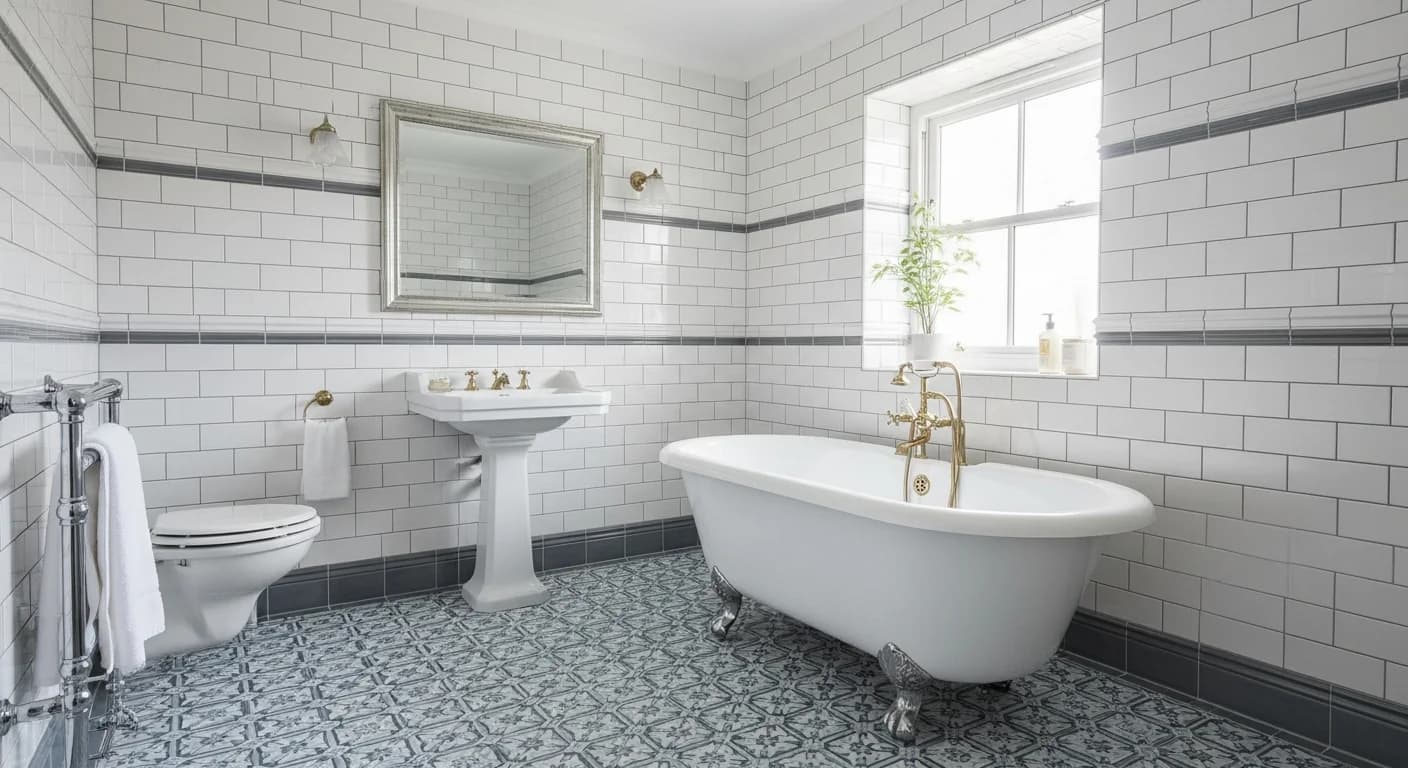
Tile defines bathroom character more than almost any other element. Your choices for floors, walls, and showers work together to create cohesive, beautiful spaces. Understanding tile options helps you make confident decisions that you'll love for years.
Floor Tile Options
Bathroom floors must be beautiful, durable, and safe. Different materials offer various advantages.
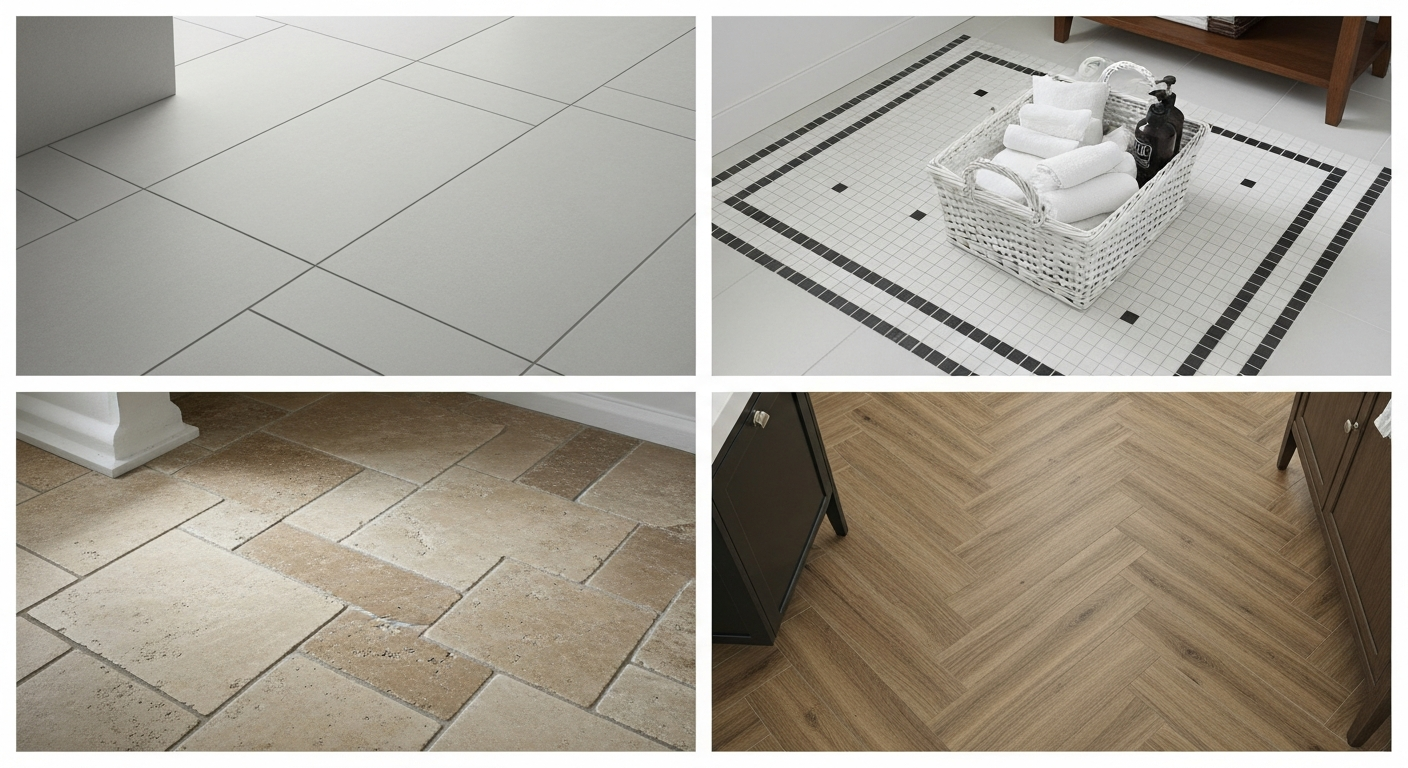
Porcelain: The workhorse of bathroom flooring. Dense, water-resistant, and available in countless styles. Can mimic natural stone, wood, or concrete. Most versatile and practical choice.
Ceramic: Similar to porcelain but slightly less dense. Works well in bathrooms with proper glazing. More affordable than porcelain. Wide style selection.
Natural stone: Marble, slate, travertine, and limestone bring organic beauty. Each piece is unique. Requires sealing and more maintenance than porcelain. Worth the effort for lovers of natural materials.
Mosaic: Small tiles (2 inches or smaller) on mesh backing. More grout lines mean better slip resistance—ideal for shower floors. Endless pattern possibilities.
Large-format: Tiles 12x24 inches or larger create fewer grout lines for cleaner appearance. Popular in contemporary bathrooms. Requires very flat subfloors.
Slip resistance: Look for tiles rated for wet areas. Textured surfaces, smaller tiles with more grout lines, and matte finishes all improve traction.
Wall Tile Trends
Bathroom wall tile offers opportunity for creativity and personal expression.
Subway tile: The classic 3x6 inch rectangle remains popular. Variations in size (2x4, 4x8, 4x12), color, and layout keep it fresh. Stack vertically for modern look.
Large format: Oversized tiles (24x48 or larger) create dramatic, nearly seamless surfaces. Fewer grout lines mean easier maintenance and contemporary appearance.
Textured tiles: Three-dimensional tiles add visual interest through shadow and light play. Wave patterns, geometric reliefs, and organic textures create focal points.
Zellige and handmade: Irregular, handcrafted tiles add character and artisanal beauty. Color variations and imperfections are features, not flaws.
Accent walls: Limiting bold tile to one feature wall controls visual intensity while adding interest. Behind vanities or in shower alcoves work well.
Floor-to-ceiling: Running tile from floor to ceiling creates seamless, spa-like continuity. Particularly effective in showers extended to full bathroom walls.
Shower Tile Design
Shower tile must handle constant water exposure while looking beautiful. Special considerations apply.
Floor vs. wall choices: Shower floors need slip-resistant, smaller tiles. Walls can use larger, smoother tiles. Coordinate but don't necessarily match.
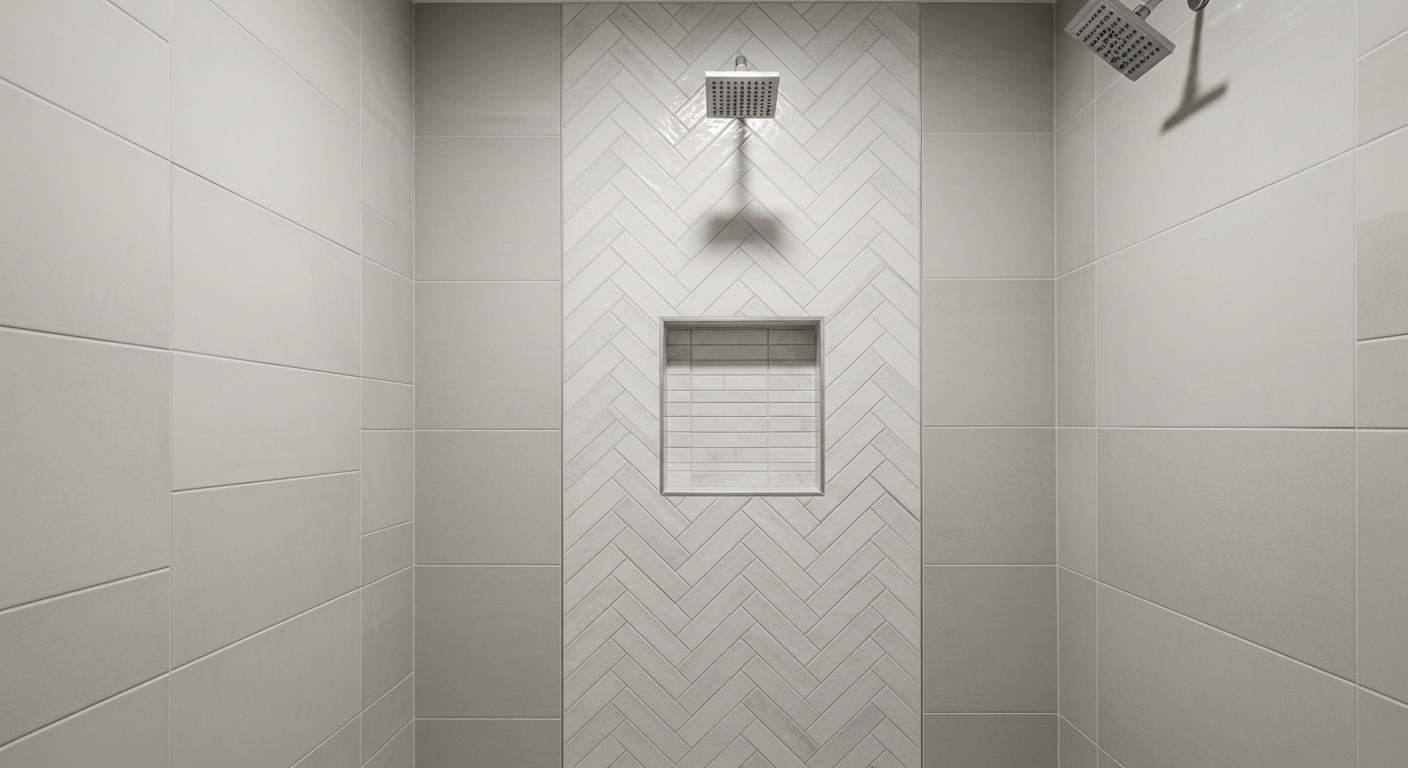
Niche design: Built-in niches benefit from contrasting or accent tile. Metallic, glass, or patterned tiles make niches pop against field tile.
Accent strips: Horizontal bands of decorative tile break up large expanses. Popular at eye level or as borders around niches.
Feature walls: One shower wall in statement tile—behind fixtures or opposite entry—creates focal point without overwhelming.
Waterproofing importance: Beautiful tile means nothing over failed waterproofing. Membrane systems behind tile prevent water damage. Never skip this critical step.
Grout selection: Epoxy grout resists mold and staining better than standard grout in wet areas. Worth the extra cost in showers.
Pattern and Layout
How you install tile matters as much as which tile you choose.
Offset/Running bond: Each row offset by half creates classic, timeless pattern. Works with any rectangular tile. Most common layout.
Herringbone: Tiles angled at 45 degrees in V-pattern add movement and visual interest. More labor-intensive but striking results.
Chevron: Similar to herringbone but tiles cut at angles to create continuous zigzag. More contemporary than herringbone.
Stacked/Grid: Tiles aligned in straight grid pattern. Modern, minimal, and clean. Works particularly well with square tiles.
Diagonal: Tiles rotated 45 degrees from wall direction. Makes spaces feel larger. Good for small bathrooms.
Basket weave: Pairs of rectangular tiles alternating direction. Traditional pattern with interesting visual texture.
Grout Considerations
Grout color and type significantly affect final appearance and maintenance.
Color impact: Matching grout to tile creates seamless appearance. Contrasting grout (white tile/black grout or vice versa) highlights tile shapes and patterns.
Maintenance reality: Light grout shows dirt but can be cleaned. Dark grout hides dirt but may fade. Consider lifestyle and cleaning habits when choosing.
Grout width: Thin grout lines (1/16") feel refined and modern. Wider lines (3/16"+) feel more traditional or rustic. Match width to tile style and size.
Epoxy vs. cement: Epoxy grout costs more but resists staining and doesn't require sealing. Cement grout is easier to work with but needs sealing. For wet areas, epoxy is worthwhile.
Mixing Tile Types
Coordinating multiple tiles requires thoughtful planning.
Limit selection: Two or three tile types maximum prevent chaotic appearance. Choose a dominant field tile, accent tile, and possibly a third for specific areas.
Color coordination: Tiles don't need to match exactly but should share color families. Pull accent colors from veining in natural stone or patterns in field tile.
Scale variation: Mixing tile sizes adds interest—large format walls with mosaic floors, for example. Keep color consistent while varying scale.
Transition planning: Where different tiles meet matters. Metal trim, Schluter strips, or tile itself can create clean transitions.
Visualize Your Tile
Tile selection is difficult from small samples. What looks perfect on a 4-inch square might overwhelm or underwhelm wall-to-wall. Seeing tile in context before purchasing prevents expensive mistakes.
HanoDecor's Bathroom Visualizer lets you test tile options on photos of your actual bathroom. Compare patterns, preview accent combinations, and evaluate how different tiles work with your fixtures—choose your bathroom tile with confidence.
Bathroom Tile Ideas FAQs
Written by
Michael Torres
Bathroom and Kitchen Design Specialist with 15 years of remodeling experience. NKBA-certified designer focused on functional layouts, fixture selection, and spa-inspired wellness spaces.