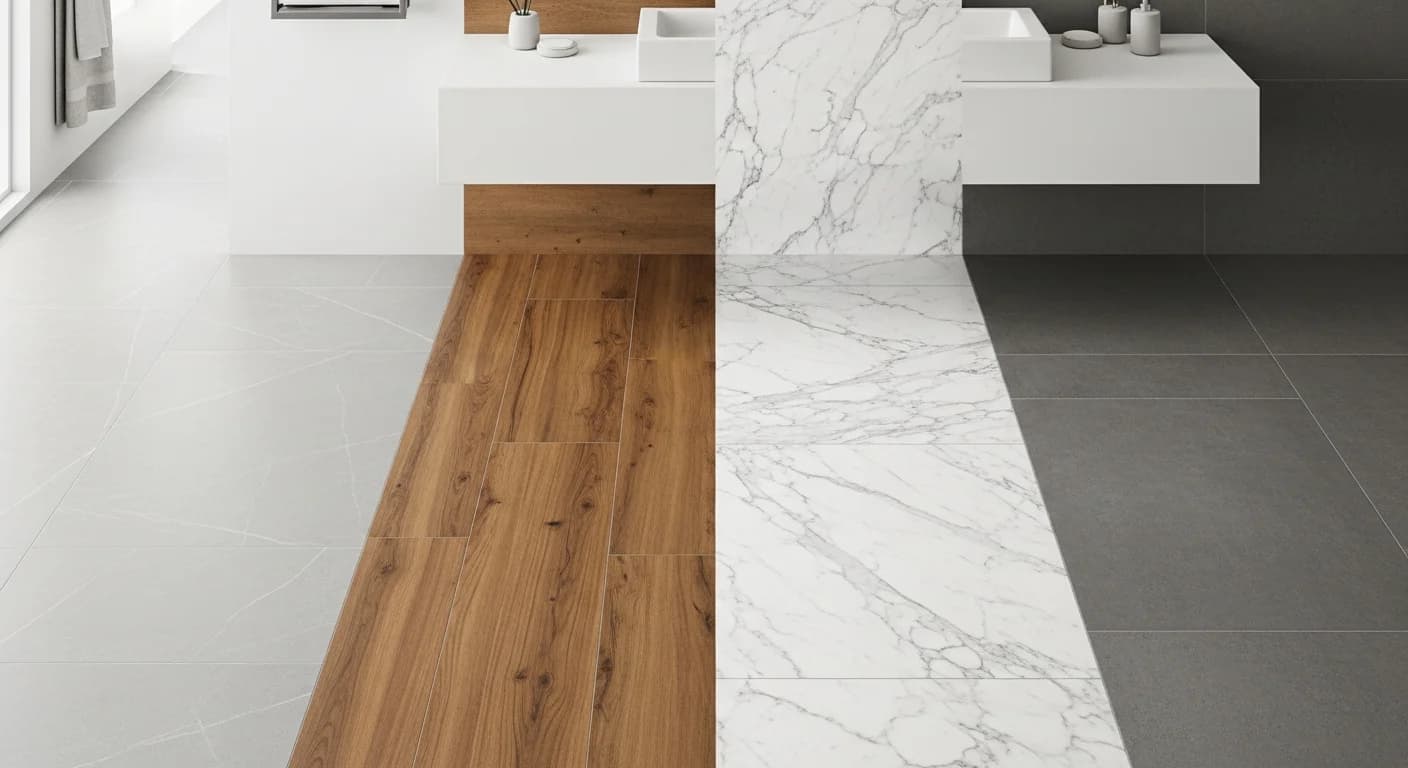
Bathroom Vanity Ideas: Style, Storage, and Function
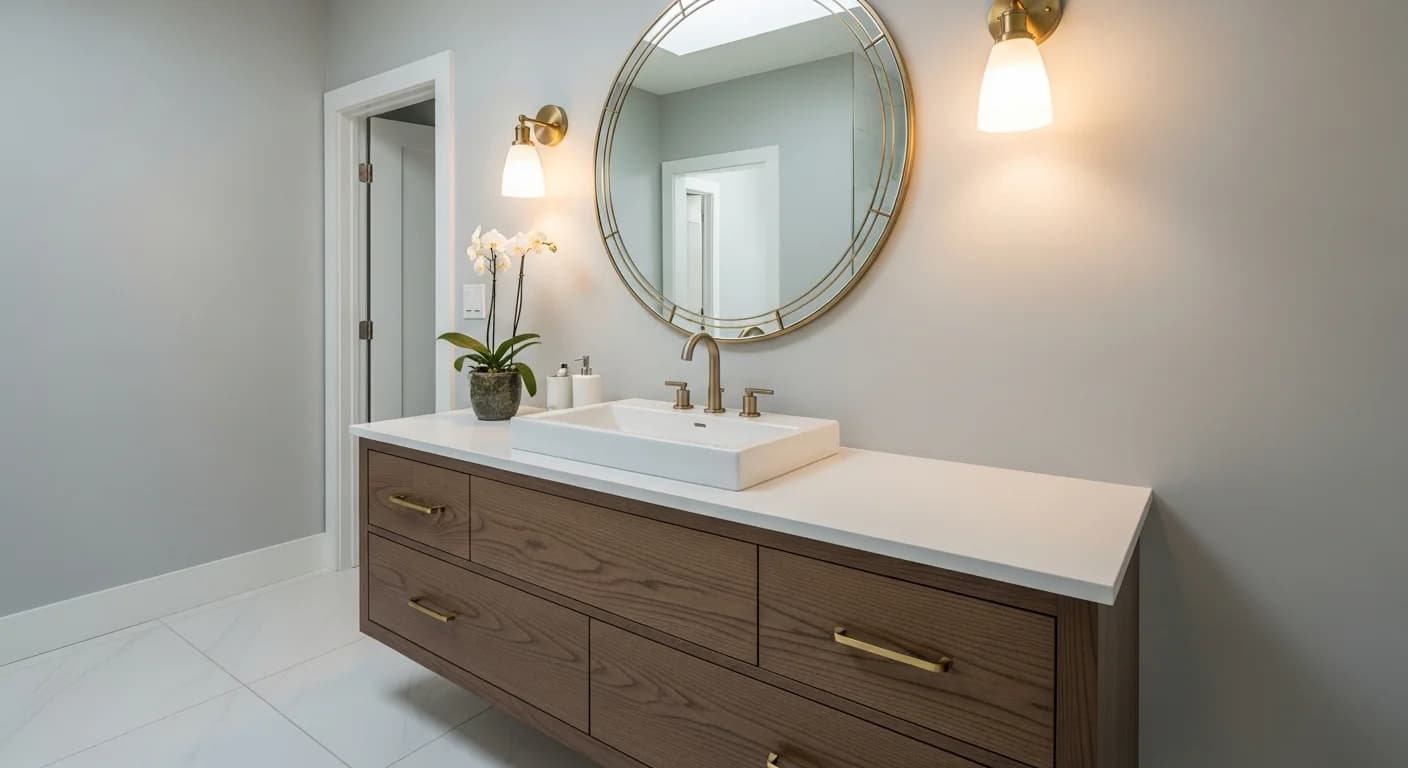
The vanity anchors bathroom design—it's often the first thing you see and the fixture you use most. Choosing the right vanity means balancing style, storage needs, and practical function. Here's everything you need to know about selecting the perfect vanity for your space.
Vanity Styles
Vanity style sets the tone for your entire bathroom. Each type offers different advantages.
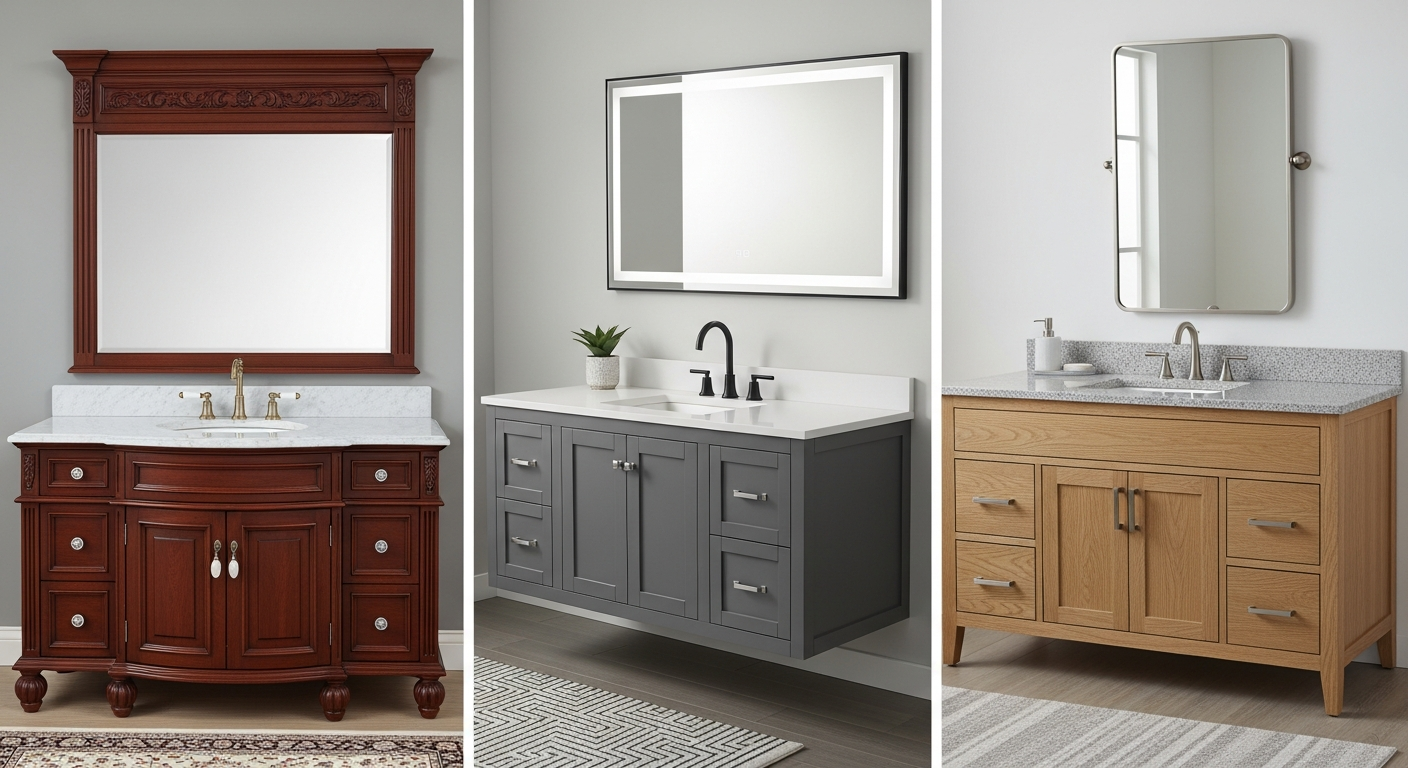
Floating/Wall-mounted: These modern vanities attach to walls, leaving floor space visible beneath. They make bathrooms feel larger, simplify cleaning, and provide a contemporary aesthetic. Installation requires secure wall attachment.
Freestanding: Traditional vanities with legs or that sit on the floor. More options at every price point. Easier installation. Can be moved if needed. Feel more substantial than floating styles.
Furniture-style: Vanities that look like repurposed furniture—often with turned legs, ornate hardware, and detailed woodwork. Perfect for traditional, farmhouse, or eclectic bathrooms.
Custom built-in: Constructed to fit your exact space with materials matching your home's cabinetry. Maximum storage and seamless appearance. Most expensive but perfectly tailored.
Open shelving: Vanities with open storage below rather than closed cabinets. Feel lighter and more casual. Require tidy, curated storage. Popular in farmhouse and contemporary styles.
Single vs. Double Vanity
Choosing between one sink and two depends on space, usage, and priorities.
Space requirements: Single vanities start around 24 inches wide. Comfortable double vanities need 60+ inches—72 inches is ideal. Measure carefully before committing to double.
Usage patterns: Couples who share morning routines benefit from double sinks. Singles or those with staggered schedules may prefer larger single vanity with more counter space.
Counter consideration: One 60-inch single vanity provides more usable counter space than two 30-inch sections. Consider what you'll place on the counter daily.
Cost factor: Double vanities require two sinks, two faucets, and more plumbing. Budget accordingly when making decisions.
Countertop Options
Vanity countertops face daily water exposure, requiring durability alongside beauty.
Quartz: Engineered stone offers endless color and pattern options. Non-porous, stain-resistant, and low maintenance. The most popular current choice.
Marble: Natural marble provides unmatched elegance. Requires sealing and careful maintenance—it etches from acidic products. Worth the care for those who love it.
Granite: Natural stone with unique patterns. Harder than marble, more resistant to etching. Requires periodic sealing.
Solid surface: Materials like Corian offer seamless installation with integrated sinks. Scratches can be sanded out. Good mid-range option.
Concrete: Custom-poured or prefabricated concrete suits contemporary and industrial styles. Can be colored, textured, or polished to preference.
Laminate: Budget-friendly option that's improved dramatically. Modern laminates convincingly mimic stone. Not as durable as stone but much more affordable.
Sink Styles
Sink choice affects both appearance and function. Consider how you use your sink daily.
Undermount: Mounted beneath the counter, undermount sinks create seamless surfaces. Easy to wipe debris directly into sink. Requires solid countertop material (won't work with laminate).
Vessel: These bowl sinks sit atop counters, making sculptural statements. Allow shorter vanities since sink height adds to total. Require wall-mounted or tall faucets.
Integrated: Counter and sink formed from single material—common with solid surface and some stone. Seamless appearance, easy cleaning, no crevices for grime.
Drop-in: Sinks that drop into counter cutouts with visible rims. Most affordable and easiest to install. Work with any counter material.
Console: Open sink designs mounted on legs without storage beneath. Vintage look, great for small spaces, but sacrifices storage.
Storage Solutions
What's inside your vanity matters as much as how it looks outside.
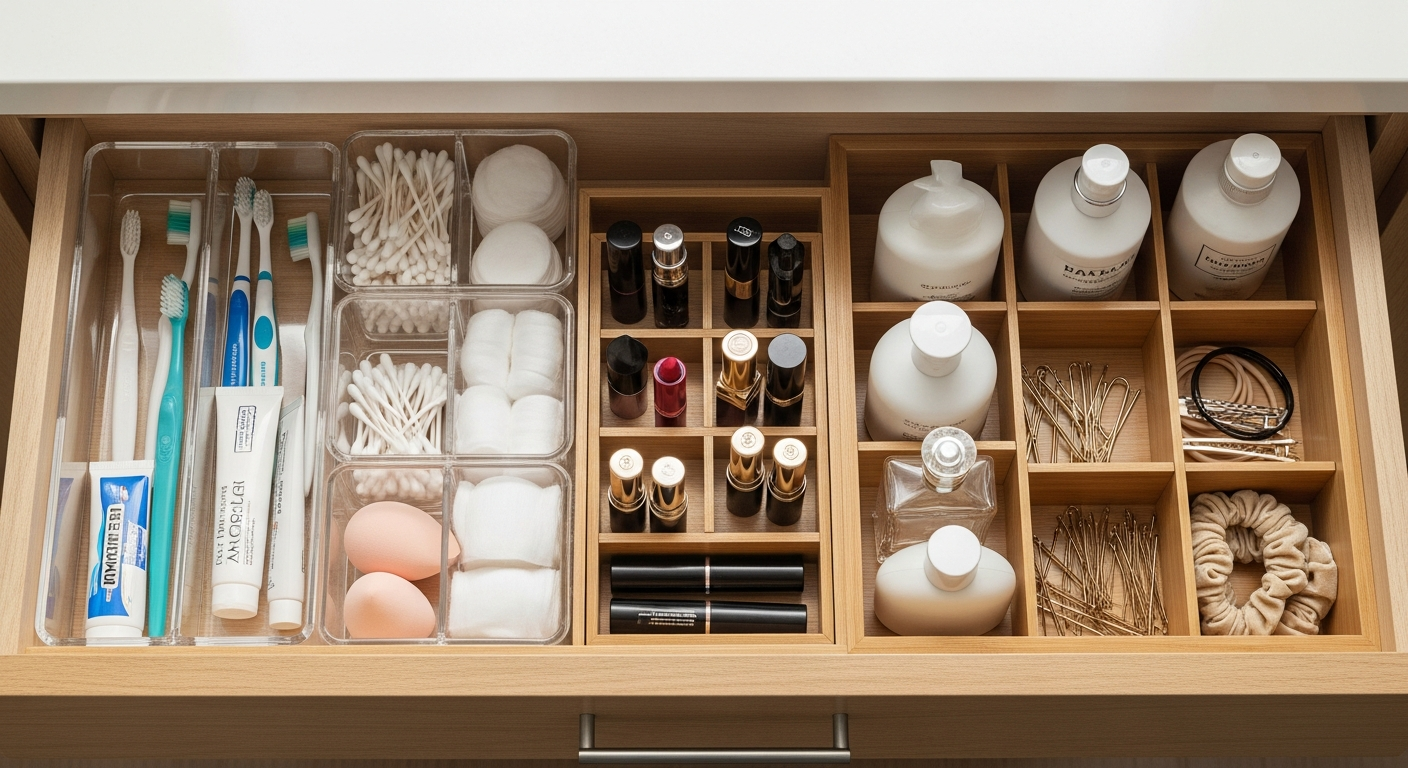
Drawer organizers: Divided inserts keep makeup, grooming supplies, and small items accessible. Custom-fit organizers maximize space.
Pull-out trays: Sliding trays in cabinets bring items forward rather than disappearing in back. Particularly useful for deep cabinets.
Door-mounted storage: Racks on cabinet door interiors hold hair tools, cleaning supplies, or small items.
Tiered storage: Stackable organizers double usable space inside cabinets. Clear containers help find items quickly.
Drawer types: Deep drawers hold hair dryers and larger items. Shallow drawers organize cosmetics and small supplies. Combination works best.
Hardware and Faucets
Finishing touches complete vanity design. Coordinate finishes for cohesive appearance.
Faucet styles: Single-handle offers easy temperature control. Widespread (separate hot/cold handles) feels more traditional. Wall-mounted faucets free counter space.
Finish coordination: Match faucet finish to cabinet hardware, lighting, and towel bars for cohesive design. Intentional mixed metals can work but require careful planning.
Popular finishes: Chrome remains classic and affordable. Brushed nickel hides water spots. Matte black feels contemporary. Brass and gold add warmth.
Visualize Your Vanity
Vanity selection significantly impacts bathroom function and appearance. Before purchasing, see how different styles, colors, and configurations work in your actual space.
HanoDecor's Bathroom Visualizer lets you test vanity styles, colors, and designs on photos of your bathroom. Experiment with floating versus freestanding, preview color options, or compare single and double configurations—find your perfect vanity with confidence.
Bathroom Vanity Ideas FAQs
Written by
Michael Torres
Bathroom and Kitchen Design Specialist with 15 years of remodeling experience. NKBA-certified designer focused on functional layouts, fixture selection, and spa-inspired wellness spaces.