Gothic Architecture Interior Design: Dark Elegance for Every Room


What Defines Gothic Architecture Interior Design
Gothic architecture interior design translates the soaring verticality, ornate stonework, and dramatic light play of medieval cathedrals into residential spaces you actually live in. It is not about recreating a museum or a haunted house. It is about borrowing the proportions, materials, textures, and decorative vocabulary of gothic architecture and applying them at a domestic scale, with comfort and livability as non-negotiable requirements.
The style draws on the same structural and decorative elements that define gothic buildings: pointed arches, ribbed vaults, tracery patterns, stained glass, carved wood, wrought iron, and rich stone surfaces. In an interior context, these elements appear as doorway shapes, ceiling treatments, furniture silhouettes, lighting fixtures, and surface materials rather than as load-bearing structure.
Three distinct approaches to gothic interior design have emerged, each suited to different tastes and budgets. Traditional gothic commits fully to dark palettes, heavy carved furniture, tapestries, and candlelight-style fixtures, creating rooms that feel like the private quarters of a medieval manor. Minimalist modern gothic strips the aesthetic down to its structural bones, using pointed arch doorways, dark walls, and a restrained selection of wrought iron or blackened steel fixtures against clean backgrounds. Whimsigoth, the most recent interpretation, blends gothic motifs with softer bohemian textures, celestial imagery, and a slightly playful irreverence that has gained wide popularity through social media design communities.
Regardless of which approach you choose, the fundamental challenge is the same: balancing drama with comfort. A room that commits entirely to darkness and weight can feel oppressive. A room that uses gothic elements too sparingly feels like a costume rather than a coherent design. The guide that follows shows you how to strike that balance in every room of your home, covering color psychology, architectural details, furniture selection, lighting design, and material sourcing.
Gothic Color Palettes for Interiors
Deep Foundation Colors
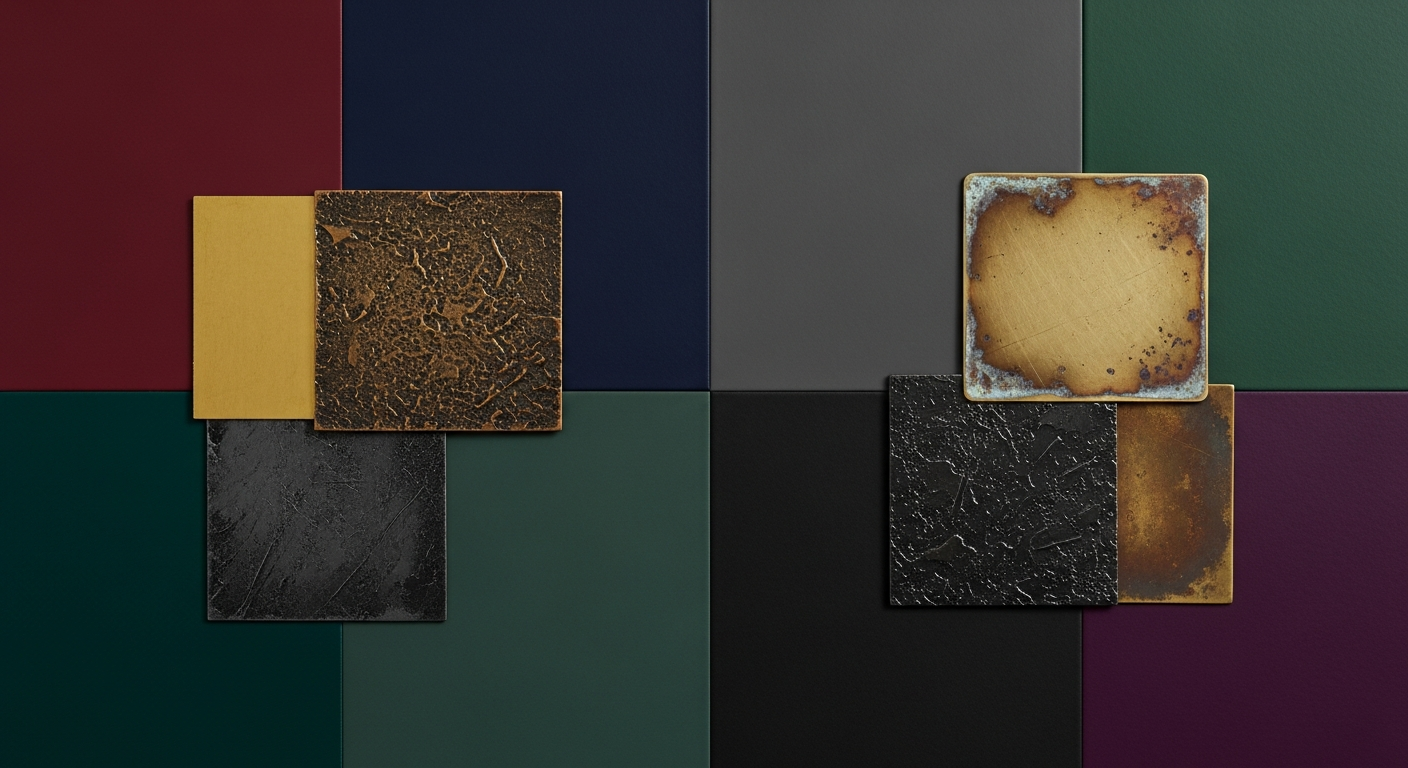
Every gothic interior begins with a foundation of deep, saturated color. The five core options are burgundy (the color of aged wine and velvet theater curtains), midnight blue (the darkest sky before dawn), forest green (the deep shade of old-growth canopy), charcoal (softer and warmer than pure black), and deep purple (historically associated with royalty and ecclesiastical vestments). These colors absorb light, shrink visual space, and create the sense of enclosure and intimacy that gothic interiors depend on.
You do not need to commit to a single color throughout your home. In fact, varying your foundation color from room to room prevents the palette from becoming monotonous. A burgundy dining room, a midnight blue bedroom, and a charcoal living room can all read as unmistakably gothic while giving each space its own identity.
Metallic Accents
Metallic accents are what elevate a dark room from feeling heavy to feeling luxurious. The gothic palette favors four metals: gold (warm, opulent, historically tied to cathedral decoration), bronze (deeper and earthier than gold), blackened iron (the metal of medieval hardware and chandeliers), and aged brass (warmer than iron, with a patina that suggests history). These appear in light fixtures, hardware, picture frames, mirror frames, and furniture details.
A single room should favor one or two metals, not all four. Blackened iron and aged brass pair naturally for a more rugged, medieval feel. Gold and bronze work together for a richer, more ecclesiastical aesthetic. Mixing too many metal finishes creates visual noise that undermines the cohesion gothic design requires.
Balancing Dark and Light
The most common mistake in gothic interior design is making everything dark. Even medieval cathedrals, the ultimate gothic spaces, were designed to draw light inward through enormous windows. Your interior needs the same principle. Keep ceilings lighter than walls, using warm off-whites, pale stone tones, or light warm grays. Paint trim and moldings in a lighter shade to create definition. Use lighter textiles on accent pillows or throws to break up expanses of dark upholstery. And always include at least one significant light source that provides warm, ambient illumination.
Room-by-Room Color Recommendations
The living room benefits from charcoal or deep forest green walls with gold or bronze accents. The bedroom works best in midnight blue or deep purple, colors that promote rest and feel intimate at night. The dining room is the natural home for burgundy, a color that flatters candlelight and makes evening gatherings feel warm. The bathroom can go darker than you think, with charcoal or deep green walls offset by white marble or light stone surfaces. The kitchen should use gothic color on cabinetry rather than walls, keeping walls and backsplashes lighter for practicality.
Architectural Elements to Incorporate
Authentic gothic interiors include architectural details borrowed from the medieval building tradition. These elements can be added to existing construction through renovation, decorative treatments, or carefully chosen furnishings.
Pointed Arch Doorways and Pass-Throughs
The pointed arch is the single most recognizable element of gothic architecture. In residential interiors, pointed arches work as doorway shapes between rooms, as pass-through openings between kitchen and dining areas, or as decorative frames around mirrors and bookcases. Custom millwork can convert a standard rectangular doorway to a pointed arch shape. For a less permanent approach, a freestanding pointed arch room divider or a mirror with a pointed arch frame achieves a similar visual effect.
Vaulted or Coffered Ceilings
Vaulted ceilings are the overhead equivalent of the pointed arch, creating upward visual movement that makes rooms feel taller and more cathedral-like. True vaulted construction is expensive, but faux vault treatments using lightweight molding or applied beams can simulate the effect at a fraction of the cost. Coffered ceilings with pointed panel shapes offer another option, particularly in dining rooms and libraries where the ceiling becomes a design focal point. Even a simple ribbed vault ceiling medallion around a chandelier mount adds gothic character overhead.
Gothic Tracery and Screens
Tracery, the ornamental stonework that fills the upper portions of gothic windows, translates beautifully to interior applications. Decorative screens with tracery-inspired cutout patterns work as room dividers, cabinet door inserts, or transom window treatments. Laser-cut metal or MDF panels in trefoil, quatrefoil, or flowing tracery patterns can be installed over windows, in wall niches, or as staircase balustrade panels. These elements add layered visual complexity without requiring structural changes.
Stone or Faux-Stone Accent Walls
A stone accent wall grounds a gothic interior in materiality. Natural stacked stone, limestone veneer, or faux-stone panels in gray, charcoal, or warm tan tones create a backdrop that references the masonry walls of medieval buildings. Position the accent wall behind a fireplace, behind the headboard in a bedroom, or behind a freestanding bathtub for maximum impact.
Gothic Living Room Design

The living room is where gothic interior design makes its strongest first impression. Begin with a focal point: a stone or carved wood fireplace surround is ideal, but a large ornate mirror or a built-in bookcase with pointed arch detailing serves the same anchoring purpose. The fireplace mantel should be substantial, carved or at minimum heavily molded, and dressed with candlesticks, small sculptures, or antique books.
Seating in a gothic living room favors high-back armchairs and deep, generously proportioned velvet sofas. The high back silhouette echoes the vertical emphasis of gothic architecture and creates a sense of enclosure. Upholstery in dark velvet (charcoal, burgundy, or midnight blue) is the signature textile. A living room design tool can help you visualize how these pieces work in your specific floor plan.
Lighting is critical. A wrought iron chandelier is the defining fixture, ideally positioned over the primary seating area. Supplement with wall sconces in matching metal for ambient light and table lamps with dark shades for reading light. The goal is warm, layered illumination that avoids harsh overhead glare.
Accessories complete the composition. An ornate mirror with a carved or metal frame adds depth. A tapestry or large-format dark artwork provides wall interest. Carved wood boxes, antique globes, leather-bound books, and dark ceramic vessels contribute to the collected, storied atmosphere. Avoid over-accessorizing. Gothic design relies on a curated selection of significant pieces, not an accumulation of small objects.
To keep the room from feeling like a period reproduction, introduce modern balance: a contemporary coffee table with clean lines, a simple area rug in a solid dark tone, or a pair of sleek floor lamps alongside the ornate chandelier. The contrast between gothic ornamentation and modern simplicity creates tension that makes both elements more interesting.
Gothic Bedroom Design

The bedroom is the room where gothic design feels most natural, because the style's emphasis on enclosure, rich textiles, and subdued lighting aligns perfectly with the purpose of a sleeping space. The bed is the undisputed centerpiece. A four-poster bed with heavy drapes or a canopy is the definitive choice, creating a room-within-a-room that feels sheltered and intimate. If a full four-poster is too imposing for your space, a tall upholstered headboard in tufted velvet achieves a similar sense of presence. Use a bedroom design tool to test different bed frame styles against your room dimensions.
Textiles define the gothic bedroom. Layer velvet, brocade, and jacquard fabrics in deep colors across the bed, chairs, and windows. A velvet duvet cover in midnight blue or deep purple, layered with brocade throw pillows and a jacquard bed runner, creates the tactile richness the style demands. Window treatments should be heavy and full-length, ideally in a fabric that matches or complements the bedding. Sheer curtains behind heavier drapes allow light control without sacrificing the layered look.
Furniture beyond the bed should include carved nightstands with ornate hardware, a tall armoire or wardrobe (the gothic alternative to a walk-in closet), and if space allows, a chaise lounge at the foot of the bed or in a reading corner. Look for pieces with pointed arch details, trefoil cutouts, or turned legs that reference gothic architectural forms.
Lighting in the gothic bedroom favors candelabra-style wall sconces flanking the bed, supplemented by a statement chandelier if ceiling height allows. Avoid recessed lighting, which feels too modern and clinical for this aesthetic. Table lamps with dark shades on the nightstands provide focused reading light.
Walls can take two approaches: dark damask wallpaper for maximum pattern impact, or a single deep-painted accent wall behind the headboard with remaining walls in a complementary lighter shade. Damask wallpaper in tone-on-tone dark patterns (charcoal on charcoal, or deep burgundy on slightly lighter burgundy) adds texture without introducing competing colors.
Gothic Dining Room and Kitchen

Gothic Dining Room
The dining room is the most historically appropriate room for gothic design. The medieval great hall, with its long wooden table, high-backed seats, iron chandeliers, and tapestried walls, is the direct ancestor of the gothic dining room. A dark wood refectory or trestle table in oak, walnut, or mahogany sets the tone. High-backed dining chairs, upholstered in leather or dark velvet, complete the seating. A grand chandelier in wrought iron or aged brass, sized generously for the table, is the room's defining fixture.
Wall treatment in burgundy or deep forest green creates warmth that flatters candlelight dining. A sideboard or buffet with carved details provides serving surface and display space. If the room includes a built-in china cabinet, consider replacing standard glass with leaded glass panels for an immediate gothic upgrade.
Gothic Kitchen
Kitchens require more practicality than other rooms, but gothic elements can be woven in without compromising function. Dark cabinetry in charcoal, deep green, or near-black stains on wood provides the foundation. Gothic character comes through cabinet hardware: ornate iron pulls, ring handles, and strap hinges that reference medieval ironwork. The backsplash is an opportunity for encaustic tile with medieval-inspired geometric patterns, dark subway tile with dark grout, or natural stone in a stacked or herringbone pattern.
For display, consider leaded glass cabinet fronts on upper cabinets, which reference gothic tracery while allowing you to showcase dishware. Light fixtures should be wrought iron or pewter, and faucets and hardware in an oil-rubbed bronze or aged brass finish connect to the broader gothic metal palette. Open shelving in dark wood, styled with pottery and vintage kitchen vessels, adds warmth.
Gothic Bathroom Design
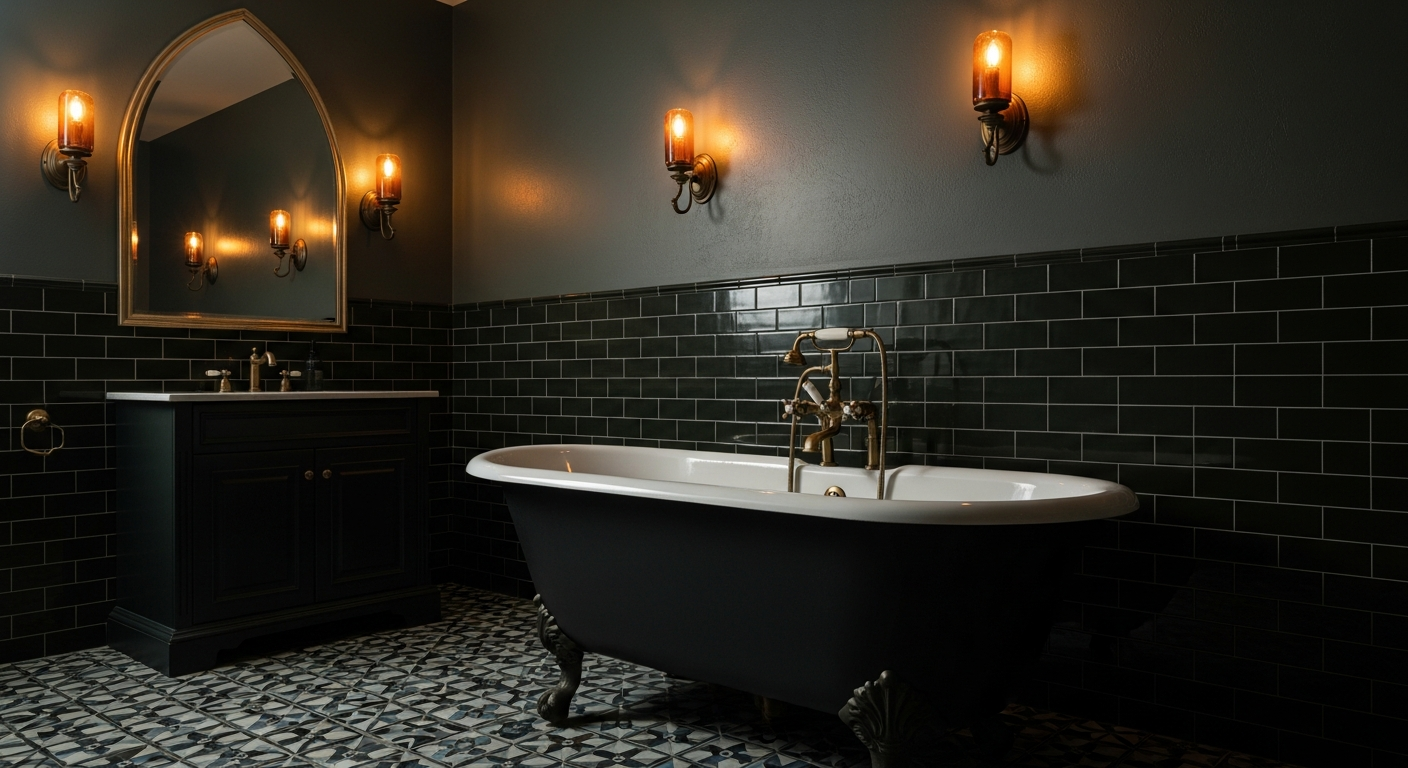
The bathroom is where gothic design can be most adventurous, because the room's smaller scale allows you to commit to drama without overwhelming a large space. Fixtures in dark metal finishes, aged brass, or oil-rubbed bronze set the tone immediately. A claw-foot tub with a painted exterior in black or deep color is the definitive gothic bathroom statement. If a freestanding tub is not practical, a built-in tub with a dark stone surround achieves a similar mood.
Tile offers the most design opportunity. Use geometric patterned floor tiles, encaustic cement tiles with medieval-inspired motifs, or classic black-and-white patterns for the floor. Walls can take dark subway tile with matching dark grout, large-format dark stone tiles, or a combination of wainscot tile below and painted wall above. An accent strip of decorative tile at chair-rail height adds a border detail that references gothic tracery bands.
The mirror is the single most impactful accessory. An ornate pointed arch mirror frame, whether in carved wood, wrought iron, or aged metal, transforms the vanity area and serves as the bathroom's focal point. For additional gothic character, consider an antiqued mirror glass that has a slight patina or smoke to its reflection.
The vanity should be a furniture-style piece in dark wood with carved details and a marble or dark stone countertop. Undermount sinks in white or cream provide necessary contrast. Storage accessories, towel bars, and robe hooks in coordinating aged brass or dark metal complete the hardware scheme.
Materials, Textures, and Furnishings
Dark Woods
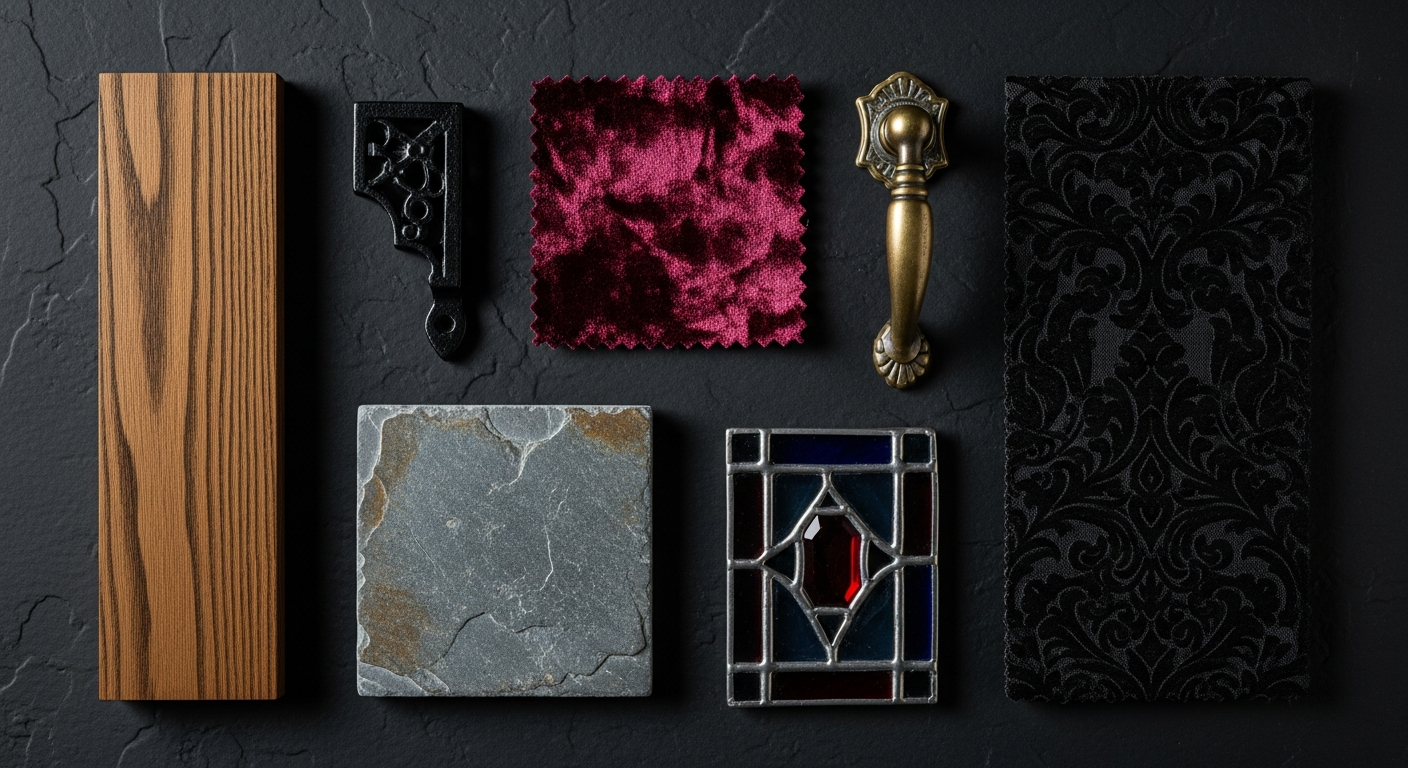
Gothic interiors favor oak (traditionally the primary structural and furniture wood of medieval buildings), walnut (darker and more refined), and mahogany (the richest option with deep reddish-brown tones). These appear in flooring, furniture, ceiling beams, door frames, and paneling. If budget is a concern, pine or poplar stained in dark walnut or ebony finishes can approximate the look.
Metals
Wrought iron is the signature gothic metal, used for chandeliers, candelabras, curtain rods, staircase railings, and decorative hardware. Aged brass provides warmth and pairs well with candlelight. Blackened steel offers a more modern interpretation that still reads as gothic. Look for hand-forged pieces with visible hammer marks and intentional irregularity for the most authentic feel.
Textiles
Velvet is the primary upholstery and drapery fabric, prized for its depth of color and light-absorbing quality. Brocade, with its raised patterns woven into the fabric, adds formality to pillows, table runners, and accent upholstery. Heavy linen provides an earthier, more medieval texture for curtains and bedding. Leather, particularly in dark brown or oxblood, works for dining chairs, desk chairs, and accent seating.
Stone
Slate (for floors and accent walls), marble (for countertops, bathroom surfaces, and fireplace surrounds), and limestone (for a warmer, more matte stone surface) are the core stone materials. Natural stone connects a room to the masonry tradition of gothic buildings and adds textural contrast to smooth wood and soft textile surfaces.
Glass
Stained glass panels, even small ones installed in transoms or sidelights, are the most direct reference to gothic cathedral design. Leaded glass with clear or lightly tinted panes works for cabinet doors and interior windows. Frosted glass with gothic patterns etched or sandblasted into the surface provides privacy in bathrooms while maintaining the decorative vocabulary.
Sourcing Tips
Antique shops and architectural salvage dealers are the best sources for authentic gothic hardware, light fixtures, and decorative ironwork. Estate sales often yield carved wood furniture at prices below retail reproduction costs. For new production, specialty gothic decor retailers and custom ironwork studios can produce pieces to specification. When mixing old and new, prioritize authentic materials (real iron, real wood, real stone) over synthetic imitations. The tactile quality of genuine materials is what gives gothic interiors their sense of weight and history.
Frequently Asked Questions
How do I make a gothic interior feel cozy, not creepy?
The difference between cozy and creepy is warmth. Use warm-toned foundation colors (burgundy, deep amber, warm charcoal) rather than cool blacks and grays. Layer soft textiles generously. Include warm-temperature lighting (2700K-3000K bulbs) in multiple sources rather than a single overhead fixture. Add living elements like plants and fresh flowers. And include personal touches such as family photos, collected books, and meaningful objects that prevent the space from feeling like a stage set.
Can gothic design work in small spaces?
Gothic design can work beautifully in small spaces because its emphasis on enclosure and intimacy aligns with what small rooms naturally provide. In a small room, commit to one or two gothic elements rather than trying to incorporate everything. A pointed arch mirror, a wrought iron light fixture, and deep wall color may be all you need. Avoid large-scale furniture that crowds the room. Instead, choose a single statement piece and keep remaining furnishings simple and scaled appropriately.
What is the difference between gothic and dark academia?
Gothic interior design draws directly from medieval gothic architecture and its decorative traditions: pointed arches, tracery, wrought iron, stone, and religious art references. Dark academia is a broader aesthetic that blends academic environments (libraries, lecture halls, universities) with romanticized intellectual culture. Dark academia interiors often incorporate gothic elements but also include tweed textiles, vintage academic tools (globes, telescopes), leather-bound books, and a warmer, more collegiate palette. Gothic is a subset that dark academia borrows from, not a synonym.
How much does a gothic interior renovation cost?
Costs vary dramatically depending on scope. Decorative-only updates (paint, textiles, light fixtures, mirrors, accessories) can transform a room for $2,000-$8,000. Adding architectural elements like pointed arch doorways, faux vault ceiling treatments, or stone accent walls typically adds $5,000-$20,000 per room depending on complexity. A full gothic renovation of a single room, including custom millwork, stone surfaces, specialized lighting, and furnishings, ranges from $15,000 to $50,000 or more. Start with paint and textiles, the two changes that deliver the most dramatic visual impact for the lowest cost.
What is whimsigoth, and how does it differ from traditional gothic?
Whimsigoth blends gothic decorative elements with bohemian warmth, celestial motifs, and a softer overall mood. Where traditional gothic commits to darkness and weight, whimsigoth introduces lighter accent colors (dusty rose, sage, muted gold), celestial imagery (moon phases, stars, cosmic patterns), crystals, dried botanicals, and more relaxed furniture arrangements. The result feels mystical and personal rather than historically rigorous. Whimsigoth is an excellent entry point for people drawn to gothic aesthetics but not ready to commit to a fully dark palette, and it blends naturally with both gothic revival details and modern bohemian sensibilities.
Visualize Your Gothic Interior
Seeing gothic design elements in your actual room makes all the difference between inspiration and execution. Upload a photo of any room and experiment with dark color palettes, pointed arch doorways, wrought iron light fixtures, and gothic-inspired furniture arrangements before committing to purchases or renovation.
Try the Room Designer to visualize how gothic elements transform your space. Compare traditional, modern, and whimsigoth approaches side by side to find the version of gothic interior design that fits your home and your personal style.
Explore our design gallery for more gothic-inspired room examples, or see gothic architecture homes to learn how the exterior and interior work together. For project planning and professional guidance, visit our pricing page to learn about design consultation options.
Gothic Architecture Interior Design FAQs
Written by
Priya Sharma
Priya is an award-winning UX designer who previously led design teams at Airbnb and Pinterest. Her focus on user-centered design ensures that HanoDecor's tools are intuitive and accessible to everyone, regardless of their technical background.