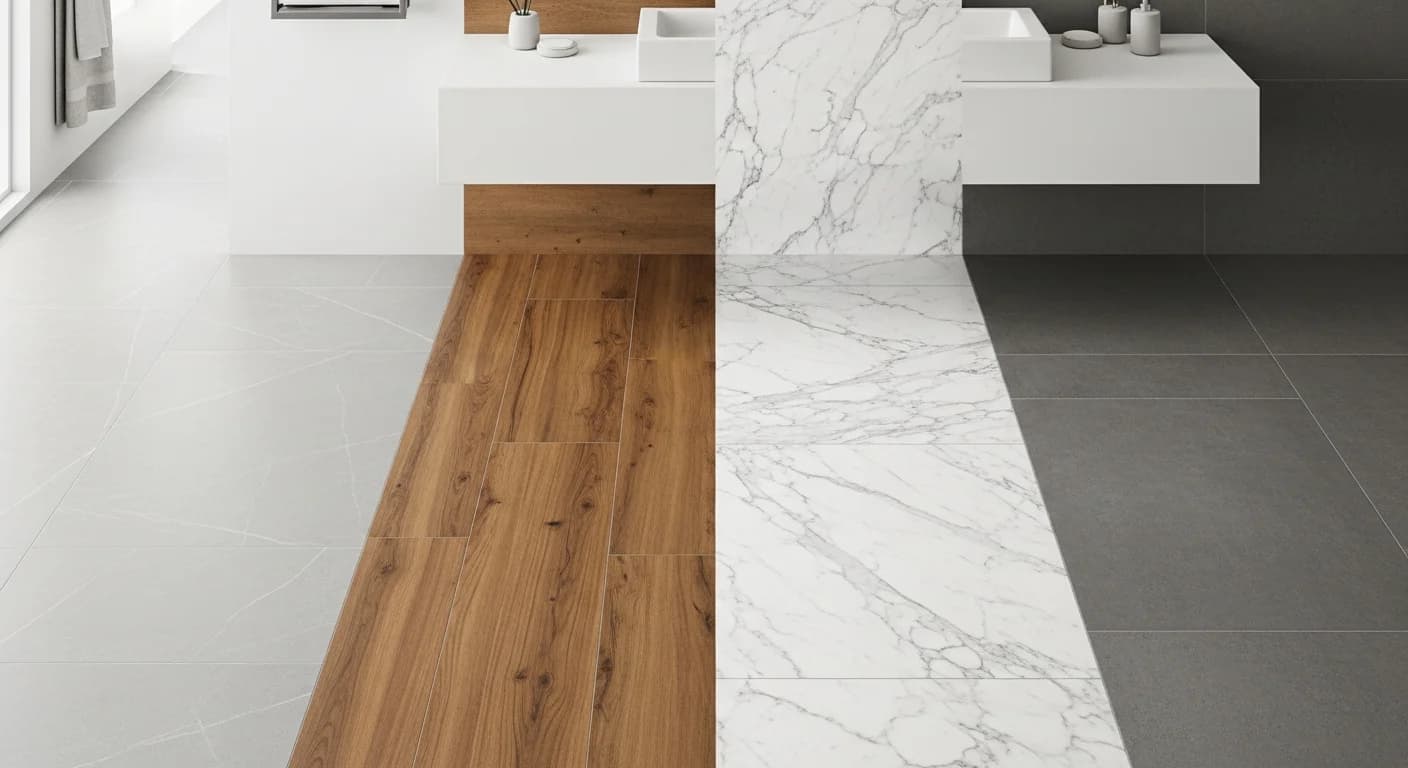
Bathroom Fixture Finishes Compared: Matte Black, Brushed Gold, Chrome, and More

Quick Summary
Choosing the right fixture finish is one of the most impactful decisions in any bathroom remodel. From the bold statement of matte black to the timeless reliability of polished chrome, from the warm luxury of brushed gold to the rustic character of oil-rubbed bronze, each finish brings a distinct personality to your space. In this guide, we compare six of the most popular bathroom fixture finishes across durability, maintenance, style compatibility, and cost. You will also learn the rules for mixing metal finishes successfully and discover which finish pairs best with your preferred bathroom style. Whether you are updating a bathroom vanity or planning a full renovation, understanding fixture finishes helps you make a decision you will love for years.
Why Fixture Finish Matters More Than You Think
Most homeowners spend weeks choosing tile, countertops, and paint colors, yet they treat fixture finishes as an afterthought. That is a mistake. Your faucet finish, showerhead finish, towel bar, cabinet hardware, and mirror frame create visual threads that tie the entire bathroom together. When those threads are coordinated, the space feels intentional. When they clash, even the most beautiful tile or vanity loses its impact.
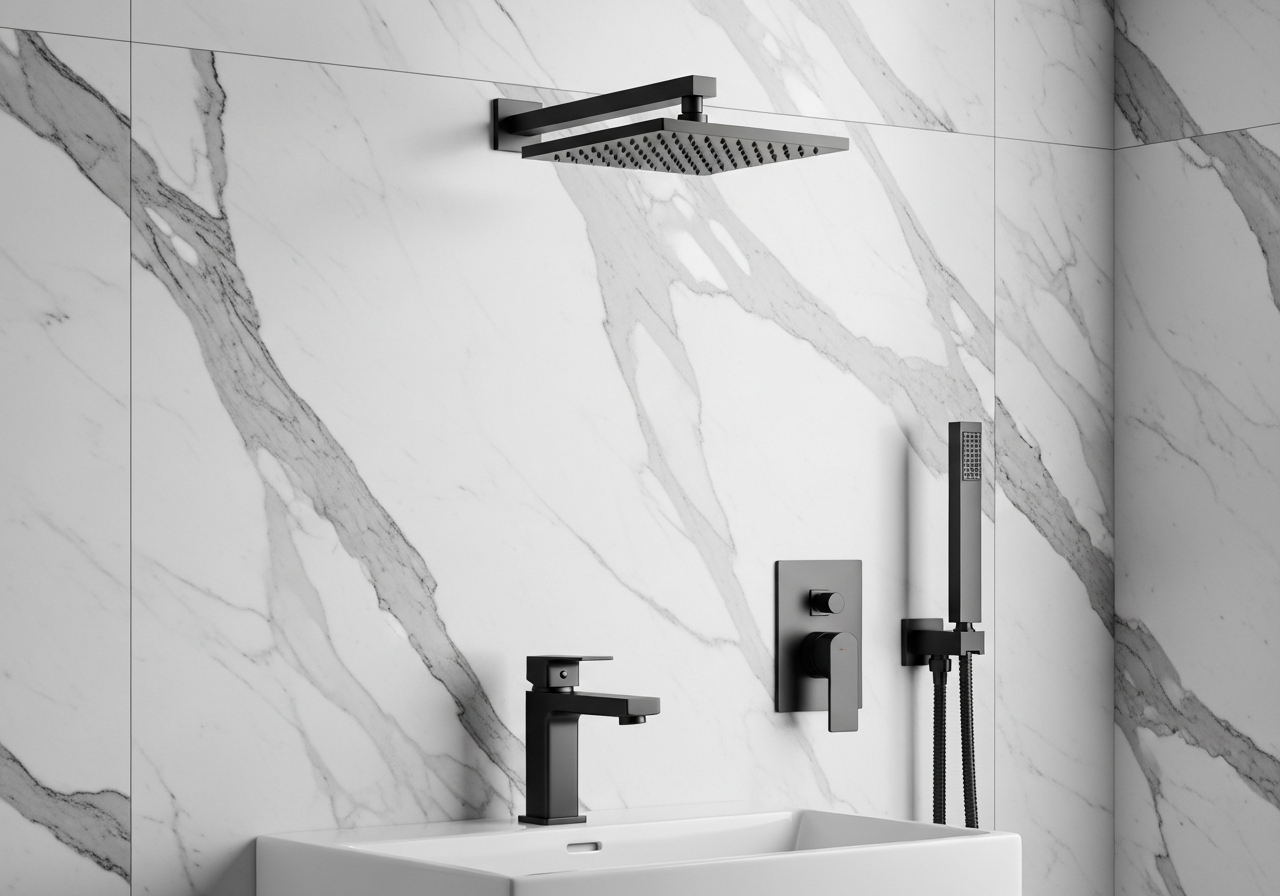
Visual impact is the most immediate reason fixture finish matters. A matte black faucet against white marble creates a graphic, high-contrast statement that reads as modern. A brushed gold towel bar against sage green walls evokes warmth and sophistication. These small elements punch well above their size in defining a room's character.
Design cohesion is equally important. Brands like Delta, Kohler, and Moen now offer coordinated finish collections that include faucets, showerheads, towel bars, robe hooks, and drain covers in matching finishes. According to the latest bathroom trends for 2026, finish consistency ranks among the top design priorities for both designers and homeowners.
Longevity is the practical reason to care about your finish choice. Some finishes, particularly those with a PVD coating (Physical Vapor Deposition), resist scratching, tarnishing, and corrosion far better than traditional lacquer-over-metal finishes. A poorly chosen finish can show water spots after every use or develop unsightly tarnish within a year. Choosing the right finish up front saves time, money, and frustration for the life of your bathroom.
Matte Black — Bold and Modern
Matte black has been the breakout fixture finish of the past decade, and its popularity shows no signs of fading. The finish delivers a strong, architectural look that pairs beautifully with a wide range of materials and color palettes.
Pros of Matte Black Fixtures
- High visual impact: Matte black creates striking contrast against white tile, marble, concrete, and light wood, making it a natural fit for modern and minimalist bathroom designs.
- Fingerprint-resistant: Unlike polished finishes, the matte texture does not show fingerprints, making it ideal for busy family bathrooms.
- Versatile pairing: Matte black works with virtually every color scheme, from all-white spaces to moody dark bathrooms with charcoal and navy.
- Gender-neutral appeal: Broad appeal in shared and primary bathrooms.
Cons to Consider
- Water spots: Hard water deposits show up as white chalky marks on dark surfaces. Regular wiping with a soft cloth after use prevents buildup.
- Finish durability varies: Lower-quality matte black fixtures may use a painted or powder-coated finish that chips over time. Look for PVD-coated options from reputable brands like Moen, Delta, or Kohler for better longevity.
- Can feel heavy in small spaces: In a compact bathroom with limited natural light, too much matte black can feel oppressive. Balance it with lighter surfaces.
Best Pairings and Cleaning Tips
Matte black fixtures look their best alongside white marble, light gray quartz, natural wood vanities, and concrete or terrazzo surfaces. For cleaning, avoid abrasive cleaners or scouring pads. A damp microfiber cloth is usually all you need. For stubborn water spots, a solution of equal parts white vinegar and water works well — just rinse and dry immediately.
Brushed Gold and Champagne Bronze — Warm Luxury
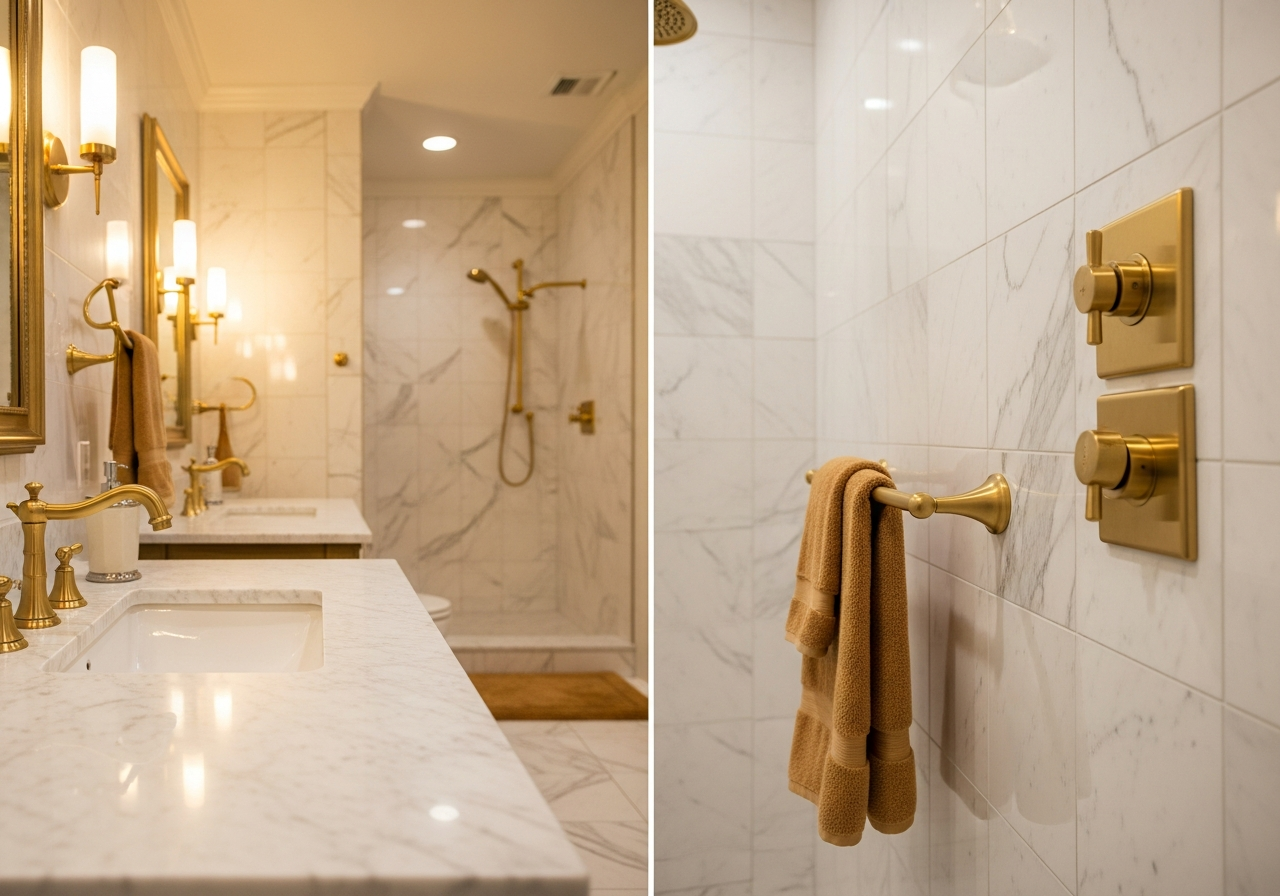
Brushed gold and champagne bronze have surged in popularity as homeowners embrace warmer bathroom palettes. While these finishes are often confused, they have distinct differences that affect which spaces they complement best.
Understanding the Differences
Brushed gold has a warmer, more yellow-toned appearance with visible brush marks that soften its reflectivity. It reads as luxurious without being flashy, making it a popular choice for primary bathrooms and powder rooms. The brushed texture helps hide fingerprints and water spots better than polished gold.
Champagne bronze sits between gold and nickel on the color spectrum. It has a softer, more muted warmth with subtle rose or copper undertones. Delta popularized this finish, and it has become one of the best-selling fixture finishes in the United States. Champagne bronze is more versatile than brushed gold because its understated tone works in transitional, modern, and even traditional settings.
When to Use Each Finish
Choose brushed gold when you want your fixtures to serve as a design focal point. It pairs beautifully with deep jewel tones like emerald, navy, and burgundy, as well as with white marble and dark wood. Brushed gold is particularly effective in floating vanity designs where the warm metal provides a striking accent against a wall-mounted unit.
Choose champagne bronze when you want warmth without making a bold statement. It works effortlessly with greige, taupe, cream, and warm white palettes. Champagne bronze is an excellent choice for whole-home coordination because it blends across kitchen and bathroom spaces without drawing too much attention.
Both finishes benefit from PVD coating technology, which provides excellent resistance to tarnish and corrosion. Delta, Kohler, and Moen offer extensive coordinated collections with matching towel bars, showerheads, and cabinet hardware.
Polished Chrome — Classic and Versatile
Polished chrome is the most widely available and affordable fixture finish on the market. Its mirror-like reflective surface has been a bathroom staple for decades, and while some trend forecasters have declared it "out," the reality is more nuanced. Chrome remains a smart, practical choice for many bathroom projects.
Trend Status in 2026
Chrome's popularity has dipped in designer circles as warmer metals have taken center stage. However, polished chrome still accounts for a significant share of fixture sales because of its affordability and broad style compatibility. For budget-conscious renovations, chrome delivers a clean, bright look at a fraction of the cost of specialty finishes. It is especially effective in bathrooms with cool-toned color palettes — white subway tile, blue-gray walls, and Carrara marble.
Maintenance Considerations
The biggest drawback of polished chrome is maintenance. Its highly reflective surface shows every water spot, fingerprint, and soap residue. In hard-water areas, chrome fixtures require daily wiping to maintain their shine. This makes polished chrome less ideal for children's bathrooms or guest baths that do not receive daily attention.
On the durability front, chrome is one of the hardest and most scratch-resistant finishes available. It does not tarnish, corrode, or develop patina over time. A well-maintained chrome faucet can look brand new after fifteen years. For homeowners who value longevity and do not mind the cleaning commitment, polished chrome remains one of the most cost-effective options.
If you love chrome's cool brightness but want less maintenance, consider brushed chrome or polished nickel as alternatives. Both reduce the visibility of water spots and fingerprints. When planning your bathroom lighting layout, keep in mind that polished chrome fixtures reflect light aggressively — an advantage in dim bathrooms but potentially distracting near vanity mirrors.
Brushed Nickel and Satin Nickel — Understated Elegance
Brushed nickel and satin nickel are two of the most versatile and forgiving fixture finishes available. They fall in the middle of the warm-to-cool spectrum, making them adaptable to almost any bathroom color scheme. Their soft, muted sheen hides water spots and fingerprints better than polished chrome while delivering a more neutral look than brushed gold.
Understanding the Difference
Brushed nickel features visible linear brush strokes on its surface, creating a subtly textured appearance. It has a warm silver tone that leans slightly toward gold in certain lighting. Brushed nickel has been popular for over two decades, meaning it has an enormous selection of coordinated products from every major manufacturer.
Satin nickel has a smoother, more uniform matte surface without visible brush marks. It appears slightly cooler and more contemporary than brushed nickel. The difference is subtle enough that many homeowners use them interchangeably, though designers recommend sticking to one within a single bathroom.
Where Brushed and Satin Nickel Shine
These finishes are the safest choice for homeowners who want something warmer than chrome but less bold than gold or black. They work beautifully in transitional bathrooms that blend traditional and contemporary elements. Brushed nickel pairs especially well with gray cabinets, white quartz countertops, and neutral tile — making it ideal for double vanity layouts where you want fixtures to complement rather than compete with other elements.
From a practical standpoint, both finishes are fingerprint-resistant and easy to clean with minimal water spots — ideal for busy family bathrooms. Most fixtures from Moen, Kohler, and Delta feature durable PVD coating that resists tarnish and corrosion for the lifetime of the product.
Oil-Rubbed Bronze — Traditional Character
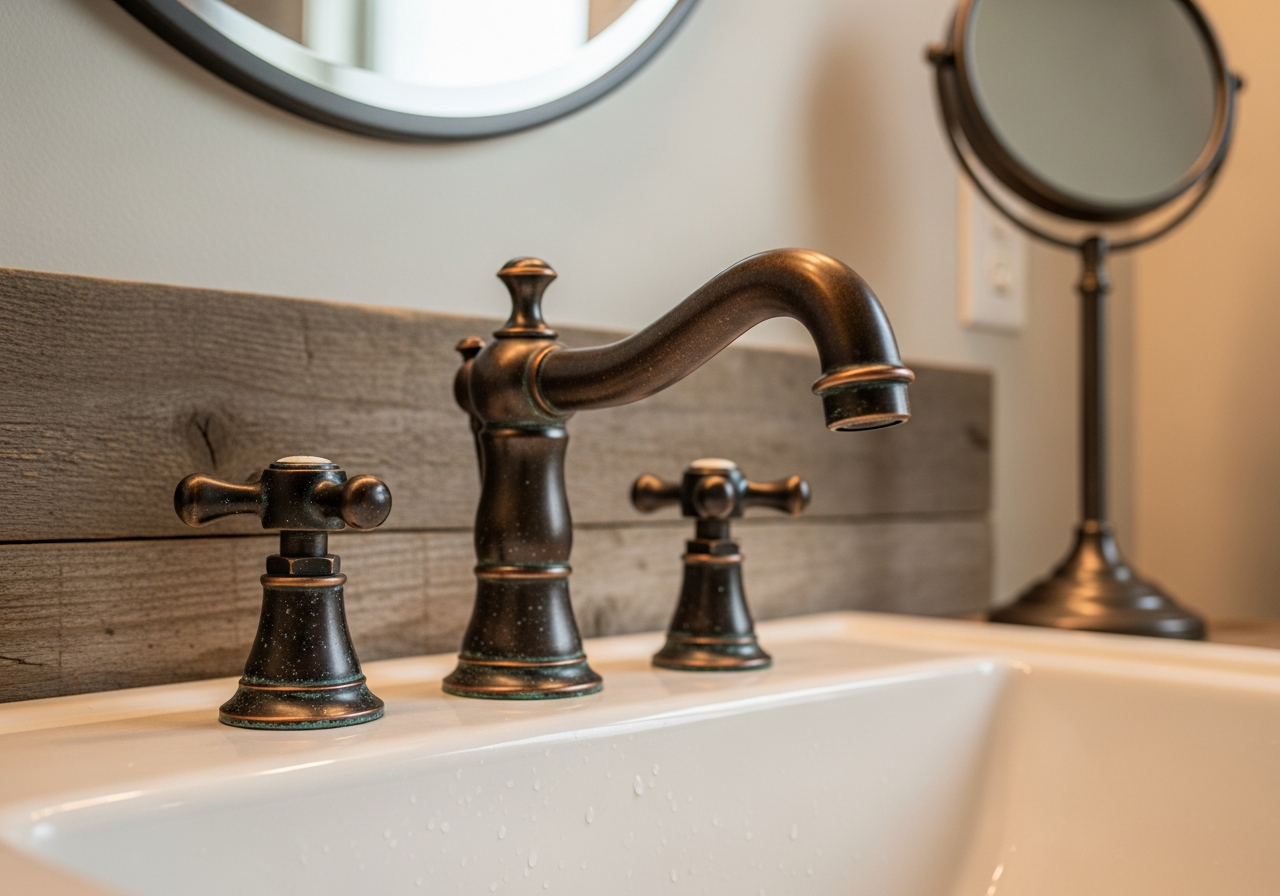
Oil-rubbed bronze is a finish that tells a story. Unlike most modern finishes that maintain a consistent appearance over time, oil-rubbed bronze is a living finish that develops a unique patina through daily use. The base color is a deep, warm brown-black, and over months and years of handling, lighter bronze highlights emerge on high-contact areas like faucet handles and towel bar ends.
The Living Finish and Patina
This natural aging process is the defining feature of oil-rubbed bronze and the reason it inspires strong opinions. Some homeowners love watching their fixtures develop character over time. Others find the inconsistent appearance frustrating and prefer finishes that remain unchanged.
The degree of patina development varies by manufacturer. Some oil-rubbed bronze fixtures use a heavy lacquer coating that slows the aging process, while others develop patina quickly. Check product specifications to understand what to expect from a specific product line.
Farmhouse and Traditional Style Pairing
Oil-rubbed bronze is the signature finish for farmhouse, rustic, and traditional bathroom styles. It pairs beautifully with shiplap walls, reclaimed wood vanities, and natural stone tile. The warm, aged quality of the finish complements cream tones, earthy greens, and warm whites far better than cool whites or stark modern palettes.
For cleaning, oil-rubbed bronze requires a gentle approach. Avoid harsh chemical cleaners, as they can strip the finish and accelerate uneven patina development. A soft damp cloth is sufficient for daily cleaning. For deeper cleaning, use a mild soap solution and dry thoroughly. Never use abrasive sponges or steel wool on oil-rubbed bronze surfaces.
Mixing Metal Finishes — Rules for Getting It Right
Today's most stylish bathrooms intentionally mix two or even three metal finishes for a layered, curated look. However, there is a difference between a well-executed mix and a chaotic mismatch. Following a few guidelines ensures your mixed metals look intentional.
The 60/30/10 Rule for Mixed Metals
The most reliable framework for mixing metal finishes is the 60/30/10 rule:
- 60% dominant finish: This is your primary metal, used on the most visible fixtures — the faucet, showerhead, and shower trim. It sets the overall tone of the bathroom.
- 30% secondary finish: This supporting metal appears on towel bars, robe hooks, cabinet hardware, and smaller accessories. It should complement the dominant finish without competing for attention.
- 10% accent finish: This is your surprise element — a mirror frame, light fixture, or decorative shelf bracket in a third metal that adds visual interest without overwhelming the scheme.
Dominant vs Accent Finishes
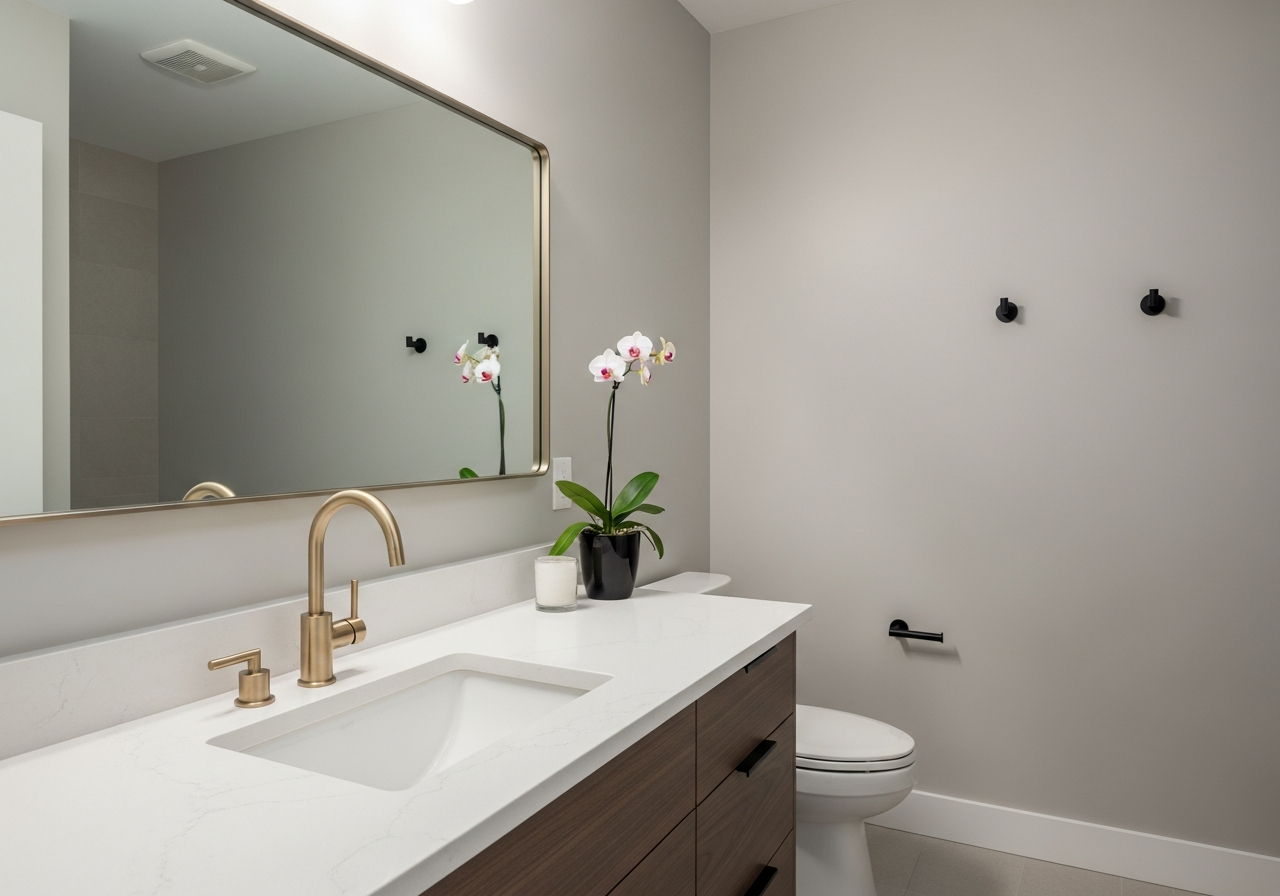
When deciding which finish to make dominant, consider what you see first when entering the bathroom. In most layouts, the vanity faucet and mirror are focal points, so your dominant finish should appear there. Some proven mixed-metal combinations include:
- Brushed gold dominant + matte black accents: Warm and modern, ideal for contemporary primary bathrooms.
- Polished chrome dominant + brushed gold accents: Classic with a touch of warmth, great for transitional spaces.
- Brushed nickel dominant + oil-rubbed bronze accents: Sophisticated and layered, perfect for farmhouse-modern blends.
- Matte black dominant + brushed brass accents: Bold and high-contrast, popular in industrial and modern designs.
One important rule: keep the temperature of your metals consistent. Mixing warm metals (gold, brass, bronze) with cool metals (chrome, polished nickel) can work, but it requires a bridging element — such as brushed nickel or a repeated material — to prevent the combination from feeling disjointed. Visit our design gallery for examples of successful mixed-metal bathrooms.
Finish Durability and Maintenance Comparison
Understanding how each finish performs over time helps you choose the option that fits your lifestyle. Below is a side-by-side comparison of the six most popular bathroom fixture finishes across key durability and maintenance factors.
Finish Durability and Maintenance at a Glance
- Matte Black: Scratch resistance is moderate to high depending on PVD vs powder coat. Water spot visibility is high. Fingerprint resistance is excellent. Lifespan is 10-20 years with PVD, 5-10 years with powder coat.
- Brushed Gold: Scratch resistance is high with PVD. Water spot visibility is low to moderate. Fingerprint resistance is good. Lifespan is 15-20+ years with PVD.
- Champagne Bronze: Scratch resistance is high with PVD. Water spot visibility is low. Fingerprint resistance is excellent. Lifespan is 15-20+ years with PVD.
- Polished Chrome: Scratch resistance is very high (hardest finish). Water spot visibility is very high. Fingerprint resistance is poor. Lifespan is 20+ years.
- Brushed Nickel: Scratch resistance is high. Water spot visibility is low. Fingerprint resistance is good. Lifespan is 15-20+ years.
- Oil-Rubbed Bronze: Scratch resistance is moderate. Water spot visibility is moderate. Develops patina intentionally. Lifespan is 10-15 years before refinishing may be desired.
Key takeaway: If low maintenance is your top priority, champagne bronze and brushed nickel are the easiest finishes to live with. If longevity and scratch resistance matter most, polished chrome is nearly indestructible. If you want the boldest visual statement with reasonable maintenance, matte black with PVD coating is your best bet.
Which Finish for Which Bathroom Style?
Matching your fixture finish to your overall bathroom style creates a cohesive, intentional look. Below is a style-to-finish guide based on current design best practices and the 2026 bathroom trend forecast.
Style-to-Finish Matching Guide
- Modern and Minimalist: Best finishes are matte black (primary) or brushed nickel. Look for clean geometric faucet shapes and frameless shower hardware. Avoid ornate or traditional profiles.
- Contemporary: Best finishes are champagne bronze or brushed gold. Choose sculptural faucet designs with soft curves. Mixed metals work well in contemporary spaces.
- Traditional: Best finishes are polished chrome or polished nickel. Select cross-handle faucets and detailed towel bar ends. Oil-rubbed bronze also works for darker traditional schemes.
- Farmhouse and Rustic: Best finish is oil-rubbed bronze. Pair with bridge-style faucets, cup-pull cabinet hardware, and exposed pipe shower systems. Matte black is an acceptable modern farmhouse alternative.
- Transitional: Best finishes are brushed nickel or champagne bronze. These neutral metals bridge traditional and modern design elements seamlessly. Transitional is the most forgiving style for finish selection.
- Industrial: Best finishes are matte black or pipe-style fixtures in iron or dark metal. Exposed plumbing elements and raw metal textures define this look.
- Coastal and Beachy: Best finishes are polished chrome or satin nickel. Cool metals complement white, blue, and natural-material palettes common in coastal design.
- Glam and Art Deco: Best finishes are brushed gold or polished brass. Pair with bold geometric patterns, marble surfaces, and jewel-toned accents.
Not sure which style fits your vision? Our bathroom remodel visualizer lets you experiment with different fixture finishes and styles in your actual bathroom before purchasing.
Frequently Asked Questions
What is the most popular bathroom fixture finish in 2026?
Brushed gold and champagne bronze have overtaken polished chrome as the most popular finishes among designers, though chrome still leads in overall sales due to its affordability and availability. Matte black remains the most popular finish for modern and minimalist bathroom designs.
Is it okay to mix metal finishes in a bathroom?
Yes, mixing metals is encouraged by most designers today. Follow the 60/30/10 rule: one dominant finish on major fixtures, a secondary finish on accessories, and an optional accent finish on decorative elements. Keep no more than three finishes in a single bathroom.
Do matte black fixtures show water spots?
Yes, matte black is susceptible to visible water spots because white mineral deposits contrast sharply against the dark surface. Regular wiping with a soft cloth prevents buildup. A water softener helps significantly in hard-water areas.
What is PVD coating and why does it matter?
PVD (Physical Vapor Deposition) is a coating process that bonds metal to the fixture surface at the molecular level. PVD-coated finishes are significantly more durable than traditional lacquer coatings, resisting scratches, tarnish, and corrosion for decades. Most premium fixtures from Delta, Kohler, and Moen use PVD on their specialty finishes.
Which fixture finish is easiest to keep clean?
Champagne bronze and brushed nickel are the easiest finishes to maintain because their mid-tone color and textured surface hide water spots, fingerprints, and minor scratches. Polished chrome is the hardest to keep looking clean due to its reflective surface, though it is the most durable finish overall.
Should cabinet hardware match my faucet finish?
Coordinating your cabinet hardware with your faucet finish creates a cohesive look. However, mixing is acceptable when done intentionally — brushed gold faucets with matte black cabinet pulls creates a deliberate contrast. Check our guide to bathroom vanity ideas for more inspiration.
How long do bathroom fixture finishes typically last?
PVD-coated finishes typically come with lifetime warranties and last 20 years or more. Traditional lacquer-coated finishes last 5 to 10 years before showing wear. Oil-rubbed bronze changes over time as its patina develops.
Preview Finishes in Your Bathroom with HanoDecor
Choosing a fixture finish from a small swatch or online photo is challenging because finishes look different depending on your bathroom's lighting, wall color, tile, and vanity material. What appears warm in a showroom may read completely differently in your space.
HanoDecor's bathroom remodel visualizer solves this problem by letting you see how different fixture finishes look in your actual bathroom. Upload a photo, select your preferred finish, and the AI generates a realistic visualization showing how matte black, brushed gold, polished chrome, brushed nickel, or oil-rubbed bronze fixtures transform your room. Compare multiple finishes side by side and share the results with your partner or contractor before purchasing.
Whether you are debating between champagne bronze and brushed gold, wondering if matte black will overwhelm your small bathroom, or curious about mixing metals, seeing the result in your own space removes the guesswork. Explore our before-and-after gallery for inspiration, or visit our pricing page to learn about plan options that fit your project.
Bathroom Fixture Finishes Compared FAQs
Written by
Emily Rodriguez
Interior Design Editor covering living spaces, styling trends, and room makeovers. Former Architectural Digest contributor with a focus on accessible, budget-conscious design.