Modern Bathroom Ideas: The Complete Guide to Minimalist Luxury Design
A modern bathroom strips away the unnecessary to reveal pure, functional beauty. Clean lines, quality materials, and thoughtful details create spaces that feel calm, luxurious, and effortlessly stylish. Whether you are planning a full modern bathroom remodel or refreshing an existing space, this guide covers every element: materials, colors, layouts, technology, budget strategies, and room-size solutions.
Quick Summary
- Modern vs. contemporary vs. minimalist: Modern refers to a specific mid-century design movement, contemporary means current trends, minimalist is a philosophy of reduction. In practice, modern bathroom design borrows from all three.
- Core materials: Large-format porcelain, floating vanities, frameless glass, matte fixtures, and warm wood accents
- Color direction: Monochromatic palettes, warm neutrals, or strategic bold accents on a neutral base
- Layout principles: Open floor plans, curbless showers, integrated storage, visual continuity
- Budget-friendly path: Achieve a modern look under $10K with strategic fixture, hardware, and surface choices
Modern vs. Contemporary vs. Minimalist: What Is the Difference?
These three terms are used interchangeably but they mean different things. Understanding the distinctions helps you communicate your vision to designers and contractors.
Modern refers to the modernist design movement originating in the early-to-mid 20th century. It emphasizes clean lines, organic forms, natural materials, and functional simplicity. A modern bathroom features simple geometric shapes, honest material expression (wood looks like wood, stone looks like stone), and a connection to nature through material warmth.
Contemporary means whatever is current right now. Contemporary design evolves constantly. In 2026, contemporary bathrooms feature curved forms, textured surfaces, warm metals, and biophilic elements. A contemporary bathroom borrows from modernism but adds current trends like fluted glass, arched mirrors, and organic-shaped vessel sinks.
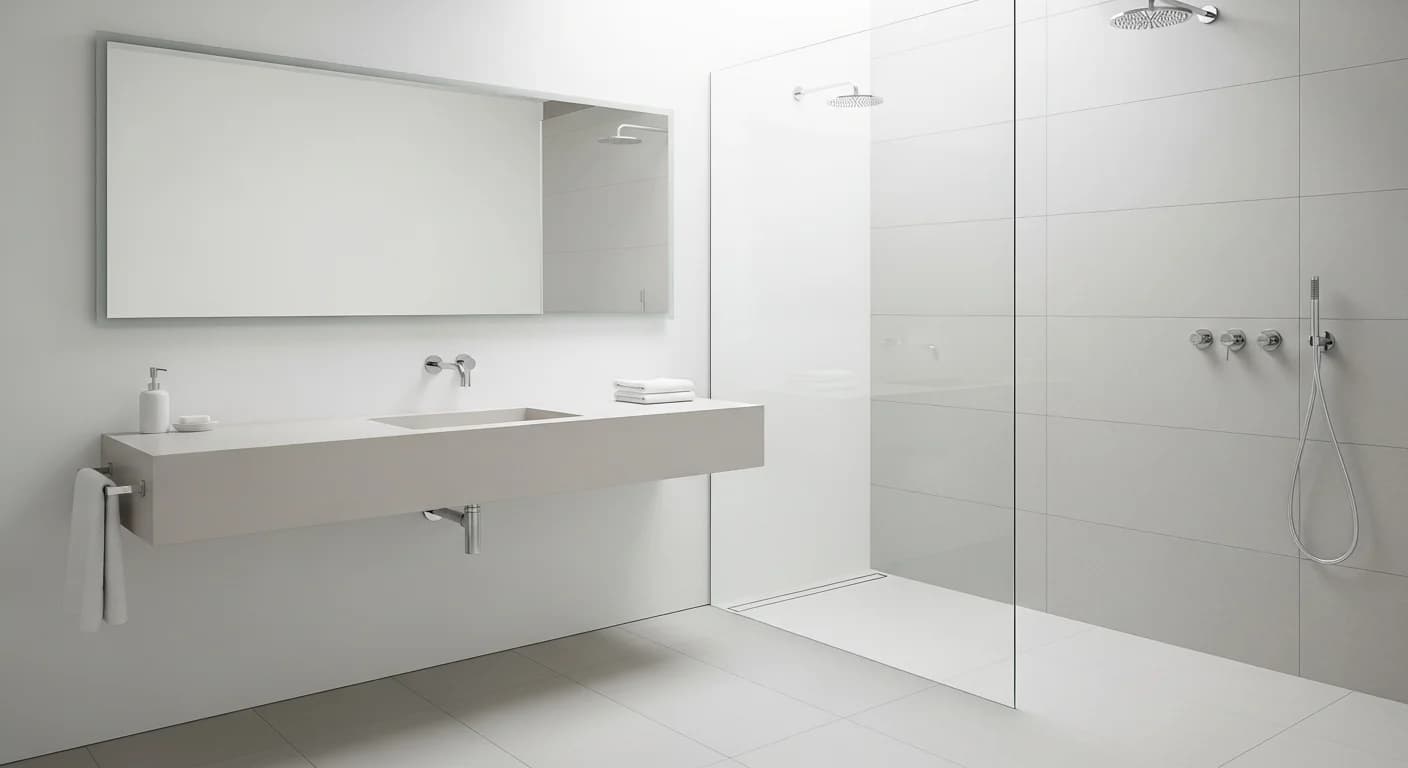
Minimalist is a philosophy of reduction. It goes further than modern design by eliminating nearly everything. A minimalist bathroom has hidden storage, flush-mounted fixtures, concealed drains, and virtually nothing visible on countertops. It is modern design taken to its logical extreme.
In practice, most homeowners seeking modern bathroom ideas want a blend: the clean lines of modernism, the current material trends of contemporary design, and the decluttered calm of minimalism. This guide covers that blend.
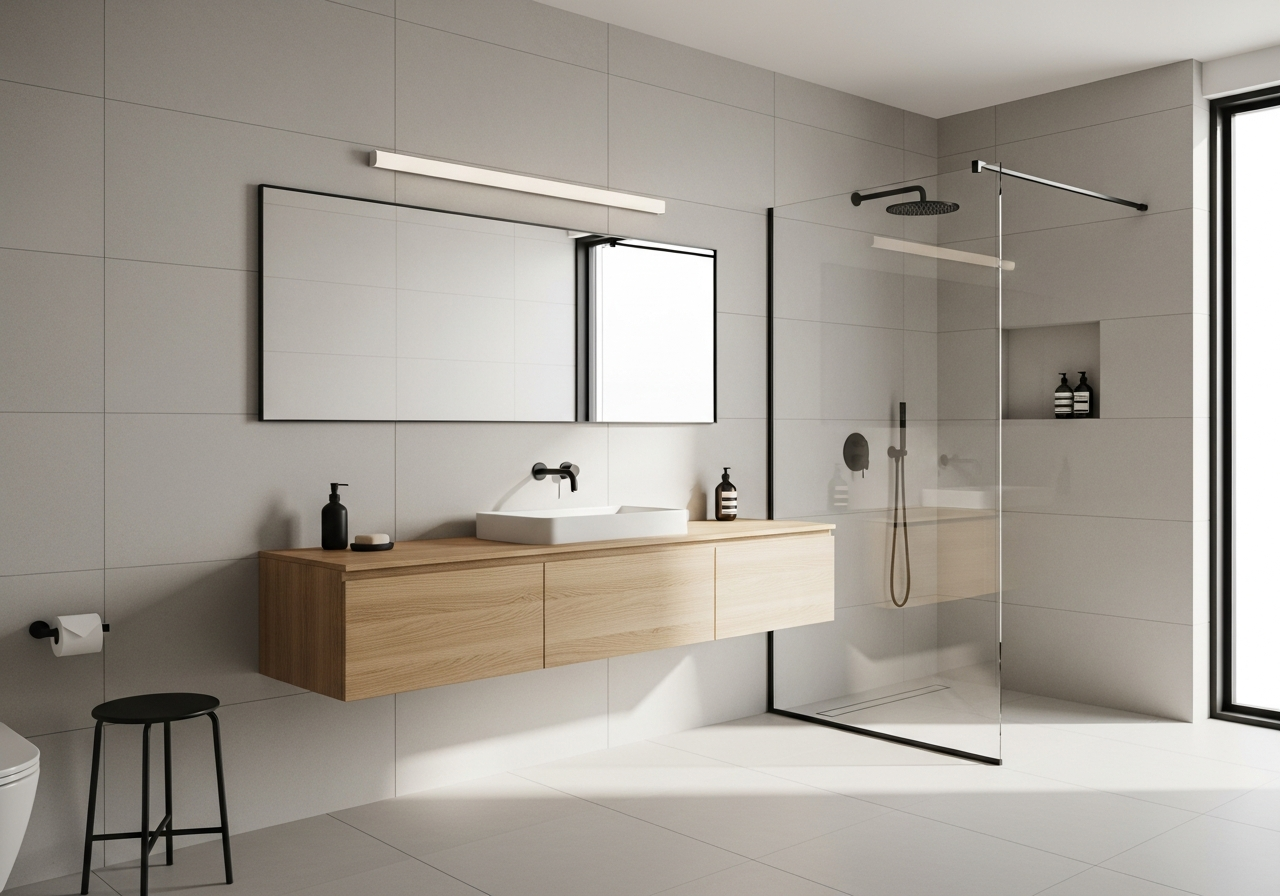
The Modern Bathroom Material Palette
In a modern bathroom, materials do the talking. With ornamentation stripped away, every surface must be beautiful enough to stand alone. Here are the five materials that define the modern bathroom remodel.
Large-Format Porcelain Tile
Oversized porcelain tiles (24x48, 32x32, or even 48x96 inches) create nearly seamless surfaces with minimal grout lines. Many convincingly mimic natural stone, concrete, or wood at a fraction of the cost. Fewer grout lines mean cleaner visuals and easier maintenance. Large-format tile works on floors, walls, and shower surrounds. See our tile ideas guide for patterns and layout options.
Floating Vanities
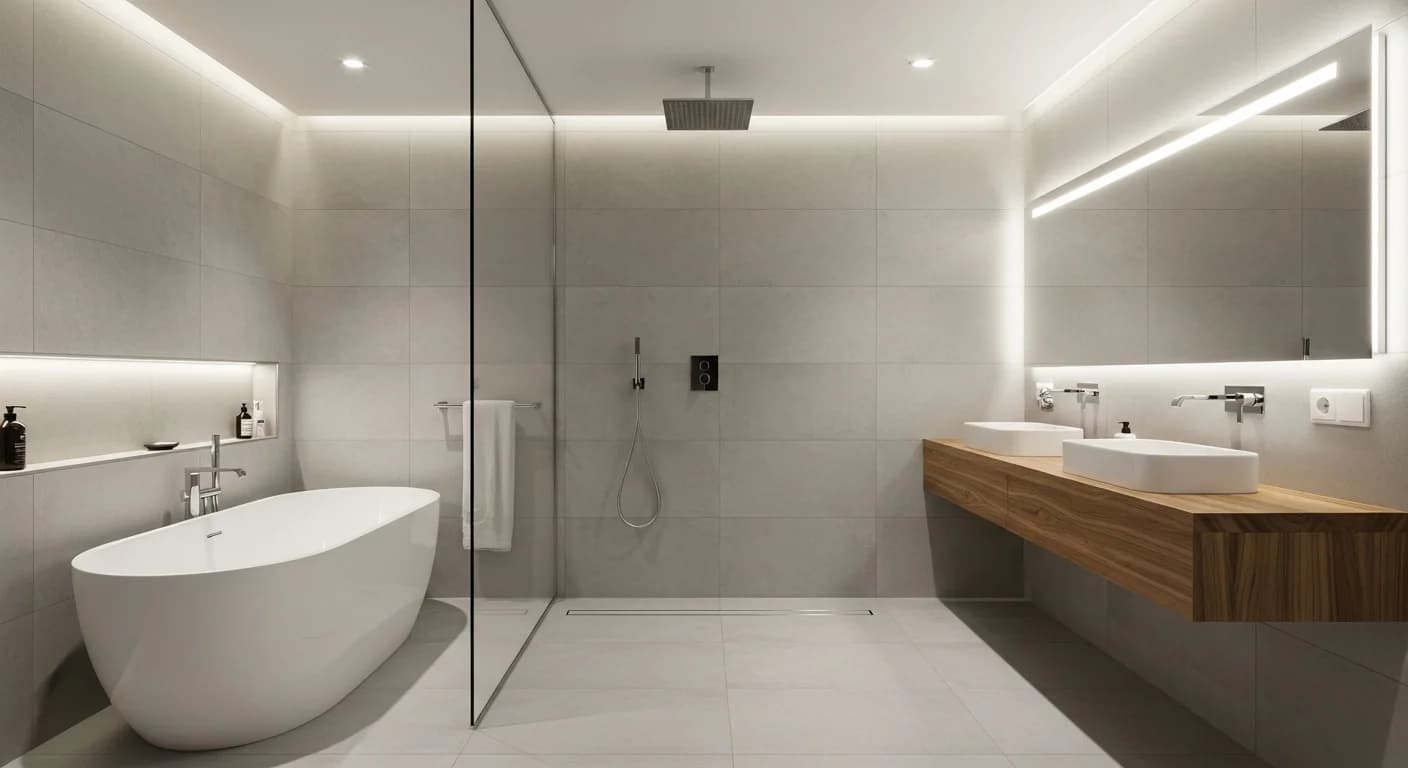
Wall-mounted vanities are the signature modern element. They create visual lightness by exposing floor space beneath, making the bathroom feel larger. Flat-front drawers with integrated handles or push-to-open mechanisms keep lines clean. Popular materials include warm wood tones (walnut, white oak), matte white or gray lacquer, and concrete. For storage strategies around floating vanities, see our small bathroom guide.
Frameless Glass
Floor-to-ceiling frameless glass shower enclosures maximize transparency and visual space. Fixed panels (no door) are the cleanest option for curbless showers. When a door is needed, pivot hardware in matched metal finish keeps the look minimal. Frameless glass showcases tile work and makes even small showers feel open.
Matte Fixtures
Matte finishes define modern fixture selection. Matte black is currently the most popular for its graphic, high-contrast effect. Matte brushed gold and brushed nickel add warmth without shine. Matte finishes hide water spots and fingerprints far better than polished options. Our fixture finishes comparison breaks down the pros and cons of each.
Warm Wood Accents
Wood prevents modern bathrooms from feeling sterile. Teak, walnut, and white oak appear as vanity fronts, open shelving, accent walls, bath mats, and accessory trays. Wood-look porcelain tile provides the aesthetic without moisture concerns. The contrast between warm wood and cool stone or concrete is a defining tension in modern design.
Modern Color Schemes
Color in a modern bathroom is restrained and intentional. Three approaches dominate.
Monochromatic
One color family in varying tones creates sophisticated depth. An all-gray bathroom with light gray walls, medium gray vanity, and dark gray floor creates visual interest through tonal variation rather than color contrast. All-white with texture variation (matte tile, glossy fixtures, natural stone) is equally effective. Monochromatic schemes photograph beautifully and never feel dated.
Warm Neutrals
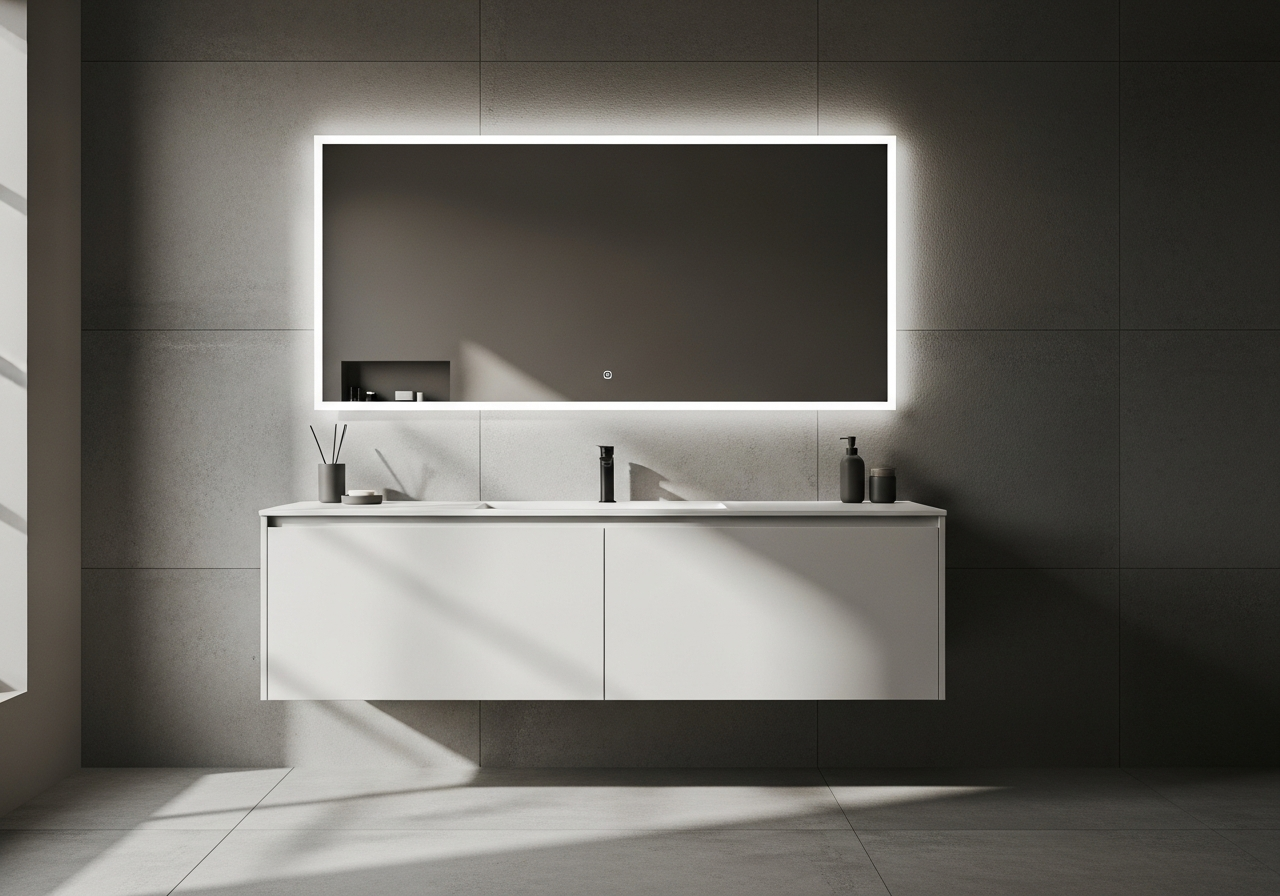
The shift away from cool grays toward warm neutrals is the defining color movement of 2025-2026. Greige (gray-beige), warm taupe, cream, and sand tones create inviting modern spaces. Paired with natural wood and brushed gold fixtures, warm neutrals feel luxurious without being trendy. This palette ages gracefully and appeals to the broadest range of buyers. Browse our color schemes guide for specific palette combinations.
Strategic Bold Accents
A predominantly neutral bathroom with one bold element creates drama without overwhelming the space. Options include a single accent wall in deep green or navy, a colored vessel sink, a statement pendant light, or colored grout on white tile. The rule: one bold moment per bathroom. More than that shifts from modern to eclectic.
Modern Layout Principles
Layout is where modern bathroom ideas differ most from traditional design. Modern layouts prioritize openness, flow, and visual continuity.
Open Floor Plan
Modern bathrooms minimize walls and divisions. Instead of separate compartments for the shower, tub, toilet, and vanity, open layouts use glass, changes in floor level, or strategic fixture placement to define zones. The result feels spacious and connected. For specific layout configurations, explore our layout ideas guide.
Curbless Showers
Eliminating the shower curb is the single most impactful modern layout decision. A curbless shower creates a continuous floor plane from bathroom to shower, dramatically expanding perceived space. It requires proper slope engineering (typically 1/4 inch per foot toward a linear drain) and waterproofing, but the visual payoff is enormous. Curbless entry also provides accessibility benefits. See more in our walk-in shower guide.
Integrated Storage
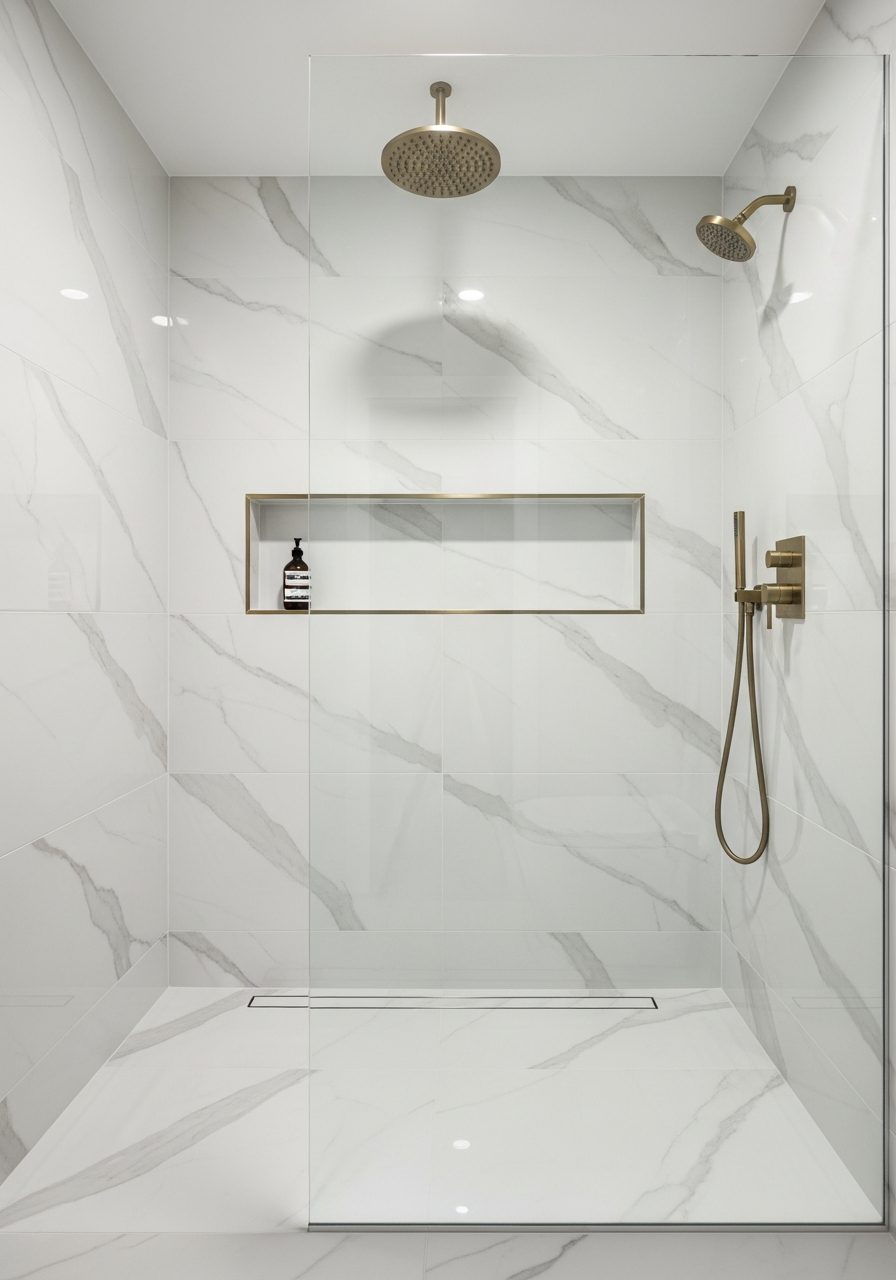
Visible clutter destroys modern design. Storage must be planned, not added as an afterthought. Recessed medicine cabinets, vanity drawers with internal organizers, tile niches in showers (sized to fit specific product bottles), and built-in linen closets keep surfaces clear. The goal: nothing sits on the countertop except what you use daily.
Visual Continuity
Use the same floor tile throughout the bathroom (including the shower) to create unbroken visual flow. Consistent grout color, matching metal finishes across all fixtures and hardware, and a limited material palette (three materials maximum) reinforce the clean, intentional aesthetic that defines modern design.
Modern Technology Integration
Technology in a modern bathroom adds convenience without visual clutter. The best smart features are invisible when not in use.
Touchless Faucets
Motion-sensor faucets reduce water waste and eliminate the need to touch handles with messy hands. Modern residential touchless faucets have improved dramatically, with reliable sensors and natural water flow. Battery-powered options avoid visible wiring. They also improve hygiene by reducing surface contact.
Smart Mirrors
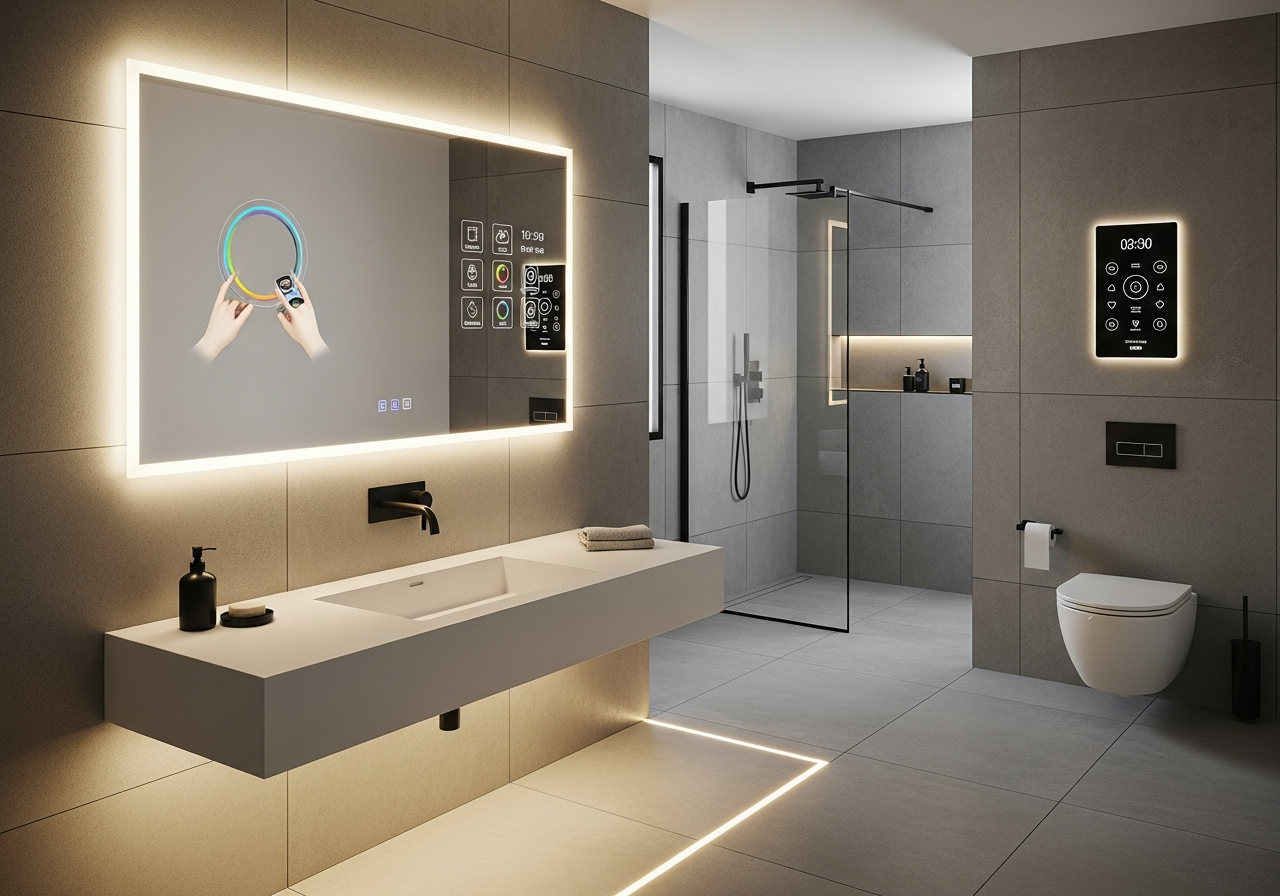
LED-backlit mirrors with integrated features replace standard mirrors while adding functionality. Common features include adjustable color temperature lighting (warm for morning, bright for grooming), built-in defoggers, touch-dimming, and in some models, time and temperature displays. The clean rectangular form and edge-to-edge lighting make these mirrors a modern design element even when the smart features are not active.
Digital Shower Controls
Programmable shower systems allow precise temperature control, flow adjustment, and multiple user presets from a flush-mounted digital panel. Some connect to phone apps for remote warm-up. The panel replaces traditional valve handles, creating a cleaner wall surface inside the shower.
LED Lighting Systems
LED strips under floating vanities create ambient glow and practical nighttime illumination. Recessed LED ceiling lights replace bulky fixture housings. Backlit mirrors provide task lighting without visible fixtures. Dimmable LED systems on smart switches adjust from bright grooming light to soft evening ambiance. Proper lighting design is crucial; see our lighting guide for layered approaches.
Heated Floors with Smart Controls
Radiant floor heating paired with a programmable thermostat warms tile floors on a schedule. The system warms before your alarm goes off and turns down when you leave. Adding radiant heat during a tile installation costs $8-$15 per square foot but delivers daily luxury. Learn more about compatible flooring in our flooring options guide.
Budget-Friendly Modern Bathroom Tips
A modern bathroom remodel does not require a luxury budget. The modern aesthetic is actually more achievable at lower budgets than traditional styles because it relies on simplicity rather than ornamentation.
Under $3,000: The Cosmetic Modern Refresh
- Replace all hardware and accessories with matte black coordinated set ($200-$400)
- Swap the mirror for a frameless rectangular LED-backlit model ($150-$400)
- Replace the light fixture with a modern linear vanity bar ($100-$250)
- Paint walls in warm white or light warm gray ($50-$100)
- Replace the faucet with a modern single-handle design in matte black ($120-$300)
- Add a simple floating shelf in walnut or white oak ($40-$80)
- Clear countertops of everything except daily essentials (free)
Under $5,000: The Surface Update
All of the above, plus peel-and-stick large-format LVT flooring ($300-$600), a new modern vanity or painted existing vanity ($500-$1,200), and updated shower hardware ($200-$500). This level achieves a recognizably modern bathroom.
Under $10,000: The Fixture Replacement
All of the above, plus a new toilet with concealed trapway ($300-$600), tiled shower surround in large-format porcelain ($2,000-$4,000), and frameless glass panel ($800-$1,500). At this level, the bathroom reads as fully modern to any observer. For detailed budget planning, reference our 2026 cost guide.
The key insight: modern design rewards restraint. Spending on fewer, higher-quality elements looks better than spreading budget across many mediocre updates. One stunning matte black faucet on a painted existing vanity looks more modern than replacing everything with builder-grade alternatives. For more DIY-friendly projects, see our beginner guide.
Modern Bathroom by Room Size
Modern design principles adapt to every bathroom size, but the priorities shift.
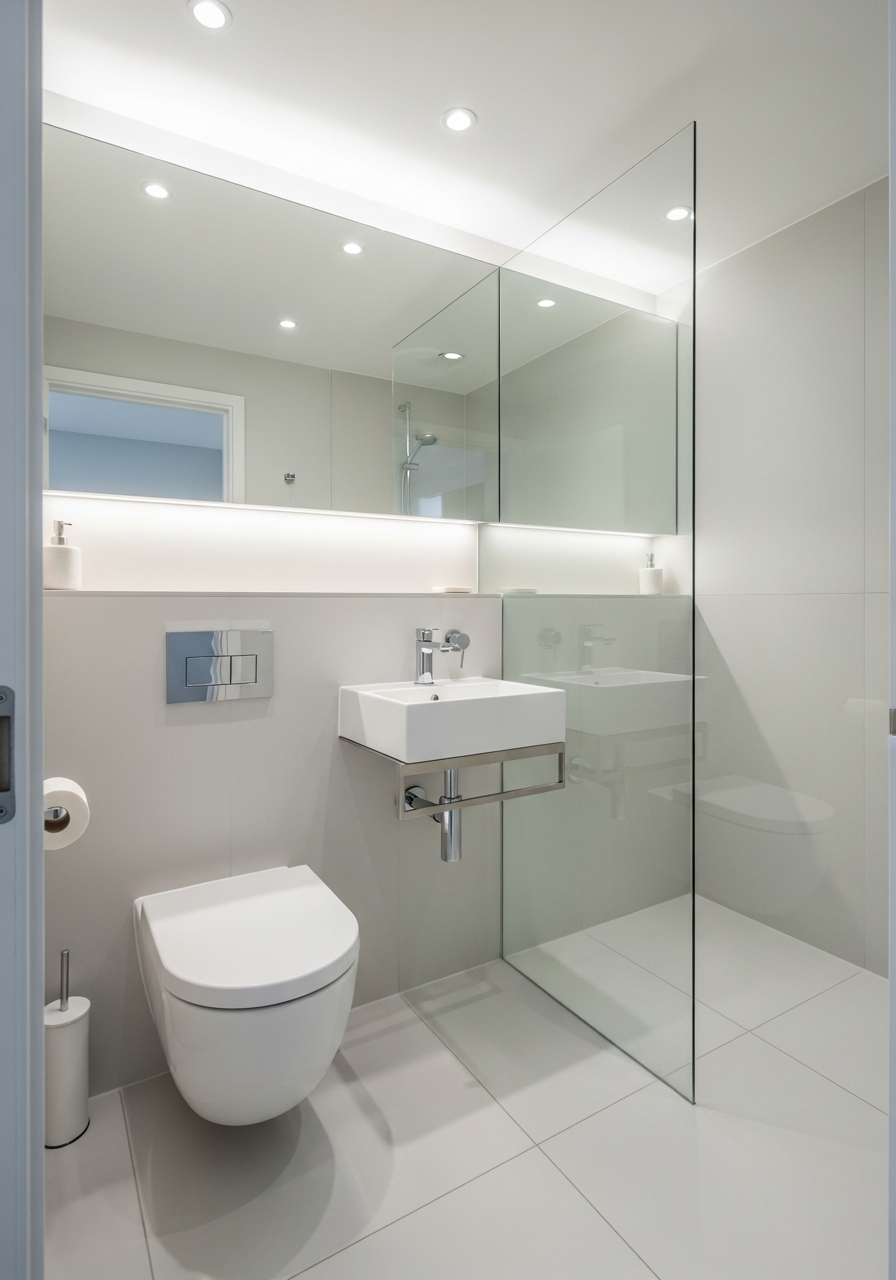
Small Bathrooms (Under 50 sq ft)
Small bathrooms benefit the most from modern design because the emphasis on visual openness, clean lines, and minimal clutter maximizes perceived space.
- Floating vanity: Essential. Exposed floor space is the single most effective way to make a small bathroom feel larger.
- Large-format tile: Fewer grout lines reduce visual noise. Use the same tile on floor and walls for continuity.
- Frameless glass panel: A fixed glass panel (no door) opens the shower visually to the room.
- Wall-mounted toilet: Saves 6-10 inches of floor space and reinforces the floating, modern aesthetic.
- Large mirror: Full-width mirror above the vanity doubles perceived depth.
Medium Bathrooms (50-80 sq ft)
Medium bathrooms can incorporate the full modern material palette without space constraints forcing compromises.
- Walk-in shower with bench: Room for a proper curbless shower with built-in seating.
- Double vanity or wide single: 48 to 60-inch floating vanity with ample counter space.
- Accent wall: Enough wall space for a feature material (natural stone, textured tile, or wood) behind the vanity or in the shower.
- Freestanding elements: Space for a freestanding towel ladder, open shelving unit, or decorative stool.
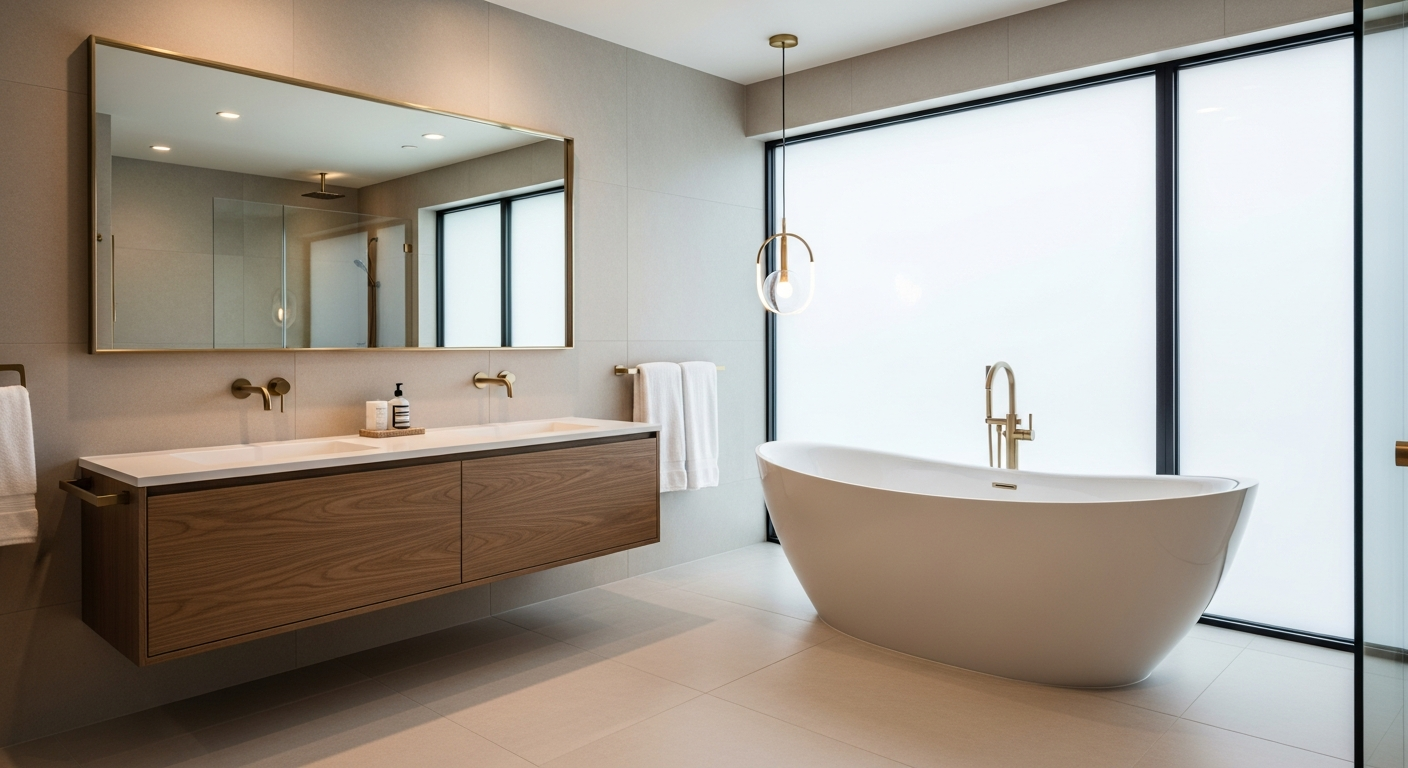
Master Bathrooms (80+ sq ft)
Large master bathrooms allow the full modern vision: open layout, separate shower and tub, and luxury features.
- Freestanding tub: A sculptural soaking tub becomes the room's centerpiece. Position it near a window for natural light.
- Open wet zone: Curbless shower that flows into the tub area, creating a spa-like wet room section.
- Double vanity with gap: Two floating vanity sections with an open gap between them for visual lightness.
- Dedicated zones: Separate grooming, bathing, and dressing areas defined by material changes rather than walls.
For luxury master bath upgrades in detail, see our master bathroom features guide.
2026 Modern Bathroom Trends
Modern design evolves. Here is where modern bathroom ideas are heading in 2026.
Warm minimalism: The cold, all-white minimalist bathroom is giving way to warm tones, natural materials, and textured surfaces. Think plaster walls, fluted wood panels, and travertine-look tile. The lines stay clean but the feeling shifts from clinical to inviting.
Curved elements: Arched mirrors, rounded vanity edges, pill-shaped medicine cabinets, and curved shower glass soften modern geometry. Curves appear as deliberate contrast to the dominant straight lines, creating visual relief.
Matte and textured surfaces: Glossy finishes continue to decline in favor of matte, honed, and textured surfaces. Fluted tile, ribbed glass, and tactile stone add dimension without ornamentation.
Biophilic integration: Natural light maximization, live plants in humidity-loving species, natural stone with visible movement, and wood elements connect bathrooms to the natural world. Green is the most popular accent color in modern bathrooms for 2026.
Invisible technology: Technology moves further into the background. Flush-mounted speakers, invisible radiant heat, sensor-activated lighting, and concealed ventilation replace visible gadgets. The best technology disappears entirely. For the full trends overview, read our 2026 bathroom trends guide.
Frequently Asked Questions
What is the difference between a modern and contemporary bathroom?
Modern refers to the mid-century modernist design movement with its emphasis on clean lines, functional simplicity, and honest materials. Contemporary means whatever design is current right now. In 2026, contemporary bathrooms include curves, textured surfaces, and warm metals that go beyond strict modernist principles. Most people use the terms interchangeably, and most bathroom designs labeled modern are actually a blend of modern and contemporary elements.
How much does a modern bathroom remodel cost?
A cosmetic modern refresh costs $1,500-$3,000 (hardware, paint, mirror, faucet). A surface-level update runs $3,000-$5,000 (add flooring and vanity). A full modern bathroom remodel with tile, fixtures, and frameless glass costs $10,000-$25,000. A luxury modern master bath renovation ranges from $25,000-$75,000+ depending on materials and scope. See our complete cost guide for detailed breakdowns.
Can I make my bathroom look modern without a full renovation?
Yes. The three highest-impact changes are: coordinate all metal finishes in one tone (typically matte black or brushed gold), replace the mirror with a frameless LED-backlit model, and clear all countertop clutter. These three changes cost under $500 and immediately shift the aesthetic toward modern. Adding a modern faucet and new light fixture for another $300-$500 completes the visual transformation.
Are modern bathrooms hard to keep clean?
Modern bathrooms are actually easier to clean than traditional ones. Fewer grout lines (large-format tile), minimal ornamentation (no moldings collecting dust), matte finishes (hide water spots), and frameless glass (fewer crevices) reduce cleaning effort. The minimalist approach to countertop items means fewer things to move when wiping surfaces. The one exception: freestanding tubs require cleaning around the base, which is slightly more effort than a built-in tub.
What modern bathroom features add the most resale value?
Walk-in showers with frameless glass, floating vanities, heated floors, and modern lighting consistently test well with buyers. Avoid overly personal or extreme choices (all-black bathrooms, unusual layouts) that may not appeal to future buyers. The safest modern investment is a warm neutral palette with quality fixtures and clean lines. See our ROI guide for specific return percentages.
Start Your Modern Bathroom Design
Modern bathroom design rewards planning. The clean, minimal aesthetic requires every element to work together because there is nothing to hide behind. Before committing to materials, fixtures, and layouts, see how they look in your actual space.
HanoDecor's Bathroom Visualizer lets you test modern fixtures, colors, and material combinations on photos of your bathroom. Experiment with floating vanities, frameless showers, matte finishes, and contemporary color palettes. Create your modern bathroom with confidence before the first tile is ordered.
For more design direction, explore our spa bathroom ideas for wellness-focused design, our before-and-after transformations for real project inspiration, and our remodel checklist for step-by-step planning.
Modern Bathroom Ideas FAQs
Written by
Michael Torres
Bathroom and Kitchen Design Specialist with 15 years of remodeling experience. NKBA-certified designer focused on functional layouts, fixture selection, and spa-inspired wellness spaces.