Bathroom Trends 2026: What Designers Are Actually Using
Every year, trend forecasts flood design media with predictions that range from genuinely prescient to wildly impractical. The difference between trend reporting and trend reality comes down to one question: what are professional designers actually specifying for clients who are spending real money on real bathrooms? This guide skips the aspirational fantasy and focuses on the bathroom trends 2026 that are showing up consistently in designer portfolios, manufacturer order books, and trade show launches — the trends with enough commercial momentum to influence how bathrooms will look for the next 3–5 years.
The overarching narrative for 2026 bathroom design is warmth, texture, and personality. The cool gray minimalism that dominated the 2015–2023 era is giving way to earthy color palettes, artisanal surfaces, sculptural forms, and a willingness to use bold color in fixtures and finishes. Technology continues its quiet integration, with smart toilets reaching mainstream adoption and circadian lighting systems moving from luxury specification to standard-tier. And the line between "bathroom" and "spa" continues to blur, with wellness features like heated floors and steam showers becoming expected rather than exceptional. For foundational design principles that support these trends, see the modern bathroom design guide.
What follows are 12 specific bathroom trends 2026 that professional designers are recommending, each with product specifics, price points, and practical guidance for incorporating them into bathroom remodels at any budget level. Whether planning a full renovation or a targeted update, these are the design directions that will define the year. Browse the bathroom design ideas hub for visual inspiration across every style.
Quick Summary
- Warm earthy tones (sage green, terracotta, warm taupe) replace cool grays as the dominant bathroom palette — 64% of designers report specifying warm neutrals
- Microcement and seamless wall surfaces eliminate grout lines for a monolithic, spa-like aesthetic ($15–$30 per sq ft installed)
- Artisanal tile — zellige, hand-painted, and textured ceramic — adds handmade character that mass-produced tile cannot replicate
- Furniture-style vanities with warm wood (oak, walnut) replace built-in cabinetry for a less "bathroom" feel
- Matte finishes dominate over high gloss in fixtures (brushed brass, champagne bronze), tile, and wall surfaces
- Smart toilets reach 51% designer adoption — bidet functionality, heated seats, and self-cleaning are going mainstream
- Colored fixtures (pistachio green, butter yellow, terracotta) bring dopamine decor into bathrooms for the first time at scale
- Lamps and cordless sconces replace traditional vanity lighting for a warmer, residential atmosphere
- Traditional features (drop-in tubs, built-in nooks, washstands) make a comeback with modern proportions
Best for: Homeowners planning a bathroom remodel who want design choices that feel current without dating quickly, plus designers seeking trend validation for client presentations.
Reading time: 14 minutes
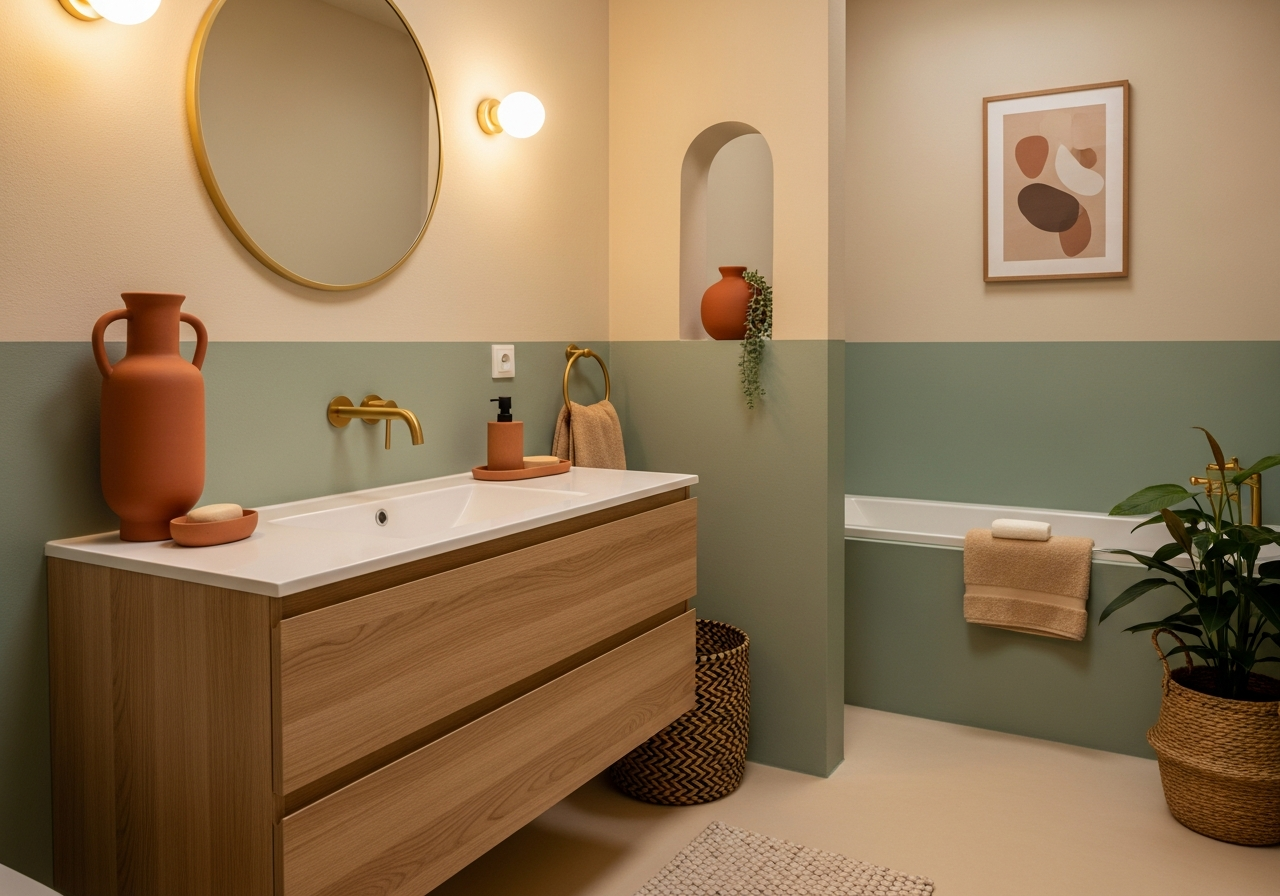
Warm Earthy Color Palettes Replace Cool Grays
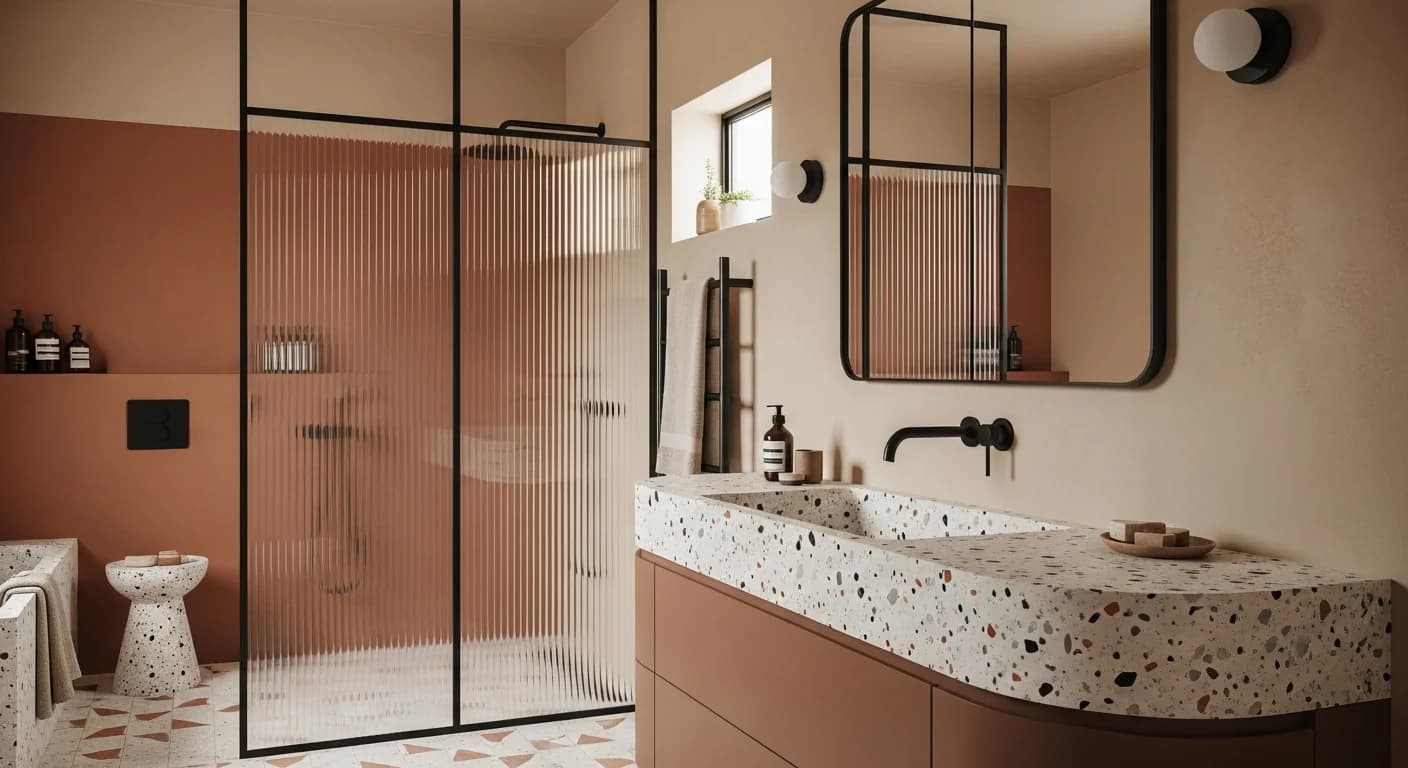
The most significant color shift in bathroom design since the all-white trend of the 2010s is underway. Cool grays, greiges, and blue-toned neutrals are being replaced by warm earthy tones drawn directly from natural landscapes: sage green, olive, terracotta, warm taupe, clay, sand, and mushroom. Sherwin-Williams named Universal Khaki (a warm, complex neutral with green and gold undertones) as a top color for 2026, while Benjamin Moore's color forecasts emphasize earth-inspired shades across their entire palette.
The design rationale is both aesthetic and psychological. Warm tones create a sense of enclosure and comfort that cool tones cannot — particularly important in bathrooms, where the vulnerability of undressing and bathing is best supported by colors that feel enveloping rather than clinical. Sage green, the single most requested bathroom color in 2026, works across design styles from traditional (paired with white marble and brass) to contemporary (paired with microcement and matte black fixtures). For a complete guide to bathroom color scheme combinations and palettes, including undertone matching and finish coordination, the color guide covers every approach.
Implementing the warm earthy palette does not require a full renovation. Repainting walls ($200–$500 for a standard bathroom), replacing hardware with brushed brass or champagne bronze ($50–$200 for a full set), and adding textured textiles in coordinating tones can shift a bathroom's entire character in a weekend. For deeper transformation, terracotta floor tile ($8–$15 per square foot), sage green vanity paint, and warm-toned natural stone countertops create a layered, cohesive warmth.
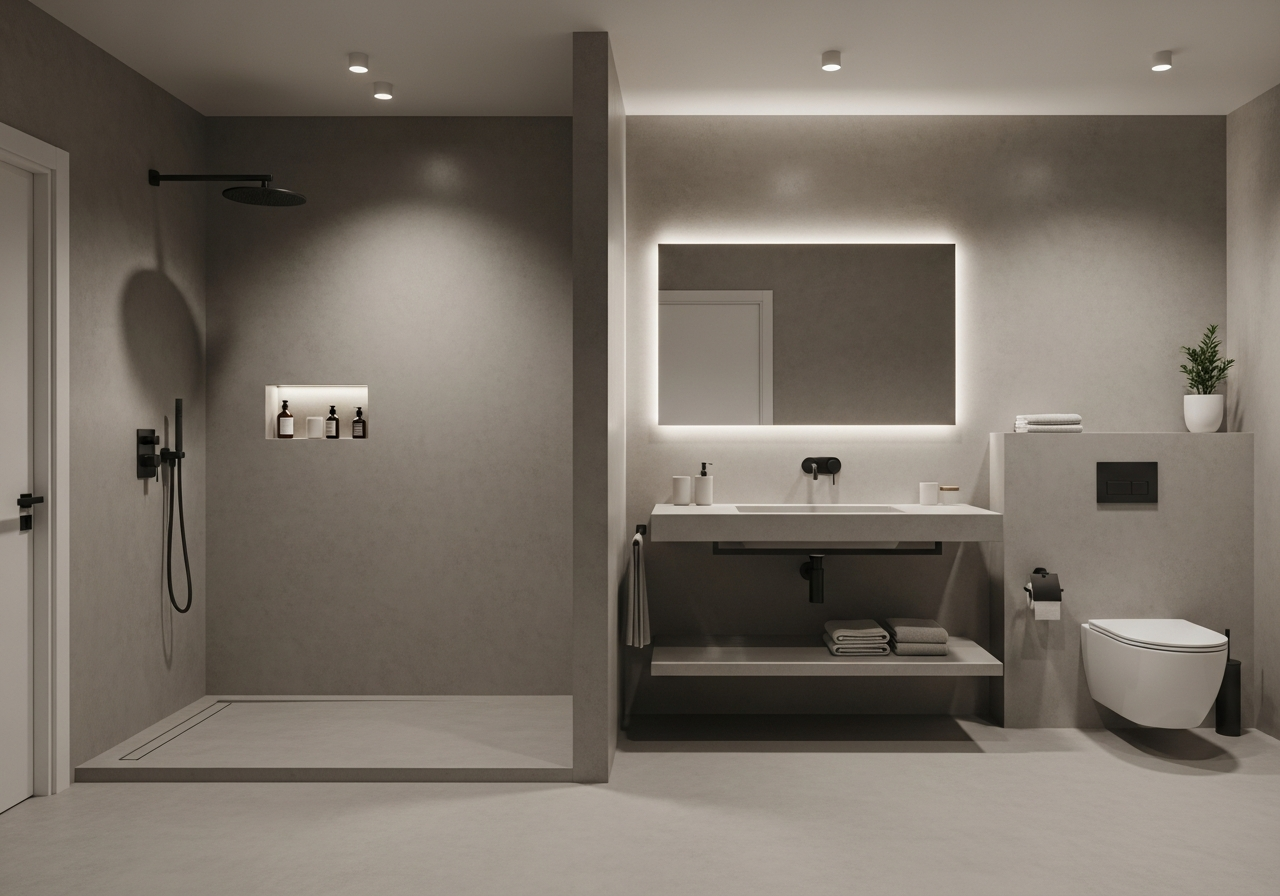
Microcement and Seamless Surfaces
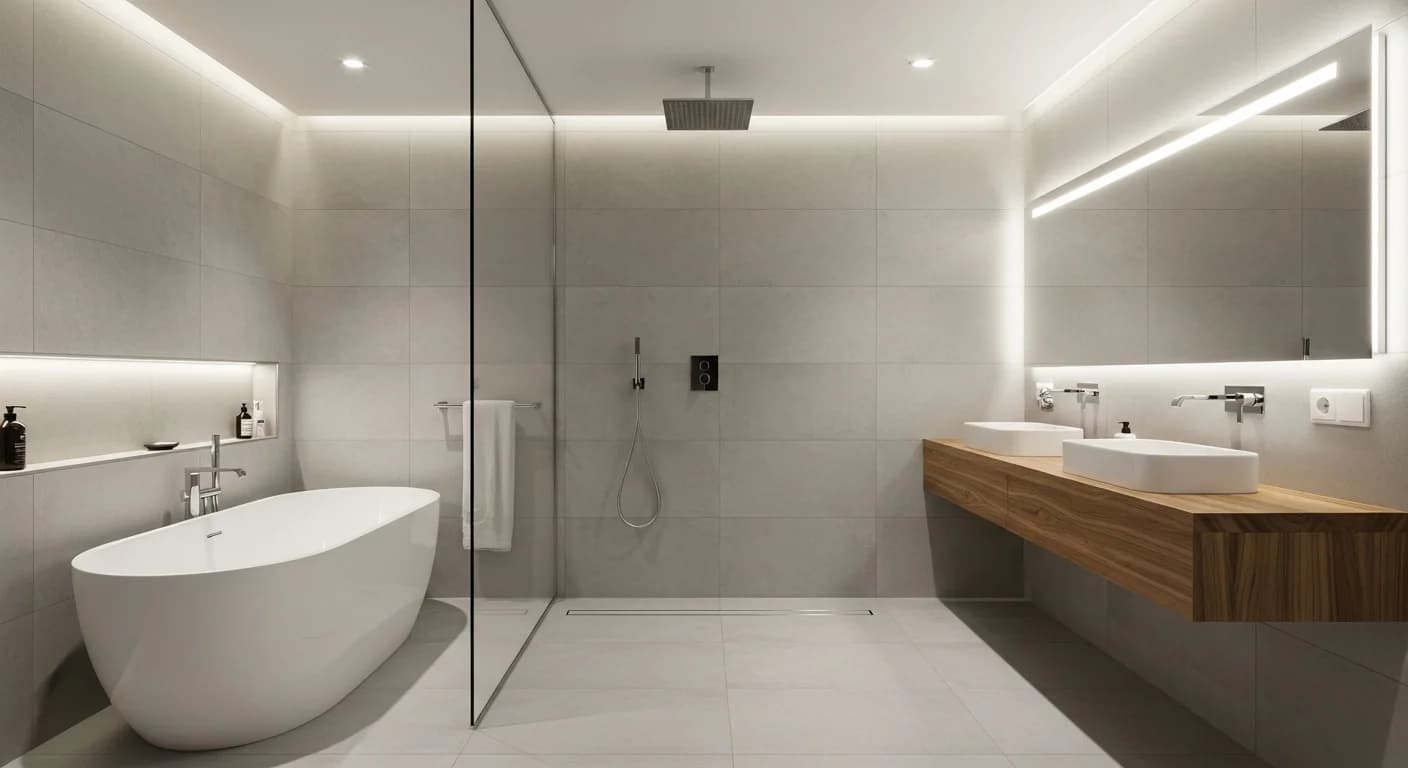
Microcement — a polymer-modified cement coating applied in 2–3mm layers over existing surfaces — has emerged as one of the defining material trends in bathroom trends 2026 design. The appeal is a completely seamless, grout-free surface that can cover walls, floors, shower enclosures, and even vanity tops in a continuous monolithic finish. The visual effect evokes the poured-concrete aesthetic of high-end European spas without the weight, cracking risk, or cold feel of actual concrete.
Available in a range of earthy tones from near-white to charcoal, microcement can be finished in matte, satin, or semi-gloss textures. When sealed with polyurethane, it becomes waterproof and suitable for direct shower contact. Installation costs range from $15–$30 per square foot, making it competitive with premium tile when factoring in the eliminated grout maintenance. The primary limitation is application skill — microcement requires an experienced applicator to achieve a uniform, aesthetically pleasing finish, and the quality difference between professional and amateur application is dramatic.
Alternatives achieving similar seamless effects include tadelakt (traditional Moroccan lime plaster, $20–$40 per square foot), large-format porcelain slabs (60 x 120 cm panels with minimal joints, $12–$25 per square foot), and epoxy-coated surfaces ($8–$15 per square foot). Each offers the grout-free visual continuity that defines the seamless surface trend while differing in texture, maintenance, and cost. Explore tile options for floors, showers, and walls to compare these surfaces side by side.
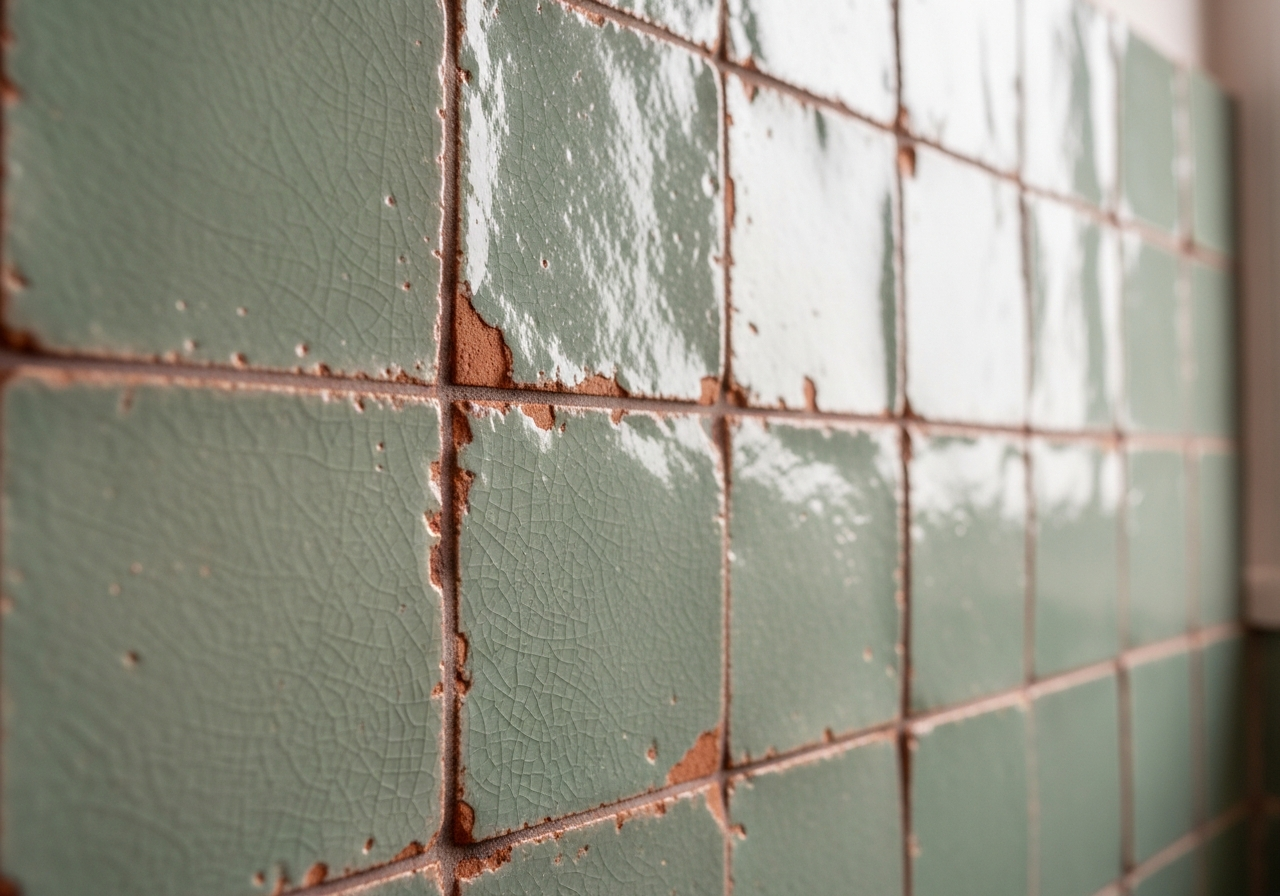
Artisanal and Hand-Painted Tile Revival
Running counter to the seamless surface trend, artisanal tile is experiencing a parallel resurgence as homeowners seek surfaces with handmade character, visual warmth, and individuality. Zellige tile — a Moroccan glazed terra cotta with characteristic surface undulations, color variation, and slight irregularity — has become the signature artisanal tile of the 2020s, and demand continues to accelerate into 2026. Each zellige tile is hand-cut and hand-glazed, producing a surface that shifts with light and cannot be replicated by machine.
Beyond zellige, hand-painted tile in Delft blue-and-white motifs, Portuguese azulejo patterns, and original contemporary designs is appearing in designer bathrooms as accent walls, shower niches, and floor borders. These tiles function as art installations within the bathroom, adding a layer of cultural reference and craftsmanship that mass-produced tile cannot achieve. Pricing reflects the labor intensity: zellige tile runs $15–$45 per square foot (installed), hand-painted decorative tile $25–$80 per square foot, and artisanal ceramic from independent studios $30–$100+ per square foot.
The practical approach for most budgets is to use artisanal tile selectively — a zellige shower niche ($200–$500 for a standard niche), a hand-painted accent strip ($300–$800 for a single row), or a feature wall behind the vanity ($500–$2,000) — rather than covering entire surfaces. This creates a focal point that feels intentional and curated rather than overwhelming, and it manages costs while maximizing visual impact.
Soft Curves and Sculptural Stone
The angular, sharp-edged aesthetic of recent minimalism is softening into organic curves, rounded edges, and sculptural forms. Curved vanity cabinets with rounded corners, oval and asymmetric mirrors, rounded-edge countertops, pill-shaped shower niches, and sculptural freestanding basins are replacing their rectilinear predecessors. This shift reflects a broader design movement toward biomorphic forms — shapes inspired by natural organisms rather than geometric precision.
Sculptural stone basins carved from single blocks of marble, travertine, or onyx represent the premium expression of this trend, with vessels ranging from $800 to $5,000 depending on stone type, size, and complexity. More accessible options include composite stone basins with organic forms ($200–$800), curved-edge solid surface countertops ($300–$1,200 installed), and softened-edge tile profiles that eliminate sharp grout lines. The visual effect across all price points is a bathroom that feels gentler, more approachable, and less institutional.
Furniture-Style Vanities with Warm Wood
The built-in, wall-to-wall vanity cabinet is yielding to furniture-style vanities that look like they belong in a living room rather than a bathroom. These freestanding or wall-mounted pieces feature warm wood species — white oak, walnut, and ash are leading the category — with visible grain, fluted or reeded door fronts, tapered or turned legs, and hardware that references furniture traditions rather than kitchen cabinetry. The bathroom vanity design guide covers style, storage, and sizing for every configuration.
The trend reflects a desire to make bathrooms feel less clinical and more like an extension of the home's living spaces. A white oak vanity with a stone vessel sink, positioned on visible legs with an open lower shelf, reads as an intentional furniture selection rather than a contractor-grade installation. Pricing for quality furniture-style vanities ranges from $800–$3,000 for manufactured options (Restoration Hardware, West Elm, Pottery Barn) to $3,000–$10,000+ for custom millwork. Floating (wall-mounted) furniture vanities add the benefit of easy floor cleaning and a visually lighter footprint that makes small bathrooms feel more spacious.
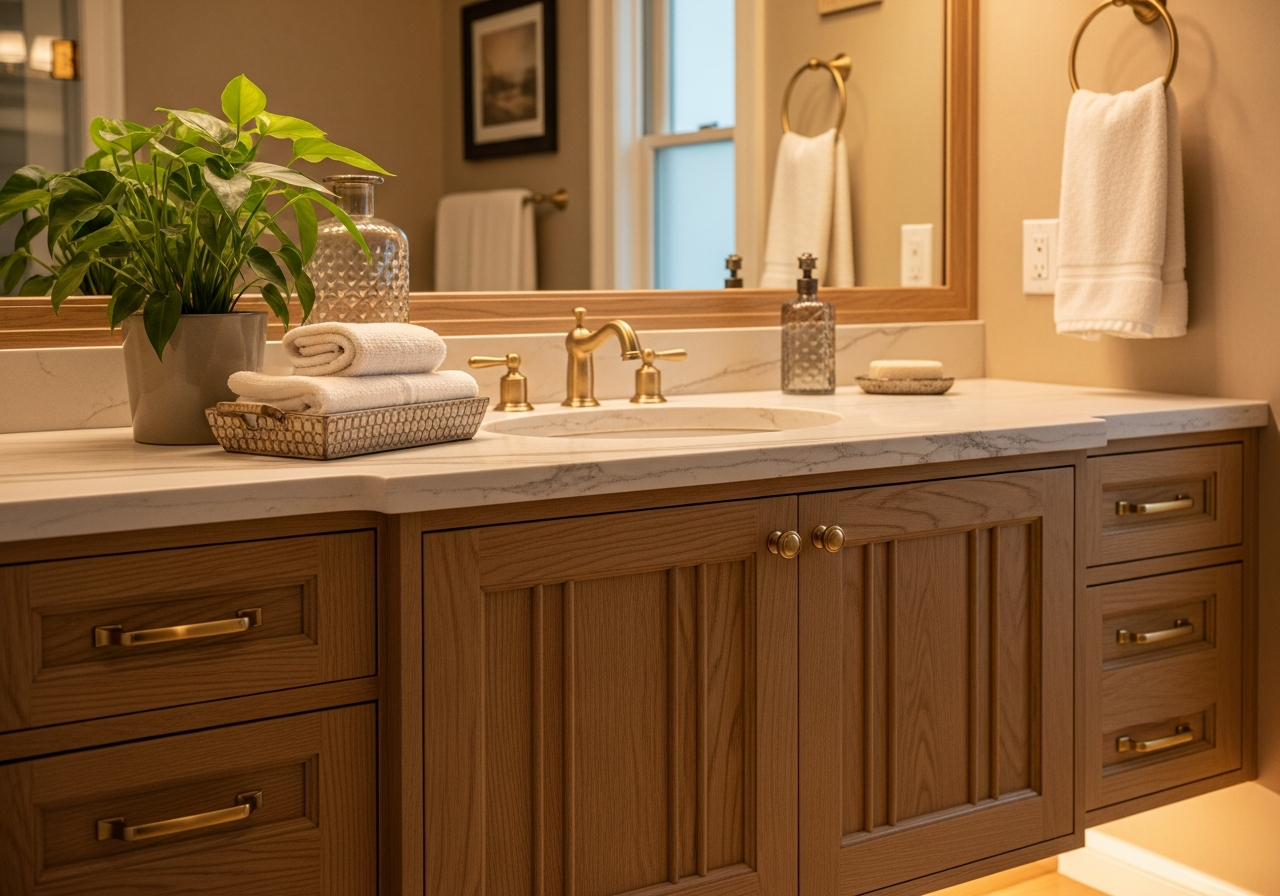
Matte Finishes Over High Gloss
Glossy surfaces — polished chrome fixtures, high-sheen tile, lacquered cabinets — are being replaced by matte, brushed, and textured finishes across every bathroom surface category. Brushed brass, champagne bronze, brushed nickel, and matte black have overtaken polished chrome as the preferred fixture finishes, with designers citing their ability to conceal water spots, fingerprints, and daily wear. Matte-finish tile absorbs light rather than reflecting it, creating a softer, more sophisticated atmosphere that photographs beautifully and lives even better.
The practical advantage of matte finishes extends beyond aesthetics. Matte surfaces require less frequent cleaning (no water spot visibility), develop a graceful patina rather than showing scratches, and pair more naturally with the warm earthy color palettes and natural materials that define 2026 bathroom design. The one area where gloss retains an advantage is in very small, dark bathrooms, where reflective surfaces help bounce available light. In all other contexts, matte finishes deliver a more contemporary, luxury-signaling result. When selecting finishes for a comprehensive remodel, the master bathroom luxury features guide details how to coordinate matte metals, stone, and tile for a cohesive palette.
Colored Fixtures and Dopamine Decor
The "dopamine decor" movement — using bold, joyful color to elevate mood — has arrived in the bathroom with colored fixtures, fittings, and sanitaryware that challenge the white-fixture orthodoxy. Pistachio green toilets and basins, butter yellow freestanding tubs, terracotta-colored concrete sinks, pastel pink vanity cabinets, and candy-colored faucets in cobalt blue or sage green are appearing in designer projects and manufacturer catalogs with increasing frequency.
Brands leading this movement include Kohler (offering 30+ fixture colors including Biscuit, Almond, and custom-matched options), Duravit (pastel-colored ME by Starck collection), and boutique producers like Kast Concrete Basins (hand-poured concrete sinks in 50+ colors). The investment risk is real — a $3,000 pistachio green toilet is significantly harder to resell than a white one — so designers recommend expressing color through fixtures that are easier to replace: faucets ($200–$800), basin vessels ($300–$1,500), and cabinet paint (reversible at minimal cost) rather than toilets and built-in tubs. View real bathroom transformations to see how bold color choices translate from rendering to reality.
Smart Bathroom Technology
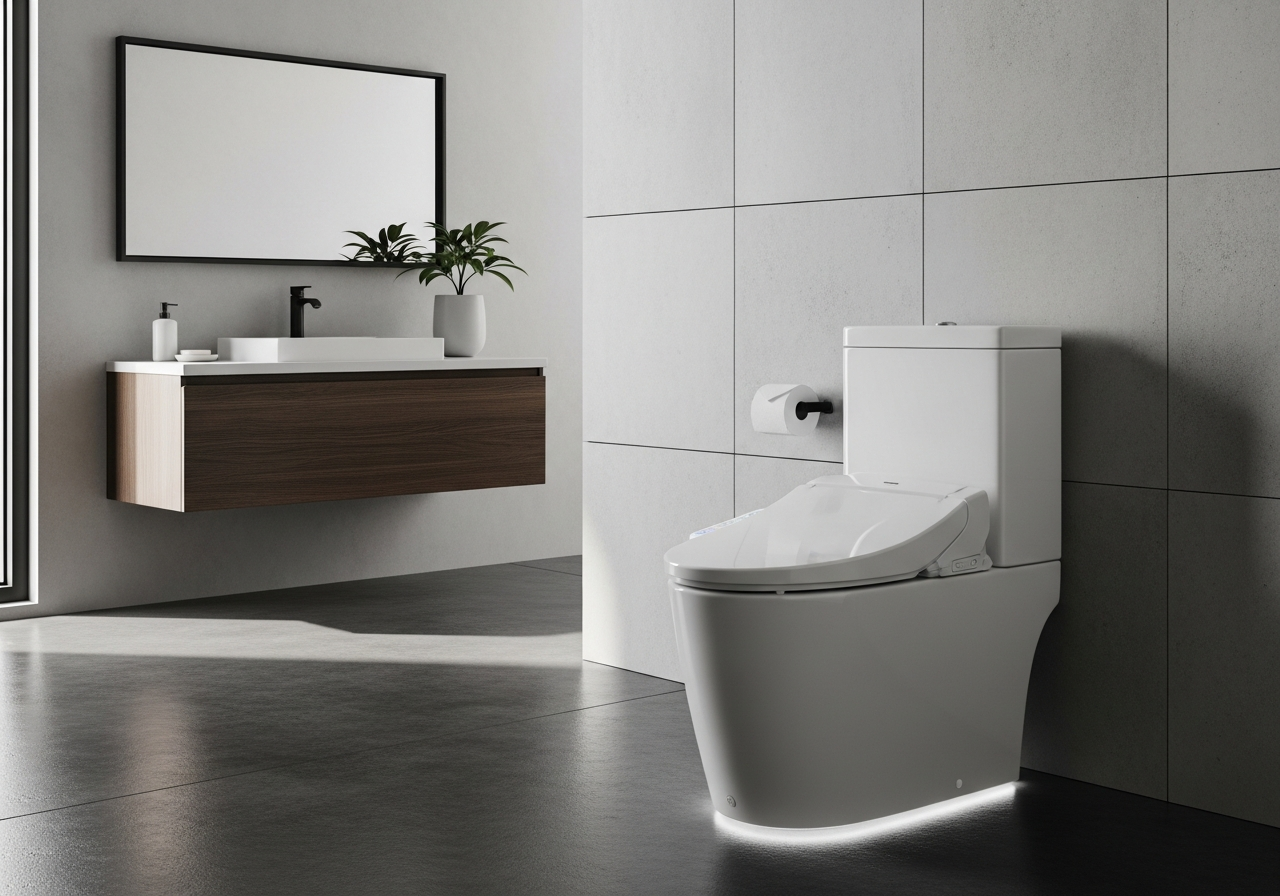
Smart toilets have crossed the threshold from luxury novelty to mainstream adoption, with 51% of interior designers reporting that they specify bidet-equipped smart toilets in the majority of their bathroom projects. The value proposition has matured beyond the initial fascination with heated seats: integrated bidets provide superior hygiene with reduced toilet paper consumption (saving $100+/year per household), self-cleaning functions reduce maintenance, and nightlight features eliminate the need for overhead lighting during nighttime use.
Leading smart toilet models include the TOTO Neorest ($5,000–$12,000), Kohler Veil ($4,000–$7,000), and budget-friendly options like the BioBidet Discovery DLS ($1,500–$2,500) and TOTO Washlet+ systems ($800–$1,500 for the seat attachment). Touchless flush activation, adjustable water temperature and pressure, warm air drying, deodorization, and automatic lid operation are standard features across the category. Installation typically requires a nearby GFCI electrical outlet — a $200–$400 electrician visit if one does not exist.
Beyond smart toilets, bathroom trends 2026 in technology include thermostatic digital shower systems (Kohler DTV+, Moen U by Moen) that allow temperature and flow control via smartphone or voice command ($1,000–$4,000), motion-sensor faucets for residential use ($200–$600), and smart mirrors with integrated lighting, defogging, and display capabilities ($500–$2,000). The common thread is technology that enhances convenience and hygiene without requiring user interaction — the best smart bathroom features are the ones that work silently in the background.
Spa-Like Wellness Features as Standard
Features that were considered luxury spa upgrades five years ago — radiant heated floors, rainfall showerheads, steam shower capability, and chromatherapy lighting — are becoming standard specifications in mid-range and above bathroom remodels. Heated floors lead the category, with 73% of designers including radiant heating in primary bathroom designs. The technology is mature, the costs are modest ($6–$16 per square foot installed), and the daily comfort impact is high enough that homeowners consistently rate it as the single renovation feature they would never give up.
Rainfall showerheads (10–12 inch diameter, ceiling-mounted or wall-arm) have moved from specialty to standard, with quality options available from $150–$500 and installation requiring only a standard shower arm connection. Steam shower capability adds $5,000–$15,000 but is increasingly requested in primary bathrooms over 80 square feet, particularly in colder climates where the therapeutic benefit is used 6+ months per year. Chromatherapy LED systems ($300–$1,500) and built-in waterproof speakers ($200–$600) round out the wellness feature set that defines the modern primary bathroom as a daily retreat rather than a utilitarian space. Consult current pricing information to budget for wellness features in your renovation plan.
Lamps and Layered Lighting
One of the most distinctive bathroom trends 2026 is the introduction of table lamps, cordless rechargeable sconces, and decorative pendant lights into bathroom spaces. This approach, long standard in European bathrooms, challenges the recessed-downlight-plus-vanity-bar formula that has dominated American bathroom lighting for decades. A ceramic table lamp on a vanity shelf, a pair of cordless sconces flanking the tub, or a linen pendant over a freestanding tub transforms the bathroom's atmosphere from institutional to residential.
Safety considerations are straightforward: lamps and decorative fixtures must be placed outside the shower and tub "wet zones" (defined as within 3 feet of the water source), plugged into GFCI-protected outlets, and UL-rated for damp locations if within 8 feet of a water source. Cordless rechargeable sconces (from brands like Lumio, Auxmir, and various Etsy artisans, $30–$300) eliminate electrical requirements entirely and can be repositioned at will. The bathroom lighting guide covering function and ambiance provides detailed placement specifications for every fixture type.
Circadian lighting systems — fixtures that automatically adjust color temperature from energizing cool-white (5000K) in the morning to relaxing warm-amber (2200K) in the evening — represent the technology intersection of the lighting trend. Ketra, Lutron, and LIFX all offer circadian-capable bulbs and fixture systems that can be programmed for bathroom-specific schedules, supporting the body's natural sleep-wake cycle through light exposure. Installed costs range from $500 for a few smart bulbs to $3,000+ for a comprehensive circadian system.
Traditional Features Making a Comeback
After a decade of minimalism, traditional bathroom features are returning with updated proportions and modern material execution. Drop-in bathtubs (set into a tiled surround or platform) are being rediscovered as an alternative to freestanding tubs, offering integrated storage ledges, a more architectural feel, and lower installed costs ($800–$3,000 versus $1,500–$8,000 for comparable freestanding models). Built-in shower niches with arched or recessed detailing reference classical architecture while providing practical storage.
Washstands — open-frame vanity structures with visible plumbing, a stone or marble top, and towel storage below — are appearing in guest bathrooms and powder rooms as a nod to Victorian-era bathroom design with contemporary proportions. Pedestal sinks, long dismissed as storage-deficient, are returning in updated sculptural forms that serve as design statements in small powder rooms where storage needs are minimal. Clawfoot and slipper tubs, once relegated to antique stores, are available in new production from brands like Victoria + Albert and Cheviot ($2,000–$6,000) with modern drain systems and optional jetted interiors. Delft-style blue-and-white tile, wainscoting, and beadboard wall treatments all signal a broader comfort with historical references applied with contemporary restraint.
What's Going OUT in 2026
Understanding which trends are declining is as valuable as knowing which are ascending. The following design elements are being actively removed or avoided by designers in 2026 bathroom projects:
- All-white bathrooms: The sterile, all-white bathroom that dominated the 2015–2022 era is being replaced by warm neutrals, earthy tones, and color accents that add personality and warmth
- Polished chrome fixtures: Brushed brass, champagne bronze, matte black, and brushed nickel have overtaken chrome as the preferred fixture finishes
- Glossy subway tile (3 x 6): While subway tile remains versatile, the specific glossy-white 3 x 6 format feels generic — designers are choosing larger formats, matte finishes, or artisanal alternatives
- Open shelving for daily storage: Exposed toiletries and cleaning supplies undermine the spa aesthetic — closed storage with clean exteriors is preferred
- Vessel sinks on flat countertops: Once trendy, these configurations create splash issues and cleaning difficulties — integrated or undermount basins are regaining favor
- Gray LVP (luxury vinyl plank) flooring: The gray faux-wood floor that appeared in every flip and rental is being replaced by warm-toned tile, natural stone, and engineered hardwood
- Matching fixture suites: Buying every fixture from the same manufacturer in the same finish feels formulaic — mixing metals and brands creates a more curated, designed appearance
Frequently Asked Questions
Which 2026 bathroom trend has the best ROI for resale?
Heated floors consistently deliver the highest ROI among trending features, with 80–90% cost recovery at resale and near-universal buyer appeal. Warm neutral color palettes and frameless glass shower enclosures also perform well because they appeal broadly without alienating buyers with strong color preferences. Smart toilets are gaining resale value as market awareness grows, particularly in luxury and move-up markets.
Are colored bathroom fixtures a risky investment?
Colored toilets and built-in tubs carry more resale risk than colored faucets, vessels, and paint — because they are expensive and difficult to replace. Express bold color through easily changeable elements (cabinet paint, faucets, accessories, textiles) and keep permanent fixtures in neutral colors unless the property will be held long-term or the buyer pool strongly favors distinctive design.
How do you incorporate 2026 trends without a full renovation?
The most impactful trend-forward updates that do not require a full renovation include: repainting walls in a warm earthy tone ($200–$500), replacing hardware with brushed brass or champagne bronze ($50–$200), adding a furniture-style mirror ($100–$500), introducing a table lamp or cordless sconce ($30–$300), swapping a polished chrome showerhead for a matte black rainfall model ($80–$300), and adding plants and warm-toned textiles ($50–$200). These updates shift the bathroom's character from generic to current for under $1,500 total.
Is microcement suitable for shower walls?
Yes, when properly sealed with waterproof polyurethane coating. Microcement performs well in shower environments, but application quality is critical — an experienced applicator who specializes in wet-area microcement is essential. Request references specifically from shower installations, and verify that the product system includes a waterproof sealer rated for continuous water exposure. Expect to reseal every 2–3 years for maintained performance. The tile and surface guide compares microcement with other seamless shower options.
Try These Trends with HanoDecor
Trend research is valuable, but seeing how 2026 trends translate into your specific bathroom is transformative. The HanoDecor bathroom remodel visualizer lets you upload a photo of your current space and preview warm earthy palettes, furniture-style vanities, matte finishes, seamless surfaces, and modern fixture styles in your actual bathroom. Test whether sage green walls work with your existing tile. See how a freestanding tub changes the room's proportions. Compare brushed brass and matte black fixtures side by side — all before purchasing a single sample. Start exploring 2026 trends in your space today.
Bathroom Trends 2026 FAQs
Written by
Emily Rodriguez
Interior Design Editor covering living spaces, styling trends, and room makeovers. Former Architectural Digest contributor with a focus on accessible, budget-conscious design.