Bathroom Flooring Options: Best Materials for Wet, High-Traffic Spaces
Quick Summary
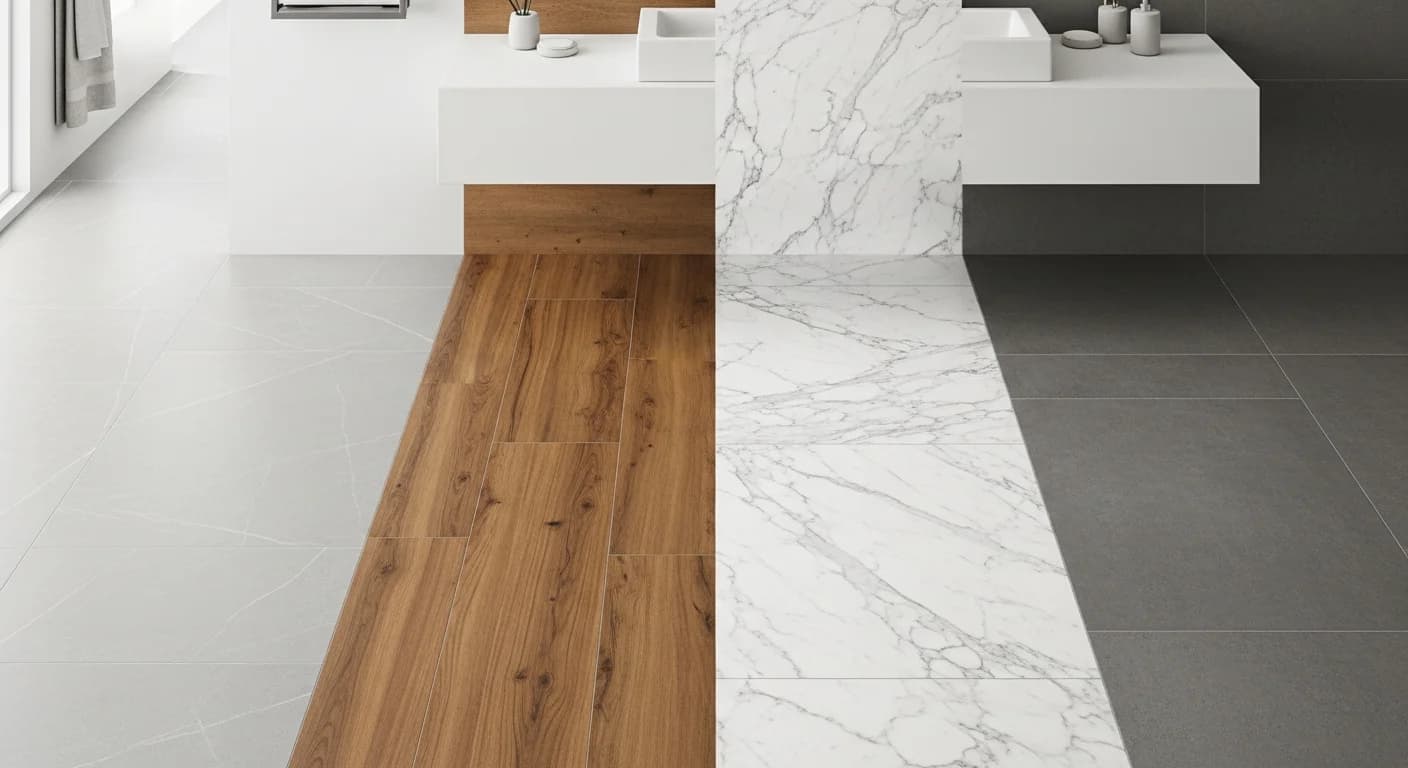
Choosing the right bathroom flooring means balancing water resistance, slip safety, durability, comfort, and aesthetics. In this guide, we compare eight bathroom flooring options — from the industry-standard porcelain tile floor to budget-friendly ceramic tile, waterproof luxury vinyl plank (LVP/LVT), natural stone like marble and travertine, seamless concrete and microcement, and alternative materials including terrazzo, cork, and rubber. Each section covers installed costs, maintenance needs, radiant heat compatibility, and real-world performance so you can choose the best material for your wet, high-traffic space. Use the comparison table near the end to see all eight materials rated side-by-side on the criteria that matter most.
What to Look for in Bathroom Flooring
Bathroom floors endure conditions no other room in the house can match — standing water, high humidity, temperature swings, and constant foot traffic. Before comparing specific materials, evaluate every option against six critical performance criteria.
Water resistance is the single most important factor. A bathroom floor must handle splashes, drips, and puddles without warping, staining, or allowing moisture to reach the subfloor. Materials rated as waterproof — meaning zero water absorption through the surface — outperform those labeled merely water resistant, which may degrade if water sits on seams or edges.
Slip safety determines how secure the floor feels underfoot when wet. The industry standard measurement is the Dynamic Coefficient of Friction (DCOF), and the minimum recommended value for wet areas is 0.42. Textured finishes, matte surfaces, and smaller tile formats with more grout lines all improve traction.
Durability matters because bathrooms see daily use from every household member. Look for materials rated for high foot traffic, and consider scratch resistance if you have pets. Porcelain rated PEI Class 3 or higher handles residential bathrooms easily, while softer materials like cork require more careful handling.
Comfort underfoot is often overlooked during the selection process but affects daily satisfaction dramatically. Hard materials like porcelain and natural stone feel cold in winter months unless paired with radiant floor heating. Luxury vinyl plank and cork offer inherent warmth and cushion, making them more comfortable for bare feet without supplemental heating.
Aesthetics drive most homeowner decisions, and fortunately today's bathroom flooring options span every design style. Wood-look porcelain and LVP deliver the warmth of hardwood without the moisture risk. Marble and travertine bring timeless luxury. Microcement and concrete create seamless, modern surfaces. The key is matching the material's visual character to your overall bathroom tile and design plan.
Radiant heat compatibility has become a top consideration as heated bathroom floors grow in popularity. Porcelain tile and natural stone conduct heat efficiently, making them ideal for electric mat or hydronic radiant systems. LVP works with low-temperature radiant heat but has upper limits. Cork and rubber are natural insulators and pair poorly with in-floor heating. Always verify the manufacturer's maximum temperature rating before installing any material over a heated subfloor.
Porcelain Tile — The Gold Standard
Porcelain tile dominates bathroom flooring for good reason. Fired at temperatures above 2,200 degrees Fahrenheit, porcelain achieves a water absorption rate below 0.5 percent — effectively making it waterproof. It resists stains, scratches, and chemicals, and it performs beautifully with radiant floor heating systems. For most bathroom remodels, porcelain tile delivers the best combination of performance, longevity, and design flexibility.
Types: Through-Body, Glazed, and Textured
Through-body porcelain carries its color and pattern through the entire thickness of the tile. If the surface chips, the damage is virtually invisible because the exposed layer matches the surface. This makes through-body porcelain ideal for high-traffic bathroom floors.
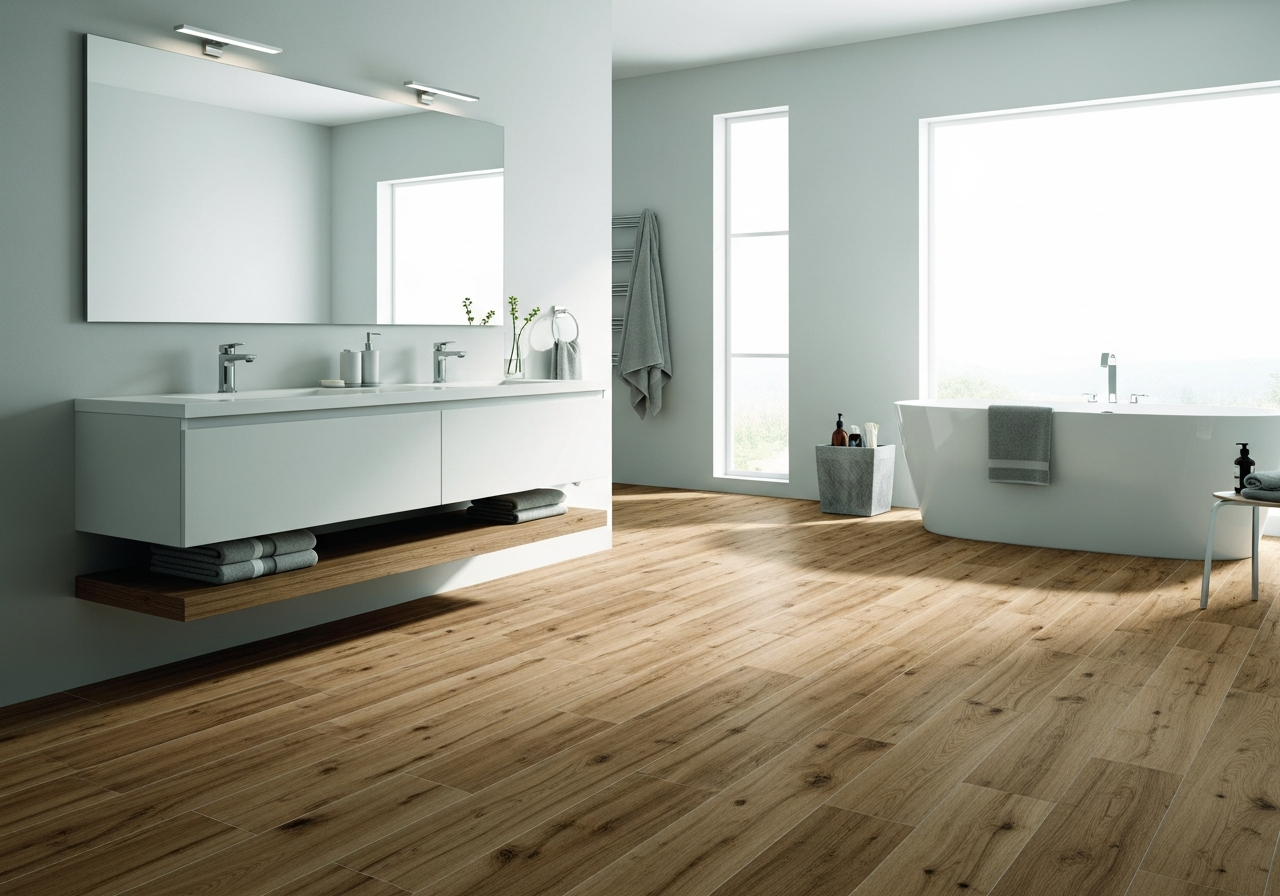
Glazed porcelain features a decorative coating fired onto the tile surface, allowing manufacturers to produce stunning wood-look, marble-look, and concrete-look designs with photographic realism. Deep chips can reveal the clay body beneath, but glazed porcelain rated PEI Class 3 or higher provides excellent wear resistance for residential bathroom use.
Textured porcelain adds surface relief — from subtle linen textures to pronounced slate or wood-grain embossing — specifically to increase slip resistance. Textured finishes can achieve DCOF values of 0.60 or higher, well above the 0.42 minimum for wet areas. If slip safety is your primary concern, textured porcelain is the strongest option as explored in our bathroom tile guide.
Size Options and Trends
Tile size dramatically affects both the visual feel and maintenance of your bathroom floor. Large-format porcelain tiles — 24x24 inches and larger — create a seamless, spacious look with fewer grout lines to clean. Rectified edges allow for narrow grout joints as slim as 1/16 inch, enhancing the continuous-surface appearance popular in modern bathroom designs.
Smaller formats — hexagons, 4x4, and penny rounds — add visual texture and increase slip resistance through additional grout lines, making them excellent choices for shower floors and compact bathrooms. Wood-look plank porcelain in 6x36 or 8x48 formats continues to trend upward, replicating the warmth of hardwood while delivering full waterproof performance.
Cost: $3 to $15 Per Square Foot
Porcelain tile ranges from approximately $3 per square foot for basic glazed tiles to $15 or more per square foot for large-format, through-body, or designer-series options. Installation adds $5 to $12 per square foot depending on tile size, pattern complexity, and subfloor preparation. A typical 50-square-foot bathroom floor costs between $400 and $1,350 for materials and installation combined. Factor in underlayment, mortar set, and grout, and budget approximately $600 to $1,800 all-in. For a full cost breakdown of your bathroom project, see our 2026 bathroom remodel pricing guide.
Ceramic Tile — Budget-Friendly Classic
Ceramic tile shares many qualities with porcelain but at a lower price point, making it an attractive bathroom flooring option for budget-conscious remodels. Fired at lower temperatures than porcelain, ceramic tile has a slightly higher water absorption rate — typically between 0.5 and 3 percent. This means ceramic is water resistant rather than fully waterproof, which is perfectly adequate for most bathroom floors when properly installed with sealed grout.
Where ceramic tile truly shines is in variety and affordability. Materials cost between $1 and $7 per square foot, and installation runs $4 to $8 per square foot. For a 50-square-foot bathroom, you could complete the entire floor for as little as $250 to $750 — roughly half the cost of porcelain.
The limitations are worth understanding. Ceramic tile is softer and more prone to chipping than porcelain, and the lower density means it can crack if the subfloor flexes. For upper-story bathrooms with wood subfloors, reinforce the substrate with cement backer board and an uncoupling membrane. Ceramic tile works with radiant floor heating, though it warms slightly more slowly than porcelain or stone. If your remodel prioritizes value and you have a stable subfloor, ceramic tile delivers solid performance at the best price in the category.
Luxury Vinyl Plank and Tile (LVP/LVT)
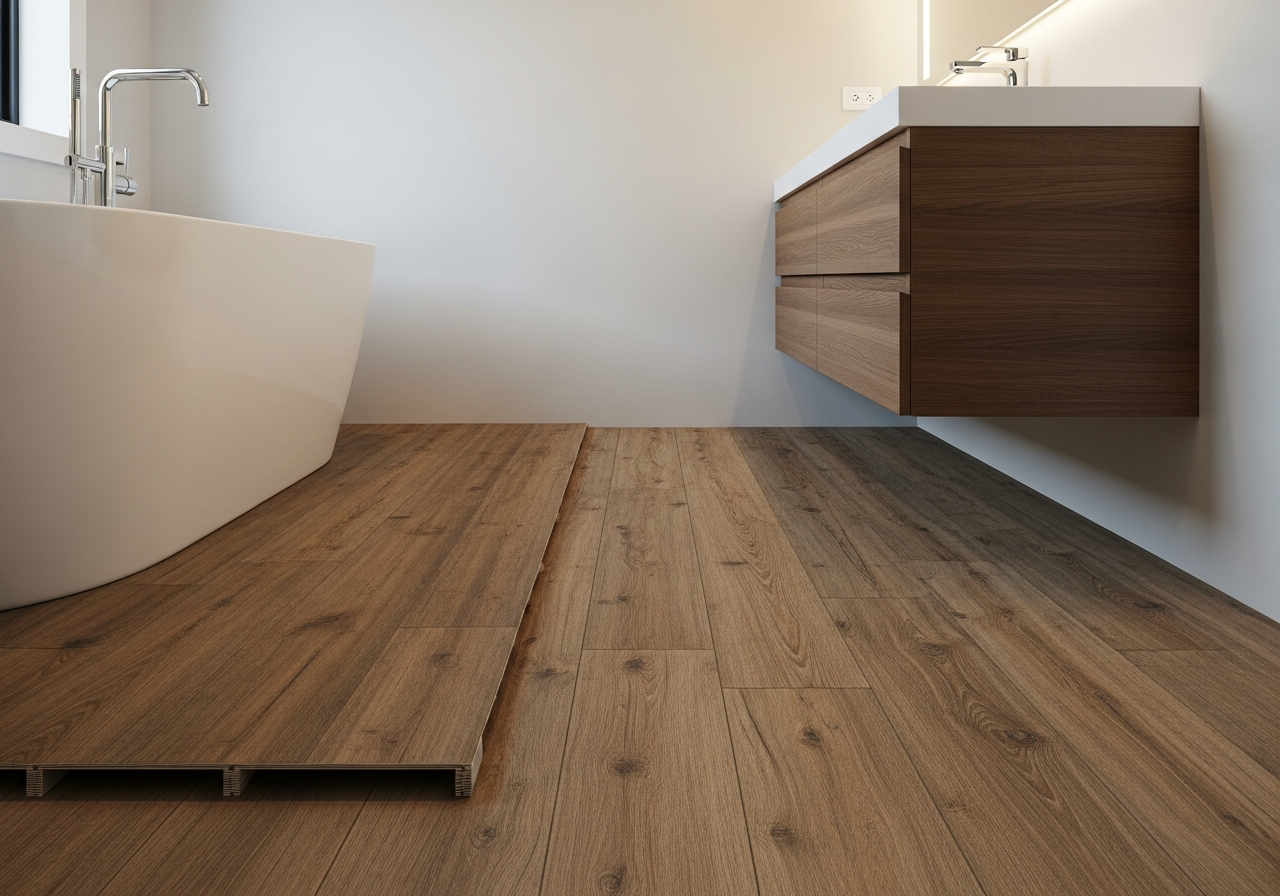
Luxury vinyl plank and luxury vinyl tile have revolutionized bathroom flooring over the past decade. Modern LVP and LVT feature a rigid or semi-rigid waterproof core — typically stone polymer composite (SPC) or wood polymer composite (WPC) — that makes them completely impervious to water penetration. Unlike ceramic or porcelain, where grout joints can allow moisture migration, LVP's click-lock installation creates a continuous floating floor barrier that protects the subfloor below.
The visual quality of today's luxury vinyl is remarkable. High-definition printing and embossed-in-register textures produce wood grain and stone patterns difficult to distinguish from the real materials they replicate. You can find LVP in oak, walnut, hickory, marble, slate, and concrete looks — covering virtually every design aesthetic.
Comfort is where LVP and LVT genuinely outperform tile and stone. The core material provides inherent cushion and warmth underfoot, and many products include attached underlayment pads for sound dampening. LVP works well without radiant heating, though it is compatible with low-temperature systems (maximum 85 degrees Fahrenheit at the floor surface).
Installation is another major advantage. LVP's click-lock floating floor system requires no mortar, no grout, and no special tools. A handy homeowner can install a bathroom floor in a single afternoon, and planks install over most existing flat subfloors — including concrete, plywood, and even existing tile.
Cost ranges from $2 to $7 per square foot for materials, with installation at $3 to $6 per square foot. For a 50-square-foot bathroom, expect $250 to $650 total — competitive with ceramic tile and significantly less than porcelain or natural stone. The main limitation is that LVP does not add the same resale value premium as tile or stone in higher-end homes. For guest baths, kids' bathrooms, and basement bathrooms, LVP is an excellent choice.
Natural Stone (Marble, Slate, Travertine)
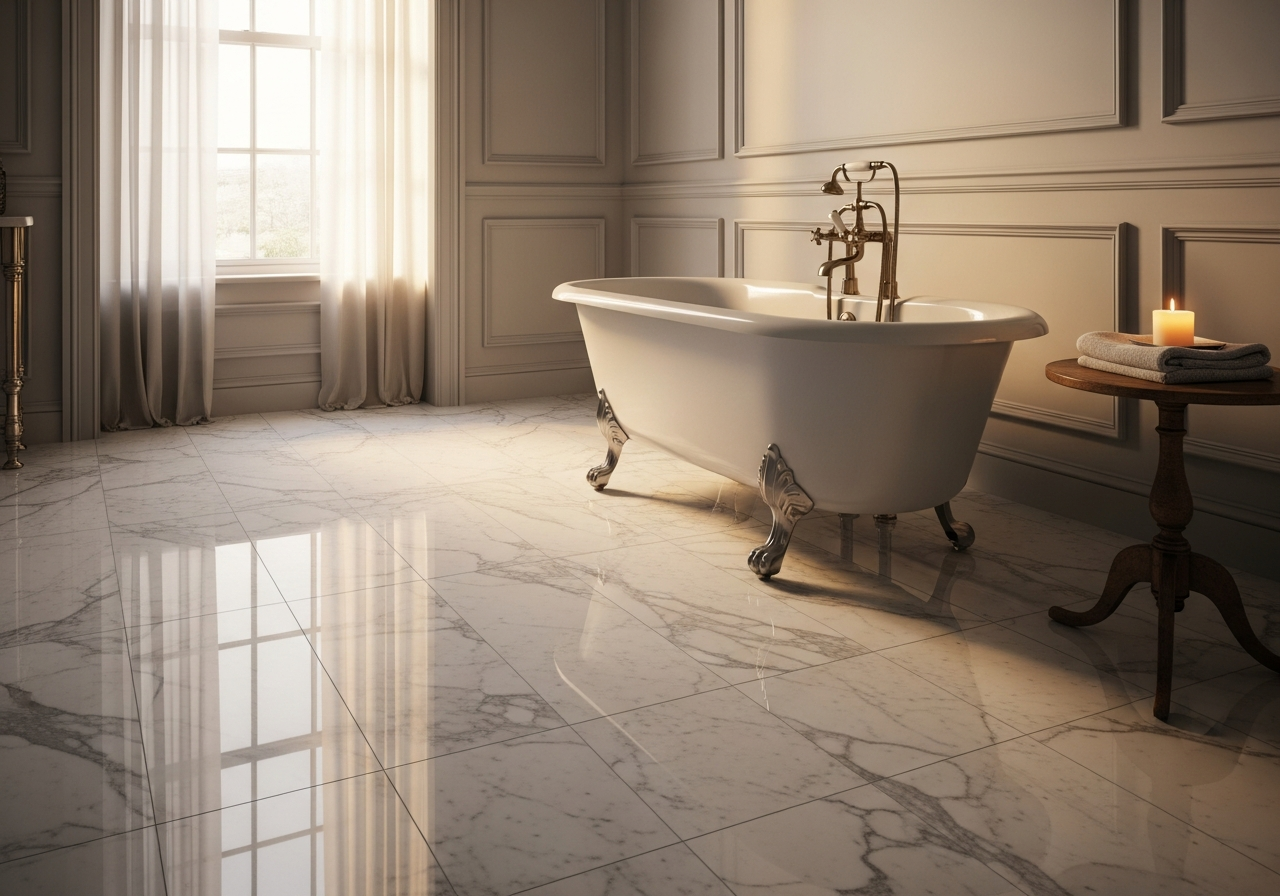
Nothing matches the visual impact and tactile luxury of a natural stone bathroom floor. Each slab or tile is geologically unique, offering veining patterns, color variations, and surface textures that manufactured materials can only approximate. For homeowners designing a high-end primary bathroom or spa-inspired retreat, natural stone remains the aspirational choice — and as our materials comparison guide details, the investment can significantly boost perceived home value.
Marble is the most iconic natural stone for bathroom floors. Carrara, Calacatta, and Statuario varieties feature the classic white-and-gray veining that defines luxury bathroom design. Marble is softer than porcelain (rating 3 to 5 on the Mohs hardness scale), meaning it can scratch and etch from acidic cleaners and hard water. A honed or matte finish is strongly recommended over polished marble in bathrooms — it hides minor wear and provides improved slip resistance when wet.
Slate offers rich, layered textures with earthy tones ranging from charcoal and deep blue to rustic copper and forest green. Slate's naturally cleft surface provides excellent slip resistance, often exceeding DCOF 0.60 without additional treatment. It is denser and more stain-resistant than marble, making it lower-maintenance in a wet environment.
Travertine brings warm, creamy tones and classic Mediterranean character to bathroom floors. Available in filled, honed, tumbled, and brushed finishes, travertine works beautifully in traditional and transitional designs. Its naturally porous structure requires thorough sealing — both before grouting and periodically every one to two years — to prevent water absorption and staining.
All natural stone bathroom floors require professional sealing upon installation and regular resealing every one to three years. Stone tile materials range from $5 to $30 per square foot, with installation at $8 to $20 per square foot. A 50-square-foot marble floor bathroom project typically runs $650 to $2,500 installed.
Concrete and Microcement
Concrete and microcement floors deliver the seamless, groutless aesthetic that defines contemporary and industrial bathroom design. With no tile joints, no grout lines, and no repeating patterns, these materials create a continuous surface that makes any bathroom feel larger and more cohesive.
Polished concrete works best in ground-floor bathrooms built on concrete slabs. The existing slab is ground, polished, and sealed to create a smooth, durable surface. Concrete resists scratches, impact, and chemical exposure indefinitely, but it is hard, cold, and unforgiving underfoot — making radiant floor heating almost essential for comfort.
Microcement (also called micro-topping) is a thin cementitious coating — typically 2 to 3 millimeters thick — that can be applied over existing tile, concrete, or plywood. This makes microcement an excellent retrofit option for bathroom renovations where removing old flooring is impractical. Applied by a skilled artisan, microcement produces a smooth, hand-troweled surface with subtle depth that no manufactured tile can replicate.
Both concrete and microcement require sealing with polyurethane or epoxy topcoats to achieve waterproof performance. Sealed properly, a concrete floor is fully waterproof, easy to clean, and virtually maintenance-free beyond periodic resealing every three to five years. Polishing an existing slab costs $3 to $8 per square foot; microcement runs $10 to $25 per square foot. Both materials are heated floor compatible and conduct radiant warmth efficiently.
Alternative Options: Terrazzo, Cork, and Rubber
Beyond the mainstream choices, three alternative materials deserve consideration for bathroom floors — each bringing unique advantages that the traditional options cannot match.
Terrazzo is experiencing a major revival in bathroom design. This composite material — marble, quartz, glass, or granite chips suspended in a cement or resin binder — creates vibrant, speckled surfaces that are extraordinarily durable. Precast terrazzo tiles cost $10 to $25 per square foot, while poured-in-place terrazzo runs $25 to $50 per square foot. Terrazzo is waterproof when sealed, highly scratch resistant, and compatible with radiant heat. The material can last 75 years or more, making it a genuinely lifetime investment.
Cork flooring offers natural warmth, cushion, and antimicrobial properties that make it surprisingly practical for bathrooms. Cork's cellular structure contains suberin, a waxy substance that resists moisture, mold, and mildew. Modern cork bathroom floors use waterproof rigid-core construction with click-lock installation at $3 to $8 per square foot. Cork scratches more easily than hard surfaces and does not pair well with radiant heating due to its insulating properties — best suited for powder rooms and low-traffic baths.
Rubber flooring provides the highest slip resistance of any bathroom flooring material — textured rubber can exceed DCOF 0.90, making it the safest option for wet environments. Rubber is waterproof, cushioned, and sound-absorbing at $2 to $8 per square foot. It is ideal for accessible bathrooms and children's bathrooms where safety is the top priority.
Bathroom Floor Comparison Table
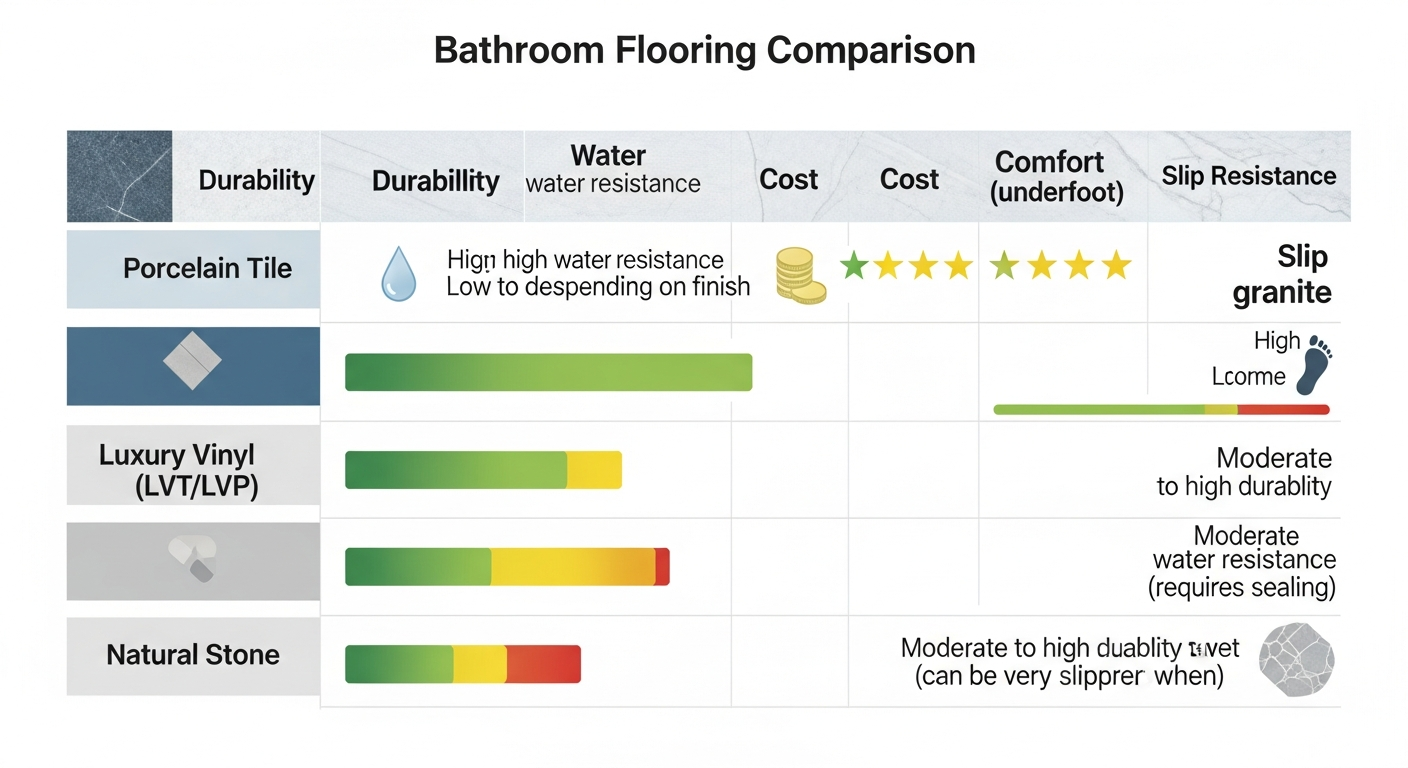
The table below compares all eight bathroom flooring materials across the criteria that matter most for wet, high-traffic spaces. Use it as a quick reference when narrowing your selection. Ratings reflect typical performance across standard residential bathroom applications.
- Porcelain Tile — Water Resistance: Waterproof | Slip Safety: High (textured) | Durability: Excellent | Comfort: Cold/Hard | Aesthetics: Wide range | Radiant Heat: Excellent | Installed Cost: $8-$27/sq ft | Maintenance: Low (reseal grout)
- Ceramic Tile — Water Resistance: Water Resistant | Slip Safety: High (textured) | Durability: Good | Comfort: Cold/Hard | Aesthetics: Wide range | Radiant Heat: Good | Installed Cost: $5-$15/sq ft | Maintenance: Low (reseal grout)
- Luxury Vinyl (LVP/LVT) — Water Resistance: Waterproof | Slip Safety: Moderate-High | Durability: Good | Comfort: Warm/Cushioned | Aesthetics: Realistic wood/stone | Radiant Heat: Low-temp only | Installed Cost: $5-$13/sq ft | Maintenance: Very Low
- Marble — Water Resistance: Needs sealing | Slip Safety: Moderate (honed) | Durability: Moderate (soft stone) | Comfort: Cold/Hard | Aesthetics: Luxury | Radiant Heat: Excellent | Installed Cost: $13-$50/sq ft | Maintenance: High (seal + gentle cleaners)
- Slate — Water Resistance: Needs sealing | Slip Safety: Very High (cleft) | Durability: High | Comfort: Cold/Hard | Aesthetics: Rustic/Natural | Radiant Heat: Excellent | Installed Cost: $10-$40/sq ft | Maintenance: Moderate (seal periodically)
- Travertine — Water Resistance: Needs sealing | Slip Safety: Moderate-High (tumbled) | Durability: Moderate | Comfort: Cold/Hard | Aesthetics: Warm/Classic | Radiant Heat: Excellent | Installed Cost: $10-$35/sq ft | Maintenance: High (seal frequently)
- Concrete/Microcement — Water Resistance: Waterproof (sealed) | Slip Safety: Moderate | Durability: Excellent | Comfort: Cold/Hard | Aesthetics: Seamless/Modern | Radiant Heat: Excellent | Installed Cost: $3-$25/sq ft | Maintenance: Low (reseal every 3-5 years)
- Terrazzo — Water Resistance: Waterproof (sealed) | Slip Safety: Moderate-High | Durability: Excellent | Comfort: Cold/Hard | Aesthetics: Vibrant/Unique | Radiant Heat: Excellent | Installed Cost: $18-$70/sq ft | Maintenance: Low
- Cork — Water Resistance: Water Resistant (sealed core) | Slip Safety: High | Durability: Moderate | Comfort: Warm/Soft | Aesthetics: Natural/Organic | Radiant Heat: Poor (insulating) | Installed Cost: $6-$14/sq ft | Maintenance: Moderate (reseal + avoid scratches)
- Rubber — Water Resistance: Waterproof | Slip Safety: Very High | Durability: High | Comfort: Warm/Cushioned | Aesthetics: Limited | Radiant Heat: Poor | Installed Cost: $4-$14/sq ft | Maintenance: Low
For deeper dives into how these materials compare for shower walls and countertops as well, see our comprehensive bathroom materials comparison.
Slip Safety Ratings Explained (DCOF)
Understanding slip resistance ratings can save you from choosing a beautiful floor that becomes a safety hazard every time someone steps out of the shower. The standard measurement used across the flooring industry is the Dynamic Coefficient of Friction, abbreviated as DCOF.
DCOF measures how much resistance a floor surface provides against a sliding object under wet conditions. A higher DCOF number means more grip and less likelihood of slipping. The American National Standards Institute (ANSI) and the Tile Council of North America (TCNA) set the minimum DCOF value for wet areas at 0.42. ADA-compliant spaces often require higher values, and many designers recommend targeting DCOF 0.50 or above for primary bathroom floors.
Here is how common bathroom flooring materials typically perform on the DCOF scale:
- Textured porcelain tile: 0.50 to 0.80 — exceeds requirements easily
- Rubber flooring: 0.70 to 0.90+ — highest ratings available
- Cleft slate: 0.55 to 0.75 — naturally excellent traction
- Matte ceramic tile: 0.45 to 0.65 — meets requirements
- Honed marble: 0.40 to 0.55 — borderline; choose carefully
- Luxury vinyl plank: 0.42 to 0.55 — generally adequate
- Polished porcelain: 0.25 to 0.40 — often fails wet requirements
- Polished marble: 0.20 to 0.35 — not recommended for wet bathroom floors
When shopping for bathroom flooring, always request the manufacturer's DCOF test results. If a product does not publish DCOF data, treat that as a red flag. For shower floors specifically, choose materials with a DCOF of 0.60 or higher and consider smaller tile formats (2x2 or mosaic) where the additional grout lines add traction. Learn more about tile selection for wet zones in our shower tile patterns and layouts guide.
Frequently Asked Questions
What is the most waterproof bathroom flooring?
Porcelain tile, luxury vinyl plank (LVP), and rubber are the most waterproof options. Porcelain has a water absorption rate below 0.5 percent, while LVP and rubber are completely impervious to water. Natural stone and concrete require sealing to achieve waterproof performance.
Is luxury vinyl plank good for bathrooms?
Yes. Modern LVP with a rigid SPC or WPC core is fully waterproof and performs well in bathrooms. It is warmer underfoot than tile, installs easily with a click-lock floating floor system, and costs less than porcelain or natural stone.
Can you put hardwood floors in a bathroom?
Solid hardwood is not recommended for bathrooms due to moisture vulnerability and mold risk. Choose wood-look porcelain tile or waterproof luxury vinyl plank instead — both deliver convincing wood-grain aesthetics with full waterproof performance.
How do I choose between porcelain and ceramic tile?
Porcelain is denser, harder, and more water-resistant, making it better for primary bathrooms and shower floors. Ceramic tile is a smart budget alternative for guest bathrooms and powder rooms where moisture exposure is lower.
What bathroom flooring works best with heated floors?
Porcelain tile and natural stone conduct and radiate warmth most efficiently with radiant floor heating systems. Concrete and microcement also perform well. LVP is compatible with low-temperature radiant heat (maximum 85 degrees Fahrenheit), while cork and rubber should not be installed over heated subfloors.
What is the cheapest bathroom floor option?
Ceramic tile and vinyl sheet flooring are the most affordable, with installed costs starting around $5 per square foot. LVP offers the best value when factoring in ease of installation, comfort, and waterproof performance. See our 2026 bathroom remodel cost guide for complete budgeting details.
Do I need underlayment for bathroom flooring?
It depends on the material. LVP floating floors often include attached underlayment or require a separate moisture-barrier pad. Tile and stone may need an uncoupling membrane (like Schluter DITRA) over wood subfloors. Always follow the manufacturer's subfloor preparation requirements.
Preview Flooring in Your Bathroom with HanoDecor
Selecting the right bathroom flooring from samples and swatches is difficult — a small chip of porcelain tile cannot convey how the material will look covering your entire floor. With HanoDecor's bathroom remodel visualizer, you can upload a photo of your actual bathroom and preview different flooring materials in your real space before purchasing. See how large-format wood-look porcelain opens up a small bathroom, compare the warmth of travertine against sleek microcement, or test whether dark slate creates the dramatic contrast you envision.
Thousands of homeowners have used HanoDecor to compare bathroom flooring options side by side — eliminating costly guesswork and ensuring the material they choose looks exactly right. Browse our transformation gallery to see real before-and-after results, or explore pricing plans to get started with your own bathroom floor visualization today.
Bathroom Flooring Options FAQs
Written by
Michael Torres
Bathroom and Kitchen Design Specialist with 15 years of remodeling experience. NKBA-certified designer focused on functional layouts, fixture selection, and spa-inspired wellness spaces.


