Bookshelf Styling Ideas: Display with Purpose and Beauty
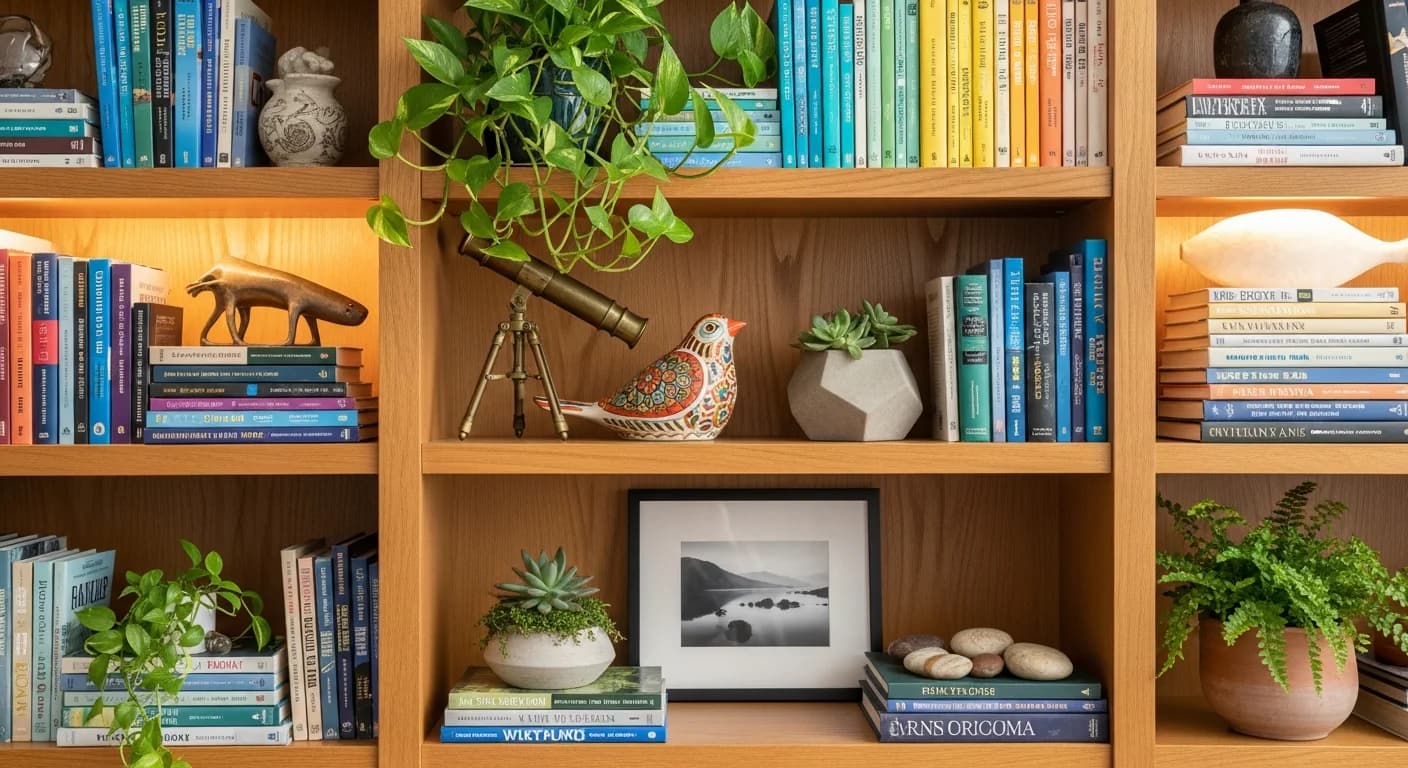
Bookshelves are opportunities—chances to display what you love, tell your story, and create visual interest in otherwise ordinary spaces. But styling shelves intimidates many people. These formulas and techniques transform overwhelming blank shelves into curated displays.
The Styling Formula
Professional stylists use formulas to create balanced, interesting displays. Here's one that works consistently.
Books + Objects + Art: Every styled shelf includes some combination of books, decorative objects, and artwork or photos. The ratio varies, but all three elements appear.
Height variation: Arrange items at different heights on each shelf. Tall vases next to stacked books, small objects raised on book stacks. Avoid uniform heights.
Groupings of three: Objects arranged in threes feel naturally balanced. Three vases, three stacked books, three framed photos. Odd numbers look more dynamic than even.
Triangle principle: Create invisible triangles connecting items of similar color or material across different shelves. This creates cohesion across the entire bookcase.
60/40 balance: Aim for approximately 60% filled and 40% empty space. Overcrowded shelves feel chaotic; too-empty feels unfinished.
Book Arrangement
Books form the foundation of most shelf displays. How you arrange them matters as much as which you include.
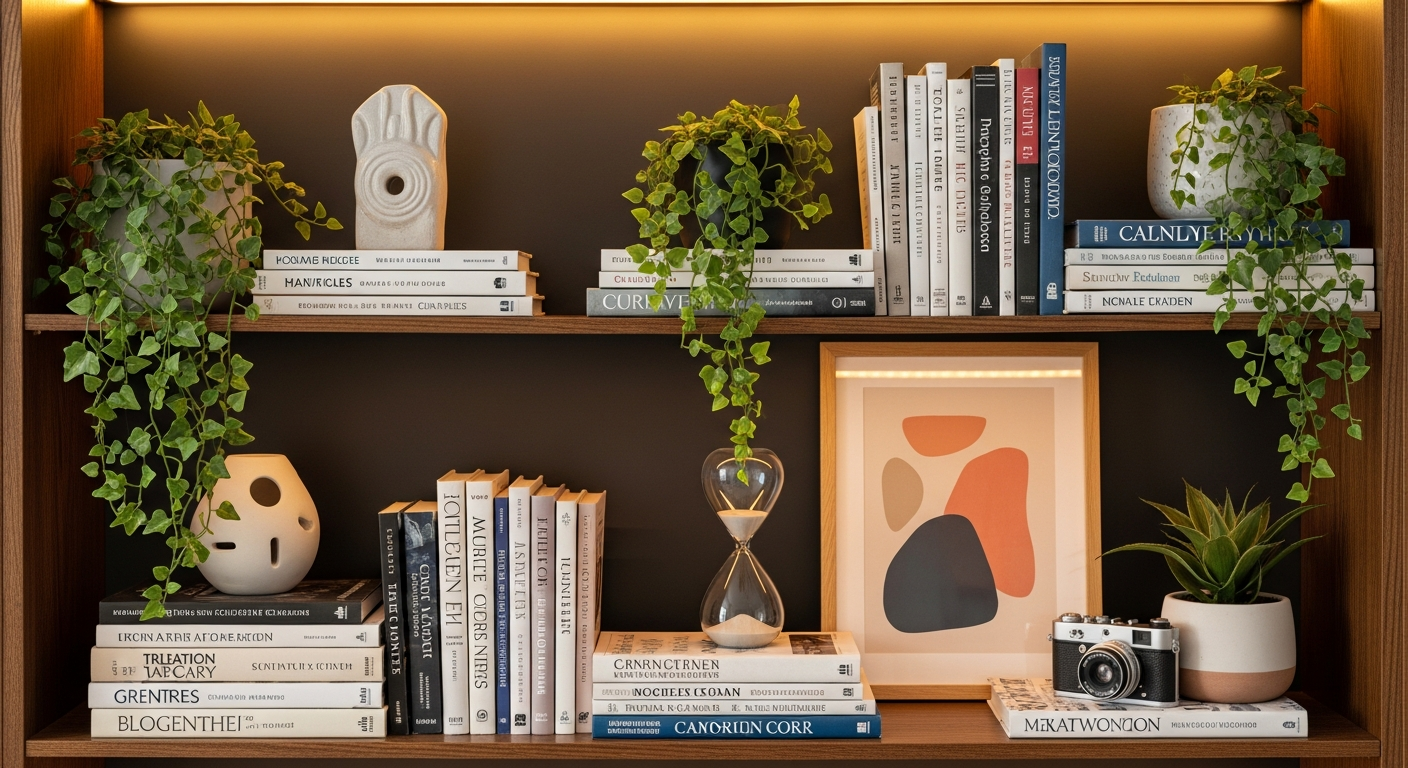
Vertical stacking: Traditional upright book arrangement. Vary heights by grouping books in sections rather than gradating from tall to short.
Horizontal stacks: Laying books flat creates platforms for objects. Stack 3-5 books, then place small items on top.
Color sorting: Arranging books by color creates striking visual impact. Critics call it impractical—proponents love the aesthetic. Try it and decide.
Spines in or out: Some stylists turn books backward for uniform look. This works for decoration-first shelves but frustrates readers.
Mixed orientation: Combining vertical sections with horizontal stacks adds visual interest and creates display platforms.
Cover-forward: A few beautiful book covers displayed facing outward add color and interest.
Object Selection
Decorative objects add personality and visual variety to book-dominated shelves.
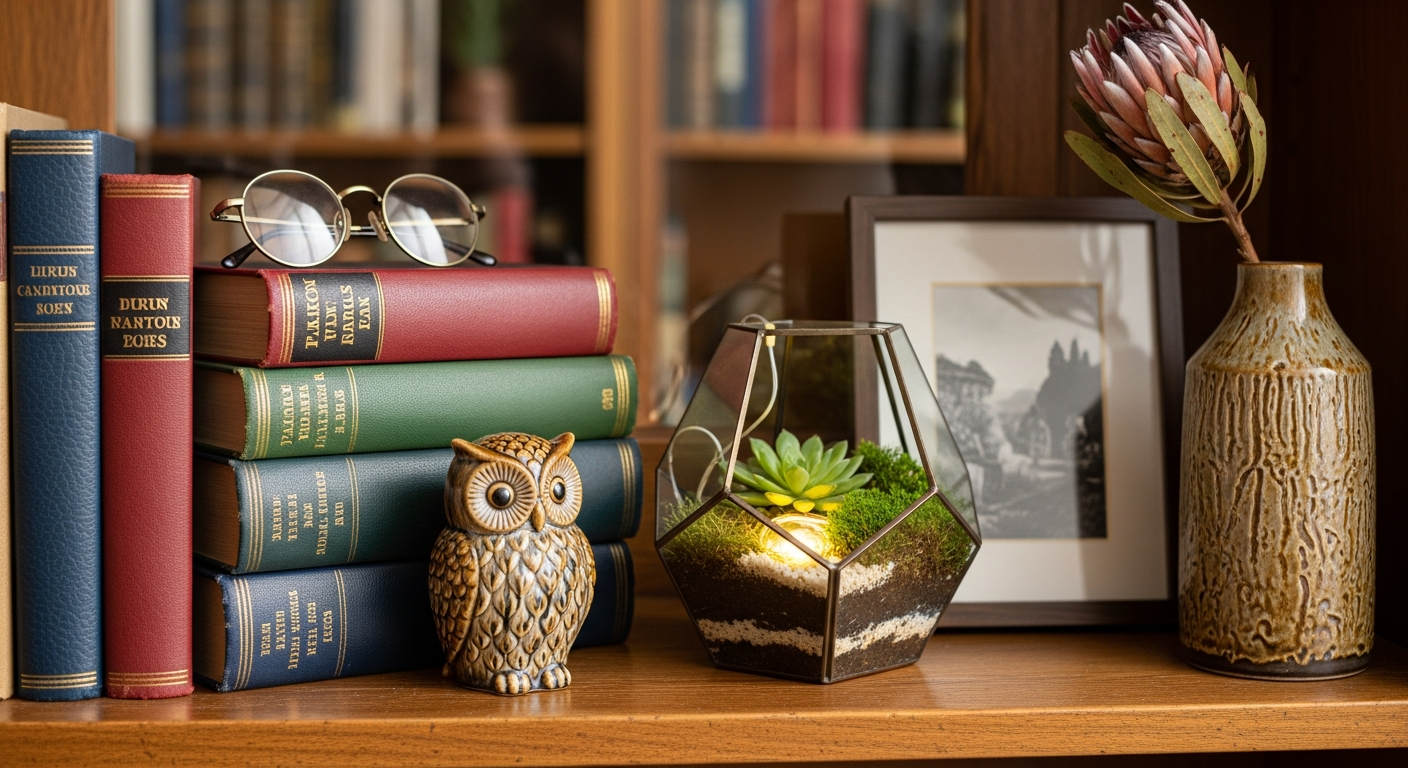
Meaningful items: Display objects with stories—travel souvenirs, inherited pieces, handmade gifts. These make shelves personal rather than catalog-styled.
Texture variety: Mix materials for interest. Smooth ceramics with rough woven baskets. Shiny metal with matte pottery. Texture creates depth.
Scale mixing: Include objects at different scales. Larger statement pieces anchor; smaller items fill gaps and add detail.
Natural elements: Plants, dried flowers, shells, stones, and branches bring organic life to shelves.
Functional objects: Boxes hide small clutter. Trays contain collections. Functional items earn shelf space while looking beautiful.
Art and Frames
Artwork breaks up book sections and adds visual focal points.
Leaned art: Small canvases or framed prints leaned against shelf backs add dimension and can layer in front of books.
Framed photos: Family photos make shelves personal. Mix frame styles intentionally or keep them consistent for gallery effect.
Small sculptures: Three-dimensional art pieces add interest traditional flat artwork can't provide.
Mirrors: Small decorative mirrors reflect light and add depth to dark bookcase interiors.
Frame coordination: Matching frame colors or materials across the bookcase creates visual cohesion.
Plants and Natural Elements
Greenery adds life that no object can replicate.
Trailing plants: Pothos, string of pearls, and philodendrons cascade down from upper shelves, adding movement and softness.
Small potted plants: Succulents, small ferns, and air plants fit on shelves without overwhelming.
Dried arrangements: Dried flowers, grasses, and branches work where light is insufficient for live plants.
Vases with branches: Tall vases with seasonal branches add height and natural interest.
Consider light: Bookshelves against interior walls may lack light for plants. Choose low-light varieties or rotate plants regularly.
Negative Space
What you don't put on shelves matters as much as what you do.
Breathing room: Allow empty space around objects. Crowded shelves feel chaotic and diminish individual items.
Empty shelf sections: Some shelf sections can remain mostly empty. This creates visual rest and highlights fuller areas.
Editing ruthlessly: Not every object deserves display. Store items that don't contribute to the overall composition.
Seasonal rotation: Rather than displaying everything always, rotate items. What's displayed feels fresh; stored items become anticipated.
Color Coordination
Color creates cohesion across diverse objects and books.
Cohesive palette: Choose 3-4 colors that repeat throughout the bookcase. This unifies disparate objects into intentional arrangement.
Neutral base: White, cream, and natural wood tones provide neutral foundation. Add accent colors through objects and book spines.
Accent distribution: Spread accent colors throughout rather than clustering. This creates visual flow across the entire piece.
Bookcase back: Painted or wallpapered bookcase backs add color that coordinates with displayed items.
Visualize Your Shelves
Shelf styling requires experimentation—moving, adjusting, and reconsidering until the arrangement feels right. Visualize possibilities before committing.
HanoDecor's Room Visualizer helps you experiment with bookshelf arrangements and room styling on photos of your actual space. Preview color schemes, plan display approaches, and create beautifully styled shelves that tell your story.
Bookshelf Styling Ideas FAQs
Written by
Emily Rodriguez
Interior Design Editor covering living spaces, styling trends, and room makeovers. Former Architectural Digest contributor with a focus on accessible, budget-conscious design.