Coffee Table Styling: The Art of Tablescapes
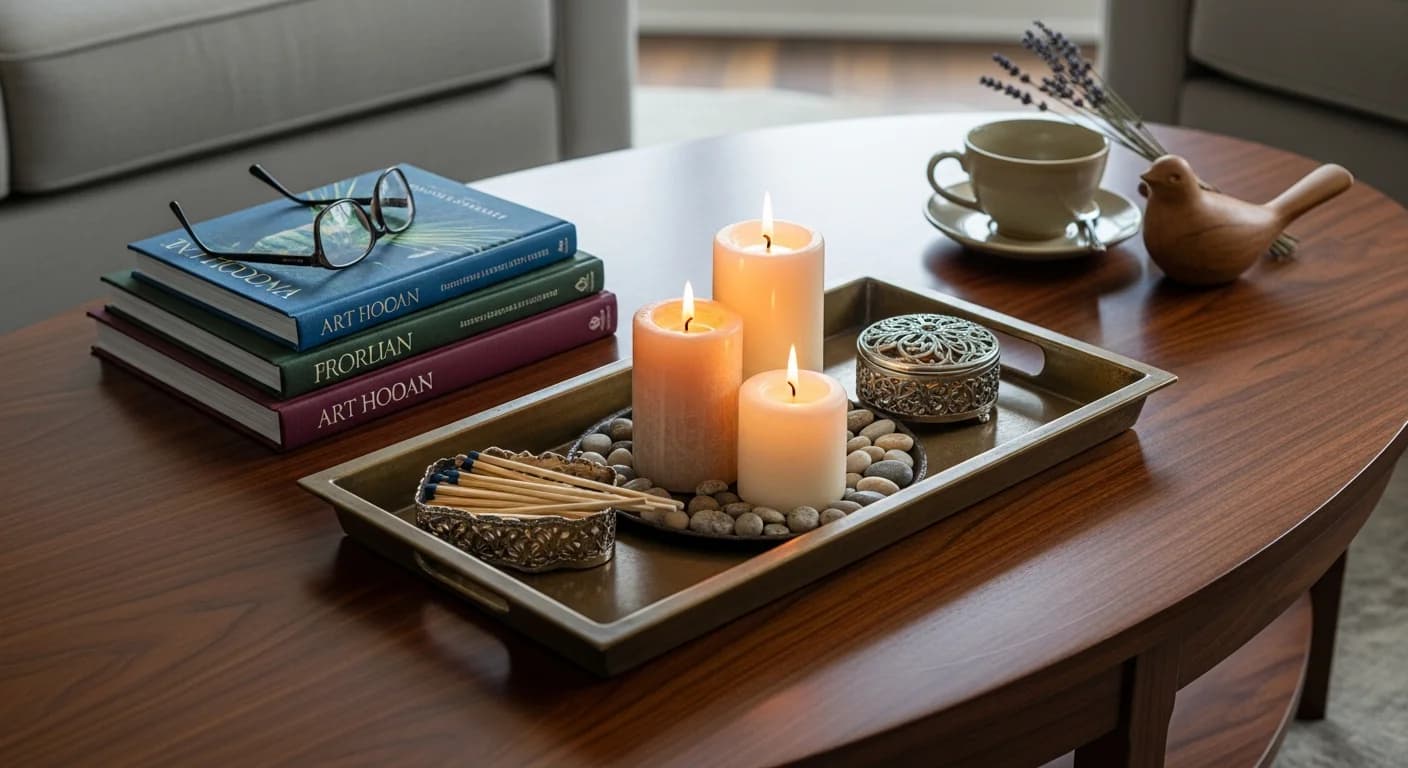
The coffee table anchors living rooms—it's the surface everyone sees, where eyes naturally rest during conversation. A well-styled coffee table elevates entire rooms, while cluttered or bare tables diminish them. These techniques help you create tablescapes that look intentional, beautiful, and livable.
The Layering Formula
Consistent coffee table styling follows a proven formula. Master this approach and you'll never struggle with tabletops again.
Tray foundation: Trays contain groupings, add visual weight, and create intentional zones. Even simple items look styled when placed on trays.
Book stack base: Coffee table books provide height, color, and personality. Stack them as platforms for other objects or display covers as art.
Organic element: Every tablescape needs something living or natural—flowers, plants, branches, or organic objects like stones or shells.
Decorative object: A meaningful or beautiful object adds personality. Candles, sculptures, boxes, or collected treasures complete the arrangement.
Height variation: Arrange items at different heights. Tall elements (flowers, candles) next to low elements (small objects, coasters) create visual interest.
Odd numbers: Group items in threes or fives. Odd numbers feel more dynamic and natural than even groupings.
Tray Foundations
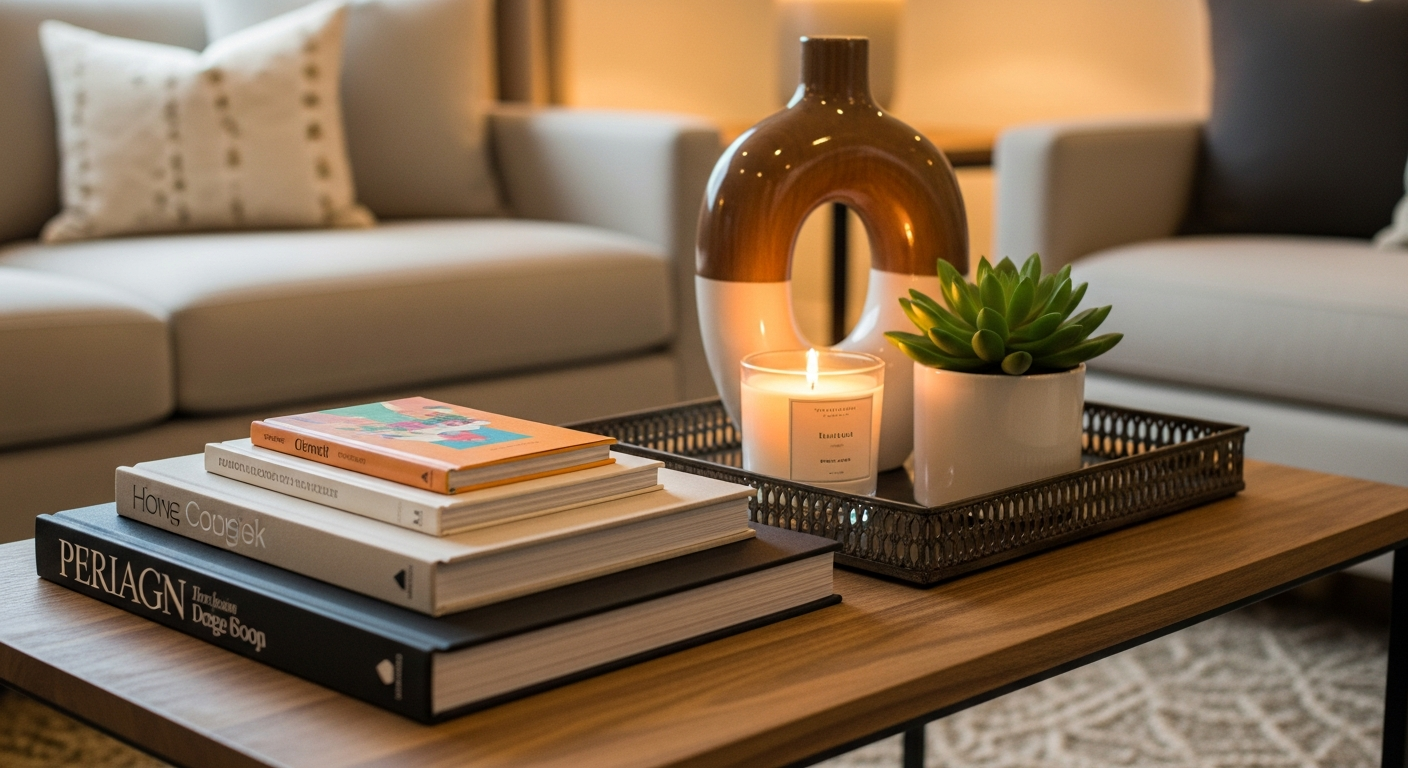
Trays transform random items into intentional arrangements.
Containment function: Trays corral groupings, preventing scattered appearance. Items that would look messy alone feel curated on trays.
Material options: Wood trays feel warm and organic. Metal trays add polish. Marble or stone trays feel luxurious. Woven trays suit casual spaces.
Size considerations: Trays should be proportional to tables—roughly one-third to one-half of surface area. Too small looks lost; too large overwhelms.
Shape variation: Round trays on rectangular tables (and vice versa) create visual interest. Square or rectangular trays on round tables work well.
What goes on trays: Candles, small plants, decorative objects, coasters. Trays create zones for grouped items rather than single objects.
Book Stacks
Coffee table books are both decoration and entertainment. Display them intentionally.
Stack heights: Two to four books per stack typically looks balanced. More feels cluttered; fewer lacks impact.
Color coordination: Arrange books so spines or covers coordinate with room colors. Remove dust jackets if needed to reveal more cohesive covers.
Topic curation: Choose books that reflect your interests—travel, art, design, photography. They're conversation starters as well as decoration.
Cover-forward display: Beautiful covers deserve display. Lay one book open or cover-up to showcase photography or artwork.
Height platforms: Use book stacks as platforms for small objects, elevating items that would otherwise get lost.
Horizontal placement: Books stacked horizontally (rather than standing upright) are standard for coffee table display.
Organic Elements
Living or natural elements bring energy no manufactured object provides.
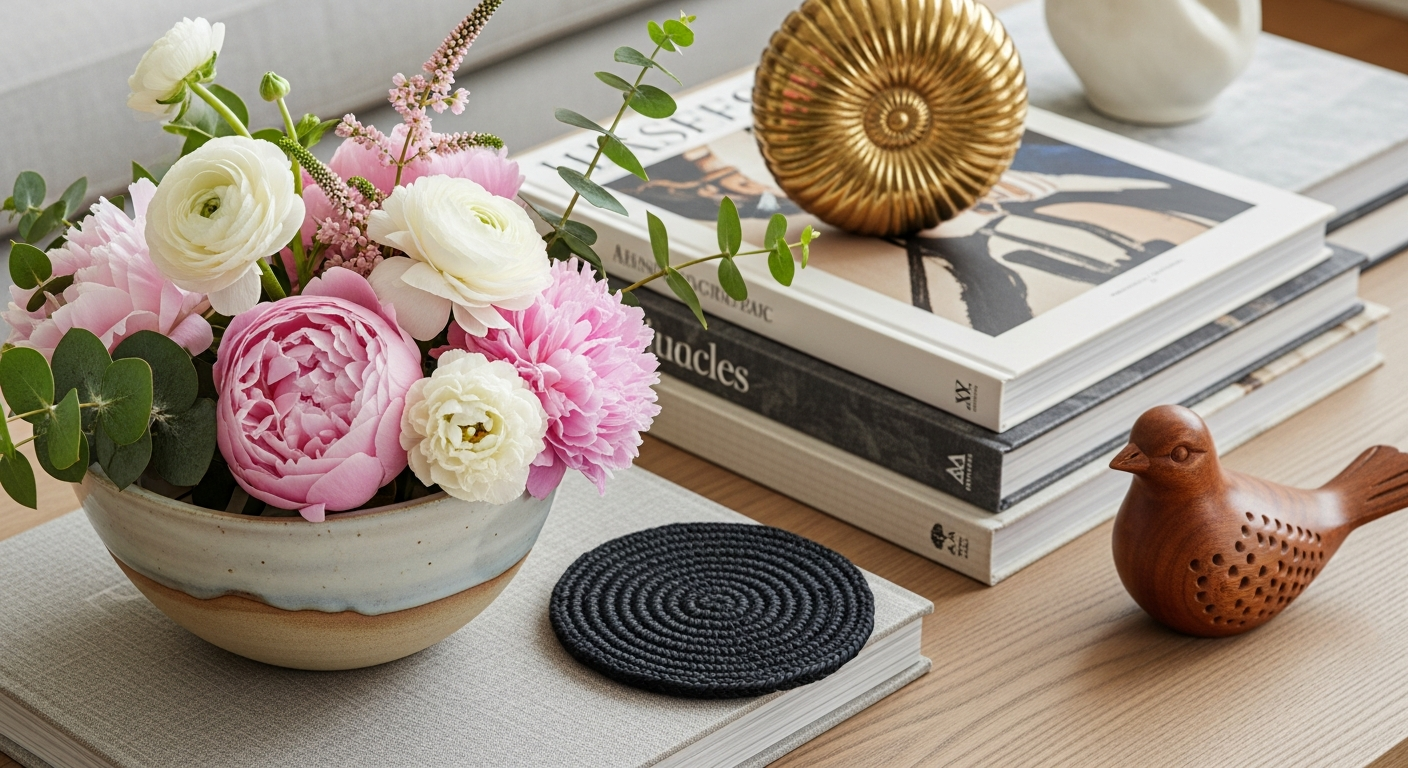
Fresh flowers: Nothing elevates tables like flowers. Simple grocery store bouquets in nice vases work beautifully. Change weekly for freshness.
Potted plants: Small succulents, pothos cuttings, or air plants add living greenery without the maintenance of larger plants.
Branches: Seasonal branches in tall vases add height and natural interest. Cherry blossoms, fall leaves, or bare winter branches.
Dried arrangements: Dried flowers, grasses, or seed pods last indefinitely while adding organic texture.
Natural objects: Collected shells, interesting stones, driftwood, or mineral specimens bring nature indoors.
Decorative Objects
Objects add personality and visual interest. Choose pieces that mean something.
Candles: Both decorative and functional. Group different sizes or use single statement candles. Glass hurricanes protect flames and add polish.
Sculptures: Small sculptural objects add dimension. Abstract forms, figurative pieces, or artistic objects work as focal points.
Boxes: Decorative boxes hide remotes, coasters, or small items while adding to the arrangement.
Meaningful items: Travel souvenirs, inherited objects, or collected pieces tell stories and spark conversations.
Seasonal touches: Pumpkins in fall, pinecones in winter, shells in summer. Seasonal elements keep displays feeling fresh.
Scale and Balance
Proper proportions make tablescapes feel intentional rather than haphazard.
Table size relationship: Styling should cover roughly 50-75% of table surface. Leave room for drinks and everyday use.
Height dynamics: Tallest elements (flowers, candles) shouldn't exceed 12-14 inches or they block sightlines.
Visual weight: Balance heavier objects with lighter ones across the table. Don't cluster all weight on one side.
Symmetry options: Formal rooms suit symmetrical arrangements. Casual spaces feel more natural with asymmetry.
Negative space: Leave breathing room between groupings. Overcrowded tables feel chaotic.
Functional Styling
Coffee tables must remain functional—styling can't prevent actual use.
Coasters accessible: Include coasters visibly so guests know drinks are welcome. Stack them or include in tray arrangements.
Remote containment: Decorative boxes or trays hide remotes while keeping them accessible.
Clear space: Leave area for actual drinks, plates during gatherings, or feet if you're that household.
Easy rearrangement: Don't create arrangements so precious they can't be moved for use. Real living requires flexibility.
Seasonal Refresh
Updating coffee table styling seasonally keeps spaces feeling fresh.
Flower rotation: Change flowers and plants with seasons—bright colors in spring, greenery in summer, warm tones in fall, evergreens in winter.
Book rotation: Switch out books seasonally for visual change and renewed reading interest.
Accessory updates: Swap decorative objects seasonally. Store off-season items for anticipated returns.
Quick changes: Even changing just the flowers and one accessory refreshes entire arrangements.
Visualize Arrangements
Coffee table styling requires experimentation—what looks good in your head may not work in reality. Play with arrangements before committing.
HanoDecor's Room Visualizer helps you experiment with living room styling on photos of your actual space. Preview how tablescapes work with your furniture, visualize color coordination, and create the perfectly styled living room you've been imagining.
Coffee Table Styling FAQs
Written by
Emily Rodriguez
Interior Design Editor covering living spaces, styling trends, and room makeovers. Former Architectural Digest contributor with a focus on accessible, budget-conscious design.