Deck Lighting Ideas: Extend Your Outdoor Hours
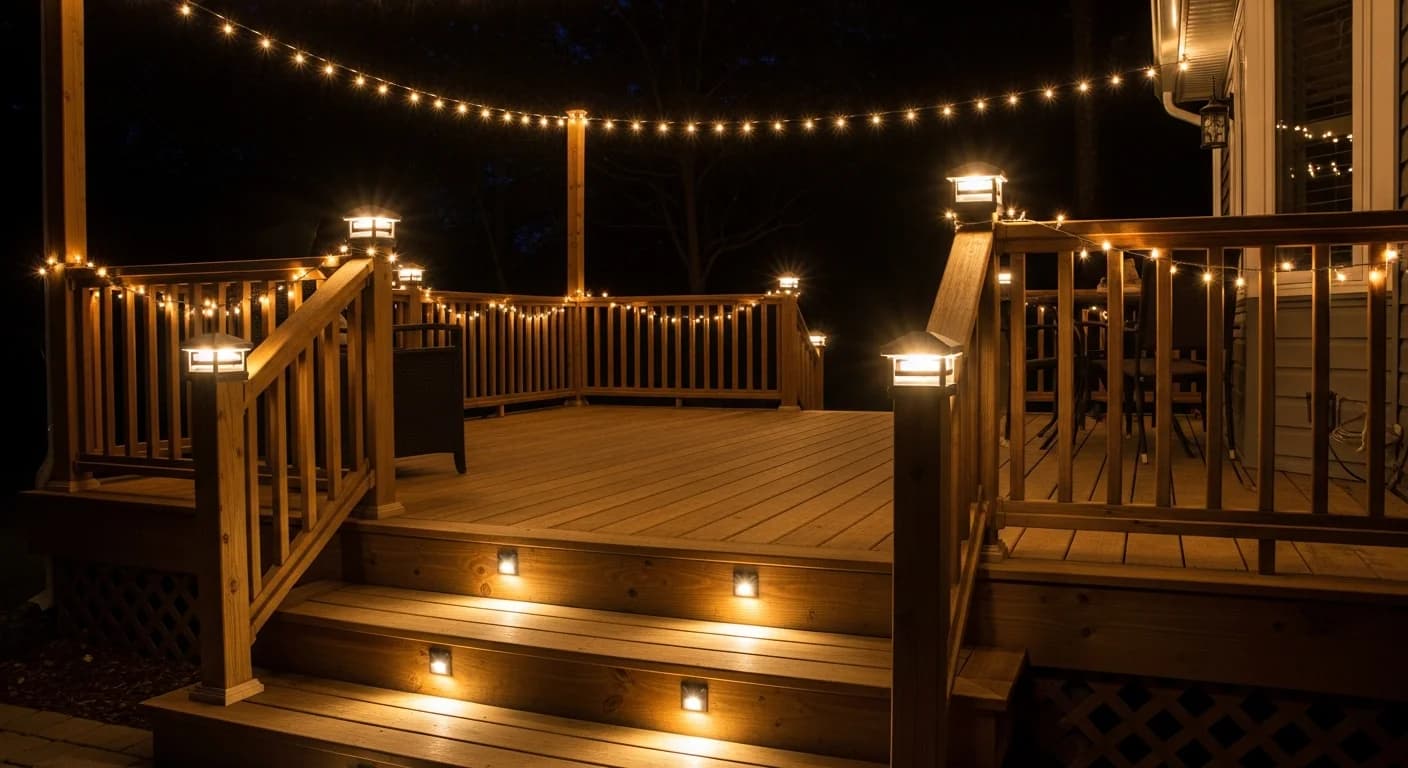
As daylight fades, well-lit decks transform from daytime outdoor rooms into evening entertainment destinations. Proper lighting extends usable hours, ensures safe navigation, and creates atmosphere that makes outdoor spaces magical after dark. Understanding lighting types, placement strategies, and power options helps you design deck lighting that functions beautifully.
Types of Deck Lighting
Different lighting serves different purposes—effective designs combine multiple types.
Ambient lighting: General illumination that provides overall visibility without harsh brightness. Sets the mood and allows basic activities throughout the deck.
Task lighting: Focused light for specific activities—cooking, reading, or game playing. Brighter and more directional than ambient lighting.
Accent lighting: Decorative lighting highlighting features, creating visual interest, or adding drama. Not primarily functional but enhances aesthetics.
Safety lighting: Illumination specifically for hazard prevention—steps, level changes, railings, and pathways. Essential for preventing accidents.
Layered approach: The best deck lighting combines all four types, creating functional, safe, and beautiful outdoor spaces.
Post Cap Lights
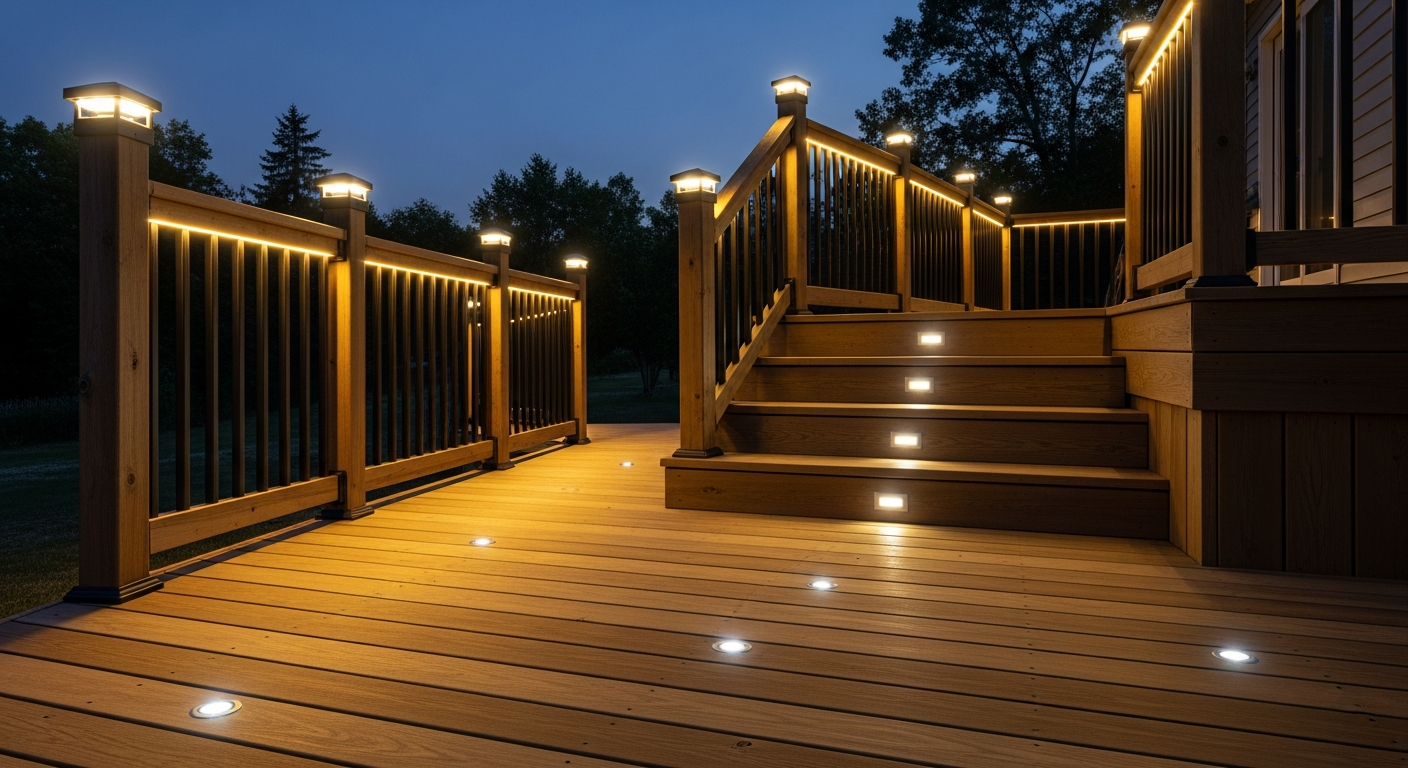
Illuminated post caps combine function with finished appearance.
Design impact: Post cap lights create rhythmic illumination along railing perimeters, defining deck boundaries with gentle glow.
Solar options: Solar post caps charge during daylight and illuminate automatically at dusk. No wiring required—simply replace existing caps.
Low-voltage options: Wired post cap lights offer brighter, more consistent illumination than solar. Require transformer and wiring installation.
Style variety: Available in contemporary, traditional, and decorative designs to complement any railing style.
Light direction: Some caps direct light downward; others glow from sides or tops. Consider how light distribution affects overall appearance.
Placement strategy: Post caps on every post may provide too much light. Alternating or corner-only placement often creates better balance.
Step and Stair Lights
Step lighting is essential for multi-level decks and any stairs.
Safety priority: Illuminated steps prevent falls—the most important safety lighting on any deck. Every step should be visible after dark.
Recessed options: Lights installed flush with riser faces illuminate treads without protruding fixtures. Clean appearance and protected from damage.
Surface-mounted: Fixtures attached to stair sides or risers provide illumination without cutting into structure. Easier installation but more visible.
Under-tread lighting: Lights beneath tread nosings create floating stair effects. Dramatic appearance with excellent step visibility.
Landing emphasis: Additional lighting at landings and stair tops and bottoms helps users recognize level transitions.
Consistent spacing: Evenly spaced step lights create visual rhythm. Inconsistent placement looks haphazard and may miss hazards.
Under-Rail Lighting
Lights beneath railings create subtle perimeter illumination.
LED strip installation: Flexible LED strips mount beneath rail caps, casting light downward onto deck surfaces below.
Perimeter definition: Under-rail lighting outlines deck edges with soft glow, defining boundaries without visible fixtures.
Indirect illumination: Light reflecting off deck surfaces creates soft ambient illumination without glare.
Color options: While warm white suits most applications, color-changing LED strips enable party modes and seasonal themes.
Channel installation: Aluminum channels protect LED strips and provide clean, finished appearance.
Dimming capability: Dimmable under-rail lighting allows adjusting brightness for different activities and moods.
Recessed Deck Lights
In-floor fixtures provide subtle illumination from deck surfaces.
Installation approach: Fixtures install between deck boards or in drilled holes, sitting flush with the deck surface.
Pathway marking: Lines of recessed lights guide movement across deck surfaces after dark.
Accent placement: Strategic single fixtures highlight features, furniture groupings, or architectural elements.
Load considerations: Choose fixtures rated for deck traffic. Low-quality fixtures break under foot traffic or furniture weight.
Glare prevention: Look for fixtures with frosted lenses or directional output to prevent uncomfortable direct glare.
Drainage awareness: Recessed fixtures must not impede water drainage or create moisture traps.
String Lights and Pendants
Overhead lighting creates festive, inviting atmosphere.
String light appeal: Nothing creates casual, festive mood quite like string lights. Instantly transform deck atmospheres for entertaining.
Mounting strategies: String lights between posts, along pergola beams, or on dedicated poles. Plan mounting points before installation.
Bulb selection: Edison-style bulbs provide warm vintage glow. LED versions offer efficiency with similar appearance.
Pendant fixtures: Hanging pendants over dining tables or seating areas provide focused illumination with decorative impact.
Outdoor ratings: All overhead fixtures must be rated for outdoor use. Indoor fixtures fail quickly when exposed to weather.
Wind considerations: Hanging lights and fixtures need secure mounting to handle wind. Avoid lightweight fixtures in exposed locations.
Solar vs. Low-Voltage
Power source affects installation complexity and light performance.
Solar advantages: No wiring required. Self-contained fixtures install anywhere with sun exposure. Zero operating cost.
Solar limitations: Brightness depends on charge. Cloudy weather reduces performance. Battery replacement eventually needed.
Low-voltage benefits: Consistent brightness regardless of weather. Brighter output available. Reliable performance year after year.
Low-voltage requirements: Transformer, wiring, and installation labor. Higher upfront cost but superior long-term performance.
Hybrid approaches: Solar lights for accents and supplemental lighting; low-voltage for critical safety and primary illumination.
Line voltage: Standard 120V outdoor fixtures require licensed electrical installation. Best for major fixtures like ceiling fans with lights.
Smart Lighting Controls
Modern controls add convenience and functionality.
Timer systems: Automatic on/off at scheduled times ensures lights operate when needed without manual intervention.
Dusk-to-dawn sensors: Photocells automatically activate lights at sunset and deactivate at sunrise. Set and forget operation.
Motion sensors: Lights activate when movement is detected. Useful for security and convenience in less-used areas.
Dimmer controls: Adjustable brightness allows setting appropriate levels for different activities and moods.
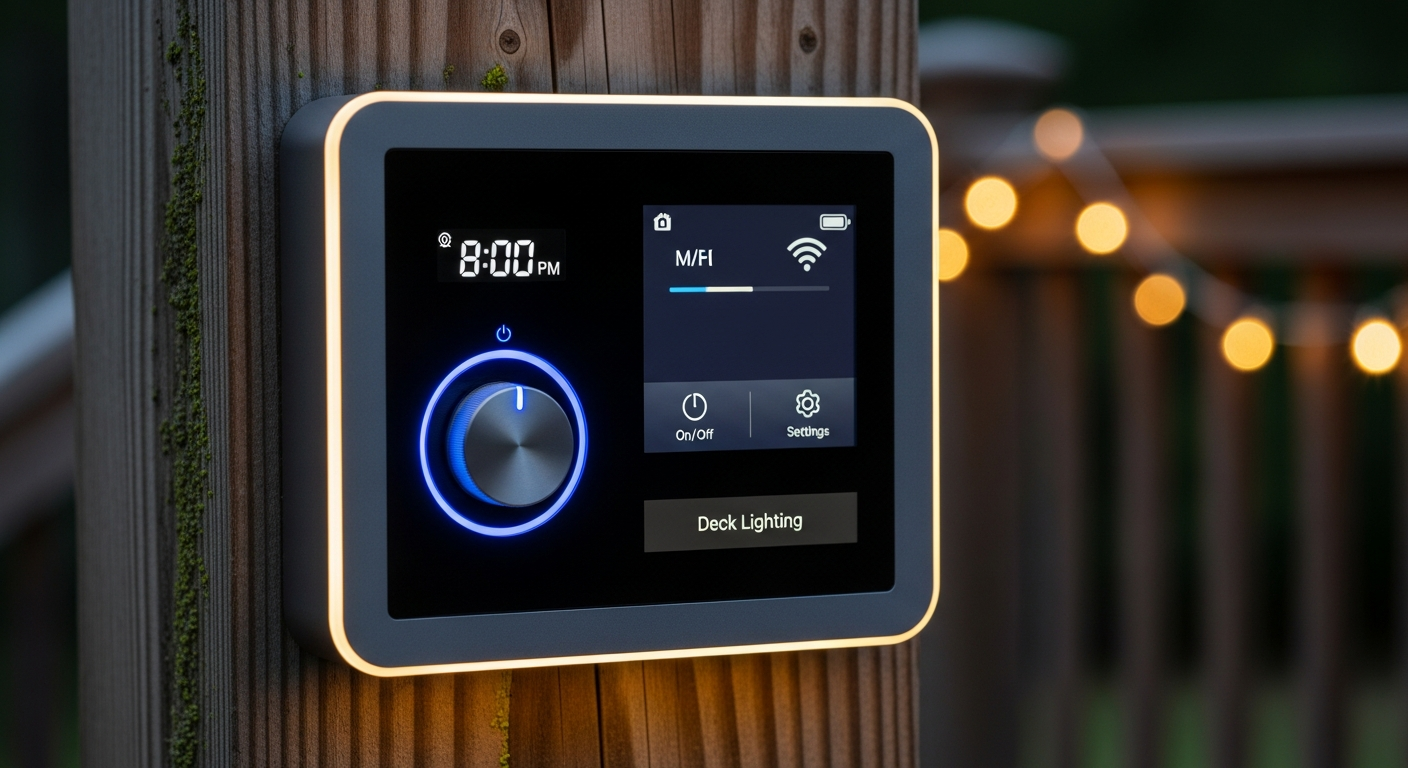
Smart home integration: WiFi-connected fixtures and controllers enable phone app control, voice activation, and scene programming.
Zone control: Separate controls for different lighting zones allow customized illumination throughout deck areas.
Installation Considerations
Proper installation ensures safe, lasting performance.
Electrical safety: All outdoor electrical work must meet code requirements. GFCI protection required for outdoor outlets and fixtures.
Waterproof ratings: Check IP ratings for water resistance. Fixtures exposed to rain need appropriate protection levels.
Wire protection: Low-voltage wiring needs protection from damage. Bury in conduit or route through protected channels.
Transformer sizing: Low-voltage systems require appropriately sized transformers for connected load. Undersized transformers cause dimming and failure.
Future access: Install with maintenance access in mind. Buried connections and hidden wiring complicate future repairs.
Visualize Your Deck Lighting
Lighting dramatically transforms deck appearance. See how different approaches look before installation.
HanoDecor's Outdoor Visualizer helps you experiment with lighting designs on photos of your deck. Create beautiful nighttime spaces with confidence.
Deck Lighting Ideas FAQs
Written by
James Park
Architectural Design Advisor specializing in exterior remodeling, siding systems, and structural home improvements. Licensed architect with 18 years of residential project experience.