Bathroom Remodel Timeline: How Long Each Phase Actually Takes
Quick Summary
A bathroom remodel takes anywhere from 2 to 12 weeks depending on the scope, materials, and complexity of the project. This guide breaks down the renovation timeline for every type of bathroom project — from a quick cosmetic refresh you can finish in a weekend to a full gut remodel that requires months of planning and construction. You will learn exactly how long each phase duration takes, including demolition time, plumbing rough-in, electrical rough-in, tile installation time, fixture installation, and finishing work. We also cover the most common causes of delays — back-order delays, permit timelines, scope creep, and hidden problems — plus proven strategies to fast-track your remodel and keep it on schedule. Use the Gantt chart planner at the end to map your own project schedule before work begins.
How Long Does a Bathroom Remodel Actually Take?
The honest answer is that bathroom remodel timelines vary dramatically based on what you are changing. A homeowner swapping out hardware and repainting can be done in a long weekend. A complete gut-and-rebuild with custom tile, new plumbing, and relocated fixtures will take two to three months from demolition to final walkthrough.
- Cosmetic Refresh: 1-2 weeks — Paint, hardware, light fixtures, accessories, and mirror replacement
- Partial Remodel: 3-4 weeks — New tile, vanity replacement, shower update, and minor plumbing changes
- Full Gut Remodel: 6-10 weeks — Complete demolition, new plumbing, electrical, tile, fixtures, and finishes
- Luxury/Primary Bathroom: 8-12 weeks — Custom features, steam shower, heated floors, freestanding tub, and specialty finishes
These ranges assume a dedicated contractor working consistently without major interruptions. Add two to four weeks if you are managing the project yourself or coordinating multiple subcontractors independently. Also factor in pre-construction time — material ordering, design decisions, and permit timeline approvals can add four to eight weeks before any physical work begins. For a detailed breakdown of what each phase costs, see our bathroom remodel cost guide for 2026.
Understanding the critical path — the sequence of tasks that directly determines your project's total duration — is the single most important concept for staying on schedule. Every day a critical-path task is delayed pushes your completion date back by the same amount.
Cosmetic Refresh Timeline (1-2 Weeks)
A cosmetic refresh is the fastest and most affordable way to transform your bathroom without the disruption of a major renovation. This level of remodel keeps all existing plumbing, electrical, and structural elements in place. You are updating the surfaces and accessories — not the bones of the room. Most cosmetic refreshes can be completed in one to two weeks, and many homeowners handle these projects themselves. If you are considering a spa-inspired update on a short timeline, many of the ideas in our spa bathroom design guide can be adapted for a cosmetic-level refresh.
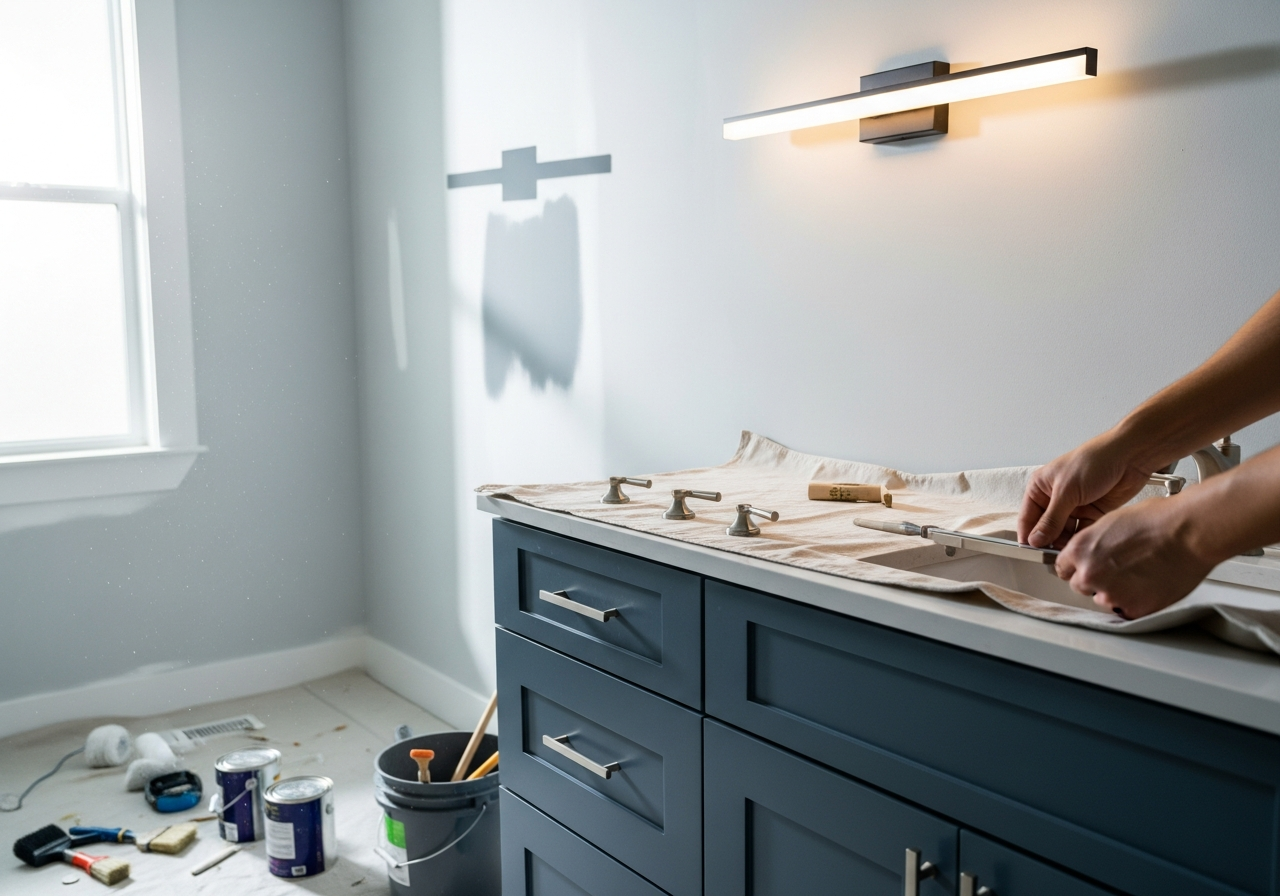
The project schedule for a cosmetic refresh typically follows this order. Days one and two cover preparation and painting — removing outlet covers, taping edges, priming any patched areas, and applying two coats of moisture-resistant paint. Drying time between coats requires four to six hours. Days three and four focus on hardware replacement — swapping cabinet pulls, drawer knobs, towel bars, and robe hooks. Day five covers light fixture and mirror replacement, which may require basic electrical connections.
Additional updates that fit within this timeline include replacing the toilet seat, installing a new shower curtain rod, swapping out the faucet if the new one fits existing holes, and refreshing caulk and grout lines. Recaulking the tub-to-tile joint takes about two hours and immediately makes the bathroom look newer. For more beginner-friendly projects you can tackle yourself, our DIY bathroom remodel guide walks through each step with photo references.
The total cost for a cosmetic refresh typically ranges from $1,000 to $5,000. Because no permits are required and no plumbing or electrical systems are modified, the renovation timeline is entirely within your control.
Partial Remodel Timeline (3-4 Weeks)
A partial remodel goes beyond cosmetic changes but stops short of gutting the room. You are replacing major components — typically the vanity, tile, shower surround, or toilet — while keeping the existing plumbing layout and wall framing intact. This is the sweet spot for homeowners who want a significant transformation without the cost and disruption of a full gut remodel.
Week one focuses on selective demolition and preparation. Removing the old vanity, pulling up floor tile, and stripping the shower surround typically takes two to three days. Because you are preserving the underlying plumbing and wall structure, demolition time is significantly shorter than a full gut.
Week two covers the most labor-intensive work — tile installation. Floor tile installation in a standard bathroom takes two to three days. Grout cure time requires an additional 24 to 48 hours before the floor can bear foot traffic. If you are also retiling the shower walls, add another two to three days. Large-format tiles install faster than small mosaics, and porcelain tile cuts more cleanly than natural stone. Browse our bathroom tile ideas guide for options that balance beauty and installation speed.
Week three brings vanity installation, toilet setting, and fixture connections. A new vanity with a pre-fabricated top can be installed in a single day. Week four is reserved for finishing touches — painting, trim, baseboards, final caulk lines, and completing the punch list. Partial remodels typically cost between $8,000 and $20,000. See real examples in our before and after bathroom transformations gallery.
Full Gut Remodel Timeline (6-10 Weeks)
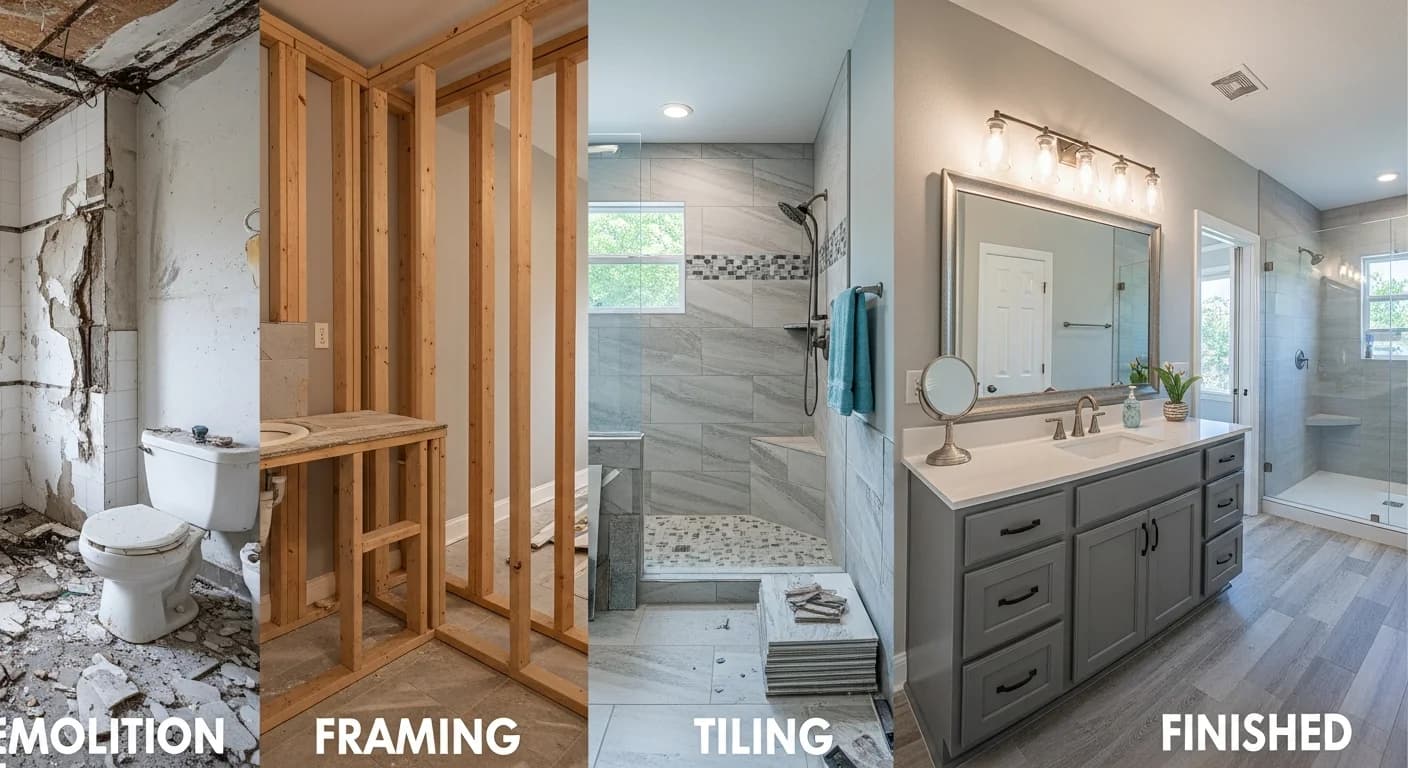
A full gut remodel strips the bathroom down to bare studs and subfloor, then rebuilds everything from scratch. This is the most disruptive type of renovation, but it gives you complete control over the layout, plumbing, electrical, materials, and design. Understanding the phase duration for each stage helps you plan around the disruption.
Demolition (2-3 Days)
Full demolition time for a standard bathroom takes two to three days. The crew removes all fixtures, vanity, toilet, tub or shower, tile, drywall, and sometimes the subfloor. Expect significant noise, dust, and vibration. Protect adjacent rooms by sealing doorways with plastic sheeting. The demolition phase often reveals hidden conditions — water damage, mold, or outdated plumbing — which can affect subsequent phases.
Rough-In Plumbing and Electrical (3-5 Days)
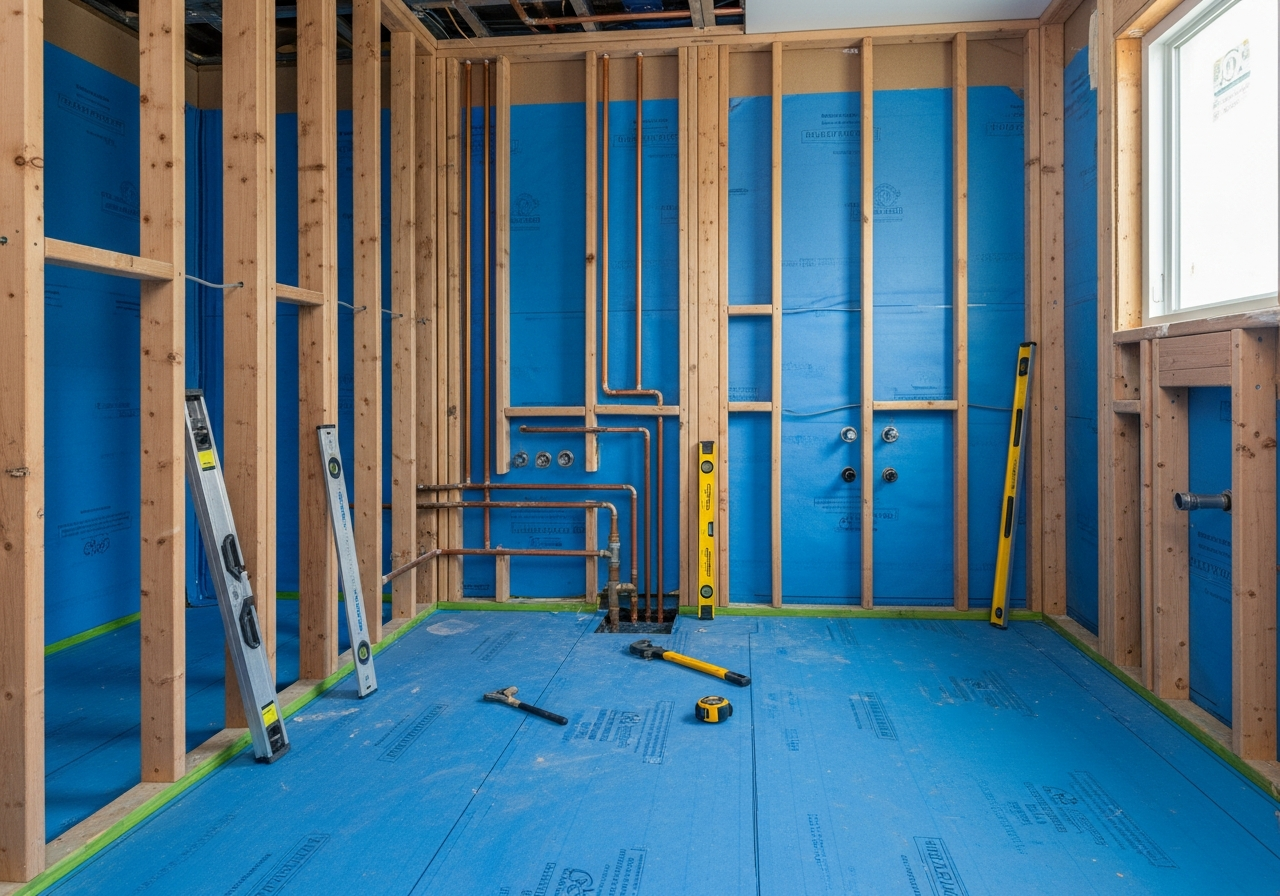
With the walls open, the plumbing rough-in and electrical rough-in happen simultaneously or in quick succession. The plumber installs new supply lines, drain lines, and vent stacks. If you are relocating the toilet or moving the shower drain, this phase takes longer because it involves cutting into the subfloor. The electrician runs new circuits for lighting, exhaust fans, GFCI outlets, and specialty features like heated floors. Rough-in work must pass inspection before walls can be closed, and inspection wait times vary from same-day to two weeks depending on your municipality.
Waterproofing and Substrate (2-3 Days)
Waterproofing is the most critical — and most frequently rushed — phase. The process involves installing cement board on wet-area walls, applying a liquid or sheet membrane waterproofing system, and sealing all seams, corners, and fastener penetrations. Curing time for liquid-applied membranes is typically 24 to 48 hours — this timeline cannot be shortened without compromising the system. Rushing this step is one of the most expensive bathroom renovation mistakes homeowners make.
Tile Installation (5-10 Days)
Tile installation time is the longest single phase in most bathroom remodels. A simple floor-and-shower installation using large-format porcelain tile can be completed in five days. A complex installation with multiple tile types, mosaic accents, and natural stone can take ten days or more. After tile is set, grout cure time adds another 24 to 72 hours depending on the grout type. Sealing natural stone tile adds another day.
Fixture and Vanity Installation (2-3 Days)
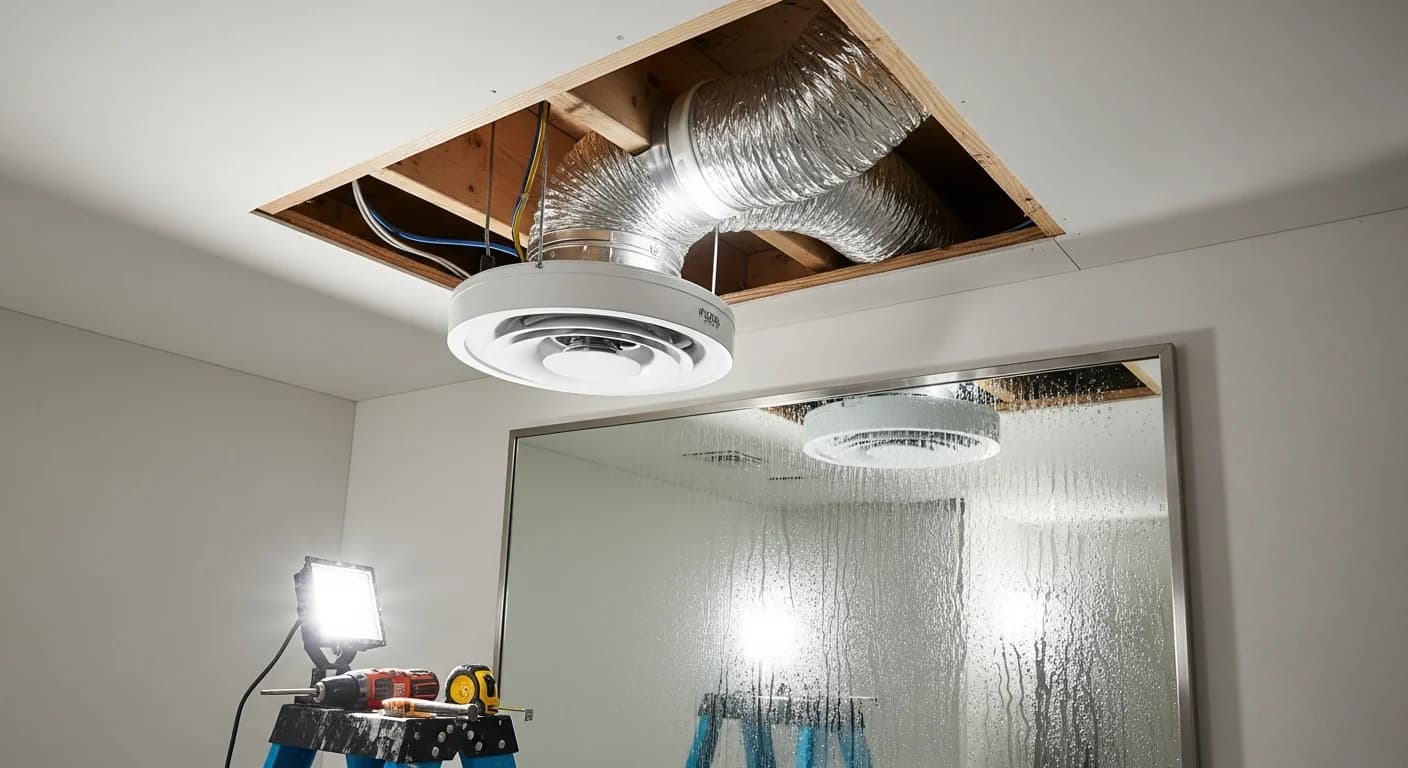
Fixture installation covers setting the toilet, mounting the vanity, connecting faucets and showerhead, installing the mirror, mounting light fixtures, and connecting the exhaust fan. A skilled crew can install all fixtures in a standard bathroom in two days. Complex installations with wall-mounted toilets or multi-head shower systems may extend to three days.
Finishing (2-3 Days)
The finishing phase covers painting walls and ceiling, installing baseboards, applying caulk at all transitions, hanging accessories, and installing the shower door or glass enclosure. The contractor then conducts a final walkthrough to create a punch list of any items needing correction. Common punch-list items include caulk touch-ups, grout haze removal, and hardware adjustments. Allow one to two days for punch-list completion.
Luxury/Primary Bathroom Timeline (8-12 Weeks)
A luxury primary bathroom remodel follows the same phase sequence as a full gut but adds time for specialty features, premium materials, and custom fabrication. Steam showers add one to two weeks to the project schedule — the enclosure must be fully sealed with a vapor barrier, and the ceiling must be sloped to prevent condensation dripping. Heated floor systems add two to three days for mat installation, embedding in thin-set, and testing before tile is laid.
Custom vanities, frameless glass enclosures, and specialty stone introduce significant lead time. Custom cabinetry typically requires six to ten weeks from order to delivery. Custom frameless glass requires field measurements after tile is complete, followed by four to six weeks for fabrication. These material delivery timelines overlap with construction, but any fabrication delay directly impacts your completion date.
Budget an additional three to five days beyond standard fixture installation for luxury features like freestanding soaking tubs, body spray systems, and digital shower controls. Total construction time for a luxury primary bathroom runs eight to twelve weeks, with pre-construction planning adding another eight to twelve weeks. For comprehensive planning, follow our bathroom remodel checklist.
What Causes Delays?
Even carefully planned bathroom remodels can fall behind schedule. Understanding common delay causes helps you build realistic buffers into your project schedule.
Material Lead Times
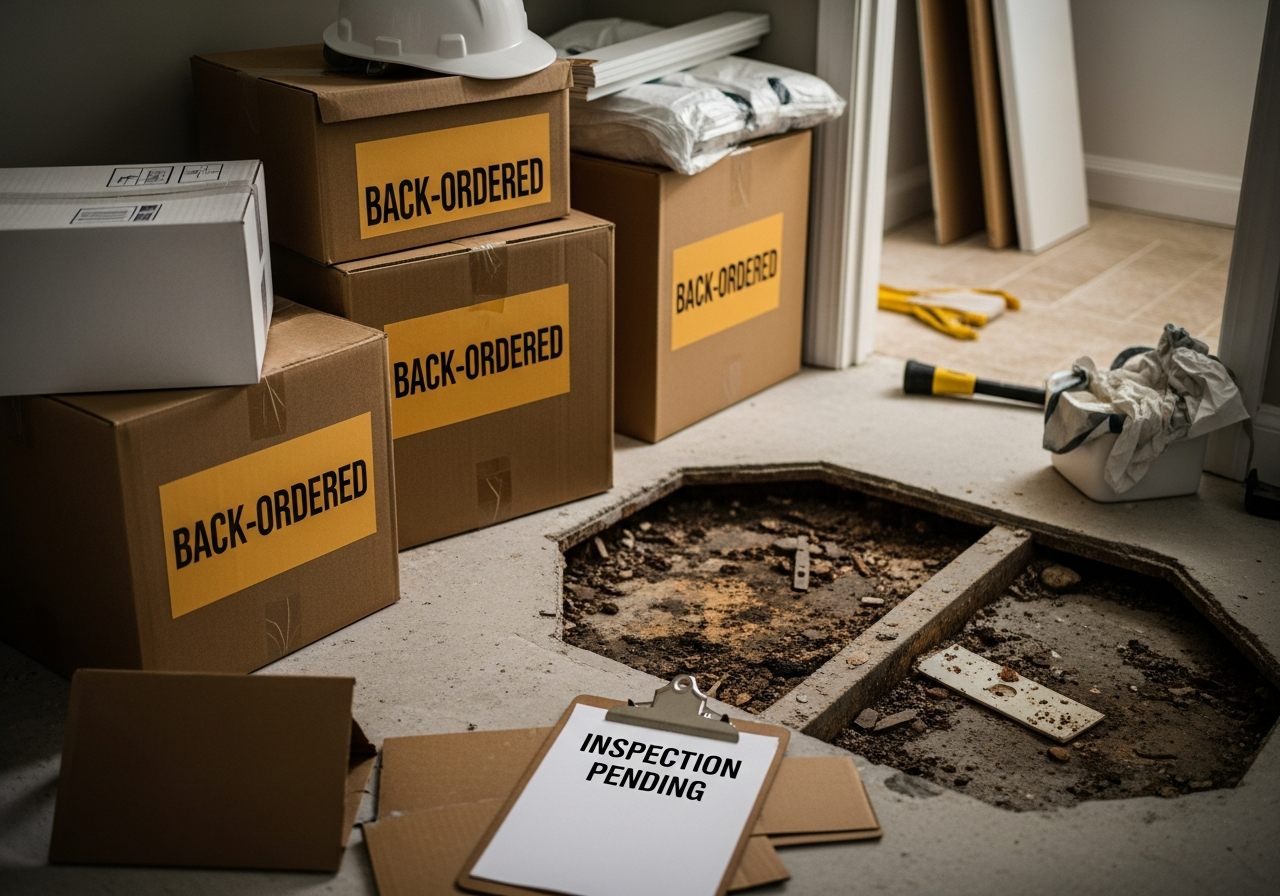
Material delivery delays are the single most common cause of schedule overruns. Specialty tile can take four to eight weeks from overseas manufacturers. Custom cabinetry requires six to twelve weeks of lead time. Even stock items can experience back-order delays of two to four weeks during peak renovation season. When a critical material arrives late, every dependent phase shifts forward, creating a domino effect across the entire renovation timeline. Order materials eight to twelve weeks before your planned start date.
Permit and Inspection Waits
Permit timeline requirements vary significantly by location. Some municipalities issue permits within three to five business days, while others take three to six weeks. Inspection wait times add another variable — after rough-in work is complete, you must wait for an inspector before closing walls. Failed inspections require corrections and re-inspection, adding another waiting cycle.
Scope Changes
Scope creep occurs when requirements expand after work has begun. Each change order requires new materials, additional labor, and often a revised permit. The best defense is making all design decisions and material selections before demolition begins. Lock in your layout, fixtures, tile, vanity, and accessories during planning, and resist changes once construction is underway.
Hidden Problems
Once walls and floors are opened, contractors frequently discover water damage to studs and subfloor framing, mold growth behind tile, outdated plumbing, non-code-compliant wiring, and structural issues. These problems must be corrected before new work proceeds. Hidden problems add anywhere from a few days to several weeks. A 15 to 20 percent contingency budget and two-week schedule buffer protect you from these surprises. Learn more in our guide to bathroom renovation mistakes.
How to Speed Up Your Remodel
While you cannot eliminate curing time or rush inspections, proven strategies can compress your renovation timeline significantly.
Pre-order all materials before demolition. This is the single most effective way to fast-track your remodel. Order tile, vanity, fixtures, hardware, and accessories eight to twelve weeks before your start date. Have everything on-site and inspected for damage before the first wall comes down.
Pre-approve all selections and finalize the design. Every decision delayed during construction becomes idle time for your contractor. Choose your tile layout, grout color, paint color, fixture finishes, and vanity configuration before demolition begins. Create a detailed selections sheet with model numbers, quantities, and supplier information.
Hire a dedicated general contractor. A contractor who assigns a dedicated crew to your project full-time will finish significantly faster than one who juggles multiple jobs. Ask potential contractors how many projects they run concurrently. Contractor scheduling is one of the biggest variables — a crew that works four days per week takes 25 percent longer than one working five days per week.
Schedule inspections proactively. Contact your building department at the start of construction and book your inspection window in advance. Some municipalities allow online scheduling, which can reduce inspection wait times dramatically.
Use our bathroom remodel visualizer to finalize your design and material selections before construction begins, eliminating the decision delays that slow down so many projects.
Realistic Timeline Planner
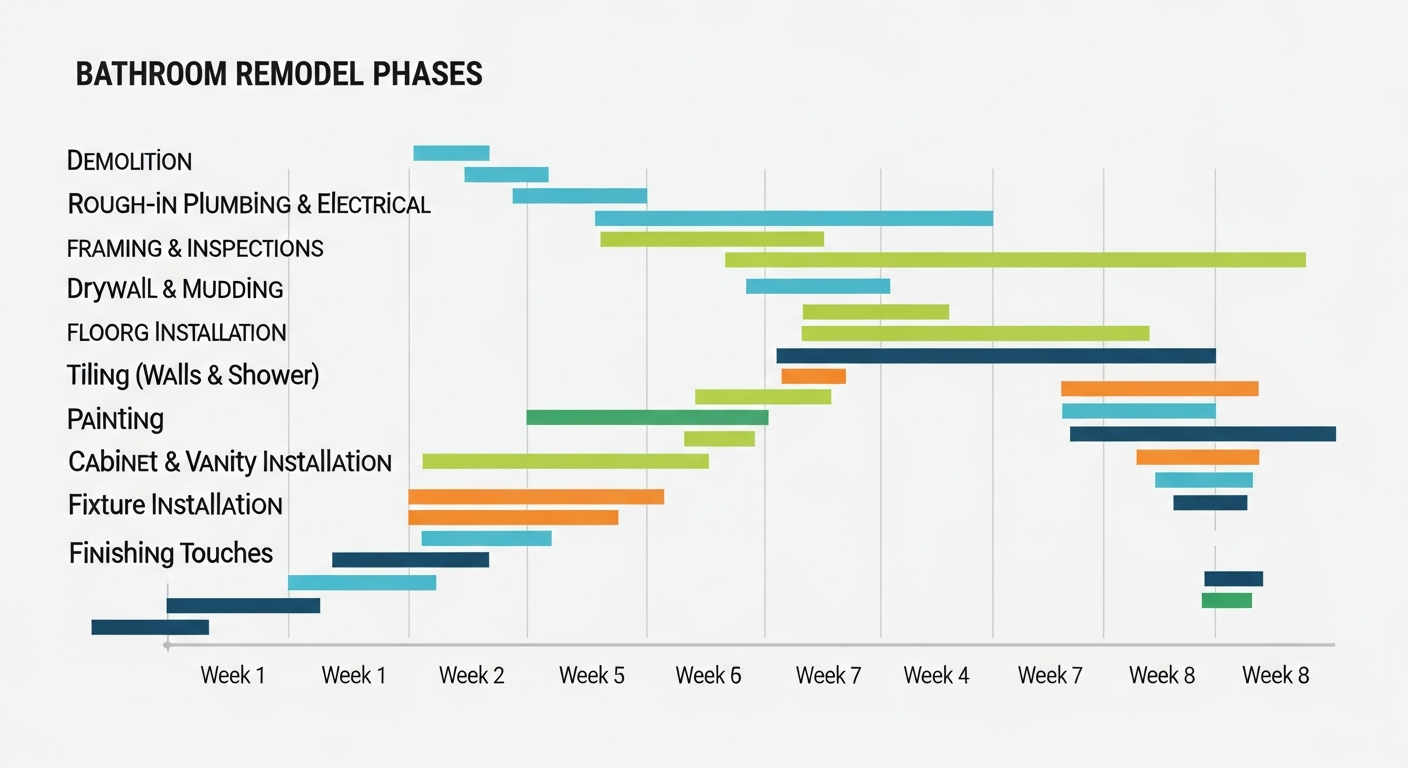
The following Gantt chart-style breakdown shows how the phases of a full gut bathroom remodel flow in sequence. Use this as a template to build your own project schedule with your contractor.
- Pre-Construction (Weeks -8 to 0): Design finalization, material ordering, permit applications, contractor scheduling
- Week 1: Demolition and debris removal (2-3 days), initial assessment of hidden conditions
- Week 2: Plumbing rough-in and electrical rough-in (3-5 days), subfloor repairs
- Week 3: Rough-in inspection, waterproofing membrane application, curing time (2-3 days)
- Weeks 4-5: Tile installation — floors, shower walls, niches (5-10 days), grouting and grout cure time
- Week 6: Vanity installation, countertop installation, toilet setting
- Week 7: Fixture installation — faucets, showerhead, lighting, exhaust fan, accessories (2-3 days)
- Week 8: Glass shower enclosure, painting, trim, caulking
- Week 9: Punch list walkthrough and corrections, final cleaning, final walkthrough
The critical path runs through demolition, rough-in, waterproofing, tile, and fixture installation — these tasks must happen in strict sequence. Tasks like ordering accessories, selecting paint colors, and purchasing mirrors can happen in parallel without affecting the schedule. For smaller projects, compress this schedule proportionally — a partial remodel follows a four-week version, and a cosmetic refresh condenses to one to two weeks. Visit our project gallery to see completed transformations and the timelines that made them possible.
Frequently Asked Questions
How long does a simple bathroom remodel take? A cosmetic refresh takes one to two weeks. A partial remodel with new tile and vanity takes three to four weeks. Most homeowners underestimate grout cure time and paint drying time, which adds days that feel unproductive but are essential for durable results.
Can I use my bathroom during a remodel? During a cosmetic refresh, you can typically use the bathroom between work sessions. During a partial or full remodel, the bathroom will be completely out of service. Plan for an alternative bathroom arrangement to reduce stress during the renovation.
How long does the tile phase take? Tile installation time ranges from three days for a simple floor-only installation to ten or more days for a complex shower with multiple tile types and niches. Add 24 to 72 hours of grout cure time after grouting.
What is a punch list? A punch list is a detailed list of minor items that need correction after main construction is finished. It is created during the final walkthrough and typically includes caulk touch-ups, paint touch-ups, grout haze cleaning, and hardware adjustments. Completion usually takes one to three days.
Do I need a permit for a bathroom remodel? Permits are required when you modify plumbing, electrical, or structural elements. Cosmetic refreshes rarely need permits. Full gut remodels almost always need building, plumbing, and electrical permits. The permit timeline varies by municipality — budget three to six weeks for approval. Check our bathroom remodel checklist for a complete list of permit requirements.
How do I avoid going over schedule? Pre-order all materials before demolition, finalize every design decision before construction begins, and hire a contractor who assigns a dedicated crew to your project. Building a two-week buffer into your project schedule accounts for unexpected delays.
Start Planning Your Timeline with HanoDecor
The best bathroom remodels start with a clear vision and a realistic schedule. Before you commit to a renovation timeline, use our bathroom remodel visualizer to see exactly how your design choices will look in your actual space. Upload a photo of your current bathroom, choose your preferred style and fixtures, and get an AI-powered visualization in seconds. Seeing the finished result before construction begins helps you make confident decisions faster — eliminating the change orders and scope creep that cause the most schedule delays.
Once your design is locked in, use our 2026 cost guide to budget accurately and our remodel checklist to ensure every phase is accounted for. Browse our gallery of completed projects for inspiration, explore pricing options for the visualizer tool, or reach out to our support team with any questions about planning your project timeline.
Bathroom Remodel Timeline FAQs
Written by
Michael Torres
Bathroom and Kitchen Design Specialist with 15 years of remodeling experience. NKBA-certified designer focused on functional layouts, fixture selection, and spa-inspired wellness spaces.