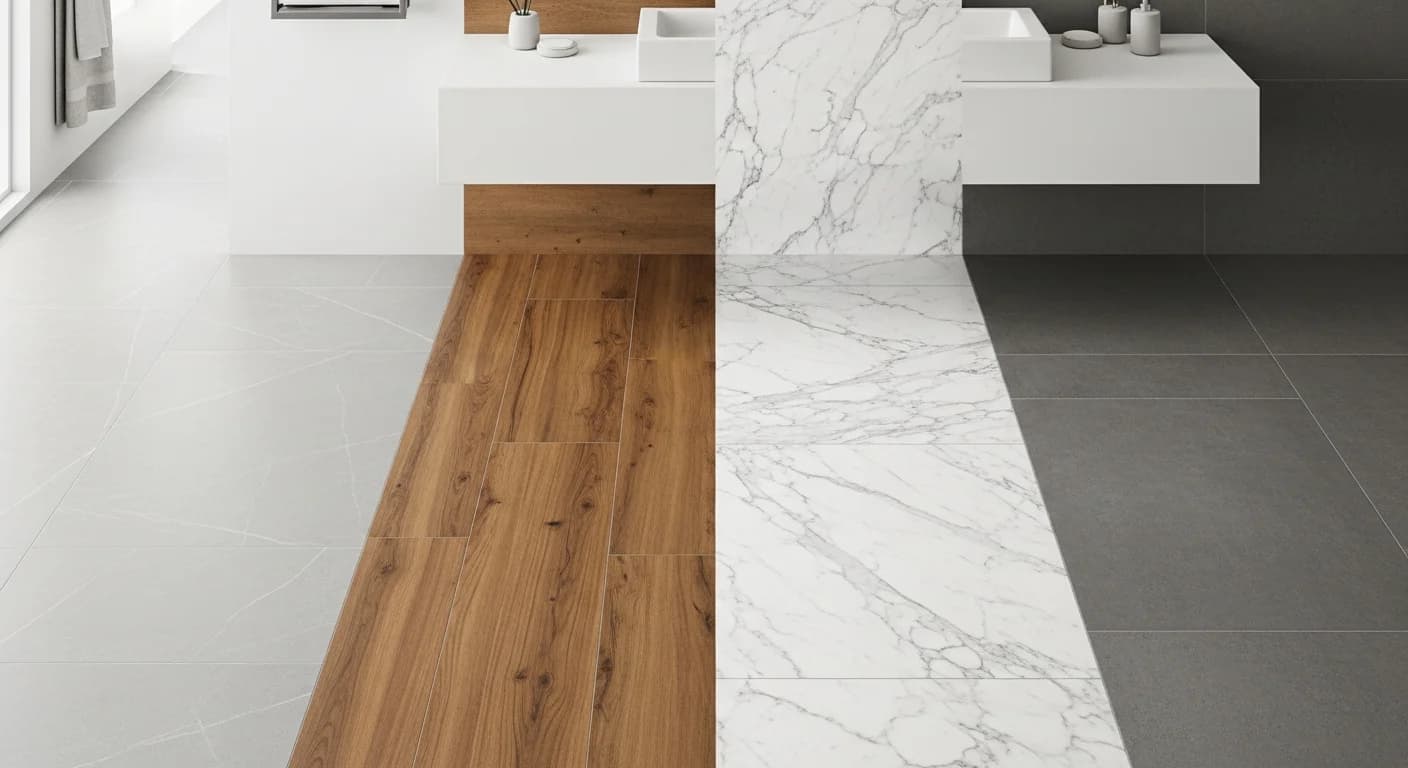
Deck Railing Ideas: Safety Meets Style
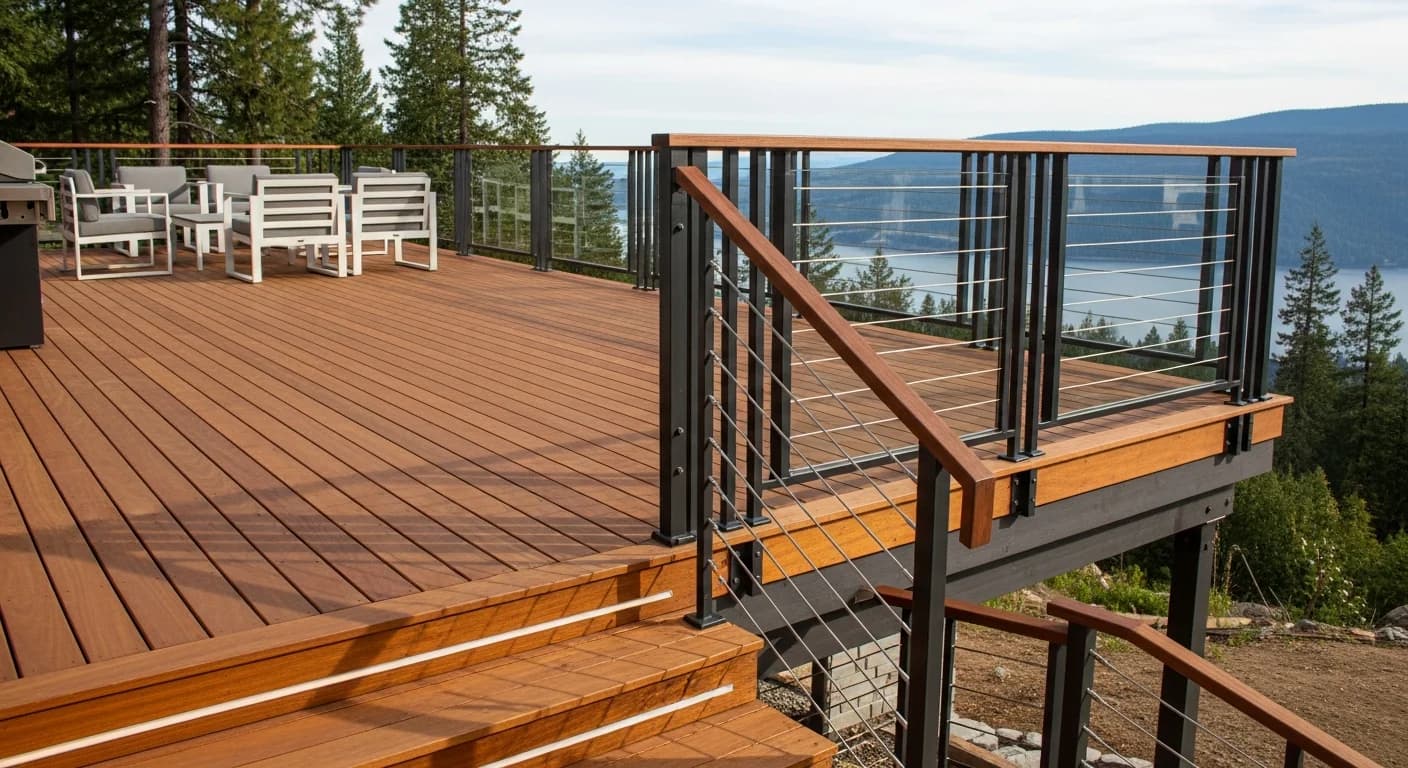
Deck railings serve dual purposes—preventing falls while defining aesthetic character. The right railing transforms a basic deck into an architectural statement while ensuring safety for family and guests. Understanding options, requirements, and design impacts helps you choose railings that protect and beautify.
Code Requirements
Safety codes establish minimum railing standards.
Height requirements: Most codes require 36-inch minimum railing height for residential decks. Decks more than 30 inches above grade require railings. Some jurisdictions require 42 inches.
Baluster spacing: Gaps between balusters cannot exceed 4 inches—preventing children from squeezing through. This applies to any infill pattern.
Graspability: Handrails must be graspable—typically 1.25 to 2 inches in diameter—allowing secure grip during movement.
Load requirements: Railings must withstand 200 pounds of lateral force. This structural requirement affects post sizing and attachment methods.
Stair railings: Stairs with more than two risers require continuous handrails. Height measured from stair nosing typically requires 34-38 inches.
Local variations: Requirements vary by jurisdiction. Always verify local codes before finalizing railing designs.
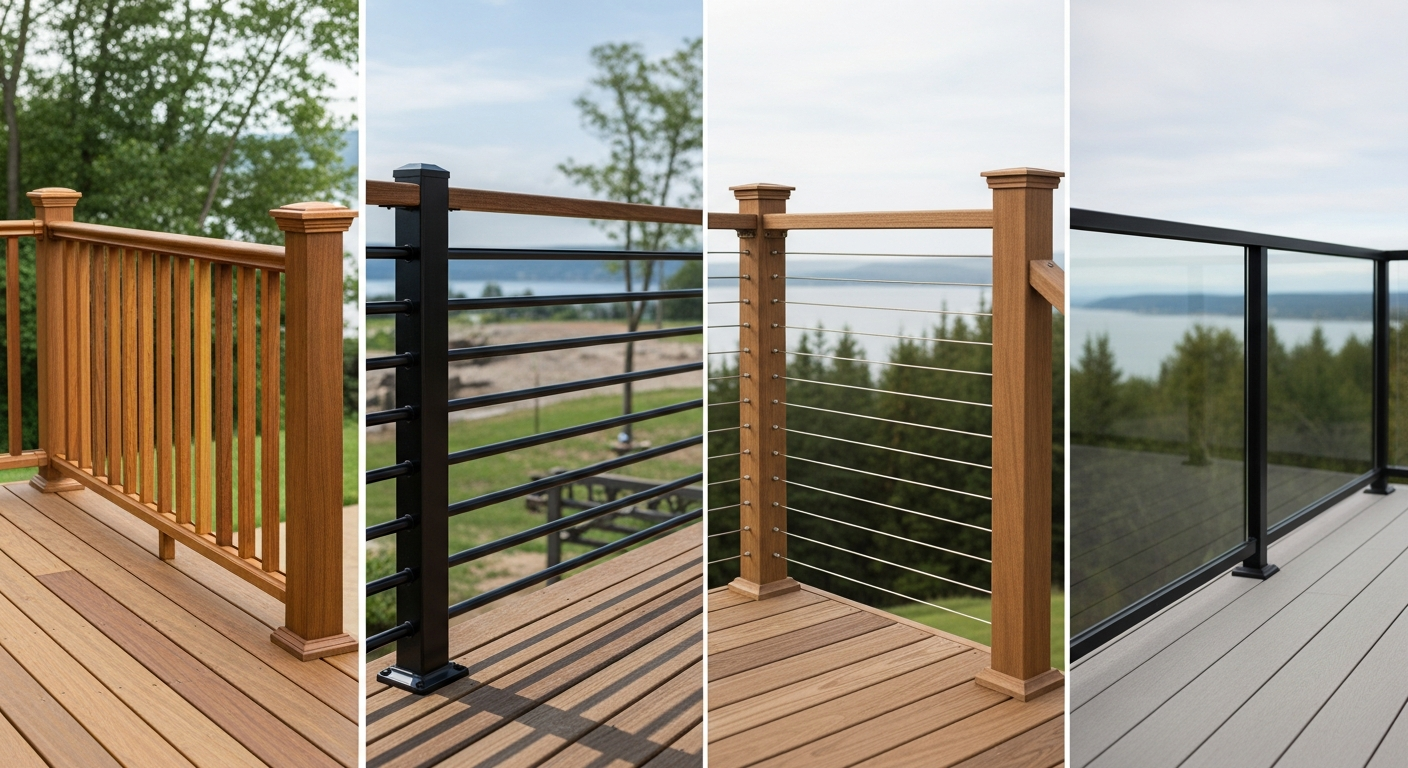
Wood Railing Options
Traditional wood railings offer warmth and customization.
Treated lumber: Pressure-treated posts, rails, and balusters provide affordable, paintable options. Require maintenance but allow complete color customization.
Cedar and redwood: Naturally rot-resistant softwoods with attractive grain. Can be stained or left to weather naturally to gray.
Hardwood options: Ipe and other tropical hardwoods create durable, distinctive railings. Match hardwood decking for cohesive appearance.
Design flexibility: Wood can be milled into virtually any profile. Custom designs limited only by imagination and craftsmanship.
Painting and staining: Wood accepts any stain or paint color. Update appearance without replacement by refinishing.
Maintenance reality: Wood railings require periodic refinishing—typically every 2-3 years. Neglected railings deteriorate quickly.
Metal Railing Systems
Metal railings provide durability with minimal maintenance.
Aluminum systems: Powder-coated aluminum resists corrosion and never needs painting. Available in black, white, bronze, and other colors.
Steel railings: Steel offers strength and thinner profiles than aluminum. Galvanized and powder-coated finishes prevent rust.
Wrought iron: Traditional wrought iron provides classic elegance with ornate design possibilities. Requires maintenance to prevent rust.
Pre-fabricated panels: Many manufacturers offer pre-assembled panels that install between posts. Simplifies installation and ensures consistent appearance.
Custom fabrication: Metal shops can create custom designs impossible with pre-fabricated systems. Higher cost but unique results.
Color matching: Powder coating allows color matching to complement any deck or home exterior.
Cable Railing
Cable systems provide modern minimalism and unobstructed views.
Visual impact: Thin stainless steel cables nearly disappear, maximizing views from deck spaces. Popular for scenic locations.
Material options: Cables typically stainless steel for corrosion resistance. Posts can be wood, metal, or composite.
Horizontal cables: Multiple horizontal cables strung between posts—most common configuration. Cables typically spaced 3 inches apart to meet codes.
Tensioning systems: Cables require proper tensioning to prevent sagging and meet code requirements. Quality hardware simplifies adjustment.
Maintenance: Periodic tension adjustment may be needed as cables stretch. Otherwise minimal maintenance required.
Cost consideration: Cable railing typically costs more than traditional balusters. Material and hardware costs add up.
Glass Panel Railings
Glass provides maximum visibility with contemporary sophistication.
View preservation: Tempered glass panels provide unobstructed views—ideal for scenic overlooks, pool areas, or small decks where visual openness matters.
Safety glass: Code-compliant railings use tempered or laminated safety glass that breaks into small pieces or holds together if shattered.
Framed vs. frameless: Framed panels mount in metal or wood frames. Frameless systems use specialized hardware for floating glass appearance.
Tinted and frosted: Colored, tinted, or frosted glass options provide privacy while maintaining light transmission.
Cleaning requirements: Glass shows fingerprints, water spots, and debris. Regular cleaning maintains clear appearance.
Cost factors: Glass railings typically represent premium option. Custom sizing and specialized hardware increase costs.
Composite and Vinyl Options
Low-maintenance synthetic materials coordinate with composite decking.
Composite railings: Same materials as composite decking create coordinated appearances. Never need painting or staining.
Vinyl systems: PVC railings resist moisture, insects, and UV damage. Available in white and limited colors.
Sleeve systems: Some systems sleeve over wood posts, providing composite appearance with wood structural strength.
Color coordination: Manufacturers offer railing colors matching their decking lines for seamless design.
Style limitations: Composite and vinyl railings offer fewer design options than wood or custom metal.
Horizontal vs. Vertical Balusters
Baluster orientation dramatically affects aesthetic impression.
Vertical traditional: Classic vertical balusters suit traditional architecture and provide familiar appearance. Work with all material types.
Horizontal modern: Horizontal balusters or rails create contemporary, linear aesthetics. Emphasize horizontal deck lines.
Mixed designs: Some railings combine horizontal and vertical elements for transitional styling.
Climbing concerns: Horizontal elements can create ladder-like climbing surfaces—consideration for families with young children.
Code compliance: Horizontal designs must still meet 4-inch maximum opening requirements between elements.
Post Cap Options
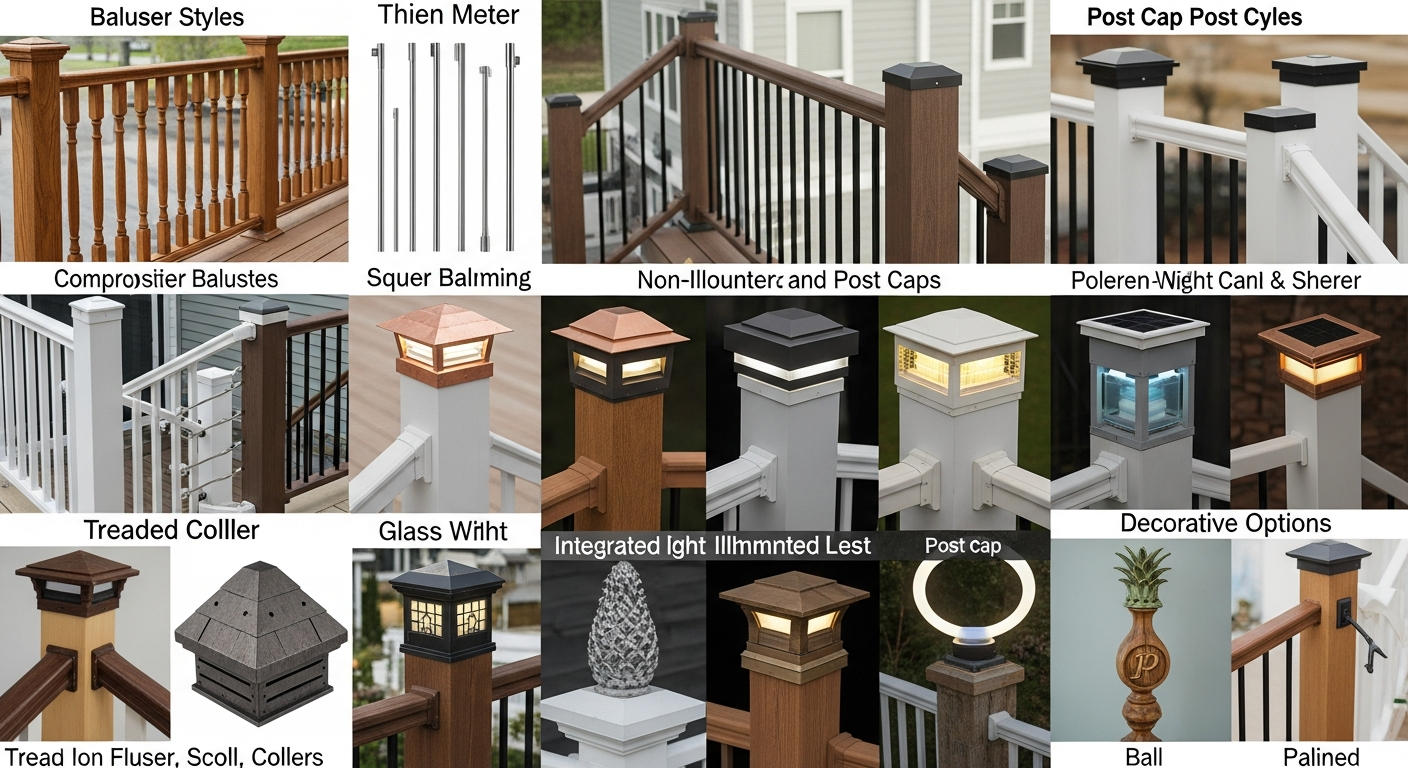
Post caps finish railings with functional and decorative details.
Flat caps: Simple flat tops protect post end grain from moisture infiltration. Basic but functional.
Decorative caps: Ornamental caps in various profiles add architectural detail and personality.
Solar post caps: Integrated solar cells charge during daylight, illuminating automatically at dusk. No wiring required.
Low-voltage lights: Wired post cap lights offer brighter, more consistent illumination than solar options.
Material matching: Caps are available in wood, composite, metal, and glass to coordinate with railing systems.
Visualize Your Railing Options
Railing choice significantly impacts deck appearance. See options on your actual deck before deciding.
HanoDecor's Deck Visualizer helps you compare railing materials and styles on photos of your outdoor space. Choose railings that combine safety with stunning design.
Deck Railing Ideas FAQs
Written by
James Park
Architectural Design Advisor specializing in exterior remodeling, siding systems, and structural home improvements. Licensed architect with 18 years of residential project experience.