Interior Paint Colors That Make Rooms Look Bigger
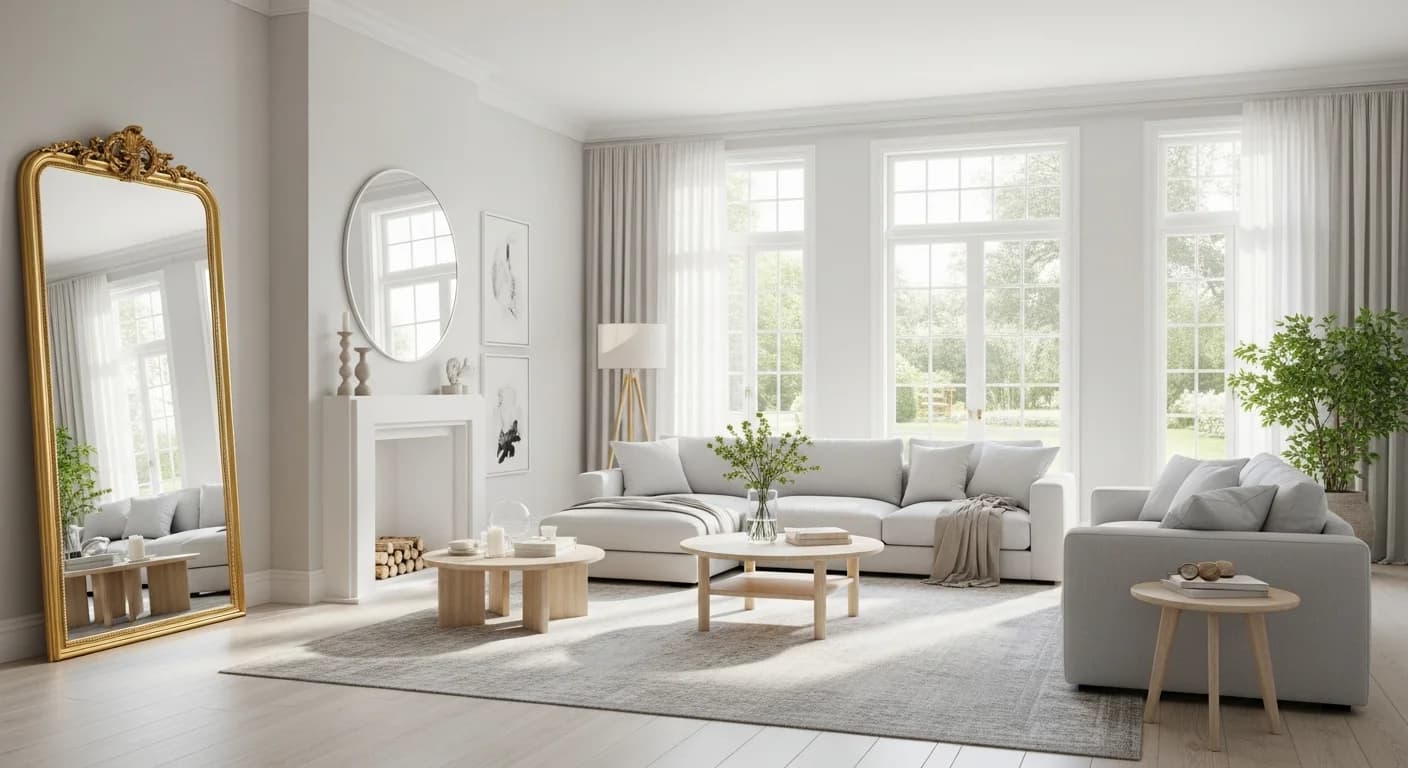
Living in a small space doesn't mean feeling cramped. The right paint colors can dramatically alter how large—or small—a room feels. Understanding the science behind color and spatial perception lets you transform even the tiniest rooms into spaces that feel open and airy.
The Science of Color and Space
Color affects spatial perception through three main principles. First, light colors reflect more light than dark colors, making rooms feel brighter and more open. Second, cool colors (blues, greens, light purples) appear to recede from the eye, creating a sense of distance and depth. Third, warm colors (reds, oranges, yellows) appear to advance toward the viewer, potentially making spaces feel smaller.
This isn't just perception—it's physics. Light colors reflect up to 80% of light hitting them, while dark colors may reflect only 10-20%. That reflected light bounces around the room, illuminating corners and making boundaries less defined. The result? Rooms feel larger than their actual square footage.
Best Paint Colors for Small Rooms
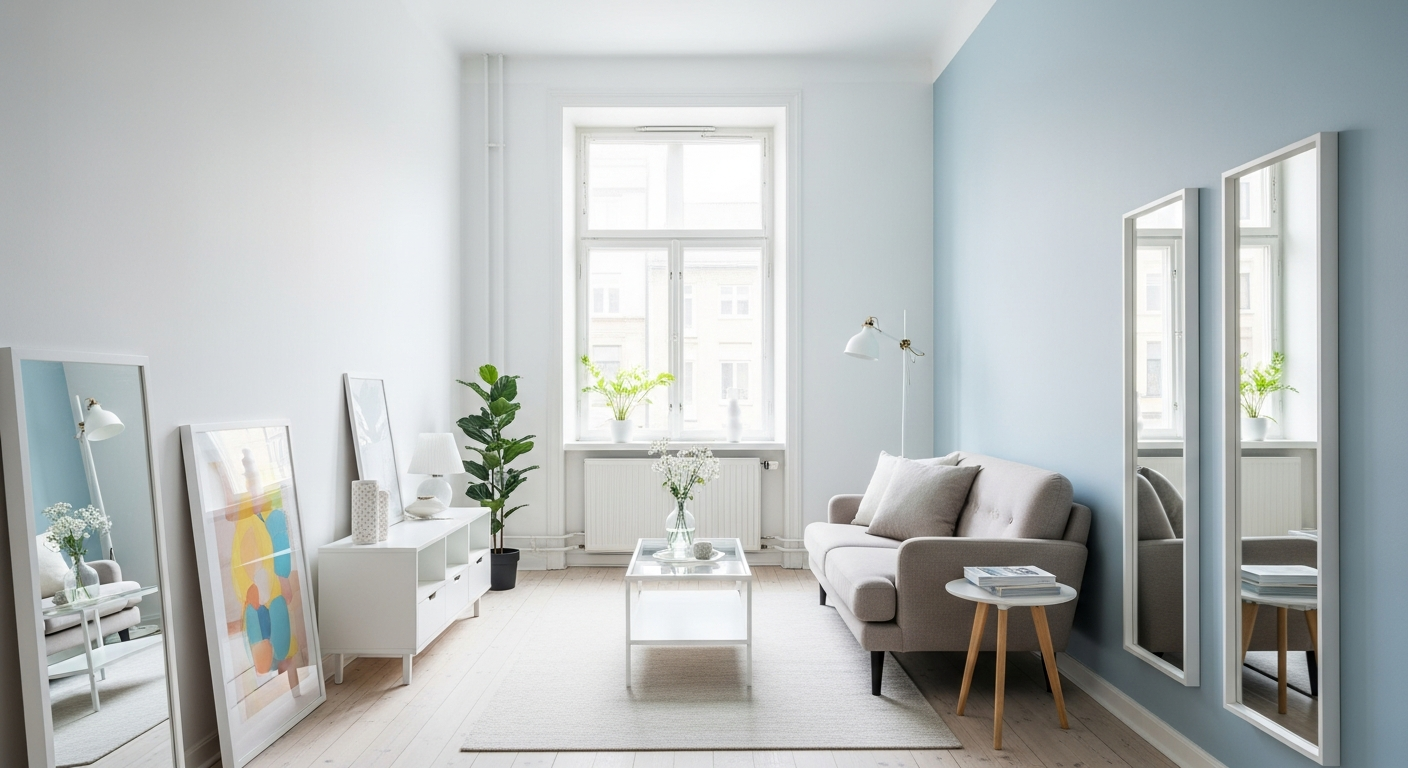
While "paint it white" is common advice, pure white can actually feel stark and institutional in small spaces. These alternatives offer the space-expanding benefits of light colors with more warmth and personality.
Soft Whites: Warm whites with cream, pink, or yellow undertones feel more welcoming than brilliant white while maintaining maximum light reflection. Benjamin Moore's Simply White or Sherwin-Williams' Creamy are excellent choices.
Light Grays: Cool light grays create a sophisticated backdrop that recedes visually. They work beautifully in modern spaces and pair with virtually any accent color. Look for grays with blue undertones for maximum space-expanding effect.
Pale Blues: Light blue is perhaps the most effective color for making rooms feel larger. Blue naturally recedes from the eye, and pale shades reflect plenty of light. Think sky blue, powder blue, or very light periwinkle.
Soft Greens: Light sage, seafoam, and mint greens combine the receding qualities of cool colors with a connection to nature that feels calming and expansive. These colors work especially well in rooms with natural light.
Blush Pinks: Very light pinks—almost white with a hint of warmth—can make rooms feel both larger and cozier. They're particularly effective in north-facing rooms that lack warm natural light.
Ceiling Color Tricks
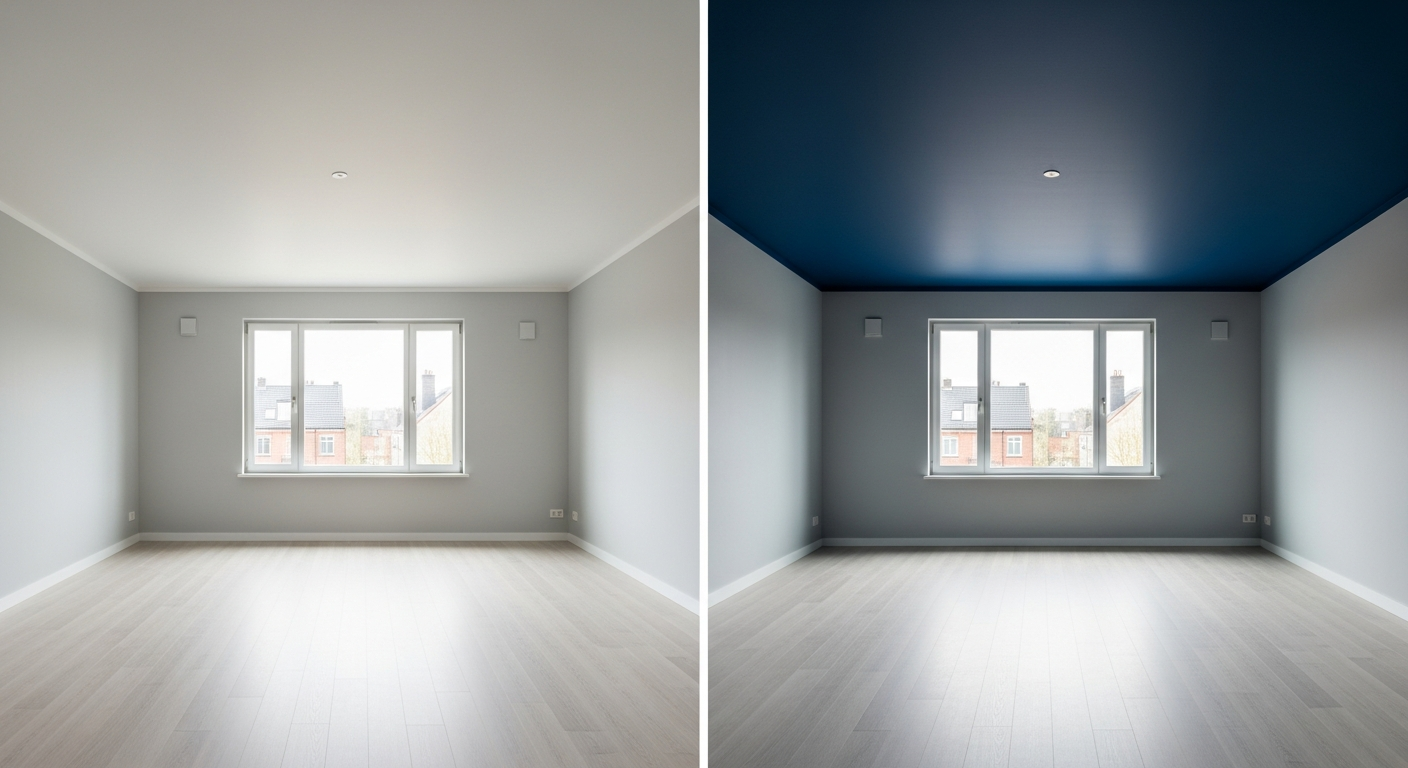
Ceilings are often overlooked, but they're crucial for spatial perception. The right ceiling color can add perceived height, while the wrong choice can make rooms feel like boxes.
Classic White Ceiling: A white ceiling that's slightly brighter than your wall color creates the illusion of height. The eye perceives the lighter ceiling as further away, making the room feel taller.
Same Color as Walls: Painting your ceiling the same color as walls eliminates the visual "lid" effect. This works especially well with light colors and can make small rooms feel like cohesive, expanded spaces rather than boxes.
Slightly Lighter Than Walls: The most effective approach for most rooms: choose a ceiling color that's 50% lighter than your wall color. This maintains distinction while maximizing the sense of height.
The Monochromatic Strategy
One of the most effective techniques for small spaces is the monochromatic approach: using varying shades of a single color throughout the room. This eliminates visual breaks that define—and therefore shrink—spaces.
For example, a small bedroom painted entirely in shades of soft blue—walls, ceiling, trim—reads as one continuous space rather than a box with distinct surfaces. The eye flows smoothly without stopping at contrasting colors, making the room feel larger than it is.
This technique works with any color family but is most effective with light, cool tones. Use the lightest shade on the ceiling, a medium shade on walls, and a slightly deeper shade for trim if you want definition.
Accent Walls in Small Spaces
Contrary to popular belief, accent walls can work in small rooms—when done correctly. The key is strategic placement and color selection.
When Accent Walls Help: A darker or bolder color on the wall furthest from the room's entrance can create depth, making the room feel longer. This works particularly well in narrow rooms.
When Accent Walls Hurt: A dark accent wall on a wall that's close to where you stand when entering the room can make the space feel cramped. Accent walls perpendicular to the longest sightline can also shrink perceived space.
Safer Alternatives: In very small rooms, skip accent walls entirely. Instead, add color through textiles, art, or a painted piece of furniture. This adds personality without compromising spatial perception.
Paint Finish Matters Too
Sheen affects light reflection, which affects spatial perception. Higher-sheen finishes reflect more light and can make rooms feel slightly larger, while flat finishes absorb light.
For small spaces, consider satin or eggshell finishes on walls. They reflect enough light to help expand the space while hiding minor imperfections. Flat paint can work on ceilings where imperfection-hiding matters more than light reflection.
Avoid high-gloss on walls in small rooms—while it reflects light, it also highlights every flaw and can feel too shiny for living spaces.
Test Before Committing
Color affects spaces differently based on lighting, furnishings, and room orientation. A color that works beautifully in a magazine photo may not have the same effect in your specific room.
This is where AI visualization becomes invaluable for small spaces. HanoDecor's AI Room Painter lets you test light colors on your actual walls, seeing exactly how different shades will affect your room's perceived size. Try ten variations of light blue, compare soft greens to pale grays, or experiment with the monochromatic approach—all before spending money on paint.
Don't let limited square footage limit your style. With the right colors, even the smallest rooms can feel open, airy, and inviting.
Interior Paint Colors That Make Rooms Look Bigger FAQs
Written by
Sarah Chen
Senior Color Consultant with 12 years of residential exterior design experience. Specializes in architectural color theory, paint technology, and curb appeal optimization.