Kitchen Cabinet Remodel: Refacing vs Replacing – Which Saves More?
Cabinet decisions represent the largest portion of most kitchen remodel budgets. The choice between refacing existing cabinets and replacing them entirely involves significant cost differences and impacts everything from project timeline to final results.
Understanding Refacing
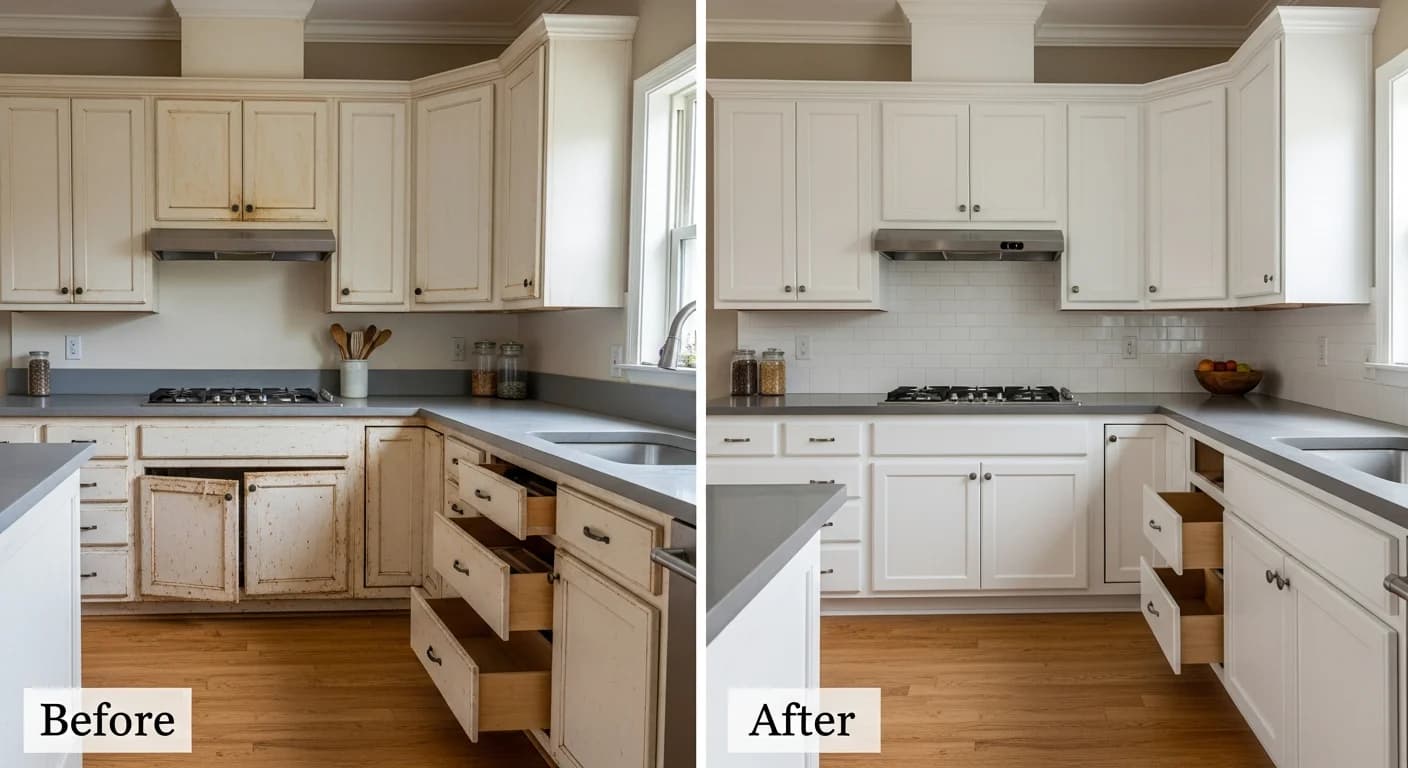
Cabinet refacing replaces visible surfaces while keeping existing cabinet boxes and layout.
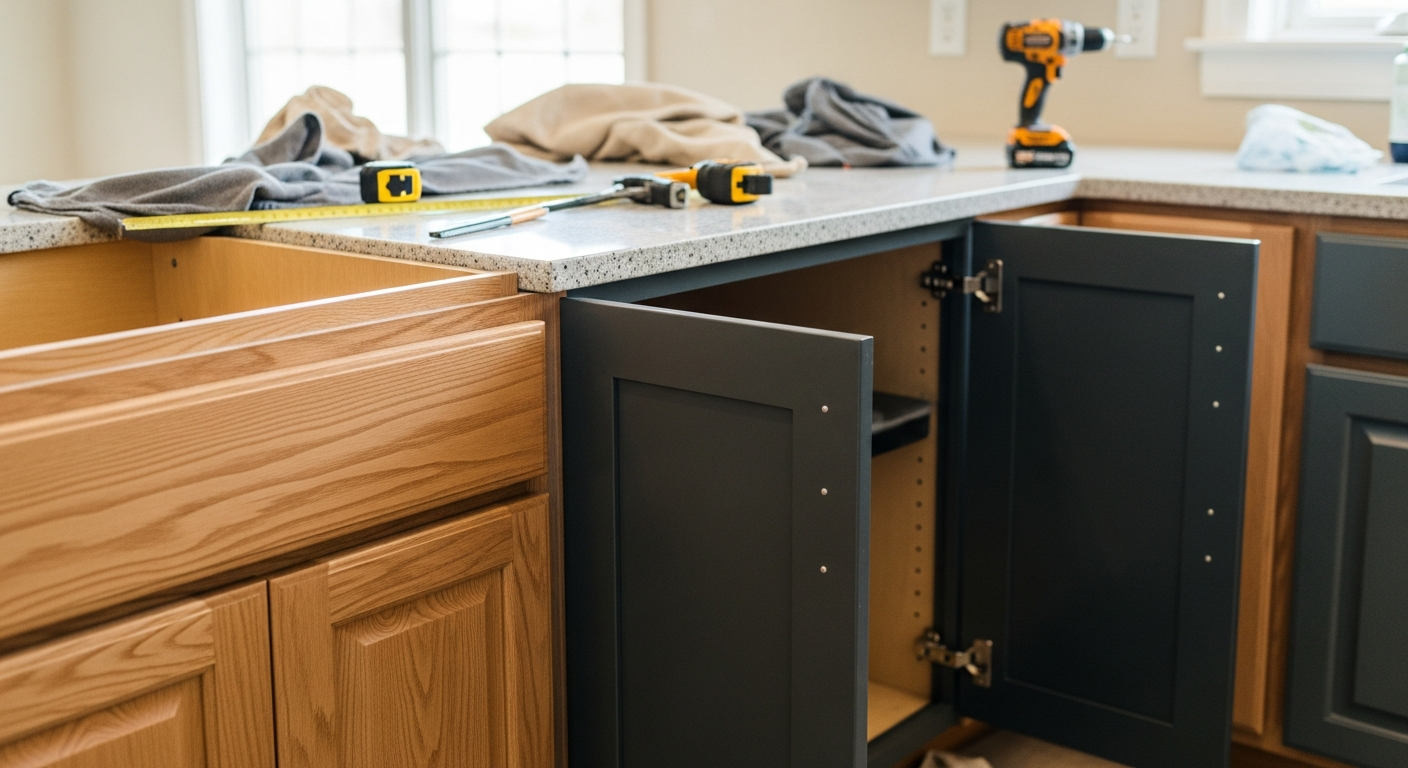
What changes: Door and drawer fronts are replaced entirely with new materials. Exposed cabinet frames get covered with matching veneer. New hinges and hardware complete the transformation.
What stays: The cabinet boxes themselves—the structural components attached to your walls—remain in place. Layout stays identical. Interior shelving typically stays unchanged.
Typical cost: Refacing costs 30-50% of full replacement, typically $4,000-$9,500 for average kitchens. Premium door styles and materials can push costs higher.
Timeline: Refacing typically completes in 2-4 days. Your kitchen remains mostly functional throughout, with minimal disruption.
DIY potential: Refacing requires moderate skills but is achievable for capable DIYers. Professional results may require professional installation.
Understanding Replacement
Complete cabinet replacement removes everything and starts fresh with new cabinets.
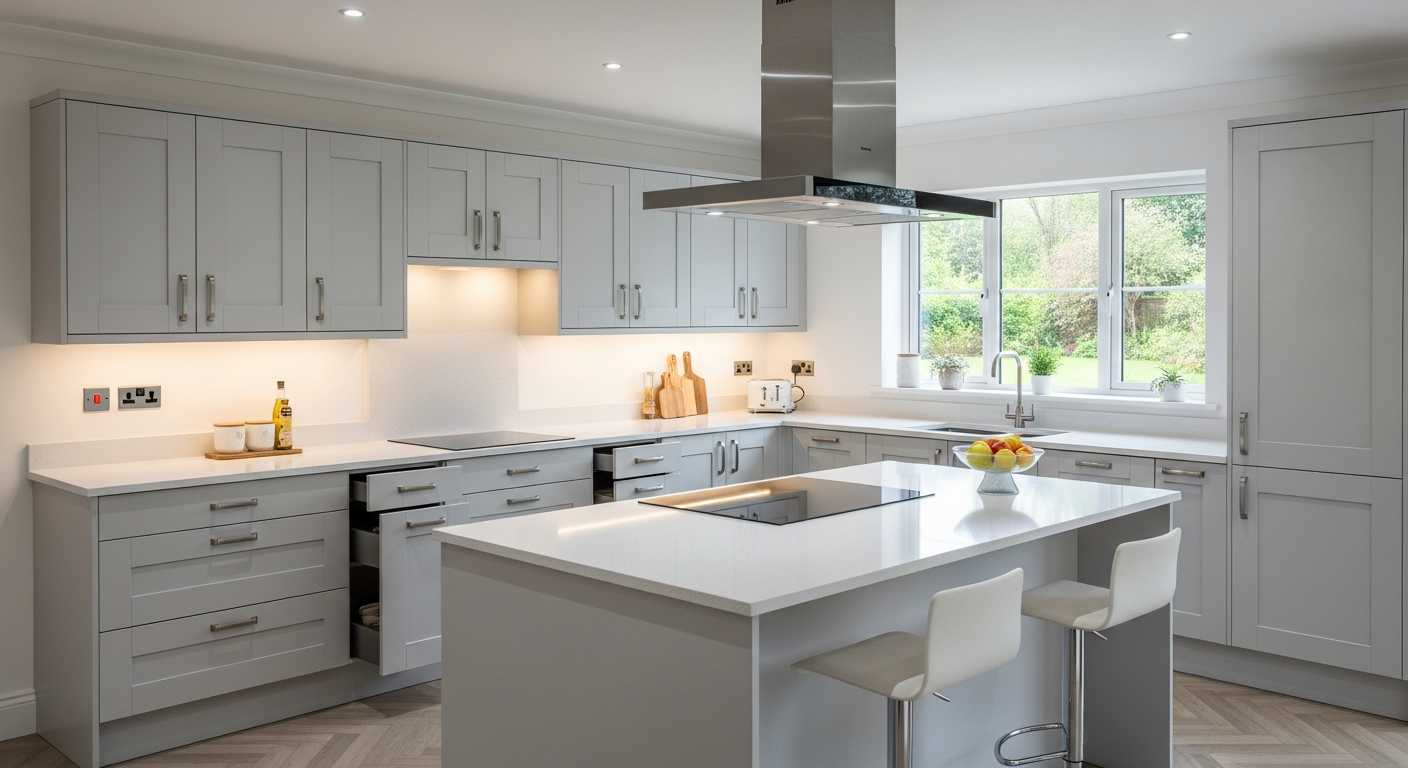
Complete flexibility: New cabinets mean complete layout freedom. Move the sink, add an island, reconfigure storage—anything is possible.
Quality upgrade opportunity: If existing cabinet boxes are poor quality, damaged, or inefficiently designed, replacement addresses these issues. Refacing can't fix structural problems.
Typical cost: Full replacement runs $8,000-$25,000+ depending on cabinet quality, kitchen size, and installation complexity.
Timeline: Expect 2-6 weeks from demolition to completion. Your kitchen will be largely unusable during this time.
Professional requirement: Cabinet installation requires precision. Professional installation is strongly recommended for optimal results.
When to Choose Refacing
Refacing makes sense under specific circumstances.
Cabinet boxes are solid: If your cabinet boxes are structurally sound, well-constructed, and properly installed, refacing preserves this value.
Layout works: If your current cabinet configuration suits your needs, there's no reason to change it. Refacing gives new appearance without unnecessary reconstruction.
Budget constraints: When budgets are tight, refacing delivers dramatic visual transformation at significantly lower cost.
Timeline pressure: If you need results quickly—selling a home, upcoming event—refacing's speed offers significant advantage.
Environmental consideration: Refacing generates far less waste than replacement. Keeping functional materials in use has environmental value.
When to Choose Replacement
Certain situations call for complete replacement despite higher cost.
Poor existing quality: Particleboard boxes, water damage, or poor construction can't be fixed with new doors. Start fresh with quality materials.
Layout problems: If your current layout frustrates you daily—insufficient storage, poor work triangle, wasted space—only replacement addresses these issues.
Updating for sale: Buyers can tell the difference between new cabinets and refacing. Major renovations for sale may justify full replacement.
Style changes requiring new configuration: Some design changes—adding drawers where doors existed, incorporating modern features—require new cabinet boxes.
Complete kitchen renovation: When you're already moving plumbing, electrical, and walls, replacing cabinets adds marginally to an already major project.
Comparing Results
Both approaches can produce beautiful results, but they're not identical.
Refacing appearance: Modern refacing looks excellent. Quality materials and professional installation rival new cabinet appearance. Interior remains original.
Replacement advantages: New cabinets can include soft-close drawers, pull-out organizers, and modern storage solutions throughout—not just on surfaces.
Longevity: Quality refacing lasts 15-20 years. Quality new cabinets can last 30+ years. Consider how long you'll remain in your home.
Return on investment: Both approaches recoup significant percentages at sale, though complete kitchen renovations typically score higher in buyer appeal.
Visualize Your Options
Before deciding, see how different door styles and colors would look on your existing cabinets.
HanoDecor's Cabinet Visualizer helps you experiment with colors and styles on photos of your actual kitchen. Whether you choose refacing or replacement, seeing options in your space guides better decisions.
Kitchen Cabinet Remodel FAQs
Written by
Michael Torres
Bathroom and Kitchen Design Specialist with 15 years of remodeling experience. NKBA-certified designer focused on functional layouts, fixture selection, and spa-inspired wellness spaces.