Kitchen Lighting Ideas: Task, Ambient, and Accent
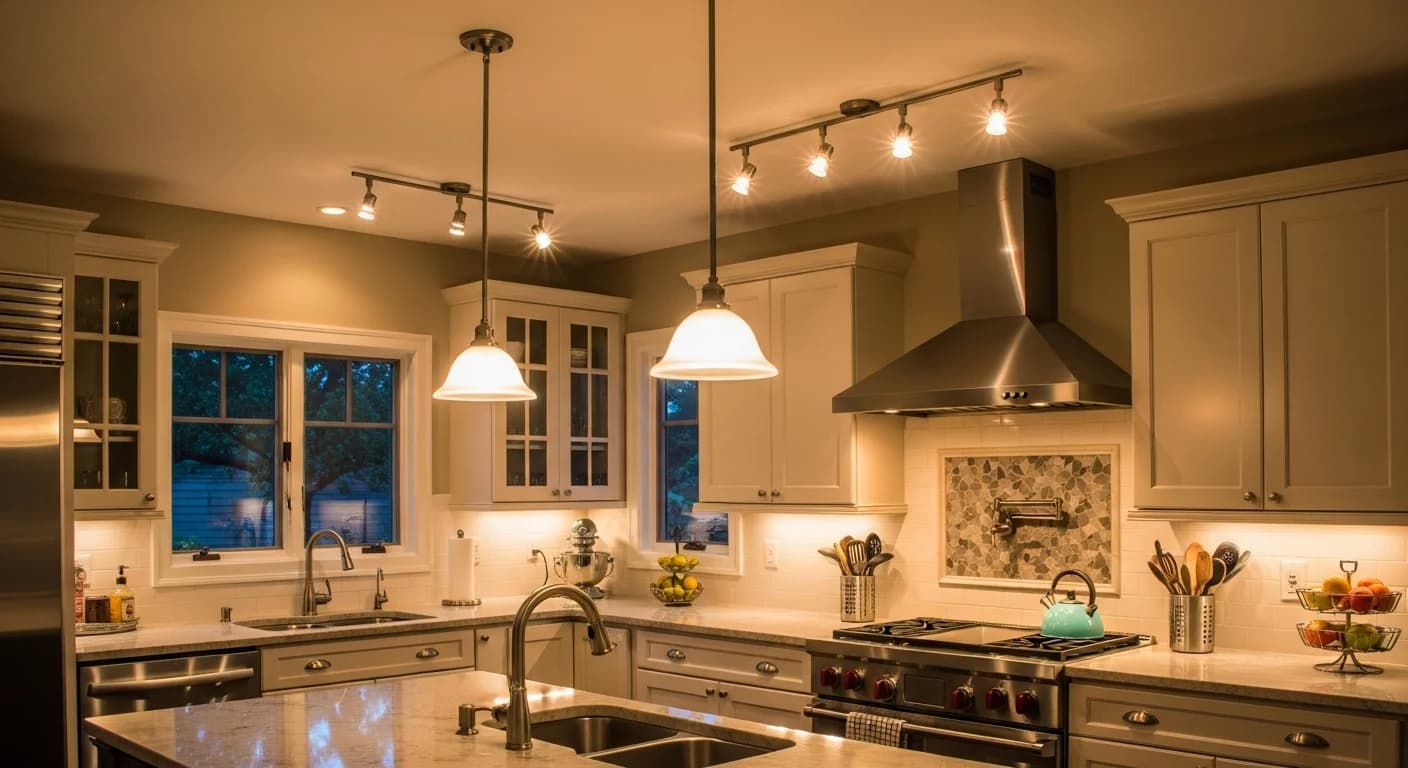
Kitchens need the best lighting of any room in the house. You're handling sharp knives, hot surfaces, and precise measurements—good lighting isn't just aesthetic, it's safety. But kitchens also serve as gathering spaces where ambiance matters. Layered lighting delivers both function and atmosphere.
Understanding Kitchen Lighting Layers
Effective kitchen lighting combines three types, each serving different purposes.
Ambient (general) lighting: Overall illumination that lets you safely navigate and see the entire space. Recessed lights, flush mounts, or large fixtures provide ambient light.
Task lighting: Focused illumination for specific work areas—countertops, stove, sink. Under-cabinet lights and pendant lights over work surfaces provide task lighting.
Accent lighting: Decorative lighting that adds atmosphere and highlights features. In-cabinet lights, toe-kick strips, and decorative pendants provide accent lighting.
A well-lit kitchen includes all three layers, each on separate switches or dimmers for maximum flexibility.
Task Lighting Essentials
Task lighting prevents shadows on work surfaces—crucial for safe, comfortable cooking.
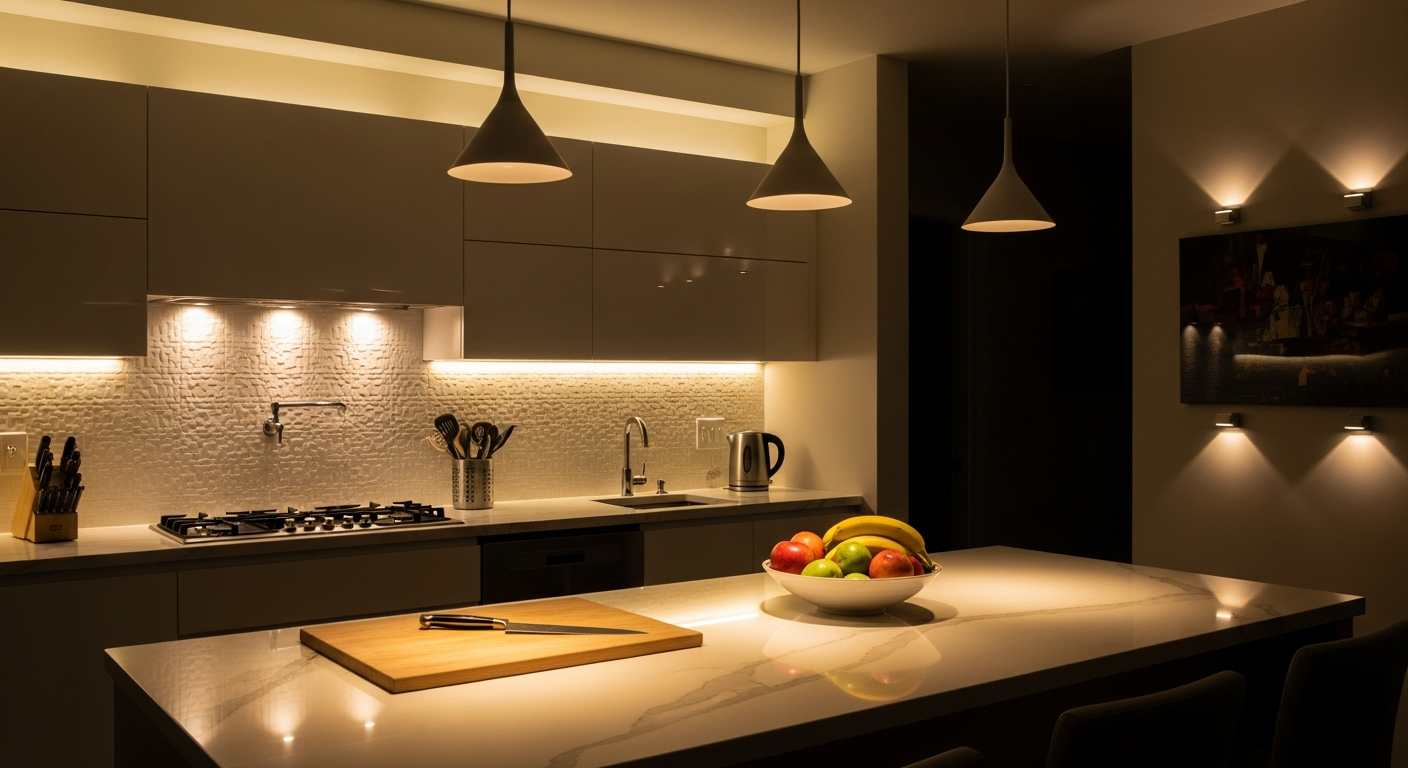
Under-cabinet lights: LED strips or puck lights beneath upper cabinets illuminate countertops directly. This is the single most important task lighting in most kitchens. Continuous LED strips provide even illumination without dark spots.
Over-island pendants: Islands used for prep need task lighting. Pendants hung 30-36 inches above the counter surface provide both task illumination and design interest.
Over-sink lighting: A pendant or recessed light directly over the sink illuminates this frequently-used work area. If your sink is below a window, the pendant provides lighting after dark.
Stove/range lighting: Range hoods typically include built-in task lights. Ensure your hood has adequate illumination; supplement with recessed lights if needed.
Inside-cabinet lighting: Lights inside deep pantries and corner cabinets make contents visible. Motion-activated options turn on when doors open.
Ambient Lighting Options
Ambient lighting provides overall illumination. Several approaches work in kitchens.
Recessed lighting: The most common kitchen ambient choice. Clean, unobtrusive, and effective. Space 4-6 feet apart for even coverage; use 4-inch or 6-inch fixtures depending on ceiling height.
Track lighting: Flexible and adjustable, track lighting directs light where needed. More visible than recessed but offers repositioning flexibility.
Flush and semi-flush mounts: In kitchens without recessed capability, surface-mounted fixtures provide ambient light. Choose fixtures that complement your style.
Ceiling fans with lights: In appropriate climates, ceiling fans with integrated light kits serve dual purposes. Ensure the light component is adequate for kitchen use.
Chandeliers: In formal kitchens or eat-in areas, chandeliers add both ambient light and decorative impact. Typically used in addition to recessed lights rather than alone.
Pendant Light Styling
Pendant lights over islands and peninsulas deserve special attention—they're highly visible design elements.
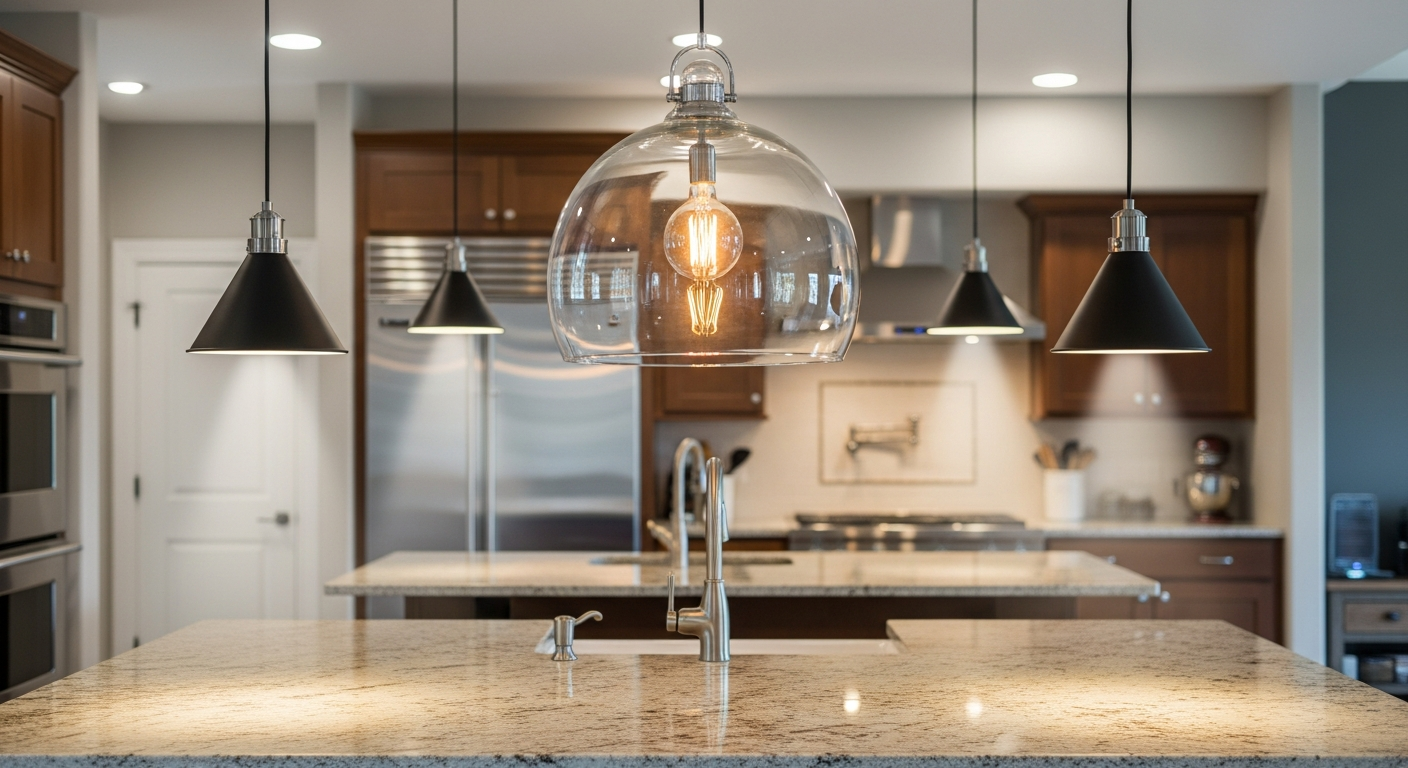
Number of pendants: Odd numbers (1 or 3) typically work better than even numbers visually. Single large pendants make bold statements; multiple smaller pendants create rhythm.
Sizing guidelines: Pendant width should be one-half to three-quarters of the counter width. Total pendant span should be about two-thirds of island length.
Hanging height: Bottom of pendants should hang 30-36 inches above the counter surface, or approximately 72 inches from the floor.
Style selection: Pendants should complement kitchen style—glass and metal for modern, lanterns for farmhouse, industrial for contemporary. They're an opportunity for design expression.
Clear vs. opaque: Clear or glass pendants provide more light but show bulbs. Opaque shades direct light downward and hide bulbs but may feel heavier.
Accent and Decorative Lighting
Accent lighting adds atmosphere and highlights kitchen features.
In-cabinet lighting: LED strips inside glass-front cabinets showcase beautiful dishes and glassware. Creates depth and warmth in the evening.
Above-cabinet lighting: LED strips above upper cabinets create ambient glow on ceilings. Particularly effective with cabinet tops that don't reach the ceiling.
Toe-kick lighting: LED strips at cabinet bases create floating effect and provide subtle night lighting. Motion-activated versions serve as safe navigation lights.
Open shelving lights: Picture lights or LED strips illuminating open shelving highlight displayed items and add visual interest.
Decorative fixtures: A statement chandelier or artistic fixture adds personality beyond pure function.
Natural Light Strategies
Daylight remains the best light source. Maximize it where possible.
Window placement: Windows over sinks are classic for good reason—task lighting during the day, connection to outdoors. Consider windows in unexpected places.
Skylights: Skylights bring natural light into interior kitchens. Tubular skylights work where traditional skylights can't.
Glass doors: French doors, sliding glass, or large windows connecting to outdoor spaces flood kitchens with light.
Light-colored surfaces: White cabinets, light counters, and pale backsplashes reflect and amplify natural light.
Dimmer Importance
Dimmers transform kitchen lighting from functional to flexible.
Why dimmers matter: Bright task lighting for cooking, dimmed ambient for dining, soft accent for evening relaxation. The same fixtures serve multiple purposes with dimmers.
Separate zones: Put different lighting layers on separate dimmers. Adjust each independently for precise control.
LED compatibility: Ensure dimmers are rated for LED bulbs. Standard dimmers may cause flickering or buzzing with LEDs.
Plan Your Kitchen Lighting
Lighting decisions are easier to make during planning than after installation. Electrical rough-in happens early in renovation—get it right the first time.
HanoDecor's Kitchen Visualizer helps you envision your complete kitchen design, including how lighting will work with your chosen cabinets, counters, and layout. Plan your layers, visualize pendant placement, and create a kitchen that's beautiful at any hour.
Kitchen Lighting Ideas FAQs
Written by
Michael Torres
Bathroom and Kitchen Design Specialist with 15 years of remodeling experience. NKBA-certified designer focused on functional layouts, fixture selection, and spa-inspired wellness spaces.