Living Room TV Wall Ideas: Stylish Entertainment Centers
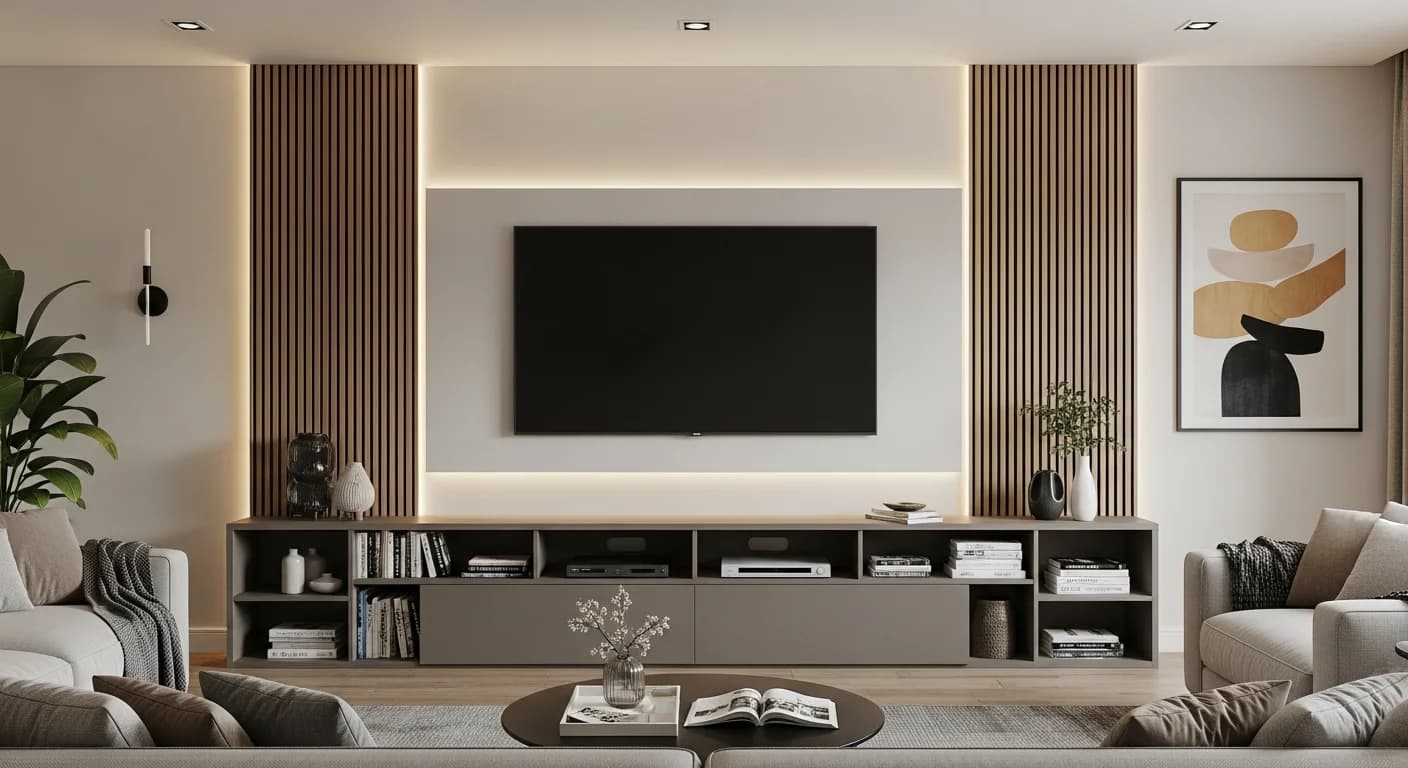
Let's face it—televisions dominate most living rooms. But that big black rectangle doesn't have to be an eyesore. With thoughtful design, your TV wall can become a intentional focal point that enhances rather than detracts from your room's aesthetic.
TV Mounting Options
How you position your TV affects both viewing comfort and room design. Consider these mounting approaches.
Wall-mounted: Clean and contemporary, wall-mounting eliminates furniture beneath the TV and creates a sleek look. Hide cables inside the wall for best results. Ensure proper height—center of screen should be at seated eye level (about 42 inches from floor).
Above fireplace: Popular but controversial. Pros: natural focal point, no additional wall space needed. Cons: often too high for comfortable viewing, heat concerns with wood-burning fireplaces. If you choose this location, angle the mount downward and ensure adequate heat protection.
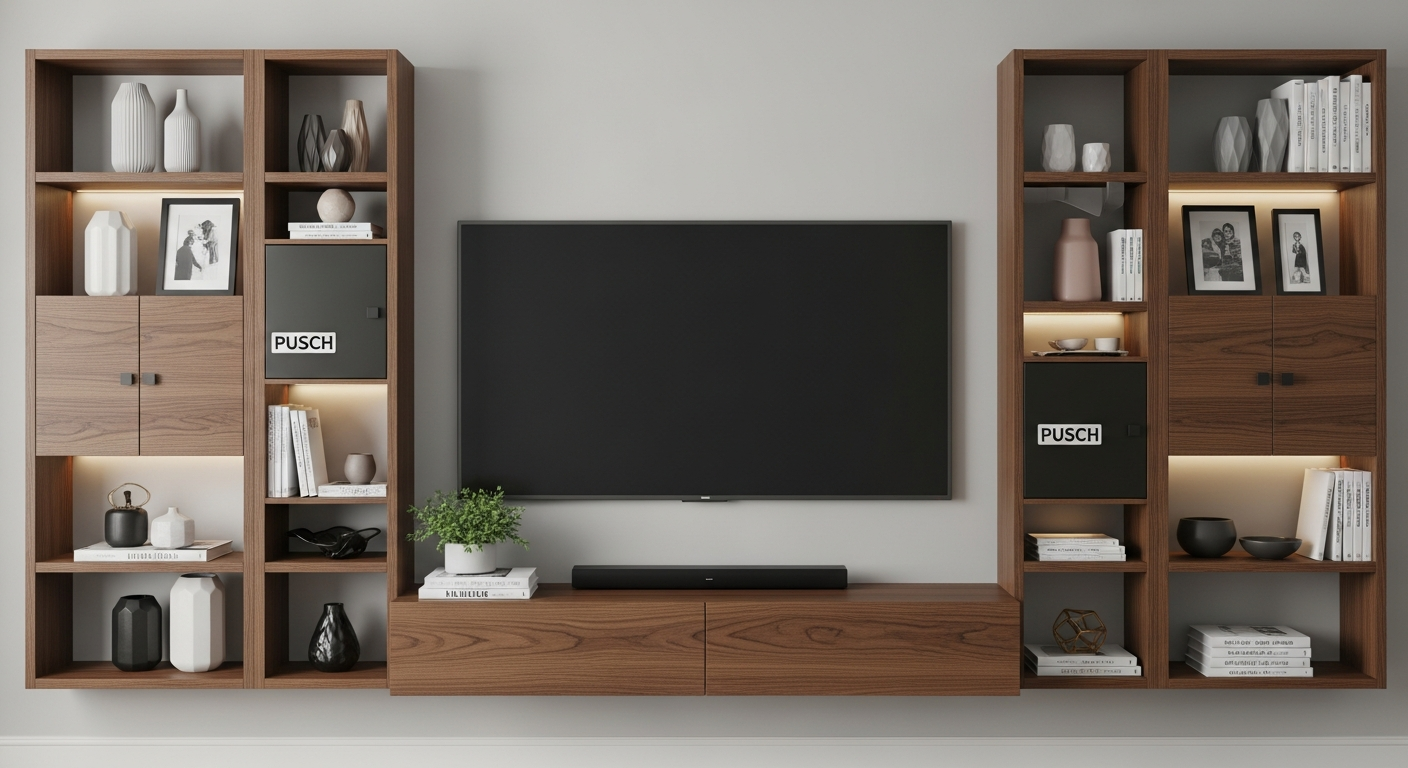
In built-in cabinetry: Surrounding the TV with custom shelving and cabinets creates intentional, architectural look. The TV becomes part of the design rather than an afterthought.
On furniture: Traditional media consoles, entertainment centers, and TV stands work well when wall-mounting isn't possible. Choose furniture that's appropriately scaled—too small looks odd, too large overwhelms.
Hiding or Disguising the TV
For those who don't want their living room dominated by a black screen when the TV is off, several solutions exist.
Frame TVs: Samsung's The Frame and similar products display art when not in use. The TV transforms into a gallery-quality picture frame. Worth the premium for design-conscious homeowners.
Cabinet concealment: Media cabinets with doors hide TVs completely when not in use. Pocket doors, bi-fold doors, or panels slide to reveal the screen when needed.
Gallery wall integration: Surround the TV with framed art and photographs. When thoughtfully arranged, the TV becomes one element among many rather than the sole focus.
Projector alternative: For movie enthusiasts, a projector with retractable screen eliminates the TV presence entirely when not in use.
Built-In Entertainment Centers
Custom or semi-custom built-ins create cohesive, architectural TV walls that look intentional and provide ample storage.
Full-wall built-ins: Floor-to-ceiling cabinetry flanking the TV creates a library-like feel. Include a mix of open shelving for display and closed cabinets for storage.
Floating shelves: Asymmetrical or symmetrical floating shelves around the TV add visual interest without the cost of full custom cabinetry.
IKEA hacks: Budget-friendly built-in looks using IKEA base cabinets and shelving systems can achieve custom appearance at a fraction of the cost.
Fireplace integration: When TV goes above the fireplace, built-ins flanking both create balanced, cohesive design.
Accent Walls Behind the TV
Making the wall itself special creates a backdrop that elevates the entire TV area.
Paint: A contrasting or darker paint color behind the TV creates focal point emphasis. Navy, charcoal, or deep green walls make TVs feel more intentional.
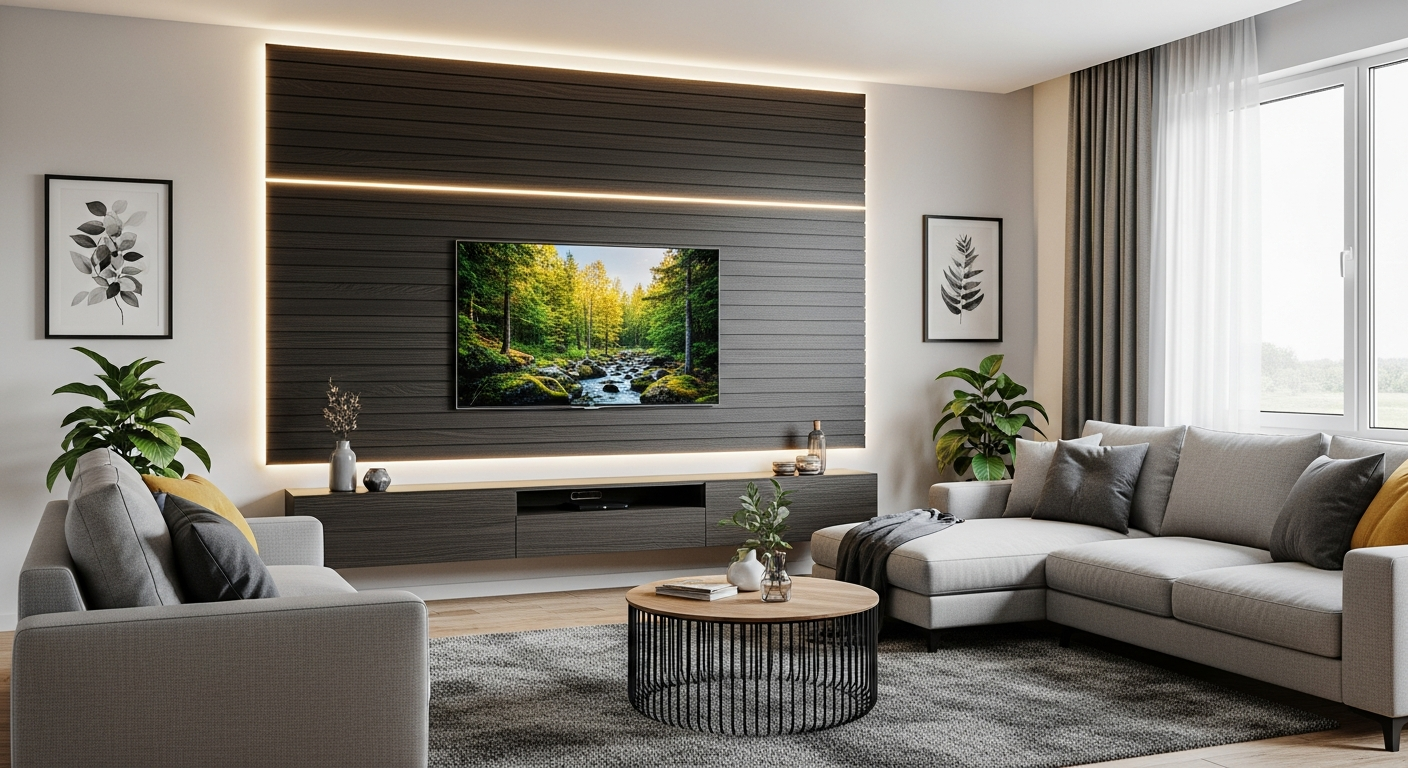
Wood paneling: Shiplap, board and batten, or reclaimed wood panels add texture and warmth. Particularly effective in farmhouse, coastal, or rustic designs.
Wallpaper: Bold or textured wallpaper creates statement walls. Grasscloth, geometric patterns, or murals add significant visual interest.
Stone or brick veneer: Natural or faux stone creates dramatic texture. Popular for media rooms and rustic-inspired spaces.
Cable Management
Nothing ruins a beautiful TV wall like visible cable chaos. Plan for cord management from the start.
In-wall concealment: For wall-mounted TVs, run power and cables inside the wall. This requires an electrician but provides the cleanest result.
Cord covers: Paintable cord covers attached to the wall hide cables without wall modification. Not invisible, but far better than exposed cables.
Furniture placement: Strategic furniture can hide cables running to floor outlets.
Wireless solutions: Streaming devices and wireless speaker systems reduce cable requirements. Some TVs now offer wireless connectivity to soundbars and receivers.
Balancing Decor
The TV shouldn't be the only thing on the wall. Thoughtful surrounding decor creates balance and reduces the black-box effect.
Symmetrical flanking: Matching items on each side (sconces, plants, art) creates formal balance. This works especially well with built-ins.
Asymmetrical arrangement: A larger piece on one side balanced by smaller grouped items on the other feels more casual and contemporary.
Below the TV: Media consoles, floating shelves, or low cabinets ground the TV and provide display space for decor.
Scale appropriately: Surrounding decor should complement, not compete with, the TV size. Small items next to a massive TV look puny; oversized pieces crowd.
Visualize Your TV Wall
TV wall design involves balancing many elements—mounting height, surrounding cabinetry, accent wall treatment, and decor. Seeing how options work together before committing prevents expensive mistakes.
HanoDecor's Living Room Visualizer lets you experiment with different TV wall approaches on photos of your actual space. Test accent wall colors, preview built-in configurations, and find the perfect balance for your entertainment center. Create a TV wall you'll love looking at—even when it's turned off.
Living Room TV Wall Ideas FAQs
Written by
Emily Rodriguez
Interior Design Editor covering living spaces, styling trends, and room makeovers. Former Architectural Digest contributor with a focus on accessible, budget-conscious design.