Pool Deck Ideas: Surfaces That Surround in Style
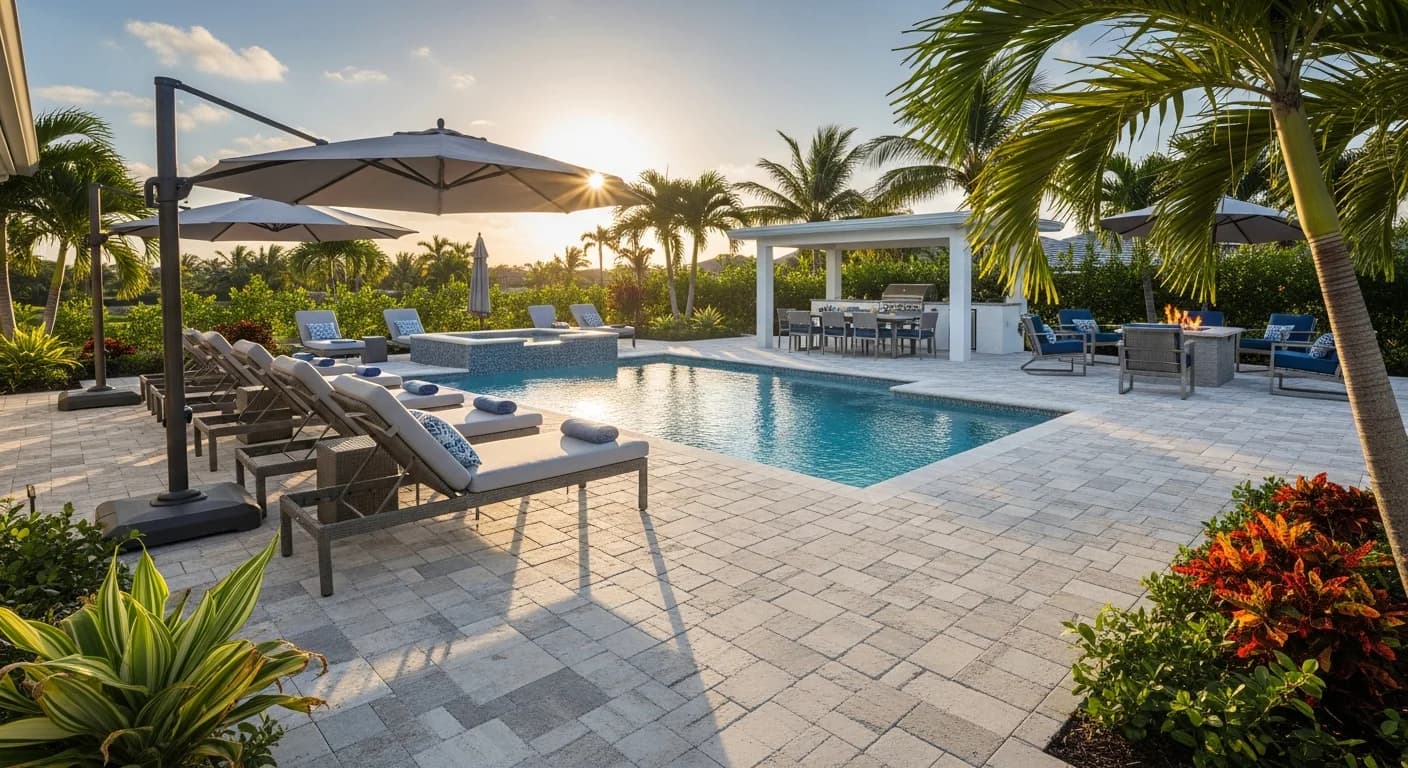
Pool decks do more than surround your pool—they define the entire outdoor experience. The right deck surface provides comfortable lounging, safe footing, beautiful aesthetics, and years of durability under sun, water, and foot traffic. Understanding material options and design considerations helps you choose pool decking that enhances your backyard oasis.
Why Pool Deck Choice Matters
Pool decks face unique challenges requiring careful material selection.
Heat exposure: Decks absorb summer sun, becoming uncomfortably or even dangerously hot for bare feet. Material choice significantly affects surface temperature.
Water exposure: Constant splashing, wet feet, and pool chemistry demand materials that resist water damage and maintain grip when wet.
Chemical resistance: Chlorinated water and pool chemicals can damage or discolor some materials. Pool-specific options resist chemical exposure.
Foot traffic: Pool decks see heavy barefoot traffic. Surfaces must remain comfortable while resisting wear.
Visual impact: As the frame around your pool, deck surfaces significantly affect overall aesthetic impression.
Concrete Options
Concrete remains the most common pool deck material with numerous finishing options.
Brushed concrete: Basic brushed finish provides economical, slip-resistant surface. Can be colored or stained for improved appearance.
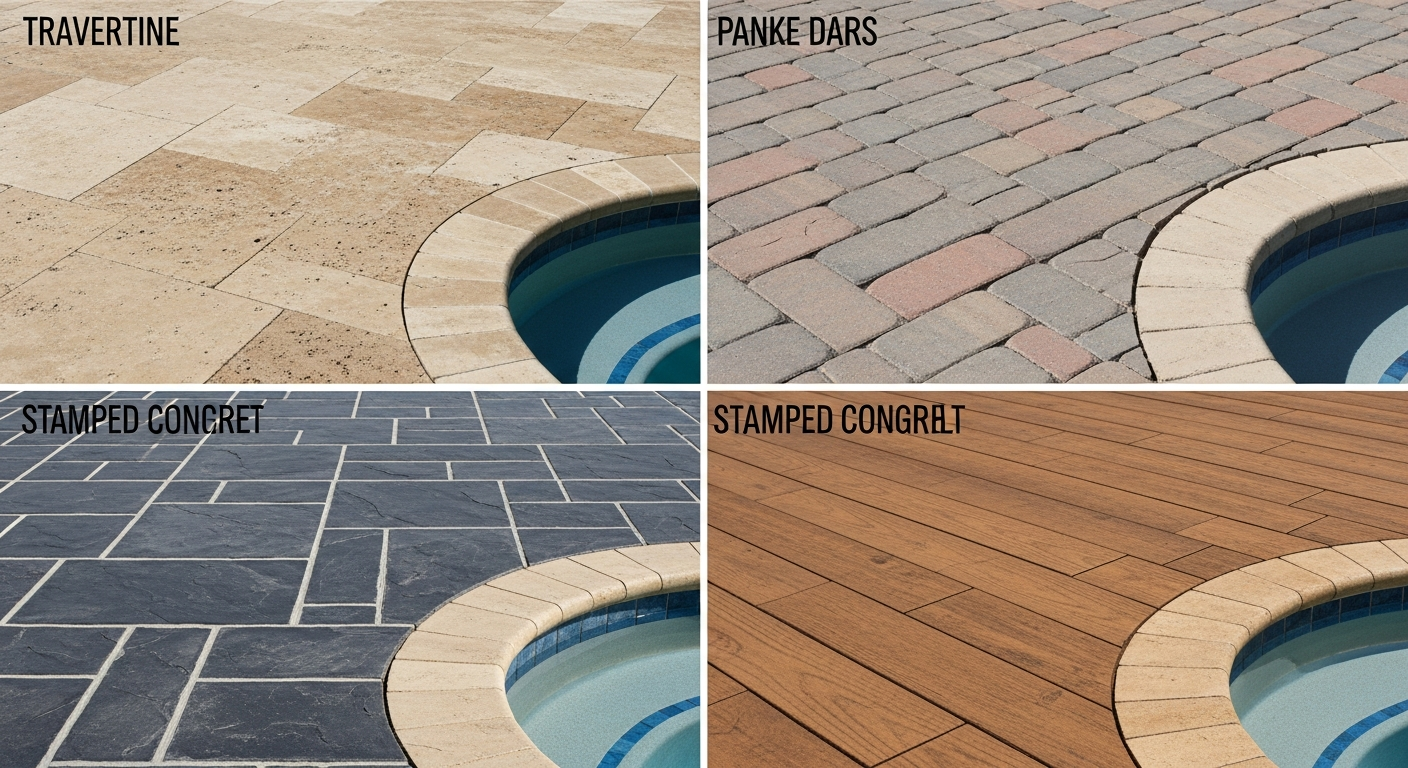
Stamped concrete: Patterns pressed into wet concrete mimic stone, brick, or tile at lower cost than natural materials.
Exposed aggregate: Surface grinding reveals embedded stones for textured, decorative appearance with natural grip.
Stained concrete: Acid or water-based stains add color to new or existing concrete. Creates variegated, natural-looking surfaces.
Cool deck coatings: Specialized coatings applied over concrete reflect heat and reduce surface temperatures significantly.
Concrete overlays: Thin cement-based coatings resurface existing concrete with new color and texture without full replacement.
Paver Options
Pavers offer design flexibility and easy repair.
Concrete pavers: Manufactured pavers come in countless colors, shapes, and patterns. Consistent sizing enables precise installation.
Natural stone pavers: Travertine, limestone, bluestone, and other stones provide authentic natural beauty. Each piece unique.
Porcelain pavers: Exterior-rated porcelain offers durability, stain resistance, and consistent appearance. Available in stone and wood looks.
Brick pavers: Classic brick creates traditional aesthetic with proven durability.
Interlocking systems: Some paver systems interlock for stability without rigid setting. Allow slight flexibility that resists cracking.
Repair advantage: Individual pavers can be replaced if damaged—significant advantage over poured surfaces.
Natural Stone
Natural stone creates premium pool environments.
Travertine: Popular pool stone that stays relatively cool underfoot. Natural pitting provides grip. Cream, tan, and gray tones available.
Limestone: Elegant appearance with natural variation. Cooler than many alternatives. Requires sealing for pool environments.
Bluestone: Dense, durable stone with sophisticated blue-gray coloring. Handles moisture and traffic well.
Flagstone: Irregular natural shapes create organic, naturalistic appearances. Installation more complex but distinctive results.
Sandstone: Warm earth tones and natural texture. Softer than other stones—may show wear over time.
Sealing requirements: Most natural stones require periodic sealing to resist staining and chlorine damage.
Cool Deck Surfaces
Heat reduction is crucial for comfortable pool environments.
Acrylic coatings: Specialized acrylic deck coatings reflect solar heat, reducing surface temperatures by 20-30 degrees compared to plain concrete.
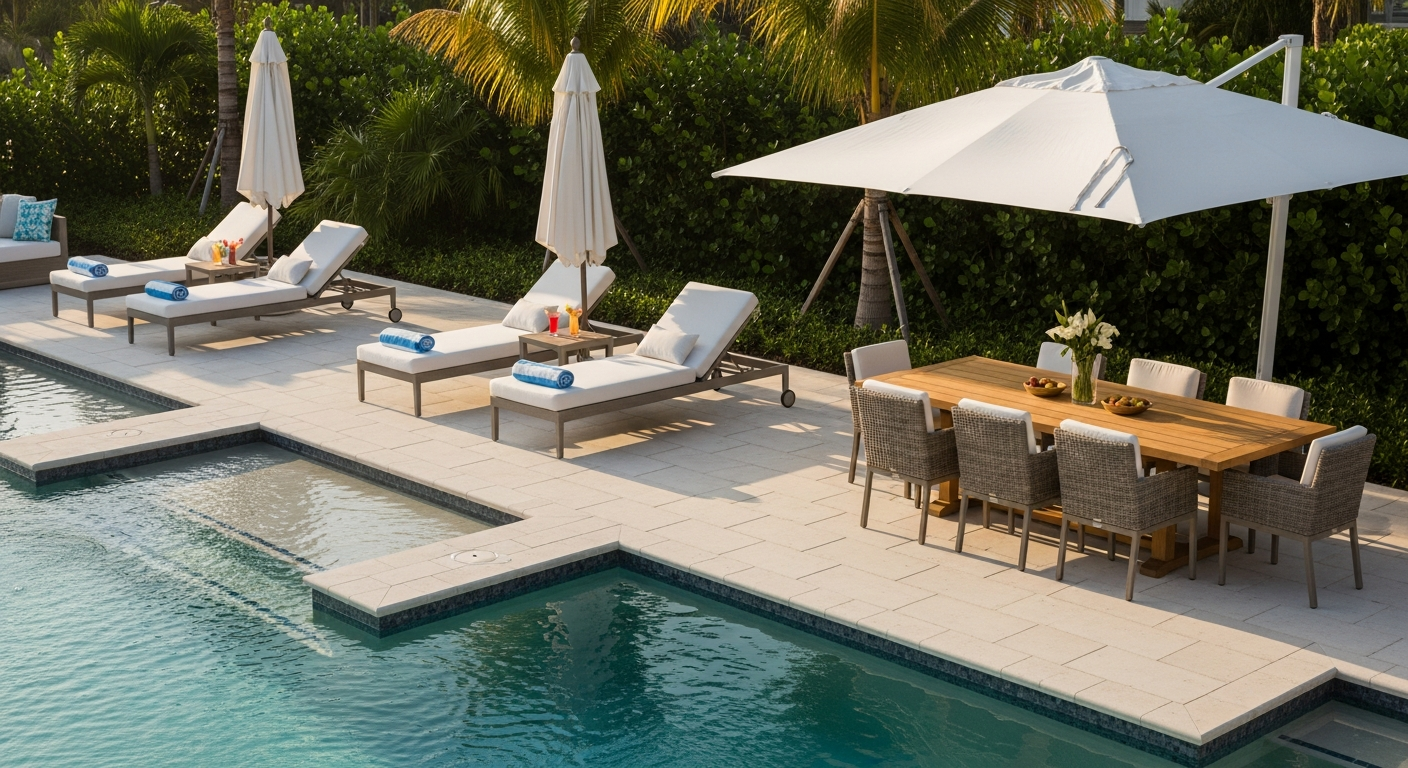
Light colors: Lighter deck colors inherently absorb less heat than dark surfaces. Choose tan, cream, or gray over dark brown or charcoal.
Textured finishes: Surface texture reduces contact between feet and hot material, improving perceived comfort.
Material density: Porous materials like travertine and some pavers stay cooler than dense, solid surfaces.
Shade integration: Pergolas, umbrellas, and shade sails reduce deck heat by blocking direct sun.
Slip Resistance
Safety on wet surfaces is non-negotiable.
Textured finishes: Brushed, stamped, or exposed aggregate concrete provides natural grip.
Slip-resistant coatings: Applied coatings add texture to existing smooth surfaces.
Material selection: Naturally textured materials like travertine and textured pavers inherently resist slipping.
Proper drainage: Standing water increases slip risk. Adequate slope and drainage keep surfaces drier and safer.
Finish maintenance: Worn smooth surfaces may need recoating or treatment to maintain adequate grip.
Drainage Planning
Water management protects decks and prevents hazards.
Slope requirements: Pool decks should slope away from the pool and toward drainage points. Minimum 1/8 inch per foot slope prevents ponding.
Deck drains: Strategic drain placement captures water before it reaches problem areas.
Permeable options: Permeable pavers and materials allow water to drain through rather than running off.
Foundation protection: Water should drain away from home foundations and pool structures.
Furniture Zones
Plan deck space for furniture and activities.
Lounge areas: Allow adequate space for lounge chairs—at least 4 feet width each plus circulation space.
Dining zones: Tables and chairs need level surfaces away from splash zones. Consider shade for daytime dining comfort.
Umbrella bases: Plan for umbrella placement with proper base support or built-in sleeves.
Traffic paths: Maintain clear circulation between furniture groupings and pool access points.
Equipment access: Leave clear paths to pool equipment for maintenance access.
Expansion Possibilities
Adding deck space enhances pool area functionality.
Patio extensions: Expanding existing decks creates room for additional seating, dining, or activity areas.
Multi-level designs: Raised or sunken areas add visual interest and create distinct zones.
Covered additions: Pergolas or covered patios extend usable hours and seasons.
Outdoor kitchen integration: Deck expansions can accommodate cooking and serving areas.
Visualize Your Pool Deck
Pool deck surfaces significantly impact the overall pool experience. See how different materials and designs work before committing.
HanoDecor's Outdoor Visualizer helps you experiment with deck surfaces and layouts on photos of your pool area. Create the perfect poolside environment with confidence.
Pool Deck Ideas FAQs
Written by
James Park
Architectural Design Advisor specializing in exterior remodeling, siding systems, and structural home improvements. Licensed architect with 18 years of residential project experience.