Small Living Room Ideas: 20 Ways to Maximize Your Space
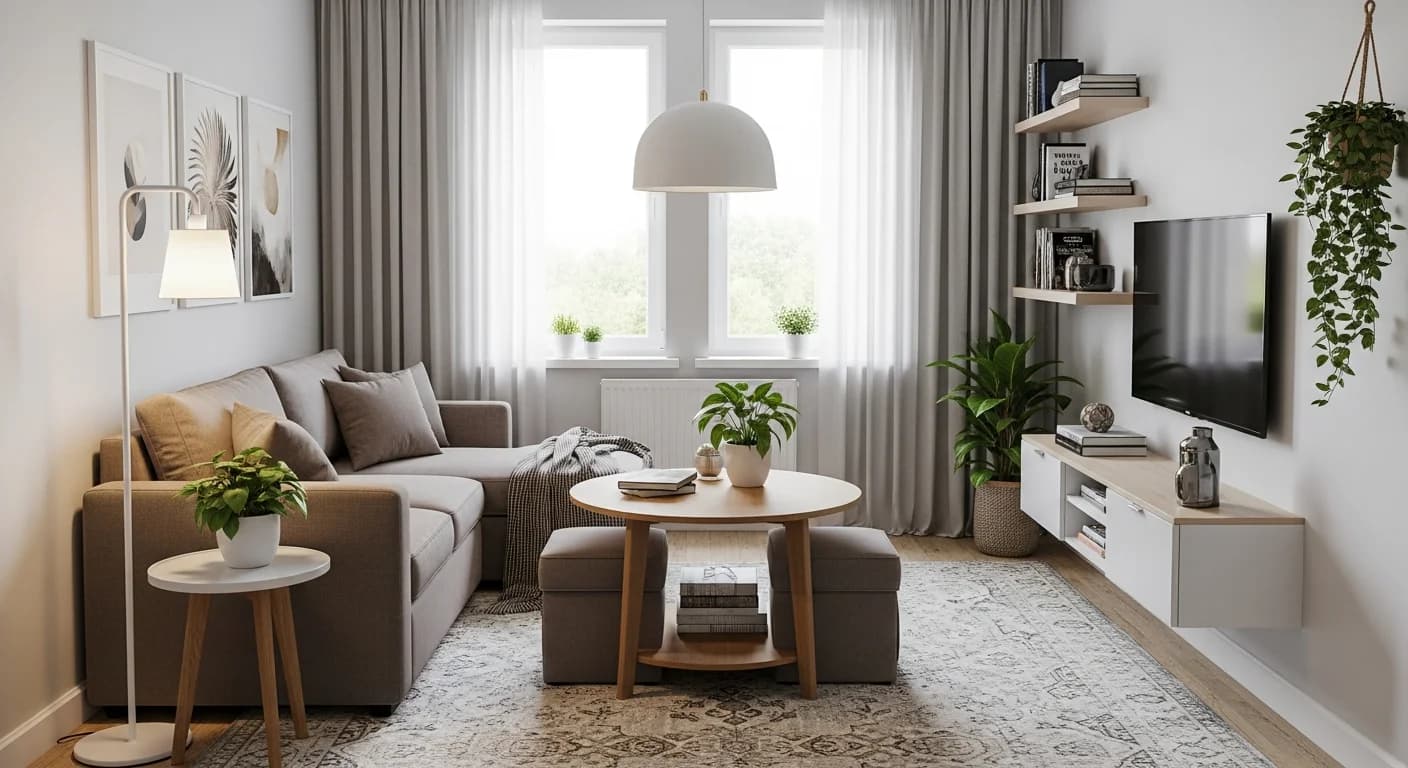
Living in a small space doesn't mean sacrificing style or comfort. With strategic design choices, even the tiniest living room can feel open, functional, and beautiful. The secret lies in smart furniture selection, clever arrangement, and visual tricks that expand perceived space.
Furniture Selection for Small Spaces
The furniture you choose makes or breaks a small living room. Every piece needs to earn its place through both function and proportion.
Scale appropriately: Apartment-sized sofas (72-84 inches) work better than full-sized versions (90+ inches). Look for furniture with slim arms that don't eat up extra inches. Avoid oversized, puffy pieces that dominate small rooms.
Choose furniture with legs: Sofas, chairs, and tables with visible legs allow light to flow underneath, creating a sense of openness. Skirted furniture that sits directly on the floor feels heavier and makes rooms feel more cramped.
Embrace multi-functional pieces: Ottomans with storage, sofa beds for guests, nesting tables that expand when needed—every piece should work double duty. A storage ottoman serves as coffee table, extra seating, and hidden storage.
Consider armless options: Armless chairs and loveseats take up less visual and physical space than their armed counterparts. They also make traffic flow easier in tight layouts.
Smart Layout Strategies
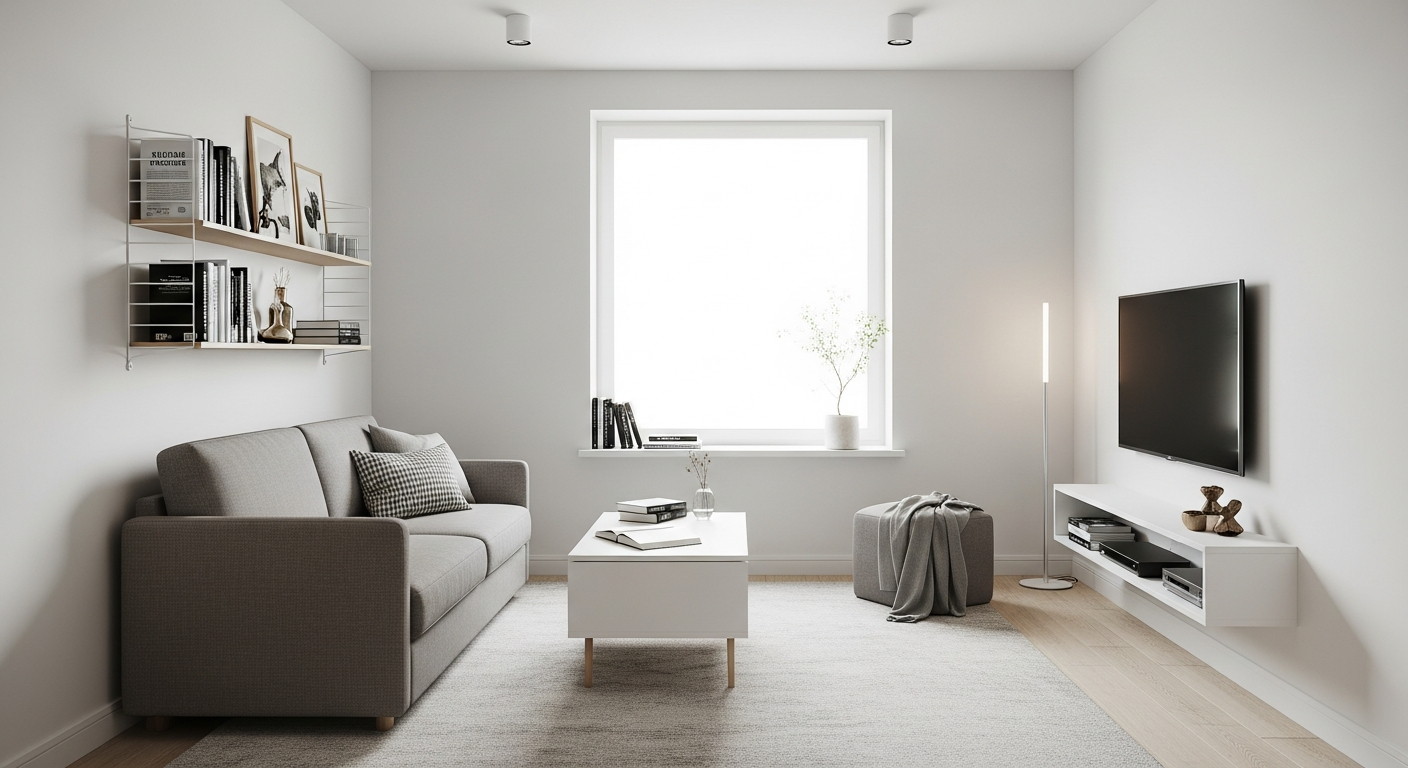
How you arrange furniture matters as much as what furniture you choose. Small rooms require thoughtful layouts that maximize both function and perceived space.
Float your furniture: Resist the urge to push everything against the walls. Floating furniture—even just a few inches from walls—creates depth and makes rooms feel larger. A sofa pulled forward with a slim console table behind it adds function while improving flow.
Try diagonal arrangements: Placing a sofa on a diagonal can make a room feel larger by creating longer sight lines. This works especially well in square rooms that otherwise feel boxy.
Create clear traffic paths: Leave at least 30 inches for main walkways and 18 inches for secondary paths. Blocked or cramped traffic flow makes any room feel smaller than it is.
Zone your space: Even small rooms benefit from defined areas. A reading nook in one corner, main seating in another—zones make spaces feel intentional rather than cramped.
Visual Tricks That Expand Space
Color, light, and strategic decor choices can dramatically alter how large a room feels, regardless of actual square footage.
Light colors expand: White, cream, and pale colors reflect light and make walls appear to recede. Dark colors absorb light and make surfaces feel closer. This doesn't mean all-white—soft grays, pale blues, and warm neutrals work beautifully.
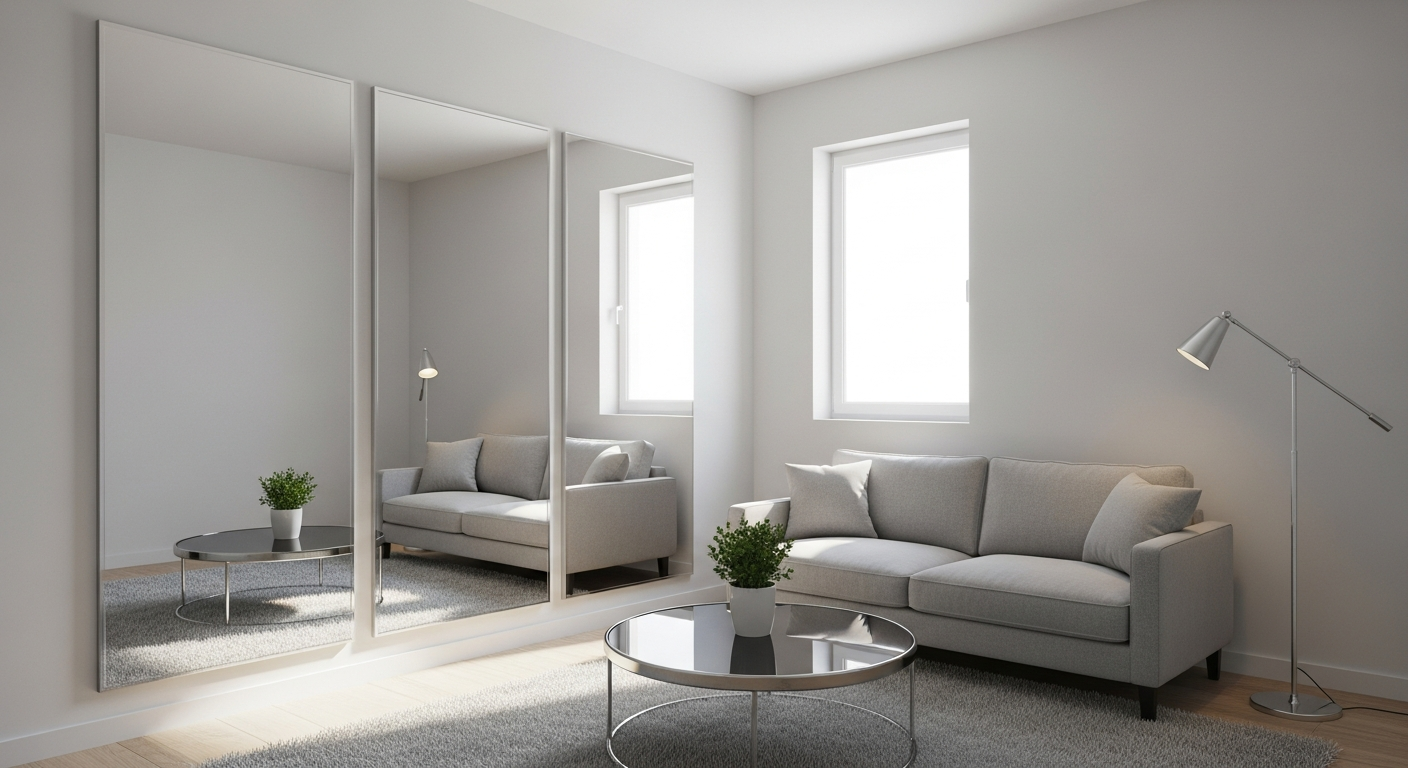
Mirrors multiply space: A large mirror opposite a window effectively doubles the natural light and creates the illusion of another room beyond. Even smaller mirrors strategically placed add depth and brightness.
Vertical lines add height: Floor-to-ceiling curtains, tall bookcases, and vertical artwork draw the eye upward, making ceilings feel higher. Hang curtains as close to the ceiling as possible, not at the window frame.
Minimize visual clutter: Every item in a small room should be intentional. Clutter shrinks spaces faster than anything else. Edit ruthlessly—if it doesn't serve a purpose or bring joy, it's costing you perceived square footage.
Storage Solutions That Disappear
Small living rooms need ample storage, but bulky storage furniture defeats the purpose. Smart storage solutions hide necessities while maintaining clean sight lines.
Built-in solutions: If possible, built-in shelving and cabinets use wall space without protruding into rooms. Floor-to-ceiling built-ins around a fireplace or TV provide massive storage while looking architectural.
Furniture with hidden storage: Coffee table ottomans, storage benches, and sofas with hidden compartments keep clutter contained without adding furniture pieces.
Wall-mounted everything: Floating shelves, wall-mounted TV consoles, and even wall-mounted desks free up floor space. Every inch of floor visible makes rooms feel larger.
Vertical storage: Tall, narrow bookcases store more than short, wide ones while using less floor space. Look for storage solutions that build up rather than out.
Lighting Strategies for Small Spaces
Good lighting opens up small rooms. Poor lighting—especially a single overhead fixture—makes them feel like caves.
Layer your lighting: Combine overhead ambient light with task lighting (floor lamps, table lamps) and accent lighting. Multiple sources eliminate dark corners and add dimension.
Choose slim fixtures: Floor lamps with slim profiles take up less visual space than bulky table lamps requiring end tables. Wall sconces provide light without any floor footprint.
Maximize natural light: Keep window treatments minimal or use sheer panels that filter rather than block light. Never cover windows with furniture.
Visualize Before You Move Furniture
Rearranging furniture in a small living room is exhausting—and discovering your new layout doesn't work is even worse. Before moving heavy pieces or buying new furniture, see how changes will look.
HanoDecor's Living Room Visualizer lets you test different furniture arrangements and color schemes on photos of your actual space. Try a dozen layouts in minutes instead of hours. See how that new sofa will fit, or whether floating your furniture opens up the room. Make confident decisions about your small space—no heavy lifting required.
Small Living Room Ideas FAQs
Written by
Emily Rodriguez
Interior Design Editor covering living spaces, styling trends, and room makeovers. Former Architectural Digest contributor with a focus on accessible, budget-conscious design.