White Kitchen Ideas: Timeless Designs That Never Date
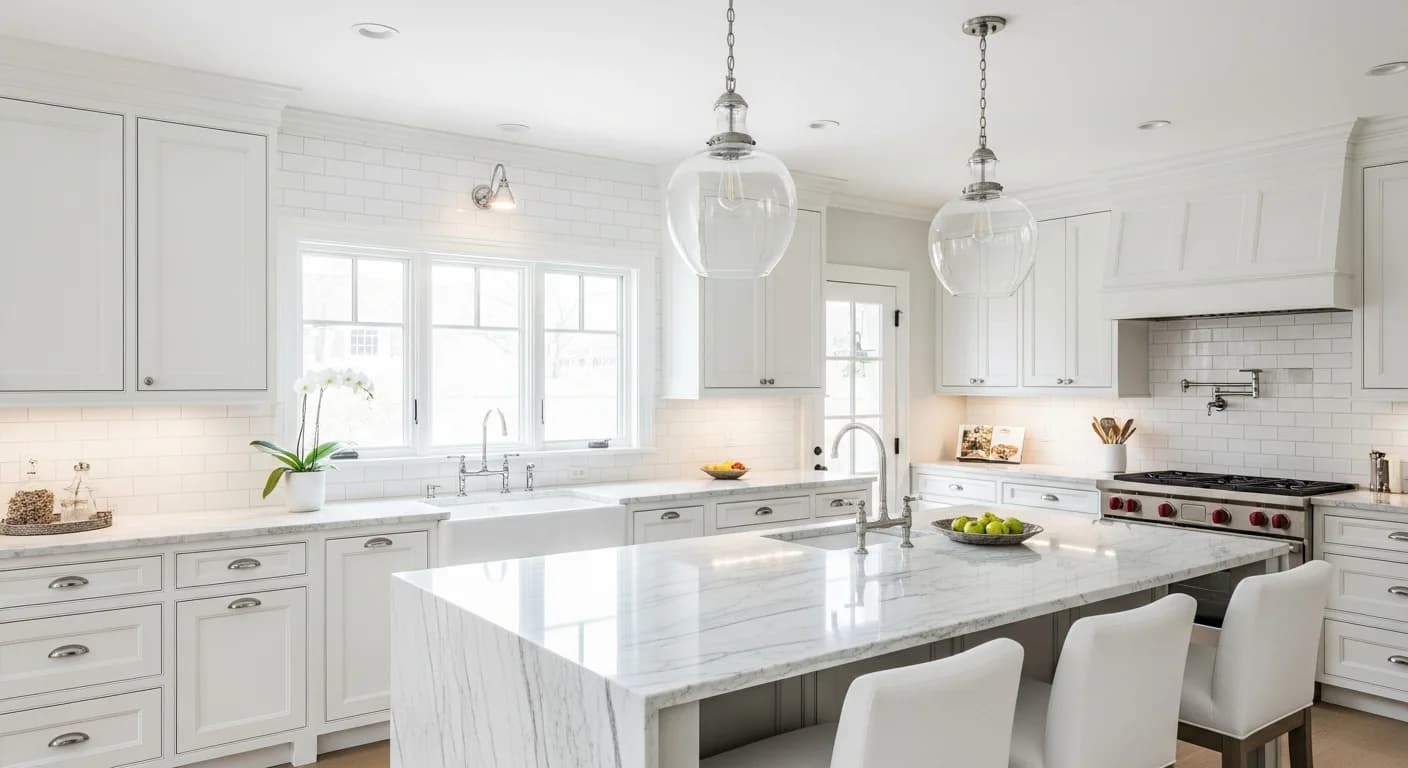
White kitchens have dominated design trends for decades—and show no signs of fading. They're bright, clean, versatile, and timeless. Whether you prefer stark contemporary white or warm creamy tones, a white kitchen provides the perfect canvas for any style.
Choosing Your Shade of White
Not all whites are created equal. The undertones in your white cabinets dramatically affect the kitchen's overall feel.
Cool whites: Pure whites and those with blue or gray undertones feel crisp and contemporary. Benjamin Moore's Chantilly Lace and Sherwin-Williams' Extra White fall into this category. They pair beautifully with stainless steel and cool gray countertops.
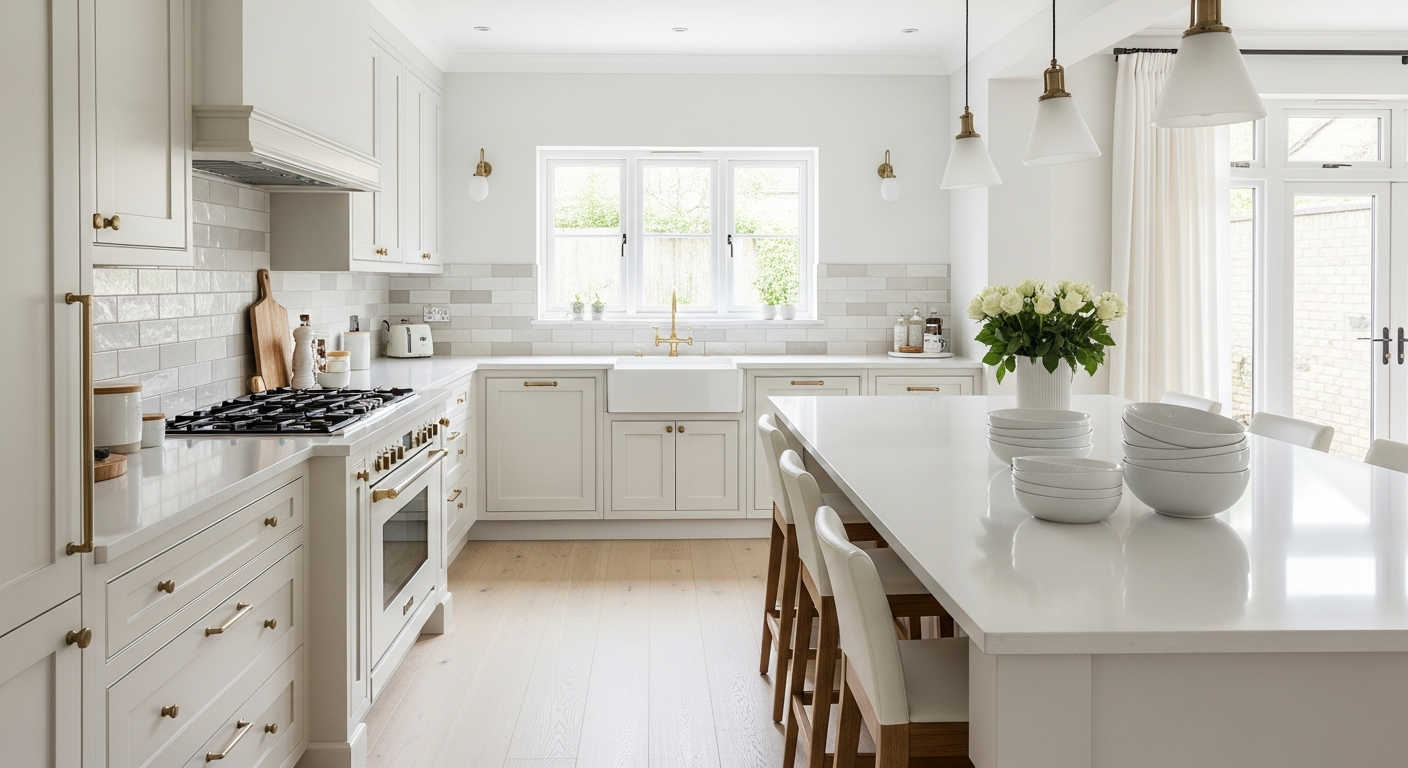
Warm whites: Whites with yellow, pink, or cream undertones feel softer and more traditional. Benjamin Moore's White Dove, Sherwin-Williams' Alabaster, and Farrow & Ball's All White create welcoming warmth. They work better with brass hardware and warmer countertops.
How to choose: Consider your lighting. North-facing kitchens benefit from warm whites that combat cool light. South-facing rooms can handle cool whites without feeling cold. Always test samples in your actual kitchen lighting.
Mixing whites: Avoid using multiple white shades unless they're very similar. Different whites side by side often look like mistakes—one appears dingy next to the other.
Cabinet Styles for White Kitchens
White cabinets work with virtually any door style—your choice defines the kitchen's character.
Shaker: The most popular choice. Simple frames with flat center panels suit traditional, transitional, and even contemporary spaces. Shaker in white is the safest, most versatile option.
Flat-panel/Slab: For truly modern kitchens, flat doors without frames or panels create sleek, minimal aesthetics. Often paired with integrated handles or push-to-open hardware.
Raised-panel: Traditional raised panels feel formal and classic. Appropriate for traditional, colonial, and elegant transitional kitchens.
Glass-front: Incorporate glass panels in some upper cabinets to break up expanses of white and add visual interest. Clear glass shows contents; seeded or textured glass obscures while adding texture.
Mixed approaches: White uppers with contrasting lower cabinets or island add visual interest while maintaining white's brightness. Navy, green, wood tones, and black all pair beautifully with white uppers.
Countertop Pairings
Countertops provide crucial visual contrast in white kitchens. Your choice affects both aesthetics and maintenance.
Marble and marble-look: Classic Carrara or Calacatta marble pairs timelessly with white. If maintenance concerns you, marble-look quartz offers similar aesthetics with better durability.
Warm quartz: Quartz with warm veining and cream tones softens stark white cabinets. Countless options mimic natural stone without the maintenance.
Butcher block: Natural wood countertops add warmth and texture that prevents white kitchens from feeling sterile. Perfect for islands or prep areas; consider easier-care surfaces near sinks.
Concrete: Gray concrete creates striking modern contrast against white cabinets. The industrial edge suits contemporary and industrial-inspired spaces.
Dark drama: Black granite, soapstone, or dark quartz creates bold contrast. This high-contrast approach feels contemporary and dramatic.
Adding Warmth and Interest
The challenge with all-white kitchens is avoiding the cold, sterile look. Strategic additions prevent your kitchen from feeling like a laboratory.
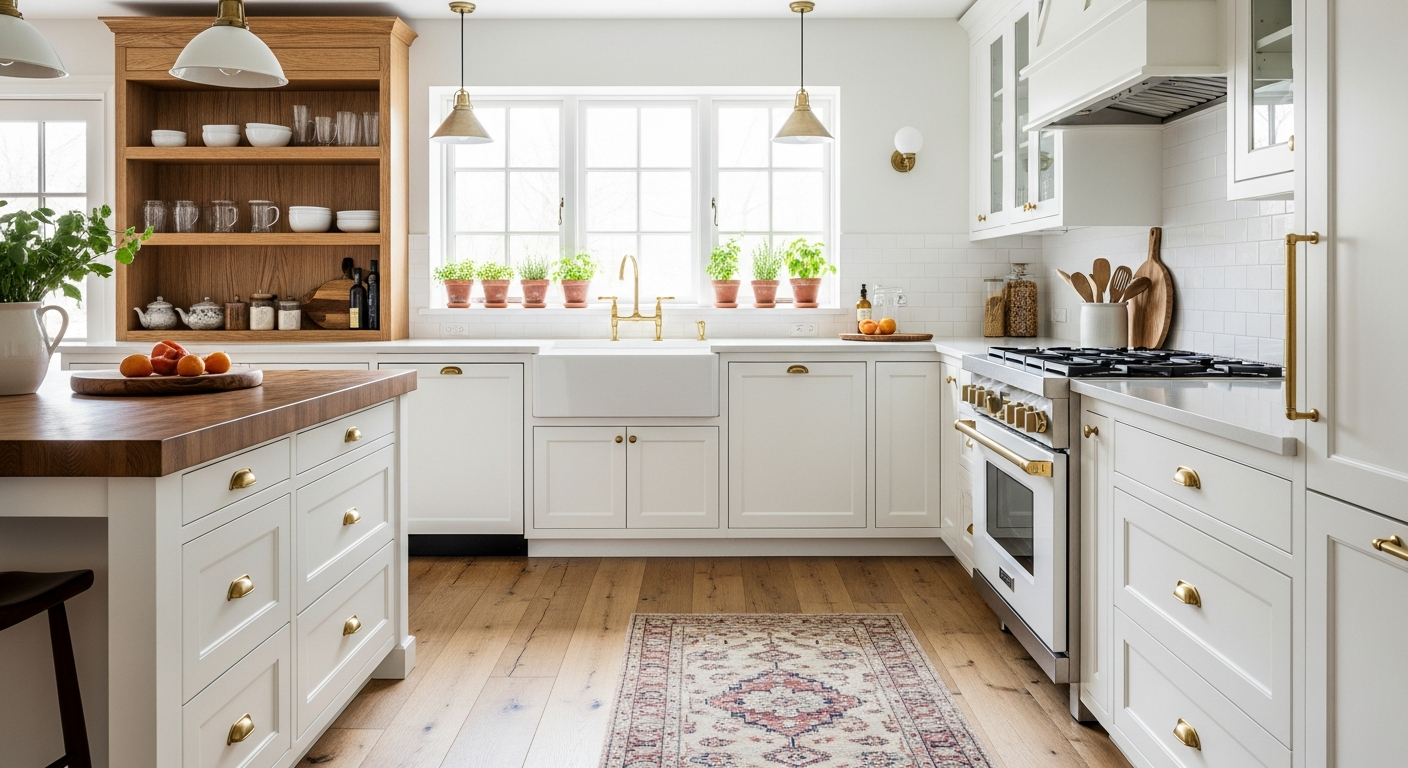
Wood accents: Open wood shelving, a wood island, butcher block sections, or wood floors add organic warmth. Even small touches—a wooden cutting board collection, wood pendant lights—make a difference.
Metal finishes: Brass, bronze, and gold hardware add warmth that chrome and nickel don't. Mixed metals can work—try brass faucet with black cabinet pulls for contemporary interest.
Textured backsplash: Three-dimensional tile, natural stone, or brick-style tile adds depth and shadow that flat surfaces lack. Texture catches light differently throughout the day.
Plants and greenery: Nothing livens up a white kitchen like plants. Herbs on the windowsill, a statement plant in a corner, or trailing pothos on open shelves bring life and color.
Avoiding the Sterile Look
Several strategies ensure white kitchens feel warm and inviting rather than cold and clinical.
Layer textures: Combine smooth cabinets with rough stone, woven pendant shades, linen window treatments, and varied surface finishes. Texture creates visual interest without adding color.
Add a rug: A vintage rug or modern runner in front of the sink adds color, pattern, and warmth underfoot.
Display personality: Cookbooks, collected pottery, art, and personal items make white kitchens feel lived-in. Open shelving becomes a gallery for treasured items.
Consider paint sheen: Matte or satin finishes feel warmer than high gloss. Save glossy finishes for contemporary spaces where you want that reflective quality.
Visualize Your White Kitchen
Choosing the right white, the right countertop pairing, and the right warm accents requires seeing options together. In a space where color choices are subtle, getting the balance right matters enormously.
HanoDecor's Kitchen Visualizer lets you test different white shades, countertop combinations, and design elements on photos of your actual kitchen. Find the perfect balance of bright and warm, contemporary and classic. Create your dream white kitchen with confidence.
White Kitchen Ideas FAQs
Written by
Michael Torres
Bathroom and Kitchen Design Specialist with 15 years of remodeling experience. NKBA-certified designer focused on functional layouts, fixture selection, and spa-inspired wellness spaces.