Basement Gym Ideas: Build Your Home Fitness Space
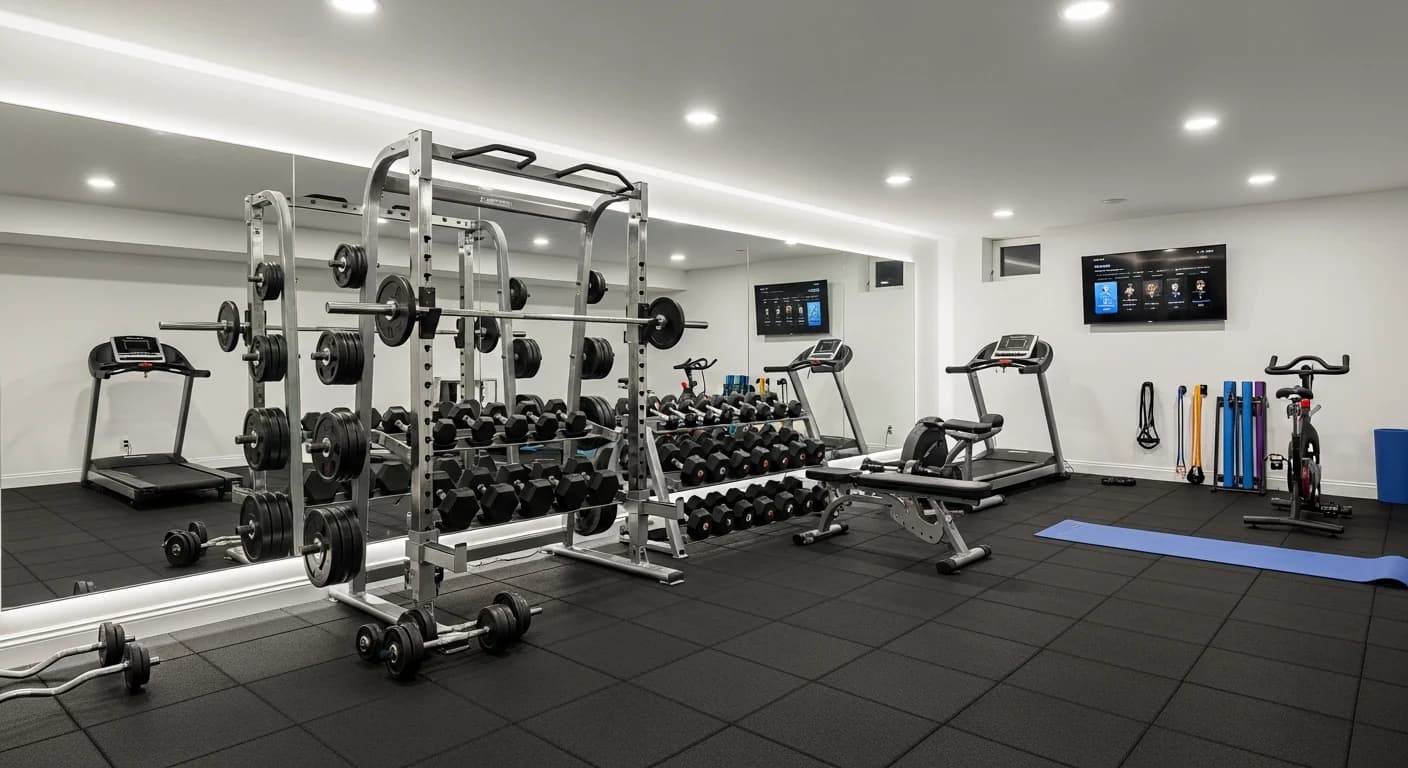
Home gyms eliminate commute time, membership fees, and gym crowds—and basements provide ideal spaces for fitness. Climate-controlled, private, and available 24/7, basement gyms empower consistent workout routines. These ideas help you design a home gym that motivates effective exercise.
Space Planning Essentials
Effective gym design starts with understanding space requirements.
Minimum sizing: A functional home gym requires at least 100-150 square feet. This accommodates basic equipment and movement space. Larger gyms (200-400+ square feet) allow more equipment variety and dedicated zones.
Equipment footprints: Measure equipment you plan to include, adding buffer space for movement around and on each piece. Treadmills need 30 square feet including user space. Power racks need 50+ square feet.
Movement clearance: Allow 2-3 feet around cardio equipment. Weight training requires 6+ feet clearance for barbell movements. Stretching and floor work need open floor area.
Traffic flow: Design clear pathways between equipment zones. Users shouldn't squeeze past equipment or interrupt others' workouts.
Future expansion: If possible, leave room for equipment additions. Fitness interests evolve, and empty space allows growth.
Multi-use consideration: Some basement gyms share space with other functions. Foldable or movable equipment accommodates dual-purpose areas.
Flooring Requirements
Gym flooring protects both you and your basement from workout demands.
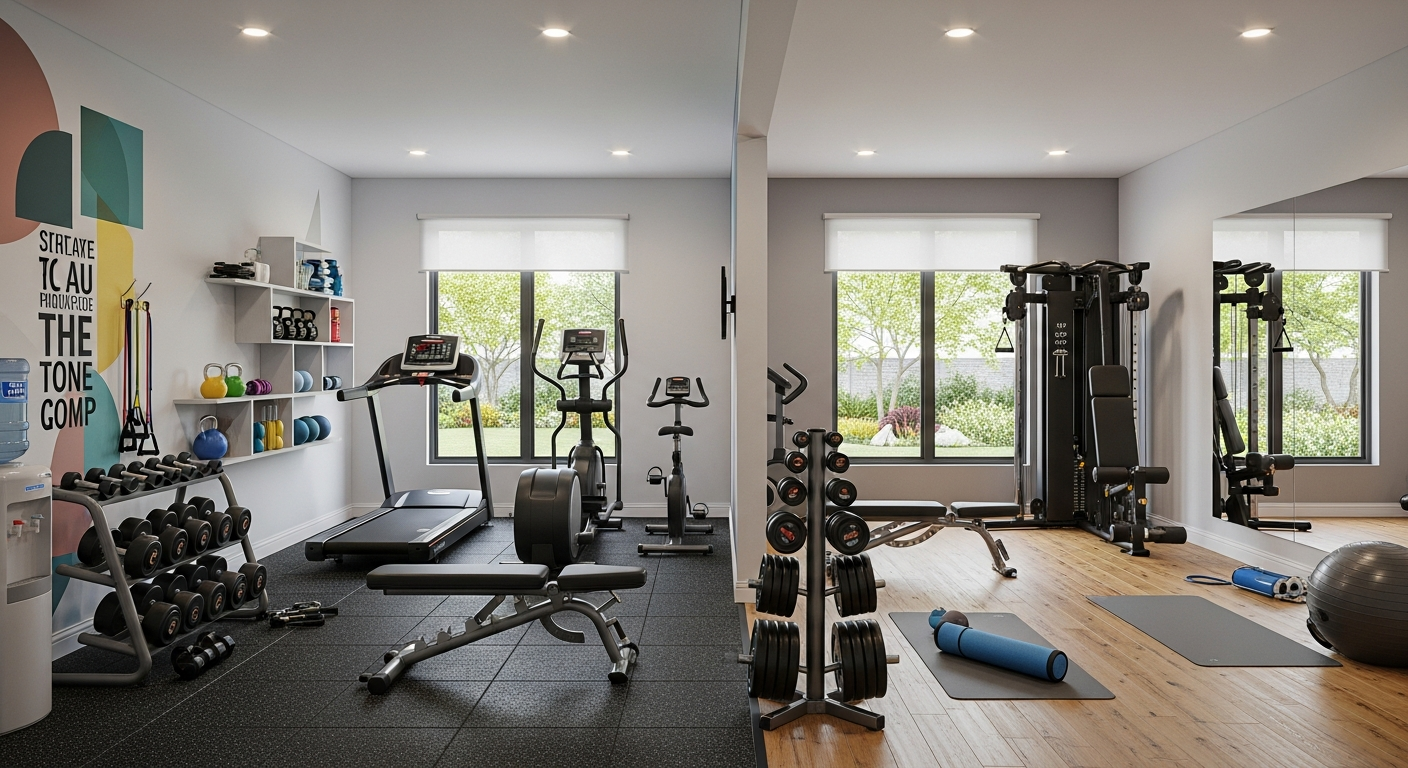
Rubber flooring: The gold standard for home gyms. Durable, impact-absorbing, and easy to clean. Available in rolls, tiles, or interlocking mats.
Thickness considerations: 3/8" rubber suits most home gyms. 3/4" or thicker protects floors from heavy weightlifting and deadlifts.
Foam tiles: Lightweight and affordable for yoga, stretching, and light exercise. Not durable enough for heavy weights.
Interlocking systems: Puzzle-piece tiles install easily without adhesive. Can be relocated if needed.
Rolled rubber: Seamless appearance with no gaps. Heavier installation but cleaner look.
Coverage strategy: Full-room coverage provides maximum flexibility. Alternatively, create zones—rubber under weight areas, simpler flooring elsewhere.
Subfloor protection: Even with gym flooring, consider moisture barriers over concrete to prevent humidity issues.
Ceiling Height Considerations
Overhead clearance affects which exercises are possible.
Minimum requirements: 7-foot ceilings accommodate most exercises. 8 feet or higher is preferred for overhead presses, pull-ups, and jumping exercises.
Exercise limitations: Low ceilings may preclude overhead barbell work, box jumps, or jumping rope. Plan equipment and exercises around your available height.
Pull-up solutions: Ceiling-mounted pull-up bars may not work in low ceilings. Wall-mounted or power rack-mounted bars keep users lower.
Working around obstacles: Ductwork and beams can be avoided by positioning equipment in clear areas. Map your ceiling before finalizing layout.
Impact protection: Ceiling-mounted bags, TRX straps, or rings require secure attachment points. Verify ceiling structure before hanging anything.
Ventilation and Climate
Comfortable workout environments require adequate air management.
Air circulation: Basements need active air movement. Ceiling fans, floor fans, or additional HVAC vents prevent stagnant air during workouts.
Humidity control: Exercise generates moisture. Dehumidifiers prevent that damp basement gym feeling and protect equipment from rust.
Temperature management: Basements stay cooler naturally—often a workout benefit. Ensure HVAC can maintain comfortable temperatures during intense sessions.
Fresh air: If possible, include operable windows or ventilation for fresh air introduction.
Air quality: Rubber flooring may off-gas initially. Ensure good ventilation during first weeks after installation.
Mirrors and Motivation
Visual elements support proper form and workout motivation.
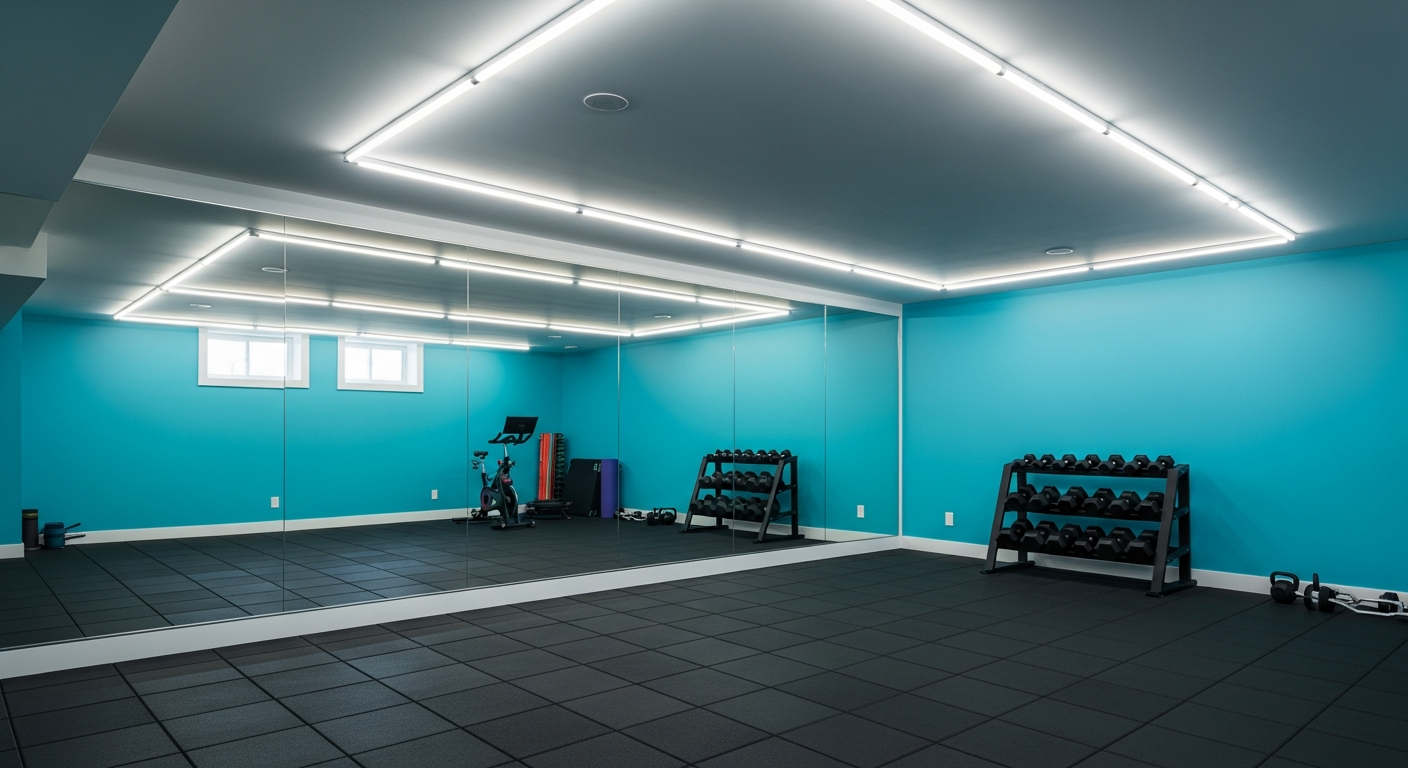
Wall mirrors: Full-length mirrors allow form checking during exercises. Position where they reflect primary workout areas.
Mirror placement: Mirrors in front of squat racks, free weight areas, and stretching zones provide most benefit.
Gym mirrors vs. home mirrors: Commercial gym mirrors are thicker and safer. If using residential mirrors, secure them properly and consider safety backing.
Motivation boards: Dedicated wall space for goals, progress photos, or inspirational imagery keeps motivation visible.
Paint colors: Energizing colors—orange, red accents, or bright whites—create motivating atmospheres. Avoid dark, dreary colors that sap energy.
Natural elements: If windows exist, keep them unobstructed. Plants that tolerate lower light add life to basement gyms.
Lighting for Workouts
Bright, even lighting energizes workouts and supports safety.
Brightness levels: Gyms need bright light—50 lumens per square foot or higher. Dark gyms sap motivation and hide hazards.
Even distribution: Multiple light sources eliminate shadows. Shadows in workout areas obscure equipment and create safety concerns.
Color temperature: Cooler temperatures (4000-5000K) feel energizing and modern. Warmer lights can work but may feel less gym-like.
LED efficiency: LED fixtures provide bright light efficiently and run cool—important in spaces that already get warm from workouts.
Recessed vs. surface: Recessed lights preserve ceiling height. Surface-mounted or suspended fixtures work where height allows.
Equipment Layout
Strategic placement maximizes function and safety.
Cardio zone: Position treadmills, bikes, and ellipticals where users have entertainment options—facing TVs or windows. Allow clearance behind treadmills.
Weight area: Concentrate free weights, racks, and benches together. Rubber flooring and mirrors support this zone.
Stretching space: Open floor area for yoga, stretching, and floor exercises. Yoga mats or softer flooring enhance comfort.
Heavy equipment placement: Consider floor load capacity for very heavy equipment. Position near supporting walls rather than center-span.
Safety considerations: Leave clear paths to exits. Position heavy equipment where dropped weights can't hit anything or anyone.
Storage Solutions
Organized equipment improves workout efficiency and safety.
Weight storage: Dedicated racks for dumbbells, kettlebells, and plates keep weights organized and accessible.
Wall-mounted options: Pegboard systems, wall racks, and mounted storage use vertical space efficiently.
Resistance band storage: Hooks or dedicated organizers prevent tangled bands.
Accessory bins: Containers for towels, jump ropes, and small accessories keep spaces tidy.
Cleaning supplies: Keep sanitizer, towels, and cleaning supplies accessible for equipment maintenance.
Entertainment Integration
Entertainment makes cardio sessions more enjoyable.
Television placement: Wall-mounted TVs visible from cardio equipment and floor areas enable watching during workouts.
Sound systems: Wireless speakers or built-in audio provides workout music. Consider Bluetooth connectivity for personal playlists.
Streaming access: Smart TVs or streaming devices enable workout apps, YouTube fitness videos, and on-demand classes.
Device storage: Charging stations and device holders keep phones and tablets accessible for apps and music.
Visualize Your Home Gym
Gym design impacts workout motivation and effectiveness. See how different layouts and equipment work in your basement.
HanoDecor's Basement Visualizer helps you experiment with gym designs and layouts on photos of your space. Build the home gym that keeps you motivated.
Basement Gym Ideas FAQs
Written by
James Okonkwo
James is a computer vision researcher whose work on style transfer and image-to-image translation has been published in top AI conferences. He ensures our AI produces photorealistic room transformations that respect architectural constraints.