Basement Home Theater Ideas: Create Your Cinema Experience
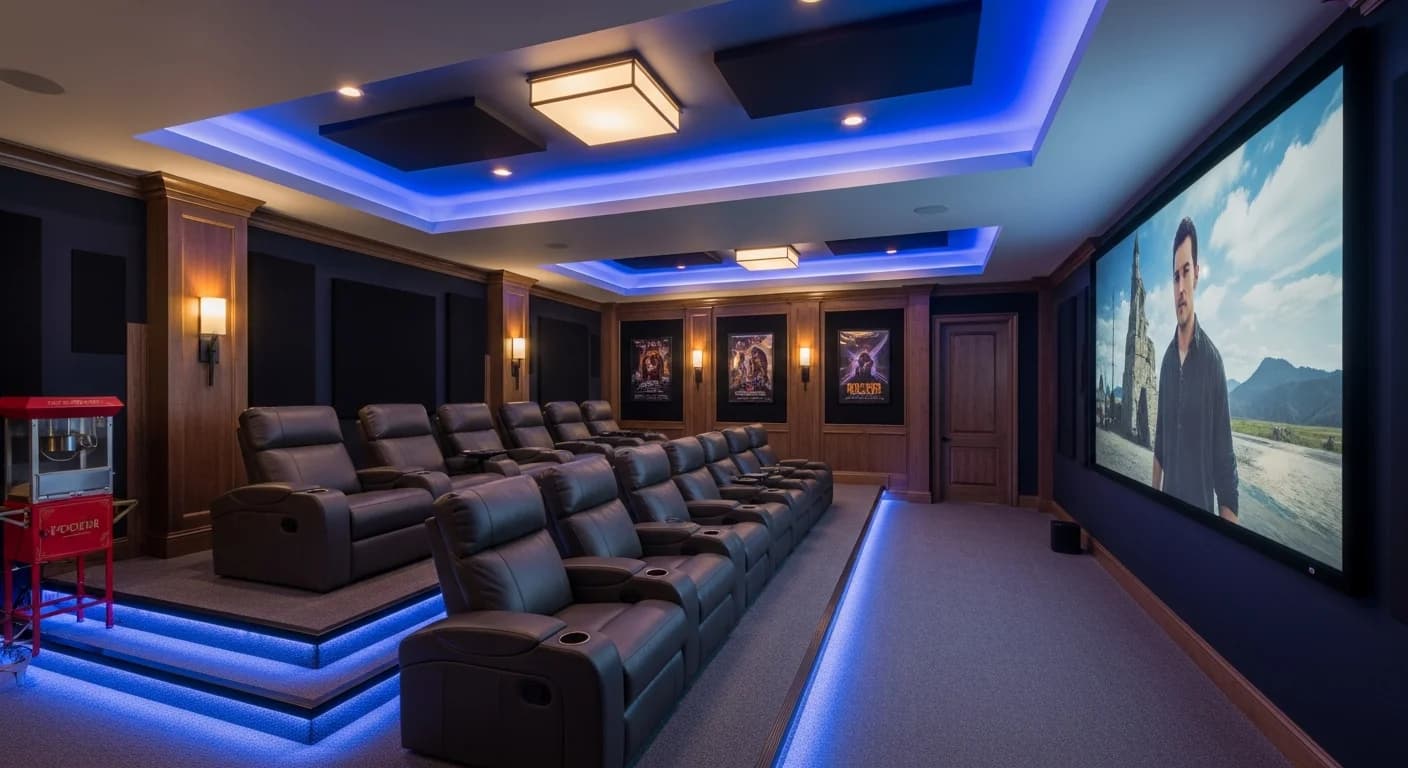
Basements make ideal home theaters. They're naturally dark, separated from household noise, and offer the space needed for immersive entertainment. Whether you dream of stadium seating and a massive screen or a cozy movie room for family nights, these ideas help you create the perfect basement cinema experience.
Why Basements Excel for Home Theaters
Underground spaces offer natural advantages for movie watching.
Light control: Limited windows mean easier light blocking. Projector screens and TVs perform best in darkness basements naturally provide.
Sound isolation: Below-grade construction naturally contains sound. Movies at theater volumes won't disturb neighbors or sleeping family members.
Dedicated space: Unlike living rooms serving multiple purposes, basement theaters can be designed solely for optimal viewing experience.
Temperature stability: Underground temperatures remain more consistent, making climate control easier and more efficient.
Space availability: Basements often have room for larger screens and more elaborate seating than main-floor rooms.
Screen and Display Options
Your viewing surface is the theater's focal point.
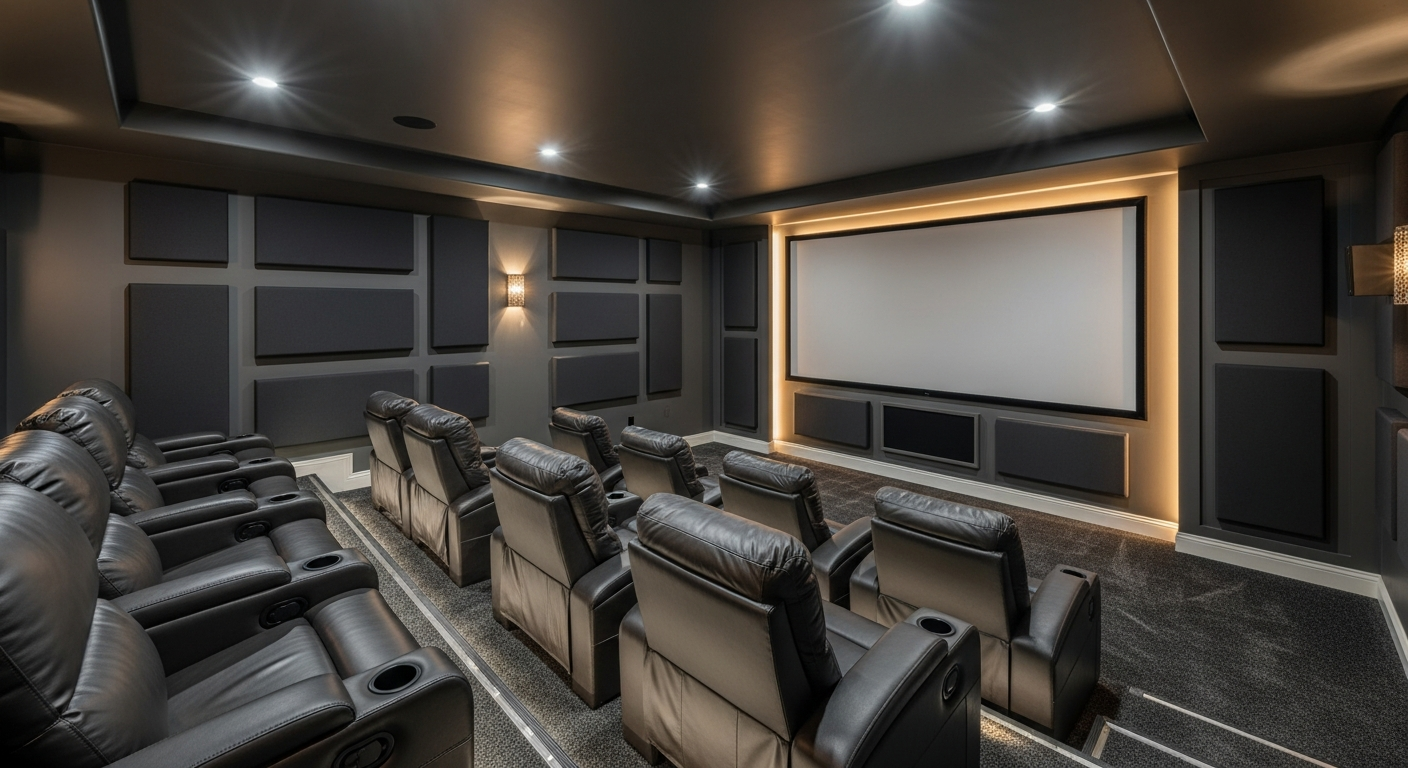
Projector and screen: Projectors create truly cinematic scale—100 to 150 inch screens are common. Requires dedicated dark room and proper throw distance.
Fixed screens: Permanently mounted screens provide best image quality for projectors. Sizes from 100 to 200+ inches possible.
Motorized screens: Retractable screens disappear when not in use, allowing multi-purpose room functionality.
Large-format TVs: 75 to 85+ inch TVs provide excellent image quality without room darkening requirements. Simpler installation than projector systems.
Screen placement: Position screens at comfortable viewing height—center of screen at seated eye level. Calculate viewing distance based on screen size.
Ambient light rejection: If complete darkness isn't possible, ALR screens reject ambient light for improved projector performance.
Seating Arrangements
Comfortable seating keeps viewers engaged through even the longest movies.
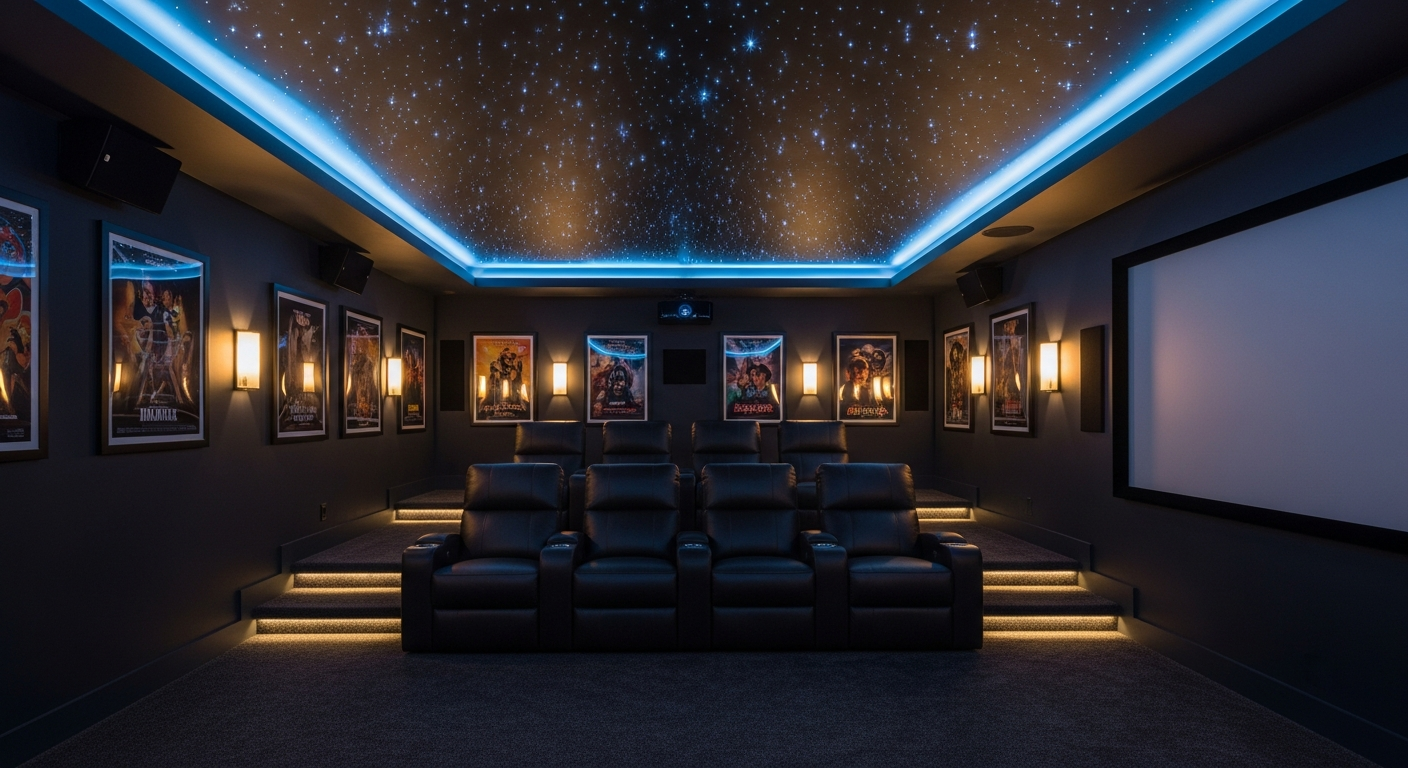
Theater recliners: Dedicated home theater seats with cup holders, LED lighting, and power recline provide authentic cinema experience.
Sectional sofas: Large sectionals accommodate more viewers with flexibility. Add theater-style cup holder consoles between sections.
Tiered platforms: Raised rear seating ensures unobstructed sightlines for all viewers. Even 8-12 inch risers significantly improve rear row viewing.
Row spacing: Allow 36-42 inches between rows for comfortable passage and leg room.
Capacity planning: Calculate seating based on typical viewing groups. Family theaters might prioritize comfort for 4-6; entertainment spaces might maximize capacity.
Front row distance: Position front seating at least 1.5 times screen height away from the screen for comfortable viewing angles.
Sound System Considerations
Audio experience equals or exceeds visual importance for immersion.
Surround sound basics: 5.1 systems (five speakers plus subwoofer) provide standard surround experience. 7.1 and Atmos systems add height and additional channels.
Speaker placement: Front left, center, and right speakers at ear level. Surrounds at or slightly above ear level to sides or rear.
Subwoofer positioning: Bass is less directional—subwoofers can be positioned for best acoustics rather than specific locations.
Acoustic treatments: Absorptive panels reduce echo and improve sound clarity. Strategic placement on walls and ceilings significantly improves audio quality.
Soundproofing: Keep sound in—and household noise out—with insulated walls, solid doors, and acoustic sealants around penetrations.
Lighting Design
Theater lighting creates atmosphere and provides function without disrupting viewing.
Dimmable everything: All theater lighting should dim to zero. Bright lights during movies destroy immersion.
Wall sconces: Classic theater lighting provides ambient glow without screen glare. Position on side walls rather than behind seating.
Floor path lighting: LED strips along aisles and stairs allow safe movement during movies without disrupting viewing.
Bias lighting: Soft lighting behind screens reduces eye strain during dark scenes. LEDs behind TV or screen provide subtle backlighting.
Smart controls: Programmable lighting scenes—"movie mode," "intermission," "credits"—enhance experience and convenience.
Fiber optic star ceilings: Create outdoor cinema ambiance with ceiling-mounted fiber optics mimicking starry skies.
Concession and Bar Areas
Complete the experience with snacks and drinks at arm's reach.
Popcorn stations: Countertop or full-size popcorn machines bring authentic theater aroma and snacks.
Mini refrigerators: Built-in or freestanding refrigeration keeps drinks cold without trips upstairs.
Candy displays: Glass-front displays showcasing movie theater candy add authenticity and convenience.
Wet bars: Full bar setups with sinks serve adult viewing parties and sporting events.
Counter space: Adequate counter for food preparation makes hosting movie nights easier.
Décor and Theme Ideas
Décor transforms functional spaces into immersive experiences.
Movie posters: Framed vintage or modern posters add authentic theater character. Lightbox-style illuminated frames elevate the effect.
Velvet curtains: Motorized or fixed curtains around screens create classic cinema atmosphere.
Art deco details: Geometric patterns, gold accents, and period-appropriate fixtures evoke golden-age theater glamour.
Themed rooms: Sci-fi, noir, or specific film franchise themes create unique, personalized spaces.
Minimalist modern: Clean lines, hidden equipment, and architectural lighting create sophisticated screening rooms.
Visualize Your Home Theater
Home theater design involves many elements working together. See how different approaches work in your basement before making decisions.
HanoDecor's Basement Visualizer helps you experiment with theater layouts, seating arrangements, and design approaches. Create your perfect cinema experience with confidence.
Basement Home Theater Ideas FAQs
Written by
Priya Sharma
Priya is an award-winning UX designer who previously led design teams at Airbnb and Pinterest. Her focus on user-centered design ensures that HanoDecor's tools are intuitive and accessible to everyone, regardless of their technical background.