How to Redesign a Dark Hallway: 7 Brilliant Lighting and Color Tips
Quick Summary
Dark, narrow hallways are one of the most overlooked spaces in home design. This guide covers 7 proven strategies for transforming a dark hallway into a bright, welcoming modern space using lighting, color, mirrors, and design tricks that create the illusion of width and light.
How to Redesign a Dark Hallway into a Modern Bright Space
If you have a dark hallway and want to know how to redesign a dark hallway into a modern bright space, you are not alone. Hallways are among the most neglected areas in home design, yet they connect every room in your home and set the tone for your entire interior. A dingy, poorly lit corridor creates a negative impression that no amount of beautiful room design can fully overcome.
The good news is that hallway transformations are one of the highest-impact, lowest-cost redesign projects you can tackle. Most dark hallways can be dramatically improved with strategic lighting, the right paint colors, reflective surfaces, and clever design tricks. You do not need to knock down walls or invest in major renovations. These 7 strategies work in hallways of any width, length, or ceiling height.
Why Hallways Feel Dark (Understanding the Problem)
Before diving into solutions, it helps to understand why hallways tend to be dark. Most hallways lack windows entirely, relying solely on artificial light. Many homes were built with a single overhead fixture in the center of the hallway, which creates a pool of light in the middle and dark shadows at both ends. The narrow proportions of hallways mean that walls absorb light rather than reflect it, and darker paint colors exacerbate this effect.
Additionally, hallway doors are often closed, blocking any borrowed light from adjacent rooms. The hallway floor may be darker hardwood or dated carpet that absorbs light. Crown molding and baseboards in dark stains create visual heaviness. Understanding these factors helps you target each one systematically rather than randomly trying fixes that may not address the root causes of your hallway's darkness.
Strategy 1: Layered Lighting That Eliminates Dark Zones
The single most impactful change you can make to a dark hallway is upgrading the lighting from a single fixture to a layered lighting plan. Layered lighting uses three types of light working together: ambient (general illumination), task (functional light for specific activities), and accent (decorative highlights that add depth and interest).
For hallway ambient lighting, replace a single center fixture with recessed lights spaced 4-6 feet apart along the entire length of the hallway. Use LED recessed lights in 3000K warm white for a welcoming tone. If recessed lighting is not possible, consider a series of flush-mount fixtures or a linear LED channel that runs the full length of the ceiling.
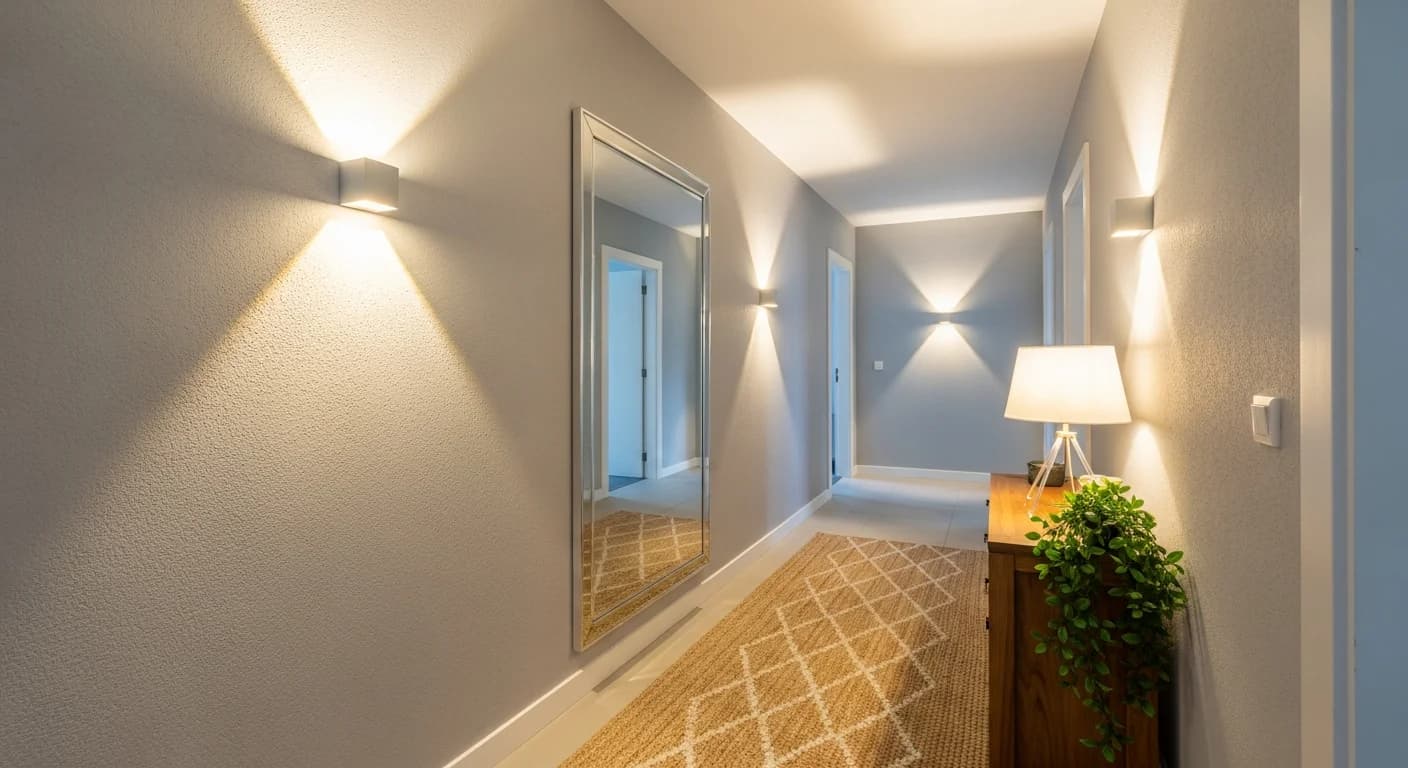
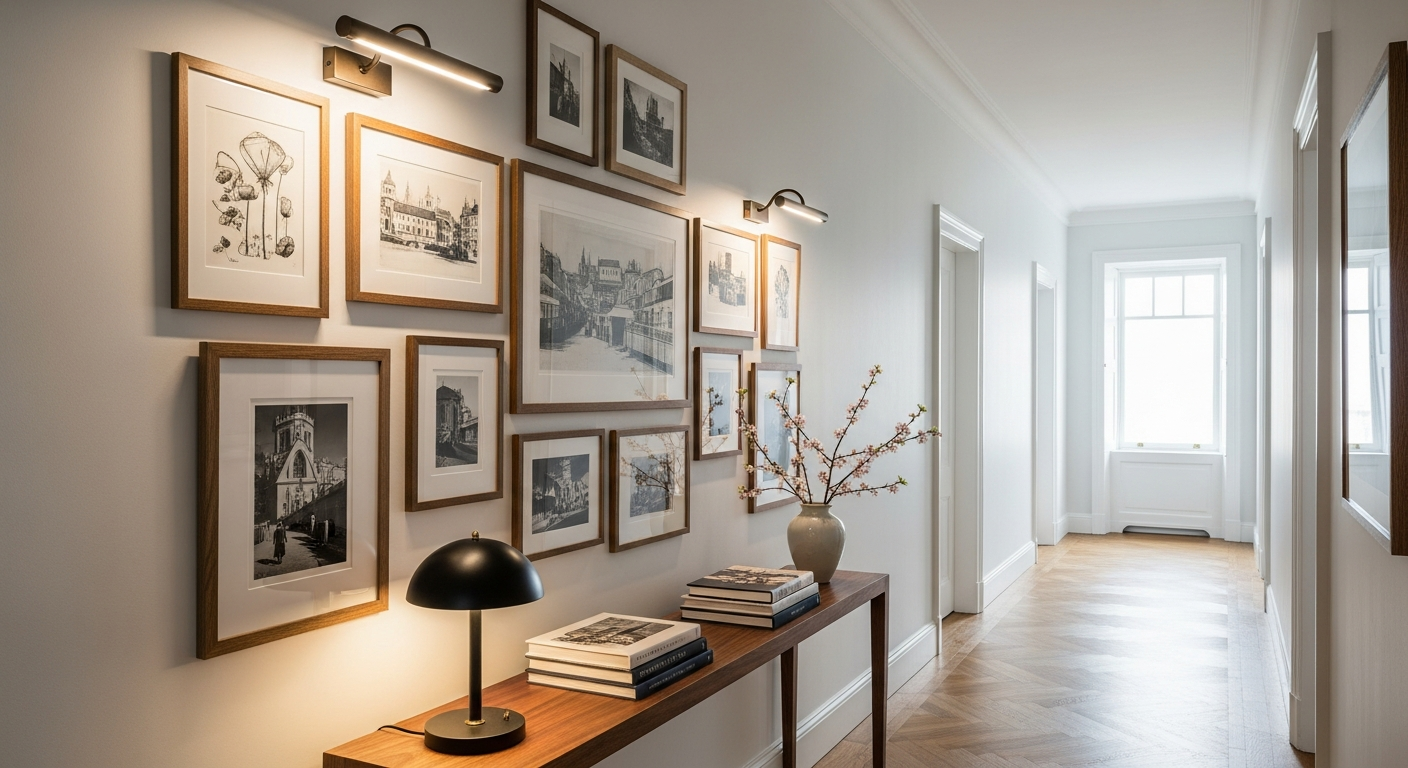
For accent lighting, add wall sconces at eye level every 6-8 feet. Wall sconces wash light up and down the walls, dramatically reducing the cave-like feeling of dark hallways. Choose sconces with upward and downward light distribution for maximum wall washing effect. LED strip lighting hidden under a picture rail or along the baseboard creates a subtle glow that makes the hallway feel wider.
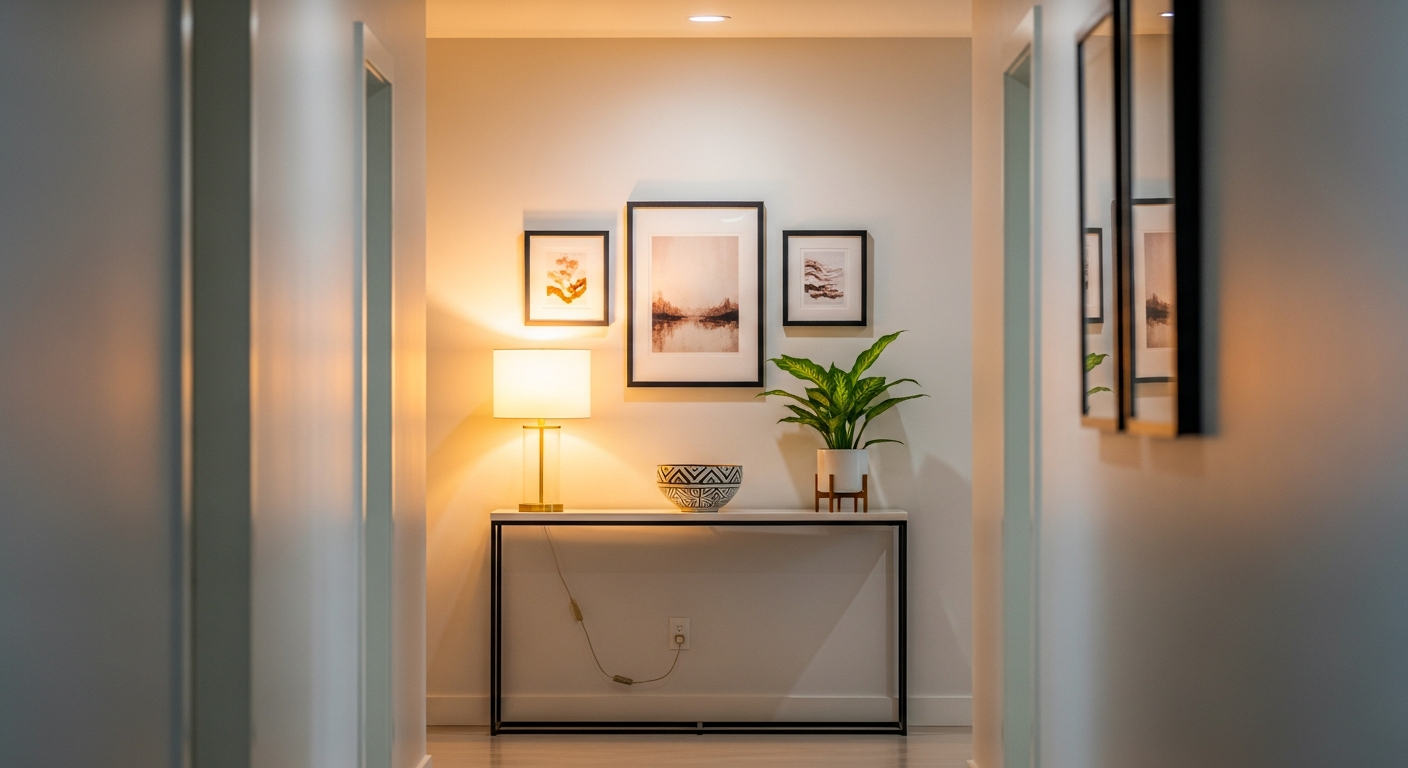
For task lighting, consider a small table lamp on a narrow console table near the entry point, or picture lights above artwork to create focal points along the hallway. The combination of overhead, wall-mounted, and accent lighting eliminates every dark zone and creates a corridor that feels open and inviting.
Strategy 2: Paint Colors That Maximize Light Reflection
Color selection has an enormous impact on how bright a hallway feels. Light colors reflect more light, while dark colors absorb it. For dark hallways, choose wall colors with a Light Reflectance Value (LRV) of 70 or higher. LRV is measured on a scale of 0 (pure black) to 100 (pure white), and colors above 70 reflect enough light to make a noticeable difference in dim spaces.
The best hallway paint colors for dark spaces include warm whites like Benjamin Moore Simply White (OC-117, LRV 89.52) and Sherwin-Williams Alabaster (SW 7008, LRV 82). For a touch of color without sacrificing brightness, try soft grays like Benjamin Moore Classic Gray (OC-23, LRV 74.78) or pale warm tones like Sherwin-Williams Accessible Beige (SW 7036, LRV 58). Avoid pure bright white in hallways with warm-toned lighting, as it can appear blue or clinical.
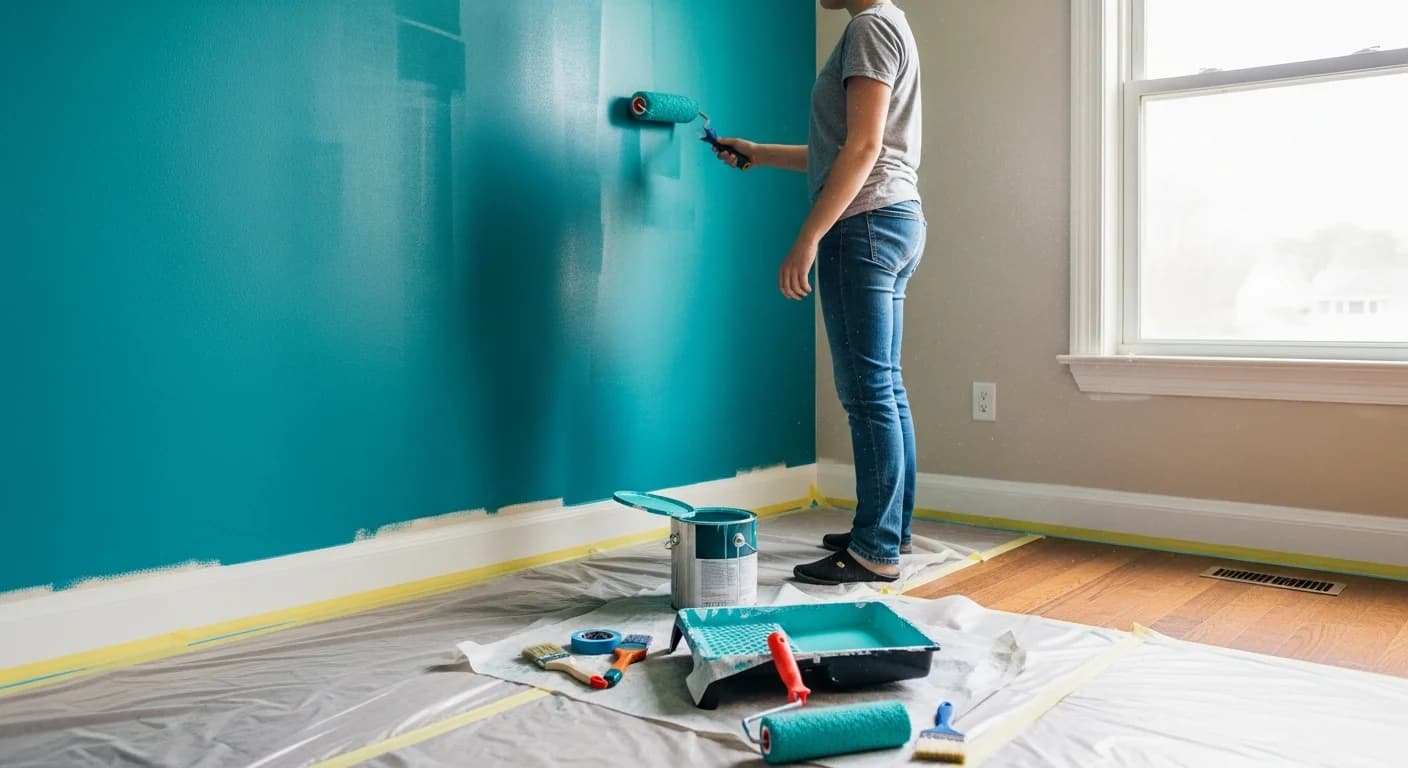
Do not forget the ceiling. Painting the ceiling in a flat bright white with an LRV above 85 maximizes overhead light reflection. If your hallway ceiling is textured, use a flat or matte finish to minimize imperfections while still reflecting light. Use HanoDecor's AI color visualization to preview different paint colors on your hallway walls before buying a single can of paint.
Strategy 3: Mirrors and Reflective Surfaces
Mirrors are the most powerful tool for making a dark hallway feel brighter and wider. A well-placed mirror doubles the perceived light by reflecting both natural and artificial light sources. Place mirrors directly opposite light sources, whether that is a window at the end of the hallway, a wall sconce, or overhead recessed lighting.
For maximum impact, use a large mirror (at least 24 inches wide) mounted at eye level on the wall opposite your primary light source. A full-length mirror at the end of a hallway creates the illusion of a doorway to another space, visually doubling the hallway's length. For a modern gallery effect, arrange a series of identically framed mirrors in a horizontal line along one wall.
Beyond mirrors, other reflective surfaces contribute to brightness. Glass-front frames for hallway artwork, metallic console tables, polished hardware on doors, and high-gloss paint on trim all bounce light around the space. Even switching from brushed nickel door handles to polished chrome adds small but cumulative light reflection throughout the hallway.
Strategy 4: Flooring Upgrades That Brighten the Base
Dark flooring absorbs light at the lowest point in the room, making the hallway feel smaller and heavier. If you have dark hardwood, dated carpet, or dark tile, changing or covering the floor can dramatically brighten the space. Light-toned luxury vinyl plank (LVP) in a whitewashed oak or pale gray finish is one of the most cost-effective ways to brighten a hallway. Modern LVP is waterproof, durable, and can be installed over existing flooring in most cases.
If replacing the floor is not in your budget, a well-chosen runner rug can make a significant difference. A runner in a light neutral tone with a subtle pattern adds warmth while brightening the base of the hallway. Choose a runner that leaves 3-4 inches of floor visible on each side to maintain a sense of width. Avoid high-pile runners in narrow hallways, as they can make the space feel cramped.
For tiled hallways, consider a light porcelain tile with a polished or semi-polished finish. Large-format tiles (12x24 inches or larger) with minimal grout lines create a sleek, continuous surface that reflects light and makes the hallway appear longer. Lay rectangular tiles in a running bond pattern along the length of the hallway to emphasize its linear proportions.
Strategy 5: Art and Focal Points That Draw the Eye
A dark hallway without focal points feels like a tunnel. Creating visual interest at multiple points along the hallway breaks up the monotony and makes the space feel purposeful rather than transitional. The key is to create a rhythm of focal points that draw your eye forward through the space.
A gallery wall is the classic hallway solution, and for good reason. A curated collection of framed artwork or photographs in a consistent frame style gives the hallway identity and purpose. Use frames with white mats and light-colored frames to maintain brightness. Illuminate your gallery wall with picture lights or adjustable spotlights for a museum-quality effect that also adds functional lighting.
At the end of a long hallway, create a strong focal point that gives the eye a destination. This could be a statement piece of art, a decorative console table with a lamp and curated objects, or an architectural element like a paneled accent wall. Painting the end wall in a slightly deeper tone than the side walls creates depth and draws visitors forward. The focal point transforms the hallway from a space you pass through into a space you experience.
Strategy 6: Door and Trim Updates That Open the Space
Hallway doors and trim occupy a significant amount of visual real estate, and their color and style dramatically affect how the hallway feels. Dark stained doors and trim make a narrow hallway feel even narrower. Painting doors and trim in a bright, clean white instantly opens the space and creates contrast against light-colored walls that adds architectural definition.
Consider replacing solid panel doors with glass panel doors or half-light doors where privacy is not critical. Borrowed light from adjacent rooms floods into the hallway through glass panels, dramatically reducing darkness. For bathrooms or bedrooms where privacy is needed, frosted or textured glass panels allow light through while maintaining privacy.
If your hallway has a door at one or both ends, consider removing it entirely if it serves no functional purpose. Many interior hallway doors were installed for heating zone separation in older homes but are no longer necessary with modern HVAC systems. Removing an unnecessary hallway door can dramatically improve light flow and air circulation.
Strategy 7: Architectural Tricks That Create Width
Several architectural and design techniques create the illusion of a wider hallway without moving any walls. Horizontal lines make spaces appear wider, so consider adding horizontal board and batten paneling, a chair rail, or horizontal stripe wallpaper to one or both walls. Keep the pattern subtle: a tone-on-tone stripe or painted paneling in the same color family as the wall creates width perception without visual clutter.
Recessing elements into the wall also creates perceived width. Built-in niches for display shelves, recessed medicine cabinets, or in-wall storage cubbies maintain the flat plane of the hallway while adding function and visual interest. Even a shallow 4-inch recess with LED backlighting creates a dramatic architectural feature that makes the hallway feel designed rather than neglected.
Avoid placing furniture or objects that protrude more than 12 inches from the wall in narrow hallways. Narrow console tables (8-12 inches deep), wall-mounted shelves, and hooks instead of coat racks keep the traffic path clear. The hallway should have a clear walking width of at least 36 inches for comfortable passage. Every inch of clear space contributes to the feeling of openness.
Visualize Your Hallway Redesign Before You Start
Before committing to any of these strategies, see what your hallway could look like with AI visualization. Upload a photo of your dark hallway to HanoDecor's room designer and try different lighting schemes, paint colors, and design styles. Generate multiple options in minutes and compare them side by side to find the perfect combination for your space.
For paint color testing specifically, HanoDecor's AI house painter lets you preview specific colors on your hallway walls without buying samples. Try warm whites, soft grays, and pale accent colors to see which one transforms your dark hallway most effectively. The visualization takes seconds and can save you hours of painting test patches.
Common Mistakes When Redesigning Dark Hallways
The most common mistake is choosing a paint color that is too bold or saturated. While a deep accent color can work on an end wall, painting the full length of a narrow hallway in a dark or saturated color will make it feel like a tunnel. Stick to high-LRV colors for the long walls and save bold colors for accents and accessories.
Another mistake is installing too few light fixtures. One overhead fixture in a 15-foot hallway leaves dark zones at both ends. Plan for a light source every 4-6 feet and supplement with wall-mounted fixtures. Dimmer switches allow you to adjust the brightness for different times of day and activities.
Overcrowding the hallway with furniture and accessories is also a frequent error. A narrow hallway needs restraint. Choose a few well-placed pieces rather than trying to fill every available wall space. White space on walls and clear floor space contribute more to brightness and openness than any decorative item can.
Frequently Asked Questions
What is the best paint color for a dark hallway? Warm whites with an LRV of 70 or higher are the safest choice for dark hallways. Benjamin Moore Simply White (OC-117) and Sherwin-Williams Alabaster (SW 7008) are two of the most popular options because they reflect maximum light while maintaining warmth. Avoid cool whites in hallways without natural light, as they can appear gray or clinical.
How much does it cost to redesign a dark hallway? A hallway redesign can range from $200 for paint and new light fixtures to $2,000-$5,000 for a complete makeover including new flooring, recessed lighting, and architectural details. Paint alone ($50-$100 for a small hallway) delivers the best return on investment. LED recessed lighting installation typically costs $150-$300 per fixture professionally installed.
Can I brighten a hallway without adding more light fixtures? Yes. Painting walls and ceiling in high-LRV colors, adding mirrors, replacing dark flooring, and installing glass-panel doors can significantly brighten a hallway using only existing light. However, adding even two or three strategically placed fixtures will produce dramatically better results than reflective surfaces alone.
What type of light bulb is best for hallways? LED bulbs in 2700K-3000K color temperature provide warm, inviting light that complements neutral paint colors. Choose bulbs with a CRI (Color Rendering Index) of 90 or higher for the most natural-looking light. Avoid cool-toned bulbs (4000K+) in residential hallways, as they create a commercial or institutional feel.
How can I make a narrow hallway look wider? Horizontal design elements (board and batten, stripe patterns), large mirrors, light flooring, and consistent wall color along the full length all create the illusion of width. Avoid visual clutter, protruding furniture, and contrasting colors that break up the wall plane. Keep the color palette unified and the floor clear for maximum perceived width.
Start Your Hallway Transformation Today
Your dark hallway does not have to stay that way. With the right combination of lighting, color, and design strategies, you can transform it into a bright, modern space that enhances your entire home. Start by uploading a photo to HanoDecor's AI room designer to see the possibilities, then tackle the highest-impact changes first. Browse entryway and hallway ideas for more inspiration.
Related Articles
How to Redesign Your Room with Color: Complete Paint and Palette Guide — Master the science of color selection for every room in your home, including hallways and transitional spaces.
How to Redesign a Dark Hallway FAQs
Written by
Sarah Chen
Senior Color Consultant with 12 years of residential exterior design experience. Specializes in architectural color theory, paint technology, and curb appeal optimization.