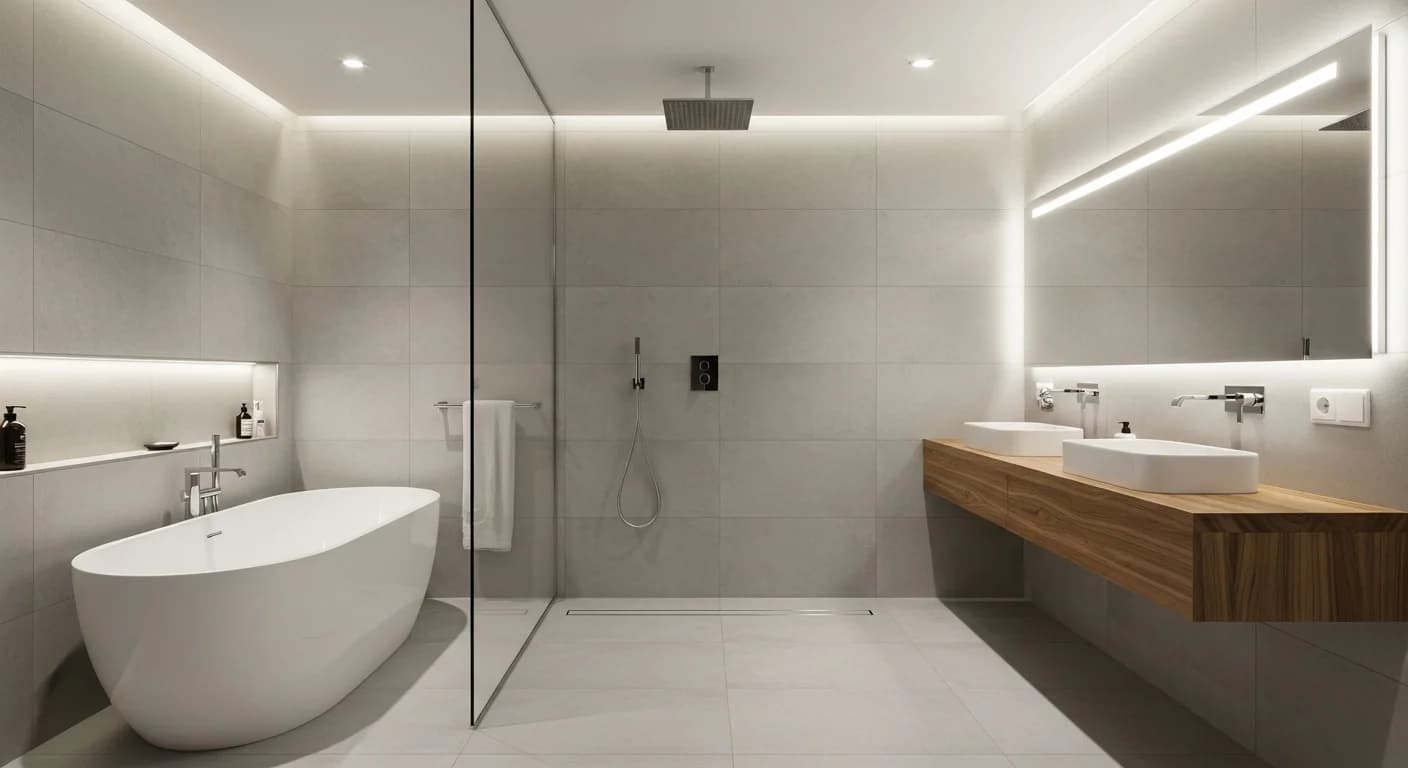
Smart Bathroom Technology: Features Worth the Investment in 2026
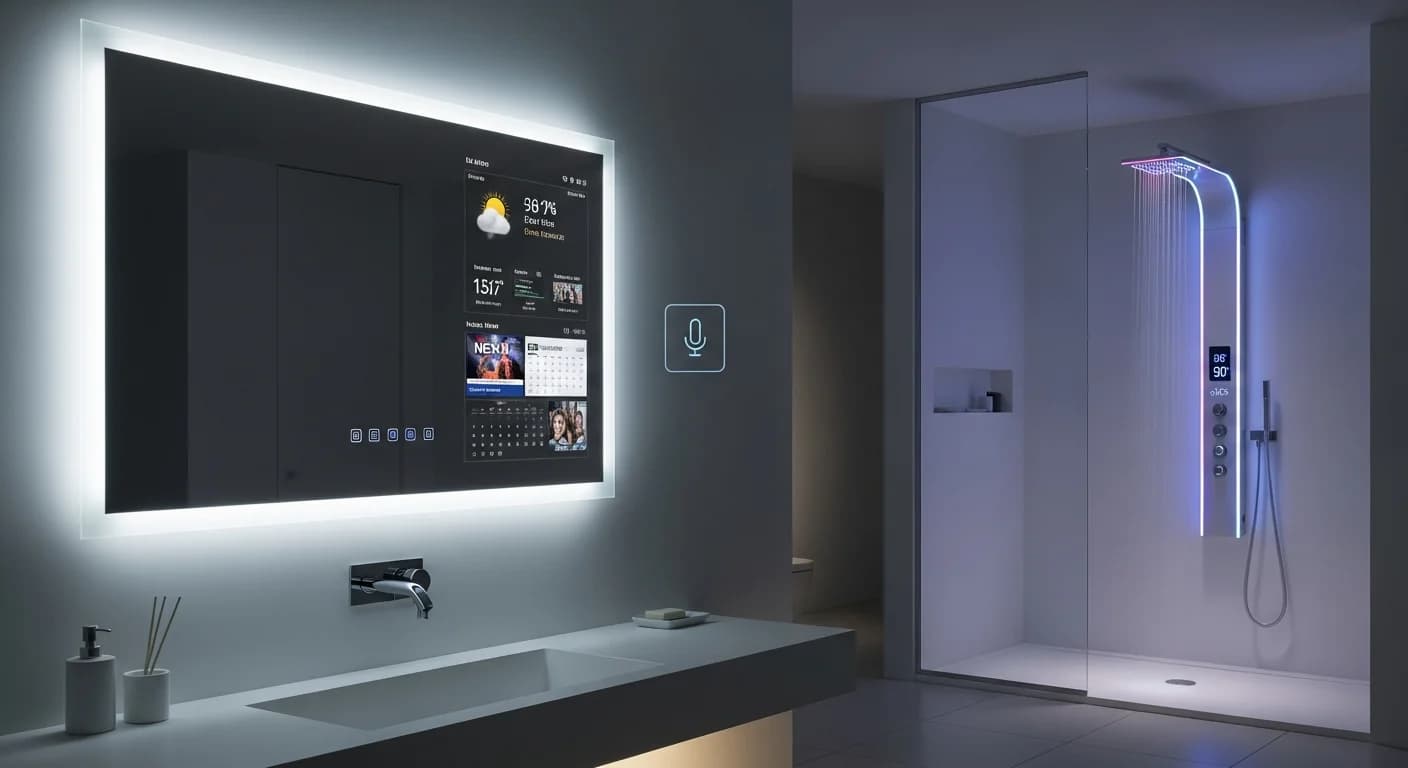
The modern bathroom is rapidly evolving from a purely functional space into a connected, intelligent environment that anticipates needs, conserves resources, and enhances daily comfort. Smart bathroom technology has moved well beyond novelty gadgets — in 2026, features like touchless faucets, digital shower systems, and smart toilets are standard specifications in luxury homes and increasingly common in mid-range renovations. A recent survey by the National Kitchen and Bath Association found that 67% of designers reported increased client demand for at least one smart bathroom feature in 2025, up from 42% just three years earlier.
The appeal of smart bathroom technology extends beyond convenience. Water-saving smart faucets reduce consumption by 30-50% compared to traditional fixtures. Leak detection sensors prevent the average $11,000 water damage claim by alerting homeowners to problems within seconds. Smart ventilation systems with humidity sensors activate automatically to prevent mold growth — the number one cause of bathroom material deterioration. When evaluated through the lens of water savings, damage prevention, and energy efficiency, many smart bathroom features pay for themselves within 3-5 years of installation.
This guide covers the most impactful smart bathroom technology available in 2026, with realistic cost ranges, installation requirements, and honest assessments of which features deliver genuine value versus which remain expensive novelties. Each section includes specific product examples and compatibility information so you can plan your smart bathroom with confidence.
Quick Summary
- Smart toilets: $500-$8,000 — bidet wash, heated seat, auto-flush, self-cleaning
- Digital shower systems: $800-$5,000 — precise temperature, preset profiles, steam capability
- Touchless faucets: $150-$800 — motion-activated, water saving, voice compatible
- Smart mirrors: $300-$2,500 — LED lighting, anti-fog, Bluetooth, display integration
- Leak detection: $50-$500 — Wi-Fi sensors, automatic shut-off valves, insurance discounts
- Best for: Homeowners upgrading bathrooms with smart bathroom technology for comfort, efficiency, and home value
- Reading time: 14 minutes
Why Smart Bathrooms Are the New Standard
Smart home technology has reached a tipping point where the infrastructure supporting connected devices — reliable Wi-Fi, affordable sensors, and standardized communication protocols like Matter and Thread — makes bathroom integration practical and reliable. Unlike early smart home systems that required proprietary hubs and complex programming, 2026-era smart bathroom technology largely operates through standard Wi-Fi, Bluetooth, and voice assistant ecosystems that homeowners already use.
The financial case for smart bathroom technology strengthens with each passing year. WaterSense-certified smart faucets and toilets reduce water consumption by thousands of gallons annually — savings that accumulate meaningfully in regions with rising water rates. A smart toilet with dual-flush technology uses 1.0-1.28 gallons per flush versus 1.6-3.5 gallons for older models, saving the average household 3,000-8,000 gallons of water per year. At water rates of $5-$15 per 1,000 gallons, that translates to $15-$120 in annual savings — modest individually but substantial over a 20-year fixture lifespan.
From a resale perspective, the return on investment for bathroom upgrades increasingly favors technology integration. Real estate agents report that smart bathroom features — particularly smart toilets, touchless faucets, and smart mirrors — are transitioning from luxury amenities to expected features in homes priced above $500,000. Properties with multiple smart features command 3-5% higher offers compared to similar homes with conventional fixtures, according to Redfin data from the first half of 2025.
Smart Toilets and Bidet Seats
Features That Matter
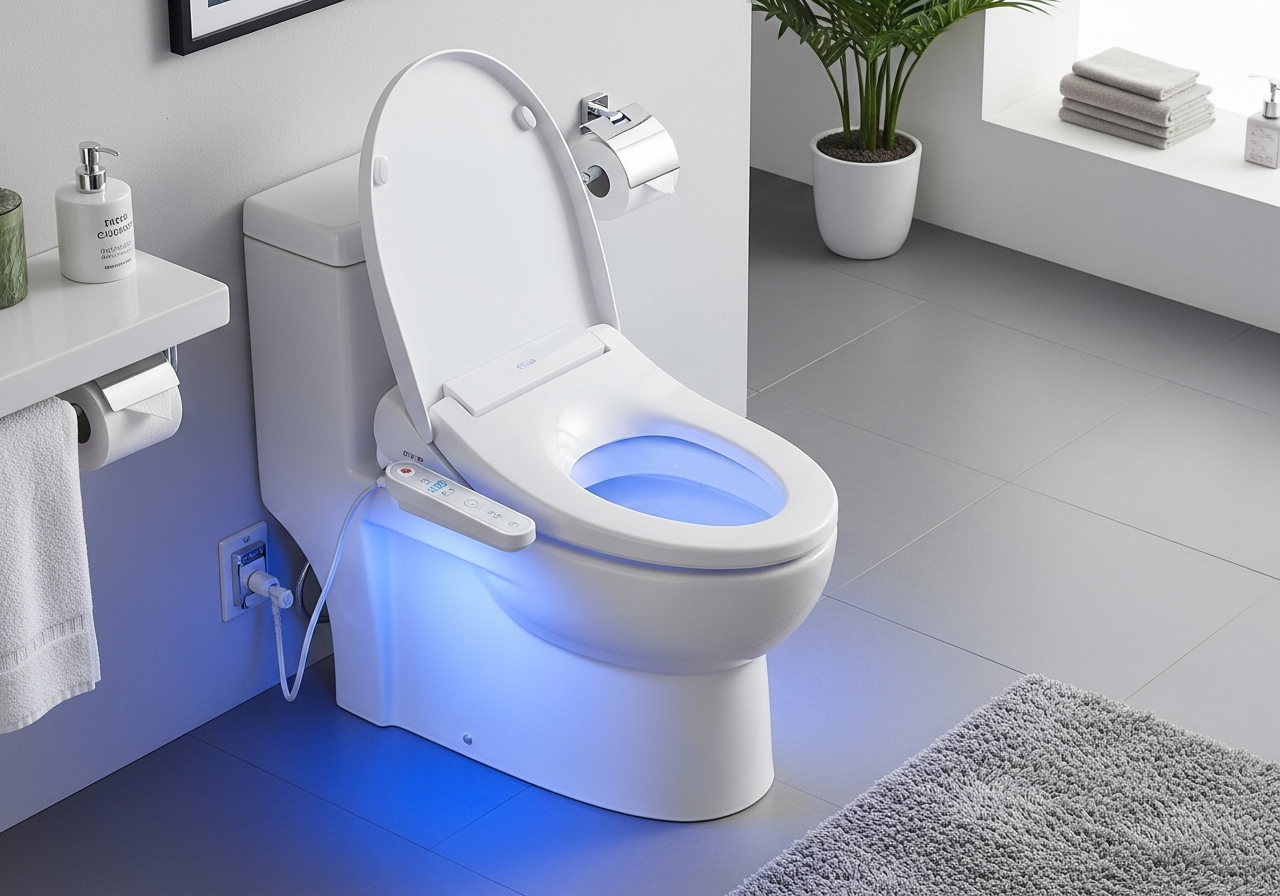
Smart toilets integrate multiple hygiene and comfort features into a single fixture, replacing the standard toilet with a technologically advanced unit that dramatically improves the bathroom experience. Core smart toilet features include: integrated bidet wash with adjustable water temperature (95-104 degrees Fahrenheit), pressure (3-5 levels), and nozzle position; heated seat with adjustable temperature (82-104 degrees Fahrenheit); automatic lid opening and closing via proximity sensor; automatic flush triggered by the user leaving the sensor zone; built-in deodorizer with activated carbon filter; and LED night light that illuminates the bowl in low-light conditions.
Advanced models add warm air drying (reducing toilet paper usage by 75-80%), UV-C light self-cleaning cycles that sanitize the bowl and nozzle automatically, remote control operation (handheld or wall-mounted panel), and user profiles that store preferred settings for multiple household members. The most sophisticated units — like the TOTO Neorest series — incorporate eWater+ technology that mists the bowl with electrolyzed water before and after each use, creating a surface that resists waste adhesion and reduces manual cleaning frequency by up to 80%.
Top Brands and Models
TOTO Neorest ($5,000-$8,000): The benchmark for smart toilets, featuring CEFIONTECT ceramic glaze, eWater+ self-cleaning, tornado flush, integrated bidet, heated seat, auto-open/close lid, and deodorizer. Available in elongated and universal height configurations.
Kohler Konnect Numi 2.0 ($6,000-$8,500): Integrates Amazon Alexa voice control, ambient lighting in 16 colors, surround-sound Bluetooth speakers, heated seat, bidet, UV self-cleaning, and personalized user profiles. The most feature-rich smart toilet on the market.
BioBidet Discovery DLS ($1,800-$2,500): Strong mid-range option with heated seat, warm water bidet, warm air dryer, auto-flush, night light, and remote control. Offers 80% of premium smart toilet features at 30% of the cost.
TOTO Washlet bidet seats ($350-$1,200): For homeowners who want bidet functionality without replacing the entire toilet, TOTO Washlet bidet seats install onto existing toilet bowls in under 30 minutes. Models like the C5 ($500) and S7A ($1,000) deliver heated seat, adjustable bidet wash, deodorizer, and night light features at a fraction of full smart toilet costs.
Cost and Installation
Smart toilet installation typically costs $200-$600 for professional plumbing — similar to standard toilet installation but requiring a nearby GFCI electrical outlet (within 3-4 feet of the toilet). Most bathrooms built after 2000 already have GFCI outlets near the vanity; adding a dedicated outlet near the toilet costs $150-$350 if one does not exist. The total installed cost for a mid-range smart toilet runs $2,000-$4,000, while premium models reach $6,000-$9,500 fully installed. For detailed budgeting, consult the 2026 bathroom remodel cost guide.
Touchless and Smart Faucets
Touchless faucets use infrared proximity sensors or capacitive touch technology to activate water flow without physically turning a handle, reducing cross-contamination and simplifying handwashing. In 2026, touchless bathroom faucets have evolved significantly beyond the unreliable, slow-responding units of previous generations. Current models from Moen, Delta, and Kohler feature response times under 0.2 seconds, adjustable flow duration, temperature memory, and integration with voice assistants.
Motion-activated faucets ($150-$500) use infrared sensors to detect hand presence within 2-4 inches of the spout. Water flows for a preset duration (typically 30-120 seconds) or until hands are removed from the sensor zone. These models are battery-powered (lasting 12-24 months on standard AA or C batteries) or hardwired to the home's electrical system.
Voice-activated faucets ($300-$800) connect to Amazon Alexa, Google Home, or Apple HomeKit, allowing commands like "turn on bathroom sink at 102 degrees" or "fill sink to 2 gallons." The Moen U by Moen and Delta VoiceIQ systems lead this category, offering precise temperature control to within 1 degree Fahrenheit and measured dispensing that reduces water waste.
Water savings from touchless faucets are substantial: the EPA estimates that touchless models reduce faucet water consumption by 30-50% compared to manual faucets, primarily by eliminating water that runs while users lather soap or brush teeth. For a household that uses the bathroom faucet an average of 15 minutes per day, this equates to 3,000-5,000 gallons saved annually. Explore bathroom lighting ideas that complement modern smart faucet aesthetics.
Digital Shower Systems
Thermostatic Digital Valves
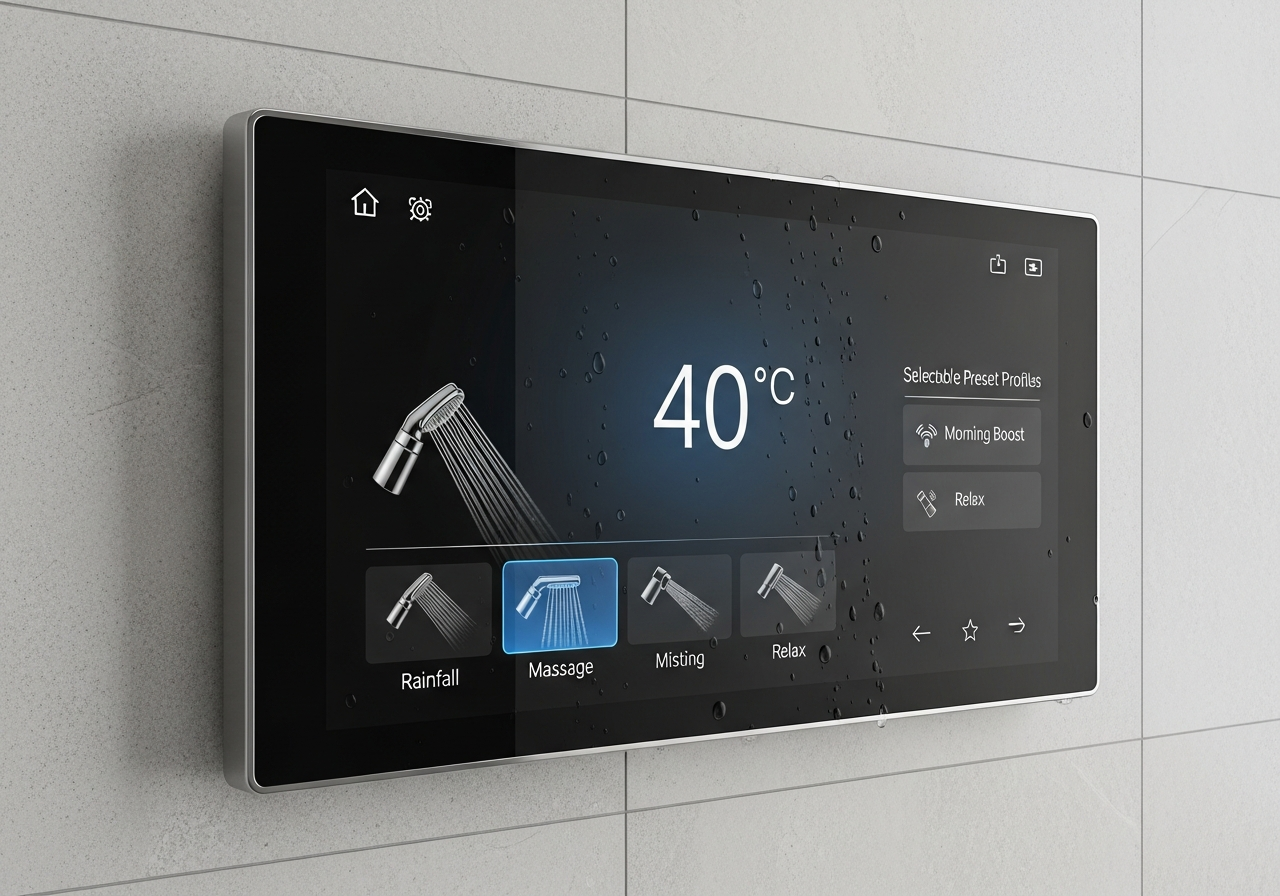
Digital shower systems replace traditional mechanical mixing valves with electronically controlled thermostatic valves that maintain water temperature within plus or minus 1 degree Fahrenheit of the set point — eliminating the cold bursts and scalding surges that occur when someone elsewhere in the house flushes a toilet or runs a dishwasher. The valve module is typically installed behind the wall, while a waterproof digital control panel (touchscreen or button-based) mounts inside the shower at a convenient height.
Leading digital thermostatic systems include the Kohler DTV+ ($1,200-$3,000), Moen U by Moen ($800-$2,000), and the Grohe SmartControl ($600-$1,500). These systems allow users to set exact temperatures, create saved presets for different household members, and start the shower remotely (via app or voice command) so water reaches the desired temperature before stepping in — eliminating 30-60 seconds of water waste per shower while the temperature adjusts.
Multi-Head Systems
Digital valve technology enables sophisticated multi-head shower configurations that would be impractical with mechanical valves. A single digital controller can manage a rain showerhead, handheld shower, body spray jets, and even a steam generator — each with independent on/off and flow control. Users create personalized shower experiences that activate specific combinations: a quick morning rinse using only the overhead rain head at 100 degrees, or a full spa experience activating all heads at 104 degrees with the steam generator.
Multi-head digital systems for a luxury primary bathroom typically cost $2,000-$5,000 for the valve system plus $500-$2,000 for each additional showerhead or body spray assembly. Professional installation adds $1,000-$3,000 depending on the number of outlets and complexity of the plumbing rough-in.
Steam Shower Integration
Digital shower systems with steam integration combine conventional showering with a steam generator that fills the enclosed shower space with therapeutic steam at 110-120 degrees Fahrenheit. The steam generator — a compact unit installed outside the shower (typically in a vanity cabinet, closet, or adjacent wall cavity) — heats water to create steam that enters the shower through a dedicated steam head. Digital controls allow precise temperature settings and session timers ranging from 10 to 60 minutes.
Steam generators for residential showers cost $1,500-$5,000 depending on the shower volume (measured in cubic feet) and brand. A standard 4 x 4 x 8 foot shower enclosure requires a 7-9 kW generator. The shower enclosure must be fully sealed with a ceiling no higher than 8 feet and a glass door that reaches within one-half inch of the ceiling to contain steam effectively. Adding steam capability to a digital shower system adds approximately $3,000-$8,000 to the total installed cost including the generator, steam head, additional electrical circuit, and sealing modifications.
Smart Mirrors and LED Lighting
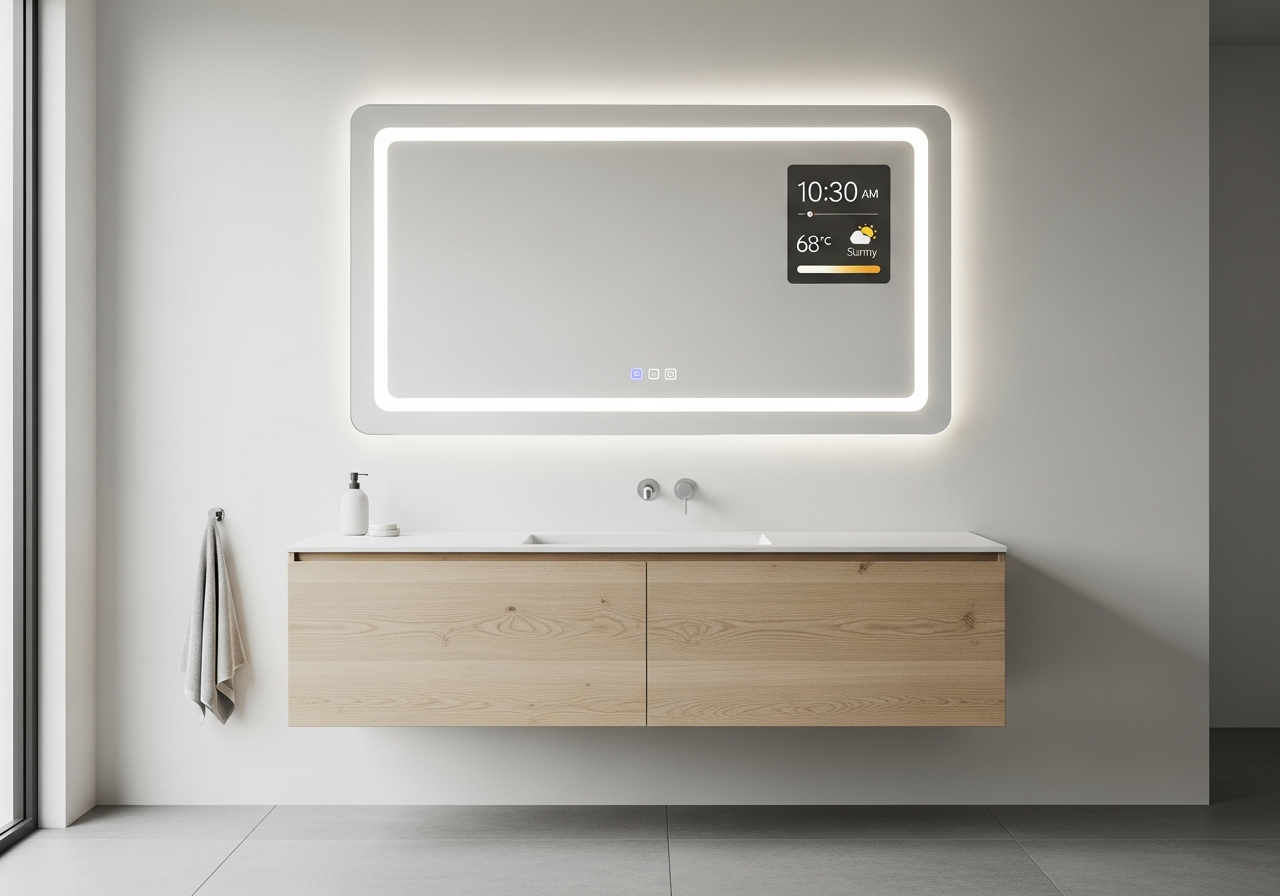
Smart bathroom mirrors combine reflective surfaces with integrated LED lighting, anti-fog heating elements, and in some models, embedded displays and Bluetooth connectivity. The functional benefits are substantial: LED-backlit mirrors provide even, shadow-free illumination ideal for grooming tasks, anti-fog heating eliminates the post-shower mirror wipe, and adjustable color temperature (3000K warm to 6000K daylight) lets users match lighting conditions to time of day or activity.
Entry-level smart mirrors ($300-$600) offer LED backlighting with on/off touch controls and anti-fog coating. Mid-range models ($600-$1,200) add dimming capability, color temperature adjustment, Bluetooth speakers for music or podcasts, and a small integrated clock or temperature display. Premium smart mirrors ($1,200-$2,500) incorporate full-screen overlays showing weather, calendar, news, or smart home controls — essentially embedding a tablet display behind the mirror glass that appears only when activated.
Installation requirements for smart mirrors are modest: most models require only a standard electrical outlet behind the mirror position. Hardwired models connect directly to a junction box and may require a licensed electrician. Bluetooth-enabled mirrors pair with smartphones for audio streaming without any additional infrastructure. For mirrors with Wi-Fi display features, a stable 2.4 GHz Wi-Fi signal in the bathroom is the only additional requirement.
Circadian Lighting Systems
Circadian lighting systems automatically adjust the color temperature and intensity of bathroom lighting throughout the day to support natural sleep-wake cycles. Morning light shifts toward cool, energizing tones (5000K-6500K) that suppress melatonin and promote alertness. Evening light transitions to warm, relaxing tones (2200K-3000K) that encourage natural melatonin production and prepare the body for sleep.
In bathrooms — where lighting encounters happen at the most circadian-critical times (immediately upon waking and just before bed) — circadian lighting has an outsized impact on sleep quality. Smart LED fixtures and tunable-white recessed lights from brands like Ketra, Philips Hue, and Lutron Caseta support automated color temperature schedules that require no daily user interaction after initial programming.
A basic circadian lighting setup using 4-6 tunable-white recessed LED fixtures and a smart switch or hub costs $400-$1,200 installed. Premium systems with Ketra fixtures and Lutron integration run $2,000-$5,000 per bathroom but deliver the most accurate and gradual color transitions. The growing body of research linking evening blue-light exposure to disrupted sleep makes circadian bathroom lighting one of the most scientifically supported smart bathroom technology investments available.
Leak Detection and Water Monitoring
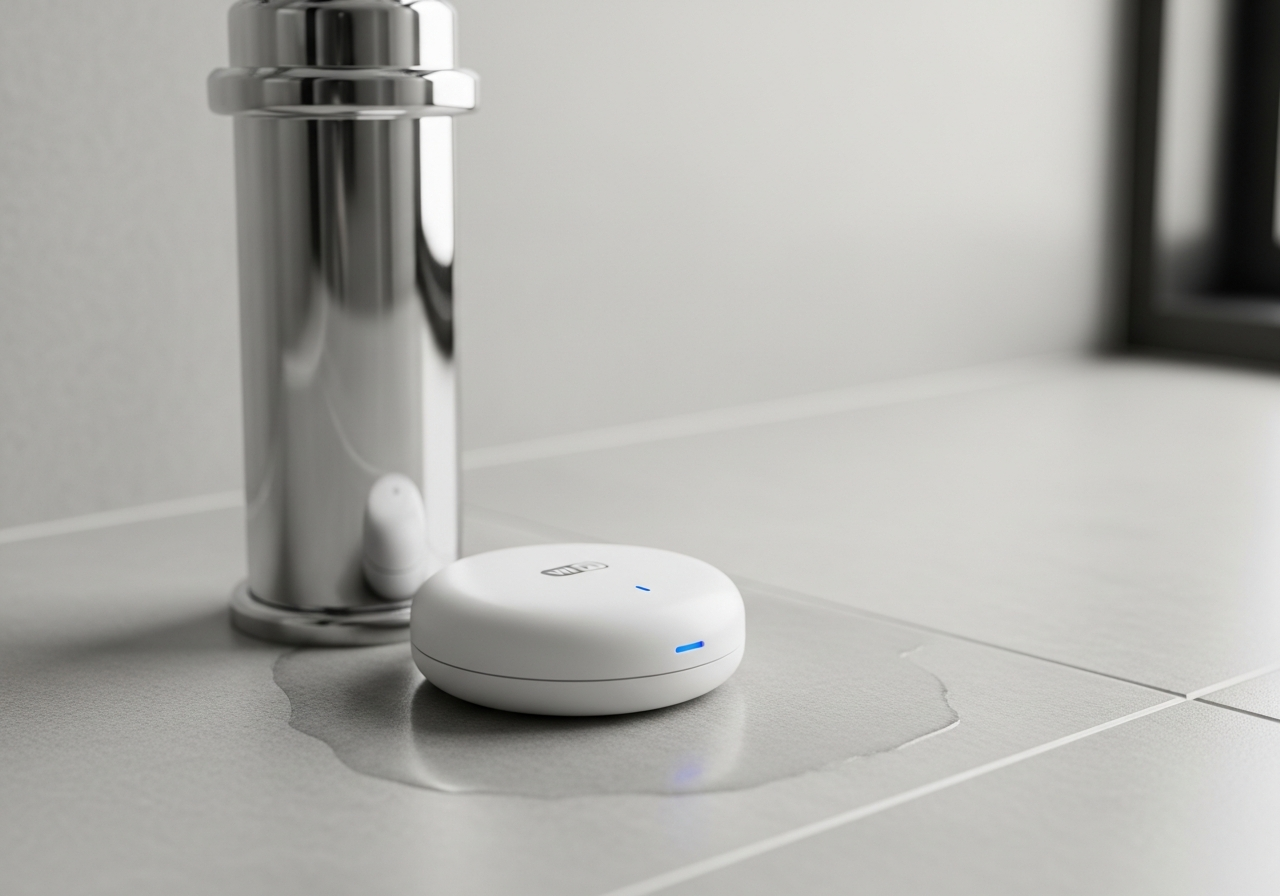
Water damage is the most common and costly homeowner insurance claim in the United States, with the average bathroom water damage incident costing $11,000-$15,000 in repairs according to the Insurance Information Institute. Smart leak detection systems — ranging from simple $30 sensor pucks to comprehensive whole-house water monitoring systems — provide an affordable insurance policy against catastrophic water damage.
Point-of-use sensors ($30-$80 each) are small Wi-Fi-connected devices placed on the floor near toilets, under vanities, behind washing machines, and near water heaters. When the sensor contacts water, it sends an instant push notification to the homeowner's smartphone. Popular options include the Govee Wi-Fi Water Sensor ($20-$30), Honeywell Lyric ($40-$60), and Samsung SmartThings Water Leak Sensor ($25-$35). Placing 2-3 sensors in each bathroom and one at the water heater provides comprehensive coverage for under $200.
Whole-house water monitoring systems ($200-$500 for the device plus $100-$300 for professional installation) install on the main water supply line and track total household water flow in real time. Systems like Flo by Moen ($500 installed), Phyn Plus ($400 installed), and Flume ($200 self-installed) detect anomalous flow patterns — a running toilet, a slow leak behind a wall, or a burst pipe — and send alerts before damage occurs. The Flo by Moen and Phyn Plus systems can also automatically shut off the main water supply when a leak is detected, preventing damage even when the homeowner is away.
Many homeowner insurance providers offer 5-15% discounts on water damage coverage for homes with qualifying leak detection and automatic shut-off systems — a discount that can recoup the system cost within 2-4 years. Check with your insurance provider for specific discount programs.
Voice Control Integration
Voice control ties individual smart bathroom technology components into a cohesive, hands-free system. With Amazon Alexa, Google Home, or Apple HomeKit as the central platform, voice commands can control lights ("set bathroom lights to 50% warm"), start the shower ("start my morning shower"), play music through mirror speakers, check the weather on a smart mirror display, and receive leak alerts through smart speakers.
The most effective voice-controlled bathrooms use a dedicated smart speaker or display positioned away from direct water spray — a wall-mounted Echo Show 5 or Google Nest Hub near the vanity works well. Alternatively, many smart mirrors include built-in microphones and speakers that serve as voice assistant endpoints without a separate device.
Bathroom-specific voice routines automate multi-step processes: a "good morning" routine might simultaneously turn on the vanity lights at 5000K, start the shower at 102 degrees, and play a news briefing — all triggered by a single voice command or a scheduled alarm. An "evening" routine could dim lights to 2700K, set the tub filler to 104 degrees, and play relaxing ambient sounds. These routines transform smart bathroom technology from individual features into an integrated experience that adds genuine daily convenience.
Smart Bathroom Cost Breakdown
Budgeting for smart bathroom technology requires understanding both the product costs and the supporting infrastructure. The following breakdown categorizes investments by budget tier for a single bathroom:
Budget Smart Bathroom ($500-$1,500):
- Bidet seat attachment (TOTO Washlet C2): $350-$500
- Smart LED mirror (basic backlit, anti-fog): $200-$400
- Leak detection sensors (2-3 units): $60-$150
- Smart light bulbs or switch (2-3 fixtures): $50-$150
Mid-Range Smart Bathroom ($2,000-$5,000):
- Smart toilet (BioBidet or TOTO Washlet+): $1,500-$3,000
- Touchless faucet (Moen or Delta): $200-$500
- Smart mirror with Bluetooth: $400-$800
- Digital shower valve: $800-$1,500
- Leak detection with shut-off: $300-$500
Premium Smart Bathroom ($8,000-$20,000+):
- Premium smart toilet (TOTO Neorest or Kohler Numi): $5,000-$8,500
- Digital multi-head shower system: $3,000-$6,000
- Steam shower integration: $3,000-$8,000
- Smart mirror with display: $1,200-$2,500
- Circadian lighting system: $1,000-$3,000
- Voice control hub and integration: $200-$500
- Whole-house water monitoring: $300-$600
View the HanoDecor project gallery for bathroom remodels incorporating smart technology at various budget levels, and consult pricing options for design visualization tools.
Frequently Asked Questions
Are smart toilets worth the investment?
Smart toilets deliver measurable value through water savings (1,000-5,000 gallons annually with dual-flush technology), reduced toilet paper consumption (75-80% reduction with bidet and air-dry features), improved hygiene (bidet wash is clinically cleaner than paper alone), and enhanced comfort (heated seat, automatic lid). For homeowners who plan to stay in their home 5+ years, the combination of daily comfort improvement and cumulative savings makes a mid-range smart toilet ($1,500-$3,000) a sound investment.
Do smart bathroom features increase home value?
Smart bathroom technology adds perceived value and competitive differentiation in the resale market, particularly in homes priced above $400,000. While isolated smart features (a single touchless faucet) have minimal impact, a coordinated smart bathroom with a smart toilet, digital shower, smart mirror, and leak detection can add $3,000-$8,000 to the appraised value. The bathroom ROI guide provides detailed return percentages for specific upgrade categories.
What smart bathroom features save the most water?
Touchless faucets deliver the highest water savings as a percentage of baseline consumption (30-50% reduction), followed by dual-flush smart toilets (20-40% reduction) and digital shower systems with preset timers (10-20% reduction through eliminating warm-up waste). Combined, a fully smart bathroom can reduce water consumption by 8,000-15,000 gallons per year compared to a bathroom with conventional fixtures from the 1990s or earlier.
Is smart bathroom technology difficult to install?
Installation complexity varies by feature. Bidet seats, smart mirrors, and leak sensors are straightforward DIY installations requiring 15-60 minutes each. Touchless faucets replace standard faucets with similar complexity (1-2 hours, basic plumbing knowledge). Smart toilets require plumbing skills comparable to standard toilet replacement plus a nearby GFCI outlet. Digital shower systems and steam generators require professional plumbing and electrical work — budget $500-$2,000 for installation labor on these systems.
What is the best voice assistant for a smart bathroom?
Amazon Alexa currently offers the widest compatibility with smart bathroom technology products, supporting smart toilets from Kohler (Konnect), faucets from Moen (U by Moen), and most smart mirrors, lights, and sensors. Google Home provides strong coverage with a slightly smaller device ecosystem. Apple HomeKit offers the most secure privacy framework but supports fewer bathroom-specific products. Choose the platform that matches your existing smart home ecosystem for the smoothest integration.
Visualize Your Smart Bathroom with HanoDecor
Designing a smart bathroom starts with envisioning how technology integrates with your space, finishes, and fixtures. Upload a photo of your bathroom to our bathroom remodel visualizer and experiment with modern fixtures, sleek smart mirrors, updated vanities, and contemporary finishes that complement smart bathroom technology. Visualize the complete transformation — from smart toilet placement to digital shower configurations — in your actual space before making any purchasing decisions.
Smart Bathroom Technology FAQs
Written by
Michael Torres
Bathroom and Kitchen Design Specialist with 15 years of remodeling experience. NKBA-certified designer focused on functional layouts, fixture selection, and spa-inspired wellness spaces.