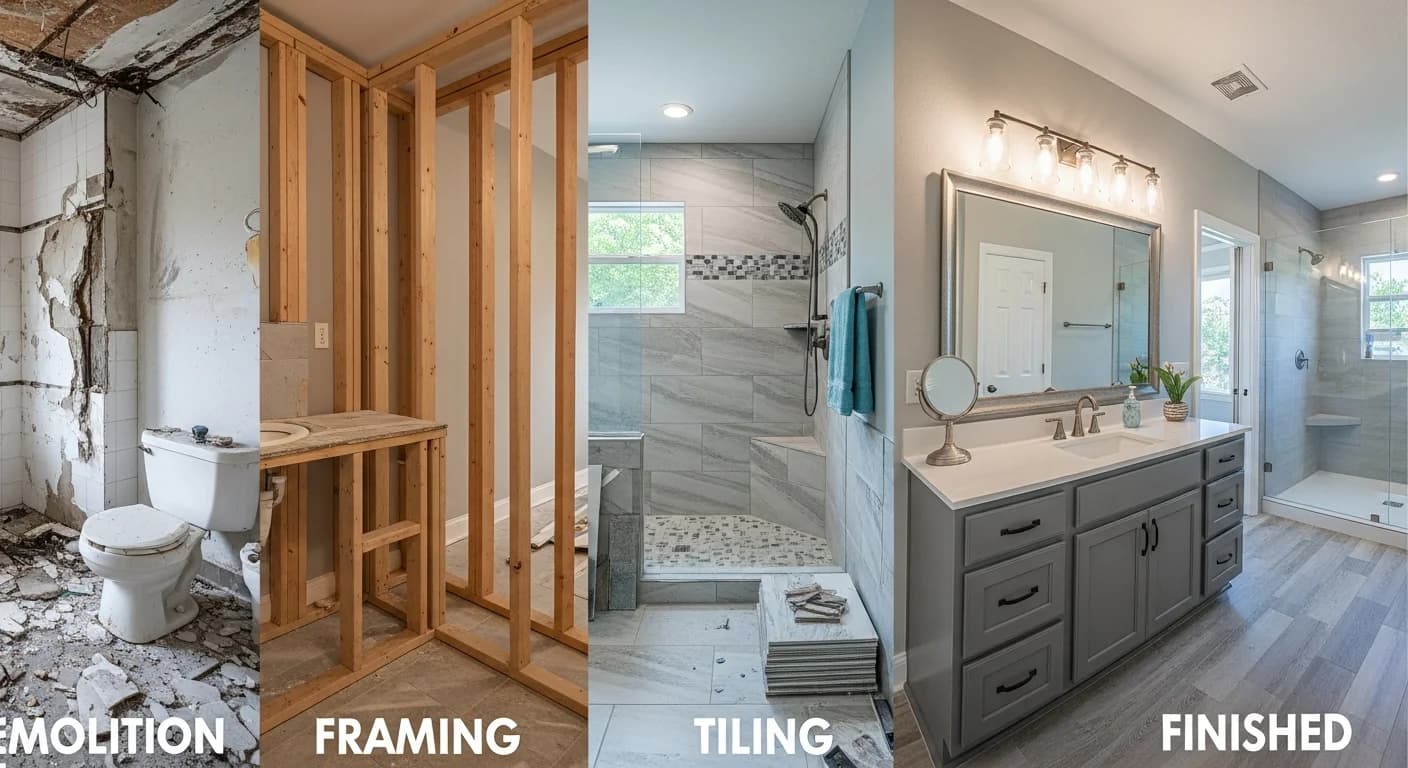
Affordable Bathroom Remodel: Smart Strategies for Any Budget
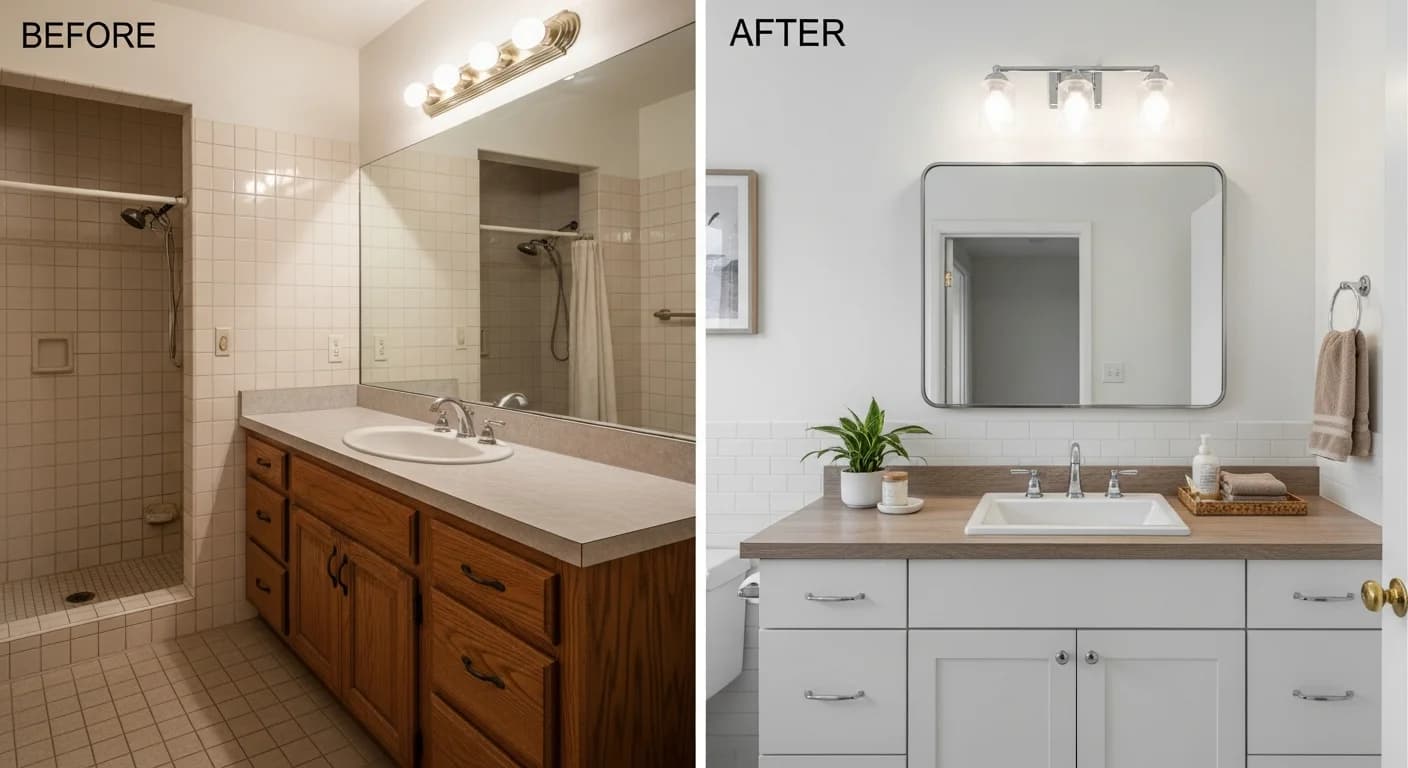
Introduction: Beautiful Bathrooms Don't Require a Fortune
When most homeowners envision a bathroom remodel, they picture five-figure budgets, weeks of construction chaos, and the stress of making dozens of expensive decisions. But here's the reality that experienced renovators know: a stunning bathroom transformation is absolutely achievable on a modest budget. The key isn't spending more money — it's spending smarter.
According to the National Association of Realtors' 2026 Remodeling Impact Report, even budget-conscious bathroom renovations recoup 60-70% of their cost at resale, with some strategic updates returning over 100% of investment. Whether you have $1,000 or $15,000 to work with, there are proven strategies to maximize every dollar and create a bathroom that looks and feels like a premium renovation.
In this comprehensive guide, we'll walk you through every budget-smart approach — from high-impact cosmetic updates that cost under $500, to smart material substitutions that deliver luxury looks at a fraction of the price. Whether you're refreshing a guest bathroom or tackling a primary suite overhaul, these strategies will help you achieve the bathroom you want without the financial stress. For broader design inspiration, explore our complete bathroom remodel ideas guide.
High-Impact, Low-Cost Updates ($500-$2,000)
The most cost-effective bathroom transformations focus on cosmetic updates that dramatically change the look and feel of the space without touching plumbing, electrical, or structural elements. These updates are often DIY-friendly and can be completed in a single weekend.
Paint: The Single Best Value Update
Nothing transforms a bathroom faster than fresh paint. A gallon of high-quality bathroom paint costs $35-$55 and covers approximately 400 square feet — enough for most bathrooms with paint to spare. Choose a semi-gloss or satin finish formulated for high-moisture environments. Popular 2026 color trends include warm whites like Benjamin Moore's Simply White, soft sage greens, and warm greige tones that create a spa-like atmosphere.
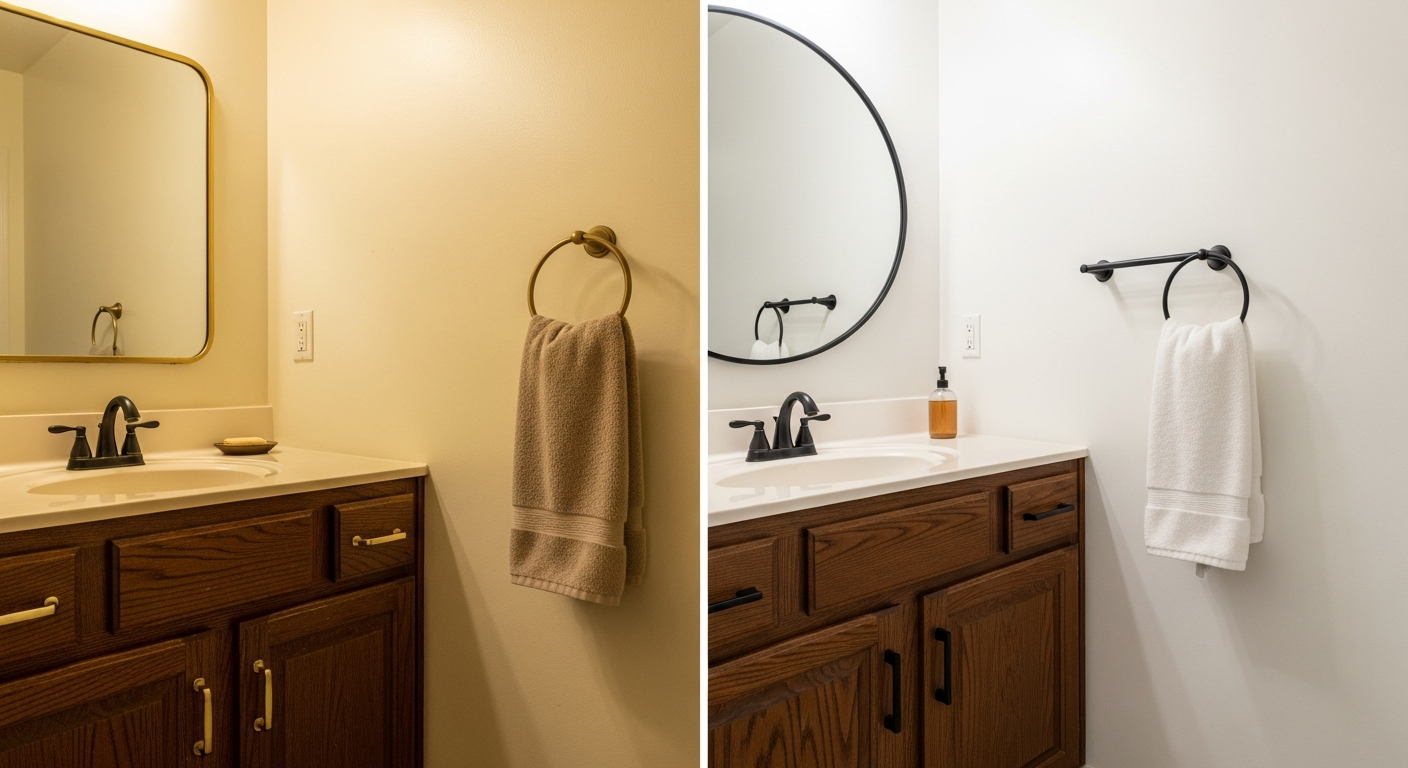
Don't overlook the power of painting your vanity cabinet. A $30 quart of cabinet-grade paint and some basic supplies can make an outdated oak vanity look completely custom. Pair it with new hardware, and you've essentially created a "new" vanity for under $100.
Hardware Swap: Instant Modernization
Replacing cabinet knobs, drawer pulls, towel bars, toilet paper holders, and robe hooks is the fastest way to update a bathroom's style. A complete hardware refresh typically costs $75-$200 and takes less than an hour to install. Matte black and brushed nickel remain the most popular and affordable finishes in 2026, while brushed gold offers a luxury look at a moderate price point.
Mirror and Light Fixture Upgrade
Swapping a builder-grade plate mirror for a framed mirror instantly elevates the entire vanity area. Budget-friendly framed mirrors from home improvement stores range from $80-$250 and come in styles from modern minimalist to farmhouse rustic. Pair it with a new light fixture ($50-$200) for a coordinated, designer-quality look.
Pro tip: If your existing mirror is in good condition, consider a DIY mirror frame kit ($25-$50) that adheres directly to the mirror surface. It delivers 80% of the visual impact at a fraction of the cost.
Accessories and Textiles Refresh
New towels, a coordinated shower curtain, bath mat, soap dispensers, and decorative elements can completely change a bathroom's personality. Budget $100-$300 for a full accessories refresh. Choose a cohesive color palette and stick with it — this simple discipline creates a curated, intentional look that reads as "designed" rather than "decorated."
Smart Material Substitutions That Deliver Luxury for Less
One of the biggest secrets in budget-friendly renovation is knowing which materials deliver the look of premium options at dramatically lower price points. Modern manufacturing has made it nearly impossible to distinguish many budget alternatives from their expensive counterparts.
Porcelain Marble-Look Tile vs. Real Marble
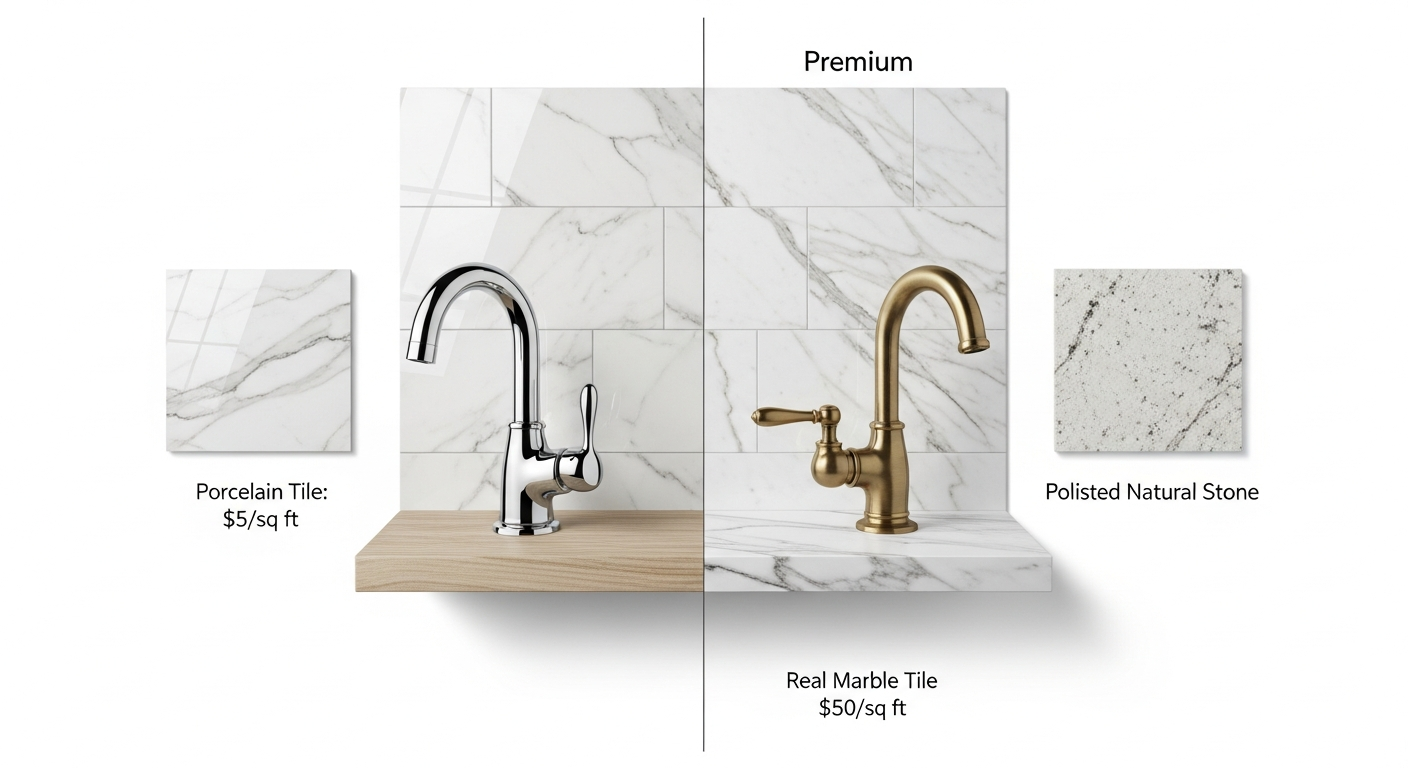
Real Carrara marble runs $15-$40 per square foot for material alone, plus it requires sealing, careful maintenance, and can stain or etch from common bathroom products. Porcelain marble-look tile costs $3-$8 per square foot, is virtually maintenance-free, and today's inkjet printing technology creates remarkably realistic veining patterns. For an 80 square foot bathroom floor, you're looking at $240-$640 vs. $1,200-$3,200 — a savings of $960 to $2,560 on flooring alone.
Luxury Vinyl Plank (LVP) vs. Hardwood or Ceramic
LVP has become the darling of budget renovations, and for good reason. At $2-$5 per square foot, it's waterproof (critical in bathrooms), comfortable underfoot, and available in convincing wood-look and stone-look patterns. It's also one of the easiest floors for DIY installation — most products feature click-lock systems that require no adhesive or special tools. Compare this to ceramic tile at $5-$15 per square foot (plus professional installation at $8-$15 per square foot) and the savings are substantial.
Engineered Quartz vs. Natural Granite
For vanity countertops, engineered quartz at $50-$80 per square foot installed delivers the durability and beauty of natural stone without granite's maintenance requirements ($60-$120 per square foot installed). Even more budget-friendly: prefabricated vanity tops in cultured marble or solid surface materials cost $100-$400 complete, compared to $500-$2,000+ for custom-cut natural stone. For a deeper dive into material comparisons, see our bathroom remodel cost guide.
Chrome vs. Premium Metal Finishes
Chrome fixtures are typically 30-50% less expensive than brushed gold, matte black, or brushed nickel alternatives. A chrome faucet from a quality manufacturer costs $120-$250, while the same model in brushed gold might run $200-$400. If you love the look of premium finishes but need to save, consider mixing: use chrome for the shower valve (which is mostly hidden) and splurge on a statement faucet in your preferred finish.
DIY vs. Professional: Know Where Your Skills End
The labor component of a bathroom remodel typically accounts for 40-60% of the total project cost. Strategically handling certain tasks yourself can save thousands — but taking on projects beyond your skill level can cost even more in repairs and corrections. Here's an honest breakdown based on skill requirements and risk level.
Safe DIY Projects (No Special Skills Required)
These projects are well within reach for any motivated homeowner with basic tools: painting walls and ceilings, replacing cabinet hardware, installing towel bars and accessories, swapping out a mirror, replacing a toilet seat, installing a new shower curtain rod, caulking and re-grouting, and installing floating shelves. Combined, these DIY tasks can save $500-$1,500 in labor costs. Check out our DIY bathroom remodel guide for step-by-step instructions on beginner-friendly projects.
Moderate DIY Projects (Some Experience Helpful)
With careful preparation and research, these projects are manageable for handy homeowners: installing a new vanity (if plumbing connections align), replacing a toilet, installing LVP or peel-and-stick tile flooring, replacing a light fixture (with power off at the breaker), painting cabinets (requires proper prep and technique), and installing a new faucet. These moderate projects can save an additional $1,000-$3,000 in professional labor.
Must-Hire Professional Projects
These projects involve codes, permits, safety risks, or specialized skills that make professional help essential: moving or adding plumbing lines, electrical panel work or adding new circuits, shower pan installation and waterproofing, ceramic or porcelain tile installation (especially in showers), structural modifications like moving walls or enlarging doorways, and ventilation ductwork installation. Attempting these projects without proper training can lead to water damage, code violations, and safety hazards that far exceed the cost of professional installation.
The Phased Renovation Approach: Spread Costs Over Time
One of the smartest budget strategies is breaking your bathroom remodel into phases. Rather than funding a $10,000 project all at once, you can spread the investment across three to four phases over 6-18 months, completing each phase as your budget allows.
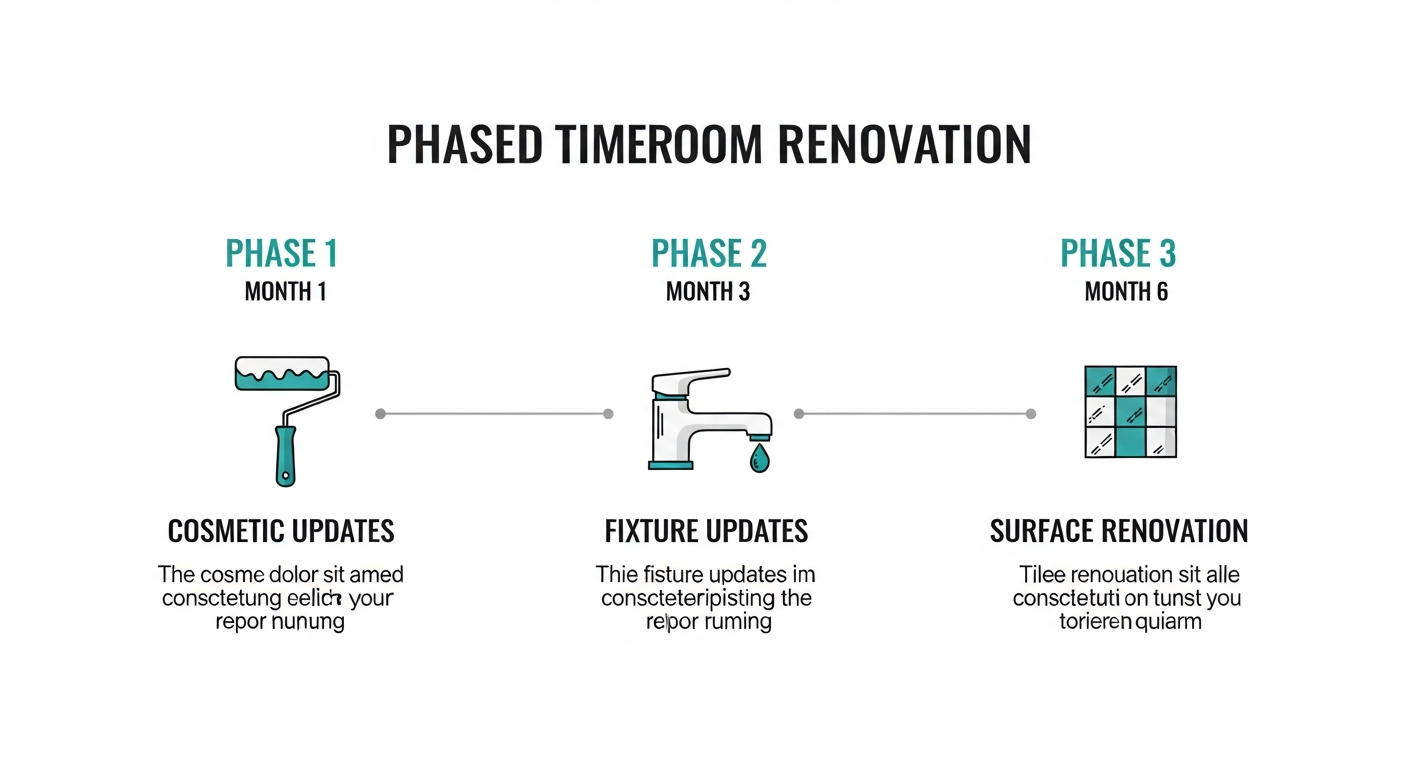
Phase 1: Cosmetic Refresh (Month 1-2, Budget: $500-$1,500)
Start with the changes that deliver the most visual impact: paint walls and ceiling, replace all hardware (cabinet pulls, towel bars, hooks), install a new mirror and light fixture, and refresh accessories and textiles. This phase alone can make your bathroom feel 50% updated and gives you a "win" that motivates the remaining phases.
Phase 2: Flooring Update (Month 3-6, Budget: $500-$2,000)
Once cosmetics are refreshed, tackle the floor. LVP or peel-and-stick tile can transform the space over a single weekend. If budget allows, this is also the time to replace the toilet — a new water-efficient model costs $150-$400 and can save $50-$100 annually on water bills.
Phase 3: Vanity and Countertop (Month 6-12, Budget: $800-$3,000)
Replace the vanity with a new stock model or refinish the existing one. Stock vanities from home improvement stores cost $200-$800 including the top, compared to $1,500-$5,000+ for custom. This phase also includes the faucet replacement and any under-vanity plumbing updates.
Phase 4: Shower/Tub Area (Month 12-18, Budget: $1,000-$5,000)
The shower or tub area is typically the most expensive phase. Options range from a simple shower door replacement or tub refinishing ($200-$600) to a complete surround panel installation ($1,000-$3,000) or professional re-tile ($3,000-$8,000). Tackle this last when you've had time to save and plan.
Budget Bathroom Transformations by Price Point
To help you plan realistically, here's what you can achieve at each major budget level, based on 2026 national averages.
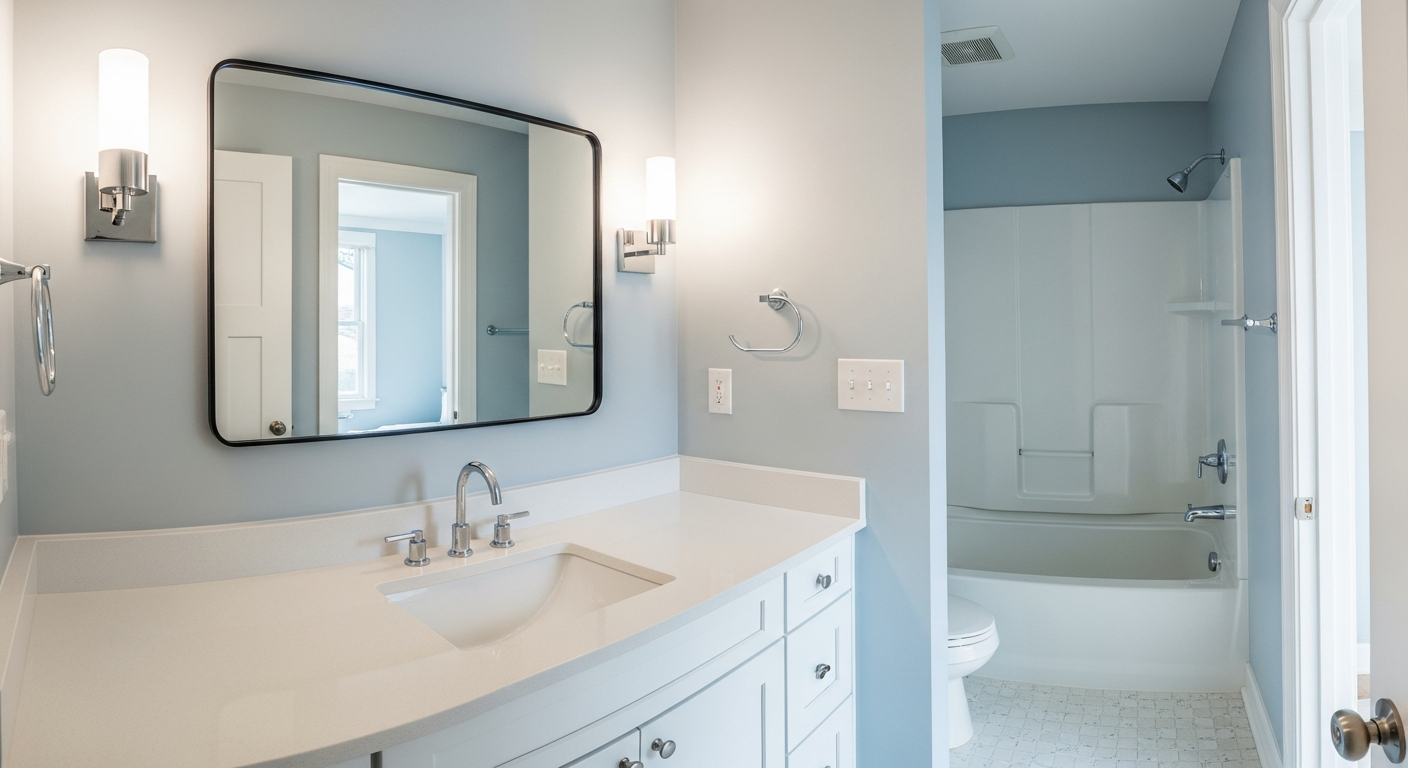
$1,000-$3,000: Cosmetic Refresh
At this price point, you can accomplish a dramatic visual transformation: fresh paint throughout ($100-$200), new hardware and accessories ($150-$300), replacement mirror and light fixture ($150-$400), new LVP flooring ($200-$600), new toilet seat and faucet ($100-$300), and refreshed caulk and grout ($50-$100). The result is a bathroom that looks and feels updated without any structural changes. This budget level is ideal for guest bathrooms, powder rooms, and rental properties.
$3,000-$7,000: Mid-Range Update
This budget opens up more substantial changes: everything in the cosmetic refresh plus a new stock vanity with countertop ($400-$1,200), a new toilet ($200-$500), tub refinishing or shower surround panels ($400-$1,500), new tile flooring installed ($800-$2,000), and updated light fixtures throughout ($200-$500). A mid-range update typically addresses all the visible surfaces and fixtures, resulting in a bathroom that genuinely feels renovated.
$7,000-$15,000: Full Renovation
At this level, you're doing a comprehensive remodel that may include everything in the mid-range update plus tile shower surround or tub/shower combo ($2,000-$5,000), a semi-custom vanity with quartz top ($1,000-$3,000), new exhaust fan with humidity sensor ($200-$500), heated floor mat under tile ($400-$800), glass shower door ($500-$1,500), and upgraded electrical for additional outlets or lighting ($500-$1,500). This budget delivers a truly transformed space that competes visually with bathrooms costing $25,000 or more — the difference lies in strategic material choices and DIY labor where appropriate.
Where to Save vs. Where to Splurge
Not all bathroom components are created equal when it comes to budget allocation. Strategic spending means directing more money toward elements you interact with daily and saving on components where budget alternatives are nearly indistinguishable from premium options.
Where to Save
Tile: Large-format porcelain tile (24x24 or 12x24) in a marble-look or concrete-look pattern costs a fraction of natural stone and requires less grout, creating a cleaner, more contemporary look. Save 50-70% compared to natural stone or designer tile.
Vanity: Stock vanities from home improvement stores have improved dramatically in quality and style. A $400-$800 stock vanity with an integrated top delivers 90% of the visual appeal of a $2,000-$4,000 custom piece. Focus your savings here and spend more on the faucet and mirror above it.
Shower Valve: The shower valve (behind the wall) is functional, not decorative. A quality chrome valve from a major manufacturer costs $75-$150 and performs identically to a $300-$500 designer model. Save money here where no one sees it.
Exhaust Fan: A quality, quiet exhaust fan costs $80-$150. There's no need to spend $300+ on a premium model unless you specifically want built-in Bluetooth speakers or LED lighting (nice-to-haves, not necessities).
Where to Splurge
Faucet: You touch and see the faucet multiple times every day. A well-made faucet from a reputable manufacturer ($200-$400) will last 15-20 years, operate smoothly, and resist corrosion. The per-day cost over its lifetime is pennies, making it one of the best bathroom investments.
Showerhead: Similarly, you use the showerhead daily. A quality rain showerhead or handheld combo ($100-$250) dramatically improves your daily experience. This is a relatively small splurge that delivers outsized satisfaction.
Lighting: Good bathroom lighting affects everything from your morning routine to the room's ambiance. Invest in a quality vanity light ($150-$300) that provides even, flattering illumination. LED options reduce long-term energy costs while delivering superior light quality.
Caulk and Sealant: This sounds minor, but premium silicone caulk ($8-$12 per tube vs. $3-$5 for basic) resists mold better, maintains flexibility, and looks cleaner for years longer. At a few dollars more per tube, it's the cheapest "splurge" with the highest maintenance-prevention return.
Shopping Strategies for Maximum Savings
Where and when you buy can save as much as what you buy. These proven shopping strategies can reduce your total material costs by 20-40%.
Outlet Stores and Floor Models
Major manufacturers and retailers operate outlet stores that sell discontinued models, cosmetic seconds, and overstock at 30-60% off retail. Floor model vanities, toilets, and fixtures at showrooms are often available at deep discounts — they're fully functional, just slightly handled. Ask your local plumbing showroom about floor model sales; many have quarterly clearance events.
Seasonal Discount Timing
The best times to buy bathroom renovation materials follow predictable patterns. Holiday weekends (Memorial Day, Labor Day, Black Friday) typically offer 15-30% off at major home improvement retailers. January and February clearance sales move out prior-year inventory at steep discounts. Late fall (October-November) is the best time to hire contractors — demand drops as the holiday season approaches, and many offer winter booking discounts of 10-15%.
Overstock and Surplus Materials
Tile outlets, liquidation stores, and online overstock retailers frequently offer premium tiles and materials at 40-70% off regular retail. The catch is limited quantity and selection, so measure carefully and buy all you need plus 15% waste factor in a single purchase. Websites like BuildDirect, Floor & Decor outlet sections, and local tile liquidators are excellent starting points.
Habitat for Humanity ReStore
ReStore locations accept donations of new and gently used building materials, fixtures, and appliances. You can find vanities, toilets, tile, light fixtures, and hardware at 50-80% off retail. Inventory varies by location and changes weekly, so visit regularly. The added benefit: your purchase supports affordable housing in your community.
Contractor Surplus and Returns
Contractors frequently overbuy materials and return unused stock. Ask local contractors if they have surplus tile, fixtures, or supplies from completed projects — many are happy to sell at a discount rather than deal with returns. Similarly, check the returns and clearance sections at big-box stores for significant savings on opened-box or slightly imperfect items.
Financing Options for Bathroom Renovations
If your dream bathroom requires more than your current savings, several financing options can make the project possible without derailing your financial health.
Home Equity Line of Credit (HELOC)
A HELOC allows you to borrow against your home's equity at relatively low interest rates (currently 7-9% in 2026). Interest may be tax-deductible if used for home improvements. HELOCs work well for larger renovations ($10,000+) because of their lower rates and flexible draw periods. The drawback: your home serves as collateral, and there are typically closing costs of $500-$2,000.
Personal Loans
Unsecured personal loans offer fixed rates (typically 8-15% in 2026) without putting your home at risk. They're faster to obtain than HELOCs — often funded within 3-5 business days — and work well for mid-range renovations ($3,000-$15,000). The fixed monthly payment makes budgeting straightforward.
Credit Cards with 0% APR Promotions
Many credit cards offer 0% APR introductory periods of 12-21 months. For smaller renovations ($1,000-$5,000) that you can pay off within the promotional period, this is effectively free financing. The key discipline: make consistent monthly payments to ensure the balance is paid before the promotional rate expires, as standard rates (typically 20-28%) will apply to any remaining balance.
Contractor Financing
Many contractors and home improvement retailers offer financing programs, some with promotional 0% interest periods. These can be convenient since they're integrated into the purchase process, but read the terms carefully — deferred interest programs charge retroactive interest on the full original amount if not paid in full by the promotional deadline.
FHA 203(k) Rehabilitation Loans
If you're purchasing a home that needs renovation, an FHA 203(k) loan rolls purchase and renovation costs into a single mortgage. This can be an excellent option for bathroom renovations in a new-to-you home, as you're financing the improvements at mortgage rates (typically 6-7.5%) rather than higher personal loan rates. The program has specific requirements and paperwork, so work with an FHA-approved lender experienced with 203(k) loans.
Putting It All Together: Your Budget-Smart Action Plan
A successful affordable bathroom remodel comes down to strategy, not sacrifice. By combining smart material substitutions, strategic DIY labor, phased timing, and savvy shopping, you can achieve a beautiful bathroom that costs 40-60% less than traditional approaches while delivering results that rival much more expensive renovations.
Start by honestly assessing what your bathroom needs versus what you want. Prioritize the changes that will have the most visual and functional impact. Set a realistic budget that includes a 15-20% contingency for surprises. Then execute methodically, phase by phase, making each dollar work as hard as possible.
Remember: the goal isn't to spend the least amount of money — it's to get the most value from every dollar you invest. A $5,000 renovation done strategically can look better and last longer than a $15,000 renovation done without a plan.
Ready to start visualizing your affordable bathroom transformation? Use our Room Designer tool to experiment with layouts, materials, and color schemes before spending a single dollar. Upload a photo of your current bathroom and see how different updates would look — it's the smartest first step toward your budget-friendly dream bathroom.
Affordable Bathroom Remodel FAQs
Written by
Michael Torres
Bathroom and Kitchen Design Specialist with 15 years of remodeling experience. NKBA-certified designer focused on functional layouts, fixture selection, and spa-inspired wellness spaces.