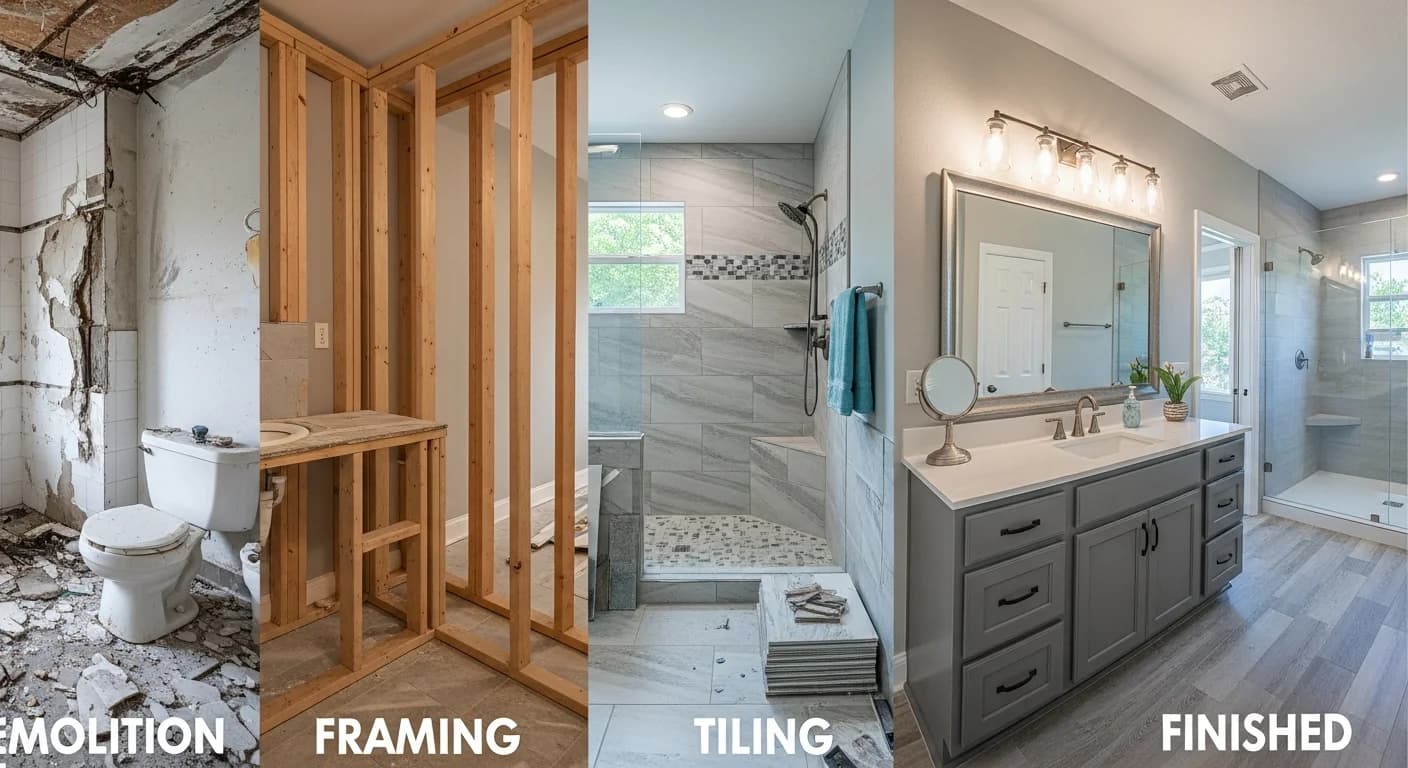
Bathroom Remodel Contractors: The Complete Hiring Guide

Why Hiring the Right Bathroom Remodel Contractor Matters
A bathroom remodel is one of the most complex home improvement projects you can undertake. Behind those gleaming tiles and polished fixtures lies a web of plumbing, electrical, waterproofing, and structural work that demands professional expertise. Choosing the wrong bathroom remodel contractor can turn your dream renovation into a costly nightmare—think flooded subfloors, cracked tiles three months after installation, or a contractor who disappears mid-project with your deposit.
According to the National Association of Home Builders, bathroom remodels consistently rank among the top three most-requested renovation projects, with homeowners spending an average of $12,000 to $35,000 on a mid-range bathroom renovation. With that kind of investment on the line, the contractor you choose will be the single most important decision you make throughout the entire process.
This comprehensive guide walks you through every step of finding, vetting, and hiring the best bathroom remodel contractors for your project. Whether you are planning a simple cosmetic refresh or a full gut renovation, these strategies will help you avoid common pitfalls and ensure your remodel is completed on time, on budget, and to the highest quality standards.
Types of Bathroom Remodel Contractors
Before you start searching for bathroom remodel contractors, it is important to understand the different types of professionals available and which one is the best fit for your project scope and budget.
General Contractors (GCs)
General contractors manage the entire renovation process from start to finish. They coordinate subcontractors (plumbers, electricians, tile setters), pull permits, schedule inspections, and oversee daily progress. A GC is your best choice for mid-range to large-scale bathroom remodels that involve moving plumbing, changing the layout, or structural modifications. Expect to pay a 15–25% markup on top of material and labor costs for their project management services.
Design-Build Firms
Design-build firms combine architectural design and construction under one roof. They handle everything from the initial concept and 3D renderings to material selection and final installation. This streamlined approach eliminates the communication gaps that often arise between separate designers and builders. Design-build is ideal for luxury bathroom remodels, complex layouts, or homeowners who want a turnkey experience. Costs are typically 10–20% higher than hiring a GC separately, but you gain significant time savings and design cohesion.
Specialty Subcontractors
If your remodel focuses on a specific trade—such as tile work, custom cabinetry, or plumbing relocation—you may benefit from hiring specialty subcontractors directly. Master tile setters, licensed plumbers, and custom vanity builders bring deep expertise in their respective fields. However, hiring subs directly means you become the project manager, coordinating schedules and ensuring work meets code requirements. This approach works best for homeowners with renovation experience or for single-trade projects like a shower tile upgrade.
Handymen
Licensed handymen can handle minor bathroom updates like replacing fixtures, installing a new vanity, adding grab bars, or refreshing caulk and grout. Most states limit handyman work to projects under a certain dollar threshold (typically $500–$1,000 per job). A handyman is not appropriate for projects that require permits, structural changes, or major plumbing and electrical work. For cosmetic refreshes on a tight budget, a skilled handyman can save you 30–50% compared to a full-service contractor.
How to Find Quality Bathroom Remodel Contractors
Finding reputable bathroom remodel contractors requires a multi-channel approach. The best contractors rarely need to advertise aggressively because they stay busy through referrals and repeat business. Here is how to build a strong shortlist of candidates.
Personal Referrals
Word-of-mouth recommendations from friends, family, neighbors, and coworkers remain the most reliable way to find quality contractors. Ask to see the finished bathroom in person if possible, and inquire about the contractor's communication style, adherence to timelines, and how they handled any issues that arose during the project. A personal referral from someone whose judgment you trust is worth more than a hundred online reviews.
Online Platforms
Platforms like HomeAdvisor, Angi (formerly Angie's List), Houzz, and Thumbtack can help you discover local bathroom remodel contractors with verified reviews and project portfolios. When evaluating online profiles, look for contractors with at least 20 reviews, a minimum 4.5-star rating, and a consistent track record spanning two or more years. Pay special attention to how contractors respond to negative reviews—professional, solution-oriented responses are a strong indicator of integrity.
Local Trade Associations
Membership in organizations like the National Association of the Remodeling Industry (NARI), the National Kitchen & Bath Association (NKBA), or your state's home builders association signals that a contractor is committed to continuing education and industry best practices. These organizations often maintain searchable directories of member contractors and may offer dispute resolution services if problems arise.
Showroom and Supplier Recommendations
Visit local tile showrooms, plumbing supply houses, and kitchen-and-bath design centers. The staff at these establishments work with contractors daily and know which ones consistently deliver quality work, show up on time, and treat customers well. Ask for their top three recommendations, and you will likely hear the same names repeated—that consistency is a powerful signal.
The Essential Vetting Checklist
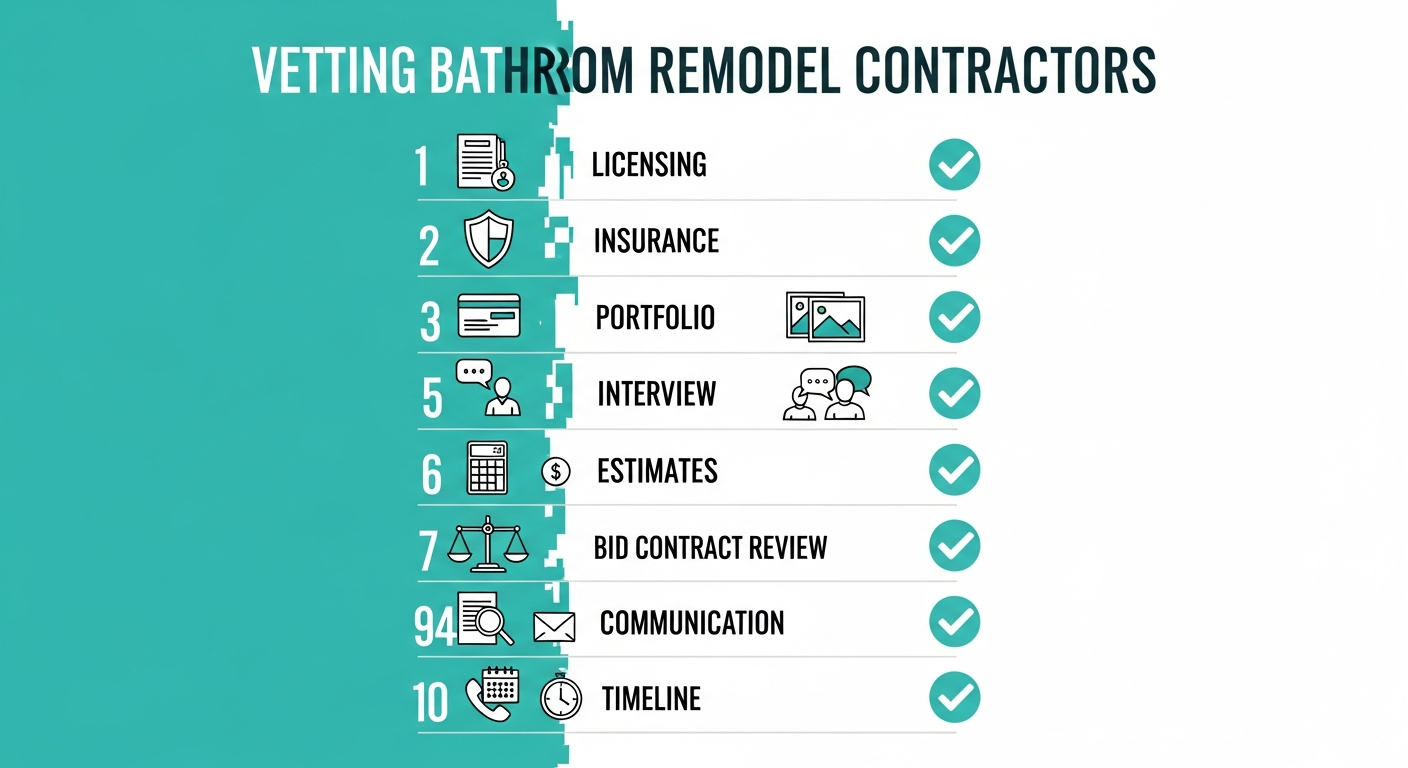
Once you have assembled a shortlist of four to six bathroom remodel contractors, it is time for rigorous vetting. Do not skip any of these steps, even if a contractor comes highly recommended.
Licensing Verification
Every state has different licensing requirements for contractors. Visit your state's contractor licensing board website to verify that the contractor's license is active, the correct type for bathroom remodeling work, and free of disciplinary actions. In states that require separate specialty licenses for plumbing and electrical work, confirm that the contractor's subcontractors hold the appropriate credentials as well.
Insurance Coverage
Require proof of both general liability insurance (minimum $1 million per occurrence) and workers' compensation coverage. General liability protects your property if the contractor causes damage, while workers' comp covers injuries to workers on your job site. Without workers' comp, you could be held liable if a worker is injured in your home. Call the insurance company directly to verify coverage is current—do not simply accept a certificate at face value.
Bonding
A surety bond provides financial protection if the contractor fails to complete the work or does not meet contractual obligations. While not required in every state, a bonded contractor demonstrates an additional layer of financial responsibility and commitment to completing projects as promised.
Portfolio Review
Ask to see a portfolio of completed bathroom projects, ideally including before-and-after photos, project scopes similar to yours, and a range of styles and budgets. Look for attention to detail in tile alignment, grout lines, caulk work, and fixture installation. A strong portfolio should include at least five to ten completed bathroom remodels from the past two years.
Reference Checks
Request at least three references from recent bathroom remodel clients (within the past 12 months). When you call, ask about timeline accuracy, budget adherence, quality of workmanship, cleanliness of the job site, and how the contractor handled unexpected issues. Also ask if they would hire the contractor again—the answer to this single question reveals more than any other.
BBB Ratings and Online Reputation
Check the contractor's Better Business Bureau profile for complaints, resolution history, and overall rating. Cross-reference with Google Business reviews, Yelp, and Houzz. Look for patterns rather than isolated incidents—a single negative review among dozens of positive ones is normal, but repeated complaints about the same issues (poor communication, cost overruns, unfinished work) are serious warning signs.
The Interview Process
After vetting, invite your top three candidates for an in-home consultation. This meeting serves two purposes: the contractor evaluates the scope of your project, and you evaluate whether this is someone you can trust in your home for several weeks.

Essential Questions to Ask
Prepare a list of questions before each consultation. Start with logistics: How many bathroom remodels have you completed in the past year? Will you personally oversee this project, or will a site supervisor manage the day-to-day work? What is your current workload, and when could you start? Then move to specifics: What is your approach to waterproofing shower pans and tub surrounds? How do you handle unforeseen issues like rotted subfloor or outdated plumbing? Do you use your own crews or subcontractors, and how long have you worked with them?
What to Observe During the Consultation
Pay attention to how the contractor conducts the initial visit. A professional contractor will arrive on time, take detailed measurements, ask thoughtful questions about your goals and budget, inspect existing plumbing and electrical systems, and check for potential issues like water damage, mold, or structural concerns. Be wary of contractors who quote a price on the spot without thorough evaluation—accurate estimates require time and careful analysis.
Early Red Flags
Watch for warning signs during the interview: the contractor seems distracted or rushed, cannot provide a timeline estimate, speaks negatively about other contractors, avoids questions about licensing or insurance, or immediately pushes for a deposit before providing a written estimate. Trust your instincts—if something feels off during the first meeting, it will only get worse once the project is underway.
Understanding Bids and Estimates
Once your shortlisted contractors have evaluated the project, you will receive bids or estimates. Understanding how to read and compare these documents is critical to making an informed decision.
What Should Be Itemized
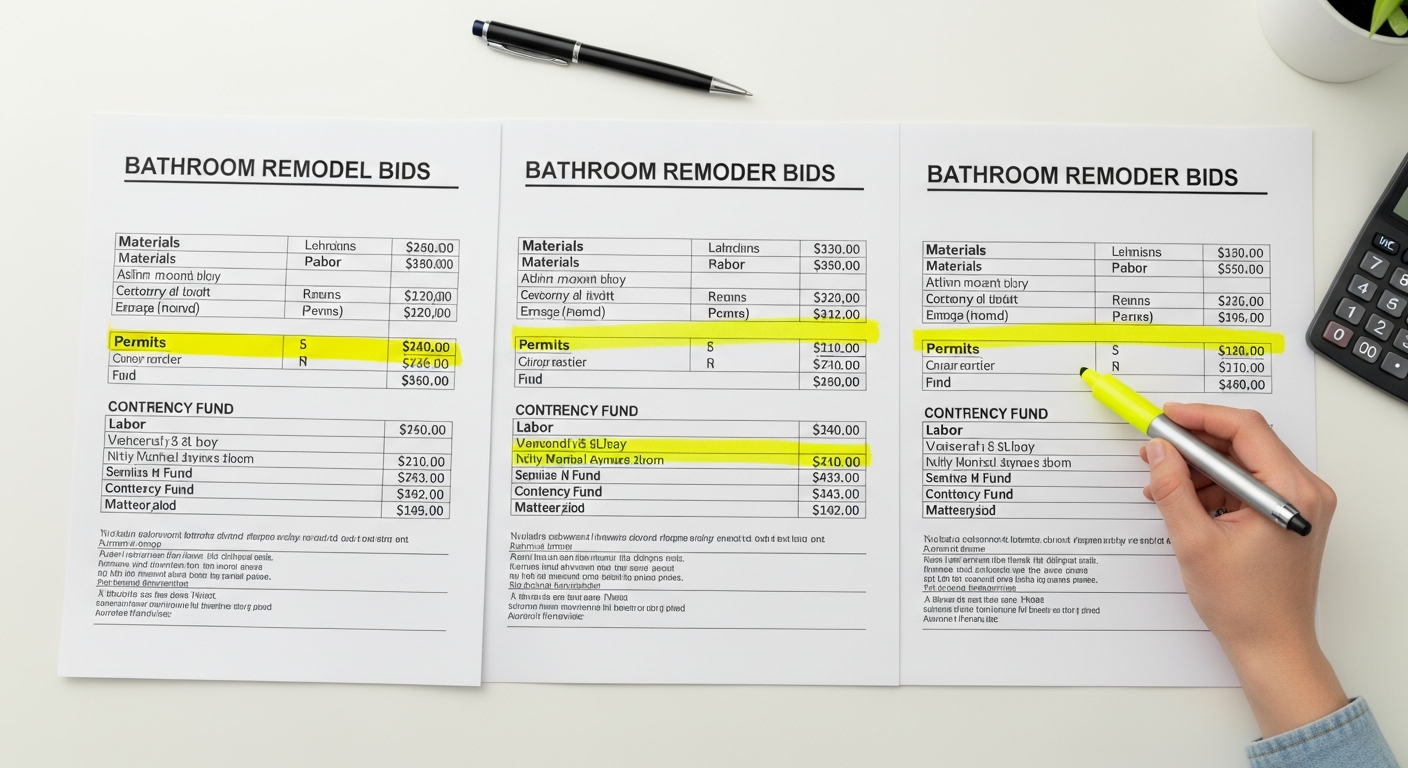
A professional bid should break down costs into clear categories: demolition, rough plumbing, rough electrical, waterproofing, tile and flooring materials and labor, vanity and countertop, fixtures (toilet, faucets, showerhead), lighting, painting, and project management fees. Material specifications should include brand names, model numbers, quantities, and unit costs. Vague line items like “bathroom renovation—$18,000” are unacceptable and make it impossible to compare bids or evaluate value.
Fixed Price vs. Time and Materials
Fixed-price contracts (also called lump-sum) establish a total project cost upfront. You know exactly what you will pay, assuming no changes to the scope. Time-and-materials (T&M) contracts bill for actual hours worked plus materials consumed, sometimes with a not-to-exceed cap. Fixed-price contracts are generally preferable for bathroom remodels because the scope is typically well-defined. T&M contracts make more sense when the extent of work is uncertain, such as when significant hidden damage is expected behind walls.
Comparing Three or More Bids
Always obtain at least three bids to establish a reasonable market range. Create a spreadsheet that breaks each bid into the same categories so you can make an apples-to-apples comparison. Look beyond the bottom line—compare the quality of specified materials, the detail of the scope of work, and the proposed timeline. A bid that is significantly lower than the others often indicates that the contractor is cutting corners on materials, underestimating labor hours, or planning to make up the difference through change orders.
Why the Lowest Bid Is Not Always the Best
The cheapest bid frequently leads to the most expensive project. Low-ball contractors may use inferior materials, rush through critical steps like waterproofing, hire inexperienced labor, or submit numerous change orders once work begins. The mid-range bid from a well-qualified contractor typically delivers the best combination of quality, value, and reliability. As the saying goes in construction: you can have it fast, cheap, or good—pick two.
Contract Essentials Every Homeowner Must Know
A thorough, well-written contract is your most important protection during a bathroom remodel. Never begin work without a signed contract that addresses every element outlined below.
Detailed Scope of Work
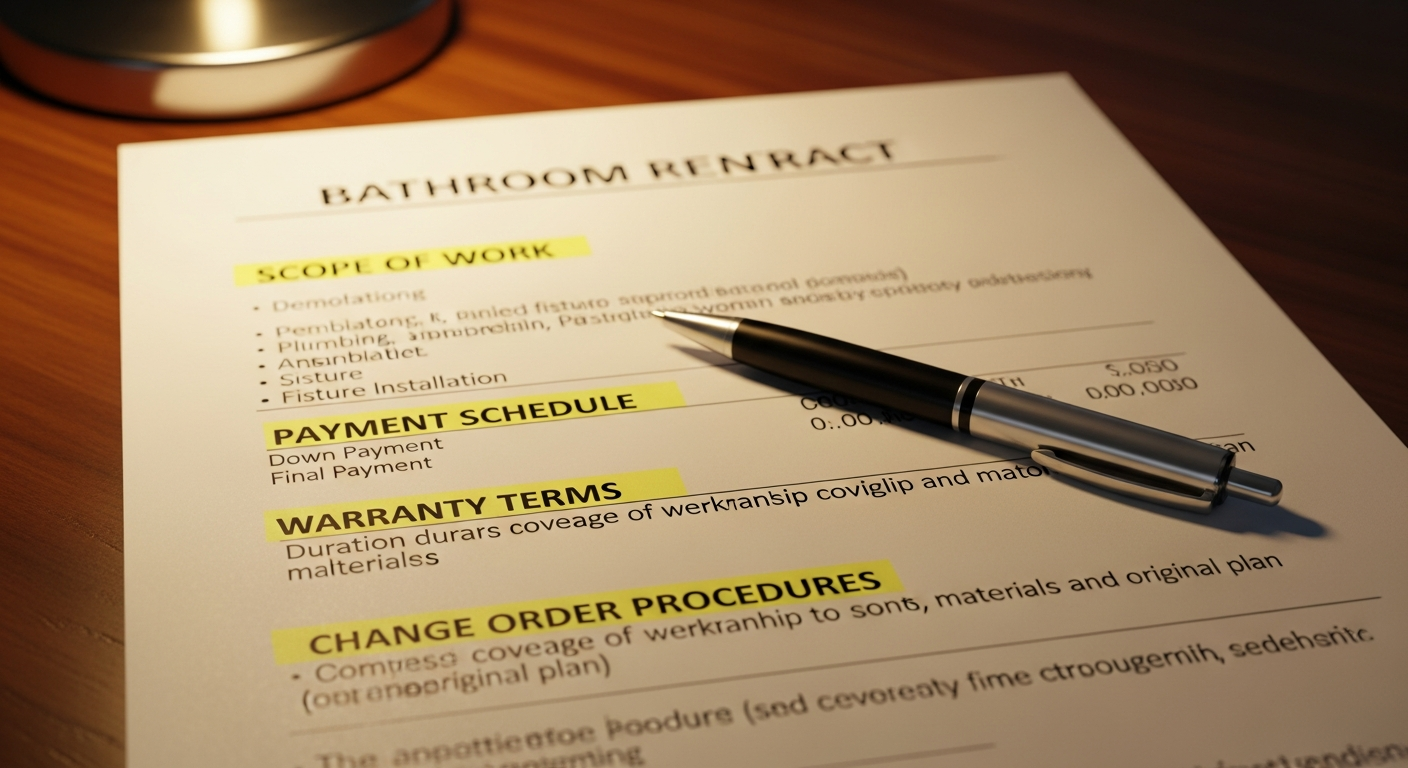
The contract should include a comprehensive scope of work that describes every task the contractor will perform, from demolition through final cleanup. Specify materials by brand, model, color, and quantity. Include fixture locations, tile layout patterns, and finish selections. The more specific the scope, the fewer misunderstandings and disputes you will encounter. If a detail is not in the contract, it effectively does not exist.
Payment Schedule
Never pay more than 10% of the total project cost as a deposit. A reasonable payment schedule ties disbursements to completed milestones: 10% at contract signing, 25% after rough plumbing and electrical pass inspection, 25% after waterproofing and tile substrate are complete, 25% after tile installation and fixture setting, and the final 15% upon completion and your acceptance of a final walkthrough. This structure ensures the contractor maintains financial motivation to complete the project to your satisfaction.
Change Order Procedures
Changes to the original scope are inevitable in any remodel. The contract should specify that all changes must be documented in writing with a detailed description of the modified work, the cost impact (both additions and credits), and the timeline impact. Both parties must sign the change order before the modified work begins. Never approve verbal change orders—they are the leading cause of budget disputes in home renovation.
Warranty Terms
Quality bathroom remodel contractors stand behind their work. Expect a minimum one-year warranty on labor and workmanship, with separate manufacturer warranties on fixtures, tile, and other materials. The contract should clearly state what the warranty covers, how to make a warranty claim, and the response time for warranty repairs. Some premium contractors offer two-year or even five-year warranties as a mark of confidence in their work.
Completion Timeline
The contract should include a projected start date, estimated completion date, and a schedule of major milestones. Consider including a per-day penalty for delays not caused by weather, material backorders, or homeowner-requested changes. While aggressive penalties can discourage good contractors from bidding, reasonable provisions demonstrate that both parties value timely completion. A typical full bathroom remodel takes four to eight weeks depending on scope and complexity.
Lien Waivers
Require signed lien waivers from the general contractor and all subcontractors with each payment. A lien waiver confirms that the contractor has been paid and waives their right to place a mechanic's lien on your property for that payment period. Without lien waivers, you could be forced to pay twice if a general contractor fails to pay their subcontractors—the subs can lien your home even though you already paid the GC.
Red Flags to Watch For
Knowing what to avoid is just as important as knowing what to look for. These warning signs should disqualify a bathroom remodel contractor from your consideration immediately.
No Written Contract
Any contractor who suggests starting work based on a handshake or verbal agreement is either inexperienced or planning to take advantage of you. A written contract protects both parties. Walk away from anyone who resists putting agreements in writing.
Demanding Large Upfront Payments
Legitimate contractors do not need 30%, 40%, or 50% of the project cost upfront. Large deposits are the most common element of contractor scams. A request for more than 10–15% upfront should be a deal-breaker, especially if the contractor claims they need the money to purchase materials. Established contractors have trade accounts with suppliers and do not need your money to buy materials.
No License or Insurance
An unlicensed or uninsured contractor puts your property, your finances, and your family at risk. Unpermitted work can create serious problems when you try to sell your home, and injuries on an uninsured job site can result in personal liability lawsuits against you as the homeowner.
Pressuring Quick Decisions
Beware of contractors who pressure you to sign a contract immediately or claim that a special price is only available “today.” Reputable contractors understand that choosing a renovation partner is a significant decision and will give you time to review proposals, check references, and compare bids without pressure.
No References or Portfolio
A contractor who cannot or will not provide references from recent clients has something to hide. Similarly, a lack of project photos or an unwillingness to show completed work suggests either inexperience or a history of subpar results. Quality contractors are proud of their work and eager to share it.
Cash-Only Payments
Insisting on cash payments is a major red flag that the contractor may be avoiding taxes, operating without proper licensing, or planning to disappear without completing the work. Always pay by check or credit card to maintain a clear paper trail.
Managing the Contractor Relationship
Once you have hired a bathroom remodel contractor, effective project management and clear communication will determine whether your experience is smooth or stressful.
Establish Communication Expectations
At the start of the project, agree on communication protocols: a weekly progress meeting (even a brief 15-minute check-in), a preferred communication channel (email, text, phone, or a project management app), daily site updates during critical phases, and 24-hour response times for non-emergency questions. Document all decisions and conversations in writing via email or text for future reference.
Progress Milestones and Check-Ins
Schedule walkthroughs at key milestones: after demolition (to inspect for hidden damage), after rough plumbing and electrical (before walls are closed), after waterproofing and tile backer installation, during tile layout (before adhesive is applied), and after fixture installation. These checkpoints allow you to catch issues early when corrections are simple and inexpensive.
Handling Disputes and Problems
Even with the best contractors, disagreements can arise. Address issues promptly and professionally. Start by discussing the concern directly with the contractor, referencing the relevant section of the contract. If you cannot reach a resolution, escalate to a written formal complaint. For serious disputes, mediation through your state's contractor licensing board or a professional mediator is more cost-effective and faster than litigation. Document everything with photos, emails, and written records.
The Final Walkthrough Checklist
Before making the final payment, conduct a thorough walkthrough with your contractor using a detailed punch list. Check every detail: tile alignment and grout consistency, caulk lines around the tub, shower, and vanity, faucet and showerhead operation, toilet flush performance and stability, cabinet doors and drawer alignment, light fixture operation, exhaust fan function, paint touch-ups, and overall cleanliness. Create a written punch list of any items that need correction, set a deadline for completion, and withhold final payment until all items are resolved to your satisfaction.
Getting the Most From Your Bathroom Remodel Contractor
Hiring the right bathroom remodel contractor is a process that requires patience, research, and due diligence. By understanding the different types of contractors, using multiple channels to find candidates, rigorously vetting your shortlist, comparing detailed bids, negotiating a thorough contract, and maintaining clear communication throughout the project, you dramatically increase your chances of a successful renovation.
Remember these key takeaways: always verify licensing and insurance, never pay more than 10% upfront, get everything in writing, obtain at least three detailed bids, and trust your instincts during the interview process. The time you invest in finding the right contractor will pay dividends in the form of a beautiful bathroom that adds lasting value to your home.
Ready to start planning your bathroom remodel? Use our free Room Designer tool to visualize your dream bathroom before meeting with contractors. Having a clear vision will make your consultations more productive and help you communicate your goals effectively. For a detailed breakdown of what your remodel should cost, check out our 2026 Bathroom Remodel Cost Guide and our guide to bathroom remodel ideas for every style and budget.
Bathroom Remodel Contractors FAQs
Written by
Michael Torres
Bathroom and Kitchen Design Specialist with 15 years of remodeling experience. NKBA-certified designer focused on functional layouts, fixture selection, and spa-inspired wellness spaces.