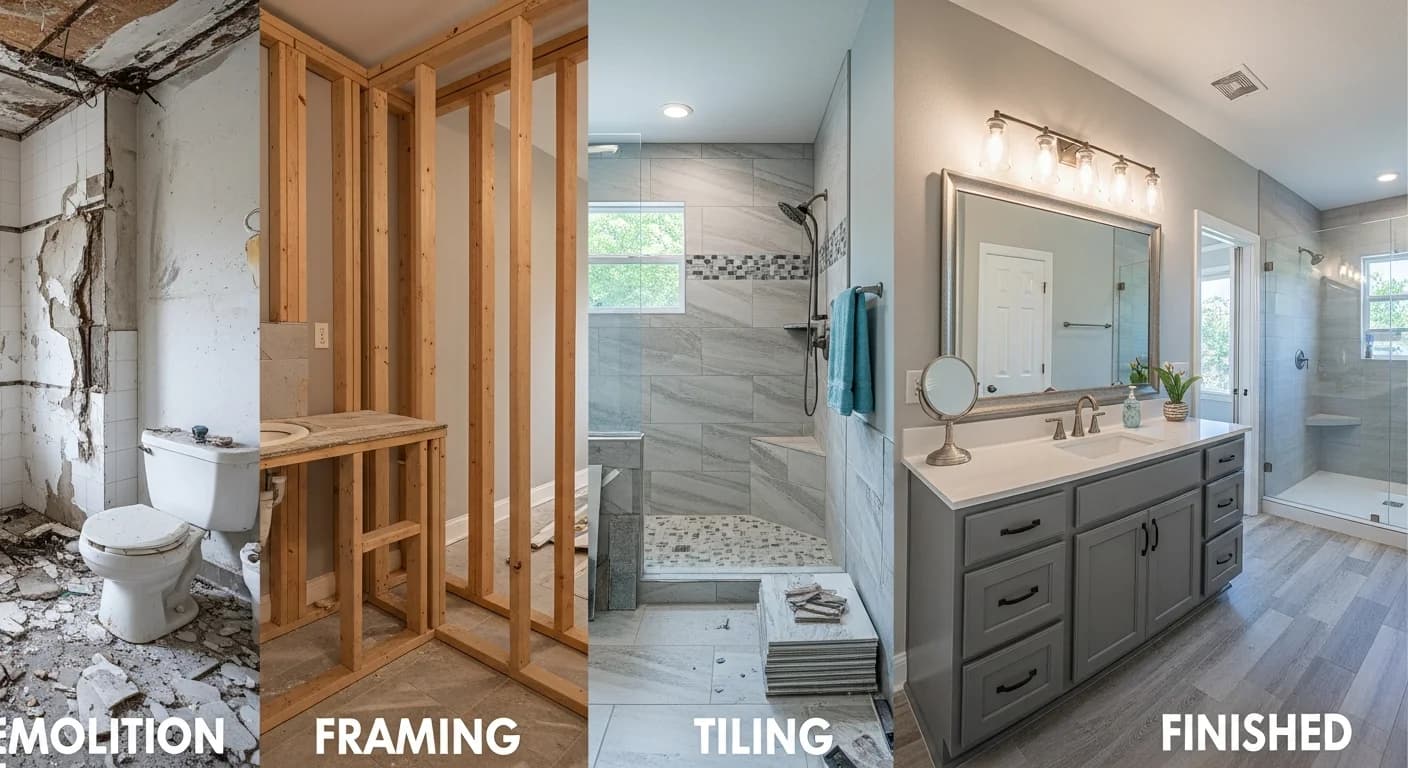
Bathroom Remodel Estimate: How to Budget, Get Quotes & Compare Bids
Quick Summary
Complete guide to bathroom remodel estimates covering budgeting, getting accurate quotes, comparing contractor bids, understanding allowances, hidden costs, and negotiation tips.
Introduction: Why Accurate Bathroom Remodel Estimates Matter
Nothing derails a bathroom remodel faster than a budget that does not match reality. According to the National Association of Home Builders, bathroom renovations exceed their original budget by an average of 20 to 30 percent, with some projects spiraling even higher when homeowners skip the critical planning phase. The difference between a smooth renovation and a financial nightmare almost always comes down to one thing: the quality of your initial estimate.
An accurate bathroom remodel estimate is not just a number on a piece of paper. It is your financial roadmap, your negotiating tool, and your protection against the unexpected costs that lurk behind every tile and inside every wall. Whether you are refreshing a powder room for $5,000 or gutting a master suite for $50,000, understanding how estimates, quotes, and bids work gives you the power to make informed decisions and avoid the costly surprises that catch unprepared homeowners off guard.
This guide walks you through the entire estimating process, from building your own preliminary budget to getting professional quotes, comparing contractor bids, and identifying the hidden costs that most homeowners overlook. By the end, you will have the knowledge and tools to approach your bathroom remodel with confidence and financial clarity. For a comprehensive overview of project costs, see our bathroom remodel cost guide for 2026.
Estimate vs. Quote vs. Bid: Understanding the Differences
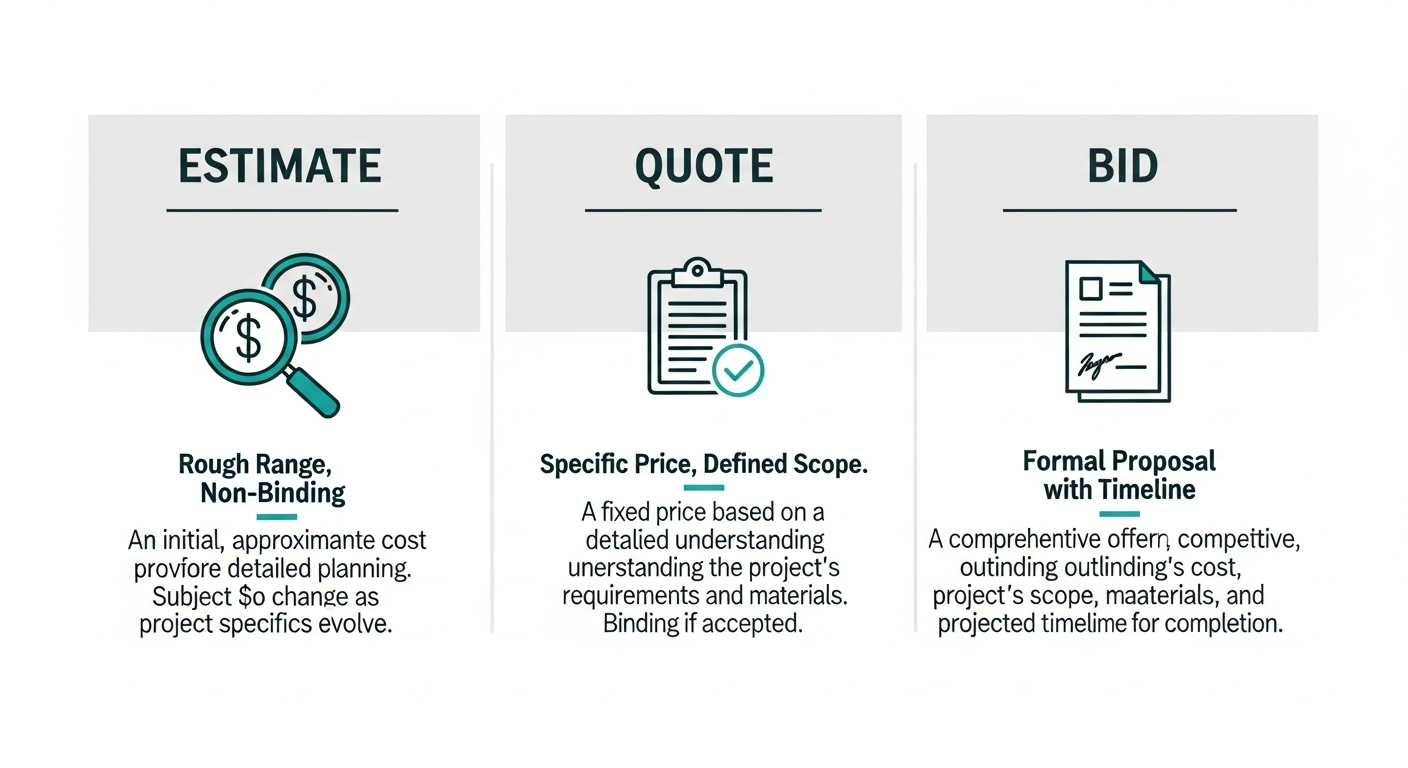
These three terms are often used interchangeably, but they mean very different things in the construction world. Understanding the distinctions will help you communicate more effectively with contractors and protect yourself financially.
Estimates: The Starting Point
An estimate is a contractor's best approximation of what your project will cost, based on a general description of the work. Estimates are typically non-binding, meaning the final price can change as the project scope becomes clearer. You will usually receive an estimate during or shortly after an initial consultation, often before the contractor has done a detailed site inspection.
Estimates are useful for ballpark planning and comparing general pricing between contractors. However, never sign a contract based solely on an estimate. The lack of specificity means the final cost could vary significantly, sometimes by 15 to 25 percent or more.
Quotes: Getting Specific
A quote (also called a proposal) is a more detailed, typically binding price for a defined scope of work. Unlike an estimate, a quote specifies exactly what is included: materials, labor, fixtures, and timeline. Once you accept a quote, the contractor is generally obligated to complete the work at that price, assuming the scope does not change.
Getting a detailed quote requires more effort from both you and the contractor. The contractor will need to visit your bathroom, take measurements, discuss your specific material choices, and calculate precise labor hours. This process can take one to two weeks, but the accuracy is worth the wait.
Bids: The Competitive Process
A bid is a formal offer submitted in response to a specific scope of work, often in competition with other contractors. Bids are most common for larger projects and are typically the most detailed and binding of the three. A proper bid includes itemized costs for every aspect of the project, a detailed timeline, payment schedule, and warranty information.
For the most accurate comparison, provide each bidding contractor with identical specifications, including drawings, material selections, and a written scope of work. This levels the playing field and makes true apples-to-apples comparison possible.
Creating Your Own Preliminary Budget
Before contacting a single contractor, build your own budget framework. This gives you a realistic baseline for evaluating quotes and prevents sticker shock when bids arrive. A well-structured budget also helps you prioritize where to spend and where to save.
Budget Category Breakdown
Every bathroom remodel budget should include these core categories with their typical percentage of total cost:
Demolition and Disposal (5-8%): Removing existing fixtures, tile, drywall, and flooring. Disposal fees for construction debris can add $500 to $1,500 depending on your area and project size.
Plumbing (15-20%): This covers rough-in plumbing, fixture connections, supply line upgrades, and drain work. Moving fixtures to new locations dramatically increases this cost, sometimes doubling or tripling the plumbing budget.
Electrical (8-12%): Wiring for lighting, exhaust fans, heated floors, and outlet upgrades. Most bathroom remodels require bringing electrical up to current code, which may include adding GFCI outlets and dedicated circuits.
Tile and Flooring (12-18%): Materials and installation for floor tile, shower walls, backsplashes, and any decorative tile work. Large-format tiles cost less to install per square foot than mosaics due to reduced labor time.
Fixtures and Hardware (15-25%): Toilet, vanity, faucets, showerhead, bathtub, mirrors, towel bars, and cabinet hardware. This category has the widest price range and is where most budget-conscious decisions are made.
Labor (35-45%): The single largest expense in most bathroom remodels. Skilled labor for plumbing, electrical, tile work, carpentry, and painting typically accounts for 35 to 45 percent of the total project cost.
Permits and Inspections (2-4%): Building permits for structural, plumbing, and electrical work. Permit costs vary widely by municipality but typically run $200 to $1,500 for a bathroom remodel.
Contingency (15-20%): A non-negotiable budget line for unexpected issues discovered during demolition. This is not optional. Every experienced contractor and financial advisor recommends maintaining a contingency fund of at least 15 percent. For older homes, consider 20 percent or more. If you are looking for ways to maximize value on a tighter budget, our affordable bathroom remodel strategies guide offers practical tips.
Cost Expectations by Bathroom Size
Bathroom remodel costs vary dramatically based on the size and complexity of the space. Here is what to expect at each level, based on national averages for 2026.
Powder Room: $3,000 to $8,000
A powder room or half bath typically includes just a toilet and sink in 20 to 30 square feet. At the lower end, expect a cosmetic refresh with new paint, a replacement vanity, updated faucet, new mirror, and fresh lighting. At the higher end, you can replace the toilet, install new flooring, add wainscoting or accent tile, and upgrade to a furniture-style vanity with a stone countertop.
Hall Bathroom: $8,000 to $20,000
A standard hall or guest bathroom of 40 to 60 square feet with a tub-shower combo offers more scope for improvement. A mid-range remodel includes new tile flooring and shower surround, a replacement vanity with countertop, new toilet, updated lighting and exhaust fan, fresh paint, and new accessories. At the higher end, consider a custom tile shower, freestanding vanity, heated floors, and premium fixtures.
Master Bathroom: $15,000 to $50,000+
Master bathrooms of 80 to 150 square feet (or larger) are where budgets can expand significantly. A mid-range master remodel might include a walk-in shower with bench, double vanity, new flooring, updated plumbing fixtures, and improved lighting. Luxury master renovations can include heated floors, a freestanding soaking tub, frameless glass shower enclosure, custom cabinetry, natural stone surfaces, smart toilets, and high-end lighting systems.
How to Get Accurate Quotes from Contractors
The quality of the quotes you receive depends entirely on the quality of the information you provide. Contractors cannot give accurate pricing without clear, detailed project specifications.
Preparing Your Scope of Work
Before requesting quotes, prepare the following: accurate measurements of your bathroom including ceiling height, a detailed wish list organized by priority (must-have vs. nice-to-have), photographs of your current bathroom from multiple angles, inspiration images showing the style and finishes you want, and a realistic budget range you are comfortable sharing.
Be specific about material preferences. Saying "I want new tile" is too vague. Instead, specify "12x24 porcelain floor tile in a matte gray finish" or bring actual samples. The more specific you are, the more accurate the quote will be.
How Many Quotes to Get
Request quotes from three to five contractors. Fewer than three does not give you enough comparison data. More than five becomes difficult to manage and can delay your project timeline. Allow two to three weeks for contractors to prepare detailed quotes after their site visit.
When selecting contractors to quote, look for a mix of company sizes. A sole proprietor, a small crew, and a mid-size remodeling company will often have different pricing structures that help you understand the true market rate. For detailed guidance on finding and vetting contractors, read our complete contractor hiring guide.
Reading and Comparing Contractor Bids
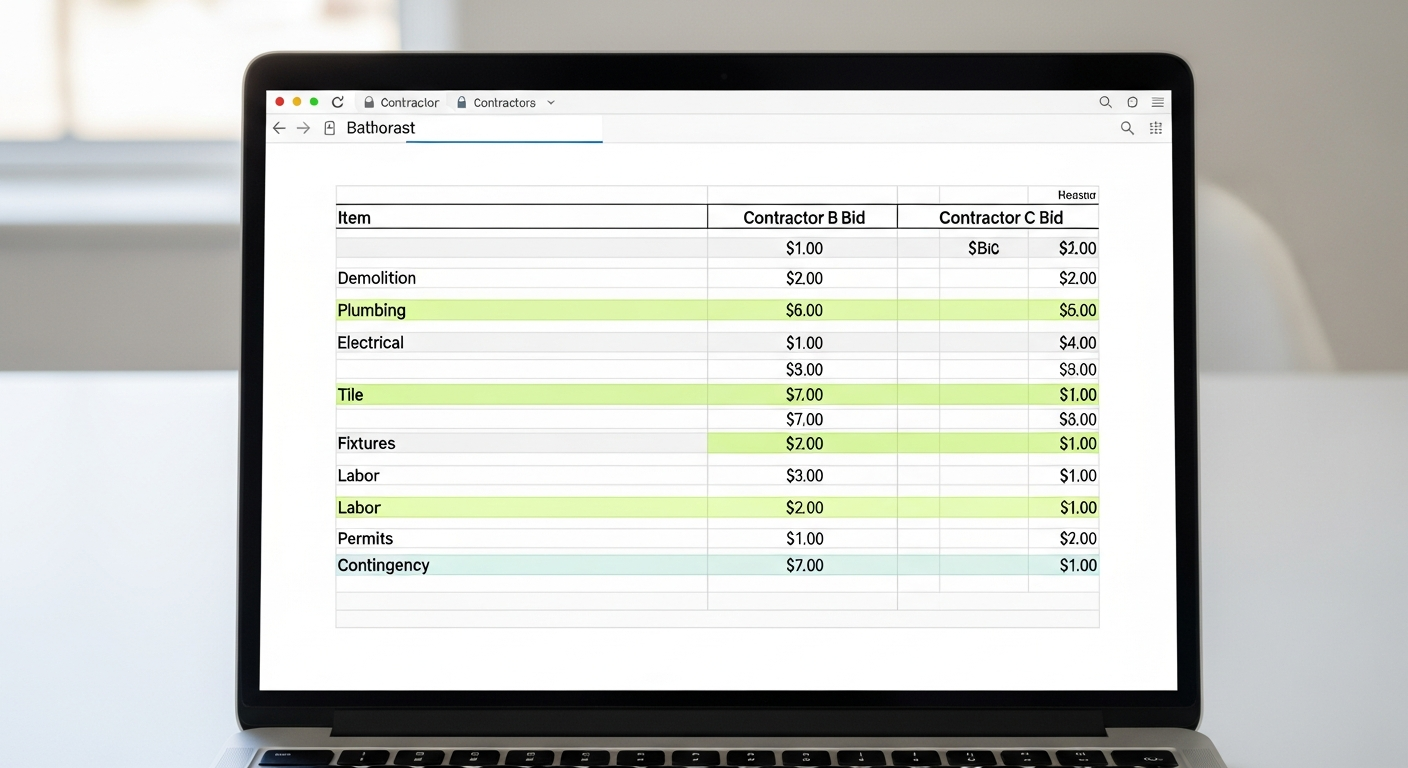
When bids arrive, resist the urge to simply compare bottom-line numbers. The lowest bid is not always the best value, and the highest bid does not guarantee the best quality. A thorough bid comparison requires examining every line item.
What Should Be Itemized
A professional bid should itemize the following: demolition and debris removal, plumbing labor and materials separately, electrical labor and materials separately, tile materials and installation costs, each fixture with specific model numbers and prices, labor hours or rates by trade, permit fees, project timeline with milestones, payment schedule tied to completion milestones, warranty terms, and change order procedures.
If a contractor provides a single lump-sum number without itemization, request a detailed breakdown. Reputable contractors are happy to show their math. Those who refuse may be hiding inflated margins or planning to cut corners on materials.
Allowances vs. Specified Products
Many bids include "allowances" for items you have not yet selected, such as "$2,000 allowance for tile" or "$500 allowance for lighting fixtures." While allowances provide flexibility, they can also mask true costs. Always ask what specific products the allowance would cover and whether it includes installation or materials only.
Understanding Labor Rates and Overhead
Contractor overhead and profit margins typically add 15 to 25 percent on top of direct labor and material costs. This covers insurance, vehicle costs, office expenses, warranties, and the contractor's profit. A bid that seems unusually low may indicate the contractor is cutting corners on insurance, using unlicensed subcontractors, or planning to make up the difference with change orders later.
Hidden Costs and Why Contingency Is Non-Negotiable
The costs that blow budgets are almost never the ones you planned for. They are the surprises hiding behind the walls, under the floors, and above the ceiling that only reveal themselves after demolition begins.
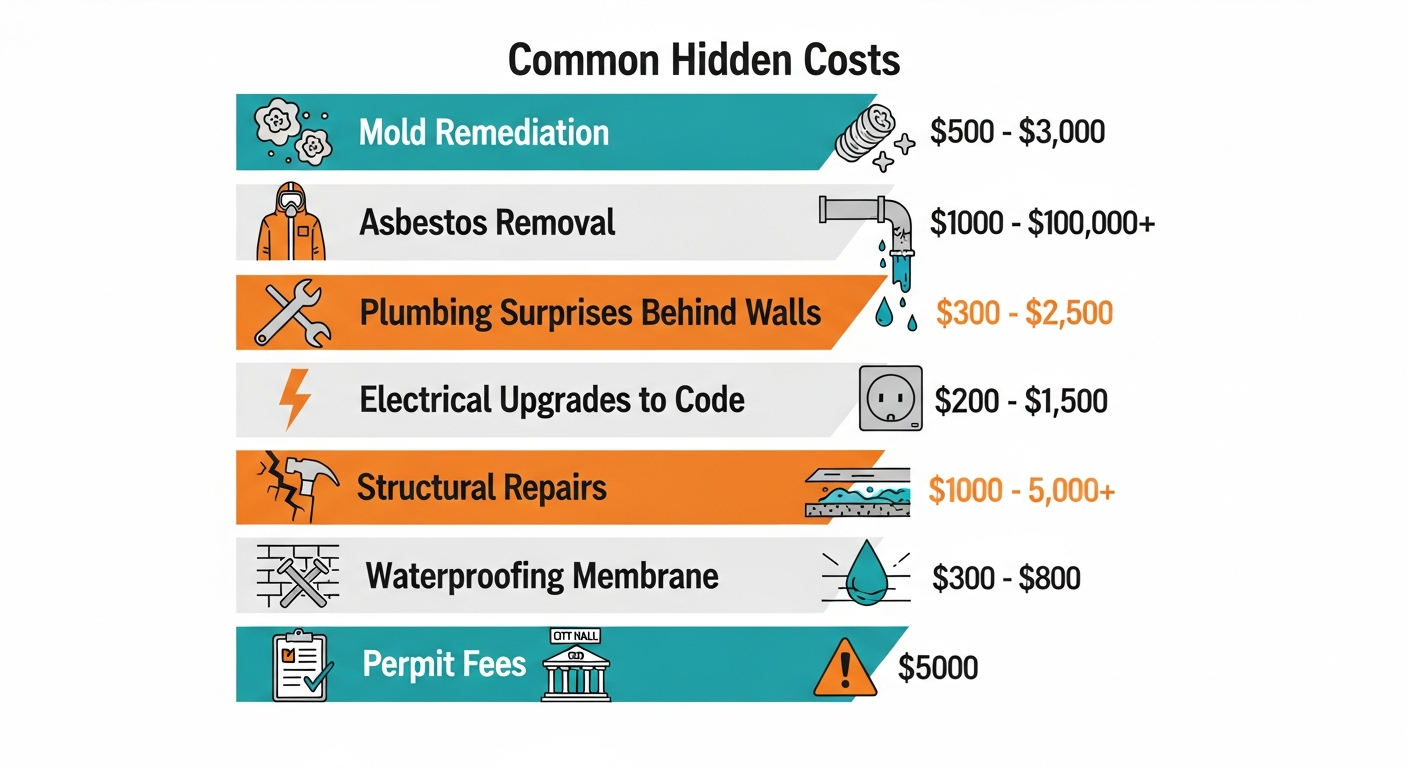
Common Hidden Cost Culprits
Mold and Water Damage ($500-$5,000+): Bathrooms are moisture-prone environments, and hidden mold is disturbingly common behind shower walls, under flooring, and around toilet bases. Professional mold remediation adds $500 to $5,000 or more depending on severity and extent.
Asbestos Abatement ($1,500-$5,000+): Homes built before 1980 may contain asbestos in floor tiles, pipe insulation, or joint compound. Professional testing costs $200 to $400, and abatement by licensed professionals runs $1,500 to $5,000 or more. This is not a DIY job and is legally required in most jurisdictions.
Plumbing Surprises ($500-$3,000): Corroded pipes, outdated galvanized plumbing, improper drain slopes, and deteriorated shut-off valves are common discoveries. Replacing old supply lines or rerouting drain pipes can add $500 to $3,000 to your project.
Electrical Upgrades ($300-$2,000): Older homes often lack adequate electrical capacity for modern bathrooms. Adding dedicated circuits, upgrading the panel, or bringing wiring up to current code can add $300 to $2,000.
Structural Issues ($1,000-$5,000+): Water damage can compromise subfloor integrity, wall framing, and floor joists. Replacing a rotted subfloor typically costs $500 to $2,000, while sistering damaged joists adds $1,000 to $3,000.
Waterproofing Requirements ($500-$1,500): Modern building codes require comprehensive waterproofing in shower and tub areas. If your existing bathroom lacks proper waterproofing membranes, adding them is essential but adds to the budget.
Setting Your Contingency
For bathrooms less than 15 years old with no known issues, a 15 percent contingency is reasonable. For bathrooms 15 to 30 years old, budget 20 percent. For bathrooms over 30 years old or in homes with known moisture issues, consider 25 percent or more. If you do not use the full contingency, congratulations, you have a bonus for upgrades or savings.
Allowances Explained: Flexibility with Financial Guardrails
Allowances are a common and sometimes confusing element of contractor bids. Understanding how they work prevents budget surprises and gives you more control over your final costs.
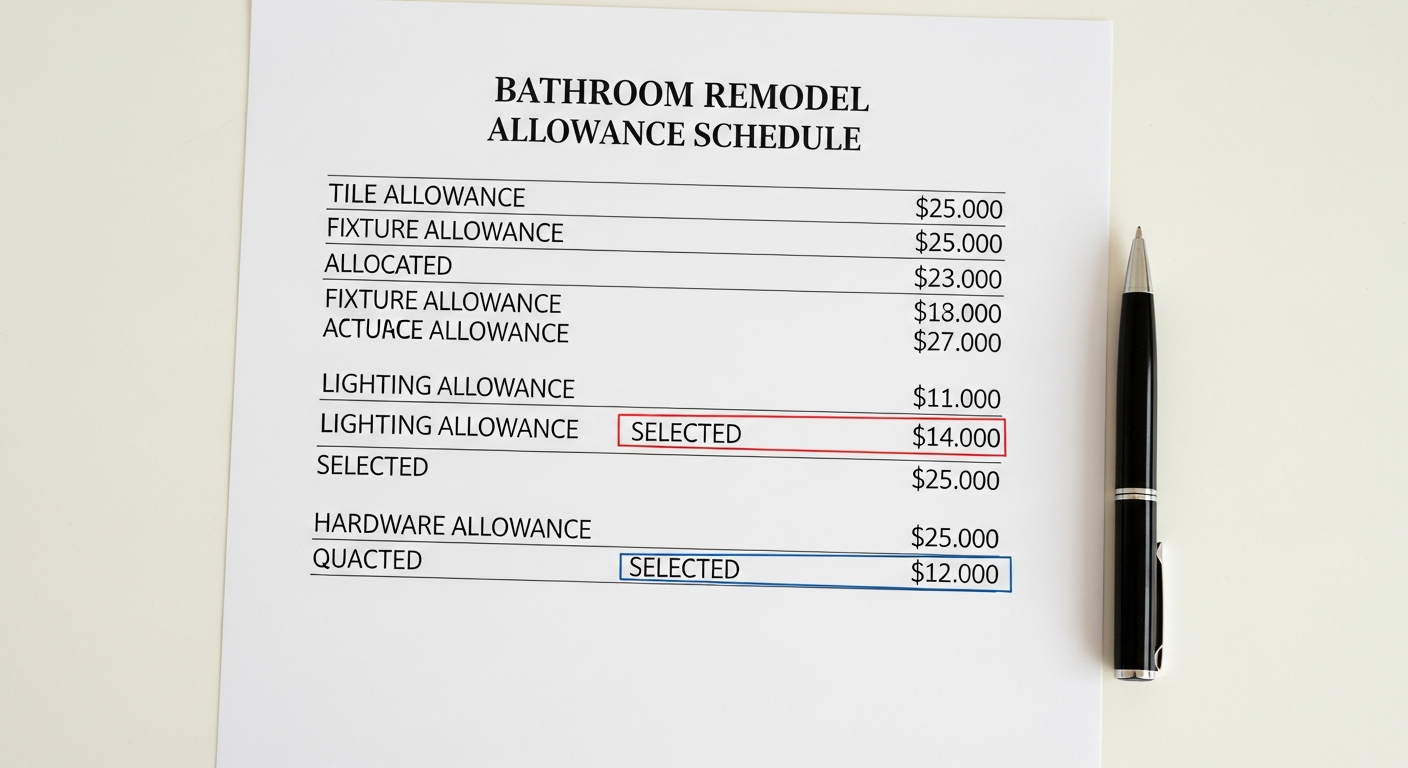
How Allowances Work
An allowance is a budgeted amount set aside for items you have not yet selected. For example, a contractor might include a $1,200 allowance for a bathroom vanity. If you select a vanity that costs $1,000, the $200 difference is credited back to you. If you select a $1,500 vanity, you pay the $300 overage.
Common allowance categories in bathroom remodels include tile and stone materials, plumbing fixtures such as faucets and showerheads, lighting fixtures, vanity and countertop, toilet, mirrors, and hardware and accessories.
Going Over or Under Allowance
Most contracts specify that overages are billed as change orders, typically with a markup of 10 to 20 percent for the contractor's time managing the change. Underages are usually credited at face value without markup. This asymmetry means going over budget on allowances costs more than the raw price difference suggests.
Negotiating Allowances
Before signing a contract, research the actual cost of products you are considering for each allowance category. If a contractor's tile allowance is $5 per square foot but you know you want $12 per square foot tile, negotiate the allowance upward before signing. It is much easier and cheaper to adjust allowances before the contract than to process change orders during construction.
Negotiation Tips: What You Can and Cannot Negotiate
Many homeowners feel uncomfortable negotiating with contractors, but thoughtful negotiation is expected and respected in the remodeling industry. The key is knowing what is negotiable and approaching discussions professionally.
What Is Negotiable
Payment Terms: The timing and structure of payments are almost always negotiable. A typical schedule might be 10 percent at signing, 30 percent at rough-in, 30 percent at tile completion, and 30 percent at final walkthrough. Never pay more than 10 to 15 percent upfront, and always withhold final payment until all punch list items are complete.
Timeline: If you have flexibility on start dates, contractors may offer better pricing for filling gaps in their schedule. Off-season work from November through February often commands lower rates.
Material Selections: Value engineering means finding less expensive materials that deliver a similar look and performance. For example, porcelain tile that mimics marble costs a fraction of natural stone but provides superior durability and lower maintenance.
Scope Adjustments: If bids come in over budget, discuss which elements can be simplified or phased. Perhaps the heated floors can wait for a future project, or a prefabricated shower niche can replace a custom-tiled one.
What Is Not Negotiable
Skilled Labor Rates: Asking a contractor to reduce their labor rates is generally counterproductive. It implies their work is not worth the market rate and may lead to corners being cut.
Permits and Inspections: These are set by your local municipality and cannot be negotiated or skipped. Any contractor who suggests skipping permits is a major red flag.
Insurance and Licensing: Never hire a contractor who is not properly licensed, bonded, and insured. The savings are not worth the liability risk.
Red Flags in Bathroom Remodel Estimates
Learning to spot warning signs in estimates and bids can save you thousands of dollars and months of headaches. Here are the most common red flags that should give you pause.
Vague or Missing Line Items
A bid that says "bathroom renovation - $18,000" without itemization is unacceptable. You have no way to know what is included, what materials will be used, or where the contractor plans to allocate the budget. Always insist on detailed, itemized bids.
No Contingency or Change Order Policy
A contractor who claims "we never have surprises" is either inexperienced or dishonest. Every professional contractor encounters unexpected issues and should have a clear process for documenting, pricing, and approving changes. The absence of a change order policy in a contract is a significant red flag.
Unusually Low Bids
If one bid is 30 percent or more below the others, something is wrong. The contractor may be planning to make up the difference with change orders, may not be properly insured, may be using substandard materials, or may simply be desperate for work and likely to cut corners. A bid that seems too good to be true almost certainly is.
Oral-Only Quotes
Any contractor who provides pricing verbally without putting it in writing is not someone you want working in your home. Written documentation protects both parties and is essential for resolving any disputes that may arise during the project.
Pressure to Sign Immediately
High-pressure sales tactics such as "this price is only good today" or "I have another client who wants this slot" are manipulative and unprofessional. A confident contractor will give you reasonable time to review their bid, ask questions, and make a decision.
No References or Portfolio
Every established contractor should be able to provide references from recent bathroom projects and a portfolio of completed work. Reluctance to share references suggests a pattern of dissatisfied clients or a lack of relevant experience.
Putting It All Together: Your Estimate Action Plan
Mastering the bathroom remodel estimating process takes effort upfront but pays dividends throughout your entire project. Start by creating your own preliminary budget using the category percentages outlined above. Then prepare a detailed scope of work before contacting contractors. Request three to five itemized bids based on identical specifications and compare them line by line, not just by the bottom number.
Always maintain a contingency fund of at least 15 to 20 percent for hidden costs, understand how allowances work before signing any contract, and watch for red flags that signal an unreliable contractor. The time you invest in the estimating phase is the single best predictor of a successful, on-budget bathroom renovation.
Ready to start visualizing your new bathroom before committing to a budget? Try our Room Designer tool to experiment with layouts, materials, and fixture placements. You can explore different configurations and get a clearer picture of your dream bathroom before requesting your first contractor quote.
Bathroom Remodel Estimate FAQs
Written by
Michael Torres
Bathroom and Kitchen Design Specialist with 15 years of remodeling experience. NKBA-certified designer focused on functional layouts, fixture selection, and spa-inspired wellness spaces.