How to Redesign a Bedroom: 9 Essential Tips for Better Sleep and Style
Quick Summary
A complete guide to redesigning your bedroom for improved sleep quality and updated style. Covers bed placement, color psychology, lighting layers, storage optimization, textile selection, and AI visualization tools to preview your dream bedroom before spending.
How to Redesign a Bedroom: 9 Essential Tips for Better Sleep and Style
Understanding how to redesign a bedroom is about more than aesthetics — it's about creating a space that supports better sleep, reduces stress, and reflects your personal style. The bedroom is the first thing you see each morning and the last thing you see each night. When it's well-designed, it sets a positive tone for your entire day and helps you unwind at the end of it.
In this guide, we cover nine essential bedroom redesign strategies that professional interior designers use — from bed placement principles and color psychology to lighting layers and smart storage solutions. Whether you're working with a spacious primary suite or a compact guest room, these tips help you create a bedroom that looks magazine-worthy and functions perfectly for how you sleep and live.
Why Bedroom Design Directly Affects Sleep Quality
Research from the National Sleep Foundation shows that bedroom environment factors — including light, color, temperature, and clutter — directly influence sleep quality. Cool colors, blackout capability, minimal electronic distractions, and an uncluttered visual environment all contribute to faster sleep onset and deeper rest.
A bedroom redesign is your opportunity to optimize these environmental factors while simultaneously updating the room's style. The nine tips below address both sleep quality and visual appeal, because the best bedroom design achieves both simultaneously.
Tip 1: Position Your Bed for Maximum Impact
Bed placement is the foundation of bedroom design. The bed is the largest piece of furniture in the room, and its position determines the layout of everything else. The ideal bed placement follows the commanding position principle: place the bed against the wall directly opposite or diagonally opposite the door, so you can see the entrance from the bed without being directly in line with it.
Center the headboard on the longest uninterrupted wall. This creates symmetry, allows space for nightstands on both sides, and makes the room feel balanced. Avoid placing the bed against a window wall if possible — windows let in light and drafts that can disrupt sleep. If the window wall is your only option, use a tall, upholstered headboard to buffer light and insulate against cold glass.
Leave at least 24 inches of clearance on each side of the bed for comfortable access and nightstand placement. In smaller bedrooms, you may need to push one side against the wall — in this case, choose the side away from the door to maintain a clear path into the room.
Tip 2: Choose Colors That Promote Rest
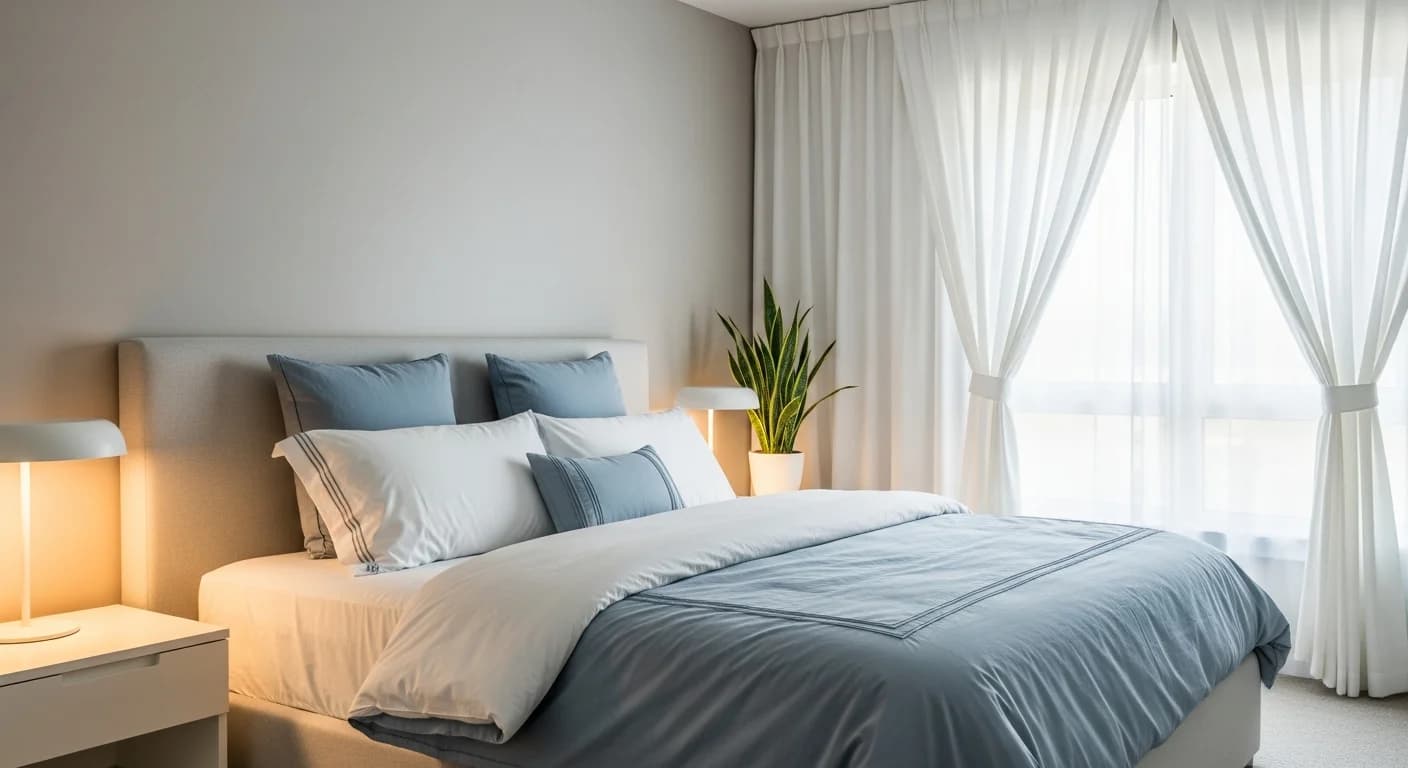
Color has a measurable effect on mood and sleep quality. A study by Travelodge found that people sleeping in blue bedrooms averaged 7 hours and 52 minutes of sleep — the most of any color. Soft greens, muted lavenders, warm grays, and cream tones also promote relaxation.
Avoid bright reds, oranges, and vivid yellows on large surfaces — these colors are stimulating and can make it harder to wind down. If you love bold colors, use them as accents: a jewel-toned throw pillow, a piece of artwork, or a painted accent wall behind the headboard. The remaining walls should stay in calming, neutral territory.
When selecting paint colors for your bedroom redesign, consider the room's natural light. North-facing rooms benefit from warmer tones (warm whites, cream, soft gold) to counteract cool natural light. South-facing rooms can handle cooler tones (soft blue, sage green, lavender) because abundant warm light balances them. Test colors with an AI color visualizer to see how they'll look in your specific room before painting.
Tip 3: Layer Your Lighting for Function and Ambiance
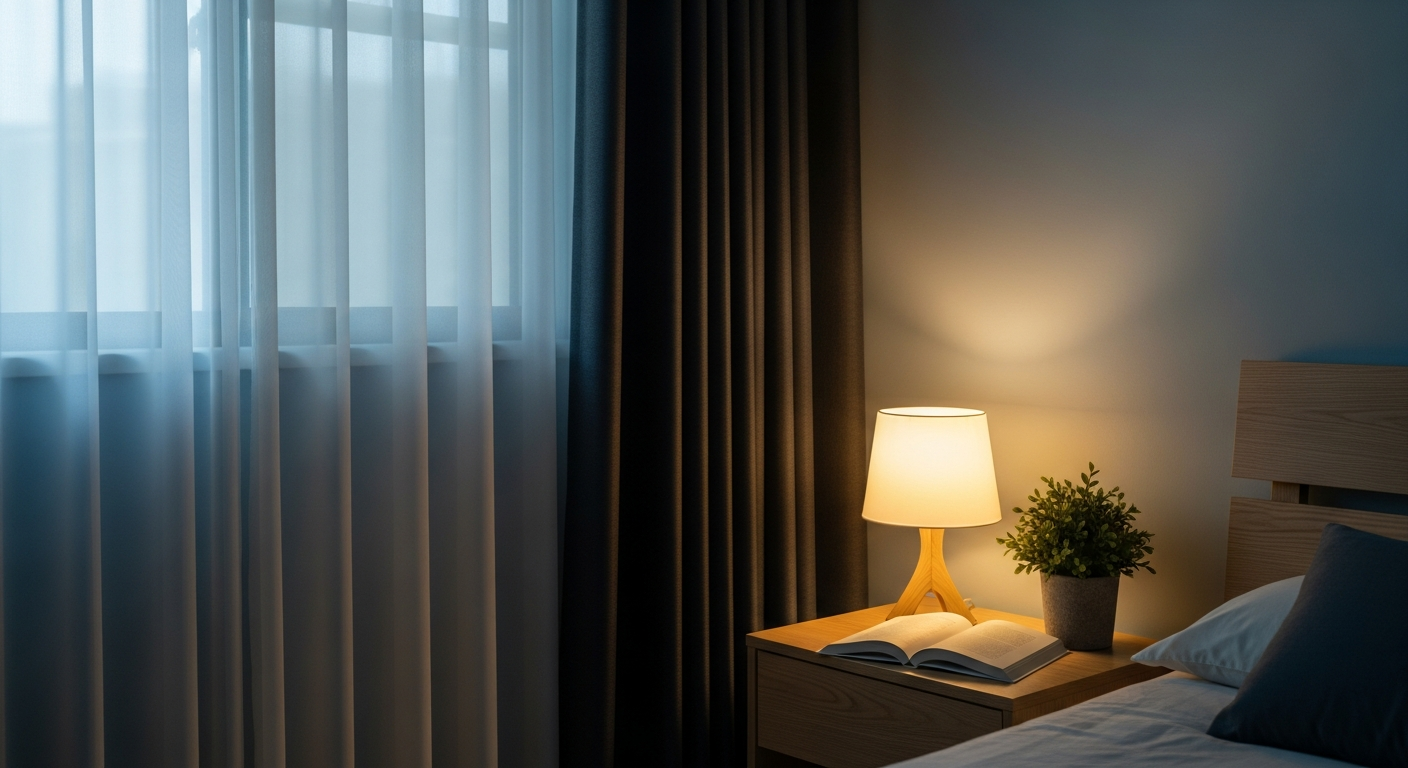
Bedroom lighting needs to support two very different modes: bright and functional (for getting dressed, reading, working) and dim and relaxing (for winding down before sleep). Layered lighting accomplishes both.
Ambient lighting: A central ceiling fixture or recessed lights provide overall illumination. Use a dimmer switch so you can lower the intensity in the evening. Task lighting: Bedside table lamps or wall-mounted reading lights on each side of the bed allow one person to read while the other sleeps. Choose lamps with warm-toned bulbs (2700K) to avoid blue-light sleep disruption.
Accent lighting: LED strips behind the headboard, a sconce highlighting artwork, or small table lamps on a dresser create atmosphere. In the evening, switch off the overhead and ambient lights and rely only on accent lighting — this signals your brain that it's time to wind down. Smart bulbs that dim automatically on a schedule are particularly effective for bedroom use.
Tip 4: Invest in Quality Bedding and Textiles
Your bed occupies 40-60% of the room's visual space, so the bedding you choose has an outsized impact on the room's overall look. More importantly, bedding quality directly affects sleep comfort. Invest in the best sheets and pillows your budget allows — you'll spend a third of your life in contact with them.
For a polished look, follow the professional layering formula: fitted sheet, flat sheet, lightweight blanket or quilt, duvet or comforter, and two to four decorative pillows. Choose a color palette for bedding that complements your wall color — contrasting without clashing. White or cream bedding works in almost every bedroom style and creates a hotel-like crispness.
Beyond the bed, add textural interest with a plush area rug beside the bed (so your feet land on something soft), blackout curtains in a coordinating fabric, and a cozy throw draped at the foot of the bed. Mix textures — linen sheets, velvet pillows, a chunky knit throw — for visual depth and tactile richness.
Tip 5: Maximize Storage to Minimize Clutter
Clutter is the enemy of relaxation. A bedroom filled with visible piles of clothes, books, and random objects creates a subconscious sense of disorder that makes it harder to unwind. Effective storage is the solution — and a bedroom redesign is the perfect time to implement it.
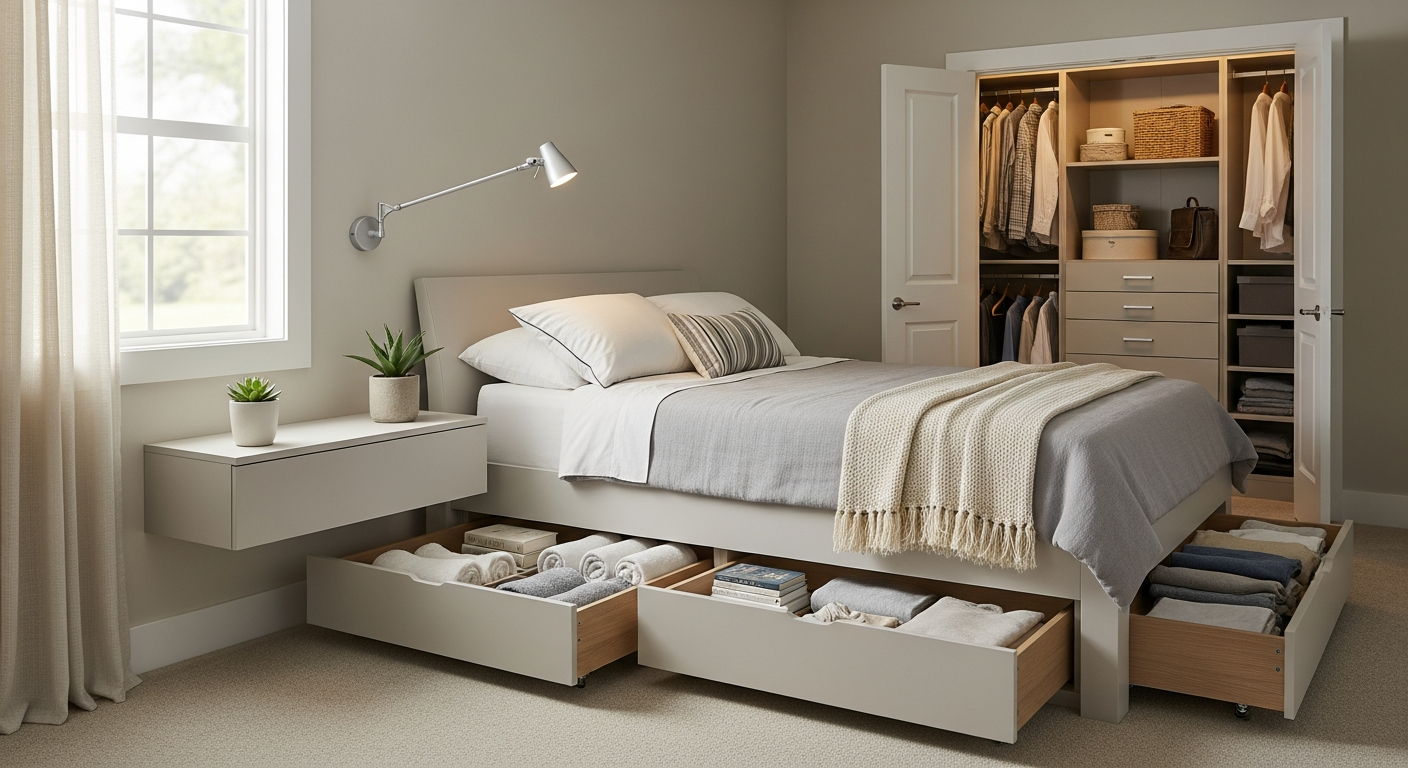
Start with the closet. If your closet is underperforming, a closet redesign can double its storage capacity with better shelving, double-hang rods, and drawer inserts. In the bedroom itself, choose furniture that pulls double duty: a bed frame with built-in drawers, a storage ottoman at the foot of the bed, nightstands with drawers rather than open shelves.
Floating nightstands and wall-mounted shelves free up floor space and make smaller bedrooms feel more open. The under-bed area is prime storage real estate — low-profile storage containers or a bed with hydraulic lift storage can hold off-season clothing, extra linens, and luggage out of sight.
Tip 6: Create a Focal Point
Every well-designed bedroom has a focal point — a visual anchor that draws the eye when you enter the room. In most bedrooms, the headboard wall is the natural choice. Options include an upholstered statement headboard, a painted or wallpapered accent wall, a gallery of art above the bed, or a large-scale piece of artwork centered above the headboard.
A wood-paneled accent wall, a bold wallpaper pattern, or architectural molding adds texture and depth behind the bed. Keep the rest of the room relatively simple so the focal point stands out without competing visual noise. If your room has a beautiful window view, consider making the window wall the focal point instead — position the bed to face the view and frame the window with floor-to-ceiling curtains.
Tip 7: Design a Functional Nightstand Setup
Nightstands serve as your bedside command center — they hold your lamp, phone charger, water glass, book, and alarm clock. A well-designed nightstand setup makes your nightly routine smoother and keeps essentials within arm's reach.
Choose nightstands that are the same height as your mattress top (or within 2 inches). They should be proportional to the bed — a massive bed needs substantial nightstands, while a smaller bed pairs better with slim designs. Include at least one drawer per nightstand for storing items you want accessible but out of sight (medications, glasses, earplugs). Built-in USB charging ports or a small cable management solution keep cords tidy.
Matching nightstands create symmetry and a polished look. Mismatched nightstands can work in eclectic or bohemian bedrooms, but they should share a similar scale and visual weight to maintain balance.
Tip 8: Control Light and Temperature
Sleep science recommends a dark, cool environment for optimal rest — ideally 60-67 degrees Fahrenheit with near-complete darkness. Your bedroom redesign should address both light control and thermal comfort.
Install blackout curtains or roller blinds that block 99%+ of outside light. Layered window treatments (sheer curtains behind blackout panels) give you flexibility: sheers for daytime privacy with filtered light, blackout panels for total darkness at night. Choose a curtain rod wide enough that panels can stack completely to the side, maximizing daytime natural light.
For temperature control, a ceiling fan provides air circulation in summer without the noise and dry air of air conditioning. In winter, a space-efficient radiator or heated mattress pad maintains comfort. Consider the thermal properties of your bedding — breathable linen and cotton for warm sleepers, flannel and down for cold sleepers. The mattress itself plays a role: memory foam retains heat, while latex and innerspring designs breathe better.
Tip 9: Visualize Your Bedroom Redesign with AI
Before buying a single piece of furniture or gallon of paint, preview your bedroom redesign using AI visualization. Upload a photo of your current bedroom to HanoDecor's bedroom remodel visualizer and test different color schemes, furniture styles, and layout configurations instantly.
AI visualization is especially valuable for bedrooms because the room's mood depends on the harmonious interaction of colors, textures, and lighting — elements that are hard to imagine from paint swatches and furniture catalog photos alone. Seeing a photorealistic rendering of your bedroom in Scandinavian versus mid-century modern style, or with a dark accent wall versus all-neutral walls, helps you commit with confidence.
Share your favorite AI-generated designs with a partner or family member to align on the direction before spending. This approach eliminates the costly and frustrating cycle of buying, returning, and re-buying furniture and decor that doesn't work in the space.

Bedroom Redesign Ideas by Style
Modern Minimalist: Platform bed with a low profile, monochromatic palette (white, gray, black), clean lines, hidden storage, and minimal accessories. Focus on quality over quantity — each piece should be deliberate and well-crafted. Scandinavian: Light wood furniture, white walls, cozy textiles (sheepskin, chunky knit throws), and plenty of natural light. The key is hygge — a sense of warmth and comfort.
Mid-Century Modern: Walnut or teak bed frame with tapered legs, a tufted headboard, geometric patterns, warm accent colors (mustard, burnt orange, olive). Bohemian: Layered textiles, global-inspired patterns, macrame wall hangings, and an eclectic mix of furniture from different eras. Traditional: Upholstered headboard, classic furniture silhouettes, symmetrical layout, and a warm color palette with rich fabrics like velvet and silk.
Browse our bedroom design ideas gallery to explore each style in detail and find the direction that resonates with your personal taste.
Common Bedroom Redesign Mistakes to Avoid
Choosing the wrong bed size for the room. A king bed in a 10x12 room leaves no space for walkways or nightstands. Measure your room and leave at least 24 inches on each side and 36 inches at the foot of the bed. Skipping the rug. A bedroom rug isn't just decorative — it provides a warm landing spot for bare feet, absorbs sound, and anchors the bed visually. Place a rug large enough to extend at least 18 inches beyond each side of the bed.
Relying only on overhead lighting. A single ceiling light with no dimmer creates an unflattering, harsh atmosphere that's terrible for relaxation. Layer multiple light sources and always include dimming capability. Ignoring the ceiling. The ceiling is the fifth wall and the one you see most from bed. A fresh coat of paint, a statement light fixture, or subtle crown molding can elevate the entire room.
Frequently Asked Questions
How much does it cost to redesign a bedroom?
A bedroom redesign can range from $500 for a paint-and-textiles refresh to $10,000+ for new furniture, lighting installation, flooring, and custom storage. Most homeowners spend $2,000-$5,000 on a meaningful bedroom transformation that includes paint, new bedding, updated lighting, a rug, and a few furniture pieces. The bed frame and mattress are typically the biggest single expenses.
What is the best bed placement in a bedroom?
Center the headboard on the longest uninterrupted wall, positioned so you can see the bedroom door from the bed without being directly in line with it. This follows the commanding position principle used in both traditional design and feng shui. Avoid placing the bed under a window (drafts and light leaks), directly in line with the door (feels exposed), or with one side pushed against a wall (limits access).
What colors are best for a bedroom?
Soft blues, muted greens, warm grays, and cream tones promote the best sleep quality according to sleep research. These calming colors lower heart rate and reduce mental stimulation. Avoid bright, saturated colors on large surfaces — save them for small accents. Warm whites and soft neutrals create a timeless backdrop that works with any decor style and can be updated easily with new accessories.
How can I redesign my bedroom on a tight budget?
Focus on the highest-impact, lowest-cost changes: paint the walls ($100-$300 DIY), update bedding ($150-$400), add layered lighting with table lamps ($100-$300), rearrange furniture for a better layout (free), declutter and organize (free), and add a rug ($100-$500). These changes alone can completely transform a bedroom. For more budget ideas, see our guide on redesigning your bedroom on a budget.
Should I redesign my bedroom around the bed or the room?
Always start with bed placement, then design outward. The bed is the room's primary purpose and largest element — every other piece (nightstands, dresser, seating, lighting) should relate to the bed's position. Choose your bed location first, then select nightstands that fit the remaining space, a dresser for the next-best wall, and accent furniture for any remaining area.
How do I make a small bedroom feel bigger?
Use light wall colors, choose furniture with legs (exposing floor creates visual space), use a large mirror on one wall, select a bed frame without a footboard, use floating nightstands, hang curtains at the ceiling line, and keep surfaces clear of clutter. A consistent color palette — where walls, bedding, and furniture share a similar tonal range — also creates visual continuity that makes the room feel larger.
Start Your Bedroom Redesign with HanoDecor
Your bedroom should be a retreat — a space that recharges you every night and inspires you every morning. With these nine essential tips, you have a roadmap for creating a bedroom that supports better sleep and reflects your personal style.
Ready to see your redesigned bedroom before spending a dollar? Upload a photo to HanoDecor's bedroom remodel visualizer and preview different styles, colors, and layouts instantly. Explore our bedroom design ideas gallery for more inspiration.
Related Articles
How to Redesign Your Room on a Budget: 15 Brilliant Affordable Ideas
How to Redesign Your Bedroom on a Budget: 12 Affordable Makeover Ideas
How to Redesign Any Room with Color: The Complete Paint Guide
How to Redesign a Bedroom FAQs
Written by
Sarah Chen
Senior Color Consultant with 12 years of residential exterior design experience. Specializes in architectural color theory, paint technology, and curb appeal optimization.