Dark Wood Furniture Trend: Why Rich Timber Is Making a Major Comeback
For the better part of a decade, light wood dominated interior design. Bleached oak floors, pale ash dining tables, whitewashed pine shelving — the Scandinavian-inspired preference for blonde timber became so pervasive that it felt less like a trend and more like a permanent default. But design never stays still, and in 2026, the pendulum has swung decisively in the opposite direction. Dark wood is back, and it is arriving with a confidence and versatility that suggests it is not merely a reaction against light wood but a genuine evolution in how we think about timber in our homes.
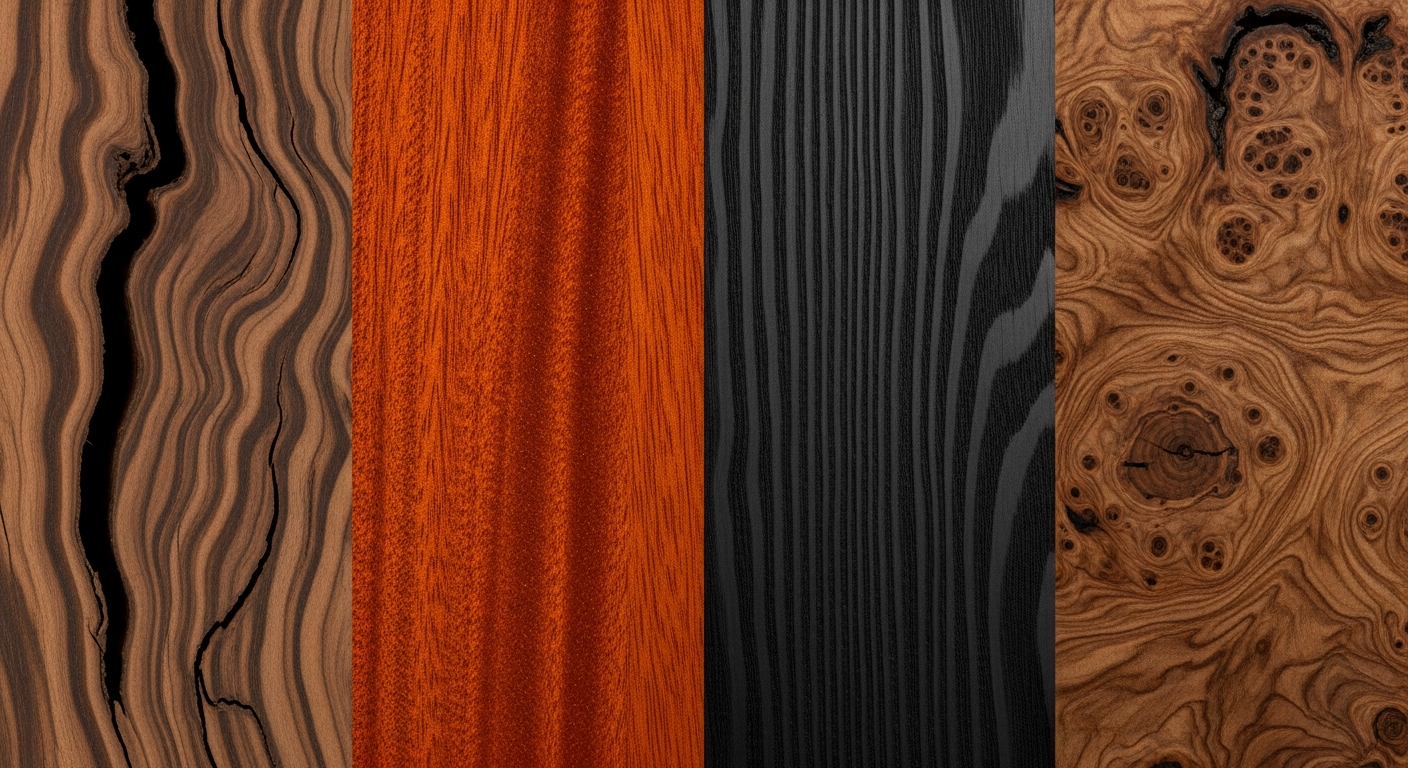
Walnut, mahogany, smoked oak, reclaimed timber with rich patina, and the extraordinary organic patterns of burl wood are replacing the pale tones that defined the previous era. Google searches for "burl wood furniture" have surged by 5,000 percent in recent years — a staggering indicator of shifting taste. This is not a niche revival. It is a mainstream movement that is transforming living rooms, dining rooms, bedrooms, and kitchens across every style category.
For context on how this material trend connects to the broader design landscape, see our complete 2026 interior design trends guide.
The Shift from Light to Dark Wood
Understanding why dark wood is resurging requires understanding why light wood dominated in the first place. The Scandinavian design wave of the early 2010s brought with it an aesthetic philosophy built on light, airiness, and visual minimalism. Pale oak and ash embodied these values perfectly — clean, neutral, and unobtrusive. They allowed the design conversation to focus on form and space rather than material richness.
But familiarity breeds restlessness. After years of blonde wood everywhere — floors, furniture, cabinetry, shelving, all in the same pale tone — the aesthetic began to feel not just familiar but monotonous. Light wood's strength became its weakness: it was so unobtrusive that it stopped making any statement at all.
Dark wood offers everything that light wood does not: warmth, depth, gravitas, and character. A walnut dining table has a presence that a pale ash table simply cannot match. Mahogany shelving brings architectural weight to a room. Smoked oak flooring creates a foundation of richness that elevates everything placed upon it. And burl wood — with its swirling, organic grain patterns that look like abstract art frozen in timber — represents the ultimate rejection of mass-produced uniformity.
The shift also reflects the broader cultural movement toward authenticity and craft. Dark woods are typically associated with age, heritage, and quality craftsmanship. A walnut piece feels substantial and permanent in a way that communicates investment over disposability — perfectly aligned with the slow design and sustainability values that are reshaping consumer behavior.
Wood Species Defining 2026
Walnut
Walnut is the cornerstone of the dark wood revival and the most versatile of the trending species. Its rich, warm brown tones carry hints of purple and gold that create extraordinary depth under varied lighting conditions. American black walnut, in particular, has become the species of choice for high-end furniture makers — prized for its workability, durability, and the way it develops even richer patina over time.
Walnut works across every room and every design style. In a modern setting, a clean-lined walnut dining table becomes the room's anchor. In a traditional setting, walnut's classic warmth feels completely at home alongside antiques and heritage pieces. It pairs beautifully with both warm and cool tones, making it exceptionally flexible for existing color schemes.
Mahogany
Mahogany brings a reddish warmth and a sense of classic elegance that few other woods can match. Long associated with fine furniture and period interiors, mahogany is experiencing a revival among designers who appreciate its ability to bridge traditional and contemporary aesthetics. A mahogany sideboard in a modern dining room creates an interesting tension between heritage and modernity that feels very 2026 — collected, layered, and deliberately non-matching.
Smoked Oak
For those who love the grain character of oak but want to move away from the pale Scandinavian palette, smoked oak offers the perfect solution. The smoking process darkens the wood through chemical reaction rather than stain, producing a depth and variation that surface-applied color cannot achieve. The result is a timber that retains oak's distinctive grain patterns while carrying the warmth and gravitas of dark wood.
Burl Wood
Burl wood is the statement piece of the dark wood movement. Formed from the irregular growths on tree trunks, burl produces swirling, organic grain patterns that make each piece genuinely unique — no two burl surfaces are ever identical. Coffee tables, side tables, and decorative bowls in burl wood have become the "it" pieces of 2026 design, prized for their sculptural quality and their ability to serve as both functional furniture and art objects.
The appeal of burl wood connects directly to the broader appetite for authenticity and natural character in interiors. In an era that values the handmade over the mass-produced, burl wood represents nature's own craftsmanship — complex, unpredictable, and impossible to replicate mechanically.
Reclaimed and Aged Timber
Reclaimed wood occupies a unique position in the dark wood trend because it carries not just material beauty but embedded history. Old barn beams, salvaged warehouse flooring, and architectural timber from demolished buildings bring patina, character, and sustainability credentials that new wood cannot match. The darker tones that develop through decades of aging and use are precisely the tones that 2026 design craves.
Brutalist and Chunky Vintage Furniture
The dark wood revival extends beyond material preference into a broader embrace of furniture with physical presence and sculptural authority. Brutalist furniture — chunky, bold pieces with substantial proportions and minimal ornamentation — is experiencing a powerful surge in popularity. The aesthetic celebrates mass, weight, and honest construction rather than delicate refinement.
Vintage Brutalist pieces from the 1960s and 1970s — particularly the work of French designers like Guillerme et Chambron and the broader tradition of European craft furniture from that era — have become highly sought after. Their chunky oak constructions, visible joinery, and uncompromising forms feel remarkably contemporary in 2026, perhaps because they embody the same values that are driving current design: authenticity, craft, and material honesty.
Contemporary furniture makers are creating new work in the same spirit. Massive plinth coffee tables, sculptural dining chairs with exaggerated proportions, and statement consoles with bold geometric forms all reflect this appetite for furniture that commands attention through physical presence rather than decoration. Sleigh-style beds — with their dramatic curved headboards and footboards — represent the bedroom expression of this trend, creating focal points that transform the room's entire character.
The key to incorporating Brutalist pieces is balance. Their substantial visual weight benefits from lighter counterpoints — soft linen upholstery, light-toned walls, and plenty of breathing room. A chunky walnut coffee table becomes a stunning focal point when surrounded by a cream sofa, natural fiber rug, and simple, uncluttered accessories.
Styling Dark Wood Room by Room
Living Room
The living room offers the most opportunities for dark wood integration. Walnut consoles behind sofas provide both storage and visual anchoring. Burl wood coffee tables become conversation pieces — functional art that draws the eye without competing with the room's overall scheme. Reclaimed timber shelving creates display opportunities that blend storage with aesthetic warmth.
The key principle for dark wood in living rooms is using it as the foundation layer against which lighter elements play. A dark walnut TV console grounded by a natural fiber rug, paired with a cream linen sofa and soft sage throw pillows, creates a room that feels simultaneously rich and relaxed. For more on creating compelling living rooms, explore our modern living room design guide.
Dining Room
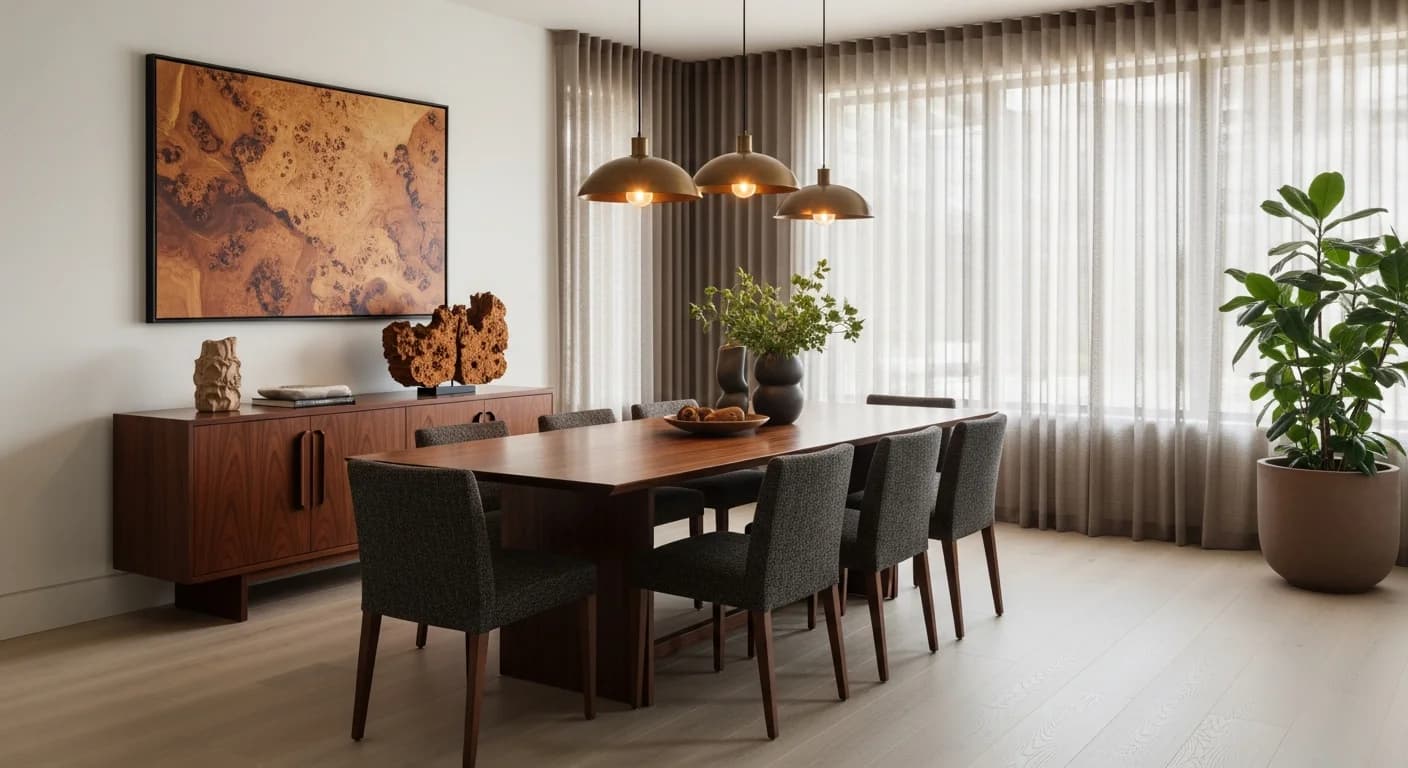
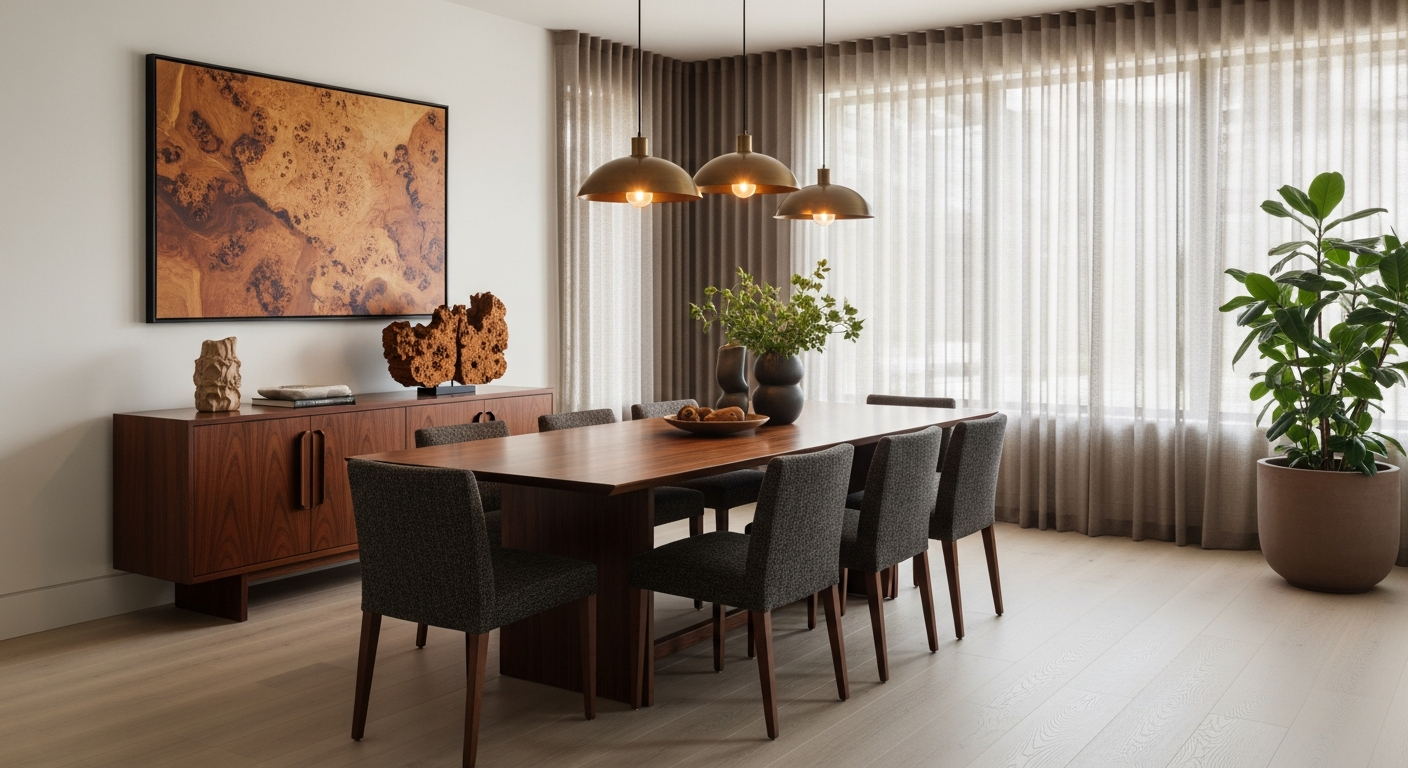
The dining room is where dark wood makes its most dramatic statement. A large walnut or mahogany dining table becomes the room's undeniable centerpiece — particularly when surrounded by contrasting chairs in lighter upholstery or mixed materials. The trend toward larger, more substantial dining tables reflects the broader cultural return to gathering, entertaining, and communal eating.
Dark wood sideboards and buffets are equally important, providing both storage and visual weight that anchors one wall and creates symmetry. Paired with warm brass lighting and rich textiles — perhaps a deep burgundy table runner or olive linen napkins — the dark wood dining room becomes the atmospheric, intimate space that 2026 design prizes.
Bedroom
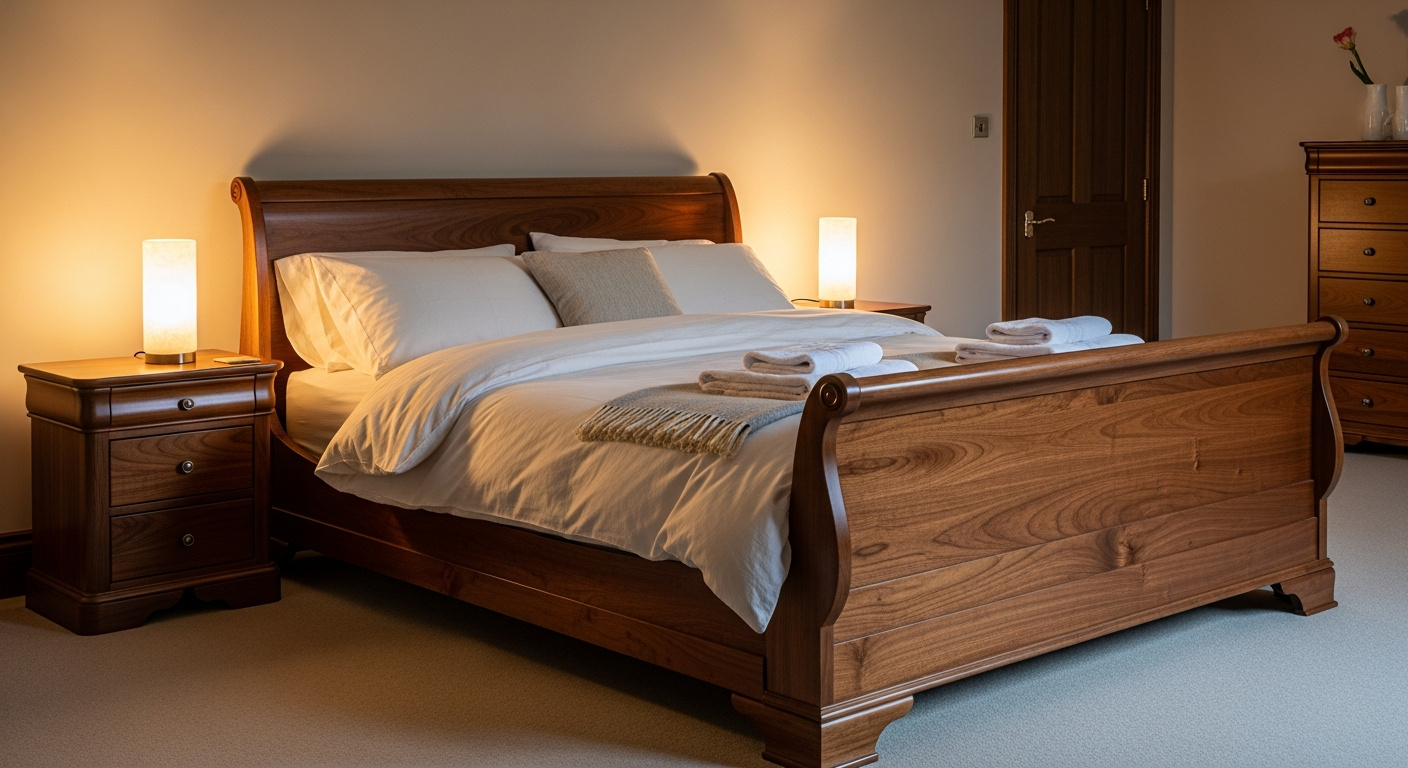
In the bedroom, dark wood brings a sense of cocooning warmth that aligns perfectly with 2026's emphasis on sleep quality and personal sanctuary design. Sleigh beds in walnut or mahogany create dramatic focal points that transform the room's character. Dark wood nightstands and dressers provide grounding weight that makes the room feel substantial and permanent.
The most effective bedroom approach combines dark wood furniture with soft, light textiles — cream linen sheets, warm white duvets, and natural wool throws. This contrast prevents the room from feeling too heavy while allowing the wood's richness to shine. Warm brass hardware and lighting complete the palette.
Kitchen
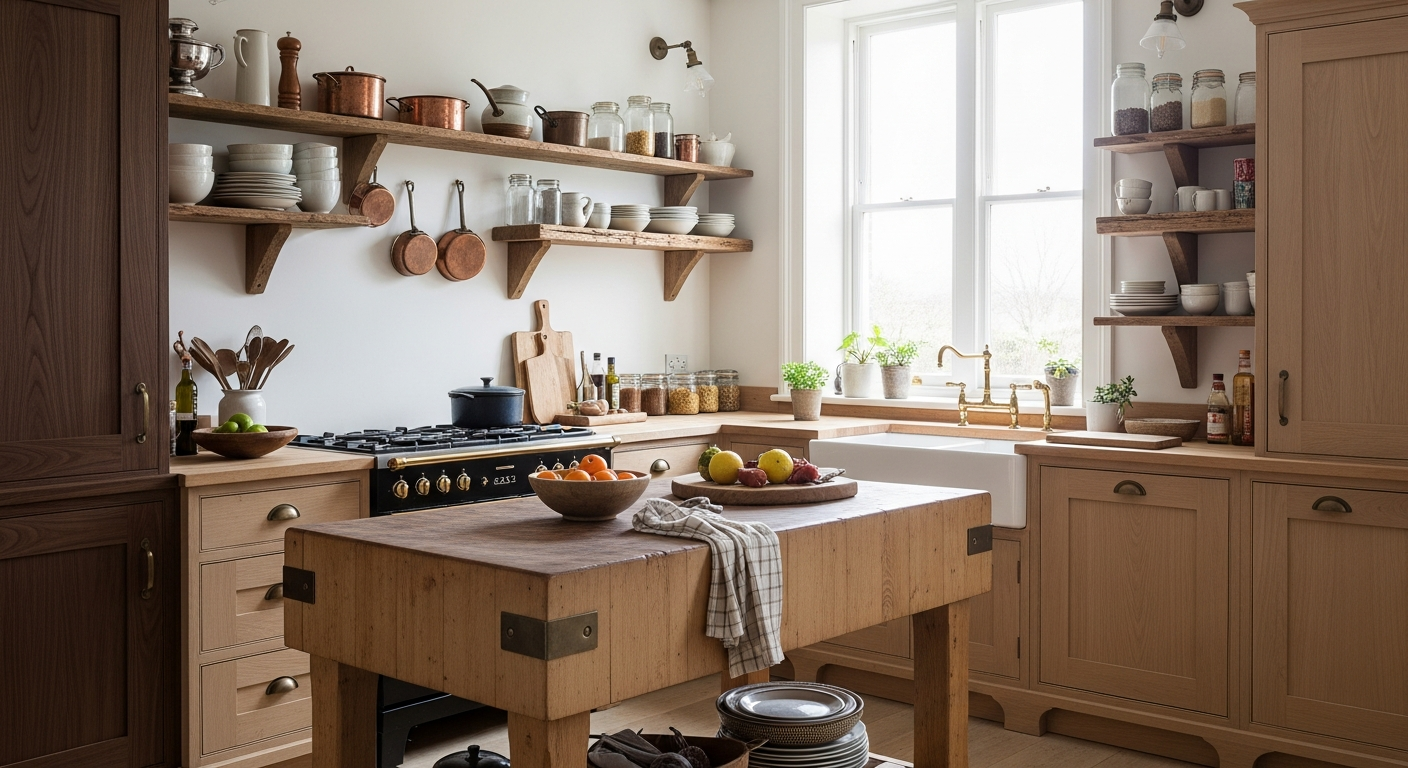
The kitchen represents the most innovative application of the dark wood trend. Unfitted wood kitchens — where standalone furniture pieces replace traditional fitted cabinetry — are one of the most distinctive design developments of 2026. Think freestanding walnut larder cabinets, butcher block prep islands on legs, and open shelving in reclaimed timber. This approach creates kitchens that feel more like living spaces and less like utilitarian workshops.
Even in more conventional kitchen layouts, dark wood is making its mark through cabinet fronts in walnut or smoked oak, wood-framed glass display cabinets, and substantial wooden island bases. The combination of dark wood cabinetry with natural stone countertops and brass hardware has become one of the defining kitchen aesthetics of the year.
Pairing Dark Wood with Other Materials
Dark wood achieves its greatest impact when paired thoughtfully with contrasting materials that highlight its warmth and depth.
Natural stone — marble, travertine, and limestone — creates combinations of extraordinary richness. A walnut vanity topped with white marble introduces contrast without coldness. A travertine coffee table base paired with a dark wood top blends two natural materials in a way that feels organic and intentional.
Metals are essential partners for dark wood. Aged brass and unlacquered brass share warm undertones that create harmony — the metal's golden patina echoes the warmth in walnut and mahogany. Stainless steel is gaining popularity as a contrasting cool metal that provides modern edge against warm timber. The combination of dark wood with stainless steel hardware and lighting is a signature 2026 pairing.
Plaster and textured walls provide the perfect backdrop for dark wood furniture. Limewash plaster in warm cream or clay creates a subtle, organic wall surface that complements rather than competes with the wood's natural grain and color.
Lighter textiles — linen, cotton, and light wool — are essential for preventing dark wood-heavy rooms from feeling oppressive. Cream cushions, white linen curtains, and natural fiber rugs introduce airiness that balances the visual weight of dark timber.
Caring for Dark Wood Furniture
The 2026 approach to wood care aligns with the broader philosophy of embracing imperfection and patina. The "living finish" concept has gained significant traction — the idea that wood furniture should be allowed to develop character through use rather than being maintained in pristine condition.
This does not mean neglect. Basic care — dusting with a soft cloth, using coasters for drinks, avoiding prolonged direct sunlight exposure, and periodic conditioning with furniture oil — protects the wood while allowing its natural character to develop. The slight darkening, the subtle wear patterns, the gentle patina that develops over years of daily use — these are features, not flaws.
For pieces that need more protection, natural wax finishes provide a soft sheen that enhances grain character while offering modest surface protection. Oil-based finishes penetrate the wood rather than sitting on top, feeding the timber while maintaining its natural look and feel.
How to Visualize Dark Wood in Your Space
One of the challenges of transitioning from light to dark wood is uncertainty about how darker tones will interact with your existing room — the wall colors, flooring, lighting conditions, and overall proportions. Too much dark wood in a small, poorly lit room can feel overwhelming. The right amount in the right room can transform it entirely.
HanoDecor's AI visualization tool lets you see exactly how dark wood furniture and finishes will look in your specific space before making any purchasing decisions. Upload a photo of your room and experiment with walnut tables, mahogany shelving, or dark oak flooring to find the balance that works for your space and light conditions.
Frequently Asked Questions
Is dark wood going to make my room feel smaller?
Not necessarily. Dark wood used strategically — as furniture pieces against lighter walls and floors — adds depth without reducing perceived space. Pairing dark wood with light walls, natural light, and reflective surfaces (mirrors, glass, brass) maintains openness while adding warmth. Full dark wood rooms work best in larger spaces with good lighting.
Can I mix dark and light wood tones?
Yes, and it is actually encouraged in 2026 design. The key is intentionality — mixing two distinct wood tones reads as deliberate, while mixing several similar-but-not-matching tones reads as accidental. For example, dark walnut furniture on light oak floors creates a beautiful contrast. The rule of thumb is to keep either the floor or the furniture dominant and let the other provide contrast.
Where should I start if I want to add dark wood?
Start with a single statement piece — a coffee table, dining table, or console — in your most used room. This allows you to experience living with dark wood before committing to larger pieces or built-in elements. A burl wood coffee table or walnut console is an excellent entry point. For more styling ideas, see our guide to coffee table styling and tablescapes.
Is burl wood sustainable?
Burl wood can be sustainably sourced when harvested from fallen trees, storm-damaged timber, or sustainably managed forests. Many artisan furniture makers specifically source burl from these sustainable channels. Vintage burl pieces are inherently sustainable as they extend the life of existing materials. Always ask about sourcing when purchasing new burl furniture.
Dark Wood Furniture Trend FAQs
Written by
Sarah Mitchell
Sarah is a certified interior designer (CID) with experience designing residential and commercial spaces across three continents. She curates our design style library and ensures all AI-generated designs follow established design principles.