Interior Design Trends 2026: The Complete Guide to Colors, Styles, and What's Next
Interior design in 2026 is defined by a single, powerful shift: homes are no longer designed to impress — they are designed to feel. After years of curated perfection and social-media-ready interiors, homeowners and designers alike are choosing warmth over polish, character over coordination, and nature over artifice. The trends shaping this year reflect a collective desire for spaces that nurture, comfort, and authentically represent the people who live in them.
This complete guide covers every major interior design trend defining 2026 — from the bold return of color confidence and the rise of warm minimalism to the mainstream adoption of biophilic design and the revival of dark, characterful wood. Whether you are planning a full renovation or simply want to refresh a single room, these are the movements, materials, and ideas that will shape how we live this year and beyond.
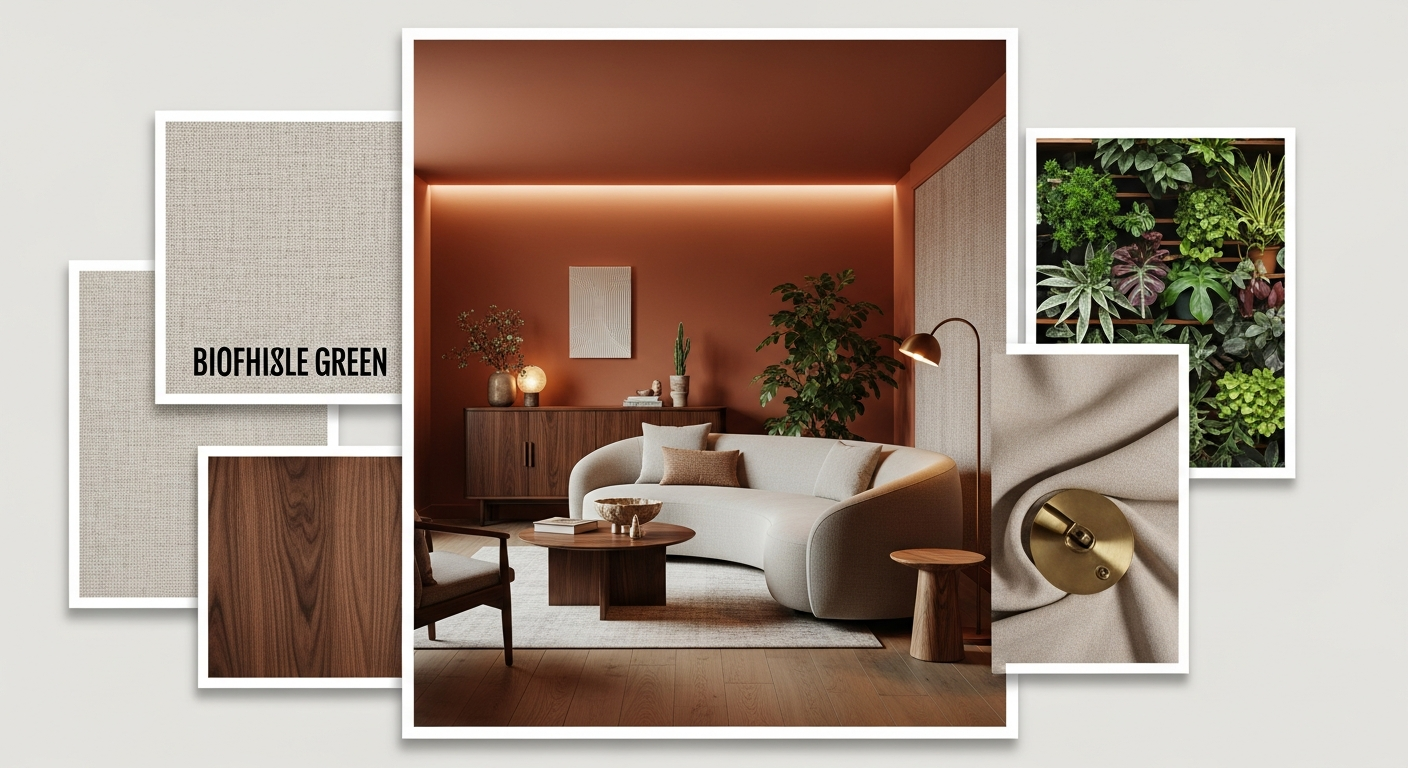
The Big Picture: What Is Driving Interior Design in 2026
Every design era is shaped by cultural undercurrents, and 2026 is no exception. Three macro forces are converging to create the most coherent design direction we have seen in years.
First, the post-pandemic emphasis on home as sanctuary has matured from a reactive impulse into a permanent lifestyle shift. Comfort is no longer a temporary priority — it is the baseline expectation. Homeowners now evaluate every design choice through the lens of daily livability: how does this sofa actually feel at nine o'clock on a Tuesday evening? Does this paint color make the room feel restful or anxious? The answers to these questions are driving purchasing decisions more than any trend report ever could.
Second, sustainability has crossed from niche concern to non-negotiable standard. The conversation is no longer about whether to consider environmental impact — it is about how to integrate it without sacrificing beauty or function. Reclaimed materials, vintage furniture, low-VOC finishes, and locally sourced goods are chosen not just because they are responsible, but because they produce more interesting, characterful spaces than mass-produced alternatives.
Third, digital fatigue is pushing people toward the tactile and the handcrafted. In a world saturated with screens and synthetic surfaces, there is a deep hunger for materials you can feel: the grain of real wood, the texture of hand-thrown ceramics, the warmth of wool and linen. This desire for sensory richness runs through nearly every trend this year.
The Three Macro Themes of 2026
These cultural forces crystallize into three themes that appear again and again across every room, every material, and every design decision this year:
Warmth and lived-in character. Rooms that feel genuinely inhabited — layered, personal, slightly imperfect. The staged showroom look is out; the collected-over-time, lived-in-and-loved look is in. This means mixing eras, embracing patina, and choosing comfort over visual precision.
Bold color confidence. After a decade dominated by gray, greige, and safe neutrals, 2026 marks the decisive return of color. Not timid accent walls, but full-commitment color drenching, moody jewel tones, and warm earthy palettes that transform the emotional character of a room. Designers report that clients are asking for burgundy, forest green, deep teal, and burnt umber with a confidence that would have been rare even two years ago.
Nature and sustainability integration. Biophilic design — the practice of incorporating natural elements into built environments — is moving from aspirational concept to everyday reality. Living walls, natural stone, maximized daylight, and organic materials are becoming standard features rather than luxury additions. Simultaneously, sustainable choices are integrated so seamlessly that they are invisible: low-VOC paints, reclaimed wood, and vintage furniture are chosen for their beauty, and their environmental credentials are a bonus rather than the primary selling point.
Color Trends Dominating 2026
Color is the single most impactful change you can make to any room, and 2026 offers one of the most exciting color landscapes in recent memory. The timidity of the gray era is over. This is the year of commitment, depth, and emotional resonance.
Colors of the Year
The major color authorities have aligned around a surprisingly cohesive vision for 2026. Benjamin Moore's Silhouette (AF-655) is a complex burnt umber with charcoal undertones — warm, grounding, and sophisticated without being heavy. It works as a wall color, a cabinet finish, or a furniture tone, adapting to both traditional and contemporary contexts.
Valspar's Sage Slate occupies the green-gray spectrum: restorative, calming, and deeply connected to the natural world. It captures the biophilic impulse in a single color — nature brought indoors through pigment rather than plants.
WGSN's Transformative Teal is a blue-green hybrid that bridges boldness and serenity. Energizing without being aggressive, it works beautifully in both small accent moments and full color-drenched rooms. Together, these three picks tell us something important: 2026 favors warmth, nature, and depth over coolness, sterility, and restraint.
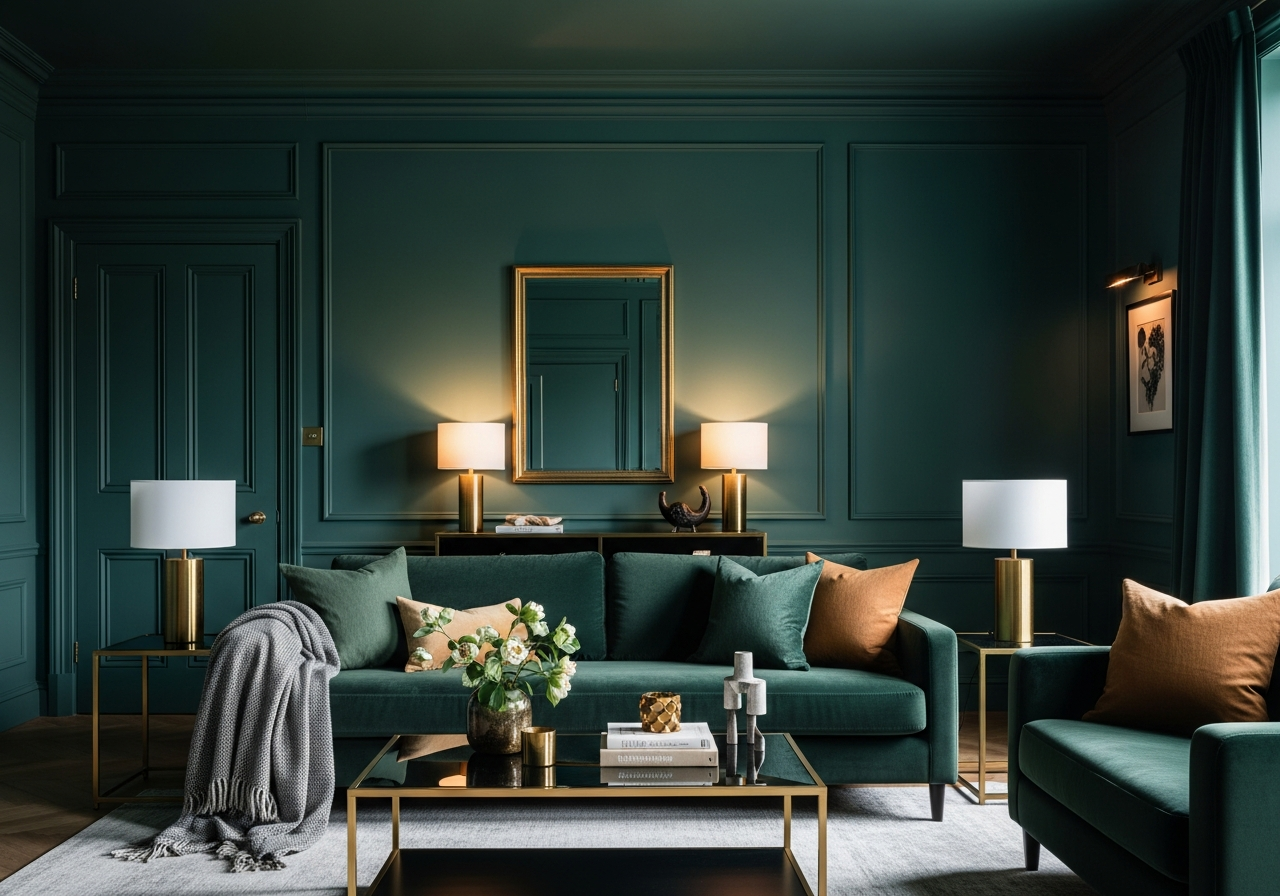
Color Drenching: The Number One Color Technique
If there is a single technique that defines 2026 color trends, it is color drenching — the practice of coating an entire room in a single hue, from walls and ceiling to trim, doors, and sometimes even furnishings. This is not an accent wall. This is total immersion.
Color drenching works because it eliminates visual fragmentation. When everything shares the same tonal family, the room feels larger, more cohesive, and more intentional. The technique is most dramatic with deep colors — imagine a bedroom drenched in midnight blue or a dining room swathed in burgundy — but it also works beautifully with warm neutrals like clay, cream, or warm white. The key is using the same color across surfaces but varying the sheen: matte on walls, satin on trim, semi-gloss on doors. This creates subtle depth without breaking the monochromatic envelope.
For a comprehensive guide to executing this technique in every room of your home, see our in-depth color drenching guide.
Moody Palettes: Burgundy, Olive, Ochre, and Forest Green
Beyond color drenching, the broader palette direction for 2026 skews deep, warm, and saturated. Burgundy has emerged as the breakout color of the year — rich, sophisticated, and unexpectedly versatile. It pairs beautifully with brass, dark wood, and cream, and it works in everything from a velvet sofa to a fully drenched powder room.
Olive green bridges the gap between natural and moody, bringing the outdoors in without the brightness of kelly or emerald. Ochre and burnt sienna continue the earth-tone renaissance, adding warmth and groundedness. Forest green remains strong, particularly in kitchens and bathrooms where it replaces the all-white default with drama and personality. For a deeper exploration of these palettes and how to apply them room by room, visit our complete 2026 color trends analysis.
What Is Out: Cold Grays, Stark Whites, and Beige-on-Beige
The colors that dominated the 2010s are officially fading. Cold gray — once the universal safe choice — now reads as dated and impersonal. Stark, cool whites feel clinical rather than clean. And the beige-on-beige monotone that briefly replaced gray lacks the depth and personality that 2026 demands. The shift is not away from neutrals entirely — it is toward warm neutrals: clay, taupe, caramel, and cream that carry color even in their subtlety.
The Rise of Warm Minimalism
Minimalism is not dead in 2026 — it has evolved. The cold, stark minimalism of the mid-2010s — white walls, sparse furniture, zero personality — has given way to a movement designers are calling warm minimalism. This is the middle ground between sterile modernism and cluttered maximalism, and it may be the most livable design philosophy to emerge in a decade.
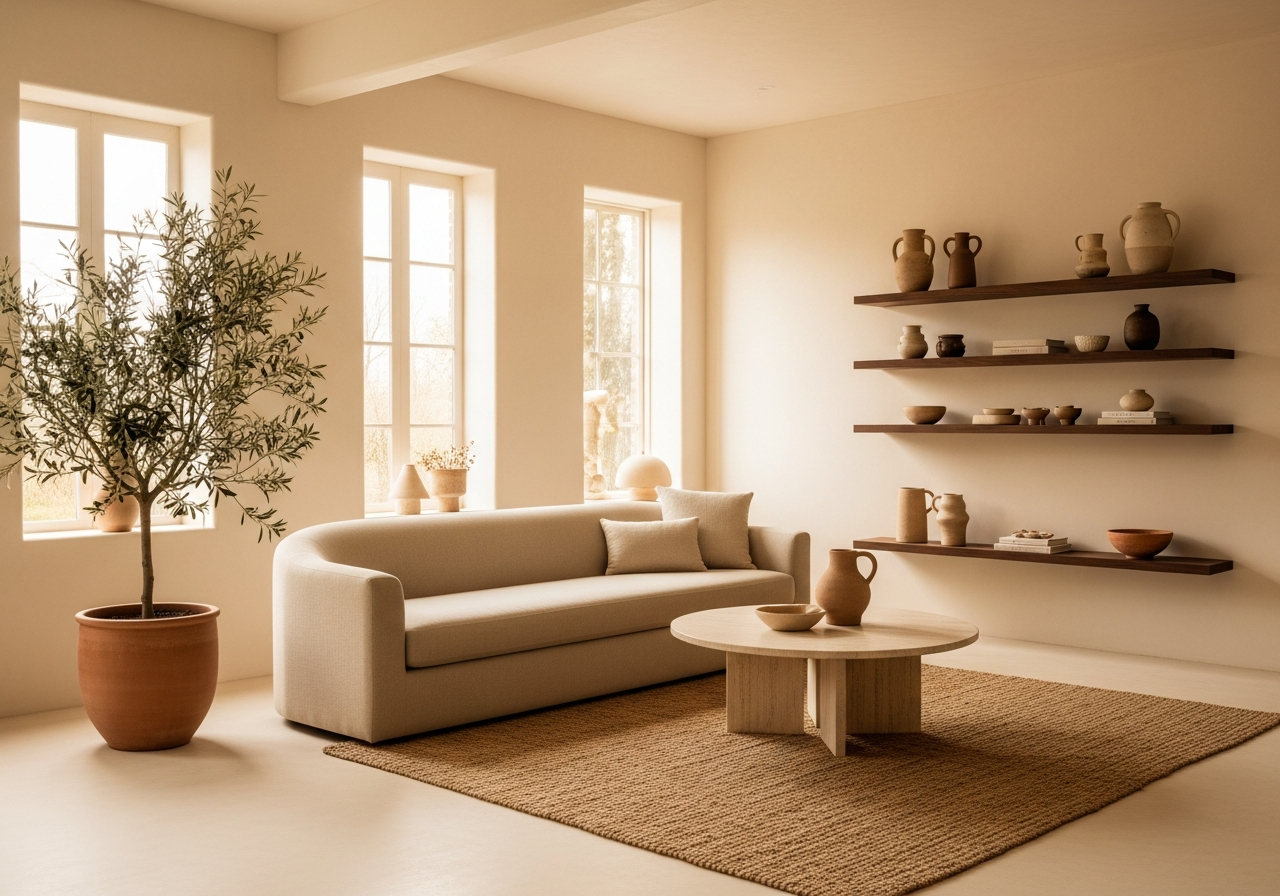
From Cold Minimalism to Warm Minimalism
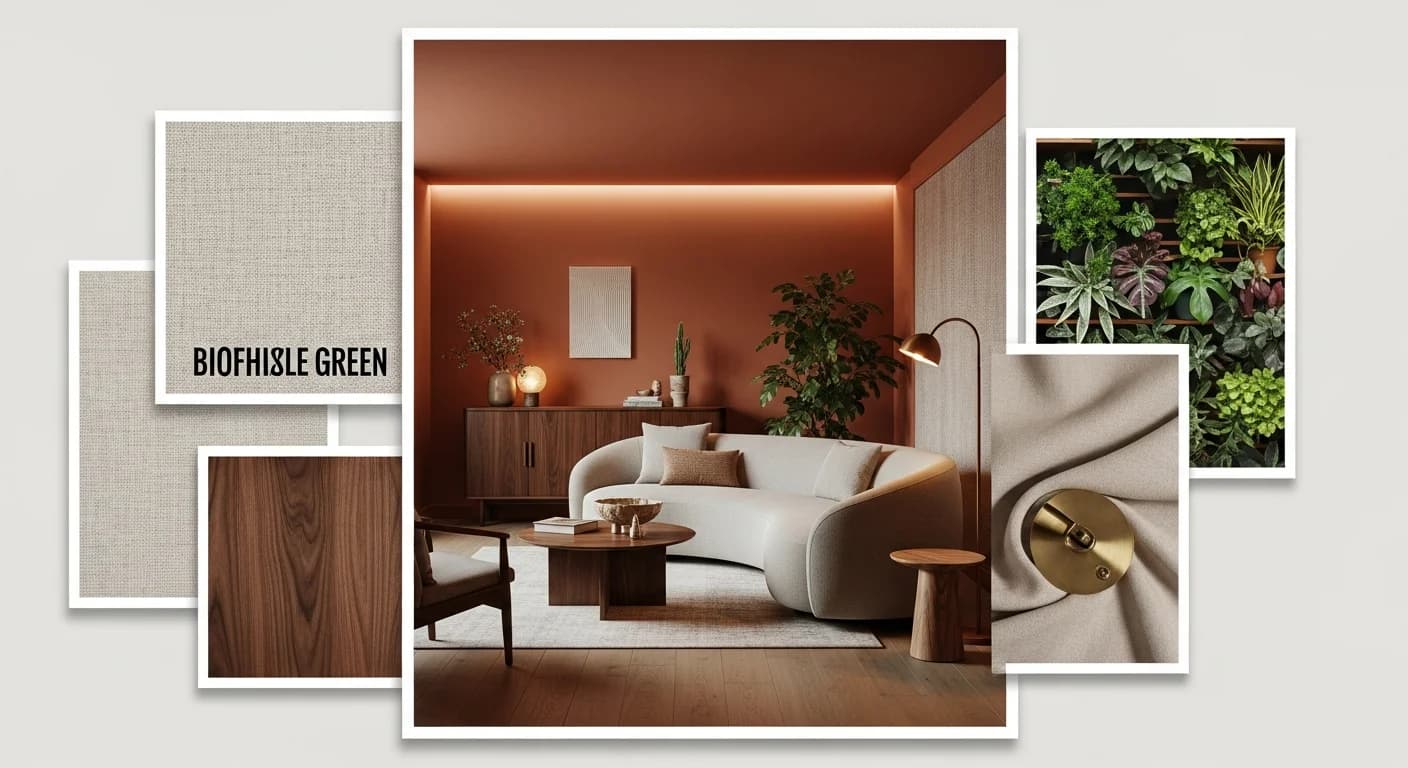
Cold minimalism said: remove everything. Warm minimalism says: keep only what matters, and make it beautiful. The difference is not about quantity — it is about quality and intention. A warm minimalist room still has restraint, but every piece earns its place through craft, texture, or emotional significance. The walls are not white — they are warm plaster in cream or clay. The furniture is not angular chrome — it is organic, curved, and upholstered in natural linen or soft wool. The floor is not polished concrete — it is wide-plank oak or reclaimed timber with visible grain and character.
Key Elements of Warm Minimalism
Organic textures are the foundation: limewash plaster, natural stone, hand-finished wood, woven textiles. These materials carry visual warmth even in minimal quantities. Soft edges and curved forms replace the hard angles of traditional minimalism — rounded sofas, arched doorways, kidney-shaped tables. Warm color palettes built around clay, cream, sage, and soft brown create environments that feel restful rather than cold. And intentional objects — a single piece of handcrafted pottery, a well-chosen piece of art, a stack of books — add personality without clutter.
For a complete guide to applying this philosophy in every room of your home, explore our detailed warm minimalism guide. If you are interested in how warm minimalism intersects with existing minimalist approaches, our minimalist home decor guide provides foundational principles that warm minimalism builds upon.
Dark Wood and Natural Materials Revival
After a decade of bleached oak, whitewashed pine, and pale Scandinavian timber, dark wood is back with authority. Walnut, mahogany, smoked oak, and reclaimed timber with rich, deep patina are replacing the light-and-airy wood tones that defined the 2010s. Google searches for "burl wood furniture" have increased by 5,000 percent, signaling a dramatic shift in consumer appetite.
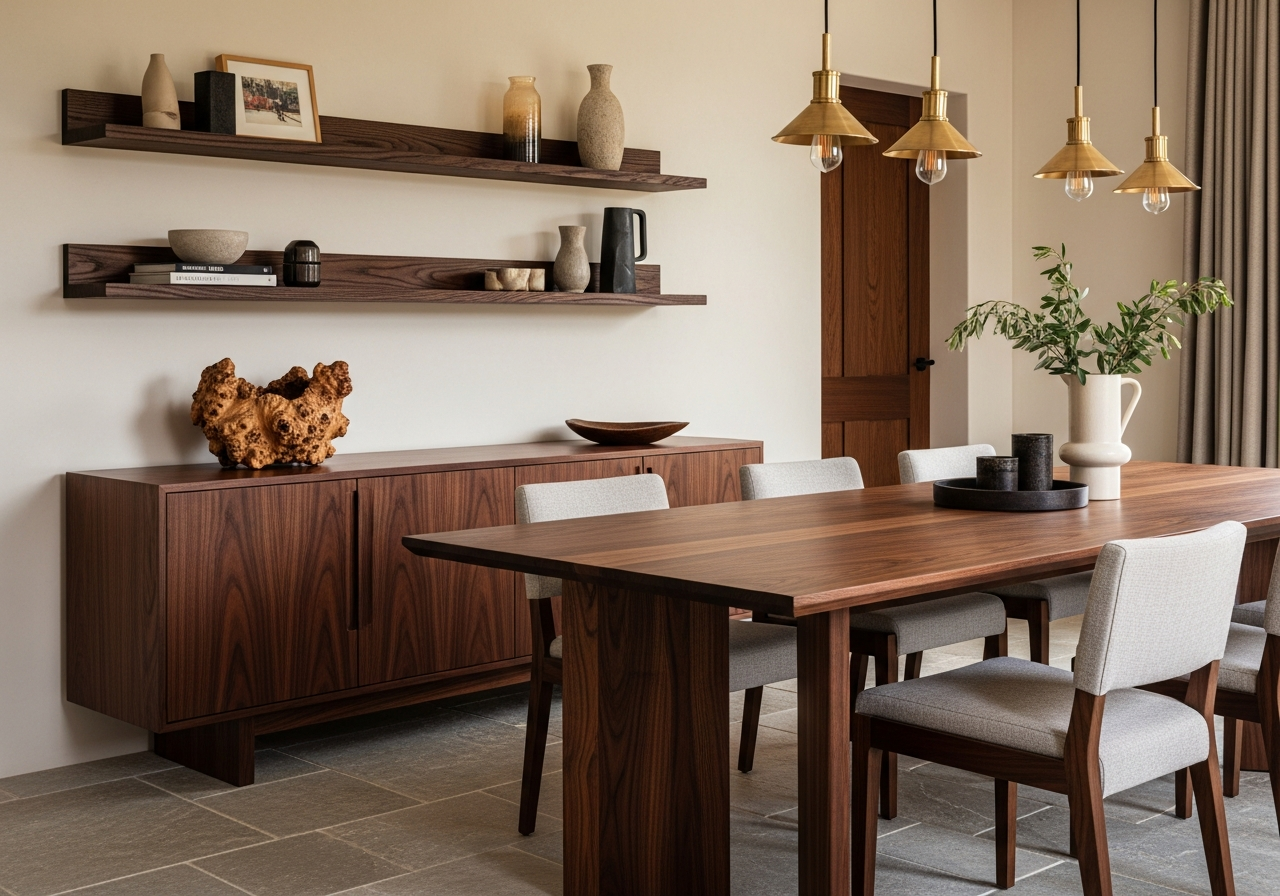
Why Dark Wood Is Back
Dark wood carries qualities that align perfectly with 2026's broader direction: warmth, depth, character, and permanence. A walnut dining table communicates substance in a way that a pale mass-produced piece simply cannot. Mahogany and smoked oak bring architectural gravitas to a room without the formality of traditional dark furniture. And burl wood — with its swirling, organic grain patterns — is the antithesis of mass production, each piece genuinely unique.
Burl Wood, Brutalist Furniture, and Character Pieces
The dark wood revival extends beyond simple material preference into a broader embrace of furniture with character and presence. Brutalist furniture — chunky, sculptural pieces with bold proportions and minimal ornamentation — is experiencing a surge in popularity. Designers are sourcing vintage Brutalist pieces from the 1960s and 1970s, and contemporary makers are creating new work in the same spirit. Sleigh-style beds, massive plinth coffee tables, and sculptural dining chairs all reflect this appetite for furniture that makes a statement through form and material rather than decoration.
The common thread is a rejection of disposable, generic furniture in favor of pieces with personality, history, and physical presence. For a comprehensive guide to incorporating dark wood into your spaces, including room-by-room styling advice, visit our dark wood furniture trend guide.
Biophilic Design Goes Mainstream
Biophilic design — the practice of incorporating natural elements, patterns, and experiences into built environments — has been discussed in design circles for years. In 2026, it crosses from aspirational concept to mainstream reality. And the shift is not just about adding houseplants.
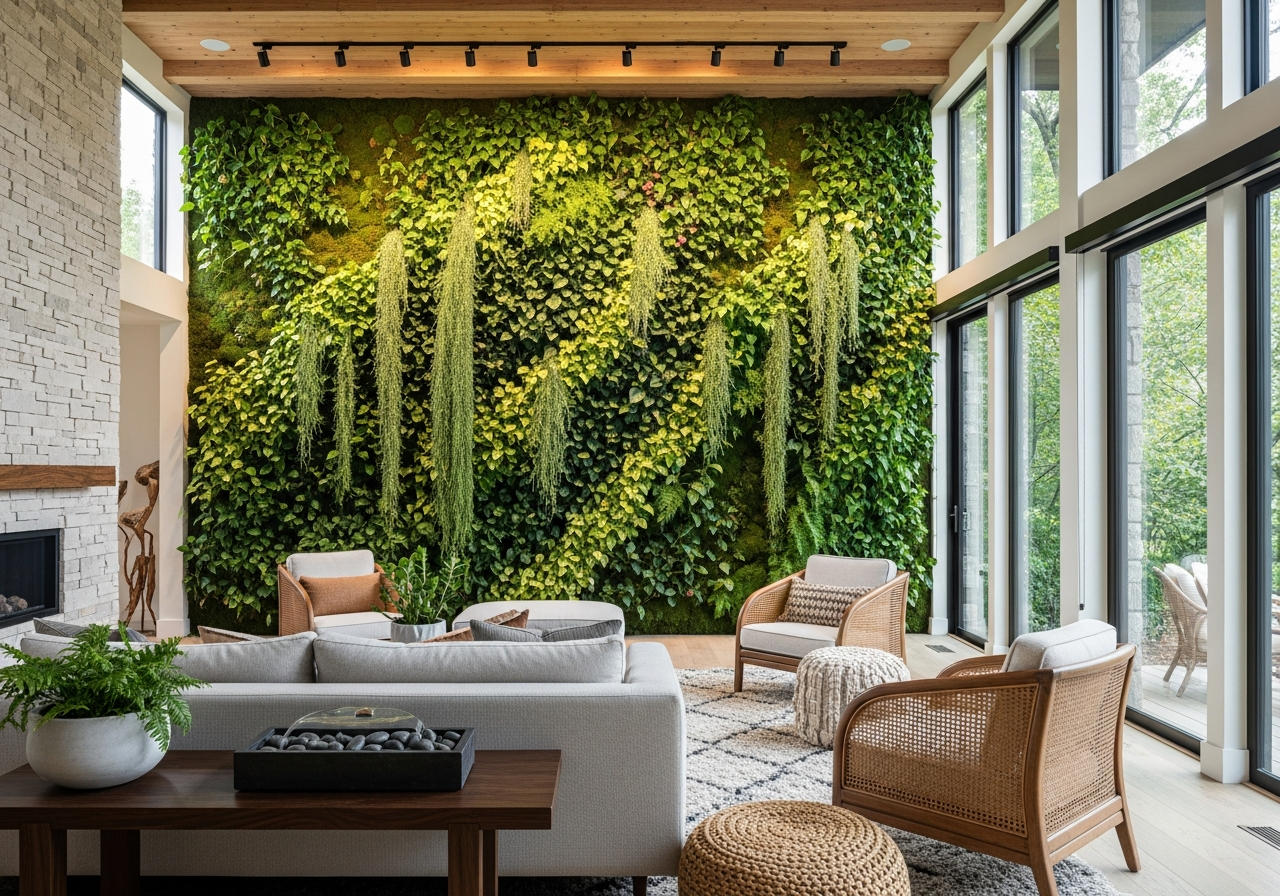
Beyond Houseplants: Living Walls, Water Features, and Natural Light
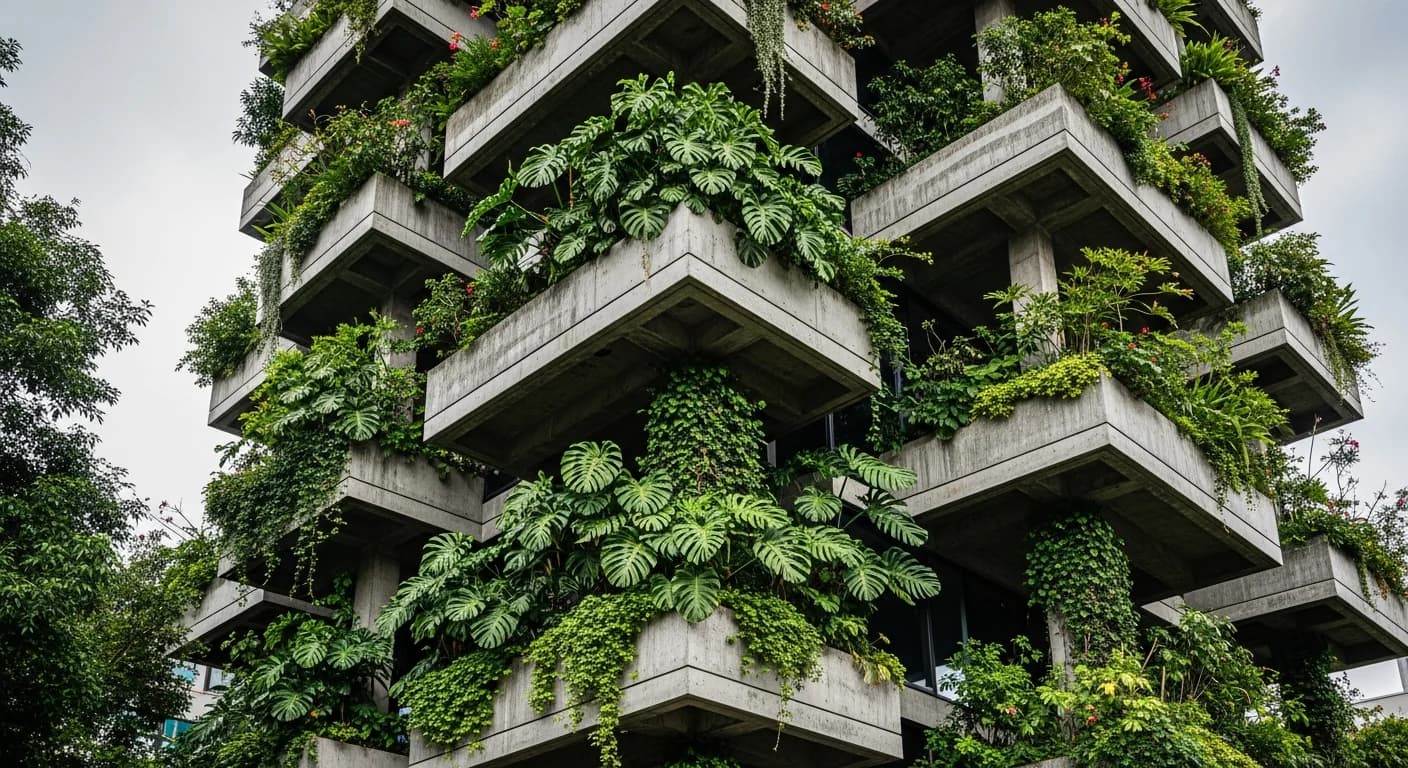
The new biophilic design integrates nature at a structural level. Living walls — vertical gardens of ferns, moss, and trailing plants — are becoming focal points in living rooms, bathrooms, and home offices. Water features, from tabletop fountains to wall-mounted cascades, add the calming sound of moving water. Natural light optimization is prioritized in renovations, with larger windows, skylights, and light wells designed to bring daylight deep into interior spaces. Natural materials — stone, wood, clay, and linen — form the material palette, connecting every surface to the natural world. And biomorphic patterns — organic shapes inspired by leaves, waves, and cellular structures — appear in furniture, textiles, and architectural details.
The Science Behind Biophilic Benefits
This is not merely aesthetic preference — it is backed by substantial research. Studies consistently show that biophilic environments reduce stress by up to 20 percent, improve cognitive performance, support better sleep, and reduce anxiety. Exposure to natural elements and patterns activates our parasympathetic nervous system, promoting rest and recovery. Living plants improve indoor air quality by filtering volatile organic compounds and increasing oxygen levels. In a world where we spend an estimated 90 percent of our time indoors, these benefits are not trivial — they are essential.
For homeowners who want to explore biophilic design in depth — including budget-friendly options for every room — our biophilic design trends guide provides a comprehensive roadmap. And for those starting with the simplest biophilic element, our indoor plant decor guide offers practical advice on bringing greenery into any space.
Sustainability and Vintage as Design Pillars
Sustainability in interior design has evolved beyond eco-friendly materials into a complete design philosophy. In 2026, the most sustainable furniture is not new — it is old. Antiques, vintage finds, and reclaimed materials are valued not just for their environmental credentials but for the design qualities they bring: patina, character, uniqueness, and the irreplaceable warmth of something that has lived.
Reclaimed, Upcycled, and Antique Furniture
The vintage furniture market is booming, driven by a confluence of environmental awareness, aesthetic preference, and economic pragmatism. A well-made vintage dresser costs less than its contemporary equivalent, carries more character, and will likely last another fifty years. Designers are mixing antique pieces with modern furnishings to create rooms that feel layered and personal — a Victorian mirror beside a modern sofa, a reclaimed farmhouse table surrounded by contemporary chairs. This mixing of eras is not just acceptable in 2026 — it is the ideal.
Low-VOC Materials and Indoor Air Quality
Beyond furniture, material choices increasingly reflect health and environmental awareness. Low-VOC and zero-VOC paints, adhesives, and finishes are becoming the default rather than the specialty option. Homeowners are paying attention to indoor air quality with the same care they apply to outdoor environmental impact, choosing natural fiber carpets over synthetic, solid wood over engineered particleboard, and mineral-based finishes over chemical coatings.
Circular Design: Buy Less, Choose Better
The circular design movement — designing products and spaces for longevity, repairability, and eventual reuse — is gaining serious momentum. Modular furniture that can be reconfigured, reupholstered, and repaired rather than replaced represents the highest expression of this philosophy. The mantra is simple: buy less, choose better, make it last. For a deep dive into sustainable design practices and how to apply them at every budget level, see our sustainable interior design trends guide.
Wallpaper, Textiles, and Tactile Surfaces
In a world oversaturated with flat screens and smooth surfaces, 2026 craves texture. This hunger for tactile richness is driving three distinct but related trends: the wallpaper renaissance, the return of textile wall hangings, and the dramatic comeback of drapery.

The Wallpaper Renaissance
Wallpaper is experiencing its biggest resurgence in decades, but this is not your grandmother's floral print. The new wallpaper divides into two camps: bold pattern (oversized florals, dramatic chinoiserie, painterly abstracts) and rich texture (grasscloth, sisal, cork, and plaster-effect papers). Both serve the same purpose — adding depth, warmth, and visual interest that paint alone cannot achieve. The powder room has become the gateway for wallpaper newcomers, offering a small, contained space to experiment with bold choices before committing to larger rooms.
Textile Wall Hangings and Tapestries
Beyond wallpaper, walls themselves are becoming canvases for textile art. Woven wall hangings, mohair art installations, and contemporary tapestries are replacing framed prints as the statement art of choice. These pieces add warmth, acoustic softness, and handcrafted authenticity that photographs and prints cannot match. In a world of mass-produced everything, a hand-woven wall hanging feels like a genuine act of creative expression.
Dramatic Drapery's Return
Floor-to-ceiling curtains in rich fabrics — velvet, heavy linen, wool blends — are making a dramatic comeback. After years of bare windows and minimal roller blinds, designers are embracing drapery's ability to soften a room, control light, improve acoustics, and add a layer of luxurious texture. The key is scale: curtains should puddle slightly on the floor and be hung as close to the ceiling as possible, creating height and drama. For more on wallpaper styles, textures, and application room by room, see our 2026 wallpaper trends guide.
Living Room Trends Leading the Way
The living room remains the laboratory where most trends are tested first and adopted most completely. In 2026, three movements are reshaping how living rooms look and feel.
Curved Furniture and Sculptural Silhouettes
Curved sofas, rounded armchairs, kidney-shaped coffee tables, and arched architectural details have moved from trend to mainstream. Curves feel organic, inviting, and emotionally warmer than sharp angles. They encourage conversation (a curved sofa naturally faces inward), soften the geometry of rectangular rooms, and create visual movement that straight lines cannot. This is not a fleeting moment — curves align so deeply with the warmth-and-nature direction of 2026 that they are becoming a permanent feature of contemporary design vocabulary.
Layered Lighting and Warmth
Overhead lighting alone is no longer sufficient. The 2026 living room demands layered lighting — a combination of ambient, task, and accent sources that can be adjusted for mood, time of day, and activity. Table lamps, floor lamps, sconces, and candlelight work together to create warmth and intimacy that a single ceiling fixture cannot provide. Warm color temperatures (2700K and below) are standard, and dimmer switches are essential. For comprehensive lighting strategies, our living room lighting guide offers detailed advice.
The Collected Over Time Look
The most coveted living room aesthetic of 2026 is one that cannot be achieved in a single shopping trip. The collected over time look — a carefully curated mix of vintage finds, inherited pieces, modern comfort, and personal artifacts — communicates authenticity, taste, and lived experience. The key is intentional variety: different eras, different materials, different scales, unified by a coherent color palette and a genuine sense of personal history. For living room design inspiration that complements these trends, explore our modern living room ideas guide and our cozy living room styling guide.
What Is Going Out of Style in 2026
Understanding what is fading is just as valuable as knowing what is arriving. These are the trends that designers across the industry agree have run their course.
Modern Farmhouse Fatigue
The modern farmhouse aesthetic — shiplap, barn doors, subway tile, and mass-produced signs — has reached saturation. What once felt fresh and accessible now reads as formulaic, like a preset filter applied to every home regardless of its actual history or location. Designers are replacing it with a more layered, multi-era approach that borrows from farmhouse warmth without the cliches.
Light Wood and Boucle Combo
Bleached oak paired with boucle upholstery defined a specific moment in Scandinavian-influenced design. That moment has passed. The combination now feels predictable and one-dimensional. Dark woods paired with chenille, mohair, and velvet offer more depth, warmth, and visual interest.
All-White Everything and Matte Black Hardware
The all-white kitchen, all-white bathroom, and all-white living room are giving way to color and warmth. Similarly, the ubiquitous matte black faucet, cabinet pull, and light fixture — once a bold counterpoint to all that white — has become predictable through overuse. Aged brass, unlacquered brass that develops natural patina, and mixed metal combinations are providing the character and individuality that matte black once offered. For a comprehensive look at every trend that is fading and what is replacing it, see our detailed trends going out of style analysis.
Room-by-Room Trend Application
While the macro trends are universal, each room offers unique opportunities and constraints for applying them.
Kitchen
The kitchen is embracing color with unprecedented enthusiasm. Deep-toned cabinets in forest green, navy, and burgundy are replacing the all-white default. Unfitted wood kitchens — where standalone furniture pieces replace built-in cabinetry — are gaining traction among designers seeking a more organic, less industrial feel. Custom range hoods in plaster, wood, or integrated panel designs are replacing the standard stainless steel chimney style. Natural stone countertops and backsplashes in warm tones (soapstone, quartzite, travertine) complete the shift from cold and clinical to warm and characterful.
Bathroom
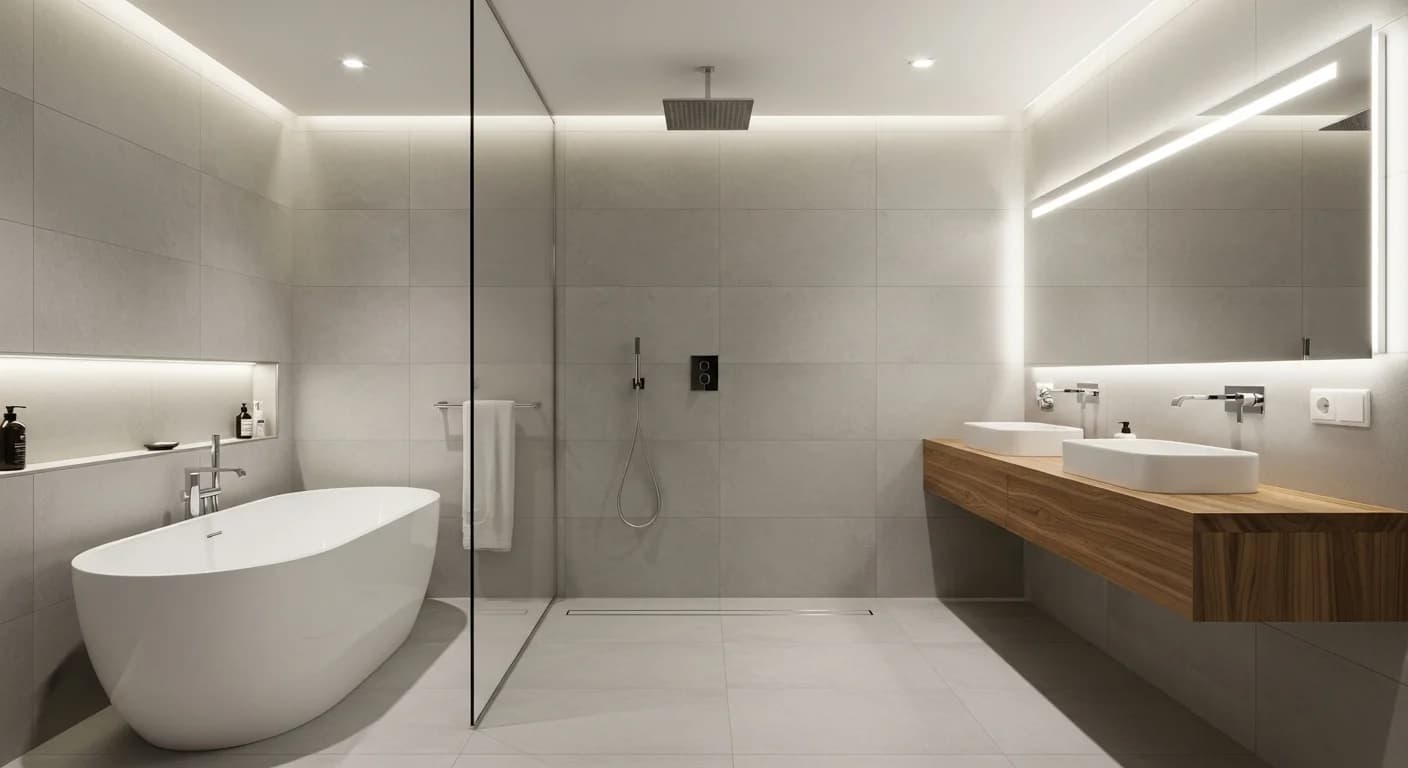
The bathroom continues its evolution into a personal wellness space. Spa-inspired elements — freestanding tubs, rainfall showers, natural stone surfaces — are standard in renovations. Smart technology (heated floors, digital shower controls, ambient lighting systems) is integrated discreetly rather than displayed prominently. The color palette mirrors the broader trend: warm stones, deep greens, and rich blues replacing all-white tile. For comprehensive bathroom trend analysis, our 2026 bathroom trends guide provides in-depth coverage.
Bedroom
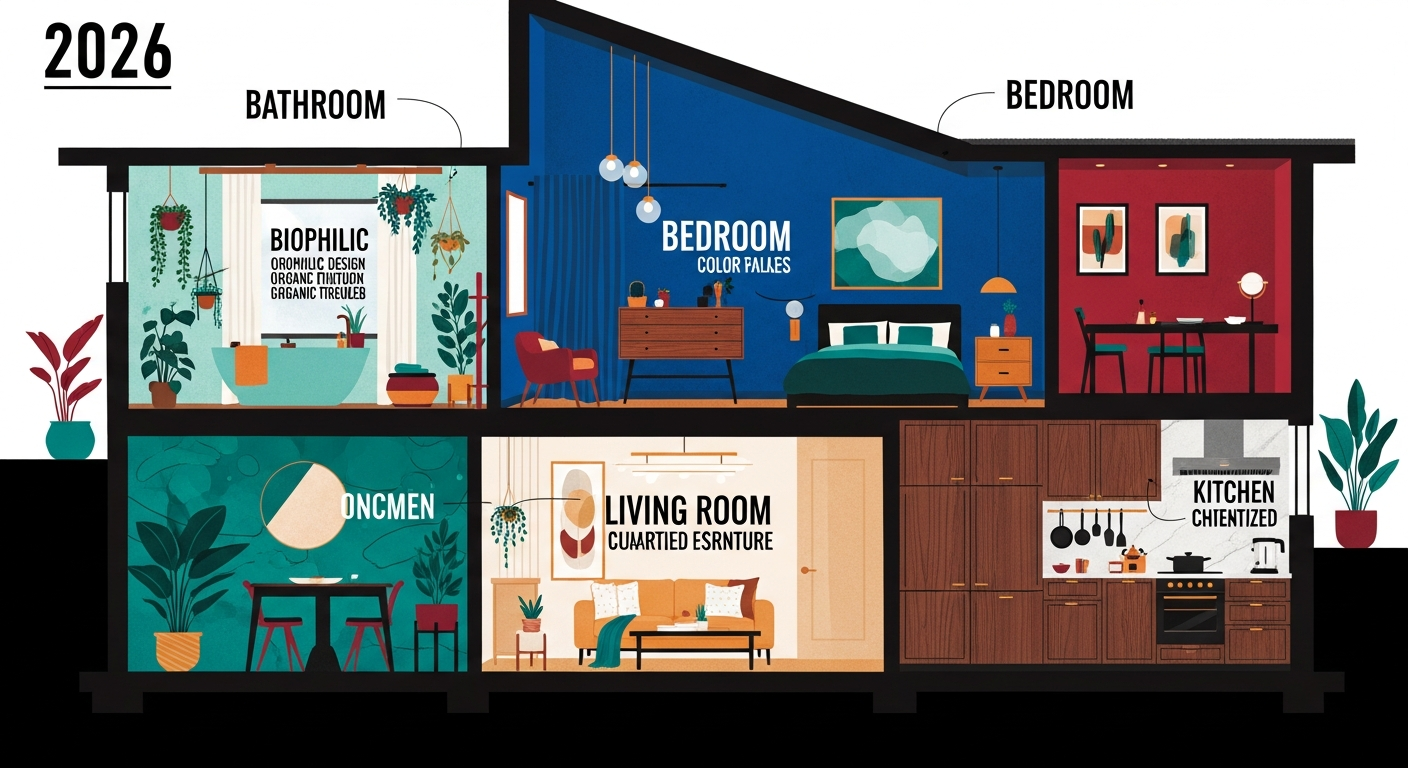
The bedroom in 2026 is a cocooning sanctuary. Moody color palettes — deep plum, chocolate brown, midnight blue — create enveloping intimacy. Sleigh-style beds in dark wood are replacing platform beds and upholstered frames. Layered textiles — heavy linen bedding, wool throws, velvet pillows — add warmth and tactile richness. The goal is a room that feels like a retreat from the outside world, every surface inviting touch and rest.
How to Visualize These Trends Before Committing
One of the most significant barriers to adopting new design trends is uncertainty. How will dark green cabinets actually look in your kitchen? Will a color-drenched bedroom feel cozy or claustrophobic? Will dark wood furniture overwhelm your living room or ground it beautifully?
This is where AI-powered design visualization transforms the experience. Instead of committing thousands of dollars to a paint color or furniture style based on photographs of someone else's home, you can upload a photo of your actual room and see any trend applied to your specific space — with your lighting, your proportions, and your existing elements. It is the difference between imagining and knowing. HanoDecor's AI visualization studio lets you test any 2026 trend risk-free before making a single purchase or picking up a paintbrush.
Frequently Asked Questions
What is the biggest interior design trend for 2026?
The single most defining trend is color drenching — coating entire rooms in a single, deep hue across walls, ceiling, and trim. It represents the broader shift from safe neutrals to confident, emotionally resonant color choices. Beyond any single technique, the overarching theme is warmth: warm materials, warm colors, warm textures, and spaces that prioritize comfort and authenticity over visual perfection.
What colors are trending in interior design for 2026?
The dominant colors are warm and deep: burgundy, forest green, olive, burnt umber, deep teal, and ochre. The official colors of the year include Benjamin Moore's Silhouette (burnt umber), Valspar's Sage Slate (green-gray), and WGSN's Transformative Teal. Warm neutrals — clay, taupe, cream, and caramel — are replacing cold grays as the preferred neutral foundation. See our complete 2026 color trends guide for detailed palette recommendations.
Is minimalism still in style in 2026?
Traditional cold minimalism is fading, but it has evolved into warm minimalism — a philosophy that maintains restraint and intentionality while embracing organic textures, curved forms, warm color palettes, and handcrafted objects. The principle of less is more remains, but less now means fewer but more meaningful, more beautiful, and more tactile objects rather than a stark, empty room.
What interior design styles are going out of fashion?
Designers agree that modern farmhouse, the light wood and boucle combination, all-white interiors, matte black hardware as a default, and cold gray palettes are all past their peak. These are being replaced by layered heritage design, dark wood with rich textiles, color confidence, aged brass and mixed metals, and warm earth-toned palettes.
How do I keep my home looking current without a full renovation?
Focus on the three highest-impact, lowest-cost changes: paint (a single color-drenched room costs under $200 in paint), textiles (new throw pillows, curtains, and blankets in warm, rich colors and textures), and lighting (replacing cool-toned bulbs with warm 2700K alternatives and adding table or floor lamps). These three changes can transform the emotional character of a room in a weekend, without any structural work.
What is color drenching in interior design?
Color drenching is the technique of painting walls, ceiling, trim, doors, and sometimes even furnishings in a single color or tonal family. Unlike an accent wall, which highlights one surface, color drenching creates a fully immersive, monochromatic environment that feels cohesive, intentional, and dramatically impactful. It works with both bold colors (deep blue, burgundy, forest green) and warm neutrals (cream, clay, warm white). For step-by-step application advice, see our color drenching guide.
The trends of 2026 share a common thread that runs deeper than any individual color, material, or technique: authenticity. Whether it is the genuine patina of aged wood, the honest texture of hand-finished plaster, the confident commitment of a fully color-drenched room, or the quiet comfort of a warm minimalist space — every major trend this year points toward homes that are designed for the people who actually live in them, not for a photograph. That shift, more than any specific trend, is the real story of interior design in 2026. And it is a shift that is here to stay.
Interior Design Trends 2026 FAQs
Written by
Priya Sharma
Priya is an award-winning UX designer who previously led design teams at Airbnb and Pinterest. Her focus on user-centered design ensures that HanoDecor's tools are intuitive and accessible to everyone, regardless of their technical background.