Interior Design Trends Going Out of Style in 2026: What Designers Are Ditching
Every design era has its defining moments — and its inevitable expiration dates. While 2026 brings an exciting wave of new interior design trends, it also signals the definitive end for several styles that have dominated our homes for the better part of a decade. The pendulum has swung, and designers across the country are united in their verdict: these trends have officially overstayed their welcome.
But here's the important nuance that separates thoughtful design evolution from mindless trend-chasing: understanding why a trend is fading tells you far more than simply knowing what to replace it with. Each outgoing trend taught us something valuable — and the styles replacing them often carry forward the best qualities while correcting the limitations.
In this guide, we'll walk through every major interior design trend that's going out of style in 2026, explain what's taking its place, and — most importantly — show you how to update your space without starting from scratch. Because good design isn't about chasing trends. It's about evolving thoughtfully.
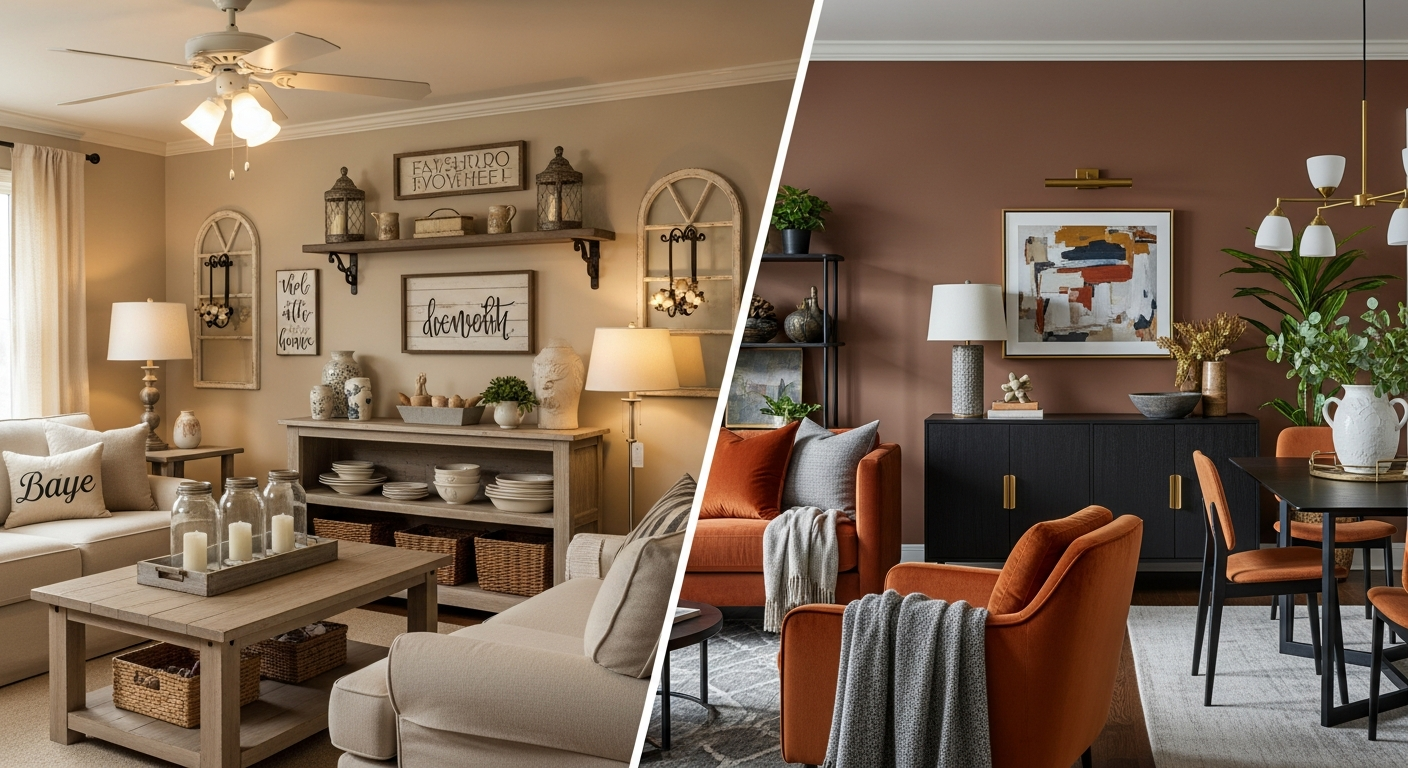
1. Modern Farmhouse: The End of an Era
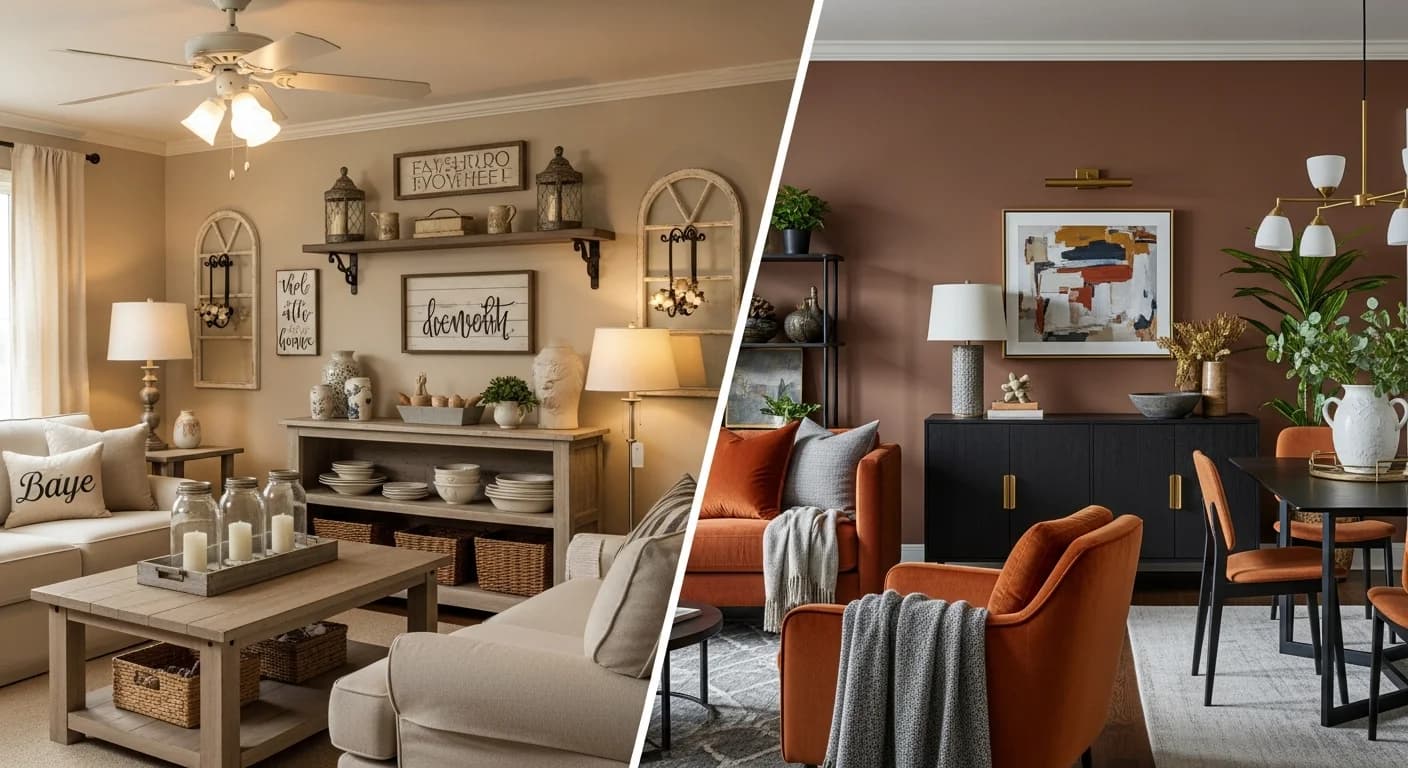
No trend has defined the last decade of American interior design quite like modern farmhouse. Born from the explosion of home renovation shows and amplified by social media, the modern farmhouse aesthetic — with its shiplap walls, barn doors, open shelving, distressed wood, and "gather" signs — became so ubiquitous that it essentially became the default American home style.
And that ubiquity is precisely why it's fading. When every restaurant, Airbnb, and suburban development features the same sliding barn door and the same "Live, Laugh, Love" sensibility, the style loses the very quality that made it appealing in the first place: authenticity and warmth.
Interior designers have been particularly vocal about farmhouse fatigue. The criticism isn't that farmhouse elements are inherently bad — reclaimed wood and simple, honest materials have genuine beauty. The problem is that modern farmhouse became a preset: a complete package applied wholesale rather than a curated, personal expression of style.
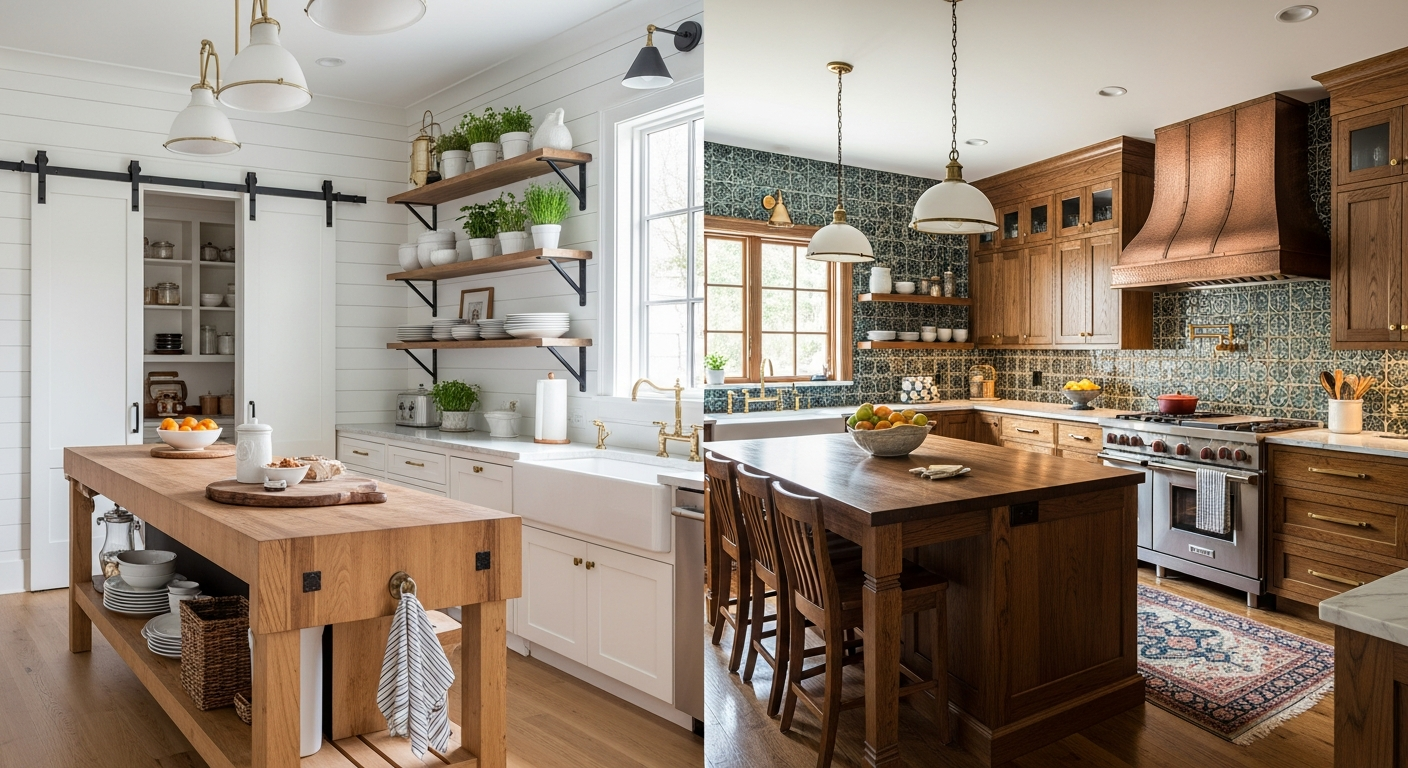
What's replacing it: Modern Heritage. This emerging style shares farmhouse's love of natural materials and warmth but ditches the formulaic approach. Modern Heritage blends antique and vintage pieces with contemporary furniture, mixes materials with more sophistication (think unlacquered brass with natural stone and hand-glazed tile), and draws from multiple design traditions rather than a single aesthetic template. The result feels collected, personal, and genuinely lived-in — everything modern farmhouse aspired to be but became too codified to achieve.
2. The Light Wood and Bouclé Combination
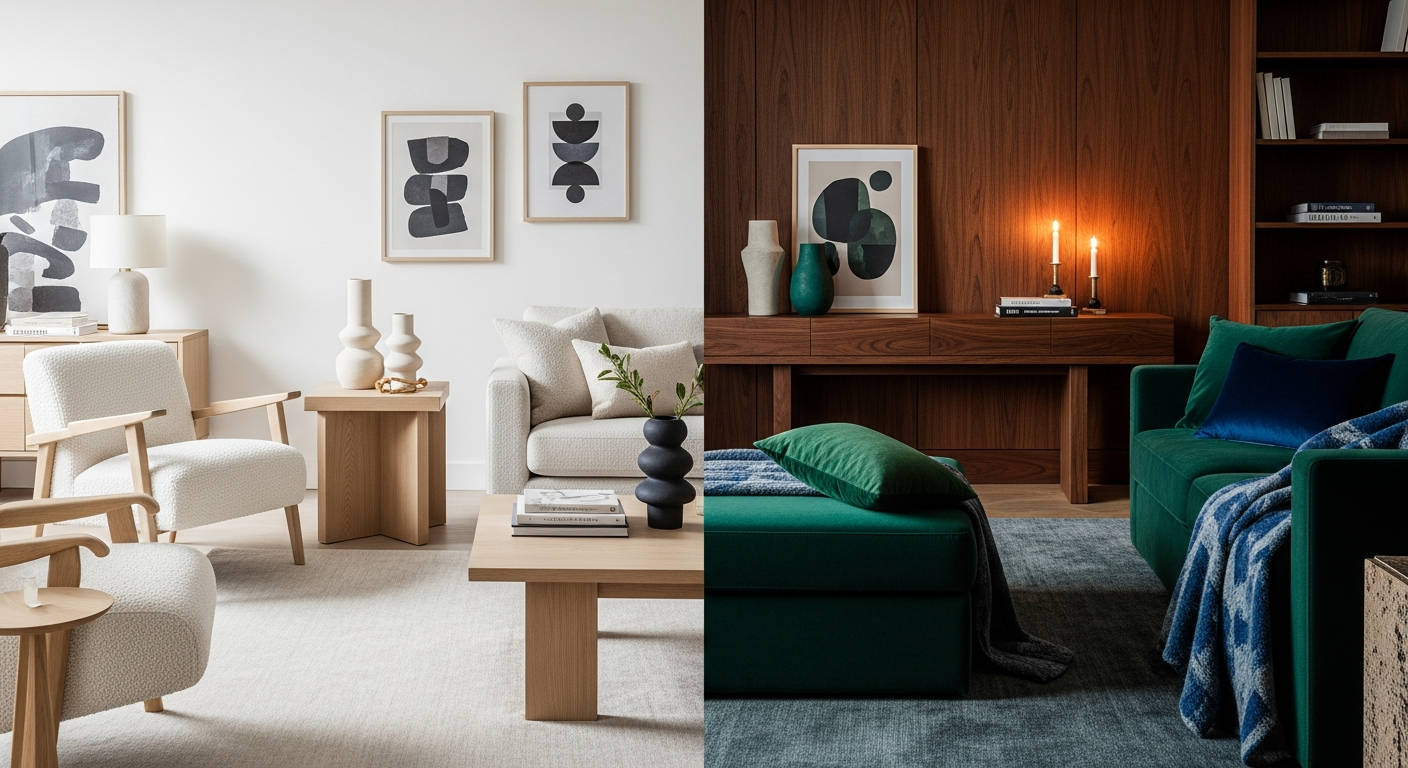
For several years, the combination of bleached or white-washed oak with cream bouclé upholstery defined a certain aspirational minimalism. It was everywhere — Scandinavian-inspired living rooms with pale oak floors, light wood media consoles, and bouclé-covered accent chairs became the visual default of "elevated" design on Pinterest and Instagram.
The aesthetic had genuine appeal: it was airy, approachable, and photographed beautifully. But by 2025, the look had become so overexposed that it began to feel generic rather than sophisticated. More practically, homeowners discovered that bouclé shows every stain and snag, and bleached wood can look washed out in rooms without abundant natural light.
What's replacing it: Rich dark woods — walnut, mahogany, smoked oak — paired with textured fabrics that have more durability and visual depth. Chenille, mohair, and performance velvet are replacing bouclé as the go-to accent upholstery. The overall palette has shifted from cool, pale, and airy to warm, rich, and enveloping, reflecting the broader cultural move toward warm minimalism.
3. All-White Interiors
The all-white interior — white walls, white cabinets, white countertops, white tile, white upholstery — has been the safe choice for homeowners and designers alike for over a decade. It promised a clean, timeless, and universally appealing aesthetic. Real estate agents particularly loved it because white kitchens and bathrooms photographed well and appealed to the broadest range of buyers.
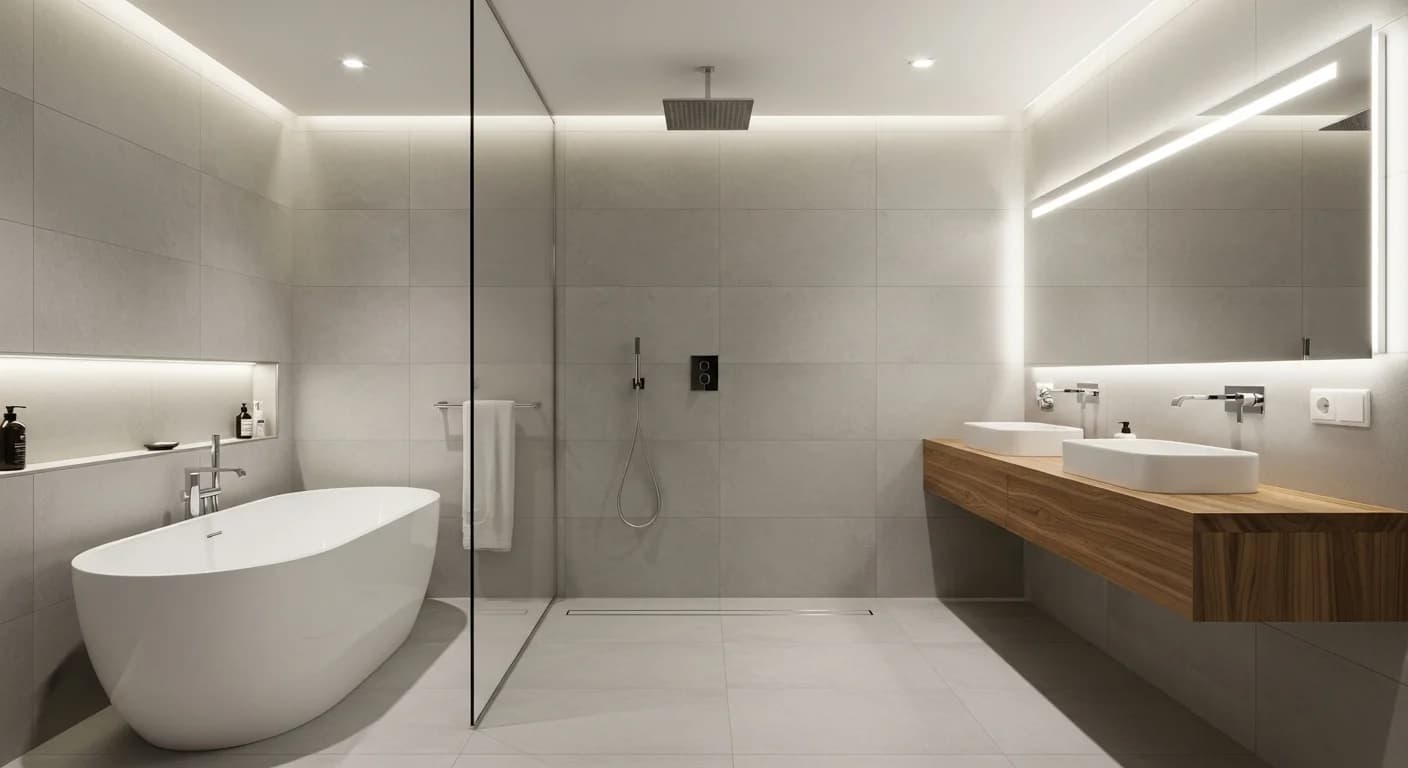
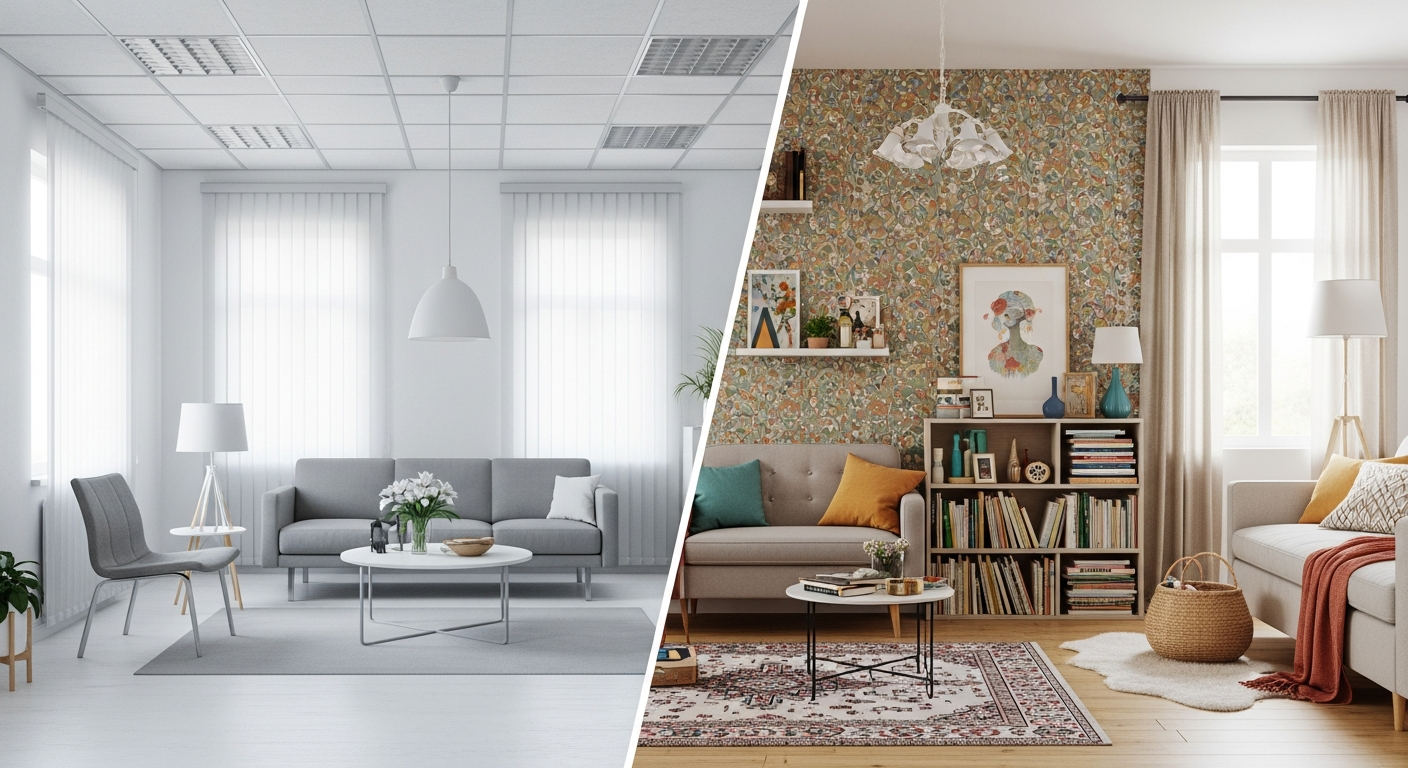
But in 2026, all-white has finally crossed from "timeless" to "tired." The fundamental problem is that all-white interiors lack the depth, warmth, and personality that contemporary design values above all else. They can feel sterile, institutional, and cold — the antithesis of the cozy, lived-in atmosphere that homeowners now crave.
This doesn't mean white is dead. White remains an essential element in most design palettes. What's over is white as the entire palette — the monochromatic approach that treats any injection of color as a risk rather than an opportunity.
What's replacing it: Warm, layered tonal palettes built around 2026's rich color trends. In kitchens, expect colored cabinets (forest green, deep navy, warm taupe) with natural stone countertops that introduce veining, movement, and visual interest. In bathrooms, warm stone tones, sage greens, and deep blues are replacing the all-white subway tile. In living spaces, color drenching and warm neutrals are creating depth without the coldness of stark white.
4. Matte Black Hardware Overload
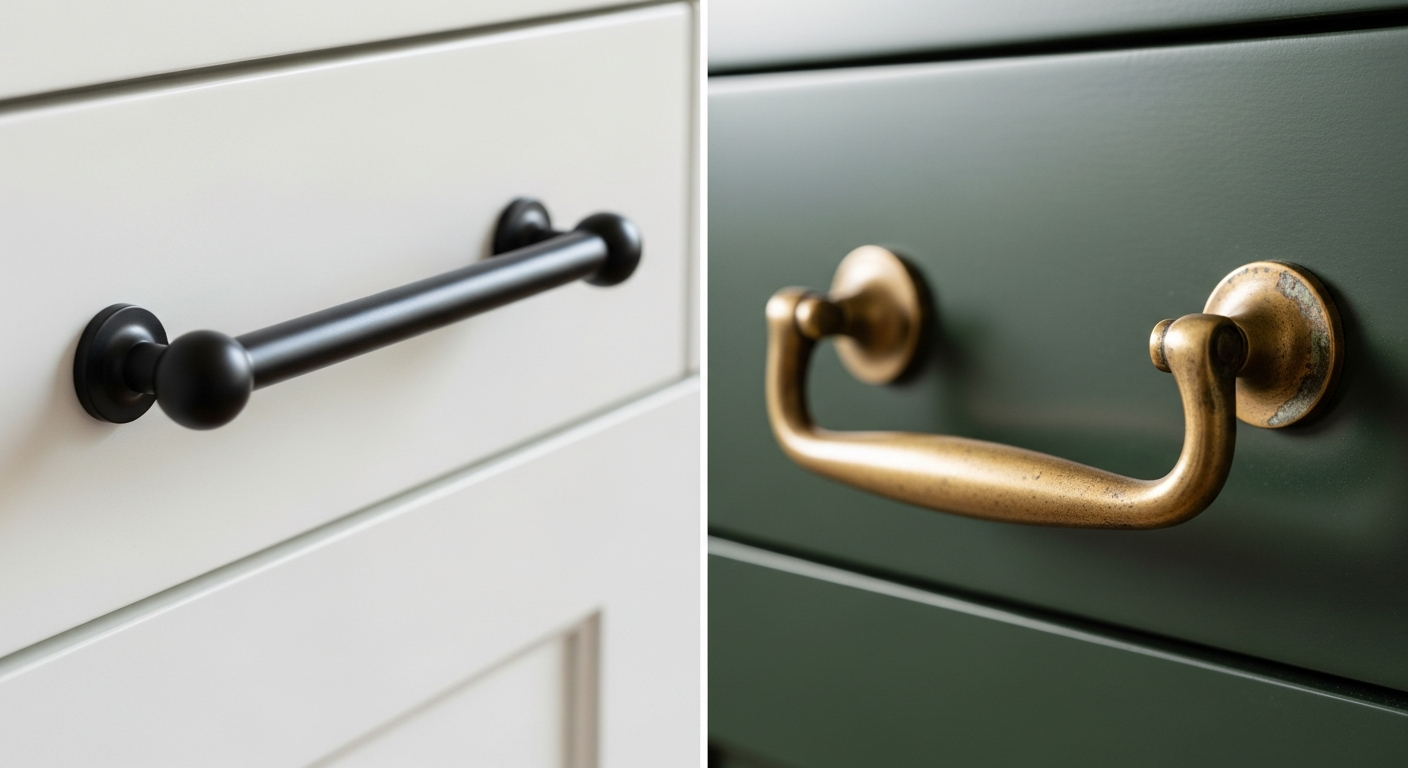
Matte black hardware was once a bold, striking departure from the polished chrome and brushed nickel that dominated for decades. On kitchen cabinets, bathroom vanities, light fixtures, and faucets, matte black provided clean contrast and a contemporary edge that felt fresh and modern.
But the trend became a victim of its own success. When matte black became the default at every price point — from luxury custom kitchens to big-box store builder-grade packages — it lost its edge. Worse, homeowners discovered that matte black finishes show fingerprints, water spots, and scratches far more readily than anticipated, creating maintenance headaches in high-use areas like kitchens.
What's replacing it: Aged and unlacquered brass, brushed gold, and warm metallic finishes that develop a natural patina over time. These finishes embrace the imperfection and character that matte black's sleek uniformity denied. Unlacquered brass, in particular, appeals to the timeless design movement because it genuinely improves with age — developing a unique patina that tells the story of use and time.
5. Beige-on-Beige Monotone
The beige-on-beige trend (sometimes called "quiet luxury" or "neutral maximalism") peaked in 2024 when every design influencer seemed to live in a world of exclusively taupe, sand, and cream. While the intention was noble — creating calm, serene spaces — the execution often resulted in rooms that felt flat, featureless, and devoid of personality.
The fundamental problem with monochromatic beige is the absence of depth. Without tonal variation, contrasting textures, or accent colors to create visual hierarchy, beige-on-beige rooms blur into a undifferentiated wash of sameness. They photograph well on Instagram (which contributed to the trend's popularity) but feel remarkably bland to actually live in.
What's replacing it: Warm neutrals executed with far more sophistication and depth. Instead of a single beige throughout, designers are building palettes with four or five warm neutrals that create subtle contrast — pairing rich mushroom walls with cream trim, caramel leather with oatmeal linen, walnut wood with warm clay tile. The addition of one bold accent color (deep green, burnt umber, rich navy) provides the visual anchor that pure beige lacked.
6. Cold Gray Everything
Gray was the undisputed color of the 2010s. Cool gray walls, gray-washed wood floors, gray kitchen cabinets, gray tile — for nearly a decade, gray was the "safe" neutral that replaced beige as the default background color for American homes. Real estate stagers loved it. Builders used it exclusively. It was everywhere.
And that saturation is precisely what killed it. Beyond mere overexposure, cold gray has a fundamental emotional limitation: it creates environments that feel institutional rather than nurturing. As our understanding of color psychology has deepened, and as the cultural zeitgeist has shifted toward warmth and comfort, gray's cool emotional temperature feels increasingly misaligned with how we want our homes to feel.
What's replacing it: Warm-toned alternatives across the spectrum. Where cool gray once dominated walls, warm greige (gray-beige), mushroom, and warm stone tones now take its place. Where gray cabinets filled kitchens, warm whites, sage greens, and rich navy blues are the new standards. The shift from cool to warm reflects a fundamental change in what we prioritize: emotional comfort over visual neutrality.
7. Chimney-Style Range Hoods
The massive, statement-making chimney range hood — that oversized stainless steel or decorative hood that dominates the kitchen wall above the range — was once a must-have feature that signaled a "serious" kitchen. Often extending from counter to ceiling, these hoods served as the kitchen's primary architectural feature and visual focal point.
In 2026, the chimney hood is being replaced by more integrated, subtle ventilation solutions that don't dominate the visual landscape of the kitchen. Designers are specifying custom panel-ready hoods that blend seamlessly with surrounding cabinetry, plaster-finish hoods that create a sculptural yet understated presence, and concealed downdraft systems that eliminate the need for an overhead hood entirely.
What's replacing it: Custom plaster hoods with organic, sculptural shapes that complement the kitchen without dominating it. Panel-ready hoods that disappear into the cabinetry. Integrated ceiling-mounted ventilation that provides powerful extraction without any visual intrusion. The common thread: the hood serves its function without demanding attention.
8. Fast Furniture and Disposable Decor
The era of buying an entire room of furniture from a single fast-fashion home retailer, knowing it'll be replaced in two to three years, is coming to a decisive end. The fast furniture model — cheap production, trendy styling, planned obsolescence — conflicts directly with 2026's emphasis on sustainability, craftsmanship, and the "collected over time" aesthetic.
Consumers are increasingly aware of the environmental cost: the EPA estimates that Americans send over 12 million tons of furniture to landfills annually, much of it cheaply made pieces that deteriorated within a few years. Beyond environmental concerns, the aesthetic shift toward quality materials and authentic craftsmanship makes the visible cheapness of fast furniture feel increasingly conspicuous and unwelcome.
What's replacing it: A "buy less, choose better" philosophy. Investing in fewer, higher-quality pieces that are built to last decades. Mixing new investment pieces with vintage and secondhand finds. Supporting local makers and artisans. Choosing solid hardwoods over particleboard, real leather and high-grade textiles over synthetic imitations. The initial cost is higher, but the cost-per-year of use is actually lower — and the environmental impact is dramatically reduced.
What's Replacing What: The 2026 Transition Guide
| Going Out | Coming In | Why the Shift |
|---|---|---|
| Modern Farmhouse | Modern Heritage | Formulaic to personal |
| Light Wood + Bouclé | Dark Wood + Velvet/Mohair | Cool and fragile to warm and durable |
| All-White Interiors | Warm Tonal Palettes | Sterile to soulful |
| Matte Black Hardware | Aged Brass / Warm Metals | Uniform to characterful |
| Beige-on-Beige | Layered Warm Neutrals + Bold Accent | Flat to dimensional |
| Cold Gray Everything | Warm Greige, Mushroom, Sage | Clinical to nurturing |
| Chimney Range Hoods | Integrated/Plaster Hoods | Dominating to harmonious |
| Fast Furniture | Investment + Vintage Pieces | Disposable to lasting |
How to Update Your Space Without Starting Over
If your home currently features several of the outgoing trends listed above, don't panic — and definitely don't reach for the sledgehammer. The beauty of 2026's design direction is that it values evolution over revolution. Here are practical strategies for transitioning your space thoughtfully:
Start with hardware and fixtures. Swapping matte black cabinet pulls for unlacquered brass, or changing out a cold chrome faucet for a warm brushed gold option, is one of the highest-impact, lowest-cost updates you can make. Hardware and fixtures set the metallic tone for an entire room and can shift the feel from cold-contemporary to warm-luxurious in an afternoon.
Add color through paint. If your rooms are currently all-white or cold gray, a fresh coat of paint in a warm neutral — mushroom, warm greige, soft clay — transforms the mood entirely without touching a single piece of furniture. Paint is the most cost-effective design intervention available, and today's warm-toned colors work beautifully as backgrounds for both existing and new furnishings.
Layer in texture and warmth. Even in a room that still has light wood floors and white walls, adding a rich wool area rug, linen curtains, and velvet throw pillows immediately introduces the warmth and depth that 2026 prioritizes. Textile layering is one of the most accessible ways to update a space because it doesn't require any permanent changes.
Mix in one or two dark wood pieces. You don't need to replace all your light wood furniture. Instead, introduce contrast by adding a walnut coffee table, a dark-stained bookshelf, or a vintage wood chest. The mix of light and dark creates visual depth and moves your space away from the monochromatic light-wood look without a complete overhaul.
Replace one major focal piece. Identify the single item in each room that most strongly signals an outgoing trend — perhaps it's a shiplap accent wall, a barn door, or a bouclé accent chair — and replace or update just that piece. One thoughtful change often transforms the entire room's perception more than multiple small adjustments.
For a risk-free way to see how these updates might look in your actual rooms, try HanoDecor's AI visualization studio. Upload a photo of your current space and experiment with different paint colors, finishes, and furniture styles to find the right balance of updated and familiar.
Frequently Asked Questions
What interior design trends are going out of style in 2026?
The major trends fading in 2026 include modern farmhouse aesthetics, the light wood plus bouclé combination, all-white interiors, matte black hardware as the default, beige-on-beige monotone decorating, cold gray color schemes, oversized chimney range hoods, and fast/disposable furniture. These are being replaced by warmer, more personal, and more sustainable alternatives that prioritize character and craftsmanship.
Is the farmhouse style over?
The formulaic "modern farmhouse" look — shiplap walls, barn doors, mason jar fixtures, distressed wood everywhere — is fading from favor. However, the underlying appreciation for natural materials, honest craftsmanship, and warmth that drove the farmhouse trend is very much alive. It's simply evolving into more sophisticated expressions like Modern Heritage that blend rustic elements with broader design influences.
Are white kitchens going out of style?
All-white kitchens are losing their dominance, but white remains a perfectly valid design element when used thoughtfully. What's going out is the entirely white kitchen — white cabinets, white countertops, white tile, white walls. What's coming in is white used as part of a richer palette: perhaps white upper cabinets with colored lower cabinets, or white walls with natural stone countertops and warm wood open shelving.
Should I get rid of my gray walls?
If your gray walls feel cold or dated, repainting in a warm neutral is one of the easiest and most impactful updates you can make. Warm greige, mushroom, and soft clay tones carry the same versatility that gray offered but with significantly more warmth and emotional appeal. However, if your particular gray has warm undertones and you still enjoy it, there's no need to change — the key is warmth, not avoiding gray entirely.
Is matte black hardware completely out?
Matte black isn't "wrong" — it's just no longer the fresh, forward-thinking choice it once was. If your matte black hardware is in good condition and you enjoy the look, there's no urgent need to replace it. But if you're planning a kitchen or bathroom update, consider warmer metallic finishes like aged brass, champagne bronze, or brushed gold for a more current and characterful appearance.
How can I update my home without following every trend?
The best approach is to focus on the underlying principles rather than specific trend prescriptions. The meta-shift in 2026 is from cold to warm, from formulaic to personal, from disposable to lasting, and from monochromatic to layered. Any changes you make that move your space along these axes will feel current without being trend-dependent. Invest in timeless elements — quality materials, warm colors, and pieces you genuinely love — rather than chasing specific styles.
Interior Design Trends Going Out of Style in 2026 FAQs
Written by
Sarah Mitchell
Sarah is a certified interior designer (CID) with experience designing residential and commercial spaces across three continents. She curates our design style library and ensures all AI-generated designs follow established design principles.