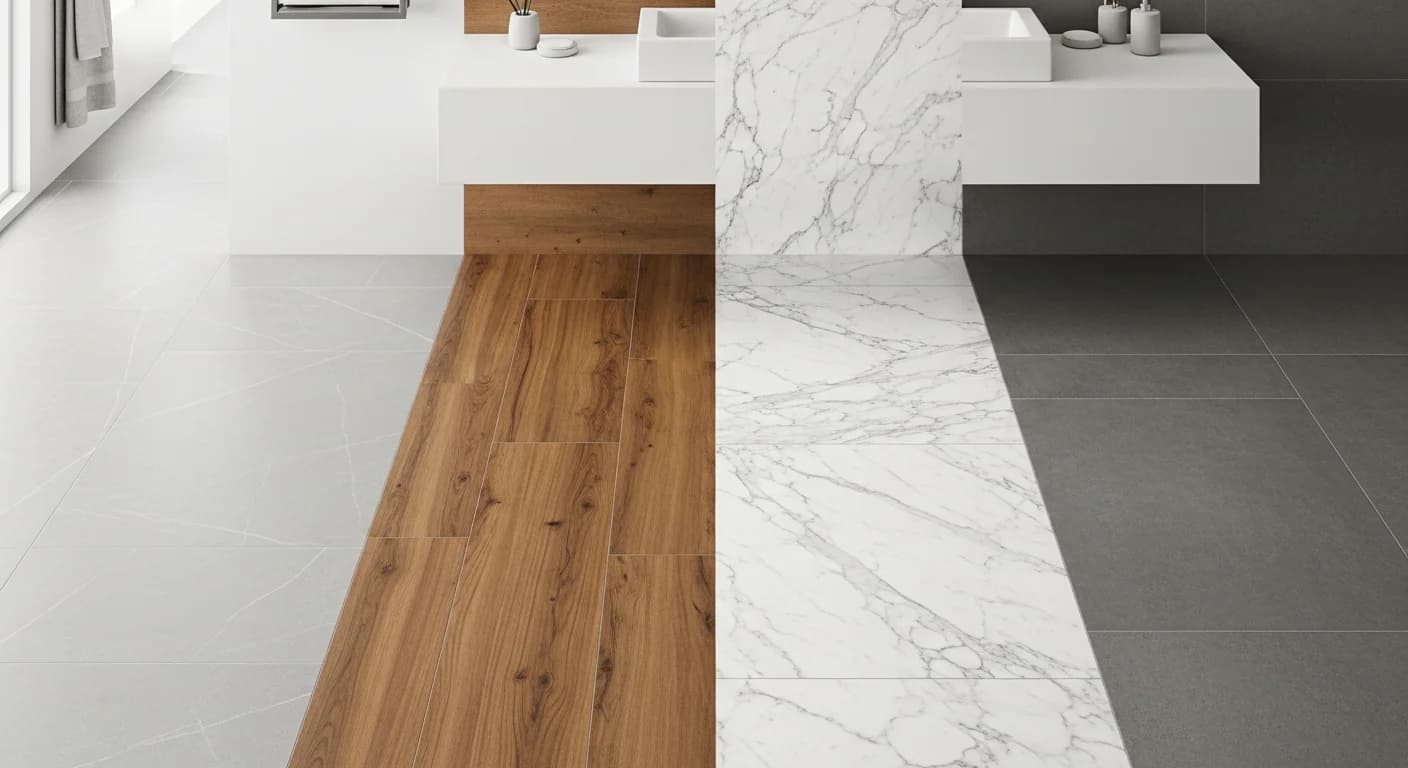
Timeless Interior Design Trends That Never Go Out of Style
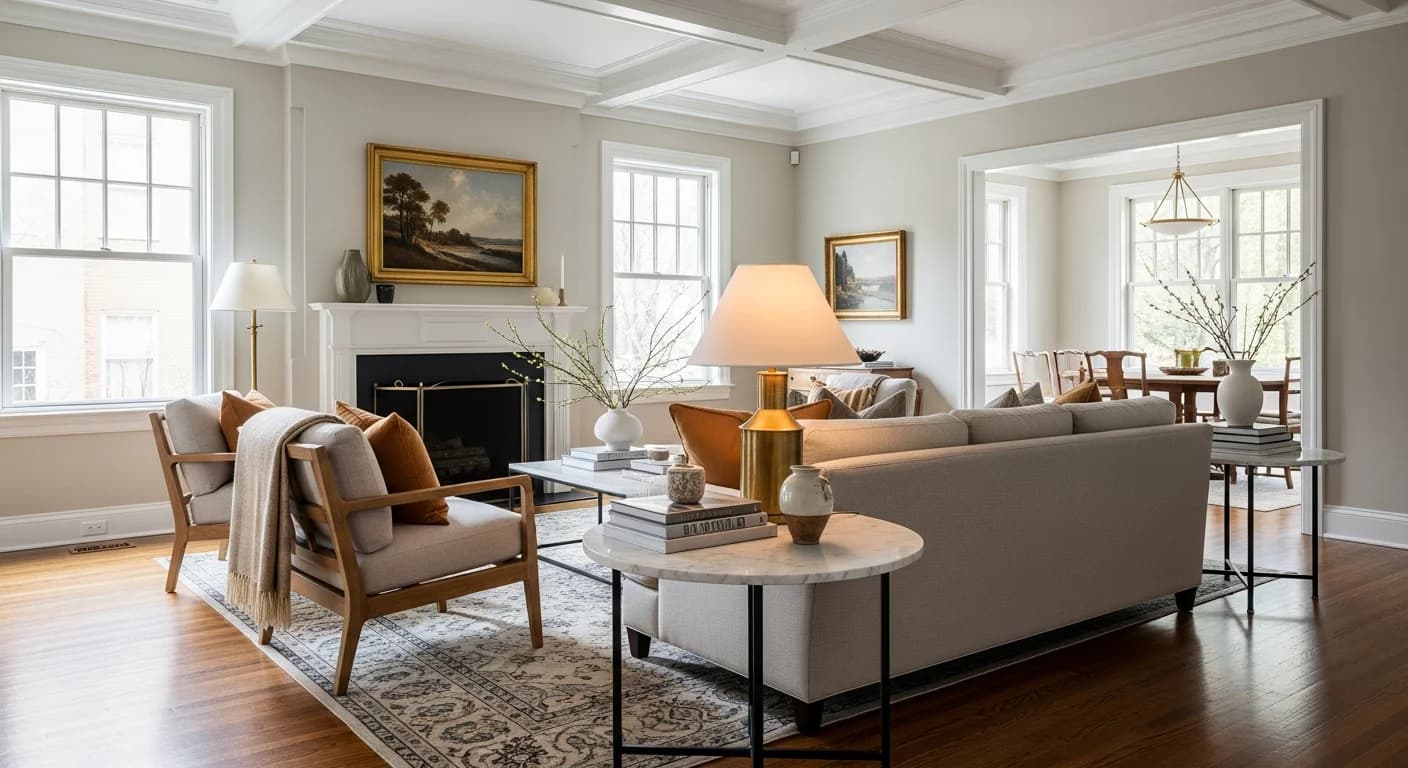
Interior design trends come and go with dizzying speed. One year, everyone is painting their walls millennial pink; the next, moody forest greens dominate Instagram feeds. Brass fixtures replace chrome, only for matte black to take the spotlight, only for brass to circle back again. If you've ever felt exhausted by the constant churn of "what's in" and "what's out," you're not alone — and you're asking the right question: What actually lasts?
The truth is, beneath every trend cycle, there are design principles and elements that have endured for decades — even centuries. These aren't trends in the traditional sense. They're foundations. They're the reason a Parisian apartment from the 1920s still feels stunning, why a mid-century modern home built in 1955 commands a premium, and why a well-designed farmhouse from the 1800s continues to inspire contemporary designers.
In this guide, we'll explore what makes certain design choices timeless, identify the specific elements that never go out of style, and give you a practical framework — the 80/20 rule — for building a home that feels both current and enduring. Whether you're renovating, decorating from scratch, or simply refining your space, understanding timeless design will save you money, reduce decision fatigue, and create a home that ages beautifully.
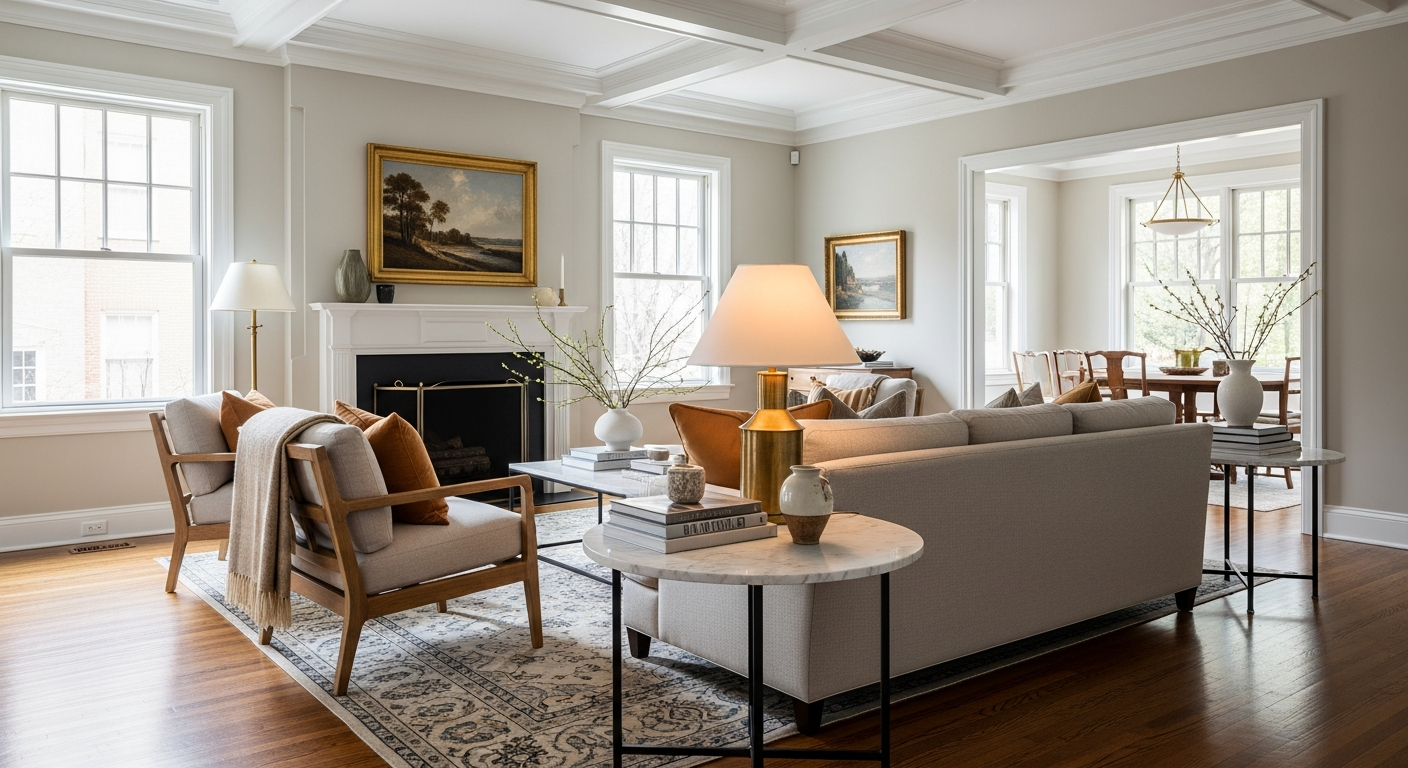
What Makes a Design Trend "Timeless"?
Before diving into specifics, it's worth understanding why some design elements endure while others feel dated within five years. Timeless design isn't about being boring or playing it safe — it's about tapping into fundamental human responses to space, light, proportion, and materials.
A timeless design element typically shares these characteristics:
- Rooted in nature: Natural materials, organic shapes, and connections to the outdoors have appealed to humans since we first built shelters. Our brains are hardwired to respond positively to wood grain, natural stone, and sunlight.
- Proportionally balanced: The golden ratio appears throughout nature and has guided architecture and design for millennia. Spaces that feel "right" almost always follow classical proportional principles.
- Crafted with quality: Handmade details, solid construction, and premium materials develop character over time rather than deteriorating. A mass-produced trend piece looks tired in three years; a hand-forged iron railing looks better at thirty.
- Functionally honest: Design elements that serve a genuine purpose — proper lighting, comfortable seating, adequate storage — never feel outdated because the human needs they serve don't change.
- Emotionally resonant: Timeless spaces evoke feelings of warmth, calm, or welcome. They prioritize how a room feels over how it photographs.
When you evaluate any design decision through these five lenses, you'll quickly identify what's likely to endure and what's likely to feel like a timestamp on your home. For a look at the latest 2026 interior design trends through this timeless lens, our complete guide offers valuable context.
The 5 Pillars of Timeless Interior Design
1. Natural Materials That Age Gracefully
If there's one single principle that defines timeless design, it's this: choose materials that get better with age, not worse. Natural materials — real wood, natural stone, brass, copper, linen, leather, wool, and clay — develop a patina and character over time that synthetic alternatives simply cannot replicate.
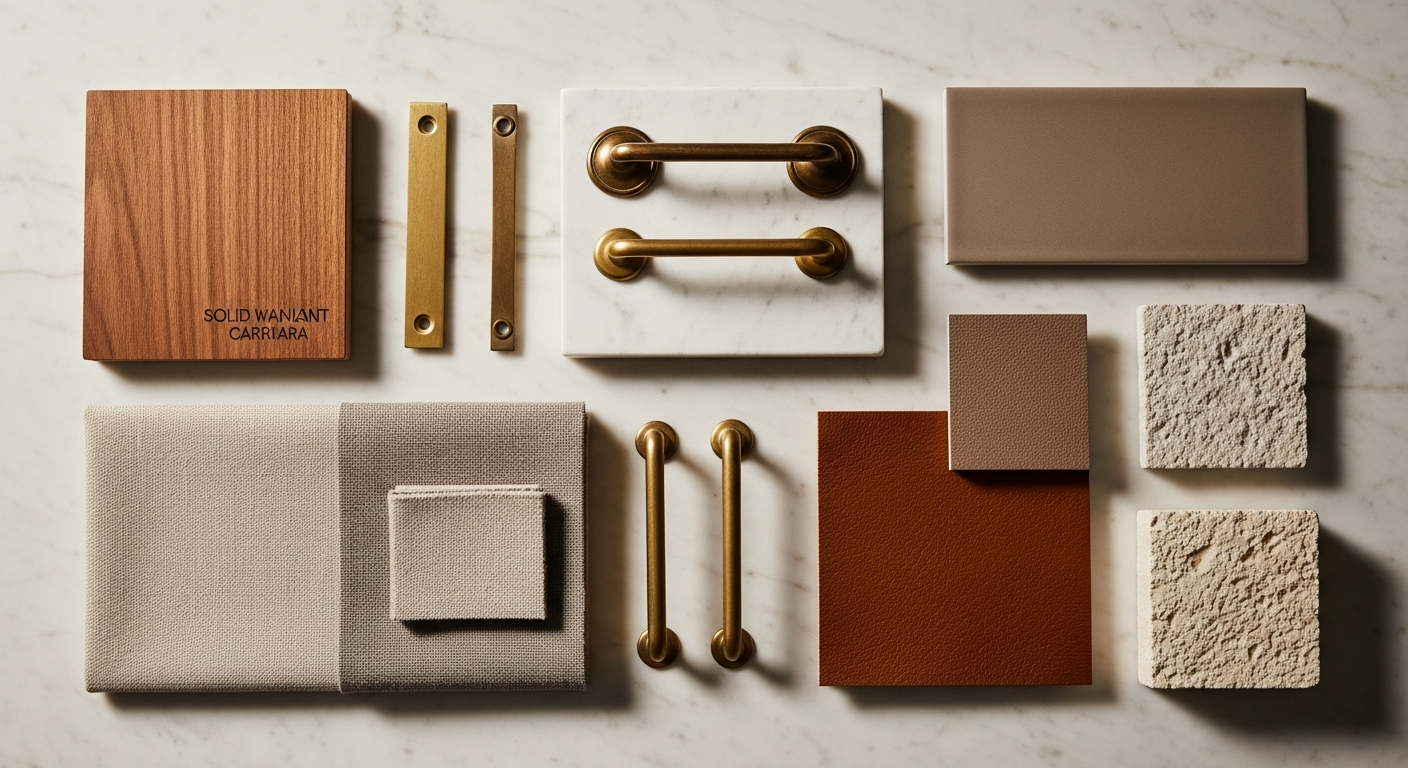
Consider the difference between a solid walnut dining table and a laminate one. After twenty years, the walnut table has developed a rich, warm patina with subtle marks that tell the story of family dinners, homework sessions, and holiday gatherings. It's more beautiful than the day it was purchased. The laminate table, meanwhile, has chipped edges, peeling surfaces, and a dated finish that screams "2015."
This principle extends to every surface in your home:
- Flooring: Solid hardwood, natural stone (marble, slate, limestone), and quality tile outlast engineered alternatives by decades. A dark wood floor in walnut or oak is as stunning today as it was a century ago.
- Countertops: Marble, granite, soapstone, and quality quartz remain beautiful indefinitely. Marble's veining actually becomes more interesting as it develops a gentle patina. See our comprehensive materials comparison for detailed guidance.
- Hardware: Unlacquered brass, forged iron, and solid bronze develop gorgeous patinas. When matte black hardware cycles out of fashion — and it will — aged brass will still look distinguished.
- Textiles: Linen curtains, wool rugs, cotton upholstery, and leather seating age gracefully. They soften, develop character, and feel more inviting over time.
The investment in natural materials pays for itself not just aesthetically but financially. Homes with quality natural materials consistently command higher resale values, and the cost-per-year of a material that lasts thirty years is almost always lower than replacing cheap alternatives every five.
2. Neutral Foundations with Personality
There's a critical distinction between "neutral" and "boring." Timeless interiors typically build on a neutral foundation — not because neutrals are safe, but because they create a canvas that adapts. The key is choosing warm, complex neutrals rather than flat, characterless ones.
Think of the difference between a room painted in builder-grade white versus one finished in a warm, creamy white with subtle undertones. Both are "neutral," but one feels institutional while the other feels intentional. The best timeless neutrals have depth:
- Warm whites: Benjamin Moore White Dove, Farrow & Ball All White, Sherwin-Williams Alabaster — these have warm undertones that prevent sterility
- Complex creams: Colors with yellow, pink, or green undertones that shift beautifully throughout the day as light changes
- Soft taupes and putties: Neither beige nor gray, these sophisticated neutrals have appeared in elegant interiors for centuries
- Rich earth tones: Warm browns, deep tans, and terracotta — colors drawn directly from nature that never feel trendy or dated
Where personality enters is through accent colors, art, textiles, and accessories — the elements that are easy and affordable to update. A room with beautiful warm white walls, quality hardwood floors, and timeless furniture can shift from "coastal" to "moody romantic" to "modern eclectic" simply by changing pillows, artwork, and decorative objects.
3. Quality Craftsmanship and Architectural Detail
Walk through any home that feels truly timeless — a Georgian townhouse, a Craftsman bungalow, a well-restored mid-century — and you'll notice architectural details that lesser homes lack: crown molding, wainscoting, built-in cabinetry, properly scaled window trim, and thoughtful ceiling details.
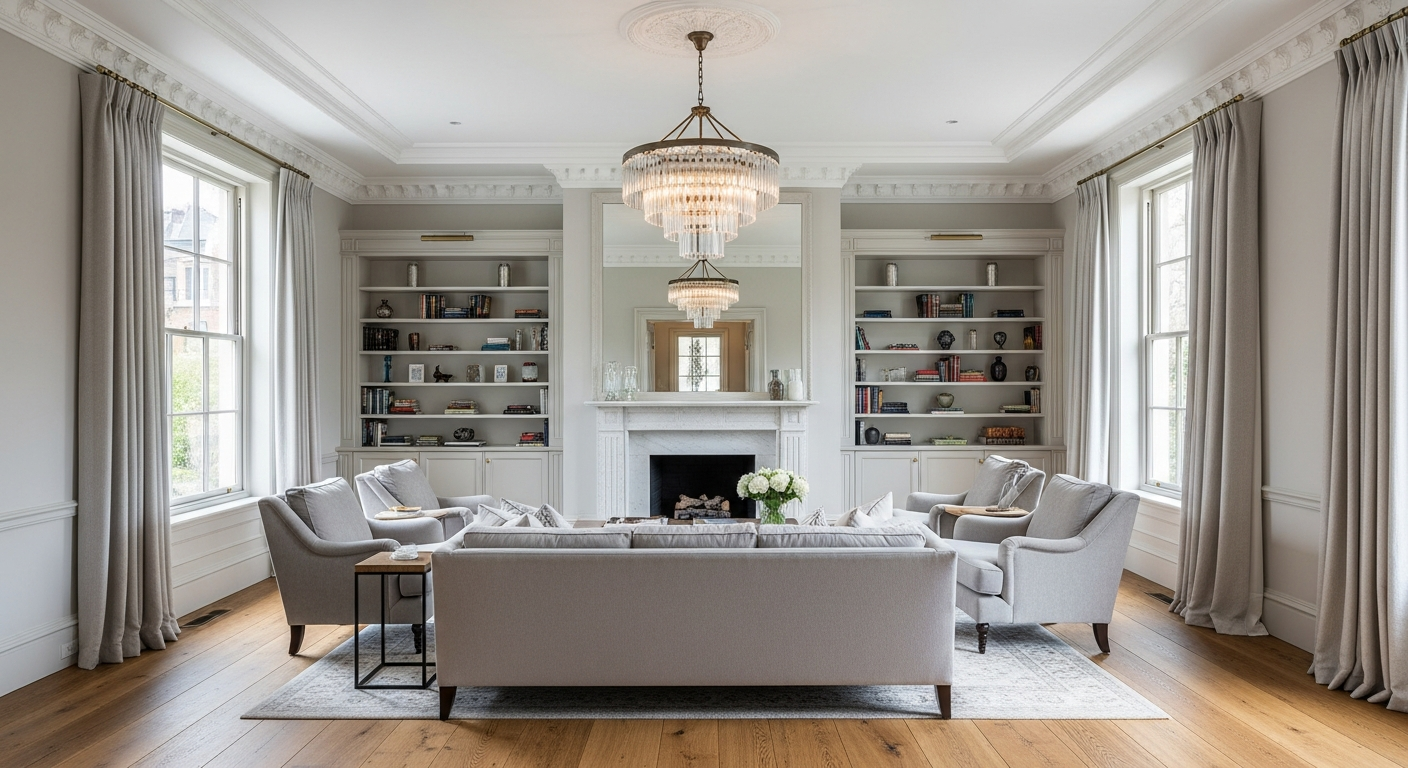
These elements endure because they serve dual purposes — they're both decorative and functional. Crown molding creates a visual transition between wall and ceiling that the eye finds pleasing. Wainscoting protects walls while adding dimensional interest. Built-in shelving maximizes storage while creating architectural rhythm.
Investing in craftsmanship means prioritizing:
- Solid wood doors over hollow-core — the weight, sound, and feel communicate quality immediately
- Real plaster walls or expertly finished drywall with proper detail work
- Custom cabinetry or high-quality semi-custom pieces with dovetail joints, soft-close hardware, and solid wood construction
- Proper trim work — baseboards, door casings, and window trim that are proportionally correct for the room's scale
- Quality light fixtures — a beautiful chandelier or set of sconces becomes a permanent architectural feature, not a disposable trend piece
For inspiration on how craftsmanship manifests in kitchen design, explore our guide to kitchen cabinet styles and options.
4. Symmetry, Balance, and Proportion
Symmetry is one of the oldest design principles in human history, and for good reason — our brains are wired to find balanced compositions pleasing and calming. This doesn't mean every room needs to be perfectly mirrored, but it does mean that visual weight should feel distributed and intentional.
Timeless rooms consistently demonstrate these proportional principles:
- The Rule of Thirds: Furniture and focal points positioned at third-intervals create dynamic yet balanced compositions — a principle borrowed from classical art and photography
- Vertical proportion: The relationship between ceiling height, window height, and furniture height should feel harmonious. Curtains hung close to the ceiling, tall bookcases that draw the eye up, and properly scaled art all contribute
- Furniture scale: Every piece should be appropriately scaled for its room. An oversized sectional in a small living room feels as wrong as a delicate loveseat in a grand parlor. See our living room layout guide for proportional planning advice
- Negative space: Timeless rooms breathe. They have moments of visual rest between areas of detail and activity. Overcrowding kills timelessness faster than almost anything else
The beauty of proportional design is that it transcends style entirely. Whether your aesthetic is traditional, modern, rustic, or eclectic, proper proportion makes it work — and feel lasting.
5. Indoor-Outdoor Connection
Humans have sought to bring nature into their living spaces since the earliest civilizations. Roman homes featured central courtyards. Japanese architecture dissolved the boundary between interior and garden. Georgian homes aligned windows to frame landscape views. This impulse is ancient, and design that honors it never feels dated.
Timeless indoor-outdoor connection manifests through:
- Generous windows: Large, well-proportioned windows that flood rooms with natural light and frame exterior views remain the single most valued feature in real estate surveys decade after decade
- Natural light priority: Arranging furniture and living spaces to maximize daylight exposure — a principle that transcends every style period
- Sightlines to nature: Whether it's a formal garden, a simple courtyard, or even a well-planted window box, views of greenery have proven psychological benefits that keep this design priority permanently relevant
- Transitional spaces: Covered porches, screened rooms, and French doors that open to patios create a graduated connection between inside and outside that adds both livability and timeless charm
- Natural elements inside: Fresh flowers, potted plants, natural wood, and stone bring the outdoors in regardless of your view or climate
10 Specific Design Elements That Never Go Out of Style
Beyond principles, certain specific design choices have proven their staying power across decades and style movements. Here are ten elements you can invest in with confidence:
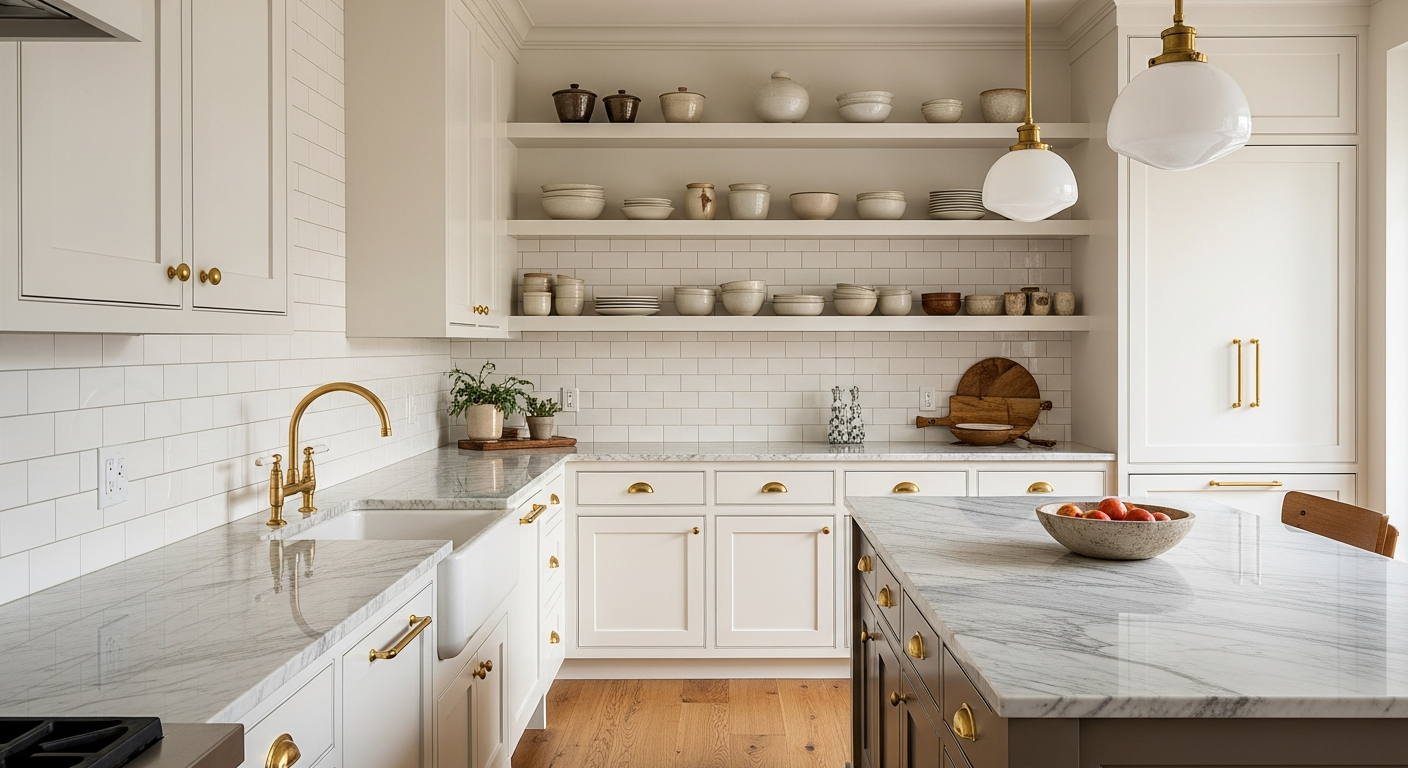
- Hardwood floors: Whether oak, walnut, maple, or reclaimed pine, real hardwood floors have been desirable for centuries and show no signs of losing their appeal. They can be refinished to suit changing tastes — stained dark for drama, left natural for warmth, or whitewashed for coastal charm.
- White subway tile: First manufactured in the early 1900s for the New York City subway system, this humble tile has maintained its relevance for over 120 years. Its clean lines, versatile look, and accessible price point make it a permanent fixture in kitchens and bathrooms worldwide.
- Marble surfaces: From ancient Roman baths to contemporary kitchens, marble has symbolized quality and beauty for millennia. Yes, it requires maintenance. Yes, it stains and etches. And yes, those "imperfections" are precisely what gives it timeless character that engineered alternatives can't match.
- Shaker-style cabinetry: The clean, rectilinear lines of Shaker cabinet doors have remained in continuous use since the 18th century. Their simplicity means they complement virtually any hardware, countertop, or color scheme — adapting effortlessly as surrounding trends evolve.
- Brass and bronze hardware: These metals were the standard in fine homes for centuries before chrome and nickel had their moment. Now, as matte black hardware begins its decline, brass and bronze are resurging — proof of their cyclical permanence.
- Built-in bookshelves: From English country libraries to Manhattan apartments, built-in shelving adds architectural character, provides essential storage, and creates a sense of permanence that freestanding furniture cannot. They're functional, beautiful, and universally appealing.
- Statement lighting: A quality chandelier, a pair of elegant sconces, or a beautifully designed pendant light functions as both illumination and art. Unlike furniture, lighting fixtures feel permanent — making quality choices especially worthwhile.
- Fireplaces: Whether traditional wood-burning, modern gas, or even purely decorative, the fireplace has served as the focal point of human gathering spaces for thousands of years. The appeal of a hearth is deeply primal and not going anywhere.
- Linen and cotton textiles: These natural fibers have dressed homes since ancient Egypt. Linen curtains develop a beautiful drape over time, cotton upholstery softens with use, and both launder endlessly. Their casual elegance works in traditional and contemporary settings alike.
- Persian and Oriental rugs: Handwoven rugs have anchored rooms across every design era from Victorian parlors to minimalist lofts. Quality examples actually appreciate in value, and their patterns and colors become more beautiful as they age and soften.
The 80/20 Rule: Timeless Foundation, Trendy Accents
Understanding timeless design doesn't mean you should ignore current trends entirely. Trends are exciting, they keep your space feeling fresh, and they reflect the cultural moment you're living in. The key is proportion.
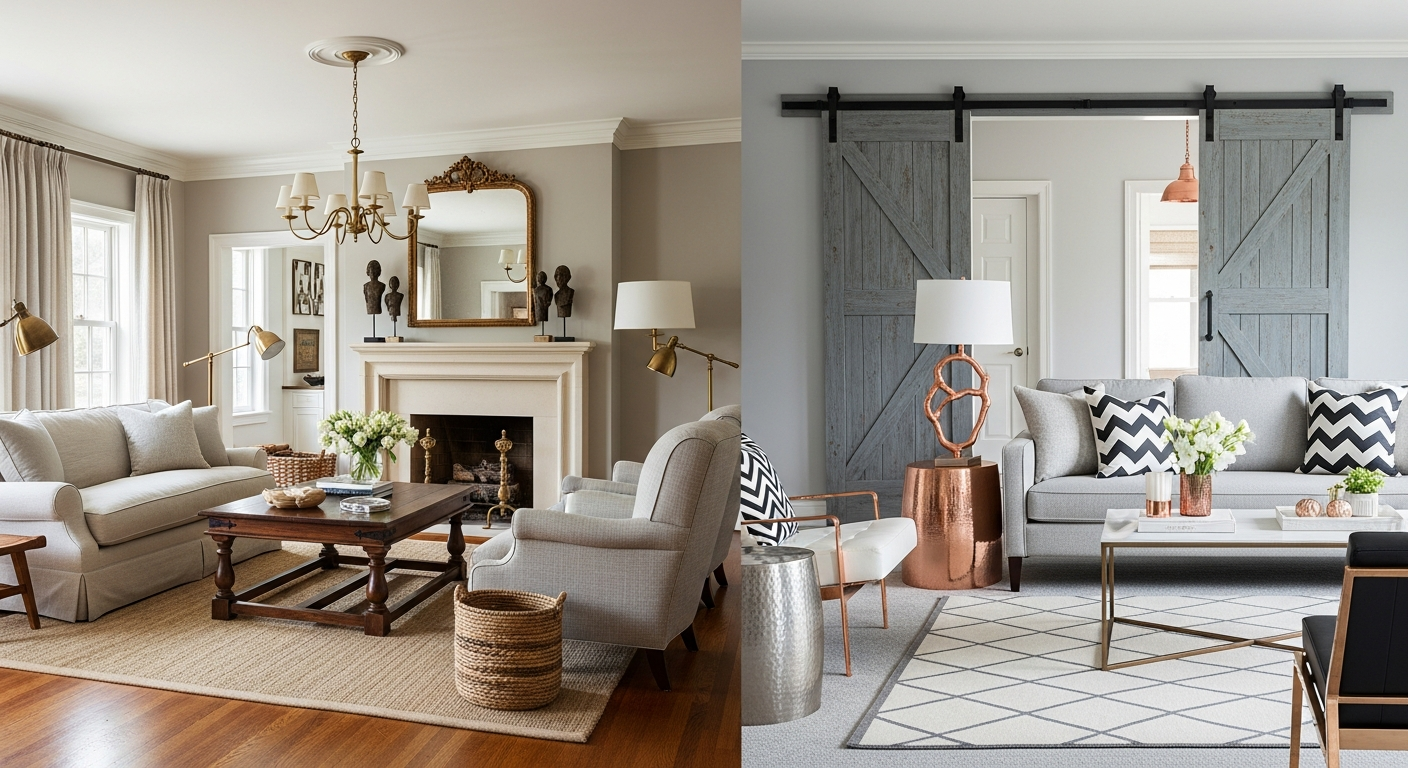
The 80/20 rule provides the perfect framework:
- 80% Timeless: Your major investments — flooring, cabinetry, countertops, wall colors, large furniture pieces, and architectural details — should be timeless choices that you'll love for a decade or more
- 20% Trend-Forward: Accent pieces, decorative objects, throw pillows, small furniture pieces, art, and accessories can embrace current trends freely because they're affordable and easy to swap
Here's how this plays out in practice:
| 80% Timeless Investment | 20% Trend-Forward Accent |
|---|---|
| Hardwood floors in a warm, natural tone | A bold, patterned area rug reflecting current color trends |
| White or warm neutral kitchen cabinets | Trendy backsplash tile or colorful small appliances |
| Quality neutral sofa in a classic silhouette | Throw pillows in the season's hottest colors and patterns |
| Marble bathroom countertops | On-trend faucet finish or decorative accessories |
| Crown molding and quality trim work | Wall paint in a trending color (easily repainted) |
| Solid wood dining table | Dining chairs in a contemporary style or upholstery |
This approach is financially intelligent, too. Your 80% investments appreciate or maintain value, while your 20% trend pieces are low-cost enough that refreshing them every few years doesn't break the budget. You get the best of both worlds: a home that feels grounded and sophisticated and a space that feels current and personally expressive.
For a detailed look at what specific trends are fading right now, see our analysis of design trends going out of style in 2026. And for the trends that are worth embracing this year within your 20%, explore our complete 2026 trends guide.
Common Mistakes That Make Homes Feel Dated
Understanding what not to do is equally valuable. Here are the most common choices that cause homes to feel stuck in a specific era:
- Going "all in" on a single trend: When every element in a room reflects the same trend moment — all-gray everything, all-farmhouse, all-mid-century — the space becomes a time capsule rather than a timeless environment
- Choosing trendy materials for permanent installations: Installing a trendy tile pattern on your entire bathroom floor or selecting cabinetry in a fashion-forward color means you're locked into that choice for years, even after the trend passes
- Ignoring proportion for trend: Oversized barn doors, exaggerated industrial pipes, or massive waterfall islands might be on-trend, but if they're out of proportion with your home's scale, they'll look dated quickly
- Matching everything too perfectly: Coordinated furniture sets from a single retailer, perfectly matching metals throughout, or matchy-matchy color schemes feel manufactured and temporary. Timeless homes have a collected, layered quality
- Prioritizing photography over livability: Designing rooms that look perfect in photos but don't function comfortably for daily life is the hallmark of trend-chasing. Timeless spaces are designed for living first
How to Apply Timeless Principles in Any Style
The beauty of timeless design principles is that they're style-agnostic. Whether you love modern minimalism, traditional elegance, rustic warmth, or eclectic maximalism, the same foundations apply:
Modern/Contemporary: Clean-lined furniture in quality materials (solid wood, genuine leather, natural stone), warm neutral palette, excellent natural lighting, and minimal but impactful statement pieces. The modern living room guide shows how timeless principles work within a contemporary aesthetic.
Traditional: Crown molding, symmetrical arrangements, rich wood tones, quality upholstery in classic fabrics, and proper proportion. The "bones" of traditional design are inherently timeless — it's the accessories and finishes that cycle in and out.
Transitional: The sweet spot between traditional and modern, this style is arguably the most "timeless-ready" because it inherently avoids extremes. Simple millwork, warm neutrals, comfortable furnishings, and a mix of straight and curved lines create spaces with genuine longevity.
Rustic/Farmhouse: When done with authenticity — real reclaimed wood, genuine antiques, actual craftsmanship — farmhouse design feels timeless. It's the mass-produced "faux farmhouse" aesthetic (industrial pipe shelving, barn door everything, decorative shiplap) that feels trendy and dates quickly.
Visualize Timeless Design in Your Space
One of the challenges of timeless design is that it requires confidence in restraint — choosing the warm white over the trendy sage green, selecting the classic marble over the dramatic veined quartzite, opting for Shaker cabinets when everyone else is going flat-panel.
That confidence comes from being able to see these choices in your actual space before committing. HanoDecor's AI visualization studio lets you test timeless design elements — hardwood floors, marble surfaces, classic cabinetry, neutral palettes — in your own rooms, so you can see how foundational choices create a beautiful canvas that evolves gracefully over time.
Frequently Asked Questions
What is the most timeless interior design style?
Transitional design is widely considered the most timeless style because it blends the warmth and detail of traditional design with the clean simplicity of contemporary aesthetics. It avoids extremes in either direction, which means it ages gracefully regardless of shifting trends. That said, any style executed with quality materials, proper proportions, and neutral foundations can achieve timelessness.
Are white kitchens still timeless?
White kitchens remain timeless when executed well — meaning warm whites (not stark, cold whites), quality cabinetry, natural stone or quality countertops, and warm metallic hardware. The "all-white, bright, cold" kitchen with gray-veined quartz and chrome fixtures is becoming dated, but a kitchen with creamy white Shaker cabinets, marble counters, and brass hardware will look beautiful for decades.
How do I make my home look timeless on a budget?
Focus your budget on the 80% elements that matter most: paint in a warm, complex neutral (surprisingly affordable), quality lighting fixtures (even one statement piece elevates a room), and natural textiles like linen curtains and cotton throws. Avoid spending on trendy decorative items that will feel dated quickly. Thrift stores and estate sales are excellent sources for quality furniture and accessories with genuine character — often at lower prices than mass-produced trend pieces.
Is gray paint still considered timeless?
Cool gray paint is moving out of the timeless category after its extended run from roughly 2012–2022. However, warm grays with taupe, green, or brown undertones — sometimes called "greige" — maintain their relevance. The shift is toward warmer neutrals overall: creams, warm whites, soft taupes, and clay tones that feel more organic and inviting than cool grays.
What flooring is the most timeless?
Solid hardwood flooring in medium to warm tones (natural oak, walnut, or hickory) is universally considered the most timeless flooring choice. It has remained desirable for over 200 years, can be refinished multiple times to suit changing tastes, and consistently tops buyer preference surveys in real estate. Natural stone (marble, limestone, slate) is similarly timeless, particularly in bathrooms, entryways, and kitchens.
Should I follow current trends or stick to timeless design?
The 80/20 approach offers the ideal balance. Invest 80% of your design budget and decisions in timeless elements — quality flooring, neutral walls, classic cabinetry, natural materials — and allocate 20% to trend-forward accents like throw pillows, artwork, decorative objects, and small furniture pieces. This way, your home feels both grounded and current, and refreshing for new trends is easy and affordable.
Timeless Interior Design Trends That Never Go Out of Style FAQs
Written by
Priya Sharma
Priya is an award-winning UX designer who previously led design teams at Airbnb and Pinterest. Her focus on user-centered design ensures that HanoDecor's tools are intuitive and accessible to everyone, regardless of their technical background.