Modern Interior Design Trends: The Shift to Warm Minimalism in 2026

For years, minimalism in interior design meant stark white walls, hard-edged furniture, and spaces so pristine they felt more like galleries than homes. But in 2026, a quiet revolution is reshaping what it means to live with less. Welcome to warm minimalism — a design philosophy that keeps the discipline and intentionality of traditional minimalism while wrapping it in organic textures, earthy palettes, and genuine human warmth.
This isn't about adding more stuff. It's about choosing better stuff — pieces with soul, surfaces with texture, and rooms that invite you to stay rather than simply look. As part of the broader interior design trends shaping 2026, warm minimalism represents perhaps the most significant shift in how we think about simplified living.
What Is Warm Minimalism?
Warm minimalism is an evolved approach to simplified design that replaces cold, clinical aesthetics with organic warmth, tactile materials, and a lived-in sensibility. Where traditional minimalism prioritized absence — the absence of color, texture, and personality — warm minimalism celebrates presence: the presence of natural light, handcrafted materials, and carefully chosen objects that carry meaning.
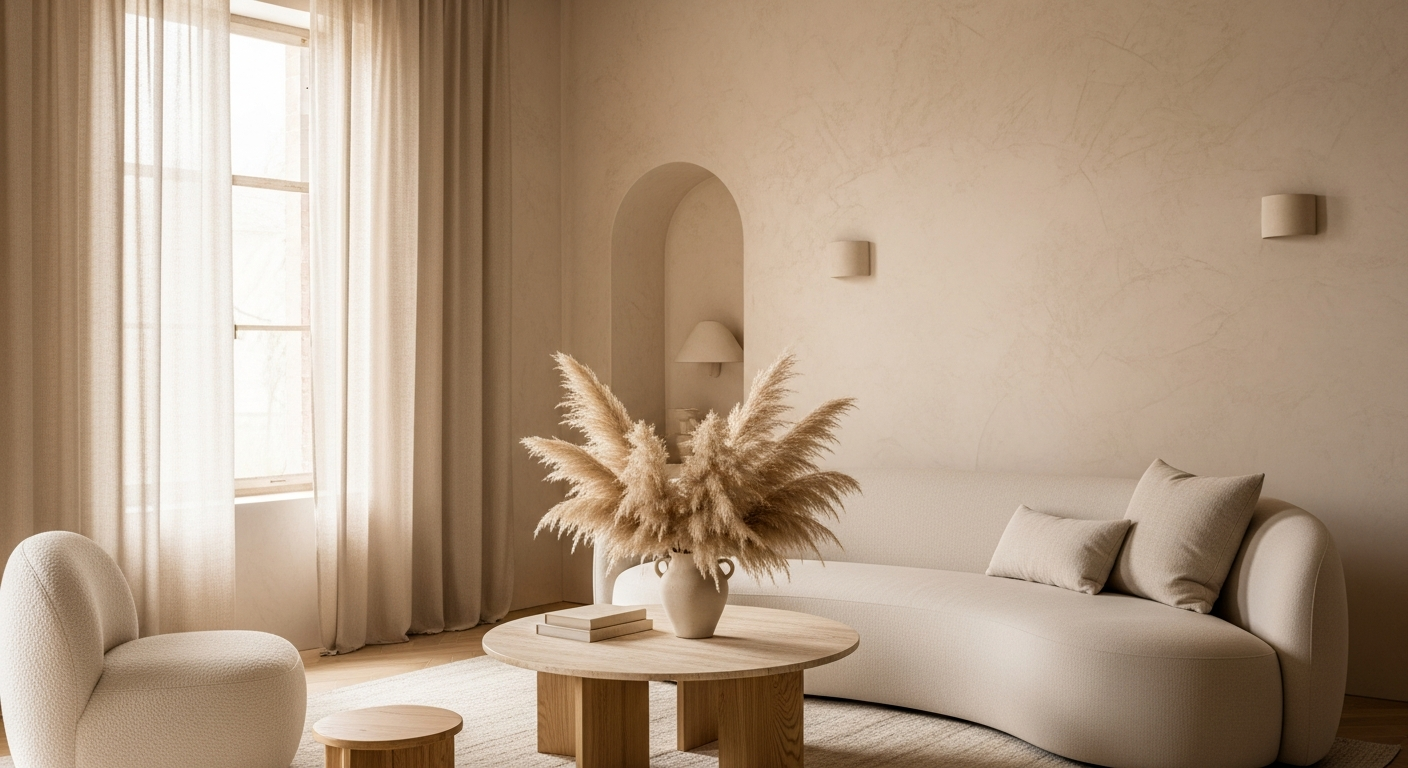
Think limewash walls instead of flat white paint. Curved linen sofas instead of angular leather sectionals. Travertine and oak instead of chrome and glass. The result is a space that feels edited without feeling empty — a home that breathes rather than holds its breath.
At its core, warm minimalism asks a different question than its predecessor. Traditional minimalism asks, "What can I remove?" Warm minimalism asks, "What deserves to stay?" The distinction matters. One approach strips away until nothing remains; the other curates until everything that remains has purpose and beauty.
The Evolution: From Cold Minimalism to Warm Minimalism

To understand where warm minimalism is going, it helps to see where minimalism has been. The minimalist movement in interior design borrowed heavily from Japanese zen aesthetics and Scandinavian functionalism in the 2010s. It became Instagram's favorite aesthetic: all-white kitchens, floating shelves with a single plant, concrete floors, and not a throw pillow in sight.
But something was lost in translation. The Japanese concept of wabi-sabi — finding beauty in imperfection and impermanence — was replaced by an obsession with perfection. Scandinavian hygge, which emphasizes warmth and coziness, was reduced to beige walls and bare surfaces. The soul of minimalism was stripped out along with the clutter.
By the early 2020s, homeowners began pushing back. The pandemic accelerated this shift dramatically. When your home becomes your office, gym, school, and sanctuary, a cold minimalist box starts to feel oppressive rather than calming. People needed warmth. They needed texture. They needed spaces that felt like an embrace, not an art installation.
Designers responded. The transition began with small gestures — a wood accent here, a warm neutral there. But by 2026, the shift is comprehensive. Warm minimalism isn't a trend bolt-on; it's a complete reimagining of what simplified design can be. If you've been exploring minimalist home decor, this evolution offers a path forward that doesn't sacrifice personality.
The Key Elements of Warm Minimalism
Organic Textures That Invite Touch
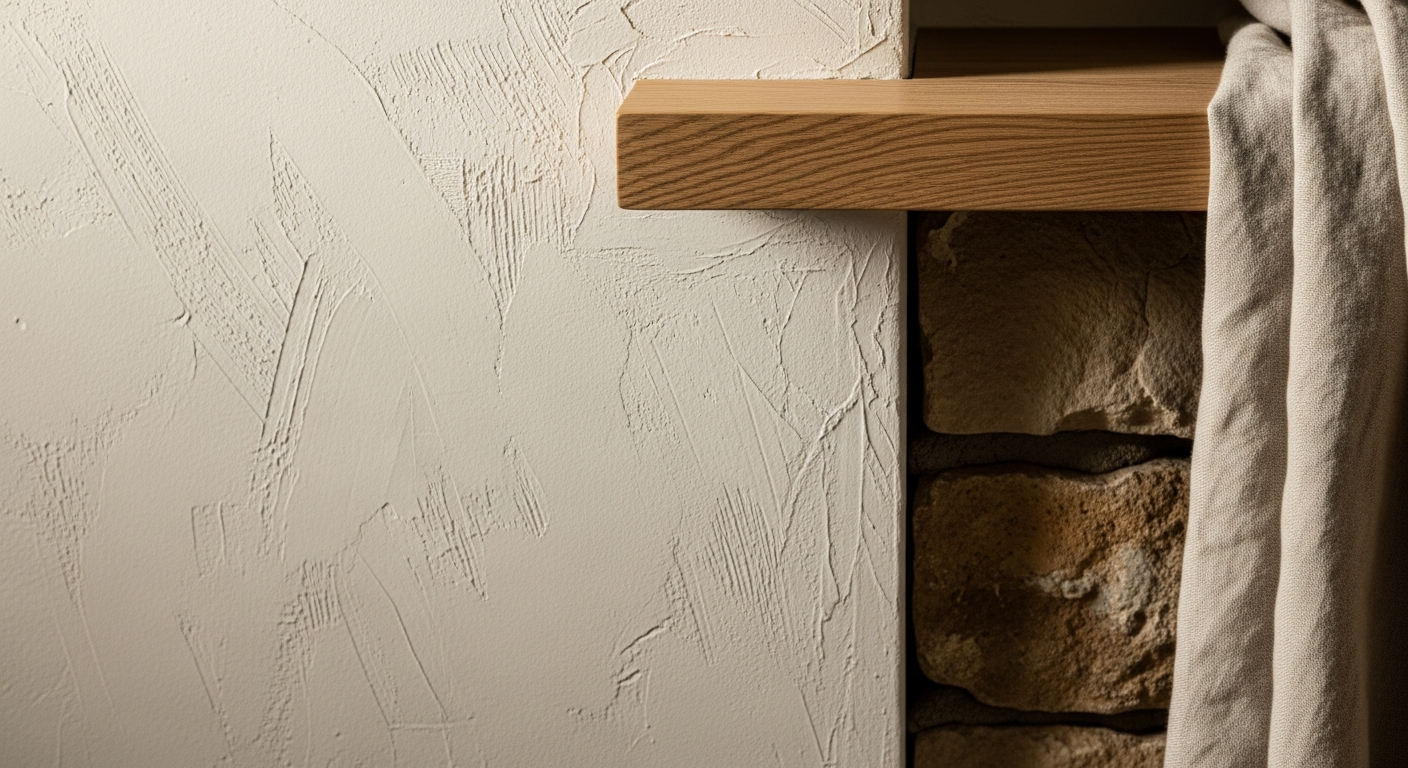
Texture is the heartbeat of warm minimalism. While cold minimalism relies on smooth, uniform surfaces — polished concrete, lacquered cabinets, flat drywall — warm minimalism embraces materials that show their nature. Limewash plaster walls have become perhaps the defining surface treatment of this movement. Their subtle variations in tone and depth create visual interest without pattern or color, giving walls a living quality that flat paint simply cannot achieve.
Natural wood grain, left unsealed or finished with matte oils, brings warmth through its inherent irregularity. Stone surfaces — travertine, limestone, soapstone — offer cool contrast while maintaining an organic connection. Even textiles play a role: raw linen, washed cotton, hand-loomed wool. These aren't materials chosen for visual perfection; they're chosen for how they feel under your hand and how they age over time. This textural richness pairs beautifully with dark wood furniture trends that bring depth and grounding to minimal spaces.
The key principle: every surface in a warm minimalist space should invite touch. If you wouldn't want to run your hand across it, it probably doesn't belong.
Soft Edges and Curved Forms
Sharp right angles and hard geometric forms defined old minimalism. Warm minimalism softens everything. Curved sofas replace boxy sectionals. Arched doorways and rounded mirrors take the place of rectangular frames. Even case goods — dressers, nightstands, media consoles — feature rounded corners and organic silhouettes.
This isn't purely aesthetic. Research in environmental psychology suggests that curved forms trigger a relaxation response in the brain, while sharp angles can subconsciously signal danger. The shift to curves makes warm minimalist spaces feel inherently more calming and welcoming — a critical distinction when the goal is a home that nurtures rather than merely impresses.
Furniture designers are responding with pieces that balance structural integrity with visual softness: kidney-shaped coffee tables, cloud-like upholstered beds, and shelving units with gently bowed profiles. The effect is sculptural without being severe.
Warm Color Palettes
The warm minimalist palette has decisively moved away from the cool whites, concrete grays, and blue-toned neutrals that dominated earlier iterations. In their place: warm cream, sand, clay, caramel, terracotta, and mushroom tones. These colors reference the natural world — sun-bleached driftwood, desert clay, morning fog over wheat fields.
The color trends of 2026 strongly reinforce this direction. Benjamin Moore's Color of the Year "Silhouette" — a warm burnt umber — and Valspar's "Sage Slate" both embody the warm-neutral philosophy. The idea isn't to eliminate color; it's to ensure that whatever colors you use feel grounded and organic rather than synthetic or harsh.
Layering tonal variations within the warm palette creates depth without complexity. A room painted in warm linen white might feature a sand-colored sofa, clay-toned throw pillows, and a walnut coffee table. Every element is technically a different color, but they all speak the same warm language.
Intentional Objects and Curated Simplicity
Perhaps the most nuanced element of warm minimalism is what some designers call "intentional clutter" — though "clutter" isn't quite right. This is about allowing a few carefully chosen objects to populate surfaces and shelves: a stack of well-loved books, a hand-thrown ceramic vase, a vintage brass candleholder, a small sculpture collected from travels.
The difference from maximalism is restraint. The difference from cold minimalism is permission. Warm minimalism gives you permission to display things that matter without the guilt of "too much." The rule of thumb: if it tells a story, has been made by human hands, or brings you a specific joy when you look at it, it earns its place. Everything else goes. For practical guidance on this approach, explore our tips on bookshelf styling that balances beauty with intention.
Room-by-Room Guide to Warm Minimalism
Living Room

The living room is where warm minimalism shines brightest. Start with a foundation of warm-toned walls — limewash in cream, sand, or pale terracotta. Choose a generously proportioned sofa with soft lines, upholstered in natural linen or washed cotton in a warm neutral. A travertine or solid wood coffee table anchors the seating area.
Lighting matters enormously here. Layer warm-toned sources: a sculptural floor lamp with a linen shade, recessed lights on dimmers, and perhaps a pair of ceramic table lamps. Avoid overhead lighting that casts harsh, even illumination — warm minimalism thrives in pools of warm light with natural shadows. For more on this approach, see our guide to layered living room lighting.
On the floor, a hand-knotted wool rug in a tonal pattern adds warmth underfoot. A single large-scale art piece — abstract, in earth tones — provides a focal point without overwhelming the space. One or two indoor plants (olive tree, fiddle leaf fig, or large-format trailing pothos) bring life without creating a jungle. The room should feel like a deep breath — open, calm, and warm. Many of these ideas pair well with contemporary modern living room designs and cozy living room concepts.
Bedroom
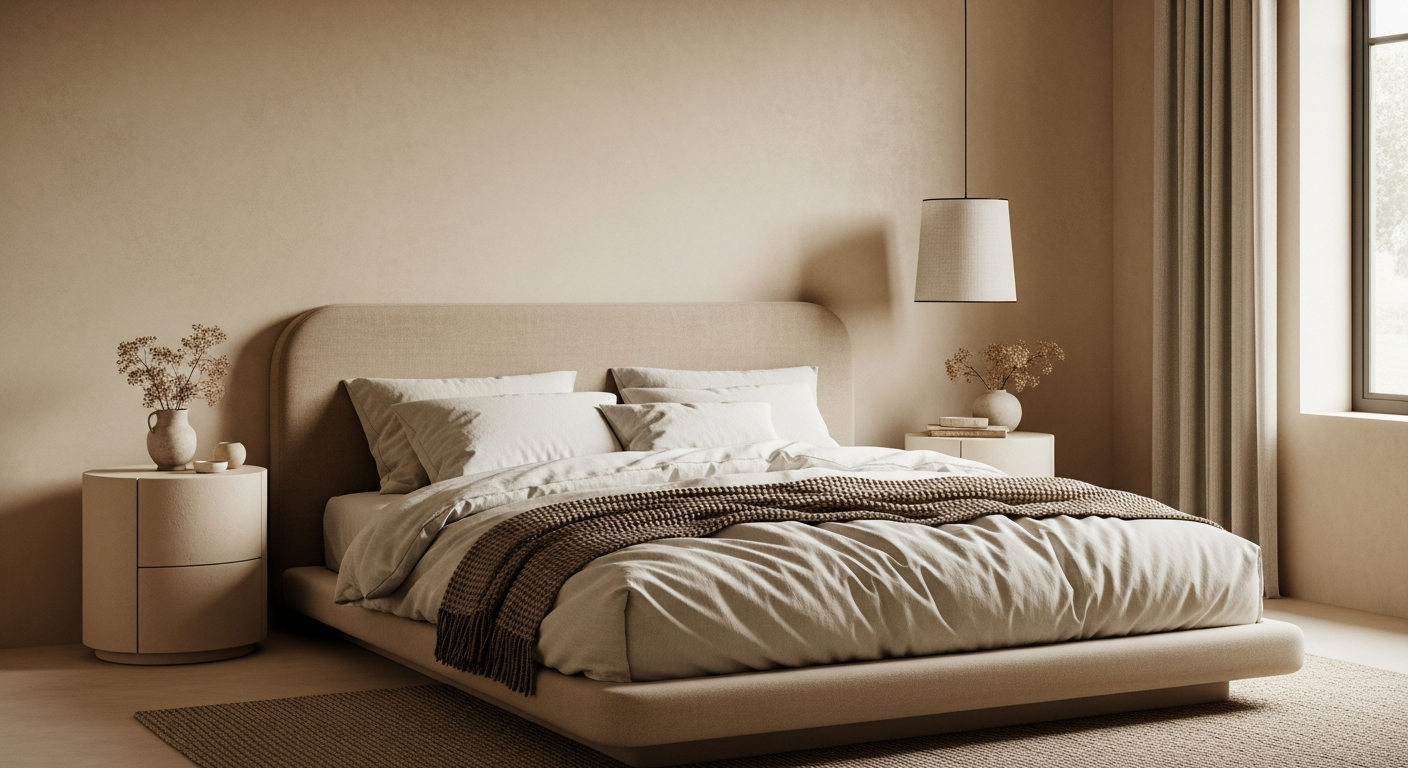
The warm minimalist bedroom is a cocoon. The bed itself should be the room's visual anchor — a low-profile platform frame in natural wood or an upholstered bed with a softly curved headboard. Bedding is critical: organic linen sheets in cream or oatmeal, a heavier linen duvet cover, a cashmere or merino wool throw at the foot.
Nightstands should be rounded — cylindrical ceramic side tables, carved wooden stools, or soft-cornered wooden pieces. Keep surfaces nearly bare: a small lamp, a book, perhaps a ceramic cup for water. The walls can go warmer here — a deeper sand or pale clay — creating an enveloping feeling as the room dims in the evening.
Window treatments matter in the bedroom more than any other room. Floor-to-ceiling linen curtains in a warm white or cream filter light beautifully during the day and provide warmth at night. Avoid blinds or shades with hard horizontal lines — they break the soft language of the room.
Kitchen
Warm minimalism in the kitchen means saying goodbye to the all-white, handleless, laboratory-style kitchen. Instead, consider wood-front cabinets in natural oak or walnut, limewash or plaster-finish range hoods replacing standard stainless steel, and open shelving in natural wood for everyday ceramics.
Countertops in warm-toned natural stone — honed travertine, limestone, or warm-veined quartzite — replace the cool precision of white marble or engineered quartz. Hardware moves to unlacquered brass or aged bronze, developing patina over time. The effect is a kitchen that looks like it belongs in a Tuscan farmhouse or a Mediterranean villa — but with all the modern functionality hidden within.
Bathroom
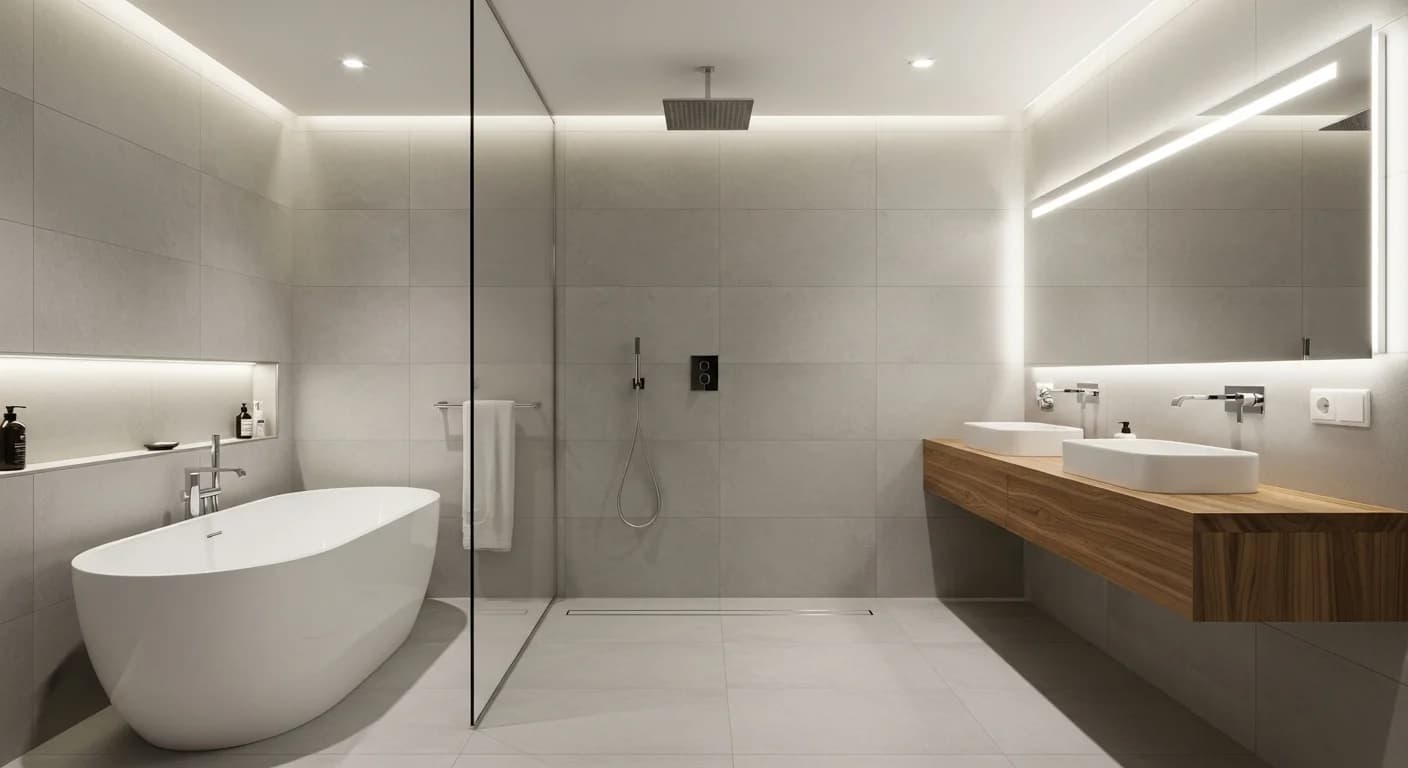
The warm minimalist bathroom draws from spa traditions. Tadelakt (Moroccan lime plaster) or microcement walls in warm sand or cream tones replace subway tile. A freestanding soaking tub with an organic, sculptural shape becomes the centerpiece. Natural stone floors — tumbled limestone or travertine — feel warmer underfoot than porcelain.
Fixtures in brushed brass or aged bronze complement the warm palette, while open shelving in natural wood displays rolled towels and a few apothecary-style vessels. The overall effect should be calming and grounding — a retreat rather than just a utilitarian room.
Materials and Furniture for Warm Minimalism
Building a warm minimalist interior requires being selective about materials. Here are the foundational choices that define the style:
Wall Treatments: Limewash paint (brands like Portola, Bauwerk, or Romabio), Roman clay, Venetian plaster, tadelakt for wet areas. These treatments add depth and movement to walls without pattern or wallpaper.
Wood: White oak, natural walnut, reclaimed elm, and European beech with matte or oil finishes. Avoid high-gloss lacquer or painted wood — the grain should be visible and celebrated.
Stone: Travertine (the unofficial stone of warm minimalism), honed limestone, soapstone, and warm-veined quartzite. Choose filled and honed finishes over polished — matte surfaces are essential to the aesthetic.
Textiles: Belgian linen, washed cotton, hand-spun wool, cashmere, mohair, and alpaca. Natural fibers exclusively — synthetics read as cold and artificial in warm minimalist spaces.
Metals: Unlacquered brass, aged bronze, brushed copper. These metals develop patina over time, adding to the lived-in quality. Avoid polished chrome or brushed nickel — they're too cool-toned for this palette.
Furniture Sources: Look for makers who emphasize solid wood construction, natural upholstery, and organic forms. Vintage and antique pieces often fit warm minimalism better than new production — their imperfections are a feature, not a flaw.
Common Misconceptions About Warm Minimalism
"It's just minimalism painted beige." This misses the fundamental shift in philosophy. Warm minimalism isn't a color change; it's a values change. It's the difference between removing everything and curating what stays. The material choices, the curved forms, the emphasis on texture — these aren't cosmetic adjustments to cold minimalism. They're a complete reconceptualization.
"It's expensive." It can be, but it doesn't have to be. Limewash paint is comparable in cost to premium conventional paint. Linen bedding from direct-to-consumer brands is increasingly affordable. Vintage furniture — one of the style's cornerstones — is often cheaper than new designer pieces. The real investment is time: time to choose carefully, time to source thoughtfully, time to let a room evolve rather than filling it all at once.
"It's only for big spaces." Warm minimalism actually excels in smaller spaces. Because the palette is unified and the furniture count is low, even a 500-square-foot apartment can feel open and calm. The warm tones make small rooms feel intimate rather than cramped, and the emphasis on natural light makes every window work harder.
"It'll look dated in two years." This is perhaps the biggest misconception. Warm minimalism is rooted in timeless materials — wood, stone, plaster, linen — that have been used in interiors for centuries. Unlike trend-driven styles that rely on specific colors or shapes of the moment, warm minimalism's palette comes from nature itself. It evolves rather than expires.
How to Transition Your Home to Warm Minimalism
You don't need to gut your entire home to embrace warm minimalism. Here's a practical progression:
Phase 1 — The Easy Swaps (Weekend Project): Replace cool-toned throw pillows with warm linen versions. Swap chrome or brushed nickel hardware for brass. Add a warm-toned wool or jute area rug. Change overhead lighting to warmer-toned bulbs (2700K or lower). Remove items from surfaces that don't meet the "intentional object" test.
Phase 2 — The Moderate Changes (1–2 Months): Paint walls with limewash or a warm-toned flat paint. Replace synthetic curtains with linen panels. Invest in one signature furniture piece — a curved sofa or a solid wood coffee table. Switch to organic linen bedding.
Phase 3 — The Deeper Commitment (3–6 Months): Replace flooring with wide-plank oak or warm-toned tile. Upgrade countertops to natural stone. Source vintage or antique accent pieces. Consider plaster or microcement finishes for accent walls or fireplace surrounds.
The beauty of this phased approach is that it mirrors warm minimalism's own philosophy: slow, intentional, and evolving over time rather than achieved in a single dramatic makeover. Try visualizing these changes first in our HanoDecor Studio to see how warm minimalist elements work in your specific space.
Frequently Asked Questions
What is the difference between warm minimalism and Japandi?
While both styles value simplicity and natural materials, Japandi tends to incorporate more Japanese-influenced design elements — lower furniture, darker wood tones, wabi-sabi imperfection, and more deliberately austere compositions. Warm minimalism is warmer in palette, more permissive of decorative objects, and draws more from Mediterranean and Scandinavian influences than Japanese aesthetics. There's overlap, but warm minimalism generally feels more approachable and lived-in than the more contemplative Japandi style.
Can warm minimalism work with a family and kids?
Absolutely — and this is one of its greatest strengths. The emphasis on durable natural materials (solid wood, stone, performance linen) means pieces withstand daily use better than delicate designer furniture. The warm, forgiving palette doesn't show marks the way stark white does. And the philosophy of "less but better" actually simplifies family life: fewer fragile objects to protect, fewer surfaces to maintain, and a calm environment that benefits everyone. Choose slipcover upholstery in washable linen for sofas and chairs in high-traffic areas.
Is warm minimalism the same as Scandinavian design?
Modern warm minimalism borrows from Scandinavian principles — especially the emphasis on light, function, and natural materials — but pushes further toward warmth and texture. Scandinavian design tends toward cooler neutrals (pale grays, whites, light woods), while warm minimalism leans into golden tones, clay, and richer materials like travertine and walnut. Think of warm minimalism as Scandinavian design that spent a summer in Puglia or Provence.
What flooring works best for warm minimalism?
Wide-plank European white oak with a natural or matte oil finish is the gold standard. Other excellent options include honed limestone, tumbled travertine, and warm-toned large-format porcelain tile that mimics natural stone. Avoid high-gloss finishes, narrow plank widths, and gray-toned or cool-washed wood — they pull the room back toward cold minimalism. In bedrooms, layering a natural wool or jute rug over the flooring adds another dimension of warmth.
How do I add color to a warm minimalist space without disrupting it?
Think earth tones rather than primary colors. A terracotta vase, olive-green linen curtains, a rust-colored throw, or a sage accent wall all introduce color while staying within warm minimalism's organic vocabulary. Art is another excellent vehicle for color — a single large painting or textile with warm-toned pigments can provide all the chromatic energy a room needs without cluttering surfaces. The key is keeping any color addition feeling grounded and natural rather than synthetic or neon.
Modern Interior Design Trends FAQs
Written by
Priya Sharma
Priya is an award-winning UX designer who previously led design teams at Airbnb and Pinterest. Her focus on user-centered design ensures that HanoDecor's tools are intuitive and accessible to everyone, regardless of their technical background.