How to Decorate a Bathroom: 9 Proven Tips for Spa-Like Calm and Style
Quick Summary
Transform your bathroom into a spa-like retreat without renovation. This guide covers 9 proven decorating techniques — from towel styling and vanity organization to plant selection, scent layering, and lighting upgrades — that create calm, luxury, and visual cohesion in any bathroom size or layout.

What Separates a Decorated Bathroom from a Functional One
Learning how to decor a bathroom is about transforming the most utilitarian room in your home into a space that feels intentional, calming, and visually cohesive. Most bathrooms start as purely functional — a toilet, a sink, a shower or tub, a mirror, and towels hung wherever they fit. A decorated bathroom elevates those same elements into a coordinated sensory experience where textures, colors, scents, and greenery work together to create spa-like serenity.
The average American spends approximately 30 minutes per day in their bathroom, and studies from the National Kitchen and Bath Association show that bathroom upgrades consistently rank among the top three home improvements for personal satisfaction. The best part is that most bathroom decorating requires zero renovation — no plumbing changes, no tile removal, no contractor. These are styling and accessory updates you can accomplish in a single afternoon.
Whether you have a compact powder room, a shared family bathroom, or a spacious primary suite, these nine decorating strategies scale to any size and budget. The goal is not to make your bathroom look like a hotel lobby — it is to create a personal retreat that makes your daily routines feel more luxurious and less rushed.
Tip 1 — Build a Cohesive Color Palette Around Your Fixtures
Your bathroom's fixed elements — tile color, countertop material, fixture finish, and grout shade — form the non-negotiable base of your color palette. Rather than fighting these existing finishes, build your decorating color scheme around them. A bathroom with white subway tile and chrome fixtures calls for crisp, cool-toned accessories. A space with warm beige travertine and brushed gold hardware works best with earthy neutrals, sage greens, and cream textiles.
Limit your accent palette to two or three colors beyond the base neutrals. A classic spa palette combines white or cream as the dominant neutral, a soft green or blue as the secondary color, and natural wood tones as the accent. Apply the 60/30/10 color distribution: 60 percent dominant neutral (walls, tile, large towels), 30 percent secondary color (bath mat, shower curtain, storage baskets), and 10 percent accent (soap dispensers, decorative objects, small textiles). For a deeper exploration of color theory, our guide on choosing a whole-home color palette applies the same principles room by room.
Tip 2 — Master the Art of Towel Styling
Towels are the single most visible textile in a bathroom, and how you display them has an outsized impact on the room's overall aesthetic. Invest in matching towel sets rather than accumulating mismatched towels over time — a coordinated set of bath towels, hand towels, and washcloths in the same color family instantly elevates the space from chaotic to curated.
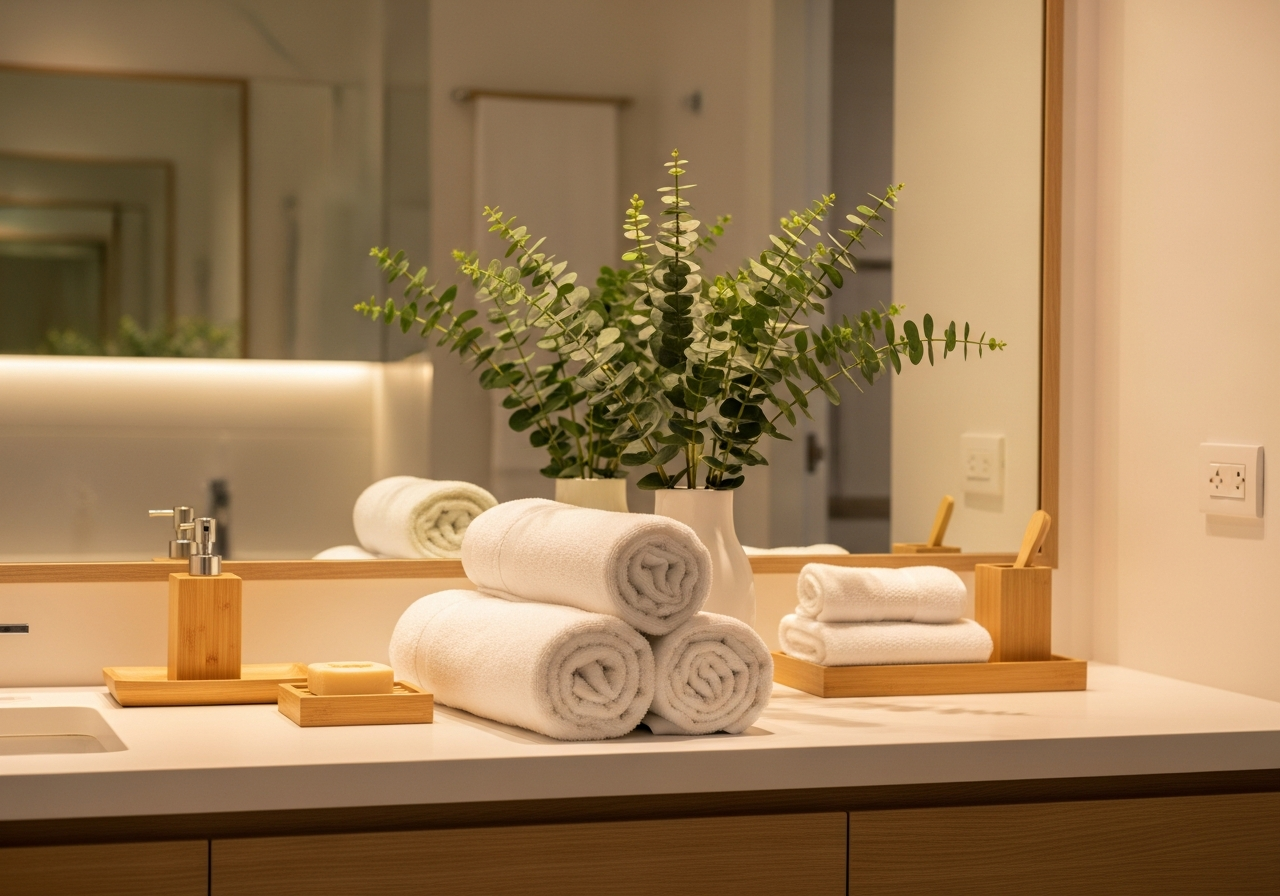
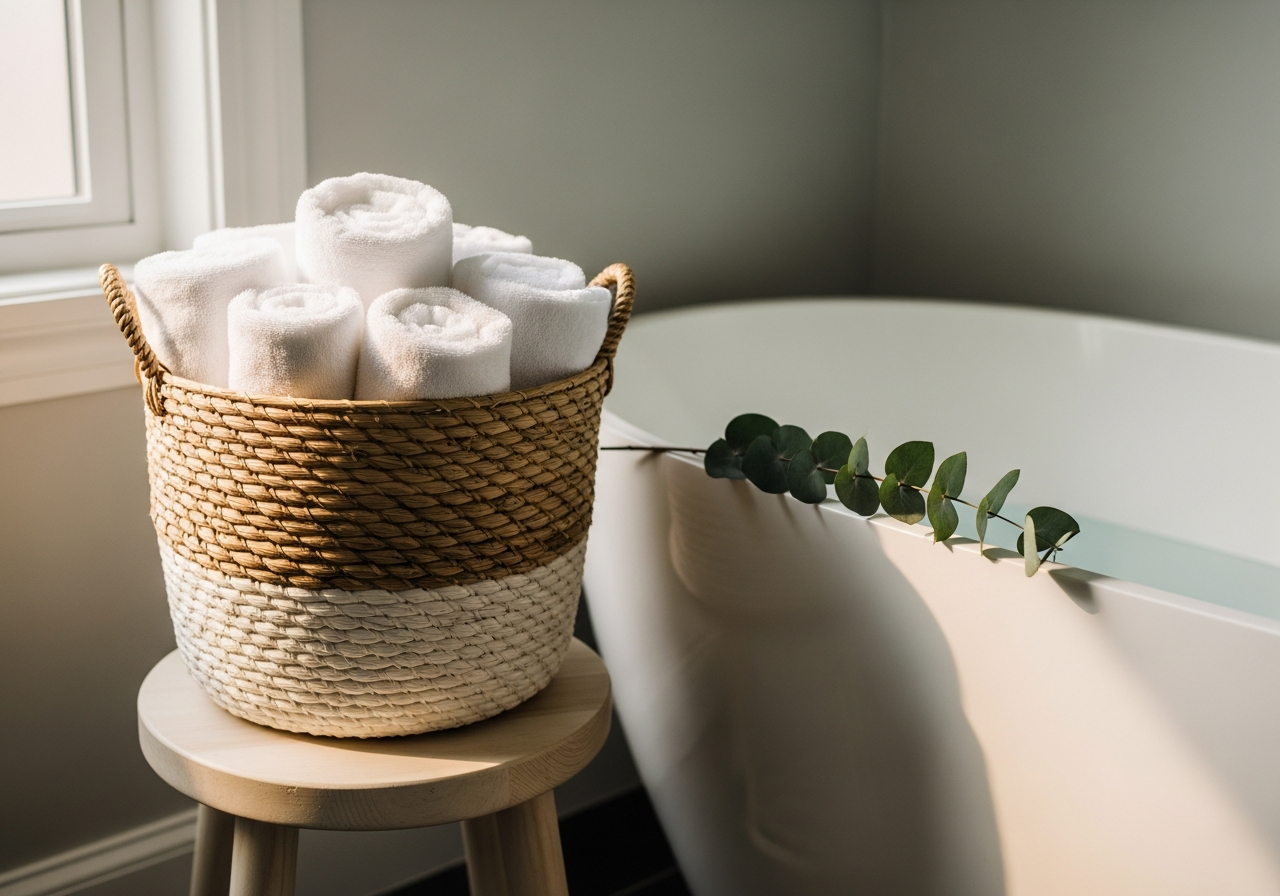
For spa-style rolled towels, fold each towel in thirds lengthwise, then roll tightly from one end to the other. Display rolled towels in a basket, on open shelving, or stacked in a pyramid on the vanity counter. For hung towels, fold in thirds and drape over a towel bar with the folded edge facing outward — this creates a clean, uniform line. Turkish cotton towels in 600 to 700 GSM weight provide the plush feel associated with luxury spas while maintaining excellent absorbency.
Color strategy matters for towels too. White towels photograph beautifully and create a hotel-like atmosphere, but they require bleaching to maintain. Soft gray, warm taupe, and muted sage are practical alternatives that hide wear while still feeling elevated. Use one accent-colored hand towel or washcloth to introduce a pop of your secondary palette color without committing to a full colored set.
Tip 3 — Organize and Style Your Vanity Surface
A cluttered vanity counter is the fastest way to make an otherwise clean bathroom feel messy and stressful. The styling rule for vanity surfaces is simple: display only what is beautiful or used daily. Everything else goes inside drawers, cabinets, or closed storage. Group your displayed items using a tray — a marble tray, a wooden tray, or a mirrored tray — to create a contained, intentional vignette rather than scattered objects across the counter.
A well-styled vanity tray typically holds three to five items: a soap dispenser in a coordinating finish (matching your faucet metal), a small plant or succulent, a candle, and one or two functional items like a toothbrush holder or cotton jar. Decant liquid soap, hand lotion, and mouthwash into matching pump bottles for a cohesive look — amber glass, frosted white, or matte ceramic dispensers elevate the aesthetic dramatically compared to commercial plastic bottles.
For bathrooms with limited counter space, wall-mounted dispensers, floating shelves above the toilet, and over-the-door organizers keep surfaces clear while maintaining easy access to daily essentials. Browse bathroom inspiration for vanity styling ideas across dozens of design styles.
Tip 4 — Add Plants That Thrive in Humidity
Live plants transform a bathroom from sterile to alive. The humid, warm conditions in most bathrooms actually make them ideal environments for tropical and subtropical species that struggle in the dry air of living rooms and bedrooms. For a comprehensive look at integrating greenery throughout your home, see our guide on using plants in home decor. Pothos, philodendrons, snake plants, ZZ plants, ferns (especially Boston ferns and maidenhair ferns), and air plants all thrive in bathroom humidity levels of 50 to 80 percent.
Placement depends on your light conditions. Bathrooms with windows can support most tropical plants on the windowsill or a nearby shelf. Windowless bathrooms require low-light champions like pothos, ZZ plants, or snake plants — these species tolerate fluorescent lighting and infrequent natural light. Hang trailing plants like pothos or string of hearts from ceiling hooks or high shelves to add vertical greenery without consuming counter space.
If live plants are not practical — whether due to lighting, pets, or maintenance preferences — high-quality faux plants have improved dramatically. Realistic artificial eucalyptus stems in a ceramic vase, a faux fern on a shelf, or preserved moss in a frame add the same visual warmth without watering requirements. A single eucalyptus bundle hung from the showerhead releases natural fragrance when activated by steam, bridging the gap between decoration and aromatherapy.
Tip 5 — Layer Scent for a Multi-Sensory Experience
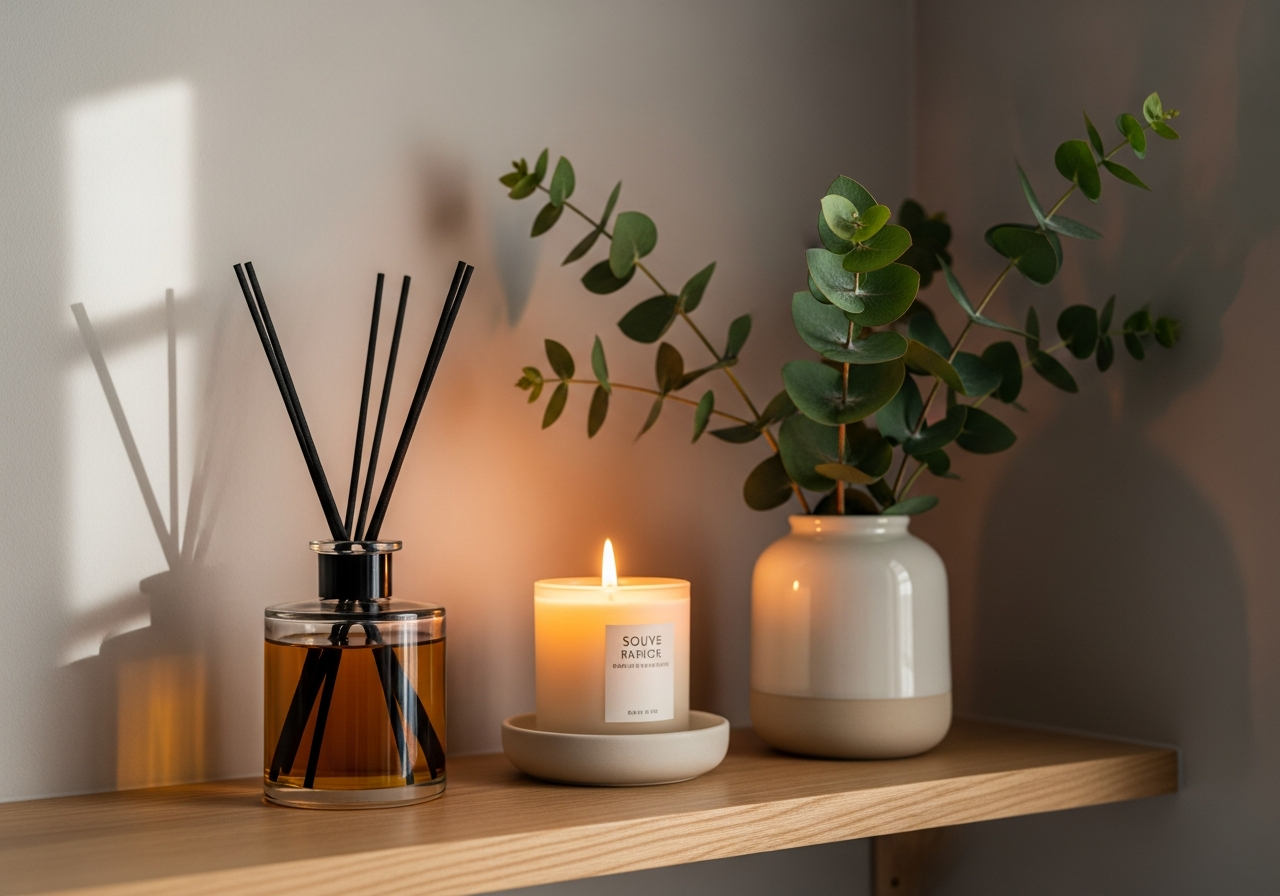
Spa-like calm engages all senses, and scent is perhaps the most powerful mood influencer in a bathroom setting. Layer fragrance from multiple sources rather than relying on a single air freshener. A scented candle on the vanity provides warm, flickering ambiance. A reed diffuser on a shelf delivers continuous background fragrance. Fresh eucalyptus or lavender stems near the shower release essential oils when steam activates them.
Choose scent families that complement each other rather than compete. Calming profiles include lavender and chamomile, eucalyptus and mint, citrus and bergamot, or sandalwood and vanilla. Avoid mixing floral scents with woodsy scents in the same small space — the olfactory clash can feel overwhelming rather than relaxing. Limit your bathroom to one scent family with two to three complementary notes for a cohesive, spa-like fragrance layer.
Tip 6 — Upgrade Lighting Without Rewiring
Harsh overhead fluorescent lighting is the enemy of bathroom ambiance. While you may not be able to change your light fixtures without renovation, you can dramatically shift the atmosphere by changing the bulbs themselves. Replace cool-white bulbs (5,000K and above) with warm-white LEDs in the 2,700 to 3,000 Kelvin range — this single swap transforms the room from clinical to warm and inviting, mimicking the golden quality of spa lighting.
Add supplemental lighting with battery-operated LED puck lights inside glass-front cabinets, rechargeable LED candles on shelves and the vanity, or a plug-in Himalayan salt lamp for warm ambient glow. If your vanity has a standard outlet nearby, a lighted mirror or an LED-backlit mirror creates flattering, even illumination that doubles as a design statement. These lighting additions require no electrician and no permanent changes — ideal for renters and anyone avoiding a full bathroom remodel.
Tip 7 — Coordinate Hardware and Accessories in One Finish
Metal finish consistency is one of the most overlooked aspects of bathroom decorating. When your towel bar, toilet paper holder, robe hook, soap dispenser, and cabinet pulls are all different finishes — chrome here, brushed nickel there, oil-rubbed bronze on the cabinet — the room feels disjointed and unplanned. Coordinating these small accessories in a single dominant finish creates visual unity that makes the entire bathroom feel professionally designed.
If replacing all hardware is beyond your budget, choose the finish that matches your faucet and coordinate the accessories you can control: soap dispenser, toothbrush holder, tissue box cover, and wastebasket. These swappable items cost $30 to $80 total and make an immediate visual impact. For a more eclectic approach, our guide to mixing metals in home decor explains how to combine two finishes intentionally — the key is a dominant metal (70 percent) and a secondary accent metal (30 percent).
Tip 8 — Use Textiles to Add Warmth and Pattern
Beyond towels, bathrooms benefit from layered textiles that soften hard tile and porcelain surfaces. A plush bath mat anchors the floor in front of the vanity or tub — choose a mat that complements your towel palette rather than matching exactly, creating depth through tonal variation. Shower curtains are the largest textile surface in most bathrooms and offer an opportunity to introduce pattern, color, or texture at scale.
For a spa-like atmosphere, choose shower curtains in natural materials like linen, waffle-weave cotton, or hemp paired with a waterproof liner. Avoid plastic curtains with loud prints — they date quickly and resist the calm, collected aesthetic. A solid-color linen curtain in white, oatmeal, or soft sage creates an effortless backdrop that lets your other decorative elements (plants, art, accessories) take center stage. Coordinate your window treatment if applicable — a moisture-resistant Roman shade or cafe curtain in the same fabric family ties the room together.
Tip 9 — Add Art and Decorative Objects Strategically
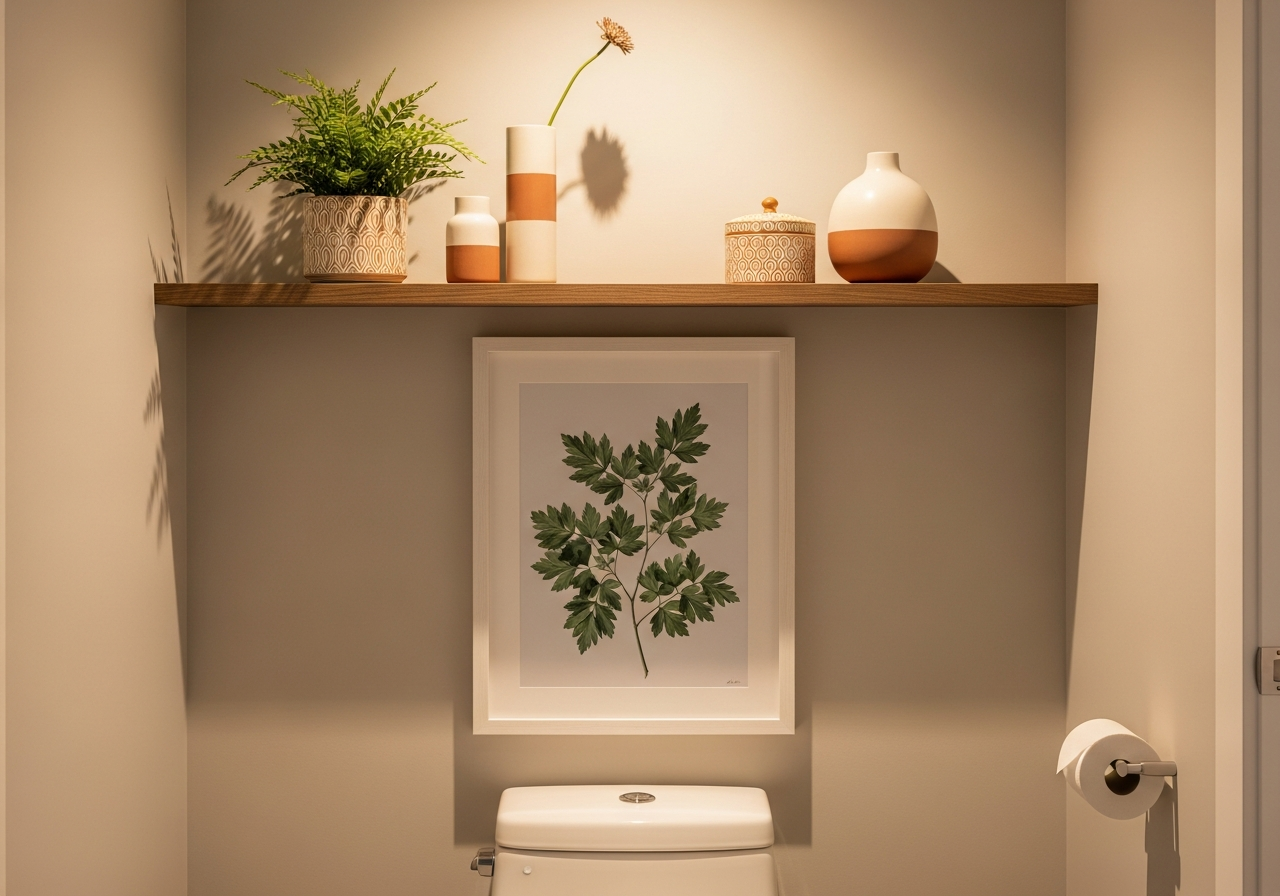
Artwork and decorative objects personalize your bathroom beyond the generic. Choose moisture-resistant art — canvas prints, sealed wood frames, metal wall art, or acrylic-framed pieces — rather than paper prints behind glass, which trap moisture and develop mold over time. For proper hanging heights and spacing rules, our wall decor hanging guide covers the measurements that work in every room including bathrooms. Position art at eye level above the toilet, beside the mirror, or on the wall opposite the vanity where it creates a focal point visible upon entering.
Decorative objects for bathrooms should balance beauty with moisture tolerance. Ceramic vessels, stone sculptures, glass jars, woven baskets, and wooden trays all handle humidity well. Avoid iron, untreated wood, and fabric-covered items that degrade in moist environments. A small collection of three to five well-chosen objects — perhaps a ceramic vase, a natural stone dish for rings, and a glass apothecary jar filled with bath salts — creates a curated vignette that feels intentional without cluttering limited counter or shelf space. For more vanity and surface styling techniques, explore our guide to bathroom vanity ideas.
Related Articles
Continue your room-by-room decorating journey with these guides: transform your kitchen without a renovation using the same no-demo philosophy, style your living room from start to finish with our complete guide, browse bathroom tile design ideas for surface inspiration, and explore bedroom ideas to carry spa-like calm into your sleeping space.
Frequently Asked Questions
How do I decorate a small bathroom without making it feel cluttered?
Focus on vertical storage and a strict editing approach. Use floating shelves above the toilet, wall-mounted accessories, and a single tray on the vanity to contain items. Limit your color palette to two neutrals and one accent, and choose mirrors and glass accessories that reflect light. The fewer items you display, the larger the space will feel — edit ruthlessly and store everything non-essential inside cabinets.
What plants survive in a windowless bathroom?
Pothos, ZZ plants, snake plants, and cast iron plants all tolerate low light and high humidity. These species survive on fluorescent or LED lighting alone and can go two to three weeks between waterings. If you leave the bathroom light on for 8 to 10 hours daily, pothos and philodendrons will actually grow quite vigorously. For truly dark bathrooms, preserved moss arrangements or high-quality faux plants are the best alternatives.
How can I make my bathroom smell like a spa without chemicals?
Layer natural scent sources. Hang a bundle of fresh eucalyptus from the showerhead — steam releases its essential oils. Place a soy candle with lavender or cedar notes on the vanity. Use a reed diffuser with essential oil blends rather than synthetic fragrance. Fresh herbs like rosemary or mint in small pots on the windowsill also provide subtle, natural fragrance while doubling as greenery.
Is it worth decorating a bathroom in a rental?
Absolutely. Every tip in this guide is renter-friendly and non-permanent. Towel sets, vanity trays, plants, candles, bath mats, shower curtains, and decanted products require zero modifications to the space. You take everything with you when you move. Even art can be hung with adhesive strips or propped on shelves. The cost of a full bathroom decorating refresh — towels, accessories, plants, and textiles — typically runs $150 to $400 depending on quality level.
Transform Your Bathroom with HanoDecor's AI Visualizer
Ready to see how a spa-inspired palette would look in your actual bathroom? Upload a photo of your space to HanoDecor's AI Room Designer and preview different color schemes, accessory placements, and styling approaches before purchasing a single item. Or explore the Bathroom Remodel Visualizer if you are considering a more comprehensive transformation. Pair digital previews with these styling techniques, and you will create a bathroom that feels like a personal retreat — no contractor required.
How to Decorate a Bathroom FAQs
Written by
Priya Sharma
Priya is an award-winning UX designer who previously led design teams at Airbnb and Pinterest. Her focus on user-centered design ensures that HanoDecor's tools are intuitive and accessible to everyone, regardless of their technical background.