Fall Interior Design Trends: Seasonal Styling Ideas for Cozy Autumn Spaces

As the air turns crisp and daylight softens into amber hues, fall invites a fundamental shift in how we experience our homes. It's the season of turning inward — of gathering, cocooning, and rediscovering the warmth that interior spaces can offer. In 2026, fall interior design trends are more intentional than ever, blending rich color palettes, sumptuous textiles, and atmospheric lighting into layered compositions that feel both luxurious and deeply comforting.
Whether you're looking to completely transform a room or simply add a few seasonal touches, this guide covers every major fall design trend for autumn 2026. From the moody color palettes dominating designer showrooms to the art of textile layering and warm lighting upgrades, you'll find expert-backed ideas to make your home feel like the cozy sanctuary it was meant to be. And if you want to visualize these changes before committing, HanoDecor's AI Studio lets you preview any autumn update in your actual space.

The Fall 2026 Design Mood: Warmth, Depth, and Cocooning
Every design season carries a mood, and fall 2026 is defined by a desire for enveloping warmth. This isn't the cold minimalism or sterile simplicity of years past — it's an embrace of tactile richness, deep color saturation, and spaces that feel like a warm embrace on a chilly evening. The overarching philosophy borrows from the Danish concept of hygge but elevates it with bolder colors and more sophisticated material choices.
Designers across the industry are noting a clear shift: homeowners want rooms that feel "lived in" yet polished, cozy yet curated. The fall 2026 mood is about creating emotional resonance through design — spaces that don't just look beautiful but actively make you feel calm, grounded, and connected. This translates into deeper color choices, more generous use of textiles, warmer lighting temperatures, and an emphasis on natural materials that age gracefully with the season.
What makes this year's fall trends distinctive is their integration with broader 2026 interior design movements. The warm minimalism trend, the dark wood revival, and the return of artisanal craftsmanship all find their fullest expression in autumn styling. Fall is the season where these year-round trends reach their peak aesthetic impact, creating spaces that feel both on-trend and timeless.
Fall Color Palettes: Burnt Umber, Burgundy, Forest Green, and Deep Gold
The fall 2026 color story is richer and more saturated than anything we've seen in recent autumns. Gone are the safe, washed-out terracottas and pale pumpkin tones — this season's palette draws from the deepest wells of autumnal beauty, channeling the intensity of old-growth forests, aged wine cellars, and sun-warmed earth.
Burnt Umber: The Anchor Color
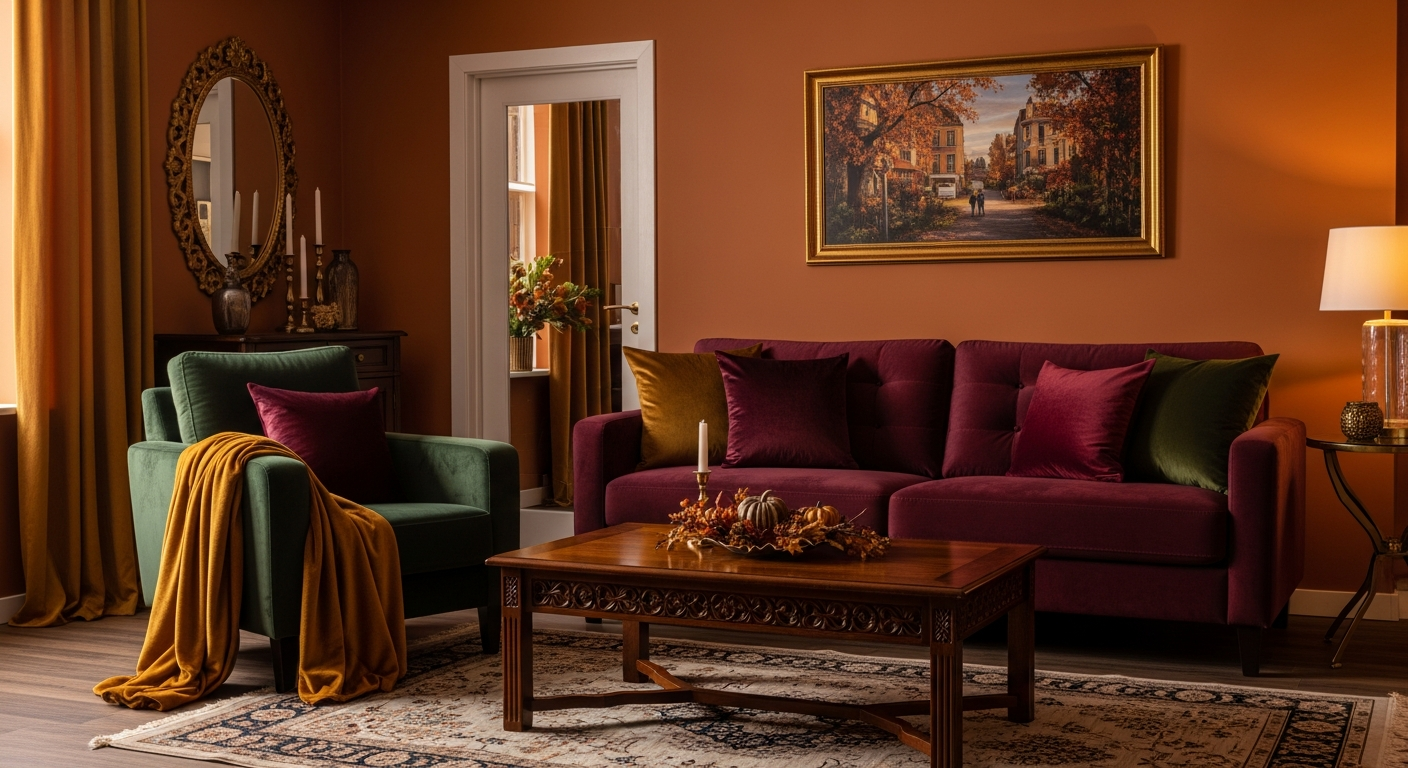
Burnt umber has emerged as the definitive fall 2026 anchor shade. Sitting at the intersection of brown and deep orange, this color carries the warmth of terracotta with the sophistication of chocolate. Benjamin Moore's Color of the Year, "Silhouette" (AF-655), directly channels this burnt umber energy, and it's showing up everywhere from accent walls to upholstery fabrics. Use burnt umber as your grounding tone — on a feature wall, a substantial area rug, or a set of velvet dining chairs. It pairs beautifully with cream, charcoal, and warm metallics like aged brass.
Burgundy: Sophisticated Depth
Burgundy continues its ascent from 2026 color trend predictions, becoming one of the most requested fall accent colors. Unlike pure red, burgundy carries enough blue and brown undertones to feel refined rather than aggressive. In fall applications, try burgundy throw pillows against a neutral sofa, a burgundy wool throw draped over an armchair, or burgundy-toned curtains that add drama without overwhelming. For bolder spaces, a burgundy accent wall creates an instant sense of cocooning warmth.
Forest Green: Nature's Grounding Force
Forest green connects fall interiors directly to the natural world outside, mirroring the deep evergreen tones that persist as deciduous trees shed their leaves. This shade works exceptionally well in living rooms and bedrooms, where it creates a calming, grounded atmosphere. Consider forest green in velvet upholstery, botanical-print cushions, or as a paint color for built-in bookshelves. Paired with warm wood tones and brass accents, forest green delivers a look that's both sophisticated and inherently seasonal.
Deep Gold: Warm Luminosity
Deep gold — not bright yellow, not pale honey, but a rich, burnished gold — adds luminosity to fall palettes without introducing harshness. Think of the warm glow of late-afternoon autumn sunlight hitting aged brass hardware or the honeyed warmth of a beeswax candle. Deep gold works brilliantly as an accent color: in throw pillows, picture frames, decorative objects, or metallic light fixtures. It bridges the warm and cool elements of any fall palette, adding cohesion and subtle radiance.
Building Your Fall Palette
The most successful fall 2026 interiors use these colors in a layered, considered approach. Start with a neutral base — warm cream, soft taupe, or light mushroom — then layer in your chosen accent colors through textiles, accessories, and artwork. A living room might pair a cream sofa with burnt umber pillows, a burgundy throw, and forest green plants, while deep gold appears in lamp bases and picture frames. This layered approach ensures richness without visual chaos.
Textiles and Layering: The Art of Autumn Comfort
If fall 2026 had a single defining design principle, it would be layering. Textiles are the primary vehicle for seasonal transformation, and this autumn's approach is all about mixing textures, weights, and materials for maximum sensory impact. The goal isn't just visual warmth — it's the kind of touchable, enveloping comfort that makes you want to sink into a room and stay.
Velvet: The Fall Fabric of Choice
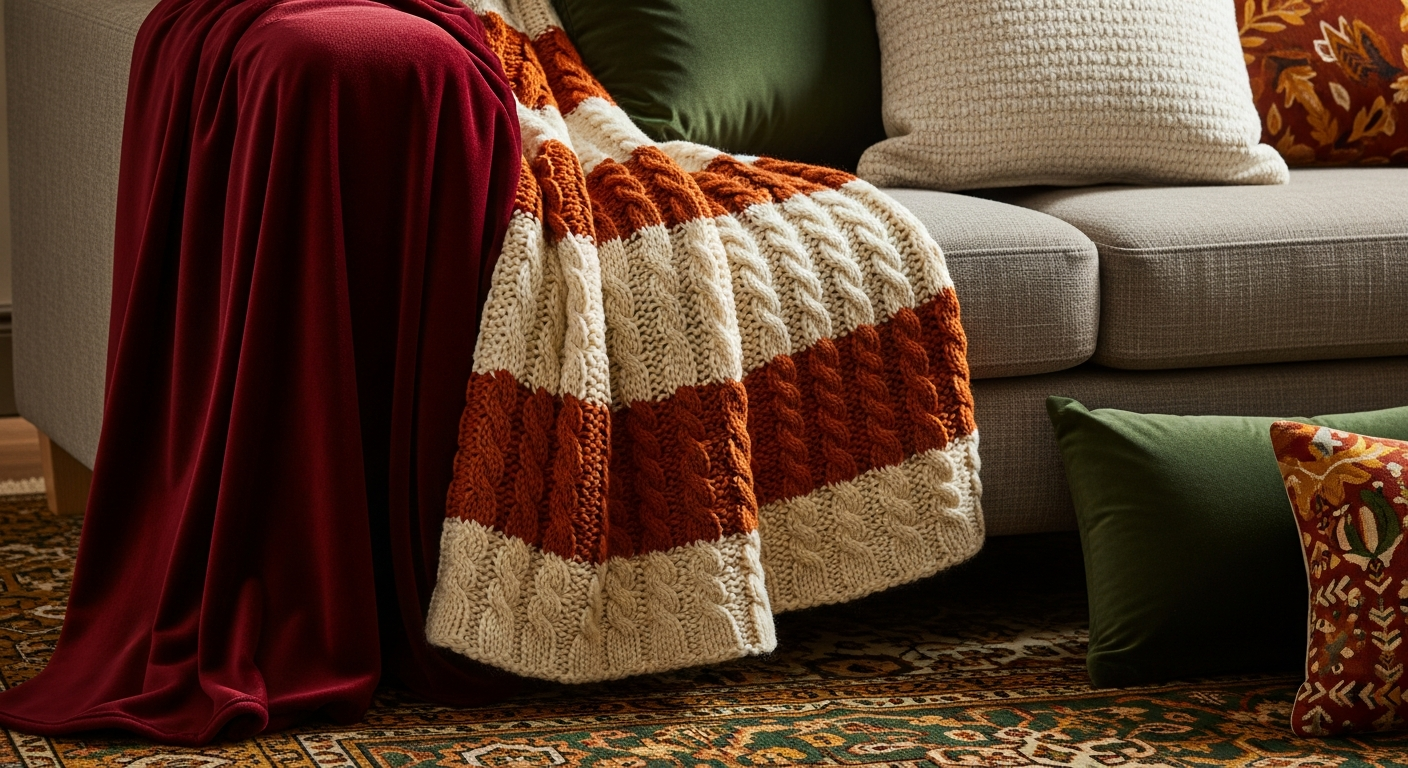
Velvet returns every autumn, but in 2026 it's being used more expansively than ever. Beyond the expected throw pillows, velvet is appearing on dining chairs, headboards, curtain panels, and even table runners for seasonal tablescaping. The key to using velvet successfully in fall is choosing the right tones — deep burgundy, forest green, burnt umber, and midnight blue all feel appropriately rich. Cotton velvet offers a more casual, washable option for families, while silk-blend velvet delivers maximum sheen and luxury.
Wool and Chunky Knits
Chunky wool throws and knit blankets add textural dimension that no other material can replicate. Drape a cable-knit throw over the arm of a sofa, fold a wool blanket at the foot of the bed, or layer a wool runner over a jute rug for instant fall warmth. The trend in 2026 leans toward undyed, natural wool tones — cream, oatmeal, heathered gray — which serve as neutral counterpoints to bolder fall accent colors. Merino wool offers exceptional softness for pieces that will be in direct skin contact.
Layered Rugs and Floor Textiles
The layered rug trend continues to gain momentum, and fall is its ideal season. Place a smaller, patterned rug — perhaps a vintage-style kilim in warm reds and golds — on top of a larger jute or sisal base rug. This creates visual depth, defines seating areas, and adds an extra layer of warmth underfoot. In bedrooms, consider adding sheepskin or faux-fur runners beside the bed for a luxurious touch on cold mornings. For more ideas on creating cozy, inviting living rooms, explore our dedicated guide.
Pillows and Cushions: The Quick-Change Strategy
Throw pillows remain the easiest and most affordable way to signal a seasonal shift. For fall 2026, mix sizes (18-inch, 20-inch, and one oversized lumbar) and textures (pair smooth velvet with nubby boucle and embroidered linen). Stick to your chosen palette — burnt umber, burgundy, forest green, deep gold — and include at least one patterned pillow featuring plaid, botanical prints, or abstract geometric designs. The cozy home decor trend emphasizes generous cushion arrangements that invite lounging.
Fall Lighting Updates: Creating Warm Atmosphere
Lighting is perhaps the most underappreciated element of seasonal design, yet it has the greatest impact on mood and atmosphere. As daylight hours shorten and evenings arrive earlier, thoughtful lighting design becomes essential for maintaining the warm, welcoming ambiance that defines fall interiors.
Warm Color Temperature
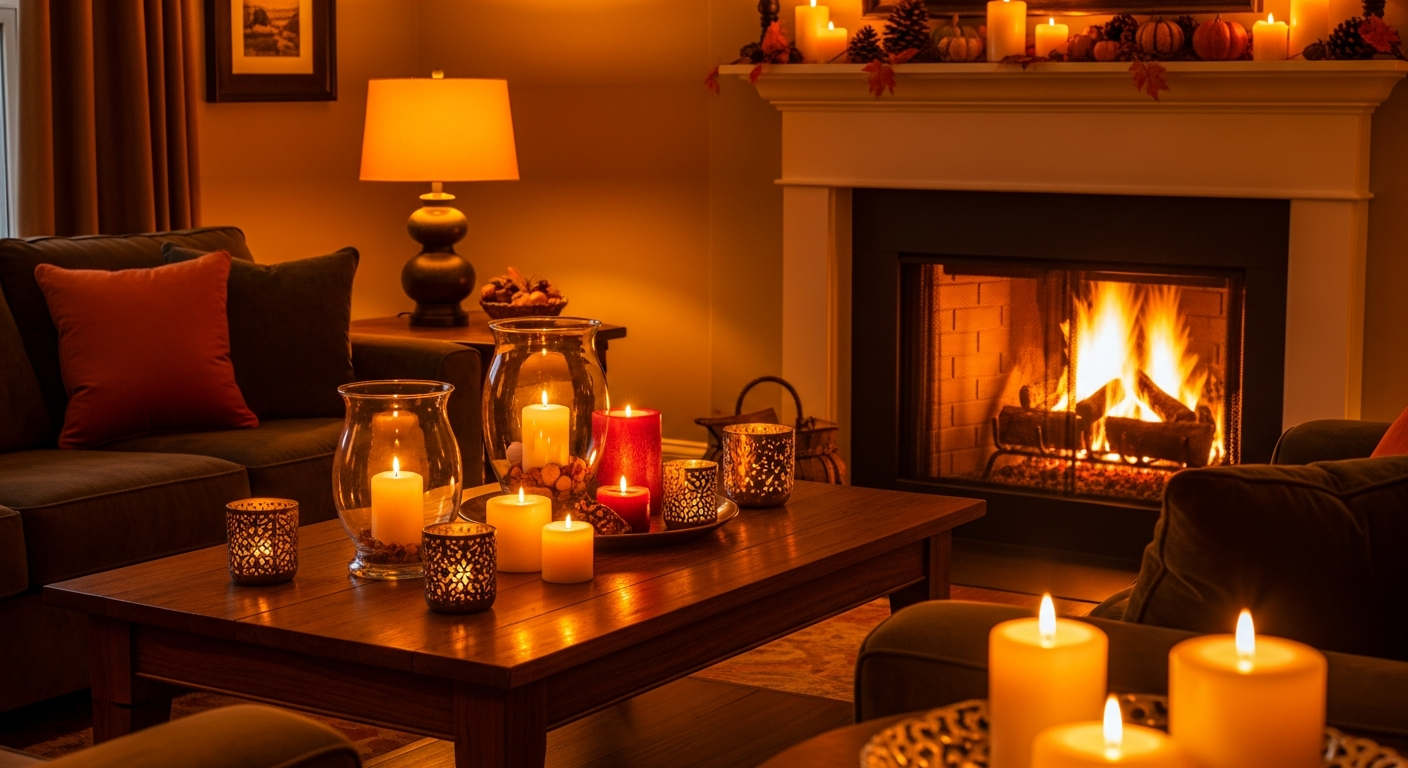
The single most impactful lighting change for fall is adjusting your color temperature. Replace any cool-white or daylight bulbs (5000K+) with warm-white options in the 2700K–3000K range. This simple swap transforms the entire feeling of a room, shifting from clinical brightness to the golden warmth of candlelight. Smart bulbs make this especially easy — program them to automatically shift to warmer temperatures as evening approaches, mimicking the natural progression of sunset.
Layered Lighting for Depth
Fall rooms benefit enormously from layered lighting — combining ambient, task, and accent sources to create depth and dimension. Replace reliance on a single overhead fixture with a combination of table lamps, floor lamps, and wall sconces positioned at varying heights throughout the room. This approach, detailed in our guide to living room lighting layers, creates pools of warm light that draw the eye through the space and eliminate the flat, shadowless feel of overhead-only illumination.
Candles and Firelight
Nothing says fall quite like the flicker of candlelight. Group pillar candles of varying heights on trays, arrange tapers in brass candlesticks on dining tables, and place votives along mantels and window ledges. For safety and convenience, high-quality LED candles with realistic flame effects have become remarkably convincing — and they allow you to create candlelit atmospheres without the fire risk. If you have a fireplace, autumn is the time to make it the room's focal point: stack firewood, add a mantel garland of dried eucalyptus, and ensure the hearth is clean and ready for the season's first fire.
Statement Table Lamps
Table lamps serve double duty in fall interiors — they provide essential warm lighting and function as decorative objects in their own right. Ceramic lamps in warm glazes (amber, olive, umber) and lamps with fabric shades in natural linen or warm tones are trending for fall 2026. Position them on side tables, console tables, and nightstands to create inviting pools of light. Brass and aged-metal lamp bases add a touch of autumnal warmth that complements the season's color palette perfectly.
Seasonal Tabletop and Kitchen Styling
Fall extends beyond the living room and bedroom into the kitchen and dining spaces, where seasonal styling creates an atmosphere of harvest abundance and gathering warmth. The tabletop and kitchen are where fall design trends often make their most impactful impression — especially when entertaining guests.
The Fall Tablescape
Fall tablescaping in 2026 moves away from literal pumpkins and cornstalks toward more refined seasonal expressions. Think linen table runners in warm tones, ceramic dinnerware in earthy glazes, brass or copper candlesticks, and centerpieces of dried botanicals — preserved eucalyptus, dried hydrangeas, wheat stalks, and thistle. Layer textures by combining wooden charger plates with linen napkins and stoneware dishes. Our guide to coffee table styling and tablescapes covers the foundational principles that apply equally to dining tables.
Kitchen Seasonal Touches
In the kitchen, fall updates can be simple yet effective. Swap your dish towels for options in autumn tones — burnt umber, deep gold, forest green. Display fall produce in beautiful bowls on countertops: pomegranates, pears, persimmons, and small gourds arranged artfully rather than casually. Copper canisters, wooden cutting boards, and ceramic crocks filled with cinnamon sticks or dried orange slices add both visual and aromatic seasonal interest. Even changing the soap dispenser to an amber glass bottle can subtly shift the room's autumn mood.
Room-by-Room Fall Refreshes
Living Room: The Heart of Fall
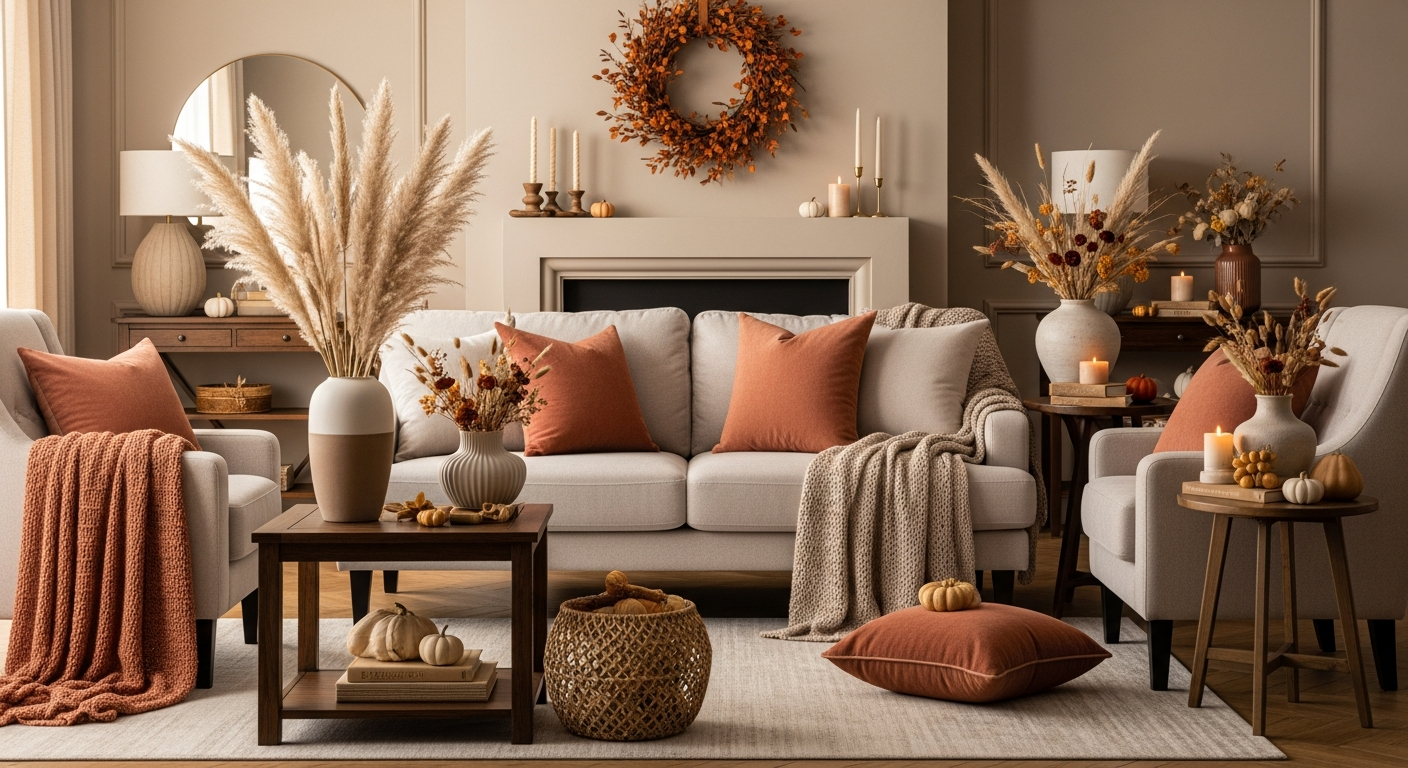
The living room bears the greatest responsibility for fall atmosphere, as it's where families gather, entertain, and spend the most time during cooler months. Start with textiles: swap summer's light throws and bright cushions for velvet, wool, and knit options in your chosen fall palette. Add a seasonal area rug or layer a patterned rug over an existing neutral one. Update the mantel or primary shelf display with dried botanicals, amber glass vessels, and warm-toned candles. Adjust the lighting to warmer tones and add at least one or two additional lamp sources for layered ambiance. Finally, consider a seasonal scent — a candle or diffuser in warm spice, cedar, or amber — to complete the sensory experience.
Bedroom: The Cocooning Retreat
Fall bedroom styling is about creating a cocooning effect — a space that wraps you in warmth from the moment you enter. Layer the bed generously: start with flannel or brushed cotton sheets, add a textured duvet in a warm neutral, layer a quilted coverlet at the foot, and finish with a chunky knit throw. Swap summer's bright accent pillows for velvet and embroidered options in fall tones. On nightstands, place warm-light lamps and aromatic candles. Consider adding heavier curtains or thermal-lined drapes that serve both aesthetic and practical purposes as temperatures drop — they add visual weight to the room while keeping drafts at bay and preserving heat.
Entryway: The First Impression
The entryway sets the tone for your entire home, and a fall refresh here creates an immediate sense of seasonal warmth for anyone who walks through the door. Start with a seasonal doormat in a warm color or pattern. Add a woven basket for storing scarves, hats, and gloves. Place a warm-toned runner on the floor if space allows. Style a console table with a seasonal vignette: a brass tray holding a candle and dried botanical arrangement, a warm-toned ceramic vase, and a small stack of autumn-hued books. If your entryway has wall space, consider a seasonal wreath of dried eucalyptus, wheat, or preserved fall leaves — more refined and modern than the traditional orange-and-brown options. Wall hooks in brass or dark metal finishes add both function and autumnal style.
Incorporating Fall Trends into Your Existing Decor
One of the strengths of fall 2026 trends is their adaptability to virtually any existing design style. Whether your home leans modern, traditional, bohemian, or transitional, these seasonal elements can be layered in without requiring a complete overhaul.
For modern spaces, focus on introducing fall through a restrained color palette — perhaps just burnt umber and cream — and let texture do the heavy lifting with a single velvet throw and a few sculptural dried branches. For traditional interiors, lean into the full richness of burgundy, deep gold, and forest green with more elaborate textile layering and seasonal tableaux. Bohemian spaces can embrace the maximalist potential of fall layering, mixing patterns, textures, and cultural references freely.
The key principle is proportion: the more minimalist your base decor, the more carefully you should curate your seasonal additions. A single perfect element — an extraordinary wool throw, a stunning ceramic vase with dried branches, a pair of velvet pillows — can transform a minimalist room for fall without compromising its essential character. For those who love the art of seasonal decorating year-round, fall offers the richest material palette of any season to work with.
Visualize Your Fall Transformation
Before investing in new textiles, paint, or lighting fixtures, see how these fall trends will look in your actual space. HanoDecor's AI-powered visualization studio lets you upload a photo of any room and preview autumn color palettes, textile arrangements, and lighting changes before making a single purchase. Try a burgundy accent wall in your living room, test how forest green curtains look against your existing furniture, or experiment with warm-toned lighting throughout your home — all risk-free and in seconds.
Frequently Asked Questions
What are the top fall interior design trends for 2026?
The top fall 2026 trends include rich moody color palettes (burnt umber, burgundy, forest green, deep gold), generous textile layering with velvet and wool, warm atmospheric lighting with candles and table lamps, dried botanical arrangements replacing fresh flowers, and dark wood furniture as statement pieces. The overarching theme is cocooning warmth — creating spaces that feel like a warm embrace during the cooler months.
How can I transition my home decor from summer to fall on a budget?
Focus on the highest-impact, lowest-cost changes: swap throw pillows and blankets to fall colors and textures, change your light bulbs to warmer temperatures (2700K), add candles in warm scents, bring in dried botanicals from your garden or local market, swap dish towels and bathroom towels to autumn tones, and add a seasonal doormat. These changes can transform your entire home for under $200 while creating dramatic visual impact.
What colors are best for fall home decorating?
The 2026 fall color palette centers on burnt umber, burgundy, forest green, and deep gold as primary accent colors, layered over warm neutral bases of cream, taupe, and mushroom. Avoid the overly literal "pumpkin orange" of past years — this season's tones are more sophisticated, deeper, and more saturated, drawing from nature's richest autumn expressions rather than holiday decorations.
How do I create a cozy atmosphere without making my home look cluttered?
The key is intentional layering rather than accumulation. Choose a limited color palette (three to four colors maximum), select textiles in varying textures but coordinating tones, and group decorative elements in odd-numbered arrangements. Edit ruthlessly — every seasonal addition should earn its place. Store summer items completely out of sight, and ensure each surface has breathing room between objects. Coziness comes from sensory richness (texture, warmth, scent, light), not from quantity.
When should I start decorating for fall?
Most designers recommend beginning your fall transition in mid-September, when the weather genuinely starts to shift. Start with textiles and lighting — the foundational elements that affect how the room feels — then add accessories and botanicals as the season progresses. This gradual approach feels more natural and allows you to enjoy the seasonal evolution rather than making an abrupt overnight switch.
Fall Interior Design Trends FAQs
Written by
Emily Rodriguez
Interior Design Editor covering living spaces, styling trends, and room makeovers. Former Architectural Digest contributor with a focus on accessible, budget-conscious design.