How Much Does It Cost to Remodel a Basement? 2026 Pricing by Finish Level
Quick Summary
A comprehensive cost breakdown for basement remodeling in 2026, organized by finish level from basic framing to luxury buildout. Covers per-square-foot pricing, cost factors by region, material and labor breakdowns, and budget-saving strategies for finishing an unfinished basement or upgrading an existing one.
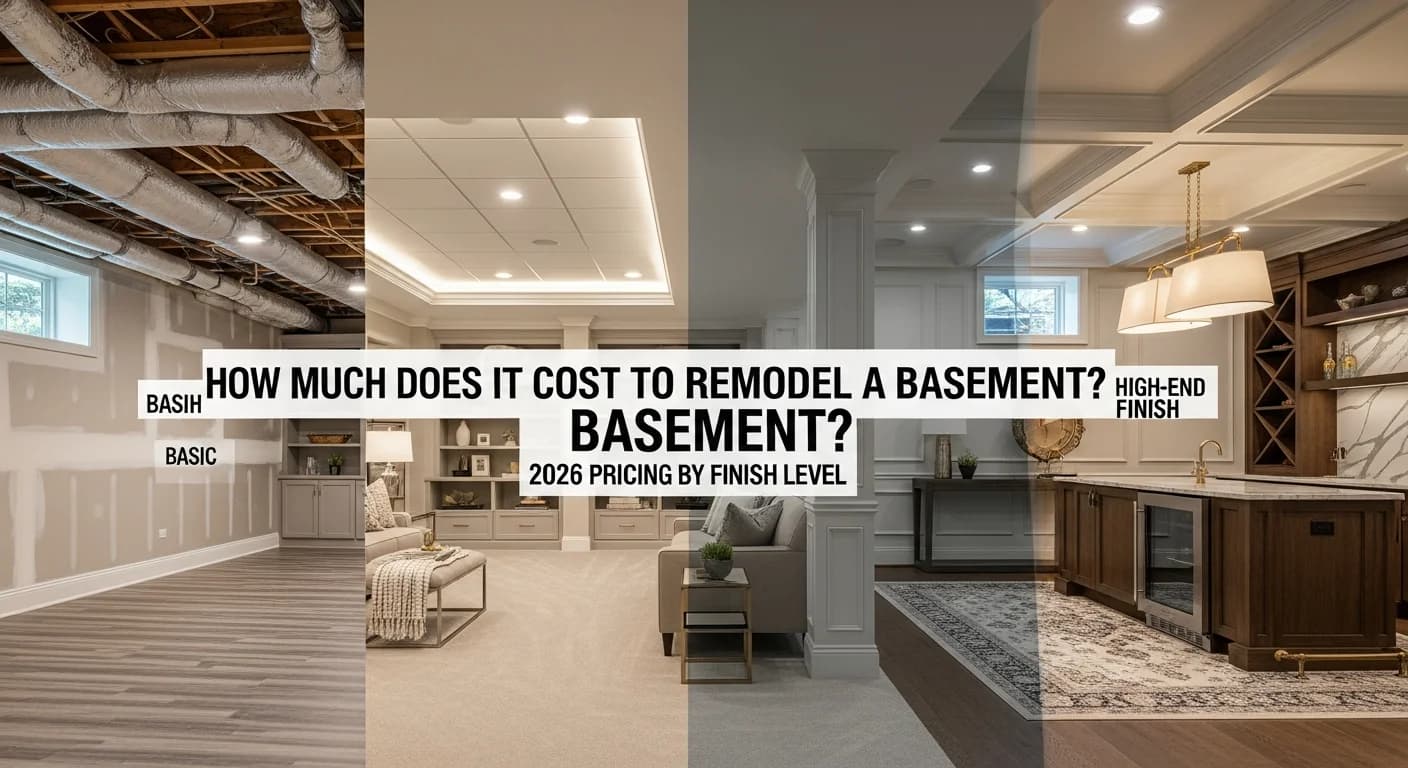
If you are wondering how much does it cost to remodel a basement, the answer depends heavily on your finish level, square footage, and whether you are starting from raw concrete or upgrading an already partially finished space. In 2026, the national average for a basement remodel ranges from $15,000 for a basic finish to $120,000 or more for a luxury buildout with a full bathroom, wet bar, and home theater. Understanding the pricing tiers helps you set a realistic budget and avoid costly surprises midway through construction.
Basement finishing has become one of the highest-ROI home improvement projects in the United States, returning an average of 70% to 75% of investment at resale according to Remodeling Magazine's 2026 Cost vs. Value report. With above-ground additions costing $200 to $400 per square foot, finishing below-grade space at $30 to $75 per square foot makes financial sense for homeowners who need more livable area without expanding their footprint.
Average Basement Remodel Cost by Finish Level
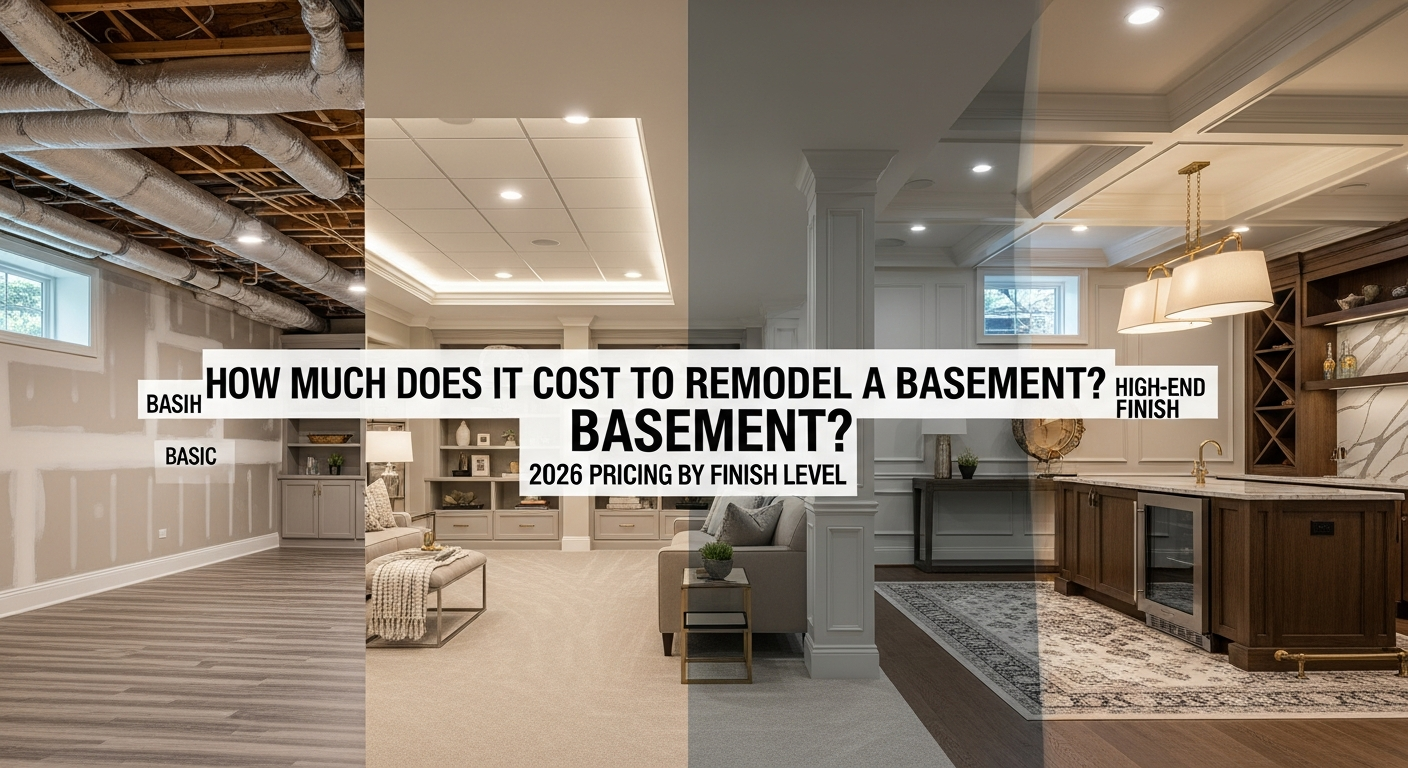
Basement remodel costs in 2026 fall into four distinct tiers based on finish quality, materials, and included features. Construction costs have increased approximately 5.6% year-over-year due to inflation in labor and building materials. The following breakdown reflects national averages for a 1,000-square-foot basement — adjust proportionally for your actual square footage.
| Finish Level | Cost per Sq Ft | 1,000 Sq Ft Total | Includes |
|---|---|---|---|
| Basic | $15–$30 | $15,000–$30,000 | Framing, drywall, basic flooring, lighting |
| Mid-Range | $30–$55 | $30,000–$55,000 | Engineered flooring, recessed lighting, half bath, built-in storage |
| Upscale | $55–$85 | $55,000–$85,000 | Full bathroom, kitchenette, custom cabinetry, premium finishes |
| Luxury | $85–$150+ | $85,000–$150,000+ | Home theater, wet bar, wine cellar, spa bathroom, smart home integration |
Major Cost Categories in a Basement Remodel
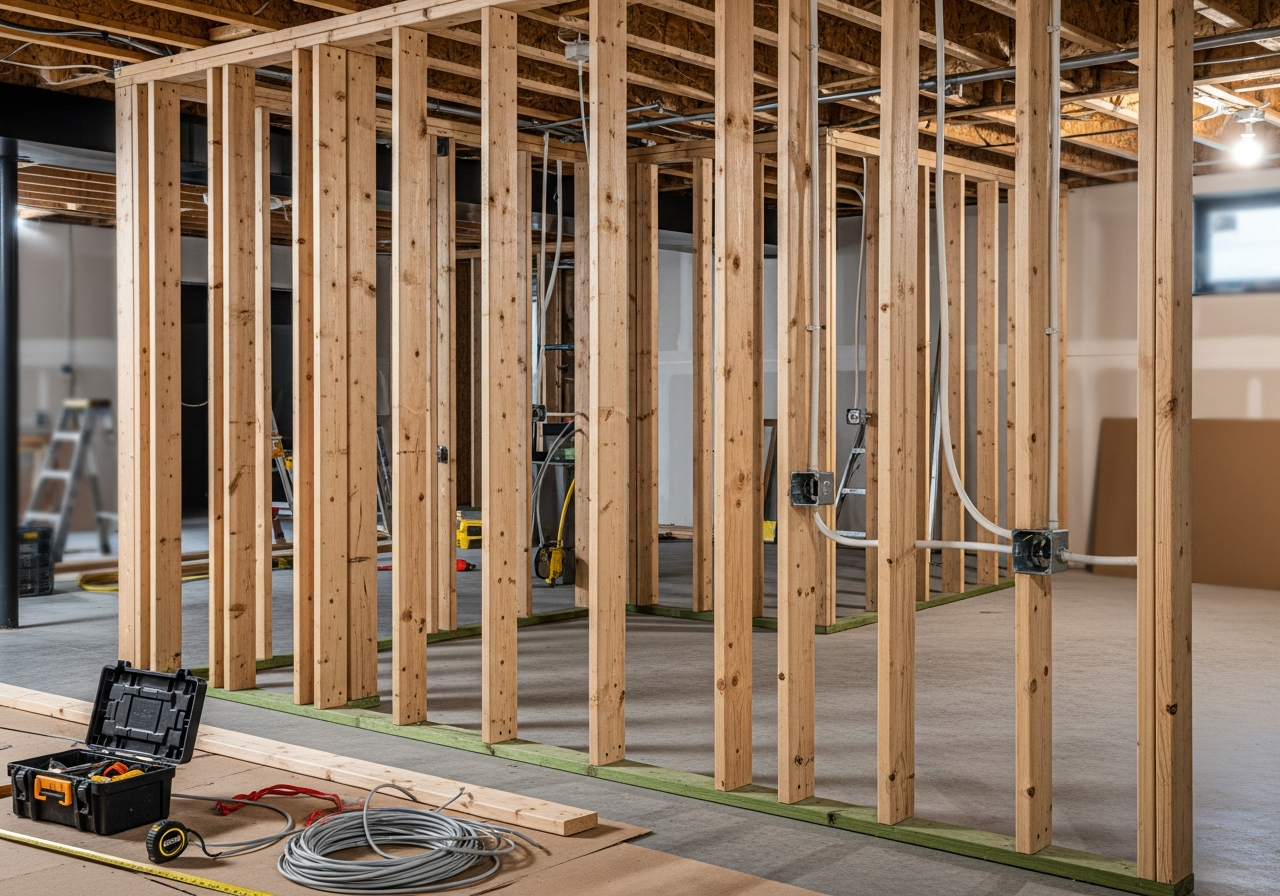
Labor typically accounts for 40% to 50% of total basement remodeling costs, with materials making up the remaining 50% to 60%. Framing and drywall installation represent the largest single line item at $5,000 to $15,000 for a standard basement. Electrical work — including new circuits, recessed lighting, and outlets — runs $3,000 to $8,000 depending on the number of circuits and fixture types. Plumbing for a basement bathroom adds $3,000 to $12,000 depending on whether you need to break concrete for drain lines.
Flooring is another significant expense, ranging from $2,000 for basic vinyl plank to $10,000 or more for engineered hardwood or polished concrete with radiant heating. Insulation, moisture barriers, and vapor retarders are essential below-grade investments that cost $1,500 to $4,000 but prevent long-term issues with mold and humidity. Do not skip waterproofing — basement moisture problems are the number one cause of remodel failure and can cost $5,000 to $15,000 to remediate after the fact.
Cost Factors That Affect Your Basement Remodel Budget
Several variables can push your basement remodel cost above or below national averages. Geographic location is the biggest factor — labor rates in major metropolitan areas like New York, San Francisco, and Chicago run 30% to 50% higher than rural or suburban markets. Ceiling height matters too: basements with less than 7 feet of clearance may require underpinning or floor lowering, which adds $20,000 to $50,000 to the project budget.
Existing conditions significantly impact cost. A dry basement with good access and existing stub-outs for plumbing is far cheaper to finish than a damp basement requiring waterproofing, sump pump installation, and foundation repairs. Egress window requirements — mandatory for bedrooms under building code — add $2,500 to $5,000 per window including well excavation. Permit costs vary by municipality from $200 to $2,000. For a complete guide to converting unfinished basements, see our basement remodel guide.
Basement Bathroom Addition Costs
Adding a bathroom is the single most valuable upgrade in a basement remodel, increasing both daily functionality and resale value. A half bath (toilet and vanity) costs $5,000 to $12,000, while a full bathroom with shower costs $10,000 to $25,000. The most significant expense is plumbing — if your basement does not have existing sewer line stub-outs, the contractor will need to break through the concrete slab to install drain lines, which alone costs $3,000 to $7,000.
An up-flush or macerating toilet system offers a budget alternative at $1,500 to $3,000, eliminating the need to break concrete for below-sewer-line plumbing. These systems are reliable in 2026 models and can handle a full bathroom's worth of fixtures. For cost comparisons with other bathroom projects, see our bathroom remodel cost guide.
Regional Cost Differences Across the United States
Basement remodel costs vary dramatically by region. In the Northeast and Pacific Northwest, expect to pay 20% to 40% above national averages due to higher labor costs and stricter building codes. The Midwest and Southeast generally fall at or below national averages, with some markets offering savings of 15% to 25%. Coastal cities with high demand for contractor services often have longer lead times, which can increase costs due to extended project timelines.
Rural areas typically have lower labor rates but may charge more for material delivery due to distance from distribution centers. Always obtain at least three detailed bids from licensed contractors in your specific market to establish accurate local pricing. For broader renovation cost context, see how much it costs to remodel a house.
Budget-Saving Strategies for Basement Remodeling
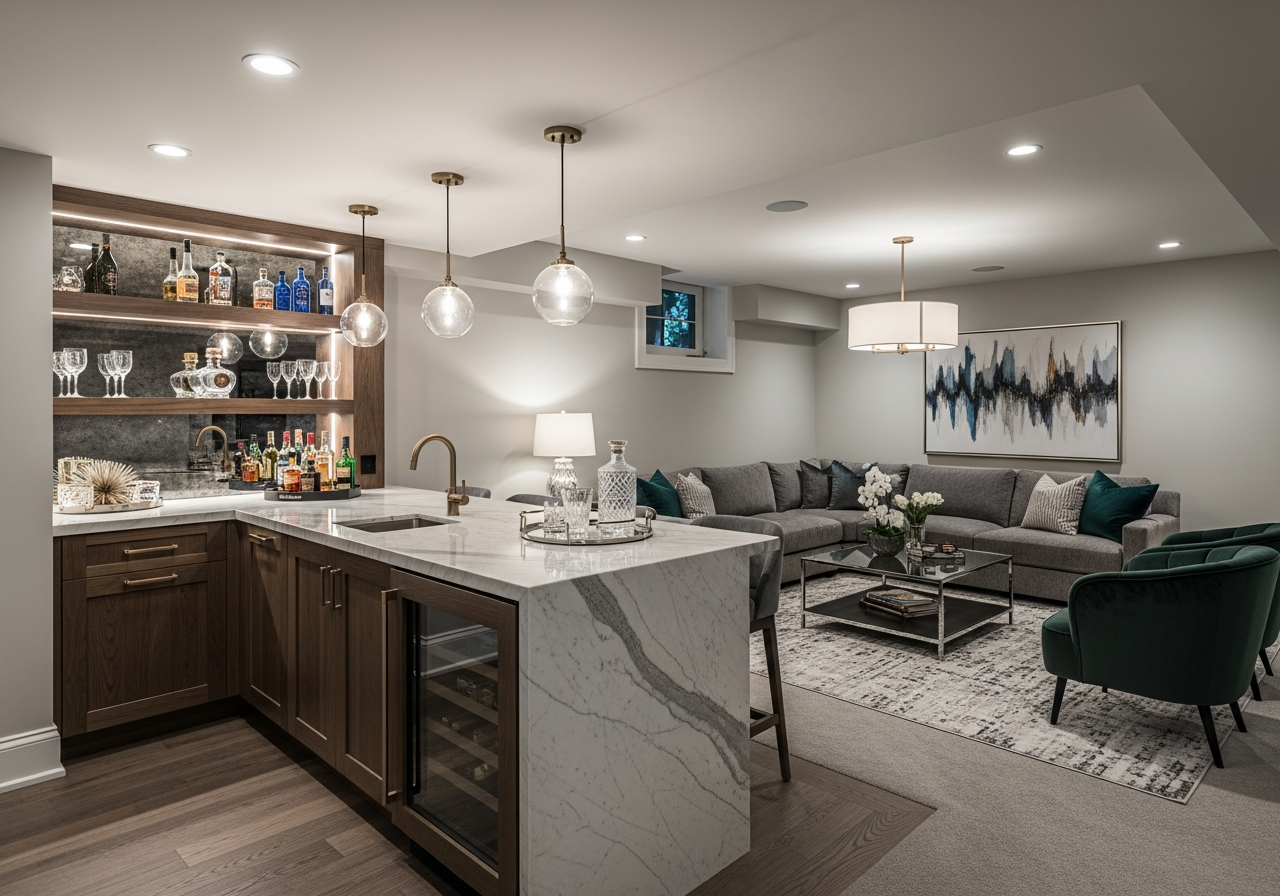
The most effective way to reduce costs is handling cosmetic work yourself while hiring professionals for structural, electrical, and plumbing tasks. DIY painting alone saves $2,000 to $5,000 on a typical basement. Luxury vinyl plank flooring is a cost-effective alternative to engineered hardwood, offering similar aesthetics at 40% to 60% less cost with superior moisture resistance. Choose open-concept layouts to minimize framing and drywall expenses — fewer walls mean lower material and labor costs.
Phase your remodel if budget is tight. Start with framing, insulation, drywall, and basic flooring, then add features like a bathroom, bar, or built-in storage in later phases as funds become available. This approach lets you use the space immediately while spreading costs over months or years. For more budget strategies, see how to budget for a remodel.
Return on Investment for Basement Finishing
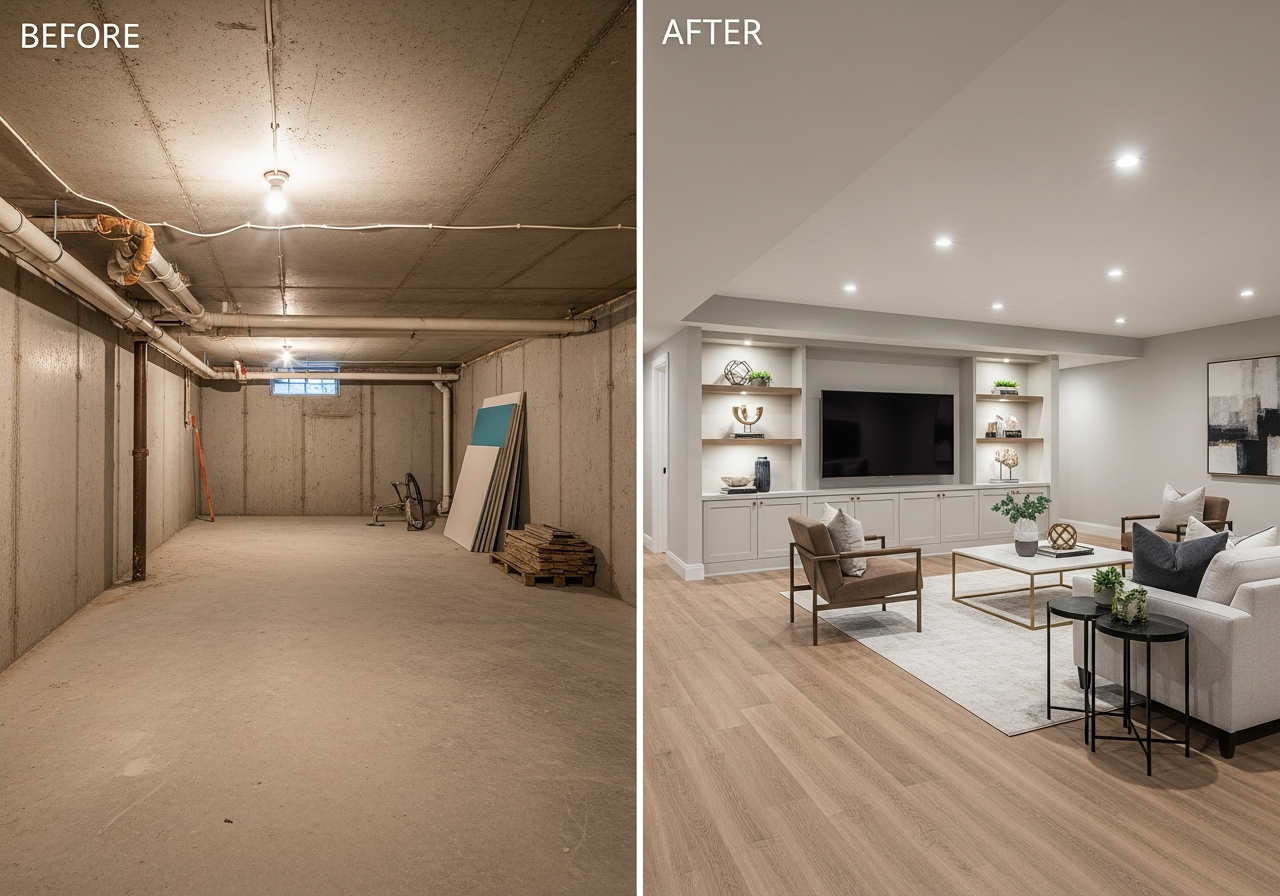
Basement finishing consistently ranks among the top ROI home improvement projects. A mid-range basement remodel recoups 70% to 75% of costs at resale, while adding a basement bathroom can increase home value by $15,000 to $25,000. In markets with limited housing inventory, finished basements can be the deciding factor for buyers comparing similar properties. The key to maximizing ROI is maintaining consistency with your home's overall finish quality — an overly luxurious basement in a modest home will not recoup proportional value.
Beyond financial returns, finished basements provide immediate lifestyle value: additional bedrooms for growing families, dedicated home offices for remote workers, entertainment spaces for hosting, and fitness areas that eliminate gym membership costs averaging $600 to $1,200 annually. For inspiration on specific basement uses, explore our basement finishing ideas.
Frequently Asked Questions
What is the cheapest way to finish a basement?
The most affordable approach is a basic finish with framing, insulation, drywall, and vinyl plank flooring — typically $15 to $30 per square foot. Skip the bathroom and wet bar initially, use an open floor plan to minimize walls, and handle painting yourself. Basement finishing systems like Owens Corning or TotalBasement offer panelized wall solutions starting around $20 per square foot that install faster than traditional framing, reducing labor costs.
Does finishing a basement increase home value?
Yes, finishing a basement typically increases home value by $30,000 to $75,000 depending on the quality of finish and your local real estate market. The average ROI is 70% to 75% at resale. Appraisers may not count basement square footage equally with above-grade space, but finished basements still positively impact buyer perception and competitive positioning. Adding a bathroom and egress windows increases the appraised value more than cosmetic finishes alone.
How long does a basement remodel take?
A basic basement finish takes 4 to 6 weeks, a mid-range remodel runs 6 to 10 weeks, and a luxury buildout with bathroom and custom features can take 10 to 16 weeks. Permit approval adds 2 to 6 weeks depending on your municipality. Moisture remediation, if needed, adds another 1 to 3 weeks before construction begins. Plan for a total timeline of 2 to 5 months from permit application to final inspection.
Do I need a permit to finish my basement?
In most jurisdictions, yes. Any work involving framing, electrical, plumbing, or HVAC requires a building permit. Finishing a basement without permits can result in fines, forced removal of completed work, and complications when selling your home. Permit costs range from $200 to $2,000 and include inspections at key stages — rough framing, rough electrical, rough plumbing, insulation, and final inspection.
Should I waterproof before finishing my basement?
Absolutely. Waterproofing is a non-negotiable step before any basement finishing work. Interior waterproofing with drainage systems and sump pumps costs $3,000 to $10,000, while exterior waterproofing with foundation membrane and drainage runs $8,000 to $15,000. Skipping waterproofing to save money almost always results in mold, water damage, and having to tear out finished work — costing far more than the upfront investment in moisture protection.
Related Articles
Explore more basement and home remodeling content: How to Remodel a Basement: Unfinished to Livable, How to Remodel a Living Room, Living Room Remodel Costs, Home Renovation Tips Complete Guide, and Home Remodel Financing Options.
Visualize Your Finished Basement with HanoDecor
Wondering what your unfinished basement could look like with a professional renovation? Upload a photo of your current space and let our AI Room Designer show you realistic previews of different finish levels and layout options — from cozy family rooms to sleek entertainment zones.
Try the AI Room Designer free — see your basement transformed in seconds. Upload your photo, select a style, and explore multiple design options before committing to a contractor. Browse our design gallery for finished basement inspiration from real homeowner projects.
How Much Does It Cost to Remodel a Basement? 2026 Pricing by Finish Level FAQs
Written by
Lisa Wang
Sustainable Design Writer focused on eco-friendly materials, energy efficiency, and budget-conscious home improvement. LEED Green Associate with expertise in low-impact renovation strategies.