How to Finance a Home Remodel: 8 Options Compared (HELOC, Loans, More)
Quick Summary
A comprehensive comparison of 8 home remodel financing options including HELOC, home equity loans, FHA 203k renovation loans, personal loans, contractor financing, cash-out refinance, credit cards, and savings strategies. Covers interest rates, terms, qualification requirements, and total cost analysis to help homeowners choose the right funding method.
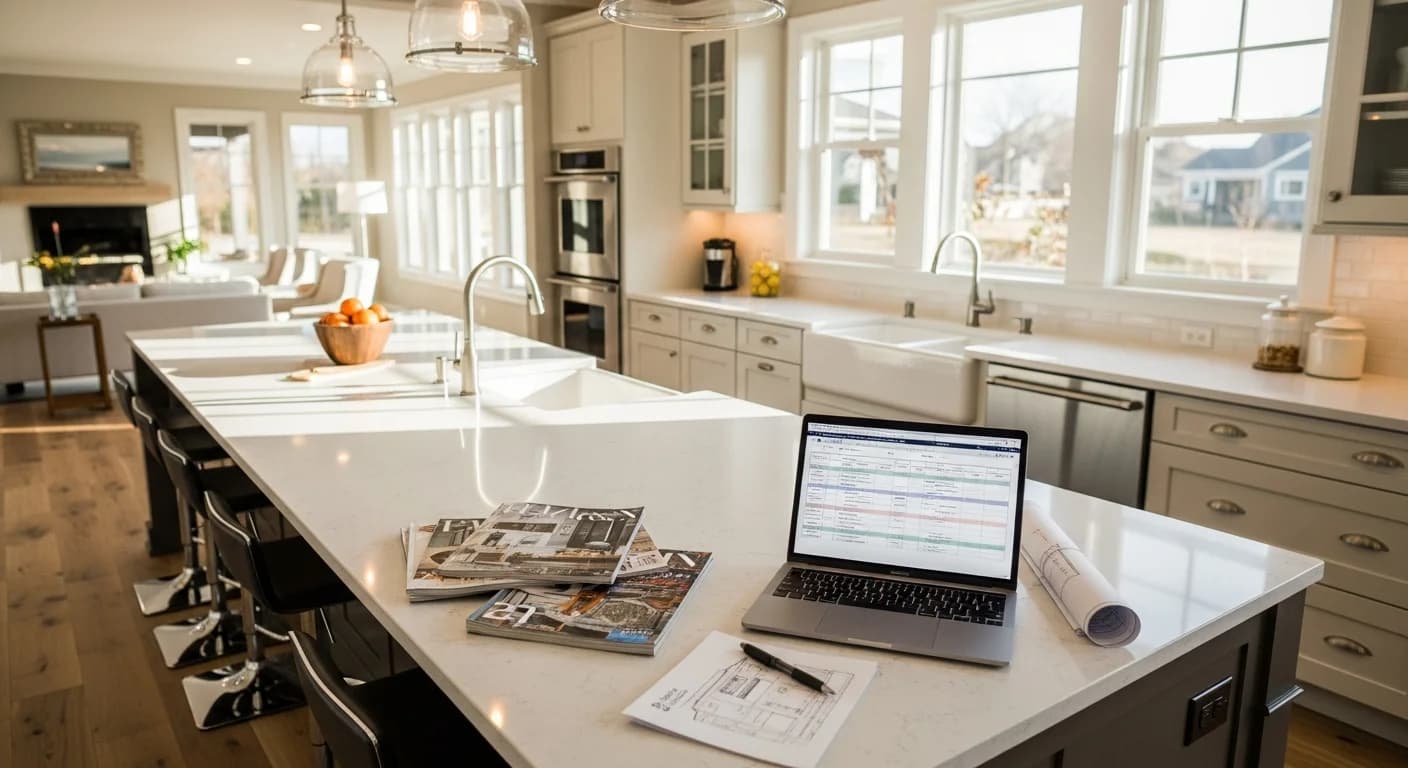
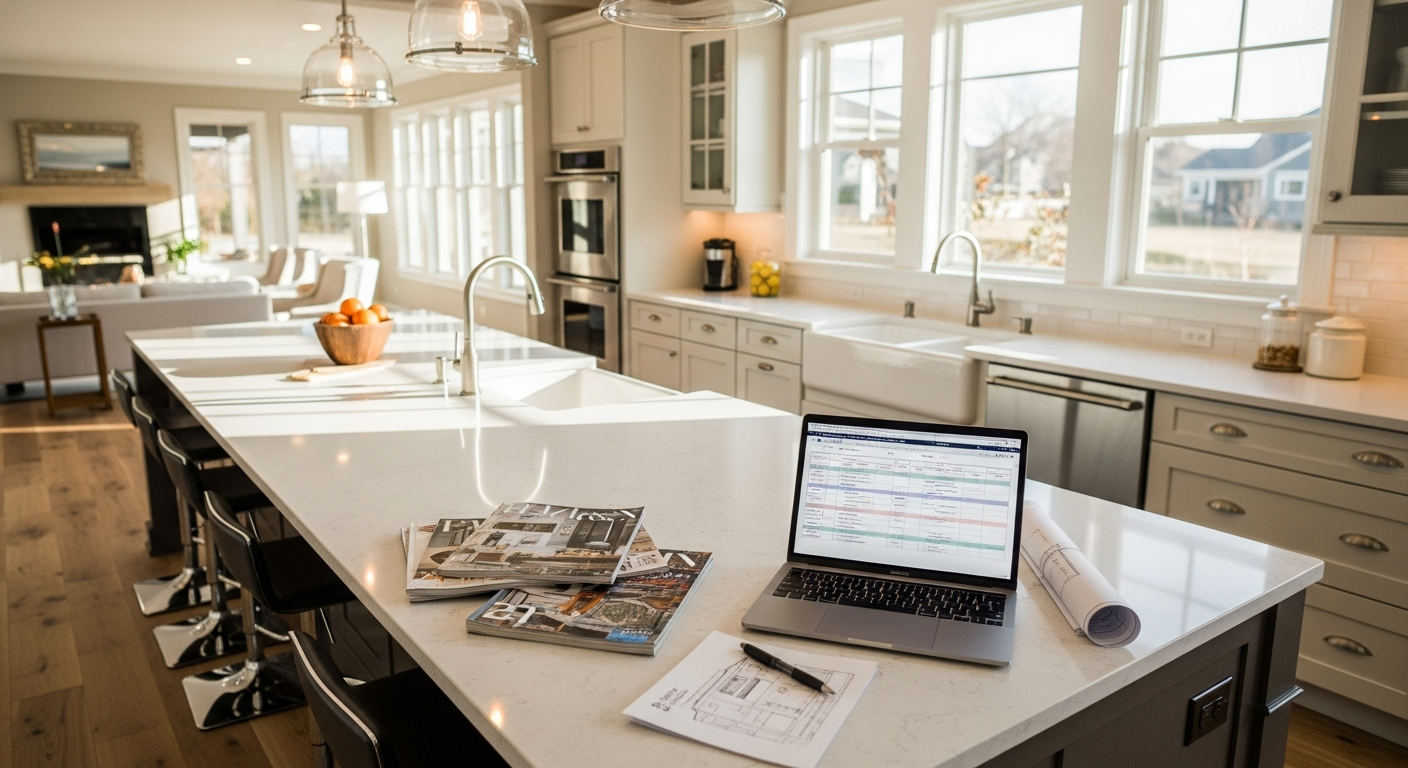
Figuring out how to finance a home remodel is just as important as choosing the right contractor or tile. The average major remodel costs $40,000 to $150,000, and the financing method you select can add $5,000 to $50,000 in interest over the loan term. With mortgage rates, home equity products, government-backed renovation loans, and unsecured options all on the table, homeowners need a clear framework for comparing total cost, qualification requirements, and repayment flexibility.
This guide breaks down 8 remodel financing options side by side, from the lowest total cost (cash and HELOCs) to the most accessible (personal loans and credit cards). Whether you are planning a $15,000 bathroom refresh or a $200,000 whole-house gut renovation, one of these strategies — or a combination — will fit your project scope and financial profile. Pair your financing decision with visualization tools to lock in your design scope before committing dollars.
How Much Should You Finance?
Before comparing loan products, establish how much you actually need to borrow. Start with detailed contractor bids or a remodel budget plan and add a 15 to 20 percent contingency for unexpected costs. Most financial advisors recommend keeping total housing debt — mortgage plus renovation loan — below 80 percent of your home's current appraised value. If your home is worth $400,000 and you owe $250,000, your borrowing capacity for a renovation loan is approximately $70,000.
Consider whether financing the full project makes sense or whether paying cash for a portion and borrowing the rest minimizes interest costs. For projects under $10,000, savings or a zero-percent introductory credit card may be the most cost-effective approach. For projects between $10,000 and $50,000, a HELOC or personal loan typically works best. Above $50,000, home equity loans or FHA 203k renovation loans become the most practical options.
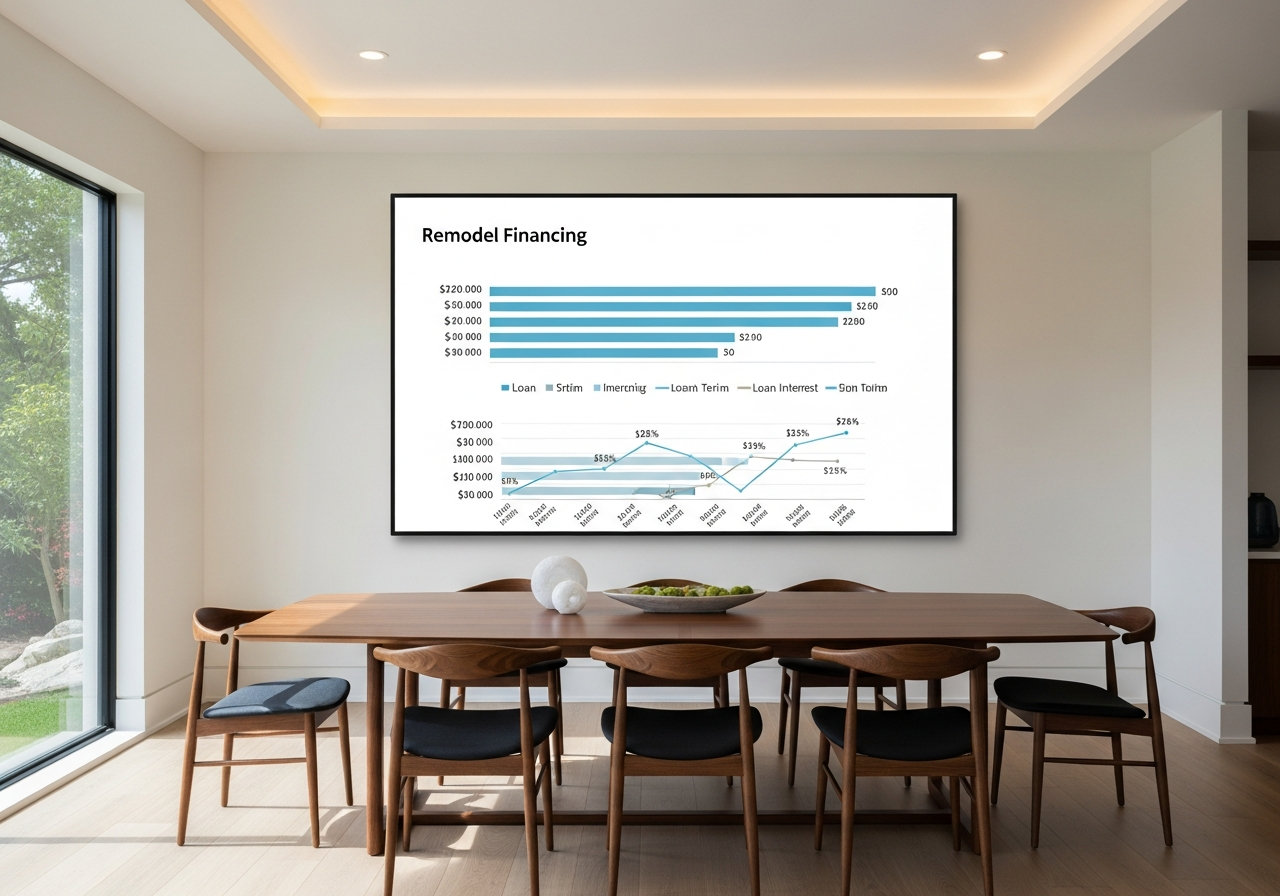
Option 1 — Home Equity Line of Credit (HELOC)
A HELOC lets you borrow against your home equity with a revolving credit line, similar to a credit card but at much lower rates. Current HELOC rates range from 7.5 to 9.5 percent (variable), with draw periods of 5 to 10 years and repayment periods of 10 to 20 years. Most lenders require at least 15 to 20 percent equity and a credit score above 680. The major advantage is flexibility — you draw only what you need, when you need it, and pay interest only on the outstanding balance.
HELOCs work particularly well for phased remodels where costs are spread over months. Closing costs are typically $2,000 to $5,000 or sometimes waived entirely. The risk is the variable interest rate — your monthly payment can increase if rates rise. Some lenders offer fixed-rate conversion options that lock in a portion of your balance at a fixed rate, providing rate certainty for larger draws. Learn more about using home equity for remodel financing.
Option 2 — Home Equity Loan
A home equity loan provides a lump sum at a fixed interest rate, typically 7 to 10 percent for 5 to 30 year terms. Unlike a HELOC, you receive the full amount upfront and make fixed monthly payments from day one. This predictability makes budgeting straightforward — you know exactly what your payment will be every month for the life of the loan. Most lenders require 15 to 20 percent equity, a debt-to-income ratio below 43 percent, and a credit score above 660.
Home equity loans are ideal for one-time, well-defined projects where you know the total cost upfront. Closing costs run $2,000 to $5,000 and the interest may be tax-deductible if the funds are used for home improvement (consult a tax professional). The drawback is that you pay interest on the full amount from closing, even if construction has not started. For a $75,000 loan at 8 percent for 15 years, you would pay approximately $43,000 in total interest.
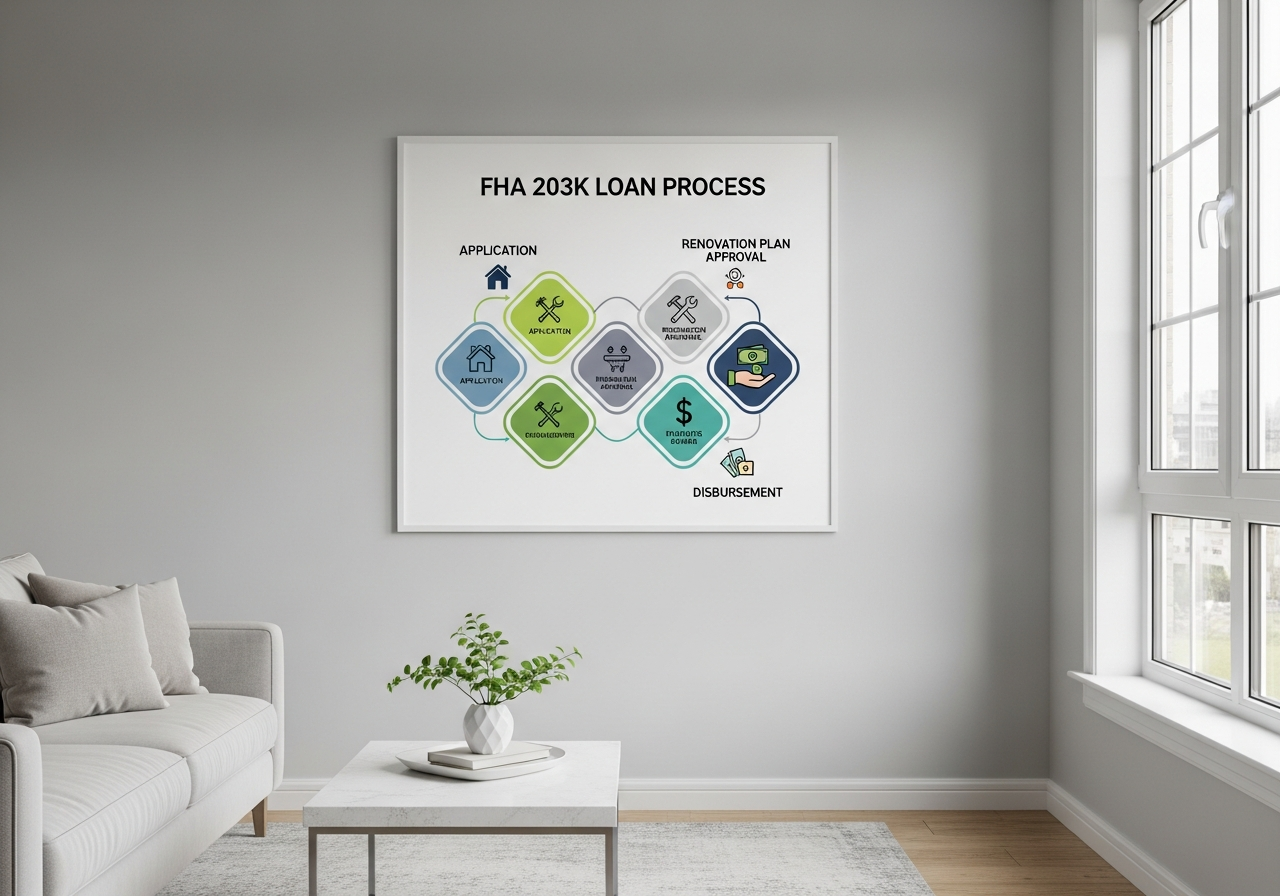
Option 3 — FHA 203(k) Renovation Loan
The FHA 203(k) loan bundles your mortgage and renovation costs into a single loan, available for both purchases and refinances. The Standard 203(k) covers structural work and renovations above $35,000, while the Limited 203(k) — sometimes called a Streamline — handles cosmetic updates up to $35,000. Down payments can be as low as 3.5 percent, and credit score requirements start at 580, making this the most accessible option for homeowners with limited equity.
The process is more complex than a standard loan. You need a HUD-approved 203(k) consultant ($400 to $1,000) for Standard loans, contractor bids before closing, and disbursements happen through a draw schedule with inspections. Mortgage insurance is required regardless of equity, adding 0.55 to 0.85 percent annually. Despite the complexity, the 203(k) is powerful for buyers purchasing fixer-uppers or homeowners refinancing with major renovation plans.
Option 4 — Personal Loans
Unsecured personal loans provide fast funding — often within 1 to 3 business days — without using your home as collateral. Rates range from 6 to 36 percent depending on credit score, with terms of 2 to 7 years and loan amounts up to $100,000 from top lenders. No appraisal, no closing costs, and no risk of foreclosure make personal loans attractive for smaller projects or homeowners who prefer not to leverage their home equity.
The downside is higher rates compared to secured options. A borrower with a 720 credit score might get 8 to 12 percent on a personal loan versus 7 to 9 percent on a HELOC. For a $30,000 project, that rate difference adds $2,000 to $5,000 in total interest over a 5-year term. Personal loans work best for projects under $50,000 where speed and simplicity outweigh the cost premium. Compare offers from at least 3 to 5 lenders to find the best rate.
Option 5 — Contractor Financing
Many large remodeling companies offer in-house financing or partnerships with lending institutions. These programs often feature promotional rates — 0 percent for 12 to 18 months or reduced rates for longer terms. The convenience of one-stop shopping is appealing, but read the fine print carefully. Deferred interest promotions charge retroactive interest on the full original balance if you do not pay in full before the promotional period expires.
Contractor financing can make sense for mid-range projects if you can pay off the balance within the promotional window. However, the convenience may come at a cost — contractors sometimes build financing fees into their bid price, effectively raising project costs by 5 to 15 percent. Always get a cash price alongside the financed price to compare. If the cash price is significantly lower, you may be better off securing independent financing and paying the contractor directly. Check our guide on choosing a remodel contractor.
Option 6 — Cash-Out Refinance
A cash-out refinance replaces your existing mortgage with a new, larger mortgage and gives you the difference in cash. If your home is worth $400,000 and you owe $200,000, you could refinance for $280,000 and receive $80,000 cash for renovations. Current cash-out refinance rates are 6.5 to 8 percent for 30-year terms. This option only makes financial sense if your new rate is close to or lower than your existing mortgage rate.
Closing costs for a cash-out refinance run 2 to 5 percent of the new loan amount — $5,600 to $14,000 on a $280,000 loan. The extended loan term means you pay interest on renovation costs for up to 30 years, which significantly increases total cost. A $80,000 cash-out at 7 percent over 30 years costs approximately $111,600 in interest alone. This option is best for homeowners who can also lower their existing mortgage rate or need very large sums with the lowest monthly payment.
Option 7 — Credit Cards (When They Make Sense)
Credit cards are rarely the best financing option, but they have a narrow use case: small projects under $5,000 to $10,000 where you can pay the balance within a 0-percent introductory APR period (typically 15 to 21 months). Some cards offer 2 to 5 percent cash back on home improvement purchases, effectively reducing project costs. A $5,000 project on a 2-percent cash-back card with a 0-percent intro APR paid over 15 months costs nothing in interest and earns $100 back.
The danger is carrying a balance past the introductory period, when rates jump to 18 to 28 percent. A $10,000 balance at 22 percent APR with minimum payments takes over 25 years to pay off and costs $18,000 in interest. Only use credit cards for remodel expenses if you have a concrete payoff plan within the promotional window and the discipline to execute it.
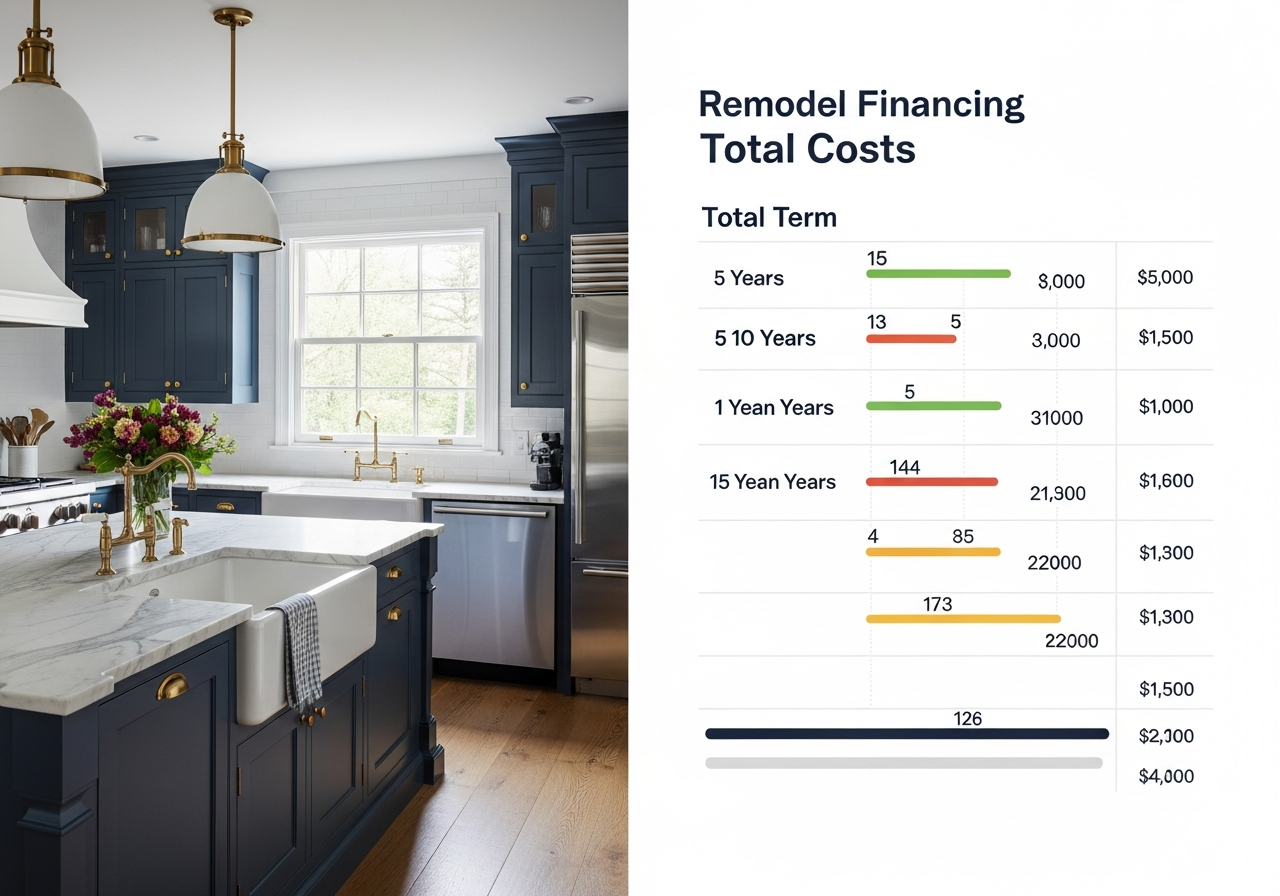
Option 8 — Savings and Phased Renovation Strategy
Paying cash eliminates interest entirely, making it the lowest total-cost option. If you cannot fund the entire project from savings, consider a phased approach — completing the kitchen this year, bathrooms next year, and cosmetic updates as budget allows. This strategy avoids debt completely but requires patience and the ability to live with a partially completed home. Setting up a dedicated high-yield savings account earning 4 to 5 percent APY and auto-depositing $500 to $1,000 monthly builds a $15,000 to $30,000 renovation fund in two to three years.
A phased strategy also lets you learn from each project phase, potentially saving money on later phases by understanding contractor pricing, material quality, and project management. Use HanoDecor's AI Studio to visualize each phase before committing, ensuring your phased plan produces a cohesive final result rather than a patchwork of disconnected updates.
| Financing Option | Typical Rate | Loan Term | Best For | Total Interest on $50K |
|---|---|---|---|---|
| HELOC | 7.5–9.5% (variable) | 10–20 yr | Phased remodels | $22,000–$55,000 |
| Home Equity Loan | 7–10% (fixed) | 5–30 yr | One-time projects | $10,000–$72,000 |
| FHA 203(k) | 6.5–8% | 15–30 yr | Low-equity buyers | $15,000–$60,000 |
| Personal Loan | 6–36% | 2–7 yr | Fast funding, no collateral | $3,200–$46,000 |
| Contractor Financing | 0–18% | 1–10 yr | Promo periods | $0–$30,000 |
| Cash-Out Refi | 6.5–8% | 15–30 yr | Large projects + rate drop | $15,000–$60,000 |
| Credit Cards | 0–28% | 15–21 mo promo | Under $10K, fast payoff | $0–$50,000+ |
| Cash/Savings | 0% | N/A | Any size, no debt | $0 |
Related Articles
Explore more remodel financing and planning resources: How to Use Home Equity to Finance a Remodel, How to Get a Construction Loan for a Remodel, How to Budget for a Remodel, How Much Does It Cost to Remodel a House?, and Home Renovation Tips Complete Guide.
Frequently Asked Questions
What is the cheapest way to finance a home remodel?
The cheapest way is paying cash, which eliminates interest entirely. Among borrowing options, a HELOC or home equity loan typically offers the lowest rates (7 to 10 percent) because your home secures the loan. If you qualify for a 0-percent introductory credit card and can pay within the promo period, small projects can also be interest-free.
Can I finance a remodel with no equity in my home?
Yes, several options exist for homeowners with limited equity. Personal loans require no collateral and are available with credit scores as low as 580 from some lenders. The FHA 203(k) loan requires only 3.5 percent down and bundles renovation costs with your mortgage. Contractor financing and credit cards also do not require home equity.
Is a HELOC or home equity loan better for a remodel?
A HELOC is better for phased remodels where costs are spread over time, since you only pay interest on what you draw. A home equity loan is better for one-time projects with a known total cost, since the fixed rate provides payment predictability. If your project timeline is under 6 months and the total is well-defined, a home equity loan simplifies budgeting.
How much can I borrow for a home remodel?
Most lenders allow you to borrow up to 80 to 85 percent of your home's appraised value minus your existing mortgage balance. For example, with a $400,000 home and $250,000 mortgage, you could borrow up to $70,000 to $90,000 through a home equity product. Personal loans go up to $100,000 with top lenders, and FHA 203(k) loans can cover the entire purchase plus renovation cost.
Are home remodel loan interest payments tax-deductible?
Interest on home equity loans and HELOCs is tax-deductible if the funds are used for substantial home improvements that increase your home's value. The deduction applies to loan amounts up to $750,000 (combined with mortgage debt) under current tax law. Personal loan interest and credit card interest are not deductible. Consult a tax professional for guidance specific to your situation.
Plan Your Remodel With Confidence
Before committing to a financing plan, visualize your remodel to define the exact scope and budget. HanoDecor's AI Studio lets you upload photos of your current spaces and see realistic renderings of your planned renovations — helping you set an accurate budget before applying for financing. Explore the Room Designer to experiment with layouts, materials, and finishes, then use the design gallery for inspiration that aligns with your financial plan.
How to Finance a Home Remodel FAQs
Written by
Lisa Wang
Sustainable Design Writer focused on eco-friendly materials, energy efficiency, and budget-conscious home improvement. LEED Green Associate with expertise in low-impact renovation strategies.