How to Get a Construction Loan for a Remodel: Requirements and Process
Quick Summary
A step-by-step guide to obtaining a construction loan for home remodeling covering loan types, qualification requirements, application documentation, draw schedules, inspection processes, and alternative financing options for homeowners who do not qualify for traditional construction loans.
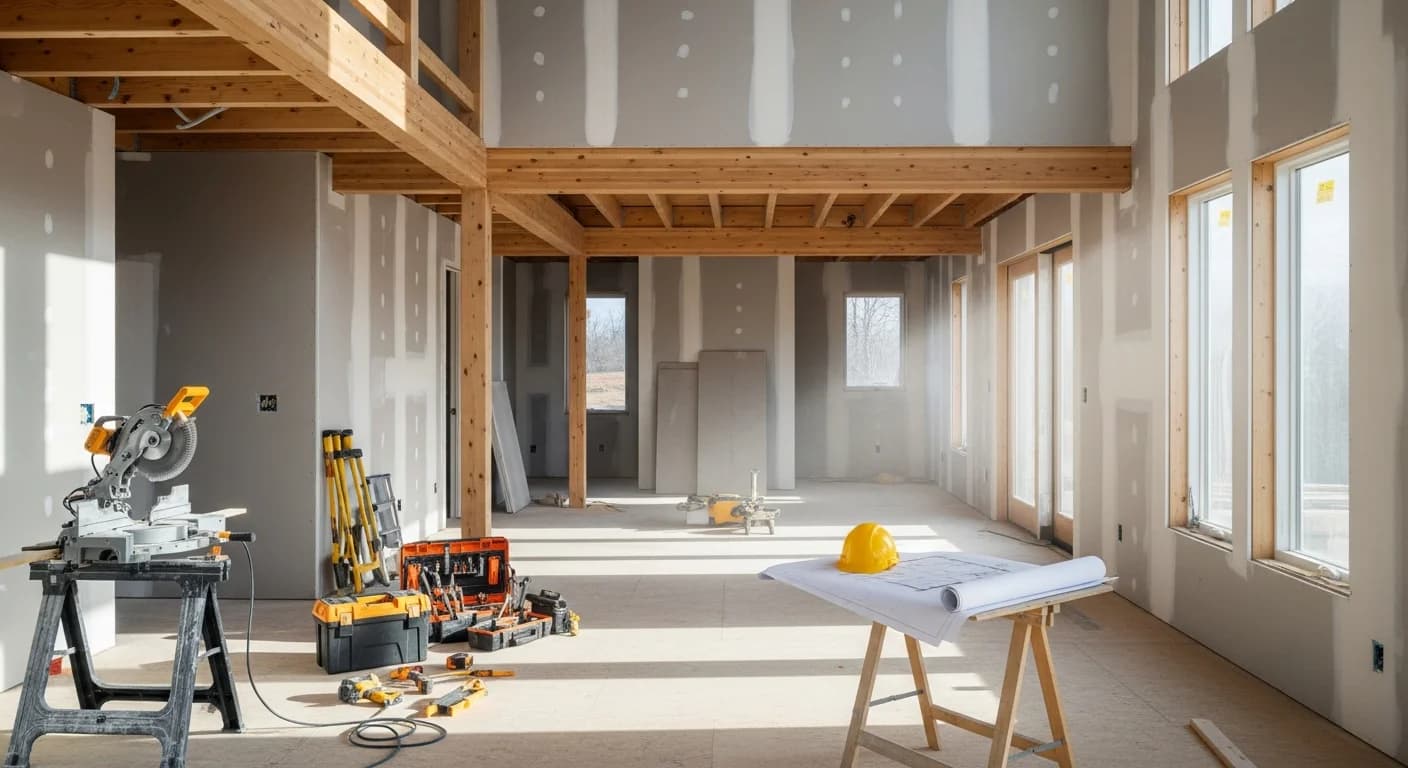
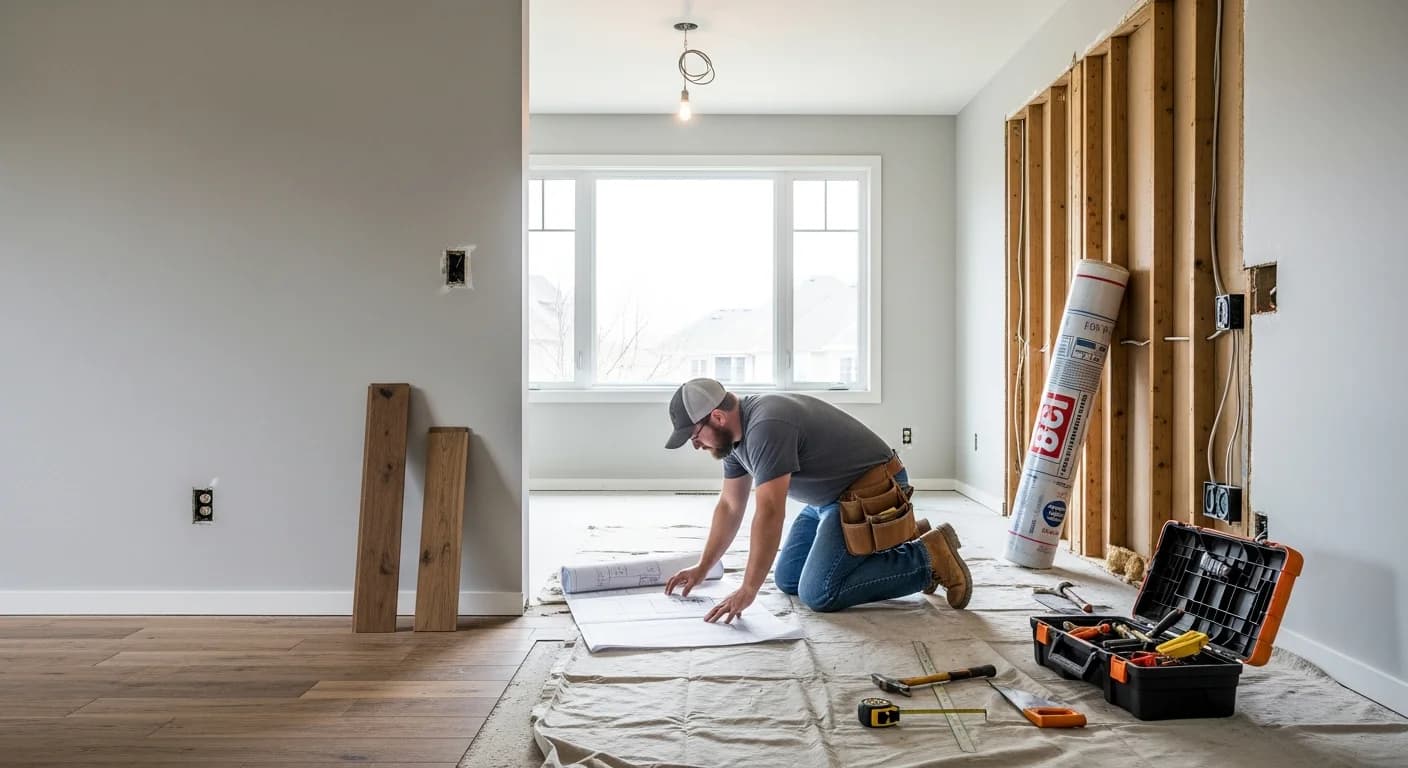
Understanding how to get a construction loan for a remodel opens financing options for major renovations that traditional home equity products may not cover. Construction loans are designed for large-scale projects — typically $50,000 and above — where funds need to be disbursed in phases as work progresses rather than all at once. They are particularly useful for whole-house renovations, additions, and gut remodels where the project scope requires professional project management and staged inspections.
This guide covers the two main construction loan types, qualification requirements, the application process, how draw schedules work, and what to do if you do not qualify. Construction loans are more complex than HELOCs or personal loans, but for the right project, they provide the structure and accountability that ensures your renovation stays on track and on budget.
Construction Loan Types for Remodels
Two primary construction loan types apply to remodel projects. A construction-to-permanent loan (also called a single-close loan) converts automatically to a traditional mortgage when construction is complete. You close once, pay construction-period interest only, then transition to permanent fixed-rate payments. A stand-alone construction loan covers only the construction period (6 to 18 months), after which you either pay it off or refinance into a permanent mortgage. Single-close loans save on closing costs but may carry slightly higher rates.
For renovations specifically, the FHA 203(k) and Fannie Mae HomeStyle renovation loans are popular alternatives that bundle renovation costs with your existing mortgage into a single loan. These products are easier to qualify for than traditional construction loans and are available through more lenders. However, they have project cost limits and require approved contractors. Our remodel financing comparison covers all options side by side.
Qualification Requirements
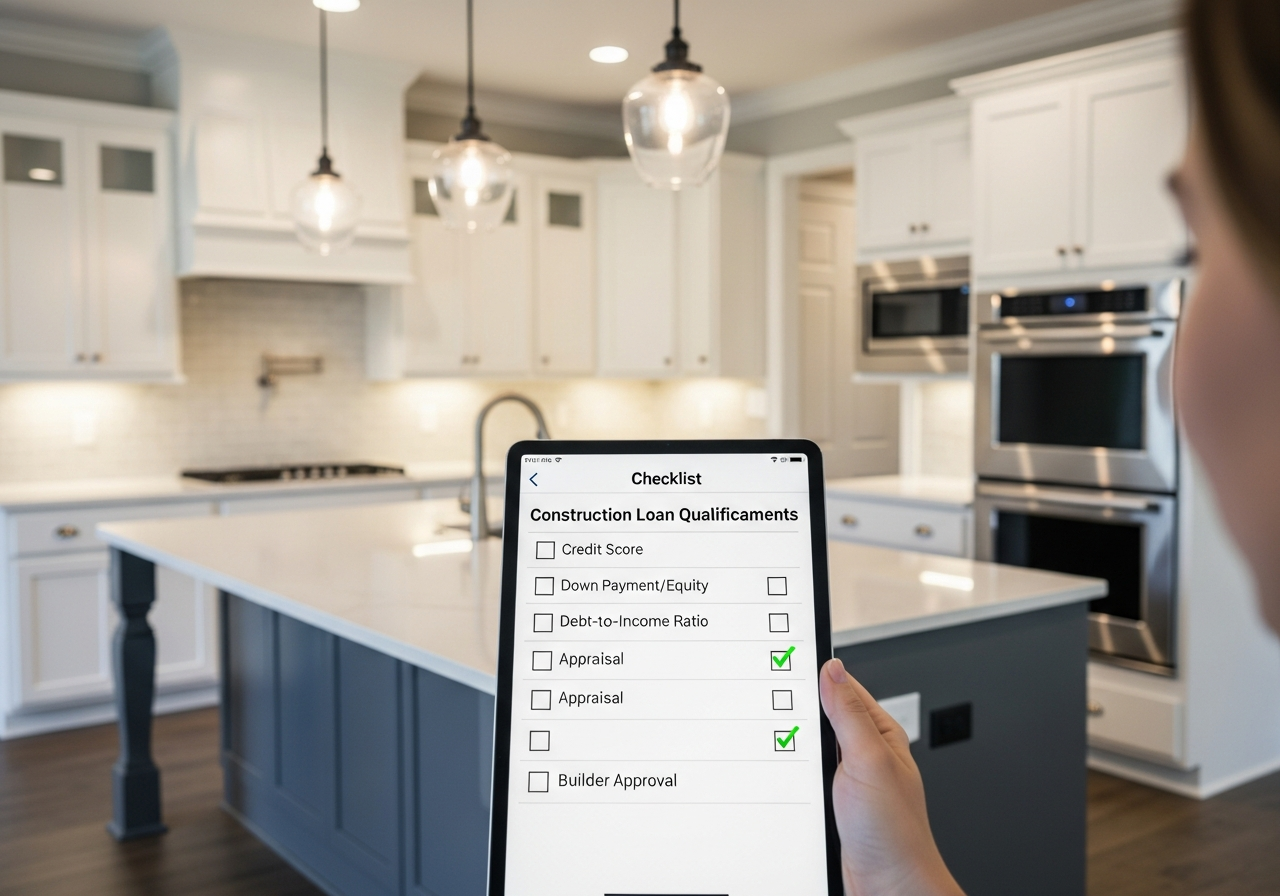
Construction loans carry stricter requirements than standard mortgages because the lender takes on additional risk during the construction period. Minimum credit score is typically 680 to 720 (compared to 620 for conventional mortgages). Debt-to-income ratio must be below 43 percent including the projected loan payment. Most lenders require 20 to 25 percent equity in the property after renovation (based on the appraised after-renovation value). Stable income documentation for 2 or more years is standard.
You will also need detailed construction plans, a licensed contractor with a track record of similar projects, a comprehensive project budget with line-item costs, and a realistic construction timeline. Some lenders require the contractor to carry specific insurance coverage ($1 million or more general liability) and may restrict which contractors qualify. The approval process takes 4 to 8 weeks — significantly longer than a HELOC or personal loan.
Application Documentation
Prepare the following documentation before applying: two years of tax returns and W-2s (or 1099s for self-employed borrowers), recent pay stubs or profit-and-loss statements, bank statements for the last 2 to 3 months, current mortgage statement, property tax records, homeowner's insurance declarations, detailed construction plans or architectural drawings, contractor's bid with line-item breakdown, contractor's license and insurance certificates, and a project timeline with milestone dates.
The lender will order an appraisal based on the after-renovation value ($400 to $800), which requires the appraiser to estimate the home's value once all planned improvements are complete. This appraisal drives your maximum loan amount. If the appraiser values the finished project lower than expected, your borrowing capacity decreases. Having detailed construction plans with material specifications helps the appraiser assign accurate values to each improvement.
How Draw Schedules Work
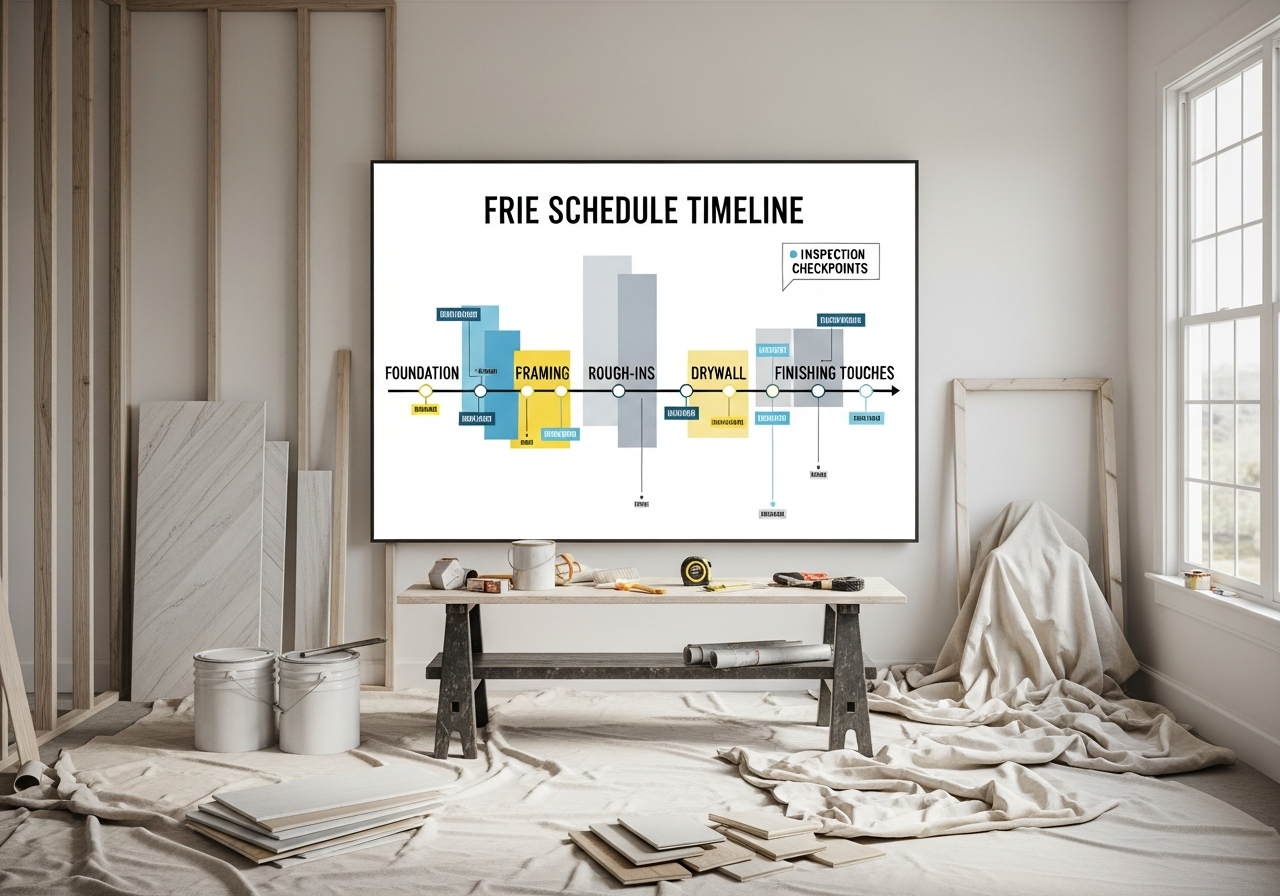
Unlike a HELOC or home equity loan where you receive the full amount upfront, construction loans disburse funds in draws — scheduled payments released as specific project milestones are completed and inspected. A typical draw schedule for a major remodel includes 4 to 6 draws: initial draw at project start (10 to 15 percent for permits and demolition), framing and rough-in completion (20 to 25 percent), mechanical systems complete (15 to 20 percent), drywall and finishes (20 to 25 percent), and final completion (10 to 15 percent).
Before each draw, the lender sends an inspector ($100 to $300 per inspection) to verify that the work described in the draw request is actually complete. The contractor submits invoices and lien waivers from subcontractors, confirming that all workers and suppliers have been paid. This process protects you from paying for work that has not been done and reduces the risk of mechanics' liens on your property. Budget $500 to $1,500 for total inspection fees over the life of the loan.
Interest During Construction
During the construction period, you pay interest only on the amount drawn — not the full loan commitment. If your construction loan is $150,000 and only $30,000 has been drawn so far, you pay interest only on $30,000. Current construction loan interest rates range from 7 to 10 percent, typically 1 to 2 percentage points above conventional mortgage rates. On a 12-month construction period with a $150,000 loan drawn evenly over 6 draws, total construction-period interest costs approximately $6,500 to $9,500.
Some lenders offer interest reserve accounts that add expected construction-period interest to the loan amount, so you do not make payments during construction. This increases the total loan but eliminates monthly payments while your home is under renovation — particularly helpful if you are paying for temporary housing during a gut remodel. Discuss this option with your lender during the application process.
| Construction Loan Feature | Construction-to-Permanent | Stand-Alone | FHA 203(k) |
|---|---|---|---|
| Closings Required | 1 | 2 | 1 |
| Min. Credit Score | 680–720 | 700+ | 580–620 |
| Down Payment / Equity | 20–25% | 20–25% | 3.5% |
| Interest Rate | 7–9% | 7–10% | 6.5–8% |
| Max Loan Term | 30 yr (after conversion) | 6–18 mo | 30 yr |
| Draw Schedule | Yes | Yes | Yes |
| Mortgage Insurance | If <20% equity | No | Yes (always) |
| Contractor Restrictions | Moderate | Moderate | Must be HUD-approved |
What If You Do Not Qualify?
If your credit score, equity, or income does not meet construction loan requirements, several alternatives exist. A HELOC or home equity loan has lower qualification thresholds and works well for projects under $100,000. FHA 203(k) loans accept credit scores as low as 580 with 3.5 percent down. Personal loans require no collateral and fund quickly. A phased renovation approach — completing one room at a time and paying as you go — avoids borrowing entirely. See our home remodel loan guide for more options.
Related Articles
Explore more financing resources: How to Finance a Home Remodel: 8 Options Compared, HELOC vs Home Equity Loan, How to Budget for a Remodel, How to Pay for a Remodel: Financing Ranked, and How Much Does It Cost to Remodel a House?
Frequently Asked Questions
What credit score do I need for a construction loan?
Most lenders require a minimum credit score of 680 to 720 for construction loans. Some community banks and credit unions may consider scores as low as 660 with compensating factors like high equity or low debt ratios. FHA 203(k) renovation loans accept scores as low as 580 as an alternative.
How long does it take to get a construction loan?
The construction loan approval process takes 4 to 8 weeks from application to closing. This includes document review, property appraisal, contractor verification, and underwriting. Having all documentation prepared before applying can shorten the timeline. Some lenders offer expedited processing for repeat borrowers or simple renovation projects.
Can I be my own contractor with a construction loan?
Most lenders require a licensed general contractor for construction loan projects. Some lenders allow owner-builders for borrowers with documented construction experience, but this is uncommon and typically comes with higher rates and additional inspection requirements. FHA 203(k) loans always require a licensed contractor.
What happens if the project goes over budget?
If your project exceeds the loan amount, you must cover the difference from personal funds or negotiate scope reductions with your contractor. This is why a 15 to 20 percent contingency built into the original loan request is critical. Some lenders allow loan modification requests for documented scope changes, but this adds processing time and is not guaranteed.
Plan Your Remodel Before Applying
Construction loan applications require detailed renovation plans. HanoDecor's AI Studio helps you visualize your project and create clear renderings that support your loan application. Use the Room Designer to finalize layouts and material selections before meeting with lenders and contractors, and browse the design gallery for reference images that communicate your vision.
How to Get a Construction Loan for a Remodel FAQs
Written by
Lisa Wang
Sustainable Design Writer focused on eco-friendly materials, energy efficiency, and budget-conscious home improvement. LEED Green Associate with expertise in low-impact renovation strategies.