How to Get a Home Remodel Loan: Application Process and Requirements
Quick Summary
A practical guide to obtaining a home remodel loan covering loan type selection, credit score requirements, documentation preparation, the application process, rate negotiation, and strategies for improving approval odds. Includes a comparison of secured versus unsecured options and tips for first-time renovation borrowers.


Understanding how to get a home remodel loan involves more than submitting an application and hoping for approval. The remodel financing landscape includes a dozen loan products with different qualification criteria, rate structures, and disbursement methods. Choosing the wrong product wastes time in applications and potentially locks you into unfavorable terms. Choosing the right product — and preparing your application properly — can save thousands in interest and weeks in processing time.
This guide walks you through the process from product selection to closing, covering everything you need to prepare, what lenders look for, and how to improve your approval odds if your financial profile has weaknesses. Whether your project is a $10,000 bathroom update or a $200,000 whole-house renovation, following this process ensures you find the right loan at the best available terms.
Step 1 — Choose the Right Loan Type
The first decision is whether to use a secured loan (backed by your home equity) or an unsecured loan (based on creditworthiness alone). Secured options — HELOCs, home equity loans, and construction loans — offer the lowest rates (7 to 10 percent) but require sufficient equity and put your home at risk if you default. Unsecured options — personal loans and credit cards — have higher rates (8 to 36 percent) but fund faster and do not require an appraisal.
For projects under $25,000, a personal loan often provides the best balance of speed, simplicity, and cost. For projects between $25,000 and $100,000, a HELOC or home equity loan delivers the lowest total cost for homeowners with 20+ percent equity. For projects above $100,000, a construction loan or cash-out refinance provides the necessary loan size and project oversight structure. Review our complete financing comparison for detailed product analysis.
Step 2 — Check and Improve Your Credit Score
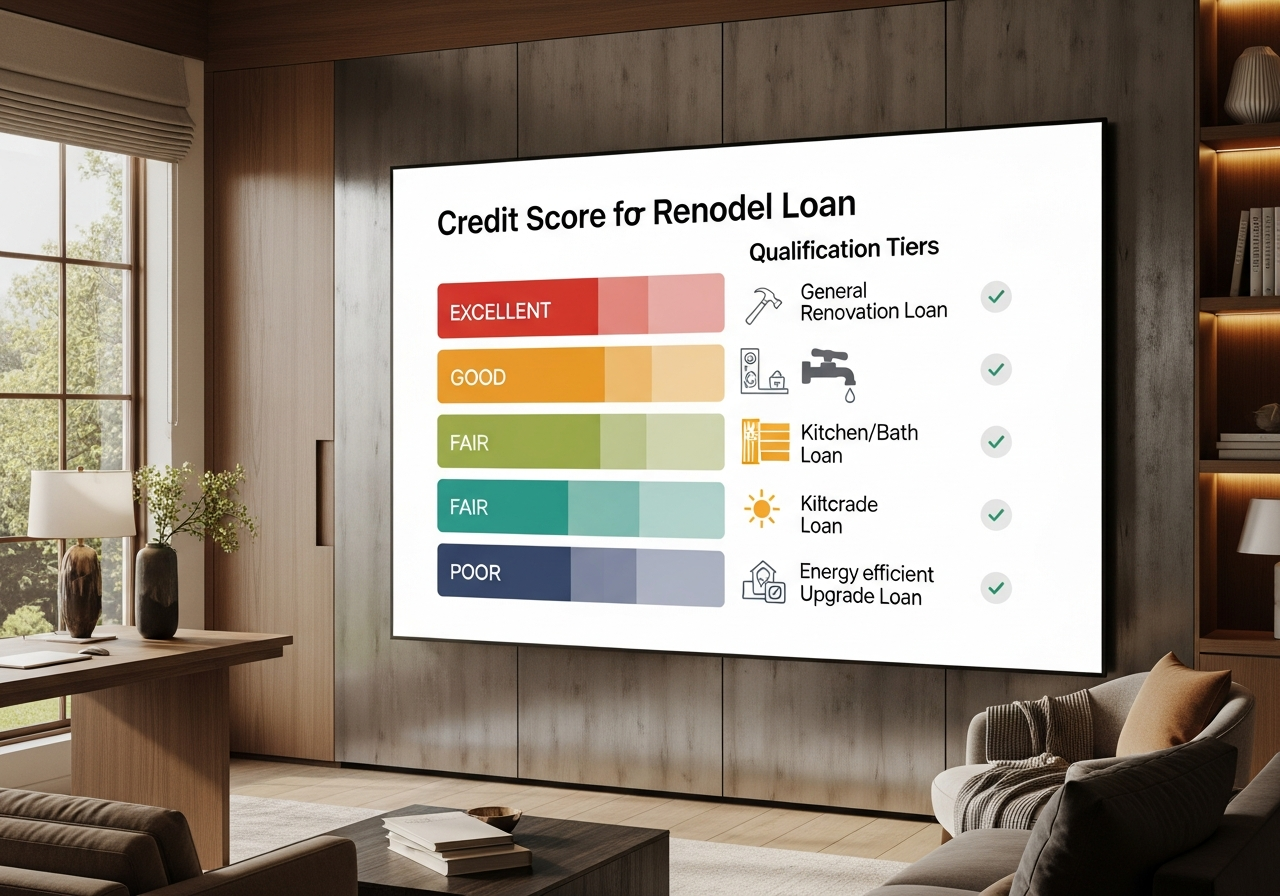
Your credit score is the single biggest factor determining both approval and interest rate. For secured products, aim for 680 or higher for competitive rates. For personal loans, 720+ unlocks the best rates (6 to 10 percent). Check your score at least 3 months before applying to identify and address any issues. Dispute inaccuracies on your credit report — errors are found on approximately 25 percent of credit reports, and correcting them can boost your score by 25 to 100 points.
Quick credit improvement strategies: pay down credit card balances below 30 percent of limits (ideally below 10 percent), avoid opening new credit accounts in the 6 months before applying, ensure all bills are paid on time, and ask for credit limit increases on existing cards (which lowers utilization without paying down balances). These steps can improve your score by 20 to 50 points in 2 to 3 months.
Step 3 — Gather Required Documentation
Prepare all documentation before starting applications to avoid delays. Standard requirements include: two years of federal tax returns with all schedules, W-2 forms or 1099s for the last two years, recent pay stubs covering the last 30 days, bank statements for all accounts (last 2 to 3 months), current mortgage statement, property tax records, homeowner's insurance declarations, and a government-issued photo ID.
For secured loans, you will also need: a home value estimate (the lender orders a formal appraisal for $300 to $600), renovation plans or contractor bids describing the scope of work, and your contractor's license and insurance information. Self-employed borrowers need additional documentation including a year-to-date profit-and-loss statement and possibly a CPA letter verifying income. Having everything organized in advance shortens the process by 1 to 2 weeks.
Step 4 — Shop Multiple Lenders
Never accept the first loan offer. Compare rates and terms from at least 3 to 5 lenders including banks, credit unions, and online lenders. Credit unions often offer the lowest rates on HELOCs and home equity loans. Online lenders typically provide the fastest personal loan approvals. Community banks may have more flexibility for borrowers with non-standard income situations.
Rate shopping within a 14 to 45 day window (depending on the scoring model) counts as a single credit inquiry, so multiple applications will not significantly impact your score. Request Loan Estimates in the standardized format required by the Consumer Financial Protection Bureau — this makes apples-to-apples comparison straightforward. Focus on annual percentage rate (APR) rather than just the interest rate, as APR includes origination fees and other costs.
Step 5 — Submit Your Application
Complete the application thoroughly — incomplete applications are the most common cause of processing delays. Provide exact figures rather than estimates for income, assets, and existing debts. Disclose all liabilities — undisclosed debts discovered during underwriting can result in denial even after conditional approval. For online applications, ensure you upload clear, legible copies of all documents.
After submission, expect a conditional approval or initial decision within 1 to 3 business days for personal loans and 5 to 10 business days for secured products. The lender may request additional documentation during underwriting — respond within 24 to 48 hours to maintain momentum. For home equity products, the appraisal scheduling and completion typically adds 1 to 3 weeks to the timeline.
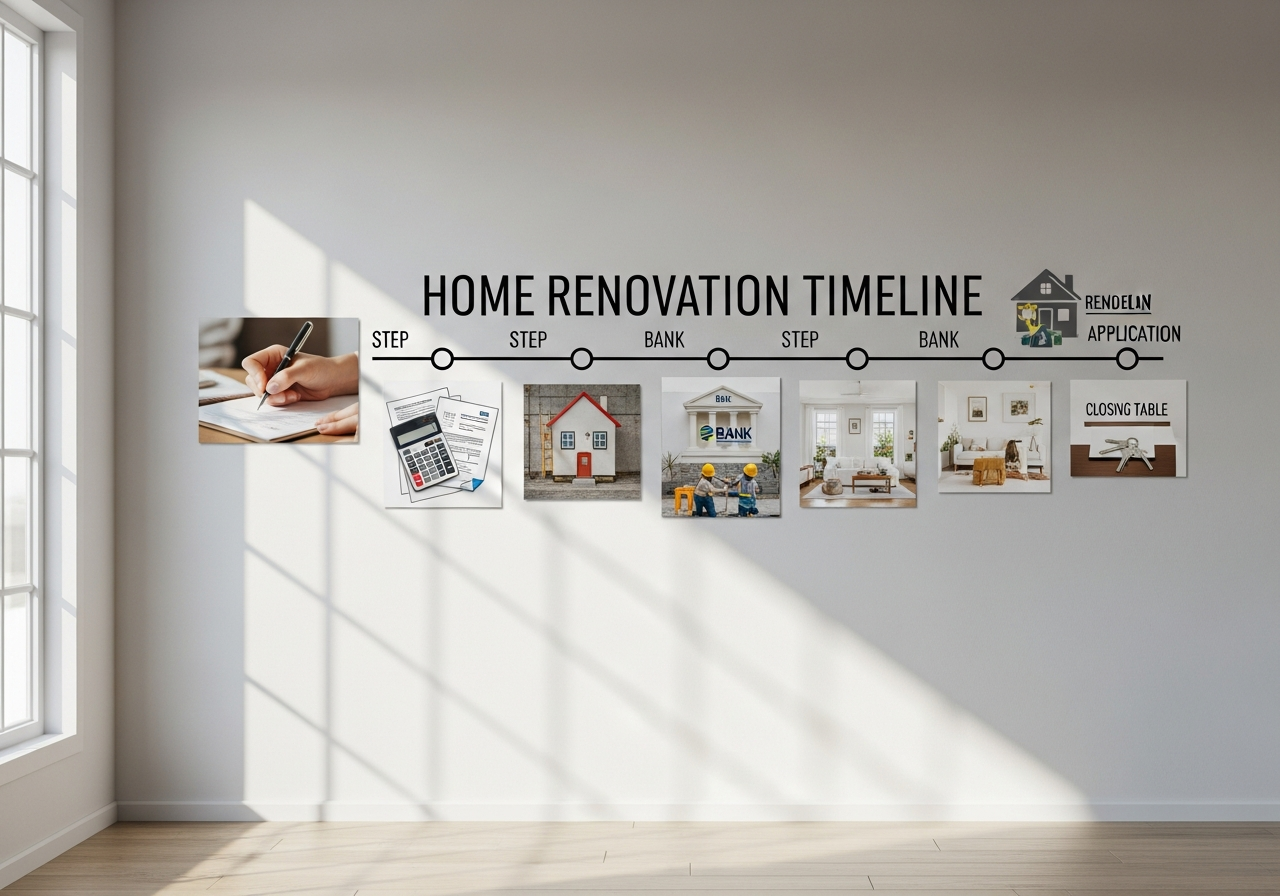
Step 6 — Review Terms and Close
Before closing, review the final loan terms carefully: interest rate (fixed vs variable), monthly payment amount, total interest over the loan term, prepayment penalties (avoid loans with them), closing costs, and any conditions or restrictions on fund usage. For HELOCs, understand the difference between the draw period and repayment period terms. For construction loans, review the draw schedule and inspection requirements.
You have a 3-business-day right of rescission on home equity products — meaning you can cancel without penalty within 3 days of closing. Use this window to do a final comparison against competing offers. Once closed, funds are typically available within 1 to 3 business days for personal loans, 3 to 5 days for home equity loans, and immediately (up to the credit limit) for HELOCs.
Tips for Improving Approval Odds
If your initial application is denied or the offered terms are unfavorable, several strategies can improve your position. Add a co-borrower with strong credit to strengthen the application. Increase your down payment or equity contribution to reduce the lender's risk. Choose a shorter loan term, which often comes with a lower rate. Provide a larger cash reserve — lenders want to see 3 to 6 months of mortgage payments in liquid savings after the renovation costs.
Consider a smaller project scope that requires a lower loan amount. Lenders are more comfortable with smaller loans relative to home value and income. If timing allows, spend 3 to 6 months improving your credit score before reapplying. Finally, try community banks and credit unions — they may have more flexible underwriting criteria than large national banks, particularly for borrowers with non-traditional income sources.

| Loan Feature | Personal Loan | HELOC | Home Equity Loan | FHA 203(k) |
|---|---|---|---|---|
| Min. Credit Score | 580–640 | 680+ | 660+ | 580 |
| Collateral Required | No | Yes (home) | Yes (home) | Yes (home) |
| Typical Rate | 6–36% | 7.5–9.5% | 7–10% | 6.5–8% |
| Approval Time | 1–3 days | 2–4 weeks | 2–4 weeks | 4–8 weeks |
| Max Loan Amount | $100,000 | 80–85% CLTV | 80–85% CLTV | FHA limits |
| Closing Costs | $0 | $0–$5,000 | $2,000–$5,000 | $3,000–$8,000 |
| Tax Deductible | No | Yes (if for home improvement) | Yes (if for home improvement) | Yes |
Related Articles
Continue your remodel financing research: How to Finance a Home Remodel: 8 Options, HELOC vs Home Equity Loan, Construction Loans for Remodels, Financing Options Ranked, and How to Budget for a Remodel.
Frequently Asked Questions
What credit score do I need for a remodel loan?
Requirements vary by product: personal loans start at 580 to 640 from some lenders (with higher rates), HELOCs and home equity loans typically require 680+, and construction loans need 680 to 720. The best rates across all products are reserved for borrowers with 740+ scores. FHA 203(k) renovation loans accept scores as low as 580.
How long does it take to get approved for a remodel loan?
Personal loans are the fastest — many lenders provide approval within 24 hours and fund within 1 to 3 business days. HELOCs and home equity loans take 2 to 4 weeks including appraisal. Construction loans and FHA 203(k) loans take 4 to 8 weeks due to their complexity. Having documentation prepared before applying shortens all timelines.
Can I get a remodel loan with bad credit?
Yes, though options are limited and rates will be higher. Some personal loan lenders approve scores as low as 560 at rates of 25 to 36 percent. FHA 203(k) loans accept 580+ with 3.5 percent down. Adding a co-borrower with stronger credit, reducing the loan amount, or spending 3 to 6 months improving your score before applying are better strategies than accepting a high-rate loan.
Do I need to specify how I will use a remodel loan?
Personal loans typically do not restrict fund usage once disbursed, though some lenders classify them as home improvement loans with nominal restrictions. Home equity products and FHA 203(k) loans require funds to be used for the documented home improvement project. Construction loans have the strictest usage controls with draw schedules and inspections verifying that funds are spent on approved work.
Start With a Clear Renovation Vision
A clear project scope strengthens your loan application. HanoDecor's AI Studio helps you create detailed renovation renderings that communicate your project vision to lenders and contractors. Use the Room Designer to finalize material selections and layouts, then browse the design gallery for reference images that support your application documentation.
How to Get a Home Remodel Loan FAQs
Written by
Lisa Wang
Sustainable Design Writer focused on eco-friendly materials, energy efficiency, and budget-conscious home improvement. LEED Green Associate with expertise in low-impact renovation strategies.