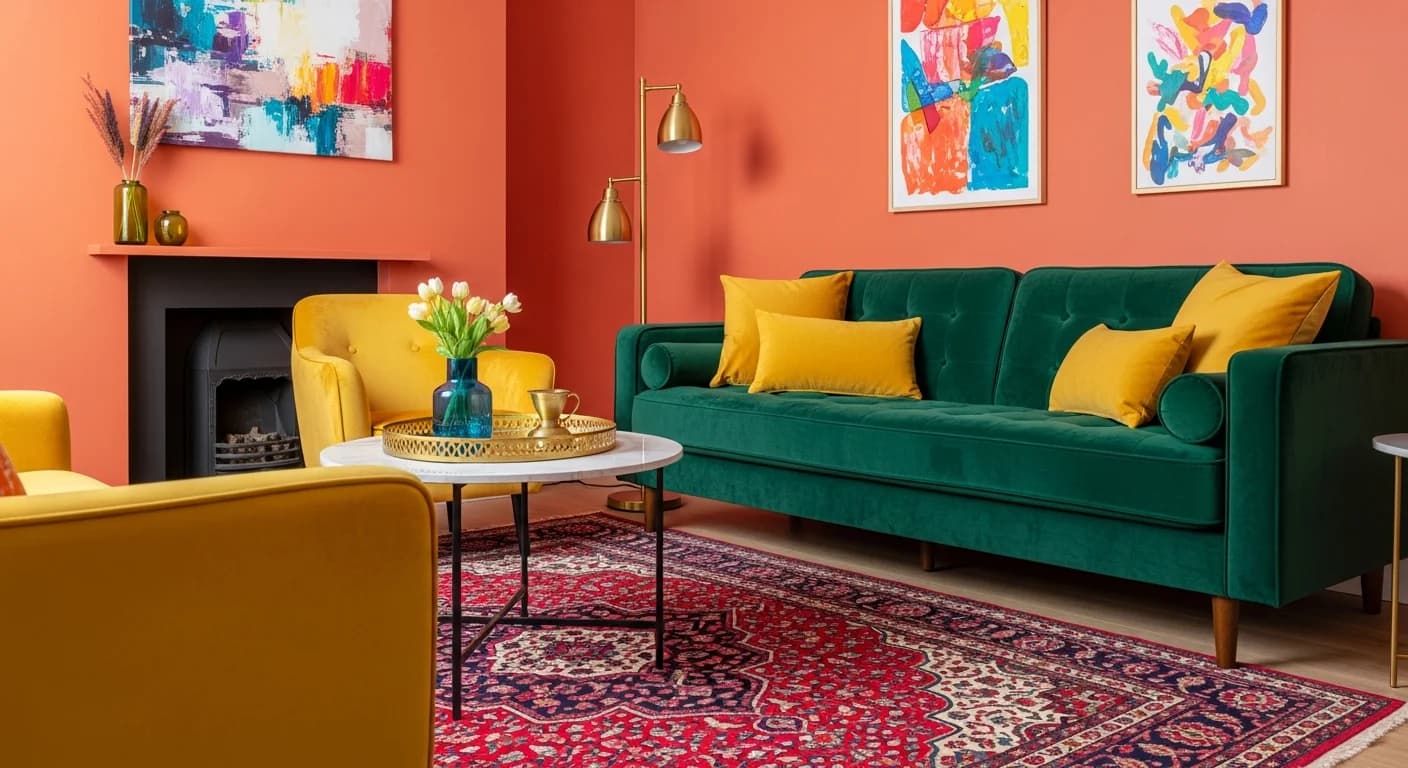
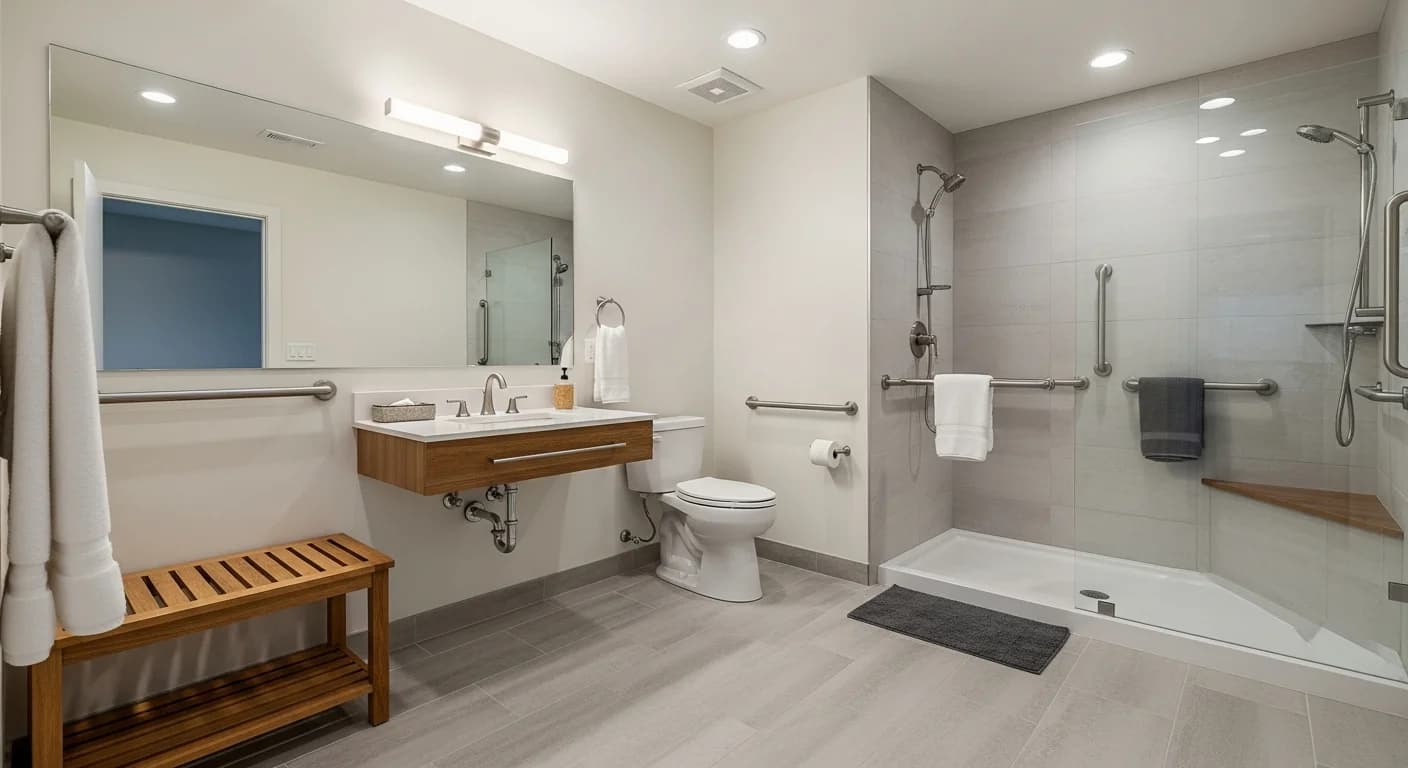
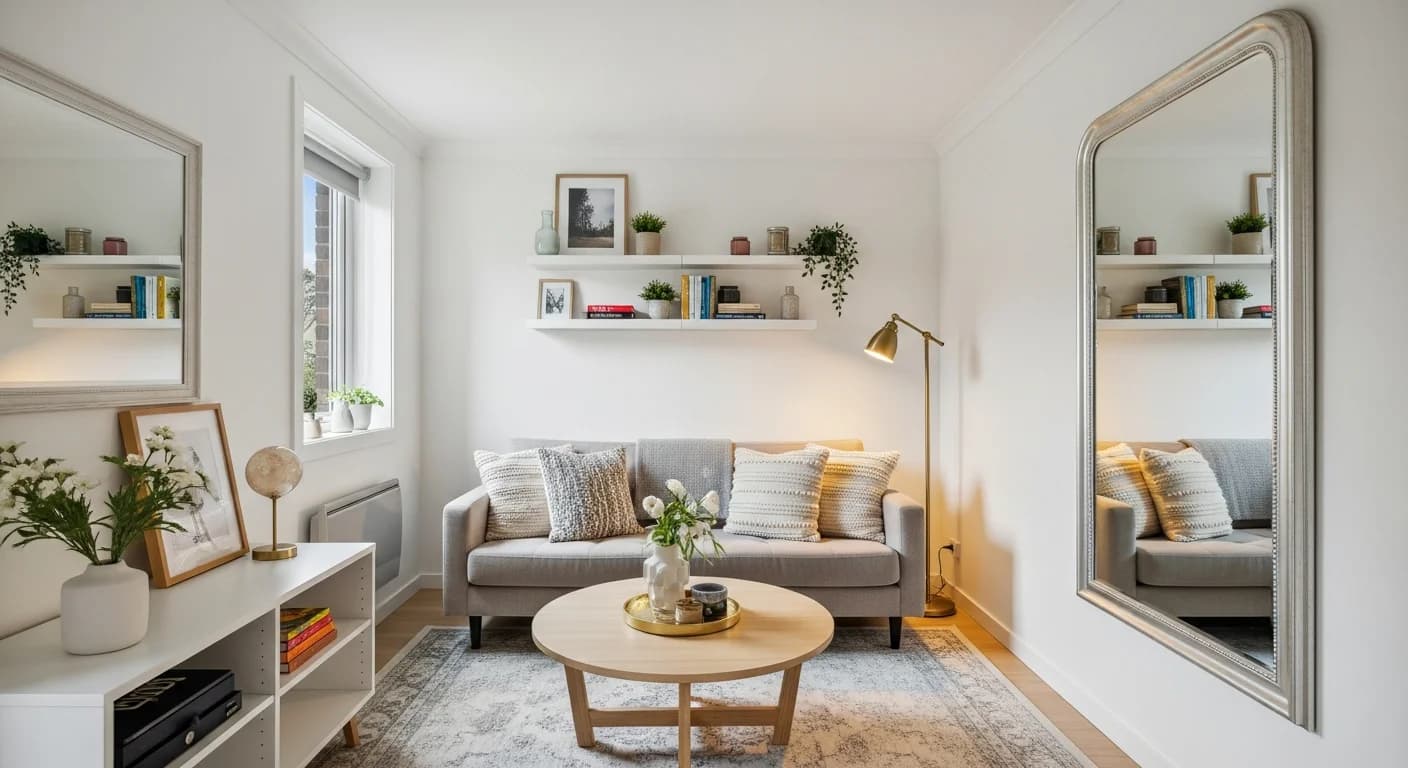
How to Remodel a Living Room: Floors, Walls, and Layout Upgrades
Quick Summary
A construction-focused guide to remodeling a living room covering flooring replacement, wall modifications, built-in shelving, fireplace updates, lighting upgrades, and open-concept conversions. Includes cost estimates, material comparisons, and step-by-step project sequencing for a complete living room transformation.
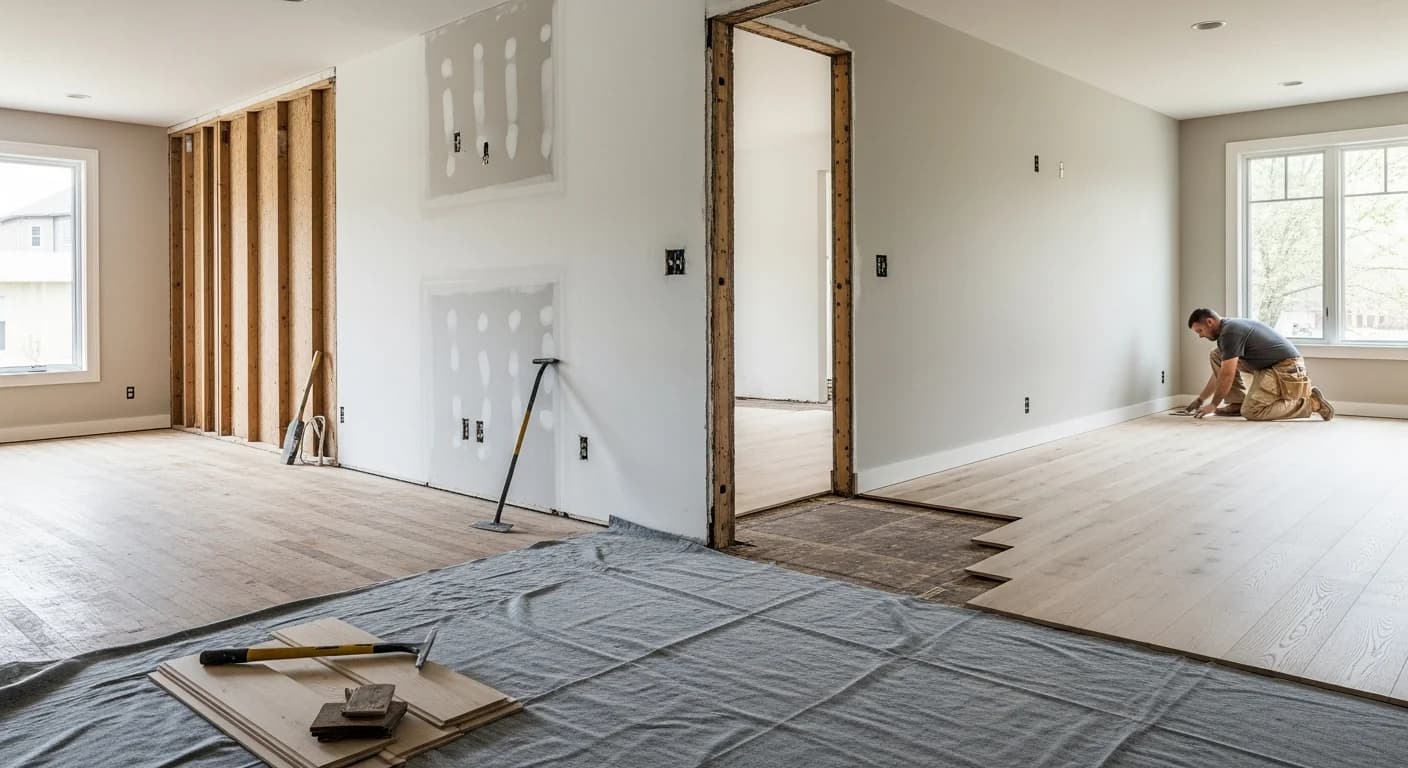
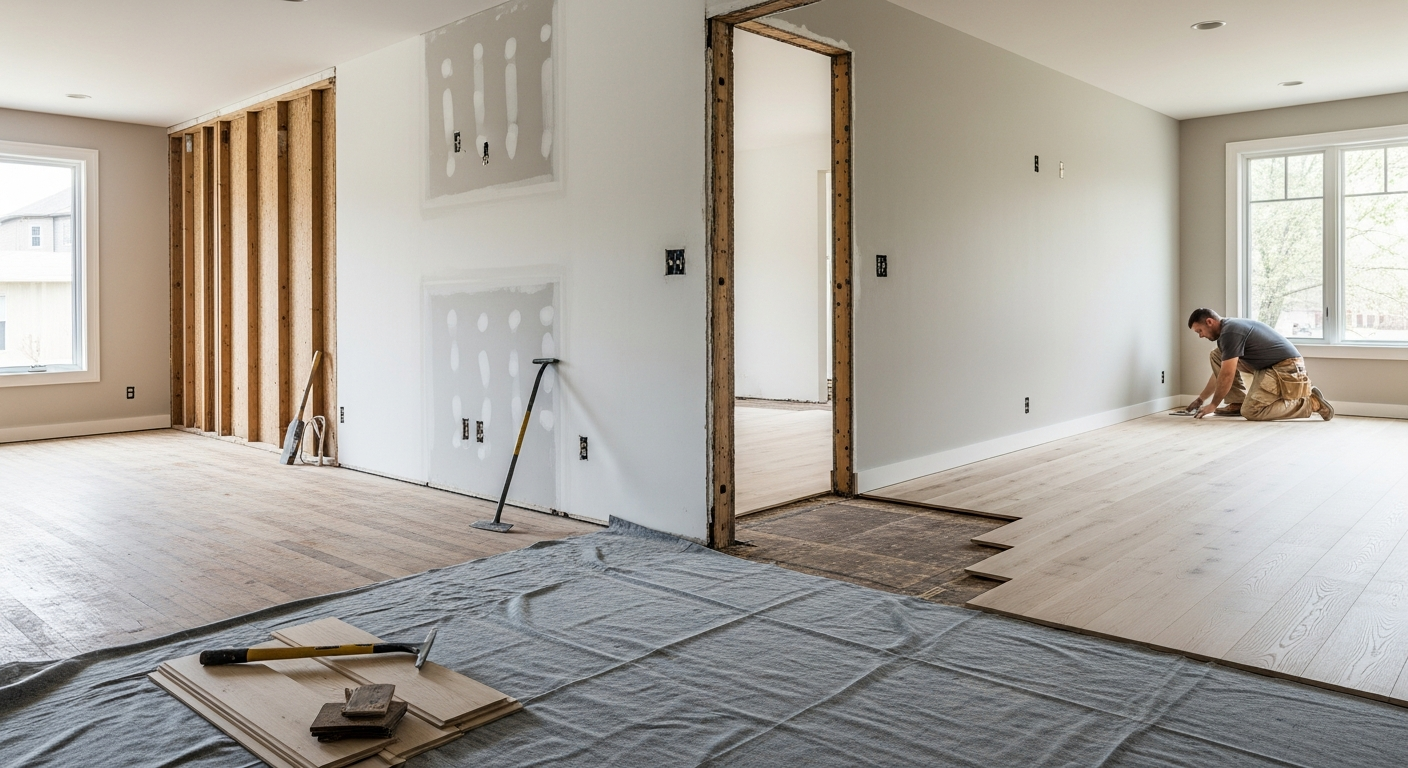
Understanding how to remodel a living room goes beyond swapping throw pillows and paint colors — it means making structural and construction-level changes that fundamentally transform how the space looks, feels, and functions. The living room is the most-used common area in most homes, averaging 4 to 6 hours of daily family use, yet it is often the last room homeowners think to remodel. A well-planned living room renovation costs $5,000 to $30,000 and delivers one of the highest enjoyment returns of any home project.
This guide covers the construction upgrades that make the biggest impact — from hardwood flooring installation and drywall repair to built-in cabinetry, recessed lighting, and opening up walls for an open-concept floor plan. Whether you are working with a 1960s ranch or a 2000s colonial, these projects can be tackled individually or combined into a comprehensive renovation. Use this guide alongside our living room decor guide for a complete transformation strategy.
Assess Your Living Room's Bones
Before demolishing anything, evaluate your living room's structural elements. Check the subfloor condition by removing a floor vent or a small section of existing flooring — look for water damage, rot, or sagging. Test walls with a stud finder to identify load-bearing walls (critical before any wall removal). Note the ceiling height, window placement, and existing electrical capacity. A room with 8-foot ceilings, limited natural light, and only two electrical outlets needs a different remodel approach than one with 9-foot ceilings, large windows, and abundant circuits.
Document current pain points: poor traffic flow, inadequate storage, dated finishes, insufficient lighting, or noise transmission between rooms. Prioritize projects that address these functional issues first, then layer in aesthetic upgrades. This approach ensures your investment solves real problems rather than just creating a prettier version of a dysfunctional space. Check living room layout ideas for flow optimization strategies.
Flooring Replacement Options and Costs
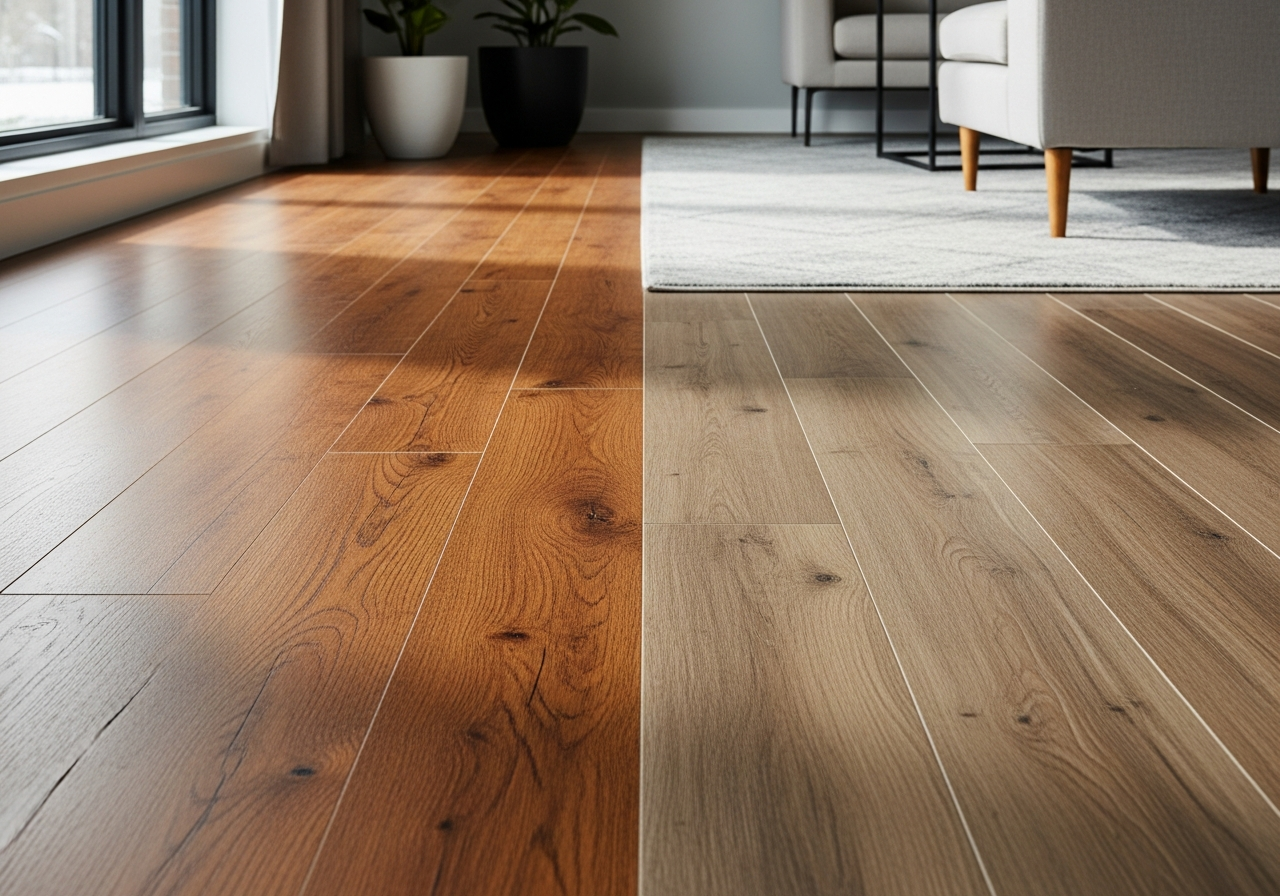
Flooring is typically the single most impactful living room upgrade. Hardwood flooring remains the gold standard, with solid oak or maple costing $6 to $12 per square foot for materials plus $3 to $8 per square foot for installation. Engineered hardwood offers similar aesthetics at $4 to $10 per square foot with better moisture resistance and faster installation. For a 300-square-foot living room, expect total flooring costs of $2,700 to $6,000 for hardwood.
Luxury vinyl plank (LVP) has emerged as a popular alternative at $2 to $7 per square foot installed, offering waterproof performance, scratch resistance, and realistic wood-look finishes. Tile works well for living rooms in warm climates, running $4 to $15 per square foot installed. If existing hardwood floors are in decent condition, refinishing ($3 to $5 per square foot) is far cheaper than replacement and can dramatically update the room's appearance.
Wall Modifications and Open-Concept Conversions
Opening up walls between the living room and kitchen or dining room is one of the most requested remodel projects. Removing a non-load-bearing wall costs $500 to $2,000, while removing a load-bearing wall requires a structural engineer ($300 to $800 for assessment) and installation of a support beam, pushing costs to $3,000 to $10,000. The result — an open, airy floor plan — significantly increases perceived space and improves sight lines throughout the main living area.
If full wall removal is not feasible or desirable, consider creating a large pass-through opening (4 to 8 feet wide) with a header beam, which provides visual connection while maintaining wall structure for furniture placement. Adding or enlarging windows is another powerful modification — a new window installation costs $1,000 to $5,000 per window and floods the room with natural light. Consider the impact on furniture placement and layered lighting design before finalizing wall changes.
Built-In Shelving and Custom Cabinetry
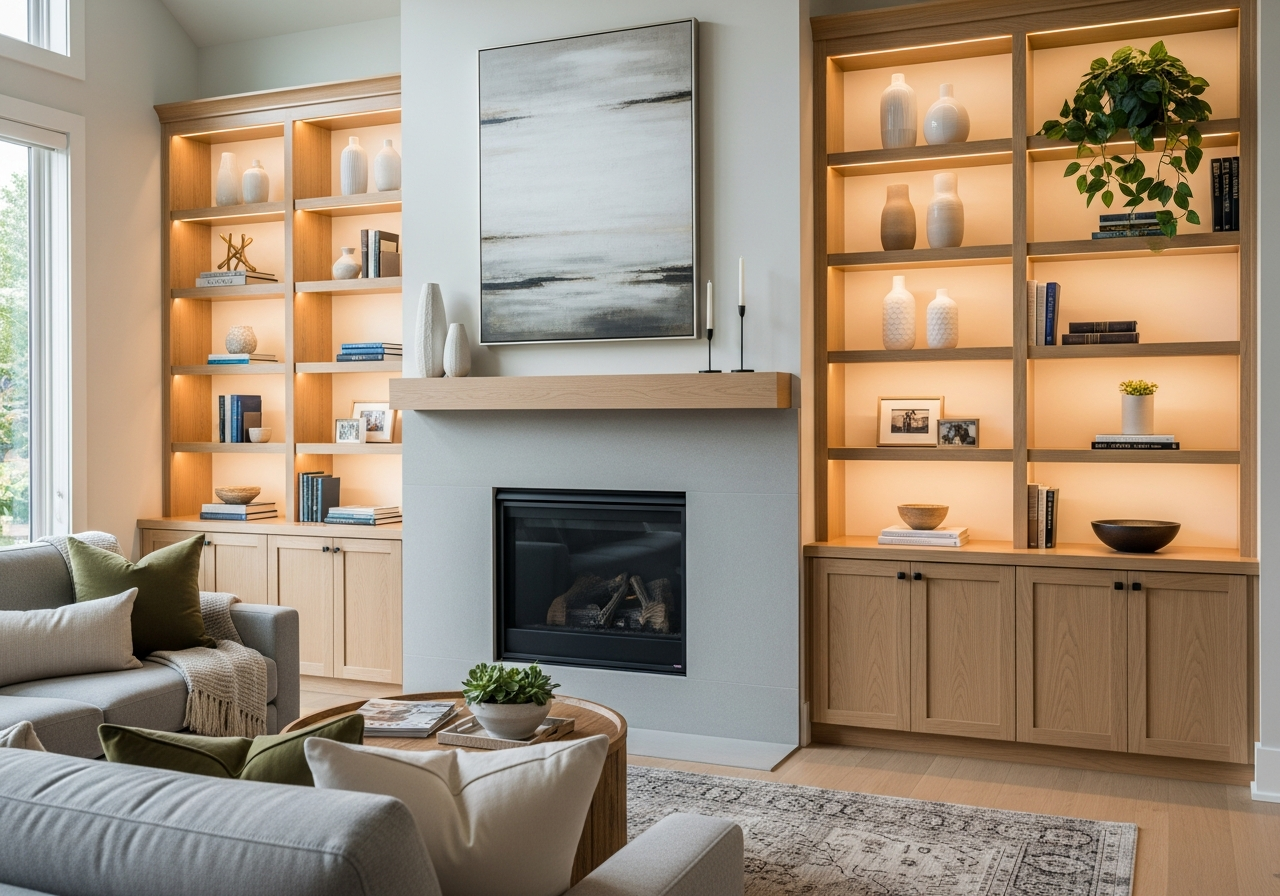
Built-in bookshelves, media centers, and window seats add architectural character and functional storage that freestanding furniture cannot match. Custom built-ins flanking a fireplace or window cost $2,000 to $8,000 depending on size, materials, and complexity. Semi-custom options using stock cabinetry modified to fit cost $1,000 to $4,000 and are available in 3 to 4 weeks versus 6 to 12 weeks for fully custom millwork.
A built-in entertainment center with concealed wiring, adjustable shelves, and cabinet doors costs $3,000 to $10,000 but eliminates the need for a bulky entertainment stand and creates a clean, integrated look. Consider incorporating USB outlets, cable management channels, and ventilated component compartments. Built-in window seats with storage underneath serve double duty as seating and organization — a 6-foot window seat with a hinged top adds approximately 12 cubic feet of concealed storage.
Fireplace Remodel and Updates
The fireplace is often the living room's focal point, and updating it transforms the entire room's aesthetic. A surround replacement — swapping brick for stone veneer, tile, or shiplap — costs $1,500 to $5,000 and takes 2 to 3 days. Adding a new mantel shelf costs $200 to $1,500 for materials and installation. Converting a wood-burning fireplace to a gas insert ($2,000 to $5,000) or electric insert ($1,000 to $3,000) improves efficiency and eliminates the need for chimney maintenance.
For a dramatic statement, consider a floor-to-ceiling stone or tile surround ($3,000 to $8,000) that draws the eye upward and makes the ceiling feel taller. Linear gas fireplaces with clean, frameless designs are trending in modern remodels, ranging from $3,500 to $8,000 installed. Read our detailed fireplace remodel guide for material options, installation steps, and design inspiration.
Recessed Lighting and Electrical Upgrades
Proper lighting is critical in a living room remodel. Replacing outdated overhead fixtures with a combination of recessed cans, wall sconces, and accent lighting creates layers that serve different activities — bright task lighting for reading, ambient lighting for entertaining, and accent lighting for artwork or architectural features. Installing 6 to 8 recessed LED lights costs $800 to $2,500 including wiring, and adding dimmer switches ($50 to $200 per switch) provides adjustable ambiance.
While the ceiling is open, consider upgrading the electrical panel capacity if needed and adding dedicated circuits for electronics, electric fireplaces, or future smart home devices. Add outlets every 6 feet along walls (code minimum is every 12 feet, but more is better for modern living) and include USB-equipped outlets near seating areas. A living room electrical upgrade typically costs $1,500 to $4,000 and is most cost-effective when done during a ceiling or wall renovation.
Ceiling and Crown Molding Treatments
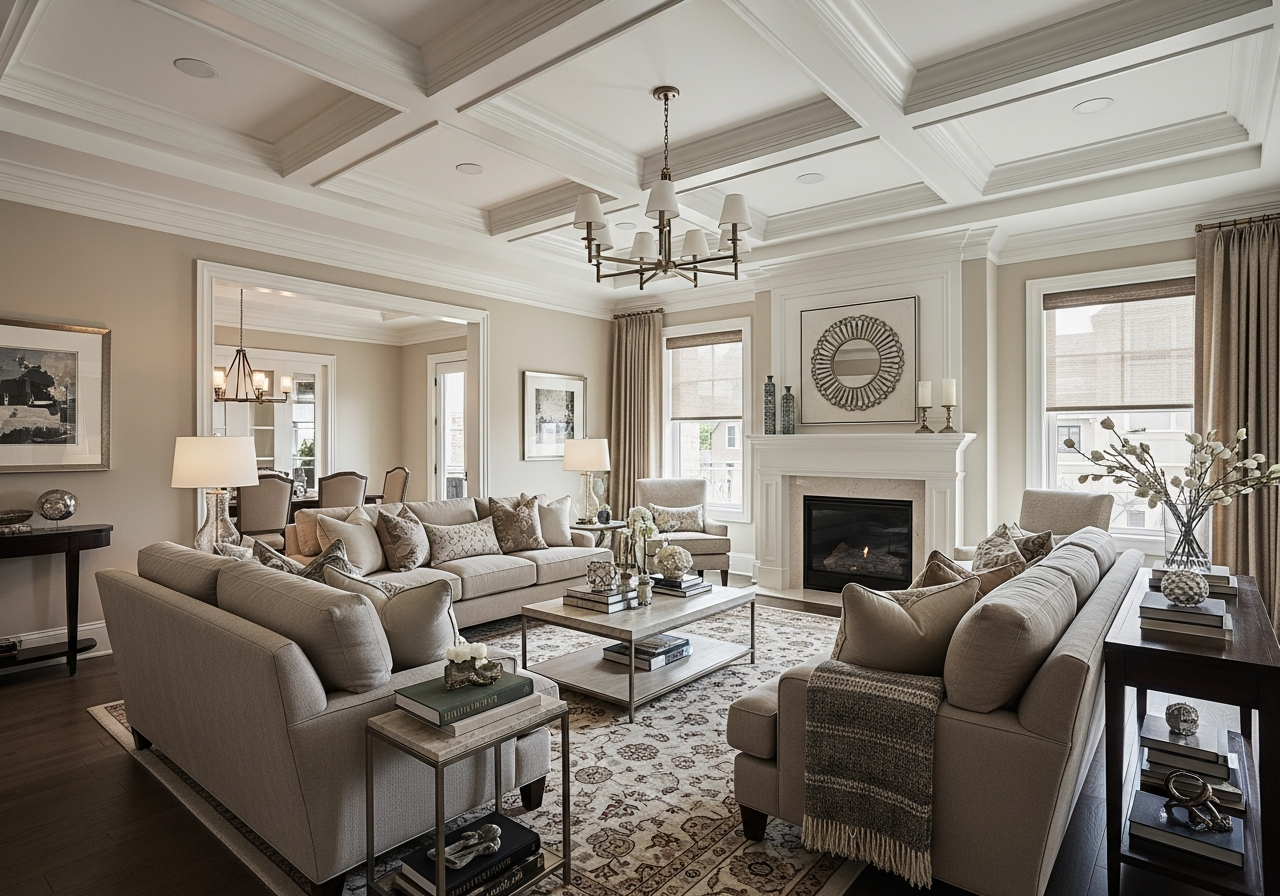
Ceiling treatments are an often-overlooked living room upgrade that adds significant architectural impact. Coffered ceilings ($2,500 to $10,000) create depth and formality. Tongue-and-groove wood plank ceilings ($3 to $7 per square foot installed) add warmth and texture. Simple tray ceilings ($1,500 to $5,000) with cove lighting make standard 8-foot ceilings feel taller. Removing a popcorn ceiling ($1 to $3 per square foot) is a common first step that instantly modernizes the space.
Crown molding ($3 to $15 per linear foot installed) bridges the transition between walls and ceiling, adding a finished, polished look. For a 300-square-foot room with 70 linear feet of perimeter, crown molding costs $210 to $1,050. Combine with matching baseboard upgrades for a cohesive trim package. Use HanoDecor's Room Designer to preview ceiling treatments before committing to a style.
| Living Room Project | Cost Range | Timeline | DIY Feasible? |
|---|---|---|---|
| Hardwood flooring (300 sq ft) | $2,700–$6,000 | 2–4 days | Moderate |
| LVP flooring (300 sq ft) | $900–$2,100 | 1–2 days | Yes |
| Non-load-bearing wall removal | $500–$2,000 | 1–2 days | Yes (with permit) |
| Load-bearing wall removal | $3,000–$10,000 | 3–5 days | No |
| Built-in shelving | $2,000–$8,000 | 3–7 days | Moderate |
| Fireplace surround update | $1,500–$5,000 | 2–3 days | Moderate |
| Recessed lighting (6–8 cans) | $800–$2,500 | 1–2 days | No (hire electrician) |
| Crown molding (70 linear ft) | $210–$1,050 | 1 day | Yes |
Related Articles
Continue planning your living room transformation: How Much Does It Cost to Remodel a Living Room?, Cozy Living Room Ideas, How to Remodel a Fireplace, How to Redesign Your Living Room, and How to Budget for a Remodel.
Frequently Asked Questions
How much does a living room remodel cost?
A living room remodel costs $5,000 to $30,000 depending on scope. Cosmetic updates like paint and lighting run $2,000 to $5,000. Mid-range projects including flooring and built-ins cost $8,000 to $15,000. Full renovations with wall removal, new flooring, custom cabinetry, and electrical upgrades range from $15,000 to $30,000 or more.
Can I remove a wall in my living room myself?
You can remove a non-load-bearing wall yourself with basic tools and a permit. Load-bearing walls require a structural engineer and professional contractor. To determine if a wall is load-bearing, check if it runs perpendicular to floor joists, sits directly above a beam or wall below, or supports ceiling joists. When in doubt, hire a structural engineer for a $300 to $800 assessment before starting any demolition.
What living room upgrades add the most value?
Hardwood flooring installation and open-concept conversions deliver the highest ROI for living room remodels. Hardwood floors typically return 70 to 80 percent of their cost at resale. Opening up the living room to the kitchen increases perceived square footage and appeals to modern buyers. Built-in shelving and fireplace updates also perform well, adding both functional value and visual appeal.
How long does a living room remodel take?
A cosmetic living room refresh takes 1 to 2 weeks. A mid-range remodel with flooring and lighting upgrades takes 2 to 4 weeks. A full renovation including wall removal, electrical work, built-ins, and flooring takes 4 to 8 weeks. Factor in 2 to 4 weeks of planning, material ordering, and permit approval before construction begins.
Visualize Your Living Room Remodel
See your living room transformation before picking up a hammer. HanoDecor's AI Studio lets you upload a photo of your current living room and preview new flooring, wall colors, built-ins, and layout changes in realistic renderings. Explore the living room ideas gallery for inspiration, then use the Room Designer to experiment with different configurations until you find the perfect plan for your space.
How to Remodel a Living Room FAQs
Written by
Priya Sharma
Priya is an award-winning UX designer who previously led design teams at Airbnb and Pinterest. Her focus on user-centered design ensures that HanoDecor's tools are intuitive and accessible to everyone, regardless of their technical background.