How to Decorate a Dining Room: 10 Stunning Tips for Everyday and Entertaining
Quick Summary
This comprehensive guide covers 10 expert tips for decorating a dining room that works beautifully for everyday meals and special entertaining occasions. From choosing the right centerpiece height to layering textiles, selecting lighting, and creating seasonal table displays, every technique balances function with stunning visual appeal.
The Dining Room Dilemma: Everyday Function vs. Guest-Ready Beauty
Learning how to decor a dining table and the room around it means solving one fundamental challenge: creating a space that feels effortlessly beautiful for Tuesday night dinner yet transforms into something special when guests arrive. The dining room sits at the intersection of daily ritual and celebration, and the best-decorated dining spaces handle both with equal grace. According to the American Institute of Architects, 78% of homeowners rank the dining area as a top-three priority in home styling, yet most dining rooms remain under-decorated or overly formal. Browse our dining room ideas gallery for visual inspiration before diving into specific techniques.
The secret lies in building a layered foundation that looks polished at baseline and elevates with small additions for entertaining. A well-chosen centerpiece, properly scaled lighting, and thoughtful textile layering create that baseline. Seasonal accents, place setting details, and ambient lighting provide the elevation. This guide walks through each layer with specific measurements, proportions, and styling rules that make the process straightforward.
Tip 1 — Choose a Centerpiece That Stays Below the Sight Line
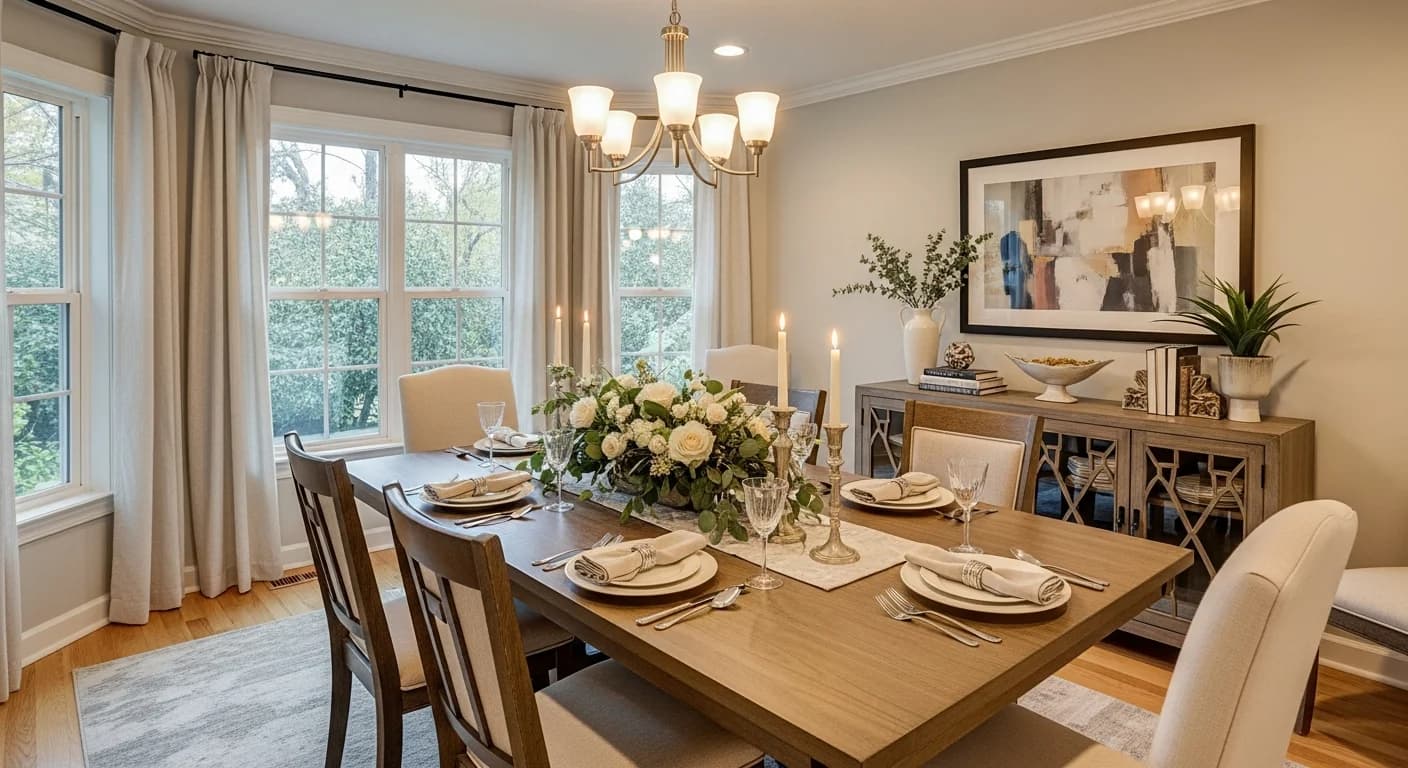
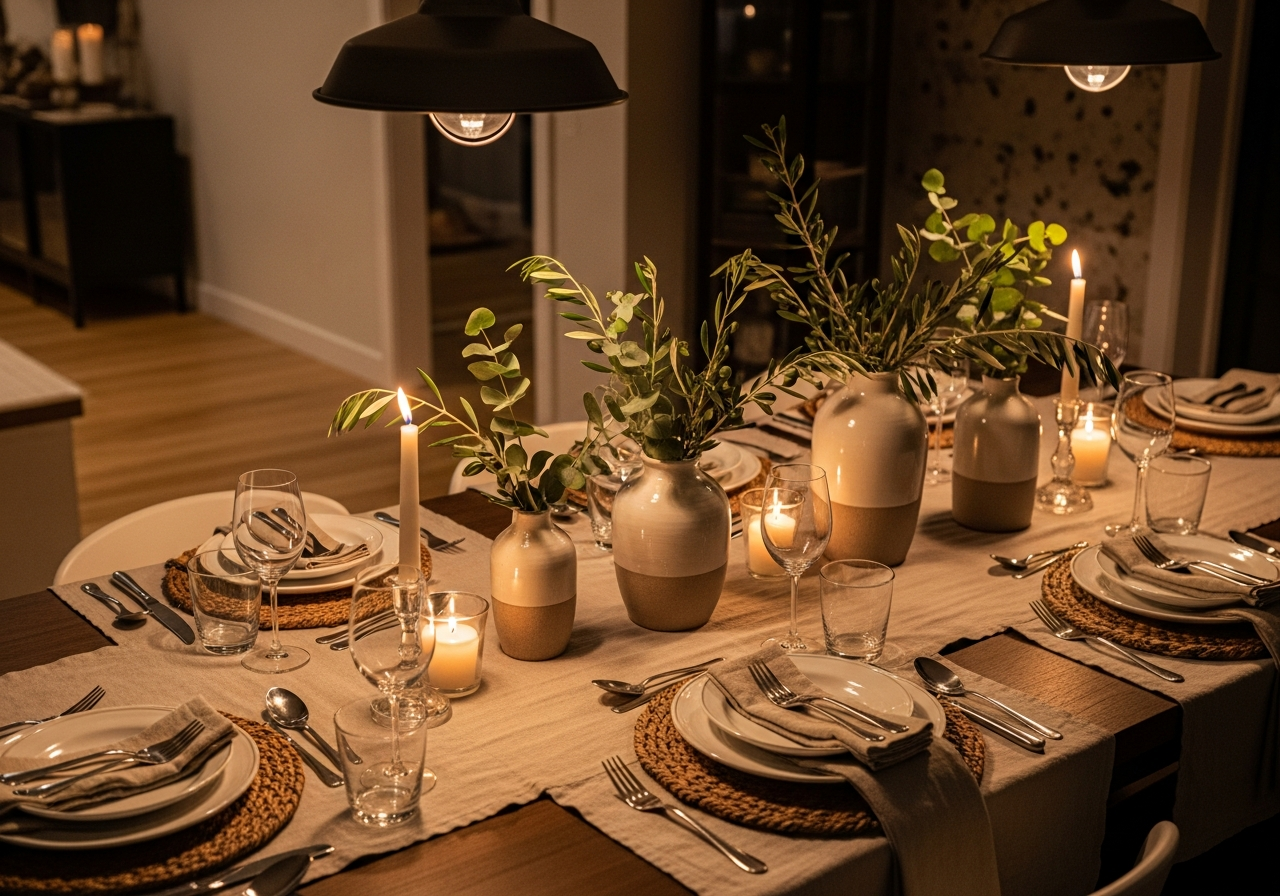
The most common dining table decorating mistake is a centerpiece that blocks eye contact across the table. Any permanent centerpiece should stay below 14 inches tall — this height allows seated diners to see and converse comfortably across a standard 30-inch-high dining table. Low-profile options include a shallow bowl filled with seasonal fruit, a cluster of three pillar candles in varying heights (8, 10, and 12 inches), or a long wooden tray holding a single potted succulent arrangement.
For round tables, center the arrangement precisely in the middle and ensure it does not extend more than one-third of the table diameter. On rectangular tables, a runner-length arrangement — spanning roughly 60% of the table length with 8 to 10 inches of clear space at each end — creates visual flow without crowding place settings. For entertaining, you can temporarily swap in a taller floral arrangement since guests typically move between seated conversation and standing mingling.
Tip 2 — Layer Textiles for Warmth and Texture
Textiles transform a hard wood or glass dining table from cold and utilitarian to warm and inviting. Build your textile layers from the bottom up: start with a tablecloth or table runner as the base, add placemats for individual settings, then top with cloth napkins. Each layer introduces texture — linen for casual elegance, cotton for everyday durability, or velvet for formal occasions.
For everyday dining, a linen or cotton runner in a neutral tone anchors the table without the fussiness of a full tablecloth. Runners should extend 6 to 8 inches over each end of the table for a relaxed drape. Layer woven rattan or jute placemats for textural contrast, and fold cotton napkins into simple rectangles placed to the left of each setting. This three-layer approach — runner, placemat, napkin — takes 5 minutes to set up and instantly elevates the table for family meals.
Tip 3 — Scale Your Lighting to the Table Size
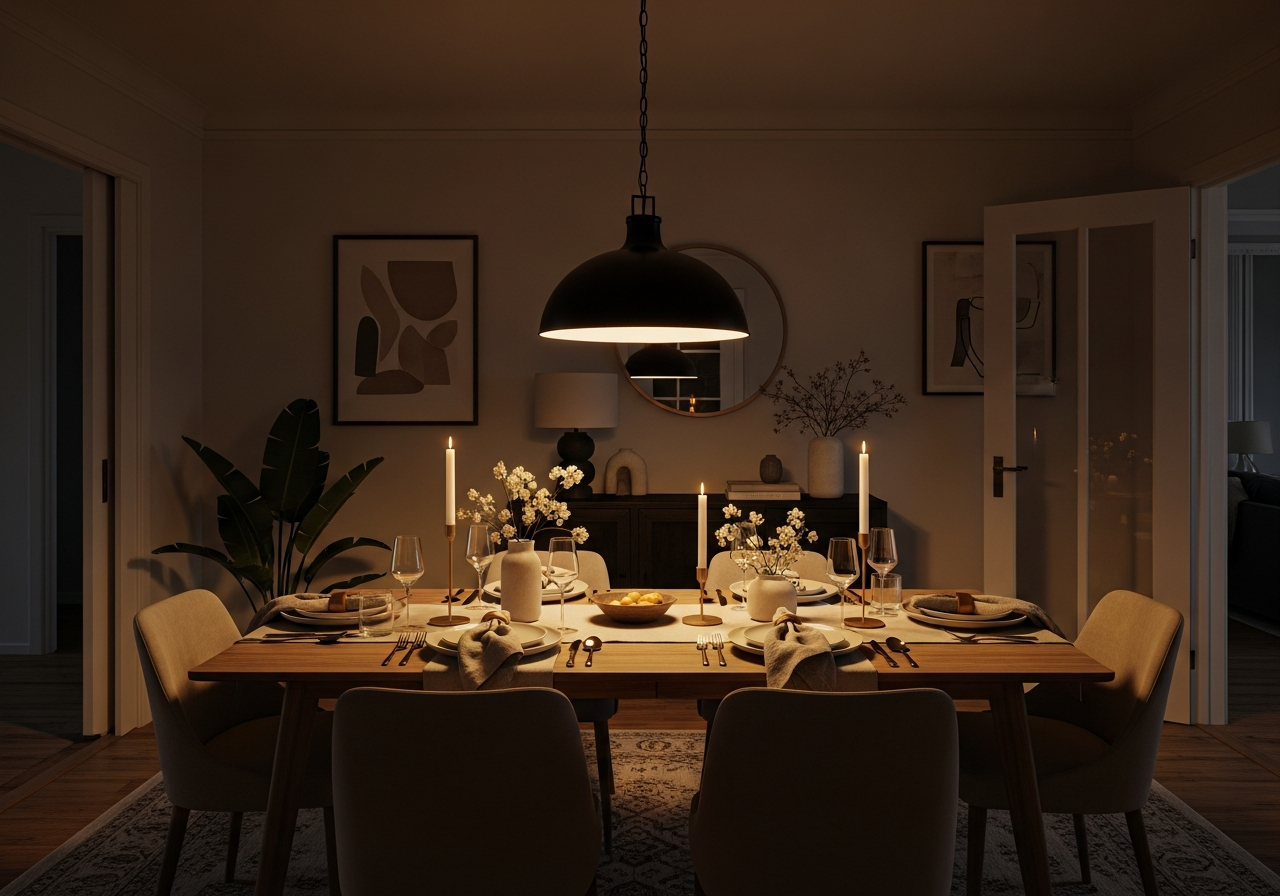
The pendant light or chandelier above the dining table is the single most impactful decorating element in the room. The fixture width should measure approximately one-half to two-thirds the width of the table — a 42-inch round table calls for a 21 to 28-inch diameter fixture. Hang the bottom of the fixture 30 to 36 inches above the table surface to avoid glare while providing adequate illumination. For tables longer than 60 inches, consider two smaller pendants spaced 24 to 30 inches apart rather than one oversized fixture.
Install a dimmer switch if one does not already exist — this single $15 upgrade transforms dining room atmosphere more than any other change. Bright overhead light works for homework and meal prep, while dimmed light (40 to 50% intensity) creates warmth and intimacy for dinner. Supplement the overhead fixture with a pair of taper candles or a sconce on the wall behind a buffet to add ambient layering during evening meals. Warm-toned bulbs in the 2700K to 3000K range create the most flattering light for both food and faces. For more on layered lighting strategies, see our guide on living room lighting ideas.
Tip 4 — Anchor the Room with a Rug Under the Table
A rug beneath the dining table defines the eating area, absorbs sound, and adds warmth underfoot. The critical rule: the rug must be large enough for chairs to remain fully on the rug when pulled out — this means adding at least 24 inches to each side of the table dimensions. A 72-by-36-inch table needs a minimum 8-by-10-foot rug, while a 48-inch round table requires at least a 7-foot round or 8-by-8-foot square rug.
Choose a flat-weave or low-pile rug for easy cleaning under the dining table — shag and thick pile rugs trap crumbs and make chair movement difficult. Indoor-outdoor rugs in polypropylene are the most practical dining room choice: they resist stains, clean with a damp cloth, and come in sophisticated patterns that rival wool. Patterned rugs in medium to dark tones hide spills better than solid light-colored options. For a cohesive look, pull one accent color from the rug into your centerpiece or napkin selection. For more rug matching advice, see our guide on how to match a rug to your existing decor.
Tip 5 — Style a Buffet or Sideboard as a Display Surface
A sideboard, buffet, or credenza along the dining room wall provides both storage and a secondary styling surface. Use the top surface to display a curated vignette: a table lamp for ambient light, a framed mirror or artwork leaning against the wall, a small stack of cookbooks, and a decorative object like a ceramic vase or sculptural bowl. Keep the arrangement asymmetrical — group items at one end or in an off-center cluster to avoid the rigid formality of perfectly centered symmetry.
The wall above the sideboard is prime real estate for a statement mirror or gallery wall. A mirror reflects chandelier light and makes the room feel larger — choose one that spans roughly two-thirds the length of the sideboard beneath it. For gallery wall options, see our guide on how to arrange wall decor in gallery layouts. Store everyday table linens, candles, and serving pieces inside the sideboard for quick access when transitioning from daily dining to entertaining mode.
Tip 6 — Create a Place Setting System for Everyday and Entertaining
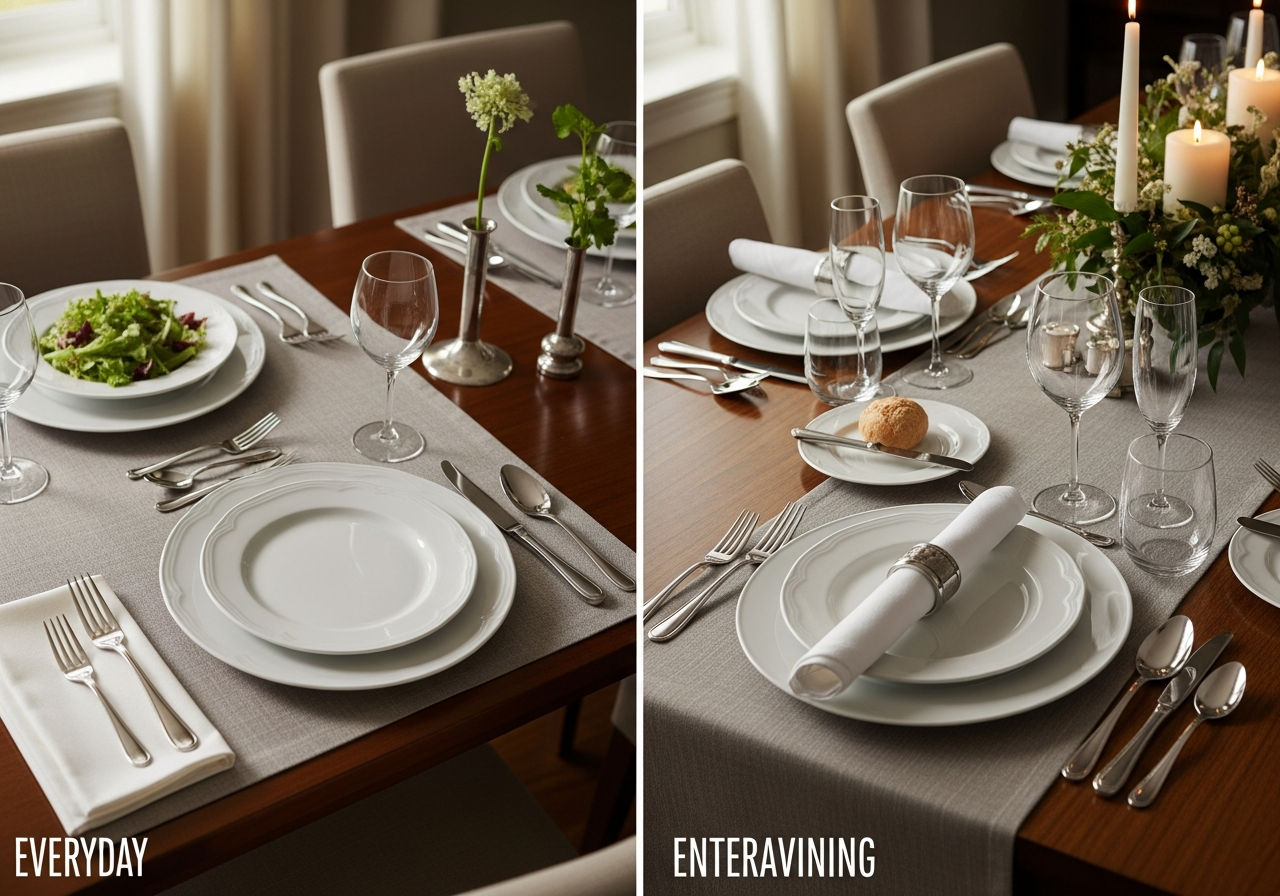
Invest in two sets of tableware that work together: a durable, dishwasher-safe everyday set and a coordinating set for special occasions. The everyday set should be a simple, neutral color — white, cream, or matte gray — that pairs with any textile or centerpiece. The entertaining set can introduce color, metallic trim, or a patterned rim that layers beautifully on top of the everyday plates as chargers during formal meals.
For everyday table decor, set each place with a dinner plate, napkin, and water glass — no more. The simplicity keeps the table uncluttered and makes daily setup a 3-minute task. When entertaining, add the charger plate underneath, a salad plate on top, a bread plate to the upper left, two glasses (water and wine), full flatware set, and a folded napkin with a sprig of greenery or a place card. This layered approach transforms the table without requiring a complete tableware overhaul.
Tip 7 — Add Wall Decor That Complements Without Competing
Dining room wall decor should enhance the atmosphere without distracting from the table, which is the room's functional and visual center. Choose artwork with colors that echo your table textiles and centerpiece palette — this creates visual continuity. Abstract art, botanical prints, and photography in muted tones work well because they add interest without demanding attention. Hang a single large piece centered over the sideboard, or create a triptych of three related prints hung 2 to 3 inches apart.
For a more personal touch, consider a collection of vintage plates arranged on the wall in a loose cluster pattern. This approach adds texture, color, and a collected-over-time quality that feels authentic. Mix plate sizes from 6 to 12 inches in diameter and arrange them using plate hangers or adhesive disc mounts. The arrangement should span roughly the same width as the furniture below it — whether that is a sideboard, a chair rail, or the table itself — to maintain visual proportion. Refer to our guide on hanging wall decor without nails for renter-friendly mounting options.
Tip 8 — Incorporate Natural Elements and Greenery
Fresh or faux greenery brings organic warmth to the dining room and softens the hard lines of tables and chairs. For a deeper look at integrating greenery throughout your home, see our guide on how to use plants in home decor. A single potted plant on the sideboard, a small herb arrangement on the windowsill, or a eucalyptus garland draped along the center of the table during gatherings all contribute natural texture. For everyday dining, a small potted fern or trailing pothos on a sideboard requires minimal maintenance and adds consistent visual softness.
For entertaining, fresh-cut branches — olive, eucalyptus, or seasonal flowering branches — placed in a simple ceramic vase create a statement without the formality of traditional floral arrangements. Cut branches at a 45-degree angle and place them in water 6 to 8 hours before the event for maximum freshness. The informal, organic quality of branches feels more contemporary than structured bouquets and costs a fraction of the price at $5 to $15 per arrangement from a grocery store floral section.
Tip 9 — Build a Seasonal Rotation System
A seasonal rotation keeps the dining room feeling fresh without a complete redecoration. Designate a storage bin for each season containing a table runner, napkins, a centerpiece object, and one or two decorative accents. In spring, switch to linen runners in soft pastels with a potted hyacinth centerpiece. Summer calls for cotton or indoor-outdoor fabrics in bright whites with a bowl of seasonal fruit. Autumn invites textured runners in rust or sage with dried wheat stalks or mini pumpkins. Winter layers velvet runners in deep green or burgundy with pillar candles and evergreen sprigs.
The swap takes 15 minutes per season and costs $20 to $50 per seasonal bin if you shop end-of-season sales. This approach prevents the dining room from feeling stale — which is the most common reason homeowners cite for avoiding their dining room altogether. When the room evolves with the calendar, it invites daily use rather than being reserved only for holidays.
Tip 10 — Set the Mood with Ambient Lighting Beyond the Chandelier
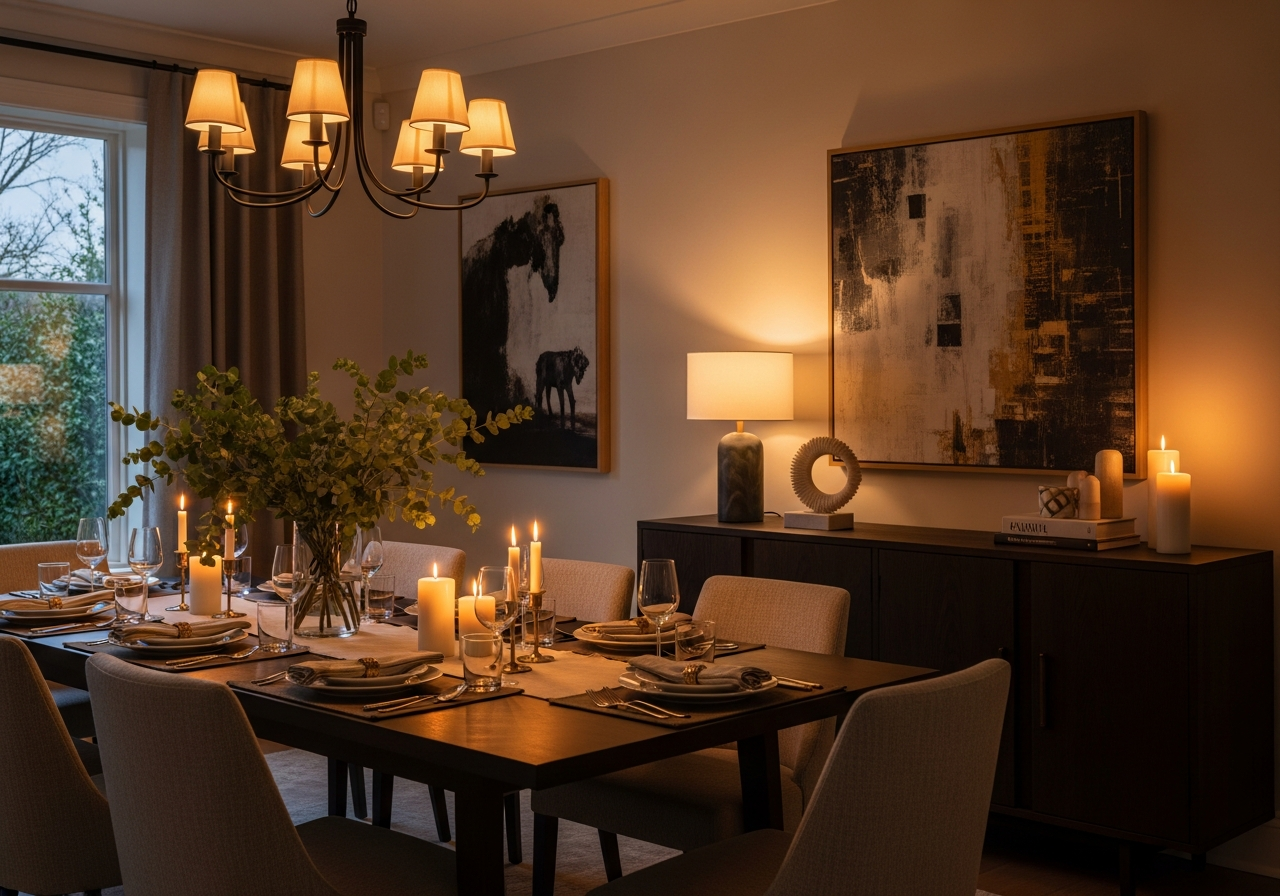
Beyond the main overhead fixture, ambient lighting creates the warmth that makes a dining room feel welcoming. Place a table lamp on the sideboard for soft fill light during meals. Add LED taper candles to the table centerpiece for flicker without the fire risk — modern LED candles in real wax casings are virtually indistinguishable from genuine candles and run for 500 or more hours on a single set of batteries.
For special occasions, string micro-LED fairy lights inside a glass hurricane vase or along a garland runner for subtle sparkle. Wall sconces on either side of a mirror or artwork provide architectural lighting that draws the eye upward and makes the ceiling feel taller. The goal is three light sources in the room — overhead, table level, and accent — each on independent controls so you can adjust the mood from bright and functional to warm and intimate with the turn of a dial.
Related Articles
Continue exploring dining and entertaining spaces with these guides: learn how to decorate an entryway so guests are impressed before they even reach the dining room, or read our complete living room decorating guide for a cohesive flow between connected spaces. If you are choosing new seating, our guide on matching chairs with room decor covers coordination principles for dining sets. For wall styling above the sideboard, explore dining room wall art ideas for curated inspiration.
Frequently Asked Questions
How do I decorate a dining table without it looking cluttered?
Keep everyday table decor to a single centerpiece element — a low vase, candle grouping, or fruit bowl — placed on a runner or tray to contain the arrangement visually. Leave at least 12 inches of clear space between the centerpiece edge and each place setting. The tray or runner acts as a visual boundary that prevents decorative items from creeping across the entire table surface.
What is the best centerpiece for an everyday dining table?
A low wooden tray holding three pillar candles at varying heights is the most versatile everyday centerpiece. It stays below the 14-inch sight line, works in every season, and transitions to evening ambiance by simply lighting the candles. A shallow bowl of seasonal fruit is the most practical alternative — it doubles as a snack station and adds natural color to the table.
How high should a chandelier hang over a dining table?
The bottom of a chandelier or pendant should hang 30 to 36 inches above the table surface. In rooms with ceilings higher than 8 feet, add 3 inches of height for every additional foot of ceiling height. The fixture width should be one-half to two-thirds the table width for proper visual proportion. Use a dimmer switch to control intensity for different occasions.
How do I transition my dining room from everyday to entertaining quickly?
Prepare a stored entertaining kit containing charger plates, cloth napkins, a floral arrangement vessel, taper candles, and place cards. When guests are expected, layer the chargers under your everyday plates, swap paper napkins for cloth, add the candles and a fresh-cut branch arrangement, and dim the overhead lighting. The entire transformation takes 15 to 20 minutes and creates a dramatically different atmosphere.
Visualize Your Dining Room Decor with HanoDecor
Deciding between a modern minimalist dining room and a warm, layered traditional space is easier when you can see both options in your actual room. Upload a photo of your dining area and experiment with different styles, lighting fixtures, wall colors, and table arrangements — all rendered photorealistic in your specific dimensions and natural lighting conditions.
Ready to transform your dining room? Try the HanoDecor Room Designer to visualize your ideal dining space before purchasing a single centerpiece. For kitchen-adjacent updates, explore our kitchen redesign guide or browse kitchen counter styling tips for a cohesive look across connected spaces.
How to Decorate a Dining Room FAQs
Written by
Emily Rodriguez
Interior Design Editor covering living spaces, styling trends, and room makeovers. Former Architectural Digest contributor with a focus on accessible, budget-conscious design.