How to Match Chairs with Room Decor: 7 Expert Coordination Principles
Quick Summary
This guide covers 7 expert principles for matching chairs with room decor across dining rooms, living rooms, and bedrooms. Learn how to coordinate leg styles, upholstery fabrics, wood tones, and scale proportions — plus when and how to intentionally mismatch for a curated, eclectic look.
Why Chair Selection Makes or Breaks a Room's Design
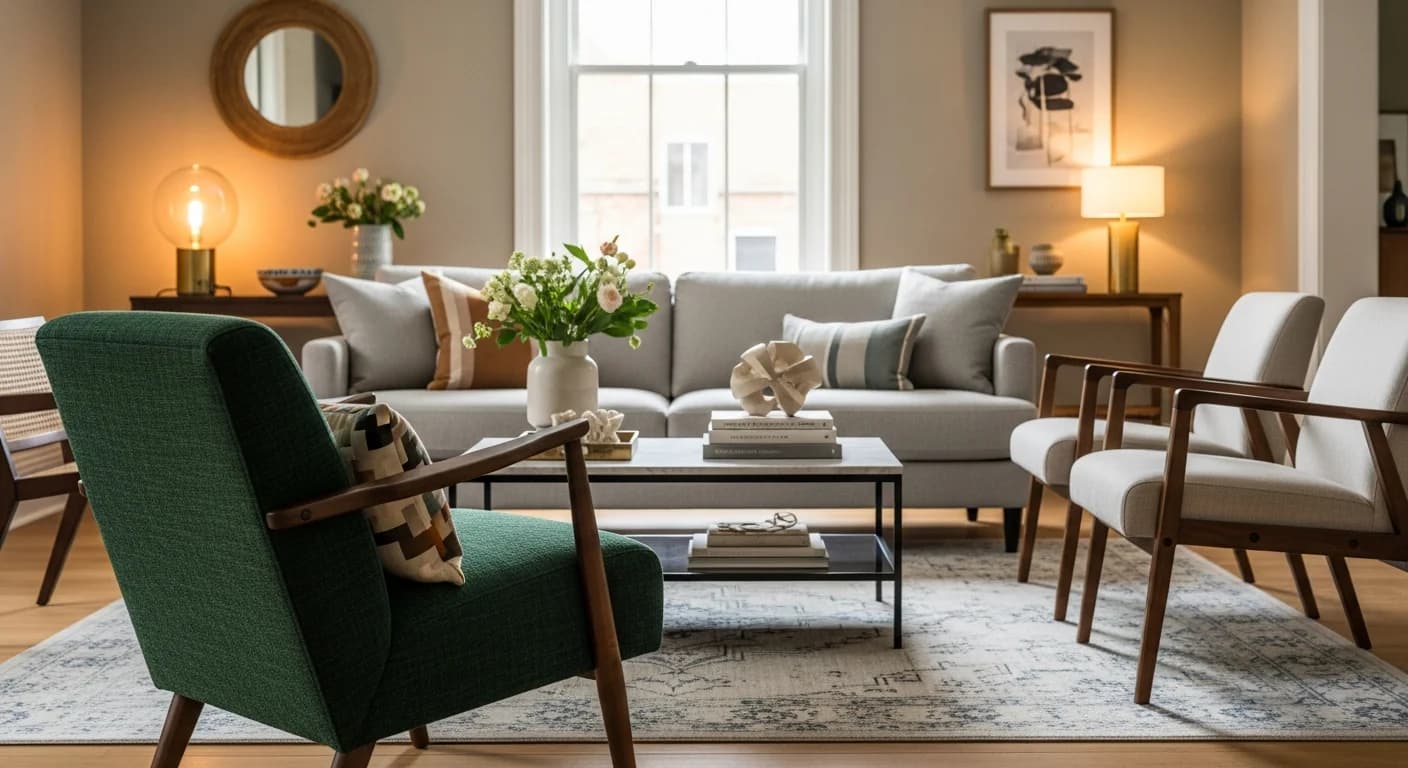
Understanding how to match chairs with room decor is one of the most impactful skills in interior decorating because chairs occupy significant visual real estate in every room they inhabit. A dining room typically contains six to eight chairs surrounding the table, making them the most repeated design element in the space — our dining room decorating guide covers the full picture of styling this critical space. In living rooms, accent chairs anchor conversation areas and introduce personality. In bedrooms, a reading chair or vanity seat adds function and style. When chairs coordinate with the surrounding decor, the entire room feels cohesive. When they clash, even well-decorated rooms feel disjointed.
The challenge is that perfect matching — identical wood tones, matching upholstery, and exactly replicated leg styles throughout a room — often looks sterile and catalog-like rather than curated and personal. The best-designed rooms balance coordination with intentional contrast, using shared design threads to connect pieces while allowing enough variation to create visual interest. These seven principles will help you find that balance in any room.
Principle 1 — Match the Leg Style to the Room's Design Language
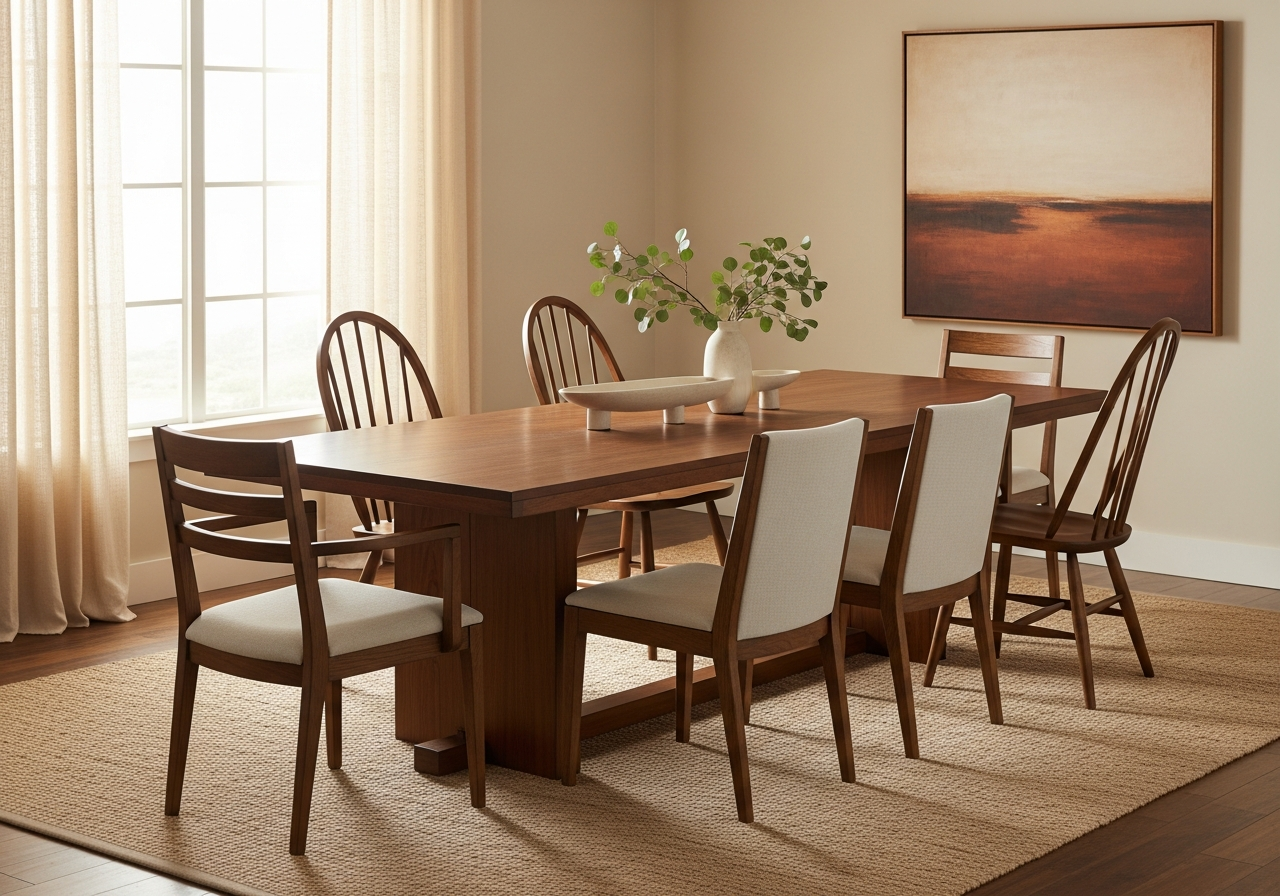
Chair legs communicate design style more directly than any other element. Tapered legs signal mid-century modern. Cabriole legs (curved with an outward knee and inward ankle) indicate traditional or French provincial style. Straight square legs suggest contemporary or Shaker-inspired design. Hairpin legs convey industrial or retro aesthetics. Turned legs with spindle details read as farmhouse or colonial. Matching the leg style of your chairs to the dominant design language of the room creates an immediate visual connection.
When selecting dining chairs for an existing table, look at the table's leg style first. A pedestal table with a turned column pairs naturally with chairs that have turned legs or soft curves. A sleek metal-base table calls for chairs with similarly clean, geometric legs. The leg styles do not need to be identical — a tapered wood leg and a tapered metal leg share the same design vocabulary even though the materials differ. The shape and angle of the leg is the primary matching point, not the material. This principle allows you to mix materials (wood table with metal-legged chairs, for example) while maintaining visual harmony.
Principle 2 — Coordinate Wood Tones Within a Two-Tone Range
Wood tone matching is the most common source of chair-room coordination anxiety. The rule is simpler than most people assume: wood tones do not need to match exactly, but they should share the same undertone family. Warm-toned woods (oak, cherry, walnut with golden or reddish undertones) coordinate with each other even when the specific shades differ. Cool-toned woods (ash, gray-washed oak, whitewashed pine) form their own compatible group. Mixing warm and cool undertones — a honey oak chair at a gray-washed table — creates visual tension that feels unintentional.
The two-tone approach works beautifully for dining sets: choose chairs in a lighter or darker shade within the same undertone family as the table. A dark walnut table with medium-tone oak chairs creates a deliberate contrast that looks layered and collected over time. Keep the difference to two to three shades apart on a wood tone scale — enough to distinguish the pieces but close enough that they read as intentionally paired. If your existing table and chairs are in different undertone families, consider painting the chair frames in a coordinating color to unify the set.
Principle 3 — Use Upholstery to Connect Chairs to the Room Palette
Upholstered chairs offer the most direct connection point between seating and room decor because fabric color and texture are easier to match than wood tones. Pull the upholstery color from an existing element in the room — a throw pillow, curtain panel, rug accent color, or artwork — to create a deliberate link. Our guide on choosing a color palette for home decor walks through the process of building a cohesive room palette. The chair fabric does not need to be the same material or pattern, just the same color family. A sage green linen chair that echoes the sage in a patterned rug ties the room together instantly.
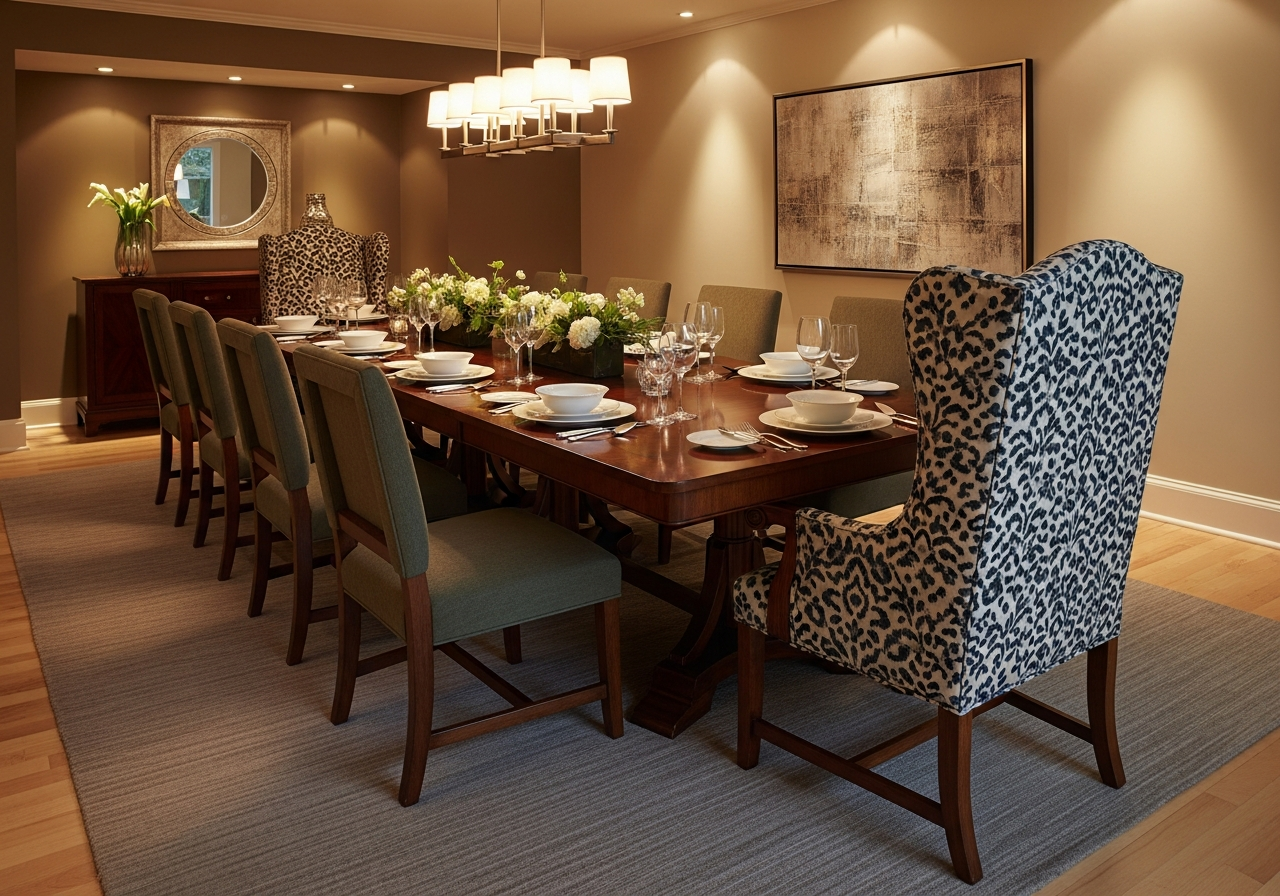
For dining chairs, consider using a host chair approach: upholster the two head chairs at each end of the table in a statement fabric (patterned or bold colored) while keeping the side chairs in a coordinating solid. This technique adds visual interest, defines the seating hierarchy, and gives the dining set a custom-designed look without the cost of fully custom furniture. The host chairs in a printed linen and side chairs in a complementary solid is a classic designer move that works in traditional, transitional, and modern dining rooms alike.
Principle 4 — Scale Chairs to the Room and Table Proportions
A chair that is too large overwhelms its surroundings, while one that is too small looks lost. For dining chairs, the seat height should be 10 to 12 inches below the table surface — a standard 30-inch table pairs with an 18-inch seat height. Leave 6 to 8 inches of space between each chair and 24 to 30 inches between the chair back and the wall or furniture behind it for comfortable movement. Arm chairs require 2 to 4 inches of clearance on each side to slide under the table.
For accent chairs in living rooms and bedrooms, scale the chair to the space it occupies. A large wingback chair demands a corner with at least 36 inches of clear space on each side, while a slim slipper chair works in tighter spots with as little as 24 inches. The chair back height should be proportional to adjacent furniture — a high-backed accent chair next to a low-profile sofa creates an uncomfortable visual imbalance. Aim for the chair back to fall within 4 to 6 inches of the sofa back height for a harmonious silhouette.
Principle 5 — Balance Visual Weight Across the Room
Visual weight refers to how heavy or dominant a piece of furniture appears, regardless of its actual weight. Solid, dark-colored chairs with thick legs and heavy upholstery carry high visual weight. Transparent acrylic chairs, wire-frame designs, and light-toned pieces carry low visual weight. Matching visual weight across the seating in a room creates equilibrium — a room full of visually heavy pieces feels oppressive, while a room of all lightweight pieces feels insubstantial.
The practical application: if your dining table is a heavy, solid wood piece with substantial legs, pair it with chairs that have enough visual weight to match — upholstered seats, solid backs, and sturdy legs. Pairing a heavy farmhouse table with delicate wire chairs creates a mismatch that makes the chairs look like afterthoughts. Conversely, a glass or slim-legged modern table calls for lighter chairs — a heavy carved chair at a glass table overpowers the delicate base. Match the visual density of the chair to the visual density of its companion furniture. For more on coordinating tables and seating, see our guide on matching a kitchen table with your decor.
Principle 6 — Intentionally Mismatch for an Eclectic, Curated Look
Deliberate mismatching — using different chair designs around the same table or in the same room — is a legitimate and increasingly popular design strategy. The key to successful mismatching is maintaining one unifying thread while allowing everything else to vary. Choose one shared element: same seat height, same wood tone, same upholstery color, or same general era. With that anchor in place, the other elements can differ freely. Six different chair designs that all have 18-inch seat heights and natural oak legs will look intentionally curated rather than accidentally mismatched.
The design world calls this the collected-over-time aesthetic — the look of a home furnished gradually with pieces acquired from different sources, each chosen for its individual character. To execute this successfully, ensure that no two adjacent chairs are identical in the mismatched set. Alternate designs around the table or distribute different styles evenly so no single chair type clusters in one area. The result should feel like a thoughtfully assembled collection, not a set of leftovers. For more on mixing styles, see our guide to mixing modern and vintage decor.

Principle 7 — Consider the Chair's Relationship to the Floor
The surface beneath the chair — whether hardwood, tile, carpet, or a rug — affects how the chair reads in the room. Chairs with exposed legs on a patterned rug interact visually with the rug pattern, so simpler leg designs work best on busy rugs while ornate legs pair better with solid or subtly textured floor coverings. On hard floors, chair legs are fully visible and become a more prominent design element, making their style and finish more impactful.
Practical considerations matter too. Chairs that slide in and out frequently — dining chairs especially — need leg tips that protect the floor. Felt pads on hardwood, rubber caps on tile, and glides on carpet prevent damage while allowing smooth movement. The chair's relationship to the floor also affects perceived height: a low-slung chair on a thick rug loses 1 to 2 inches of visual height, which can create a too-low feeling at a standard-height table. Test chair heights with the rug in place before committing to a purchase.
Room-by-Room Chair Matching Quick Guide
| Room | Chair Type | Key Matching Priority | Common Mistake |
|---|---|---|---|
| Dining Room | Dining chairs (4-8) | Leg style matches table; seat height 10-12" below surface | Mixing warm and cool wood undertones |
| Living Room | Accent chairs (1-2) | Upholstery connects to pillow or rug colors | Chair back height mismatched with sofa |
| Bedroom | Reading or vanity chair | Scale proportional to surrounding furniture | Oversized chair in a small bedroom corner |
| Home Office | Desk chair | Match material finish to desk (wood, metal, mixed) | Ergonomic chair that clashes with decor style |
| Entryway | Bench or side chair | Coordinate with console table and wall decor | Chair that blocks traffic flow |
Related Articles
Expand your furniture coordination skills with these guides: discover how to incorporate antiques into modern decor for mixing eras confidently, or explore our complete living room decorating guide for full-room coordination. For layout planning, read our living room layout and furniture arrangement ideas. Browse dining room ideas for visual inspiration, or check out mid-century modern living room ideas for style-specific seating pairings.
Frequently Asked Questions
Do all dining chairs have to match each other?
No, mismatched dining chairs are a deliberate design choice used by professional designers worldwide. The key is maintaining one unifying element — same seat height, same wood tone, same upholstery color, or same general style era — while allowing other details to vary. Intentional mismatching creates a collected, curated look that feels more personal than a catalog-matched set. Alternate different designs around the table for the most balanced visual effect.
How do I match a chair to a table with a different wood tone?
Ensure both pieces share the same undertone family — warm woods (oak, cherry, walnut) with warm woods, cool woods (ash, gray wash, whitewash) with cool woods. A two to three shade difference within the same undertone family looks intentional and layered. If the undertones clash, consider painting the chair frame a coordinating color, adding seat cushions that bridge the two wood tones, or embracing a deliberate contrast by pairing a painted chair (matte black, white, or a room accent color) with the natural wood table.
What color chair goes with a dark wood dining table?
Dark wood tables pair beautifully with chairs in lighter warm wood tones for natural contrast, or upholstered chairs in cream, oatmeal, sage, or slate blue for a softening effect. Matte black metal chairs create a bold contemporary look against dark wood. Avoid chairs in a nearly-identical dark shade — the slight mismatch looks accidental rather than coordinated. Either match exactly (same stain and species) or create clear, intentional contrast.
How do I choose an accent chair for the living room?
Choose an accent chair that pulls one color from an existing room element — a rug, pillow, or artwork — so it connects to the space. Match the chair back height to within 4 to 6 inches of the sofa back height for visual proportion. Consider the visual weight: pair heavy sofas with substantial accent chairs and slim sofas with lighter designs. Place the chair at a 45-degree angle to the sofa for natural conversation flow.
How do I match chairs with a modern and traditional mixed room?
In transitional rooms that blend modern and traditional elements, choose chairs that have one foot in each style. A chair with a traditional silhouette (wingback, rolled arm) in a modern fabric (solid linen, geometric print) bridges both aesthetics. Alternatively, pair a modern chair shape (clean lines, slim profile) with a traditional fabric (damask, plaid) for the same bridging effect. For more mixing techniques, see our guide on how to mix modern and traditional decor.
Visualize Chair Combinations in Your Room with HanoDecor
Choosing chairs from a catalog photograph is risky — you cannot know how the color, scale, and style will work in your actual room until the furniture arrives. AI visualization eliminates that guesswork. Upload a photo of your dining room, living room, or bedroom, and preview different chair styles, upholstery colors, and arrangements rendered in your specific space with your existing furniture, wall color, and lighting.
Ready to find the perfect chairs for your space? Try the HanoDecor Room Designer to test different chair options in your actual room before purchasing. For more furniture coordination guidance, explore our guides on matching furniture with your decor style and matching a rug to your existing decor for a fully coordinated space.
How to Match Chairs with Room Decor FAQs
Written by
Priya Sharma
Priya is an award-winning UX designer who previously led design teams at Airbnb and Pinterest. Her focus on user-centered design ensures that HanoDecor's tools are intuitive and accessible to everyone, regardless of their technical background.