How to Mix Modern and Traditional Decor: 7 Effortless Blending Tips
Quick Summary
A practical guide to blending modern and traditional design elements into a cohesive transitional style. Covers 7 proven techniques for combining clean-line furniture with classic moldings, contemporary art with antique accents, and neutral palettes with ornate details — plus ratio guidelines and room-by-room examples.

What Is Transitional Style and Why Does It Work
Understanding how to mix modern and traditional decor is the foundation of transitional style — one of the most enduringly popular design approaches for good reason. Transitional design takes the best elements from both worlds: the warmth, craftsmanship, and detail of traditional interiors paired with the clean lines, uncluttered surfaces, and neutral palettes of modern design. The result is a space that feels timeless rather than trend-driven, comfortable rather than sterile, and sophisticated rather than stuffy.
According to the American Society of Interior Designers, transitional style has been the most requested residential design approach for five consecutive years, with over 35 percent of homeowners identifying it as their preferred aesthetic. Its popularity stems from flexibility — transitional rooms accommodate inherited antiques alongside new purchases, work equally well in a 1920s colonial and a 2020s new build, and age gracefully as trends shift. Unlike purely modern rooms that can feel cold or purely traditional rooms that can feel dated, transitional spaces occupy a balanced middle ground that most people find intuitively appealing.
The challenge is execution. Mixing styles without a framework results in rooms that feel random, disconnected, or identity-less. These seven tips provide the structure you need to blend modern and traditional elements with confidence and intentionality — creating spaces that look effortless precisely because the blending follows clear principles.
Tip 1 — Establish a Dominant Style at 60/40
The most common mistake in mixing modern and traditional decor is splitting them 50/50. Equal representation creates visual tension rather than harmony — the eye cannot settle because neither style dominates. Instead, choose a dominant style that occupies roughly 60 percent of the room's visual weight, with the contrasting style at 40 percent. Our furniture matching guide explains how to identify which pieces belong to which style family and how to weigh their visual impact.
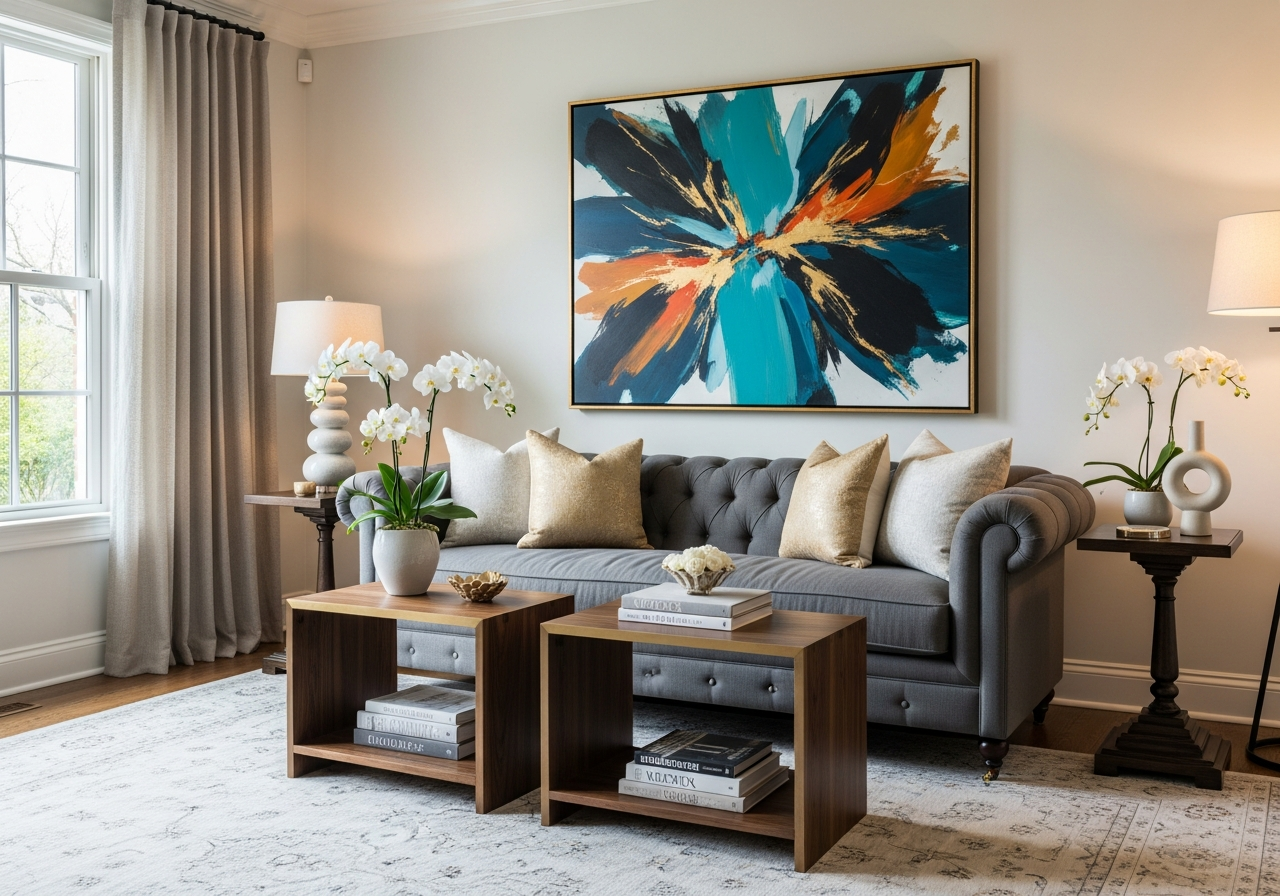
In a room that leans 60 percent modern — clean-lined sofa, minimal window treatments, contemporary coffee table — the 40 percent traditional elements become intentional accents: an ornate gilt mirror, a classic wingback chair, or a Persian rug. The reverse also works: a room with traditional crown molding, an upholstered sofa with rolled arms, and a crystal chandelier can feel fresh with 40 percent modern additions like a geometric side table, abstract wall art, and a sleek floor lamp.
The 60/40 ratio prevents the room from feeling like two competing design schemes sharing a space. It gives the eye a clear visual narrative — this is a modern room with traditional warmth, or this is a traditional room with modern edge — rather than leaving visitors wondering what you were going for.
Tip 2 — Use a Unified Color Palette as the Bridge
Color is the single most powerful tool for making disparate styles feel cohesive. When every piece — modern and traditional alike — shares the same color family, the style differences recede and the room feels unified. Neutral palettes are the classic transitional choice: warm whites, soft grays, taupes, and creams create a backdrop where a Louis XVI chair and a minimalist Parsons table can coexist peacefully.
Choose three to four colors that appear in both your modern and traditional pieces. For example, if your traditional rug has navy, cream, and gold, echo those colors in your modern throw pillows, contemporary lamp base, and abstract art. The color repetition creates visual threads that connect pieces across style boundaries, making the overall composition feel intentional rather than accidental.
Avoid the trap of making traditional pieces one color family and modern pieces another — this creates visual camps that divide the room. Instead, distribute each color across both style categories. A traditional wooden side table can sit next to a modern brass lamp because both share the warm metallic family. Our guide on choosing a whole-home color palette walks through this process in detail.
Tip 3 — Pair Ornate Architecture with Simple Furniture
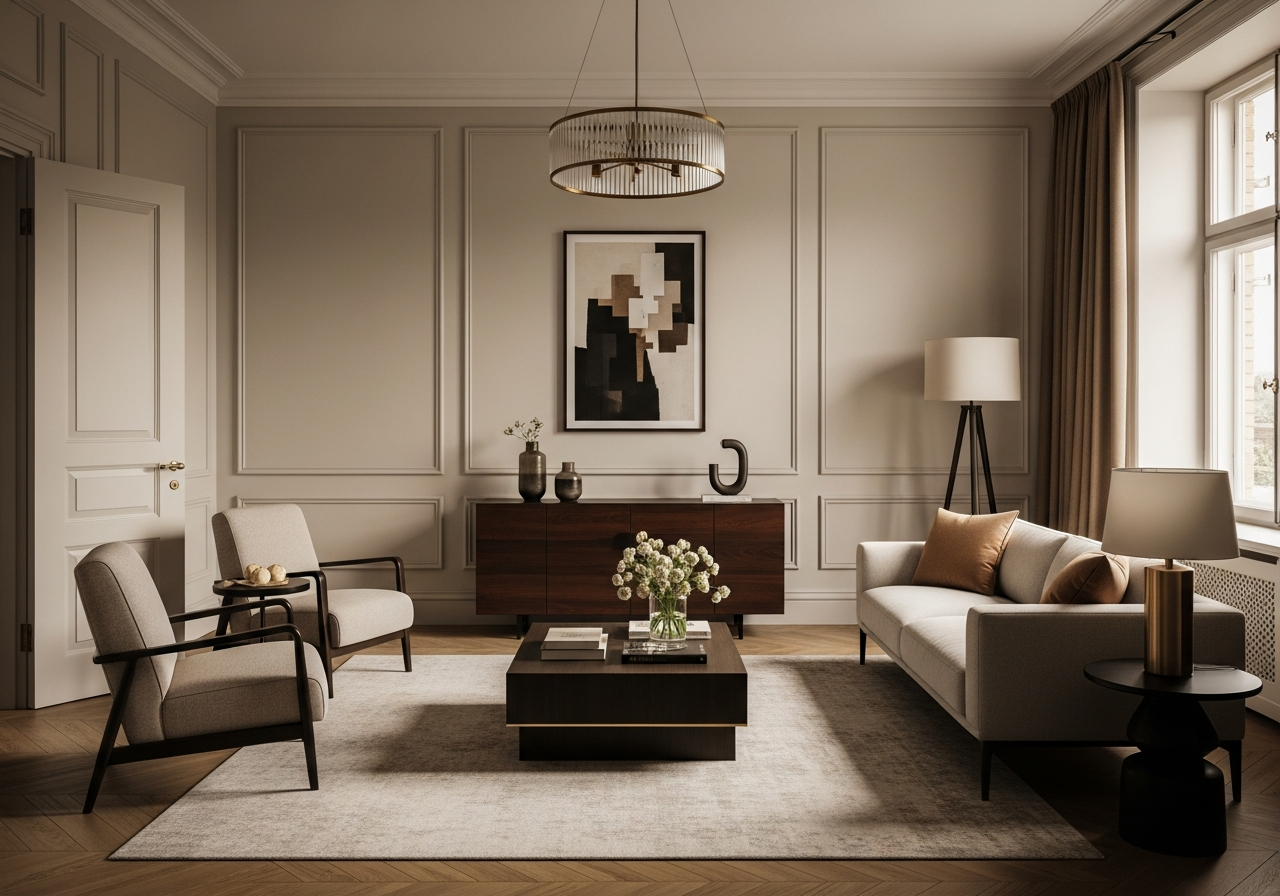
Rooms with traditional architectural details — crown molding, wainscoting, ceiling medallions, arched doorways, or decorative fireplace surrounds — provide a rich canvas for modern furniture. The architectural detail supplies the traditional character, freeing you to furnish with clean-lined, contemporary pieces that keep the room from feeling like a period reproduction. Our complete living room decorating guide walks through how to assess your room's architectural baseline before layering furniture and decor.
This contrast between ornate structure and simple furnishing is the signature of high-end transitional design. A room with detailed crown molding, a marble fireplace, and tall baseboards gains freshness from a low-profile modern sofa in light gray linen, a walnut slab coffee table, and a streamlined metal floor lamp. The architecture tells the story of the home's history; the furniture tells the story of how you live now.
The reverse works too: if your home has minimal architecture (flat ceilings, no molding, simple doorways), adding a few traditionally styled furniture pieces — a tufted ottoman, a turned-leg side table, or an upholstered dining chair with nailhead trim — introduces the warmth and detail that the architecture lacks.
Tip 4 — Mix Textures to Create Depth and Warmth
Texture mixing is where modern and traditional design complement each other most naturally. Modern design favors smooth, minimal textures — polished metal, flat-weave fabrics, glass, and matte finishes. Traditional design celebrates rich, tactile textures — velvet, carved wood, tufted upholstery, silk, and heavy drapery. Combining both creates the layered, inviting depth that defines transitional spaces. Our pattern mixing guide covers the complementary skill of combining different textile prints within this same framework.
Layer textures within a single seating area: a modern linen sofa with a traditional velvet lumbar pillow and a wool throw, sitting on a vintage Persian rug, beside a sleek glass side table topped with a carved wooden box. Each texture contributes a different tactile quality, and the variety keeps the eye moving and the hand wanting to touch. This multi-texture approach works in every room — bedrooms benefit from mixing crisp cotton sheets with a quilted traditional coverlet, while dining rooms gain warmth from pairing a modern table with upholstered chairs in a classic damask or herringbone fabric.
Tip 5 — Use Modern Art with Traditional Furniture (and Vice Versa)
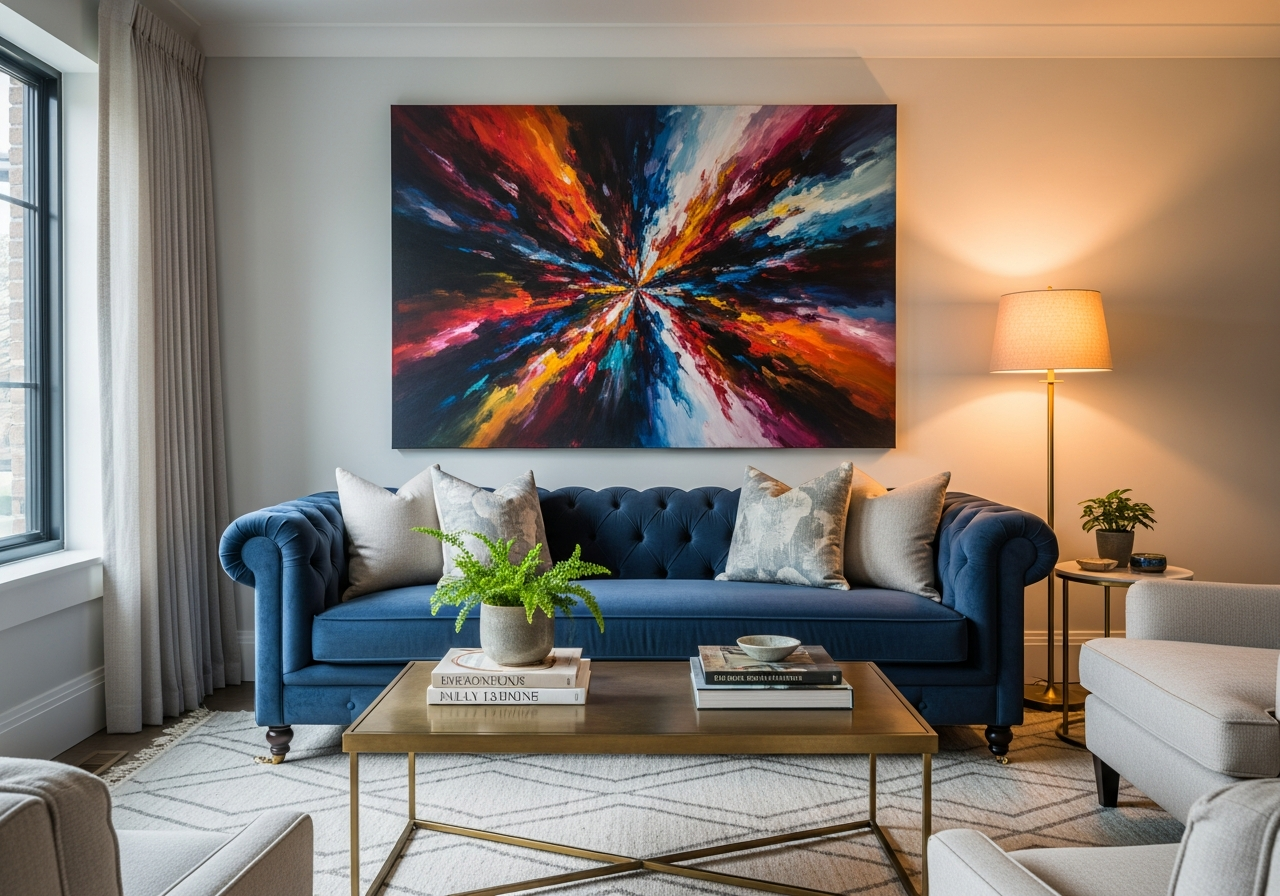
Wall art is one of the easiest and most impactful ways to create style contrast. Hanging a large abstract painting above a traditional tufted sofa creates instant transitional tension — the classic form of the sofa grounds the composition while the contemporary art injects energy and visual modernity. This high-contrast pairing reads as intentional and sophisticated rather than accidental.
The reverse pairing — a traditional landscape painting, botanical print, or gilt-framed mirror above a modern credenza or clean-lined console — works equally well. The traditional art adds soul and history to the modern furniture's simplicity, preventing the space from feeling showroom-sterile.
The framing itself becomes a blending tool. A contemporary photograph in an ornate gold frame bridges both styles simultaneously. A classical portrait in a minimal black float frame does the same from the opposite direction. Pay attention to frame finishes and ensure they coordinate with the room's metal palette — our metal mixing guide helps with this coordination.
Tip 6 — Create Continuity with Consistent Metal Finishes
Metal finishes act as connective tissue across a room, linking pieces that might otherwise feel unrelated. When your modern floor lamp, traditional picture frames, cabinet hardware, and light fixtures share the same metal family — all warm brass, all matte black, or all brushed nickel — the varied furniture styles feel deliberately curated rather than randomly assembled.
In transitional rooms, warm metals (brass, gold, aged bronze) tend to lean the aesthetic toward traditional warmth, while cool metals (chrome, polished nickel, stainless steel) push it toward modern crispness. Choosing a dominant metal that aligns with your 60/40 style ratio reinforces the design direction. A room leaning 60 percent traditional might use brass as the dominant metal with chrome as a secondary accent. A room leaning 60 percent modern might reverse that proportion.
Matte black is the neutral of the metal world — it works in both modern and traditional contexts and bridges the gap between warm and cool metals seamlessly. When in doubt about metal mixing, matte black hardware, frames, and fixtures provide a safe, stylish anchor that complements virtually any other finish in the room. For a deeper exploration of mixing gold, silver, brass, and chrome, explore our modern and vintage mixing guide.
Tip 7 — Edit with Intention: Every Piece Earns Its Place
The hallmark of well-executed transitional design is restraint. Traditional rooms can absorb many accessories — collections of objects, layered curtains, multiple rugs, and ornamental details that create richness. Modern rooms strip away excess until only essential forms remain. Transitional design lives between these extremes: each decorative piece must earn its place through either function, beauty, or meaningful contrast.
After placing your furniture and major decor elements, step back and evaluate. Remove anything that does not actively contribute to the room's visual story. If a traditional decorative plate collection clutters the modern floating shelves, edit to the three best pieces. If a cluster of modern geometric objects overwhelms a traditional side table, keep one statement piece and store the rest. The edited result should feel like a conversation between two styles — not a debate.
A useful final test: ask yourself whether each piece looks like it was chosen deliberately or like it was left over from a previous style phase. Transitional rooms succeed when every object, whether modern or traditional, appears to be there on purpose.
Room-by-Room Transitional Blending Ideas
| Room | Traditional Element (40%) | Modern Element (60%) | Bridging Detail |
|---|---|---|---|
| Living Room | Tufted sofa, Persian rug | Clean-line coffee table, abstract art | Shared neutral palette, brass accents |
| Dining Room | Upholstered chairs, crystal chandelier | Parsons table, contemporary centerpiece | Matching wood tones, linen textiles |
| Bedroom | Upholstered headboard, nightstands with turned legs | Minimal bedding, sleek sconces | White-on-white color scheme |
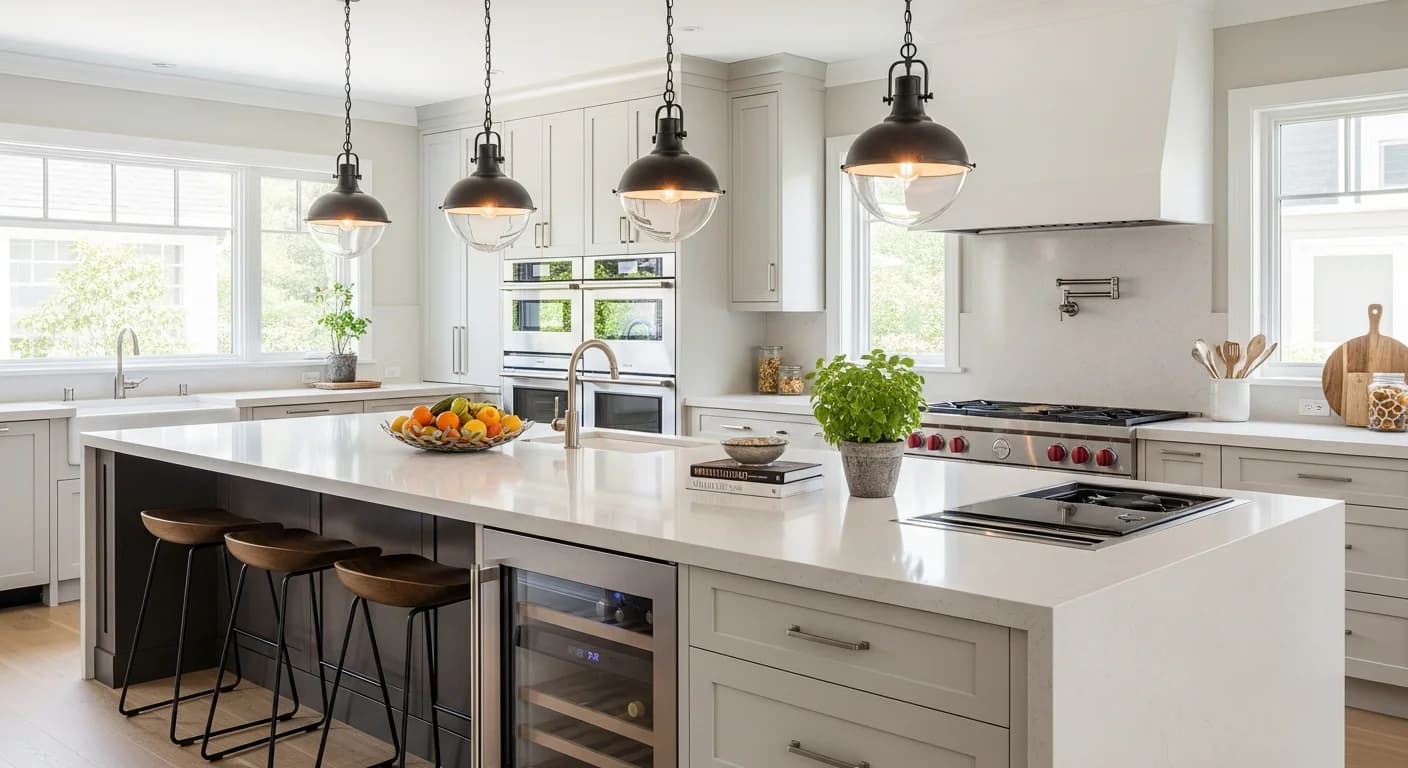
| Kitchen | Paneled cabinetry, farmhouse sink | Waterfall countertop, integrated appliances | Brass hardware throughout |
| Entryway | Ornate console table, gilt mirror | Modern bench, geometric rug | Warm taupe wall color |
Frequently Asked Questions
What is the difference between transitional and eclectic decor?
Transitional design specifically blends modern and traditional elements using a disciplined framework (unified palette, consistent metals, 60/40 ratio). Eclectic design draws from multiple styles — bohemian, industrial, art deco, global — with fewer structural rules. Transitional rooms feel calm and balanced; eclectic rooms feel vibrant and collected. Both are valid approaches, but transitional is more structured.
Can I mix modern and traditional in a small room?
Yes, and smaller rooms often benefit from it. In tight spaces, limit the mix to two or three key contrast points — perhaps a modern light fixture over a traditional side table, or contemporary art above a classic upholstered chair. The reduced number of pieces means each contrast moment has more visual impact, and the unified color palette keeps the small space feeling cohesive rather than chaotic.
How do I avoid making my room look like two different styles fighting?
Three strategies prevent style conflict: establish a 60/40 dominant ratio (never 50/50), use a unified color palette across both styles, and repeat one metal finish throughout the room. When colors, metals, and proportions connect pieces visually, the style differences become complementary contrasts rather than competing statements. Remove any piece that feels like it belongs to a different room entirely.
What colors work best for transitional design?
Warm neutrals are the transitional palette sweet spot — soft whites, creamy ivories, warm grays, greige (gray-beige), taupe, and camel. These colors bridge modern coolness and traditional warmth naturally. Add depth with navy, olive, or burgundy accents. Avoid both stark cool whites (too modern) and heavy jewel tones on large surfaces (too traditional) unless used as controlled accents within the 10 percent accent allocation.
Visualize Your Transitional Room with HanoDecor
Curious how your room would look with a transitional style transformation? Upload a photo to HanoDecor's AI Room Designer and experiment with different style blends — preview modern furniture in your traditionally detailed room, or add traditional warmth to a contemporary space. Compare multiple variations side by side before purchasing a single piece. Pair your AI previews with these seven blending principles, and you will create a transitional room that feels effortlessly sophisticated.
Related Articles
Explore more style-blending and coordination guides: How to Incorporate Antiques into Modern Decor takes the vintage-integration concept further with sourcing and placement tips. How to Match a Rug to Your Existing Decor covers one of the most impactful transitional anchoring decisions. How to Match Chairs with Room Decor helps with seating selections that bridge style boundaries. For dining room applications of transitional blending, see How to Decorate a Dining Room, and to discover which end of the modern-traditional spectrum suits you best, try How to Find Your Home Decor Style.
How to Mix Modern and Traditional Decor FAQs
Written by
Priya Sharma
Priya is an award-winning UX designer who previously led design teams at Airbnb and Pinterest. Her focus on user-centered design ensures that HanoDecor's tools are intuitive and accessible to everyone, regardless of their technical background.