How to Style Bookshelves: 8 Expert Rules for a Beautiful, Curated Display
Quick Summary
A step-by-step guide to styling bookshelves like a professional designer. Covers 8 expert rules including the 60/30/10 formula for books vs objects vs empty space, color grouping and coordination, height variation techniques, negative space usage, mixing horizontal and vertical book stacks, incorporating organic elements, lighting shelves for impact, and seasonal refresh strategies.
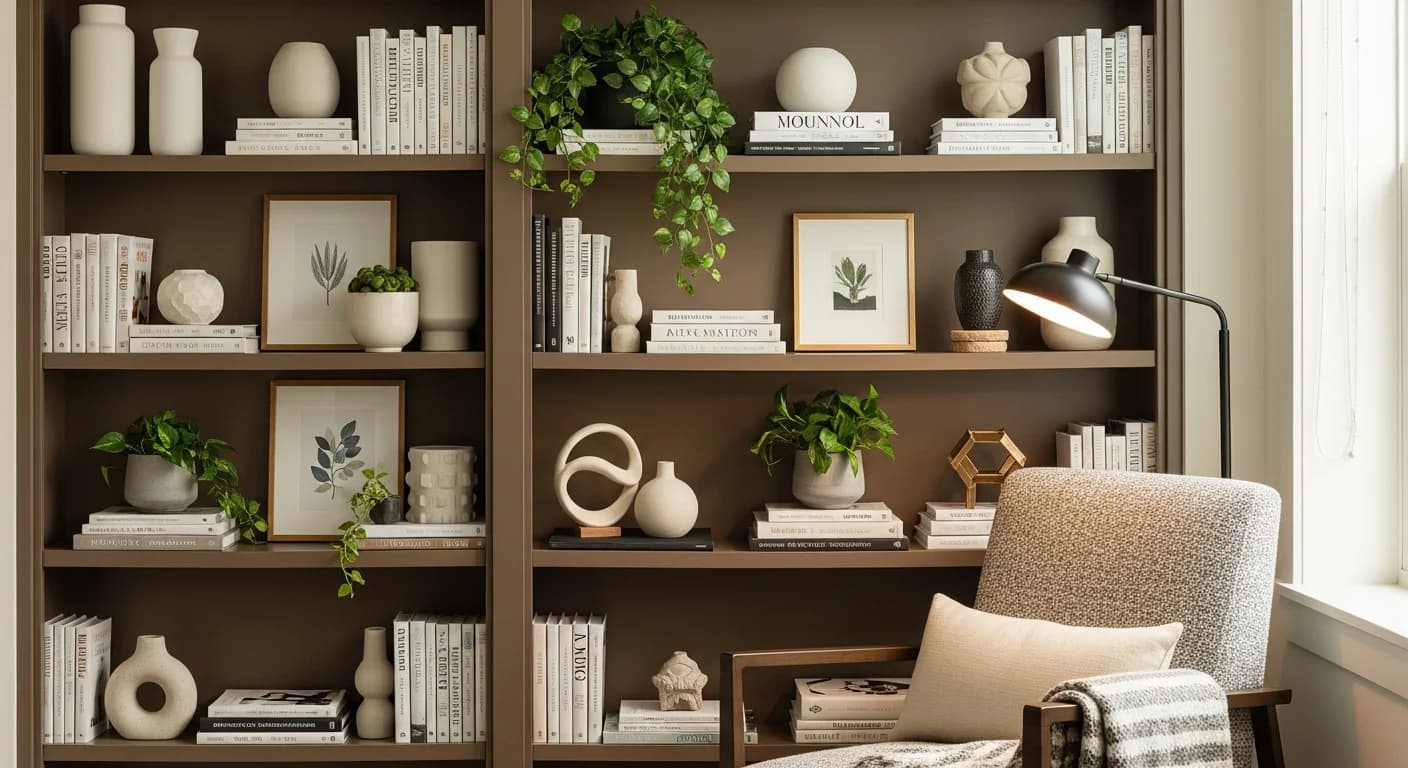
Learning how to decor bookshelves like a professional stylist is one of the highest-impact decorating skills you can develop. Bookshelves are one of the first things guests notice when they enter a room — and the difference between a cluttered shelf crammed with random objects and a beautifully styled display is entirely a matter of technique, not budget. A well-styled bookshelf communicates personality, taste, and visual sophistication in a way that few other decorating elements can match.
Professional stylists follow a set of consistent principles that produce polished results on any shelf — built-in bookcases, standalone Kallax units, floating shelves, or floor-to-ceiling library walls. Whether you are working with a single three-shelf unit or a full wall of shelving, these 8 rules will transform your bookshelves from storage catch-alls into design features that anchor the room. For additional shelf display inspiration, browse our bookshelf styling ideas gallery.
Rule 1 — Apply the 60/30/10 Shelf Formula
The 60/30/10 formula is the foundation of professional shelf styling. Fill approximately 60% of your total shelf space with books, 30% with decorative objects, and leave 10% completely empty. This ratio prevents the two extremes that plague most bookshelves: the overcrowded wall of spines with zero visual interest, and the sparsely decorated shelf that looks like a retail display rather than a lived-in home.
The 60% book allocation ensures that your bookshelf still functions as a bookshelf — it holds and displays actual books. The 30% decorative objects layer adds visual variety through vases, framed photos, small sculptures, candles, and decorative boxes. The 10% empty space is the secret ingredient that most amateur stylists miss: negative space gives the eye a resting point and prevents the display from feeling overwhelming. On a five-shelf unit, this means one shelf can be left with noticeably more breathing room than the others.
Rule 2 — Group Books by Color for Visual Impact
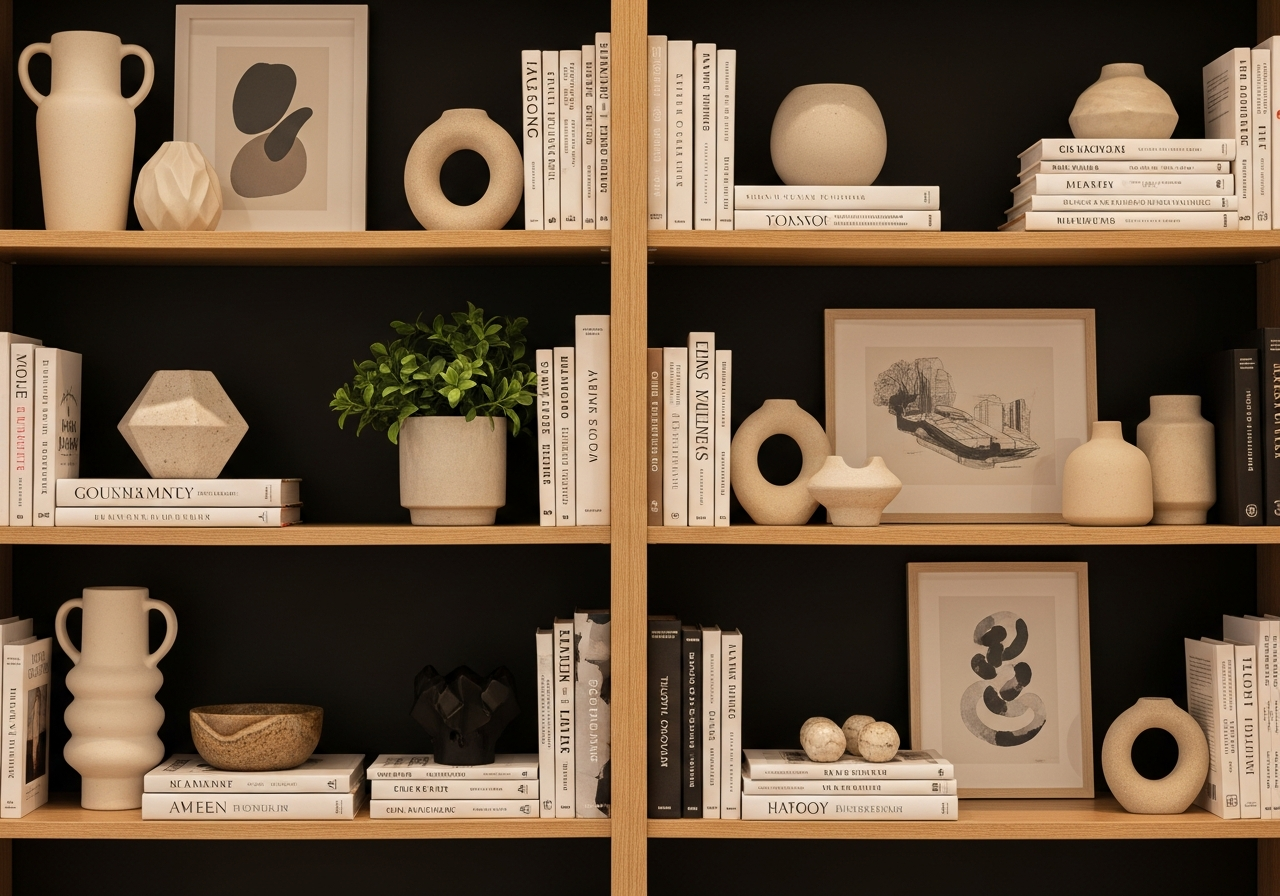
Color-grouped books create an immediate visual impact that transforms a bookshelf from a random collection into a curated display. Arrange books in tonal groups — a section of white and cream spines, followed by blues, then greens, then neutrals. The transition between color groups should feel gradual rather than abrupt. You do not need to organize every book by color — grouping just 40 to 50 percent of your collection by color creates the effect while leaving room for genre-based or practical organization. For help selecting a cohesive color scheme that ties your shelves to the rest of the room, see our guide to choosing a whole-home color palette.
If a full rainbow arrangement feels too bold, choose a more restrained approach: remove brightly colored dust jackets from books that clash with your palette and display the neutral hardcovers underneath. Turn a few books spine-in to show their muted page edges. Place a stack of three to four books in your accent color on each shelf to create color rhythm that ties the display to the room's palette. Professional stylists often wrap select books in coordinated paper covers for magazine-worthy shelves, though this is an optional flourish.
Rule 3 — Vary Heights with Vertical and Horizontal Stacks
A shelf where every book stands vertically at the same height creates a monotonous visual rhythm. Break this pattern by mixing vertical rows with horizontal stacks. A horizontal stack of three to four books topped with a small object — a candle, a plant, or a decorative box — creates a visual pedestal that adds height variation and visual interest. Alternate between vertical and horizontal groupings on each shelf to create a dynamic rhythm across the entire unit. This same height-variation principle is essential for coffee table styling, where stacked books serve as pedestals for decorative objects.
Height variation extends to decorative objects as well. Place taller items like vases, framed art, or sculptural objects next to shorter horizontal book stacks for contrast. A tall vase on the left of a shelf balanced by a stack of books with a small object on the right creates an asymmetrical composition that feels sophisticated and intentional. The key is variety within each shelf — avoid having all tall items on one shelf and all short items on another.
Rule 4 — Embrace Negative Space
Negative space — the intentional empty areas on your shelves — is what separates amateur styling from professional results. Resist the urge to fill every inch of shelf space. Leave gaps between groupings, keep at least one shelf lighter than the others, and allow decorative objects to stand alone with breathing room around them. The empty space draws attention to the objects you have chosen to display and prevents the visual overwhelm that comes from too much density.
A common technique is the "anchor and float" approach: fill 70 to 80 percent of the far side of each shelf with books and objects, then leave the remaining side open. Alternate which side is fuller — right-heavy on the top shelf, left-heavy on the next — to create an asymmetrical cascade that guides the eye across and down the bookcase. This approach works on any shelf depth and creates the illusion that your collection has been thoughtfully curated rather than simply piled on.
Rule 5 — Add Organic Elements for Warmth and Texture
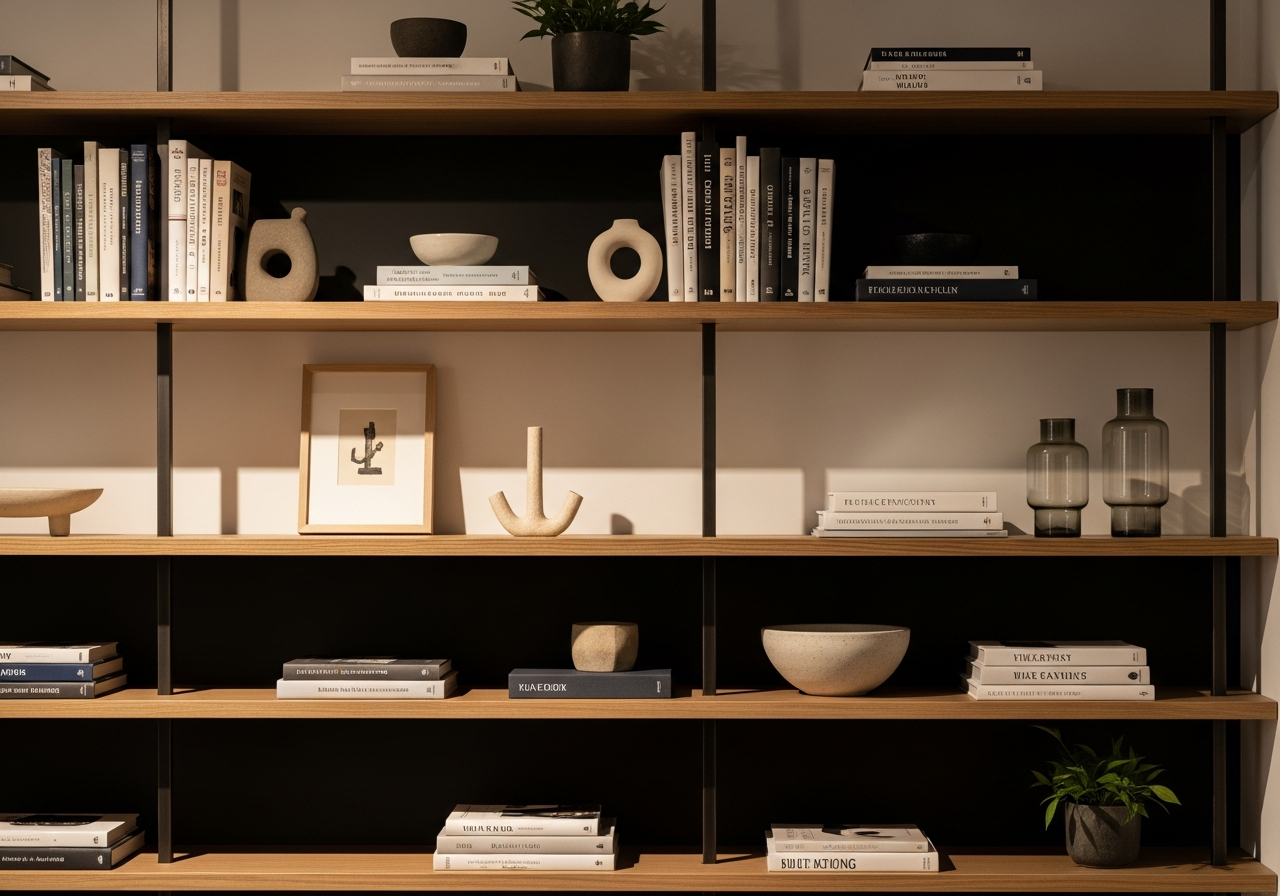
Books and decorative objects alone can make shelves feel static and one-dimensional. Organic elements — plants, dried florals, woven baskets, wooden objects, and natural stones — introduce texture and life that softens the geometric lines of a bookcase. A trailing pothos cascading over the edge of a shelf adds movement. A small succulent in a ceramic pot introduces a pop of green. Dried eucalyptus or pampas grass in a vase creates height and organic softness. Our room-by-room plant styling guide covers the best varieties for shelves and low-light spots.
Woven baskets placed on lower shelves serve double duty: they add natural texture and hide clutter like remote controls, chargers, and magazines. A piece of driftwood or a large geode serves as a sculptural focal point. Mix smooth surfaces (ceramic, glass) with rough textures (woven, wood, stone) for tactile variety. Limit organic elements to one or two per shelf to avoid a garden-center look — each piece should complement the books and objects around it.
Rule 6 — Create Visual Triangles Across Shelves
Professional stylists arrange key objects to form invisible triangles across the bookcase. Place a tall blue vase on the top-left shelf, a medium blue candle on the middle-right shelf, and a small blue decorative box on the bottom-center shelf. These three color-matched items form a triangle that your eye naturally traces, creating visual movement across the entire unit. The triangle principle keeps the viewer engaged with the full display rather than fixating on one area.
You can layer multiple triangles using different elements: one triangle of color, one triangle of texture, and one triangle of shape. A metallic triangle — brass bookend on one shelf, gold-framed photo on another, copper bowl on a third — ties together shelves that might otherwise feel disconnected. This technique works on any size bookcase, from a single three-tier unit to a full wall of built-ins.
Rule 7 — Light Your Shelves to Create Depth and Drama
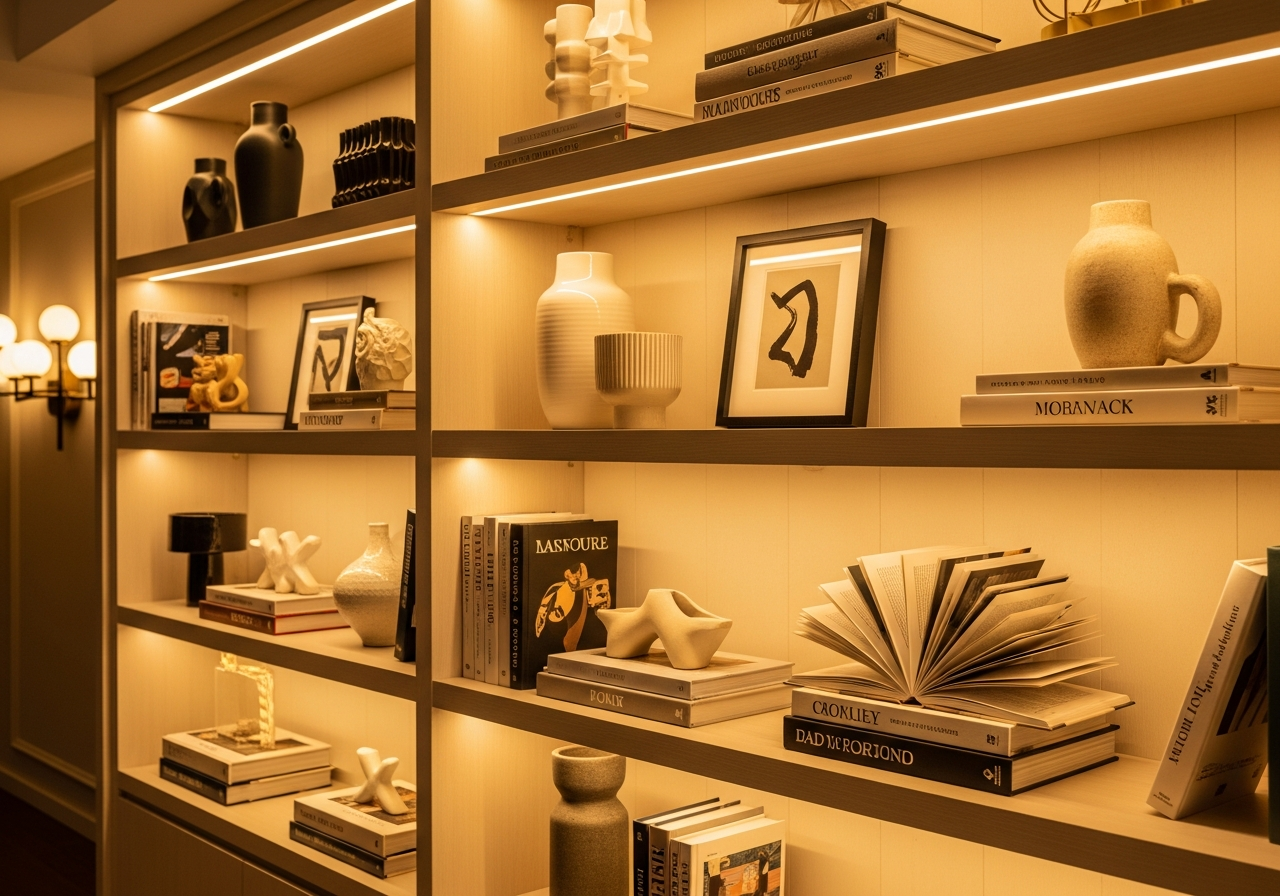
Lighting transforms bookshelves from a static storage feature into a dynamic focal point. LED strip lights along the underside of each shelf cast a warm downward glow that highlights the objects below. Puck lights positioned behind key objects create backlit silhouettes that add drama and depth. Battery-operated art lights clipped to the top shelf illuminate the entire unit without hard wiring. Well-lit shelves look intentional and gallery-like, drawing attention and making colors and textures more vivid.
Choose warm-white LEDs (2700K to 3000K) for a cozy, inviting glow. Avoid cool-white or daylight-temperature bulbs on bookshelves — they create a clinical, retail-store feel. Dimmer-compatible LED strips let you adjust brightness for different times of day. At night, shelf lighting can serve as atmospheric ambient light that replaces overhead fixtures and creates a warm, layered atmosphere. For more on layering light in living spaces, see the complete living room decorating guide.
Rule 8 — Refresh Shelves Seasonally for a Living Display
A bookshelf that never changes starts to fade into the background. Seasonal refreshes keep your display dynamic and give you a reason to revisit your styling. Swap out one or two decorative objects each season: a ceramic vase for spring, a shell or driftwood piece for summer, a warm-toned candle for fall, and a metallic or crystal object for winter. Rotate which books are displayed spine-out versus stacked horizontally to create a fresh visual every few months.
You do not need to restyle the entire bookcase — changing three to five objects per season is enough to refresh the look. Keep a small box of seasonal swap items in a closet so the rotation takes just 10 minutes. This approach keeps your bookshelf feeling alive and current without requiring a full restyling effort. Use the AI room designer to preview different shelf styling concepts in your actual space before committing to purchases.
Frequently Asked Questions
How many items should go on each shelf?
A well-styled shelf typically holds 5 to 12 items depending on shelf width and depth. For a standard 36-inch shelf, aim for 8 to 10 items including books. Group items in clusters of three to five, with negative space between groupings. The goal is a curated, intentional look — not an overstuffed collection.
Should I organize books by color or genre?
Color organization creates the strongest visual impact for decorating purposes. However, you do not need to choose one or the other — organize 40 to 50 percent of your most visible books by color for visual effect, and group the rest by genre or subject on less prominent shelves. This hybrid approach looks beautiful while keeping your library functional.
How do I style floating shelves differently from bookcases?
Floating shelves are shallower and more visible from multiple angles, so every item matters more. Limit each floating shelf to three to five items. Use leaned artwork or framed prints as backdrop pieces. Stack two to three horizontal books as a base for a small decorative object. Leave at least 25 to 30 percent of the shelf empty. Consistent spacing between items is especially important on floating shelves because there is no bookcase frame to anchor the arrangement.
What are the best decorative objects for bookshelves?
The most versatile bookshelf objects include ceramic vases in neutral or accent colors, small framed photographs, decorative boxes for hidden storage, sculptural objects in natural materials, small potted plants or dried florals, bookends in brass or marble, and candles in glass holders. Mix textures — smooth ceramic next to rough stone, woven basket next to polished metal — for visual richness.
How do I make an IKEA bookshelf look expensive?
Three techniques elevate an affordable bookshelf: First, add peel-and-stick wallpaper or paint to the back panels for a custom look. Second, swap the included hardware for brass or matte black knobs and pulls. Third, apply professional styling rules — the 60/30/10 formula, color grouping, and negative space. A well-styled $80 bookshelf looks more expensive than a $500 unit filled with random clutter.
Create Your Dream Shelf Display with HanoDecor
Styling bookshelves is one of the most satisfying decorating projects because the transformation is immediate and dramatic. The 8 rules in this guide — the 60/30/10 formula, color grouping, height variation, negative space, organic elements, visual triangles, lighting, and seasonal refreshes — provide a complete framework for turning any bookshelf into a curated design feature.
Want to see how styled shelves look in the context of your whole room? Try the AI room designer — upload a photo of your living room, study, or bedroom, and preview different shelf styling approaches in your actual space. See how books, objects, and lighting work together before you start rearranging.
Related Articles
Expand your surface styling skills with these related guides: How to Style Wall Shelves and Floating Shelves adapts these bookshelf rules to shallower, wall-mounted displays. How to Style a Console Table covers vignette-building for narrow surfaces. How to Use Books as Decor dives deeper into stacking, color-coordinating, and displaying books throughout your home. For blending old and new objects on your shelves, read How to Mix Modern and Vintage Decor, and for mantelpiece displays see How to Style a Mantel.
How to Style Bookshelves FAQs
Written by
Emily Rodriguez
Interior Design Editor covering living spaces, styling trends, and room makeovers. Former Architectural Digest contributor with a focus on accessible, budget-conscious design.