How to Style a Console Table: 7 Essential Rules for Every Room
Quick Summary
This guide covers 7 essential rules for styling a console table in any room — from entryway foyers to living room walls and hallway nooks. Learn the height variation formula, symmetry techniques, proportion rules, and layering methods that designers use to create polished vignettes on console surfaces.
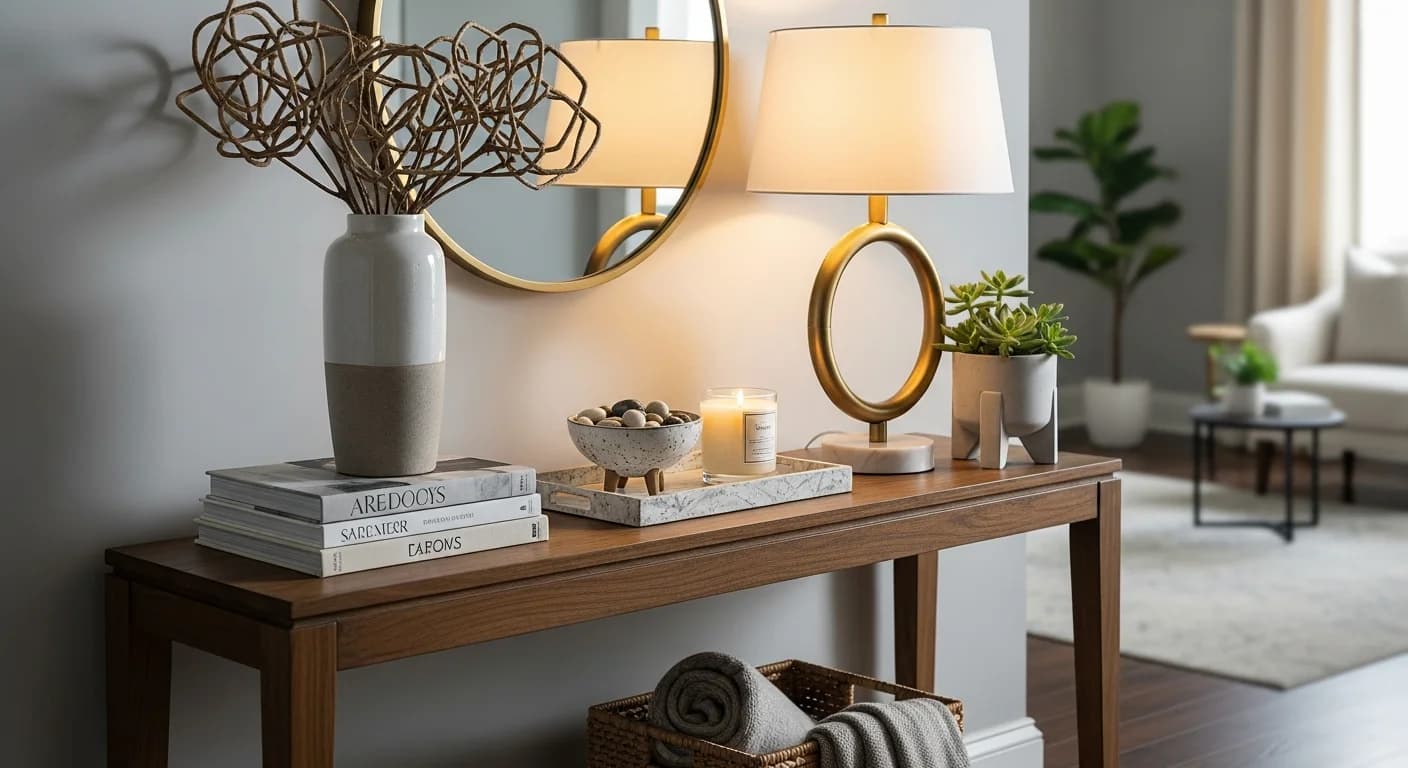
Knowing how to decor a console table is one of the most versatile styling skills in interior decorating. Console tables appear in entryways, behind sofas, along hallway walls, and beneath mirrors — and each location demands a slightly different approach. The challenge is creating an arrangement that looks intentional and polished rather than cluttered or bare. Professional stylists follow a set of proportion and height-variation rules that turn a flat surface into a three-dimensional vignette with visual depth and personality. A well-styled console table typically includes objects at three different heights, a mix of textures, and a balance between functional pieces (keys, mail trays) and decorative ones (art, greenery, candles). This guide breaks down 7 essential rules that work regardless of your console's size, style, or location.
Why Console Tables Are the Hardest Surfaces to Style
Console tables are narrow — typically 10 to 16 inches deep — which limits the front-to-back layering that makes coffee tables and sideboards easier to style. Their elongated shape (48 to 72 inches wide) creates a horizontal plane that looks empty if underfilled and cluttered if overfilled. Additionally, console tables are usually positioned against a wall, meaning the arrangement is viewed from the front only, which requires every object to be visible from a single vantage point. These constraints make console styling a precision exercise where each object must earn its place.
The wall above the console is equally important. A bare wall above a styled console feels incomplete, while an overly busy wall above a cluttered surface creates visual chaos. Think of the console table and the wall above it as a single composition — the objects on the surface and the artwork or mirror above should relate in scale, color, and style. This integrated approach is what separates a designer-level vignette from a random collection of objects.
Rule 1 — Create Three Height Levels
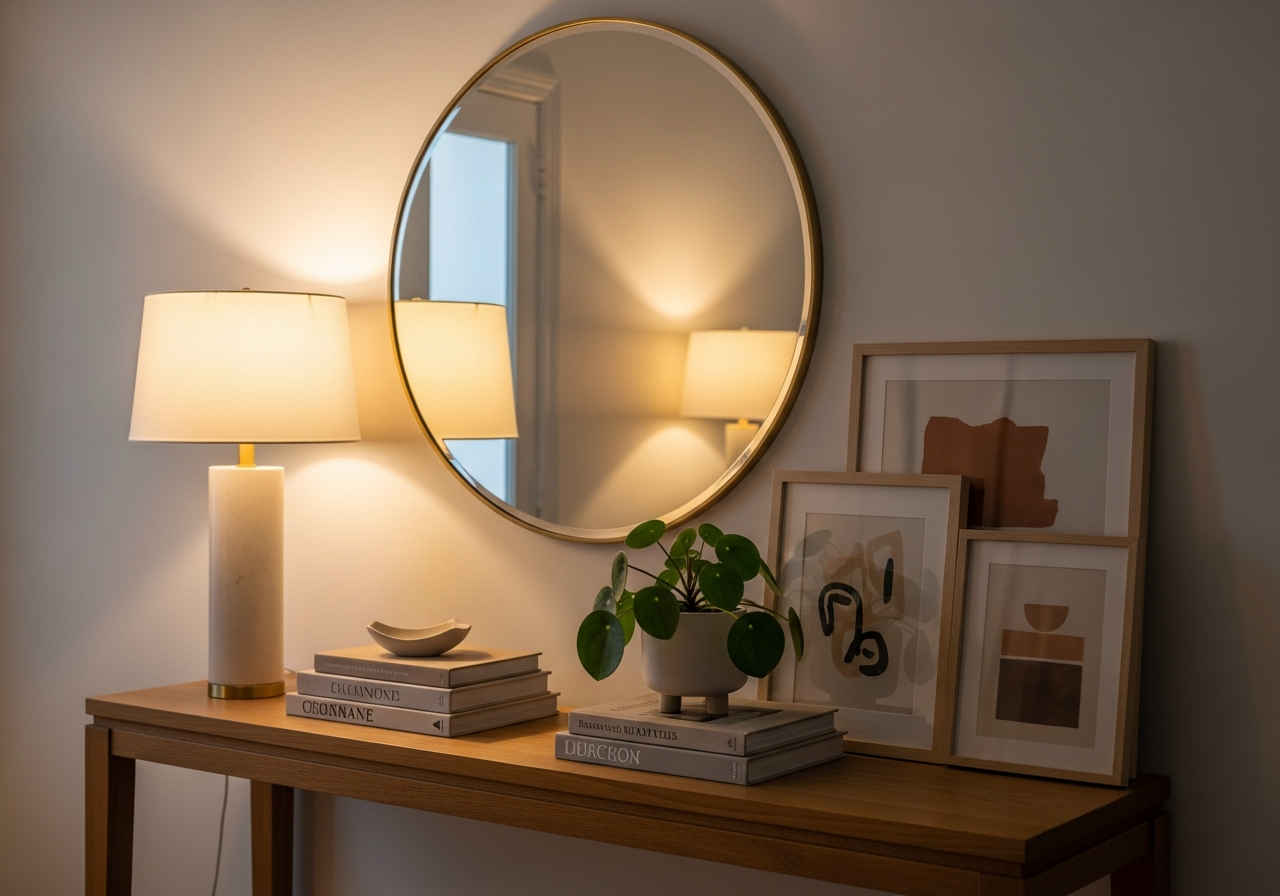
The foundation of console styling is the three-height rule: arrange objects at tall (over 18 inches), medium (8 to 14 inches), and low (under 6 inches) heights. A tall table lamp or vase anchors one end at 24 to 30 inches. A medium-height object — a framed photo, a stack of books, or a small sculpture — occupies the middle zone. Low objects like a decorative box, a small succulent, or a candle fill the base layer. This height variation creates a visual triangle that draws the eye upward and across the display, preventing the flat, monotonous look that occurs when all objects are the same height. The same three-height approach works beautifully on mantels — see our mantel styling guide for fireplace-specific applications.
Rule 2 — Use the Rule of Thirds for Placement
Divide your console surface into three horizontal sections. Place your tallest anchor piece at the left or right third — not dead center — to create dynamic asymmetry. The middle third can hold a low-profile object or remain partially open for visual breathing room. The opposite third balances the arrangement with a medium-height grouping. This off-center placement creates visual movement and avoids the static, formal look of perfect symmetry. However, if your entryway or room has a formally symmetrical architecture (centered door, matching sconces), a symmetrical console arrangement with matching table lamps at each end and a centered decorative object can reinforce the architectural balance.
Rule 3 — Mix Textures and Materials
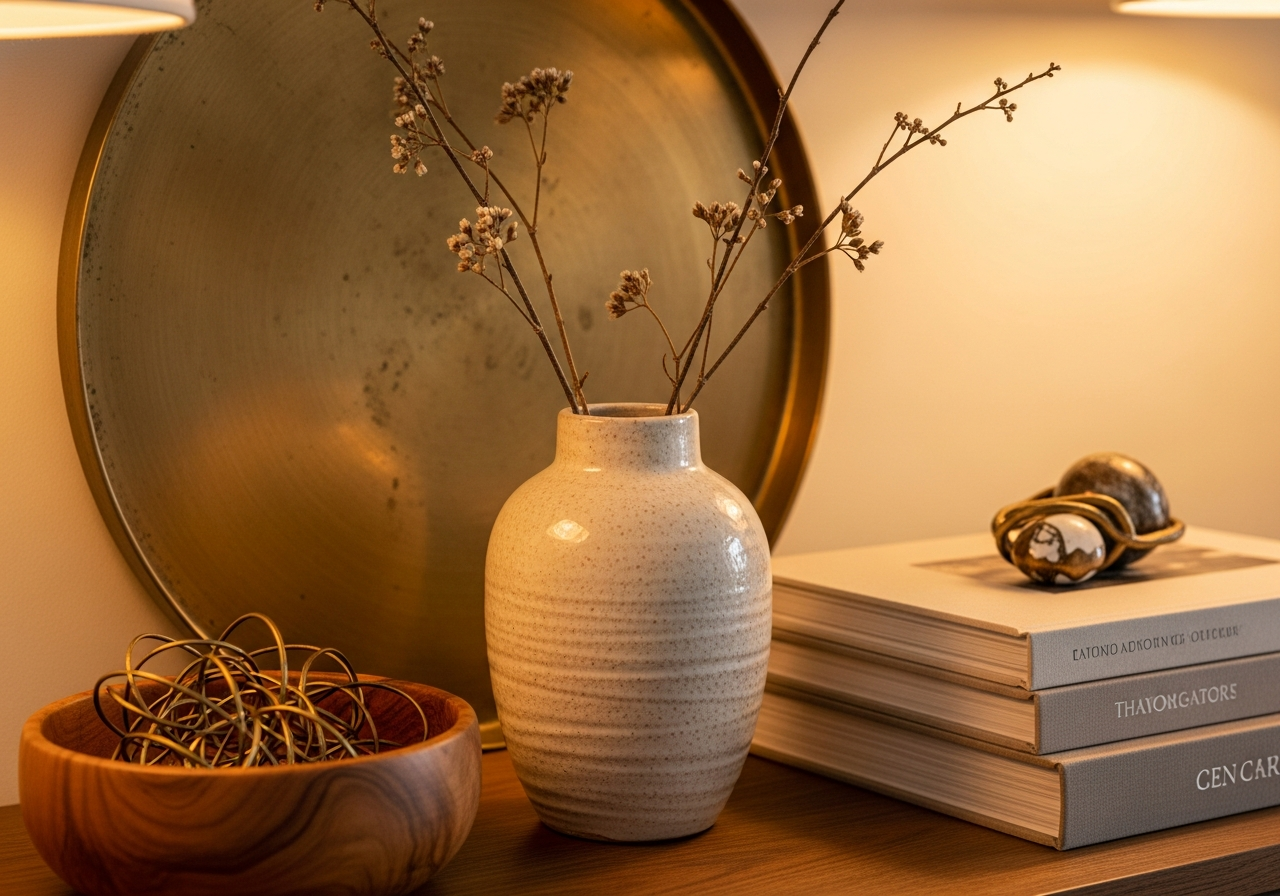
A console display with objects in a single material (all ceramic, all glass, all wood) reads as flat and monotonous. Combine at least three textures: something smooth (a ceramic vase or metal sculpture), something organic (a wooden bowl, woven basket, or live plant), and something reflective (a brass tray, a crystal object, or a framed piece with glass). The textural contrast creates visual interest even when the color palette is neutral. For example, a matte white ceramic lamp, a stack of linen-bound books, and a small brass dish create a tactile richness that a single-material display cannot achieve. When mixing metallic finishes on your console, our metal mixing guide explains the 60/30/10 ratio for warm, cool, and neutral metals.
Rule 4 — Anchor the Wall Above
The wall above a console table needs a focal element — a mirror, a piece of art, or a curated gallery arrangement. A round mirror (30 to 36 inches in diameter) softens the console's angular lines and reflects light into the space, making it a particularly effective choice for dim entryways and narrow hallways. For art, choose a single piece or a pair of pieces whose combined width is 50 to 75% of the console's width. Hang the bottom edge of the art or mirror 4 to 8 inches above the console surface — close enough to feel connected, but high enough that tall objects on the console do not touch or crowd the wall piece. For gallery wall techniques, see our wall arrangement guide.
Rule 5 — Balance Visual Weight
Visual weight refers to how heavy an object appears based on its size, color, and density. Dark, large, and dense objects carry more visual weight than light, small, and transparent ones. A console arrangement should balance visual weight across the surface — a heavy ceramic lamp on one end can be balanced by a grouping of lighter objects (a stack of books topped with a small plant and a candle) on the other end. If you step back and the arrangement feels lopsided, add a darker or larger object to the lighter side, or replace a heavy piece on the dominant side with something more delicate.
Rule 6 — Include One Functional Element
A console table that is purely decorative misses an opportunity. In entryways, include a small tray or decorative bowl for keys, sunglasses, and pocket items — our entryway decorating guide covers the full styling process for these high-impact spaces. Behind a sofa, a table lamp provides task lighting for reading. In a hallway, a small dish with fragrance diffuser reeds serves double duty as decor and ambient scent. The functional element should be styled into the arrangement — a brass catch-all tray with a few curated objects inside looks intentional, while a random pile of keys and mail looks like clutter. Styling your console for daily use ensures the arrangement stays maintained rather than being pushed aside for practical needs.
Rule 7 — Edit Ruthlessly — Less Is More on Narrow Surfaces
Console tables reward restraint. With only 10 to 16 inches of depth, every object competes for space. A strong console vignette has 5 to 7 objects (including the wall piece) — enough for visual interest, few enough for each piece to breathe. If you step back and the arrangement looks crowded, remove one object. If it still feels cluttered, remove another. The strongest vignettes always have at least 20% of the surface visible. This negative space gives the eye a resting point and makes the curated objects stand out. Resist the temptation to fill every inch — the empty space is part of the design.
Console Styling by Room Location
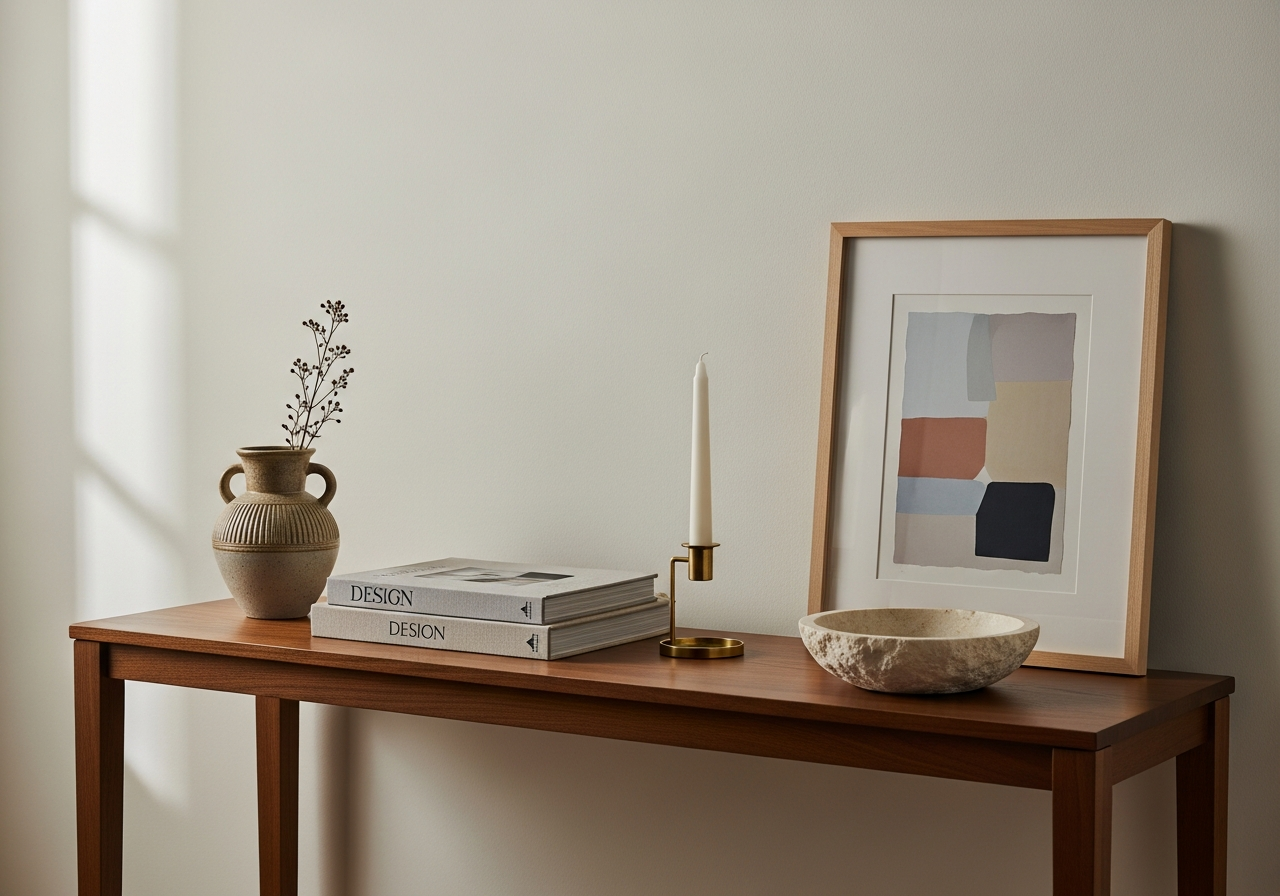
In entryways, prioritize function: a table lamp for welcoming light, a tray for daily items, a mirror above for last-minute checks, and one decorative element (a vase with fresh flowers or a sculptural object). In living rooms behind a sofa, coordinate the console display with the room's color palette and keep objects low enough to avoid blocking sightlines from the sofa to the wall. In hallways, opt for a narrower console (10 to 12 inches deep) with a single focal object and a mirror to open up the corridor visually. In dining rooms, style the console as a buffet extension during gatherings, with candlesticks, a low floral arrangement, and serving-ware displayed as decorative objects between meals.
For coffee table styling techniques that complement your console table arrangement, see our coffee table styling guide. And for broader surface styling across mantels and shelves, browse our bookshelf styling tips.
Frequently Asked Questions
What should I put on a console table in an entryway?
An entryway console table should include a mix of functional and decorative items: a table lamp or pair of sconces for welcoming light, a small tray or bowl for keys and daily items, a mirror or artwork above, and one to two decorative objects (a vase with flowers, a sculptural piece, or a stack of books). Keep the arrangement edited to 5 to 7 total objects for a polished, uncluttered look.
How do I style a console table behind a sofa?
Behind a sofa, keep console objects below the sofa's back height or only slightly taller to avoid blocking the room's flow. A pair of matching table lamps at each end creates symmetry, while a small plant or stack of books in the center adds a finishing touch. Coordinate the console's color palette with the sofa's throw pillows and the room's overall scheme for visual cohesion.
What is the right height for a mirror above a console table?
Hang a mirror so its bottom edge is 4 to 8 inches above the console surface. The mirror's center should be roughly at eye level (57 to 60 inches from the floor). Choose a mirror width that is 50 to 75% of the console's width — a mirror that is wider than the console looks top-heavy, while one that is too narrow looks undersized.
Can I style a narrow console table without it looking cluttered?
Yes, narrow consoles (10 to 12 inches deep) benefit from vertical height rather than horizontal spread. Use a tall, slender lamp or vase as the primary anchor, pair it with a small framed photo or sculpture, and add one flat object (a small tray or decorative book). Avoid wide objects and limit the arrangement to 3 to 5 pieces that emphasize height over depth.
Visualize Your Console Table Styling with HanoDecor
Not sure which styling approach works for your space? Upload a photo of your entryway, hallway, or living room to HanoDecor's Room Designer and see how different console styling approaches transform the area. Experiment with modern minimalist arrangements, traditional layered vignettes, or eclectic mixed-material displays — all visualized on your actual space before you rearrange a single object.
Related Articles
Continue building your surface styling skills: How to Style a TV Stand applies similar proportion rules to media consoles where electronics add extra complexity. How to Style Wall Shelves covers display techniques for the shelving often found above or near console tables. How to Use Books as Decor explores stacking and color-coordinating books as height builders on any surface. For matching your console to the room's overall aesthetic, read How to Match Furniture with Your Decor Style, and for full living room context see our complete living room decorating guide.
How to Style a Console Table FAQs
Written by
Emily Rodriguez
Interior Design Editor covering living spaces, styling trends, and room makeovers. Former Architectural Digest contributor with a focus on accessible, budget-conscious design.