How to Style a Coffee Table: 7 Brilliant Rules for Perfect Layers and Balance
Quick Summary
A practical guide to coffee table styling with 7 rules covering the tray method, height variation, the rule of threes, texture mixing, negative space, and seasonal rotation. Includes techniques for round, rectangular, and oval coffee tables.
The coffee table is the visual center of any living room, yet most people either leave it bare or pile it with remotes and mail. Learning how to decor a coffee table properly is one of the fastest ways to make your entire living room feel intentionally styled. A well-curated coffee table display tells visitors that the room was designed with care — and it takes less than 15 minutes to achieve once you know the rules.
Professional stylists and magazine editors follow a reliable set of principles when arranging coffee table vignettes. These 7 rules cover everything from choosing the right base layer to creating height variation, balancing organic and geometric shapes, and maintaining enough clear space for the table to remain functional. Whether your coffee table is rectangular, round, square, or oval, these techniques adapt to any shape and style, from minimalist modern to collected bohemian. The same layering principles apply to other surfaces — see our console table styling guide for adapting these rules to narrow entryway and hallway surfaces.
Why Coffee Table Styling Makes or Breaks a Living Room
The coffee table sits at the geometric center of most living room seating arrangements. It is the first surface guests notice when they sit down and the last thing they see when they leave. Interior designers call it the room's "anchoring surface" because it ties together the sofa, chairs, rug, and surrounding decor into a cohesive composition. A styled coffee table signals that the room is complete; an empty or cluttered one signals that the decorating process stalled.
The good news is that coffee table styling is one of the most forgiving decorating skills to practice. Unlike hanging a gallery wall or choosing a paint color, you can experiment with different arrangements in minutes, moving objects around until the composition feels right. No tools required, no permanent commitments, and the materials you need are often already in your home. For more inspiration, browse our coffee table tablescape ideas.
Rule 1 — Start with a Tray as Your Foundation
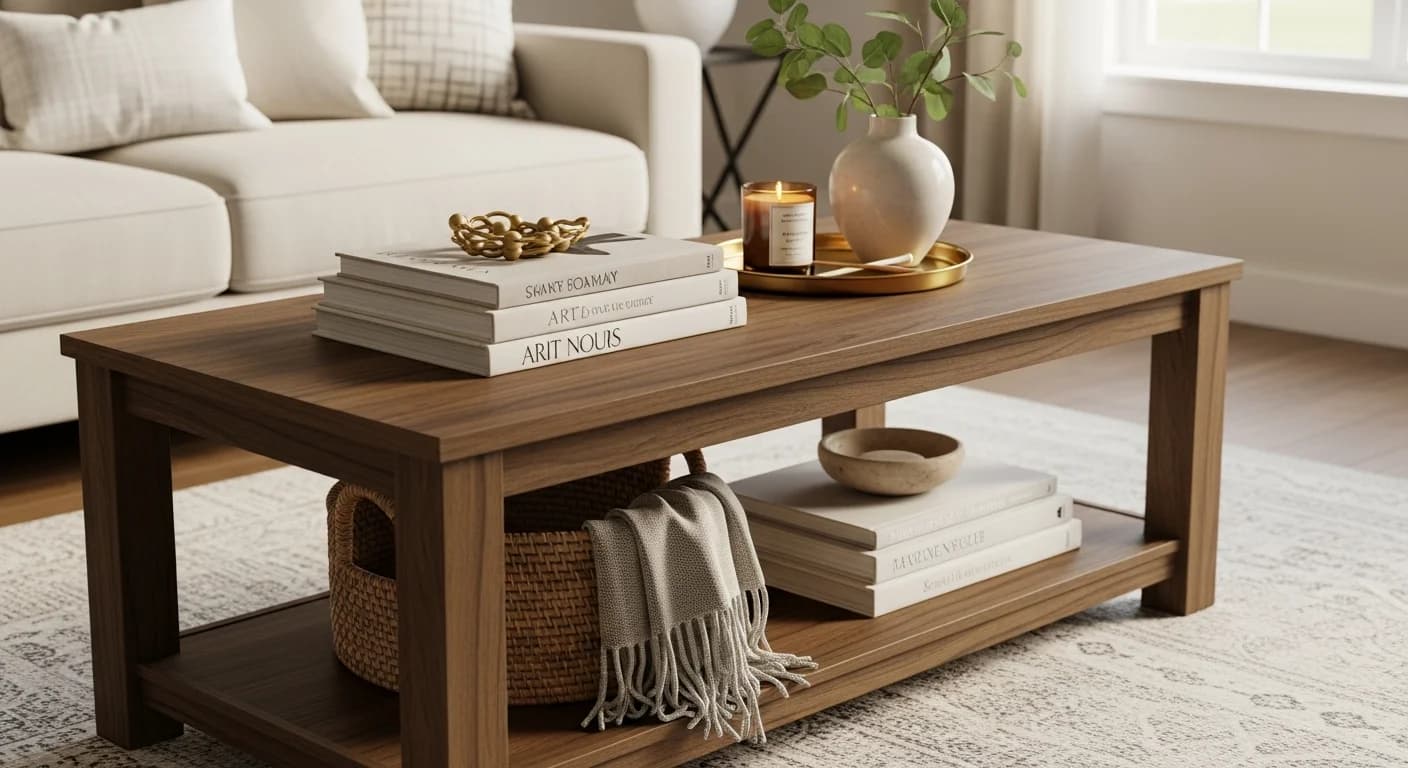
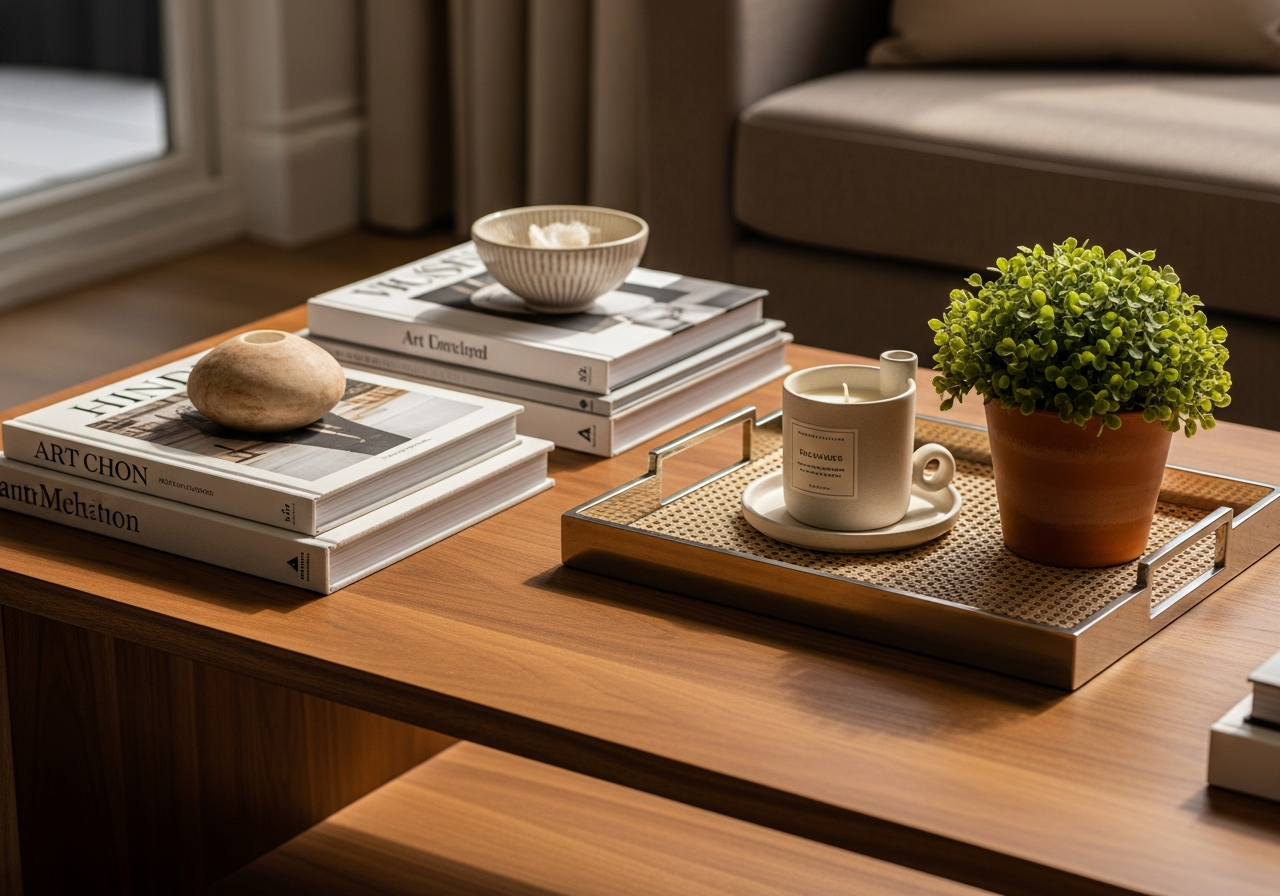
A decorative tray is the single most useful coffee table styling tool. It corrals loose items into an organized grouping, creates a defined boundary for your arrangement, and makes it easy to clear the table quickly when you need the full surface for entertaining. Choose a tray that contrasts with your table's material — a woven rattan tray on a marble table, a brass tray on a wood table, or a lacquered white tray on a dark walnut surface.
The tray should be approximately one-third to one-half the length of a rectangular table, or about 60% of the diameter of a round table. Place it off-center for an organic, relaxed feel or centered for a symmetrical, polished look. Inside the tray, you will build your vignette with the remaining six rules. Everything within the tray reads as one intentional grouping rather than random scattered objects — and that visual organization is what separates styled from cluttered.
Rule 2 — Create Height Variation with Stacked Books
A flat arrangement where everything sits at the same level looks lifeless. Stacking two to three hardcover coffee table books creates a pedestal that adds height and visual interest. Choose books with covers that complement your color palette — a white cover, a sage green spine, and a navy blue book create a curated stack that doubles as decor and conversation starter. Oversized art, photography, and design books (typically 10x12 inches or larger) work best because their scale matches the table's proportions.
Place a small decorative object on top of the book stack — a candle, a small sculptural piece, or a tiny potted succulent. This "topper" adds another height layer and draws the eye upward. The book stack plus topper should reach 6 to 10 inches tall, creating a visual anchor that grounds the entire coffee table arrangement. Position the stack in one quadrant of the table or at one end, never in the exact center, to leave room for the remaining elements.
Rule 3 — Follow the Rule of Threes for Balanced Groupings
The human eye naturally finds odd-numbered groupings more visually appealing than even numbers. Arrange your coffee table objects in groups of three: a stack of books, a candle, and a plant. Or a tray, a vase, and a decorative bowl. Three creates a triangle composition that the eye follows naturally, creating movement across the surface. Avoid four or six items in a symmetrical grid — this reads as rigid and corporate rather than warm and personal.
Vary the shapes within each grouping: one tall and narrow (a vase or candle), one medium and round (a bowl or sphere), and one short and flat (a book stack or tray). This shape variation prevents monotony and creates the visual rhythm that professional stylists describe as "collected." Each piece should feel like it belongs to the group while maintaining its own identity — unified by color or material but differentiated by shape and height.
Rule 4 — Mix Textures and Materials for Visual Richness
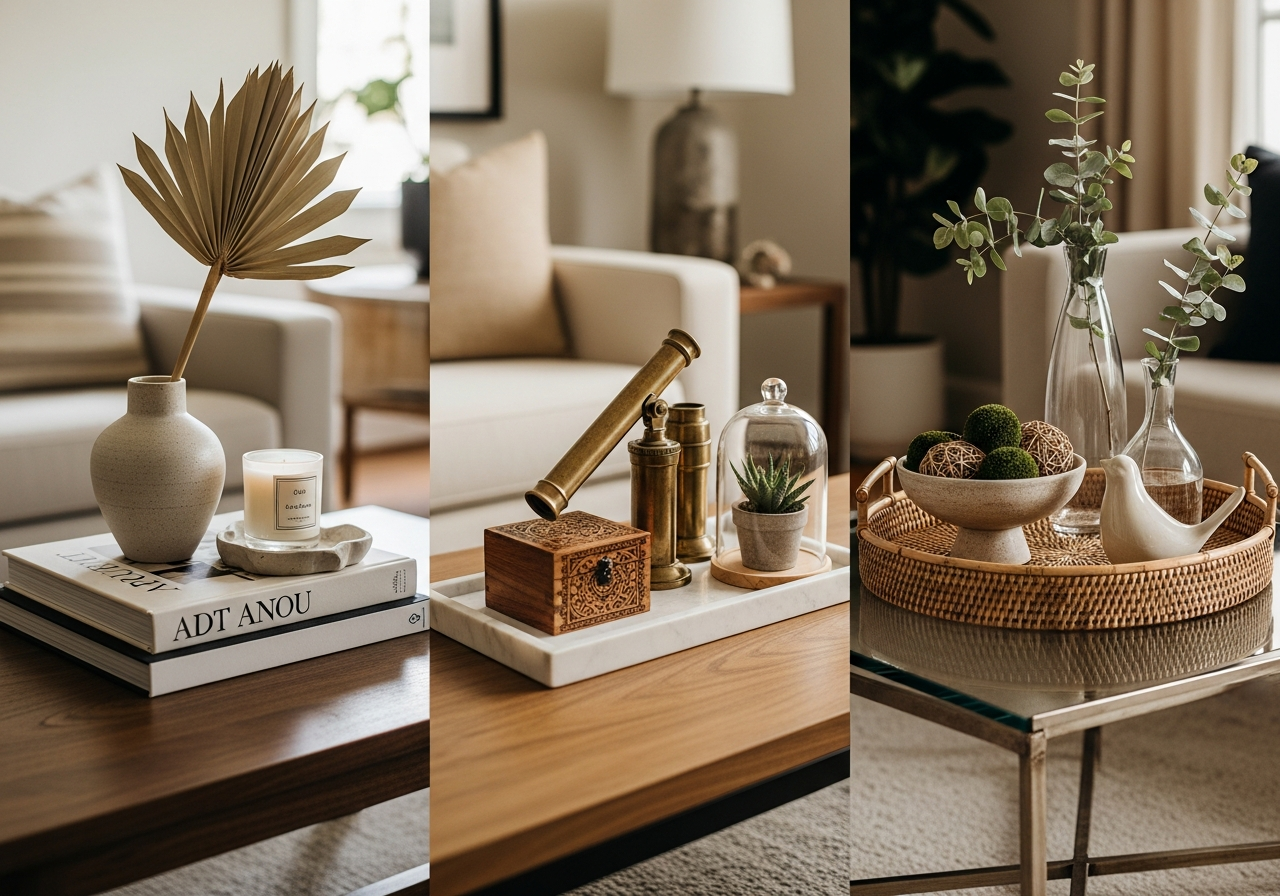
A coffee table display with all matching materials — all ceramic, all glass, all wood — feels flat and catalog-like. The most engaging displays mix at least three textures: something organic (a plant, woven basket, or wooden object), something smooth and reflective (a glass vase, metallic tray, or polished stone), and something soft (a woven coaster set, a fabric-covered box, or a tassel). This textural contrast creates visual richness that makes people want to reach out and touch the arrangement. If you enjoy layering patterns and textures, our guide on how to mix patterns in decor extends these principles to textiles throughout the room.
Consider the table itself as one of your textures. A glass coffee table already provides a reflective surface, so add more organic and matte elements to balance it. A rustic wood table calls for smoother, more refined accessories to create contrast. A marble table benefits from warm, organic textures like woven rattan or raw ceramics that soften its coolness. The goal is complementary contrast — each material looks better because of what sits beside it.
Rule 5 — Include One Living Element
Every coffee table arrangement benefits from something alive — or something that looks alive. A small potted succulent, a single stem in a bud vase, a cluster of air plants, or a tiny herb pot adds organic energy that no manufactured object can replicate. Living elements introduce natural color variation, asymmetric shapes, and a sense of growth that makes the arrangement feel fresh rather than static. Studies show that rooms with visible plants are perceived as 15% more attractive than identical rooms without them. For a comprehensive approach to incorporating greenery throughout your home, see our room-by-room plant styling guide.
If plant maintenance is a concern, high-quality preserved or dried botanicals work well — dried eucalyptus, pampas grass stems, or preserved moss in a low bowl provide organic form without watering. Avoid obviously artificial flowers with plastic stems and uniform petal shapes. The living element should be proportionate to the table — a small 3 to 4 inch succulent for compact tables, a medium-sized potted fern for larger surfaces.
Rule 6 — Maintain 40% Clear Space for Function
The most common coffee table styling mistake is over-decorating. A coffee table that cannot hold a cup of coffee has failed its primary function. Professional stylists keep at least 40% of the table surface clear — enough space for drinks, snacks, a laptop, or a board game without needing to move decorative items. This open space also provides visual breathing room that makes the styled portion look intentional rather than crowded.
On a rectangular table, concentrate your display on one half or one end, leaving the opposite area completely clear. On a round table, cluster items in the center and leave the perimeter open. On a large square table, use one quadrant for your styled grouping and keep the remaining three-quarters functional. If your coffee table is under 36 inches in any dimension, limit your display to just three items total — a small tray, one book, and one natural element.
Rule 7 — Rotate Seasonally to Keep It Fresh
A coffee table display that never changes becomes invisible — you stop seeing it, and it stops adding beauty to the room. Swap out one or two elements every season or every few months: fresh flowers in spring, a bowl of sea glass or shells in summer, a scented candle and pinecones in fall, and metallic accents with evergreen sprigs in winter. These small changes take five minutes and make the room feel freshly styled without requiring a full redecoration.
Keep a small box or basket of off-season coffee table accessories in a closet for easy swaps. The permanent anchor elements — your tray, book stack, and primary plant — stay year-round, while the accent pieces rotate. Budget approximately $15 to $30 per seasonal refresh by focusing on candles, small botanicals, and seasonal objects rather than entirely new displays.
Coffee Table Styling by Shape
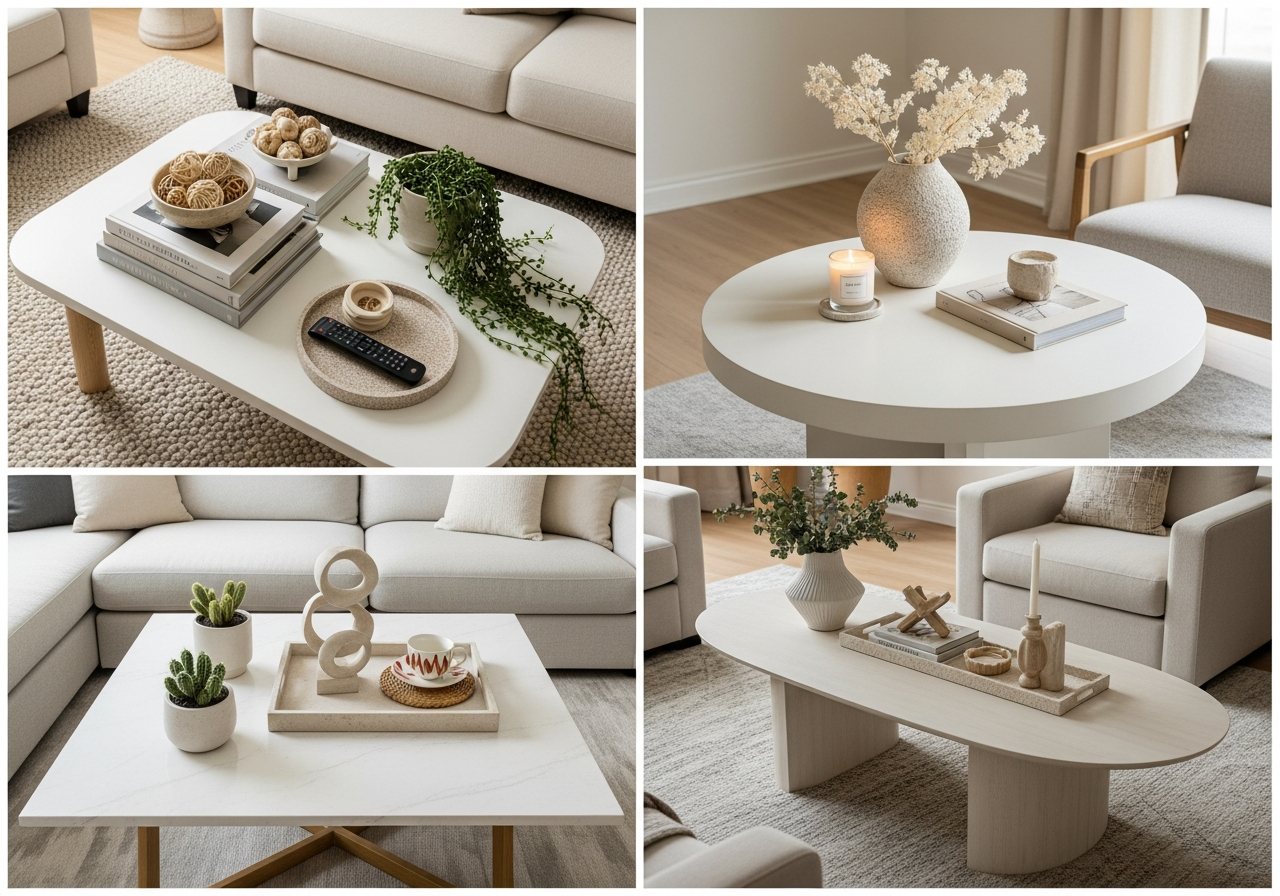
Table shape affects arrangement strategy. For rectangular tables, create two groupings — one at each end — with clear space in the middle. For round tables, build a single centered arrangement with items radiating outward, using a round tray as the base. For square tables, use one quadrant for your display or place a centered arrangement with clear corners. For oval tables, follow the round table approach but elongate the arrangement slightly along the table's length.
| Table Shape | Ideal Tray Shape | Max Items | Arrangement Pattern |
|---|---|---|---|
| Rectangular | Rectangular or Oval | 5-7 | Two end groupings |
| Round | Round | 3-5 | Single centered cluster |
| Square | Square or Round | 3-5 | One quadrant or centered |
| Oval | Oval or Round | 4-6 | Elongated center grouping |
Frequently Asked Questions
What should I put on a coffee table for decoration?
The five essential coffee table decor items are: a decorative tray (as the foundation), a stack of two to three hardcover books (for height), a candle (for ambiance and scent), a small plant or botanical (for organic life), and one sculptural or personal object (for personality). These five elements cover all the bases — height variation, texture contrast, organic life, and personal meaning — while keeping the surface functional.
How do I style a round coffee table?
Round coffee tables work best with a single centered arrangement. Use a round tray as the foundation and build upward: a small book stack on one side, a candle on the other, and a low plant in the center. Keep the arrangement compact — items should occupy the center 50 to 60% of the table diameter, leaving the perimeter clear for drinks and functional use. Avoid linear arrangements on round tables; circular or asymmetric groupings feel more natural.
How do I keep a coffee table from looking cluttered?
Keep at least 40% of the surface clear and limit yourself to five items maximum on standard-sized tables. Use a tray to contain your arrangement within a defined boundary. Remove all non-decorative items daily — remotes, mail, keys, and glasses create instant visual clutter. If you must store remotes on the table, place them inside the tray or in a decorative box that becomes part of the arrangement.
What size books work best for coffee table styling?
Oversized hardcover books measuring 10x12 inches or larger work best because their scale matches coffee table proportions. Standard bookshelf-sized hardcovers (6x9 inches) look undersized on most coffee tables. Stack two to three books maximum, with the largest on the bottom and the smallest on top. Choose covers in colors that complement your room's palette — the spines and covers become part of the color scheme.
Visualize Your Styled Coffee Table with HanoDecor
Want to see how a styled coffee table transforms your entire living room? Upload a photo of your space and our AI Room Designer will show you the full effect — including coordinated pillows, lighting, and wall art that complement your new coffee table display. See the complete picture before you start arranging.
Try the AI Room Designer free — upload your living room photo and preview styled surfaces, curated color palettes, and balanced arrangements in seconds. Continue styling your living room with our complete living room decorating guide, and explore bookshelf styling techniques for your next surface project.
Related Articles
Continue mastering surface styling with these complementary guides: How to Style a TV Stand and Entertainment Center applies many of the same layering principles to media consoles. How to Style a Mantel covers proportions and seasonal swaps for fireplace displays. How to Use Books as Decor expands on the stacked-book technique introduced in Rule 2. For coordinating your coffee table with surrounding furniture, read How to Match Furniture with Your Decor Style, and for small-space adaptations see How to Decorate a Small Living Room.
How to Style a Coffee Table FAQs
Written by
Emily Rodriguez
Interior Design Editor covering living spaces, styling trends, and room makeovers. Former Architectural Digest contributor with a focus on accessible, budget-conscious design.