How to Decorate a Small Living Room: 10 Brilliant Tricks to Feel Bigger
Quick Summary
A practical guide to decorating small living rooms for maximum visual space and style. Covers 10 tricks including right-sized furniture selection, light color palettes, strategic mirror placement, vertical space utilization, multi-functional pieces, transparent furniture, floating elements, minimalist surfaces, layered lighting, and strategic textile use.
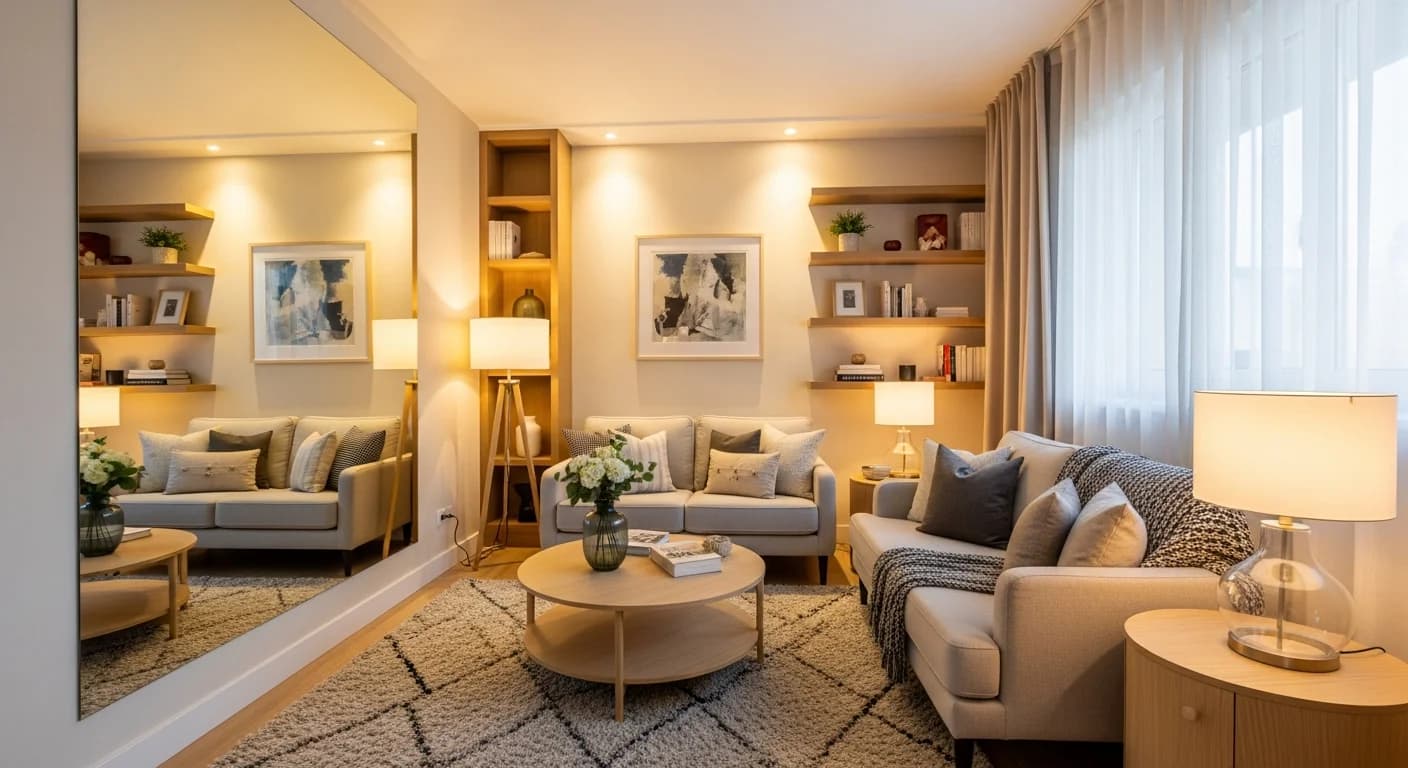
Figuring out how to decor a small living room is one of the most common decorating challenges homeowners face. With average American living rooms shrinking from 330 square feet in the 1990s to under 250 square feet in many newer builds and apartments, maximizing both style and function in a compact space has become an essential skill. The good news is that a smaller footprint does not mean settling for less — it means making smarter decorating choices.
Professional designers use specific techniques to make small rooms feel significantly larger than their actual dimensions. These are not expensive renovation tricks — they are styling decisions about color, scale, placement, and light that anyone can apply without moving a single wall. Whether your small living room is 120 square feet or 200 square feet, these 10 tricks will help you create a space that feels open, inviting, and thoughtfully decorated. For layout-specific guidance, see the living room layout and furniture arrangement guide, and browse living room design ideas for visual inspiration.
Trick 1 — Choose Right-Sized Furniture (Not Smaller Furniture)
The biggest mistake in small living room decorating is filling the room with too many undersized pieces. A room cluttered with a small sofa, two small chairs, a small coffee table, and three side tables feels more cramped than the same room with one properly scaled sofa, one accent chair, and a single coffee table. Fewer pieces with correct proportions create breathing room and clear pathways that make the space feel larger. If you are unsure which furniture styles work best in compact rooms, our furniture and decor style matching guide covers proportion principles for every room size.
For living rooms under 200 square feet, a 72-inch apartment-sized sofa works better than a full 84-inch model. Choose a sofa with a tight back and slim arms — rolled arms and deep cushions consume valuable floor space. An armless accent chair or slipper chair provides additional seating without the visual bulk of a standard armchair. Leave 18 inches of clear walking space between major furniture pieces and maintain at least 14 inches between the sofa and coffee table for comfortable leg room.
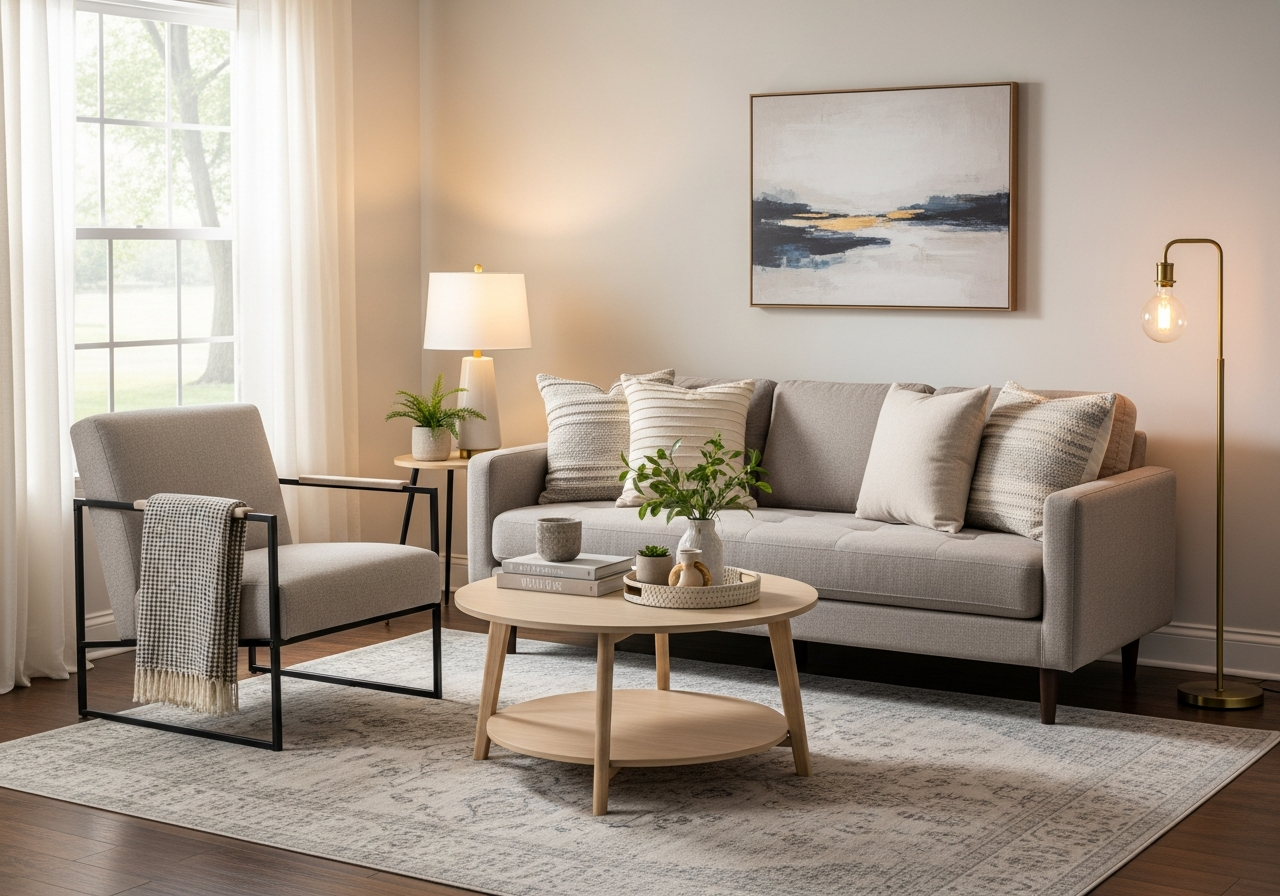
Trick 2 — Use Light Colors to Visually Expand the Space
Light colors reflect more natural and artificial light, making walls appear to recede and creating the illusion of a larger room. White, warm ivory, pale gray, soft greige, and light sage green are all effective choices for small living room walls. Paint the ceiling the same color as the walls — or one shade lighter — to eliminate the visual break that makes ceilings feel lower. This monochromatic approach creates an uninterrupted visual envelope that expands perceived space.
Extend the light palette to larger furniture pieces. A light-colored sofa in linen, soft gray, or warm cream maintains the airy feeling, while a dark sofa can anchor the space effectively if the walls stay light. The key is limiting high-contrast elements — a room where everything is within two to three shades of the same tone feels significantly more spacious than one with stark light-dark contrasts. For more on color strategy, explore our guide on using pastel colors in decor for sophisticated soft-tone palettes.
Trick 3 — Place Mirrors Strategically to Double Visual Space
Mirrors are the most powerful tool for making a small living room feel bigger. A large mirror placed opposite a window reflects natural light deep into the room and creates the illusion of a second window. The reflected view doubles the perceived depth of the space. A floor-length mirror leaned against a wall adds dramatic depth, while a collection of smaller mirrors arranged as a gallery wall creates interest without the commitment of a single oversized piece.
Position mirrors where they reflect the most open view or the brightest light source in the room. Avoid placing mirrors where they reflect clutter, a blank wall, or the back of furniture — this negates the expansion effect. A 30x40-inch mirror above a console table can make a small entryway-adjacent living room feel twice as deep. Mirrored furniture — a mirrored side table or a console with mirrored panels — adds reflective surfaces without taking up additional wall space.
Trick 4 — Think Vertically to Maximize Wall Space
When floor space is limited, vertical space becomes your best decorating asset. Tall bookshelves that reach near the ceiling draw the eye upward and make walls feel taller. Floor-to-ceiling curtains hung 2 to 4 inches below the ceiling line — even if the window sits lower — create the illusion of much taller walls and larger windows. Vertical gallery walls with portraits and prints stacked in columns emphasize height over width.
Floating shelves installed at varying heights provide display and storage space without the visual weight of freestanding bookcases. Wall-mounted planters, pendant lights instead of table lamps, and tall narrow floor vases all direct attention upward. For practical guidance on arranging vertical wall displays, see our wall decor hanging guide for height formulas and spacing rules that work in compact rooms.
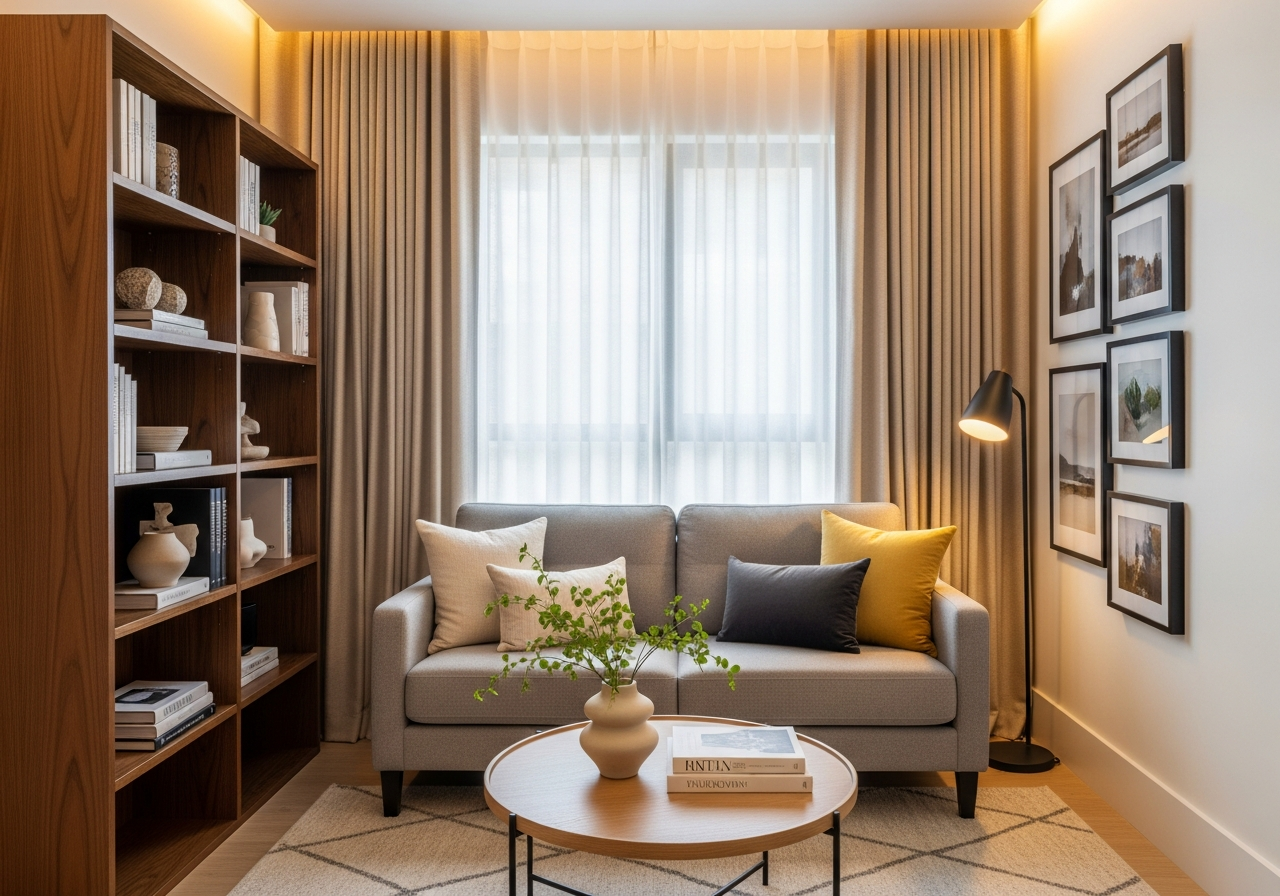
Trick 5 — Invest in Multi-Functional Furniture
In a small living room, every piece of furniture should serve at least two purposes. An ottoman with internal storage replaces both a coffee table and a storage bin. A console table behind the sofa doubles as a workspace with the addition of a stool. Nesting tables provide surface area when needed and tuck away when you need floor space. A storage bench beneath a window combines seating with hidden storage for blankets, games, and seasonal items.
Sleeper sofas and sofa beds have improved dramatically in comfort and design — modern models with memory foam mattresses fold out seamlessly and look indistinguishable from standard sofas during the day. Wall-mounted drop-leaf desks fold flat against the wall when not in use. A bar cart serves as a side table, drink station, and decorative display piece that rolls out of the way when floor space is needed for entertaining. Each multi-functional piece eliminates one item from the room, reducing visual clutter and improving traffic flow.
Trick 6 — Use Transparent and Leggy Furniture to Show Floor
Exposed legs on sofas, chairs, and tables reveal floor area that makes the room feel more spacious. Furniture that sits on visible legs — whether wood, metal, or acrylic — appears to float above the floor, reducing visual weight. A sofa on 6-inch tapered legs looks considerably lighter than the same sofa with a skirted base that touches the floor. The visible floor line creates a continuous visual plane that your brain interprets as more space.
Transparent materials take this principle further. A glass or acrylic coffee table occupies physical space without blocking sight lines — you see through it to the rug and floor beyond. Lucite side tables, glass-top dining tables, and transparent shelving units all provide functionality while maintaining visual openness. A round glass coffee table eliminates corners that can obstruct pathways in tight layouts and lets the area rug pattern remain fully visible.
Trick 7 — Float Furniture Away from Walls
Pushing all furniture flat against the walls is a natural instinct in a small room, but it actually makes the space feel more cramped. Pulling the sofa even 3 to 6 inches away from the wall creates a shadow gap that adds visual depth. Floating a small armchair at an angle to the sofa defines a conversation area and makes the room feel intentionally designed rather than simply furnished around the perimeter.
In a room under 150 square feet, floating furniture by just 2 to 4 inches is enough to create the effect. The goal is not to create a walkway behind the sofa — it is to break the visual seal between furniture and wall. This small adjustment makes the room look curated and spacious rather than tightly packed. A narrow console table behind a floated sofa adds surface area for lamps and decor while defining the seating zone.
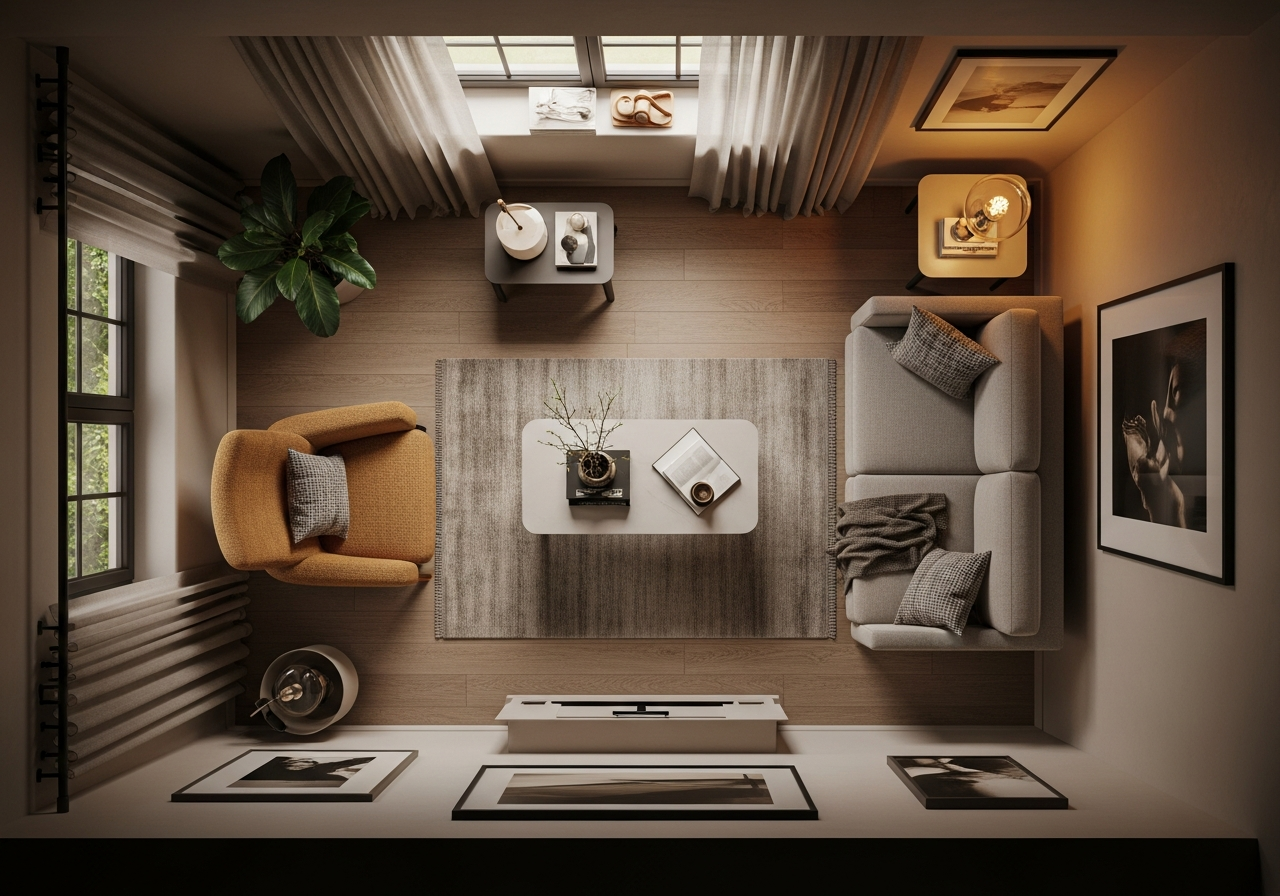
Trick 8 — Keep Surfaces Clear and Curated
In a small living room, every visible surface tells a story — and clutter tells a story of chaos. Limit coffee table styling to a tight grouping of three to five objects: a small stack of books, a candle, a decorative tray, and one organic element like a small plant or a sculptural object. Side tables should hold only a lamp and one or two items. The empty space around objects is just as important as the objects themselves — it gives the eye a place to rest.
Apply the same principle to shelving. Leave 30 to 40 percent of shelf space empty. Group items in odd numbers — threes and fives — and vary heights within each grouping for visual interest. Baskets on lower shelves hide everyday items while maintaining a clean visual line. Every item on display should earn its spot by being either beautiful, functional, or meaningful. For detailed surface styling techniques, explore our coffee table styling guide.
Trick 9 — Layer Lighting to Create Depth and Warmth
A single overhead light flattens a small room and emphasizes its boundaries. Layered lighting — ambient, task, and accent — creates depth, warmth, and zones that make the room feel larger and more inviting. Replace a central ceiling fixture with recessed lighting or a flush-mount fixture for even ambient light. Add table lamps on side tables for warm task lighting. Use LED strip lights behind a media console or under floating shelves for accent glow that adds dimension.
Wall sconces free up table surface space and draw the eye upward. A floor lamp with a slim profile provides reading light without consuming floor area. Dimmer switches let you control brightness throughout the day — bright for morning cleaning, medium for afternoon work, and low warm light for evening relaxation. The play of light and shadow across a room creates visual complexity that makes a 150-square-foot space feel more interesting and larger than it is. For more layered lighting strategies, see our living room lighting ideas guide.
Trick 10 — Use Textiles Strategically for Warmth Without Bulk
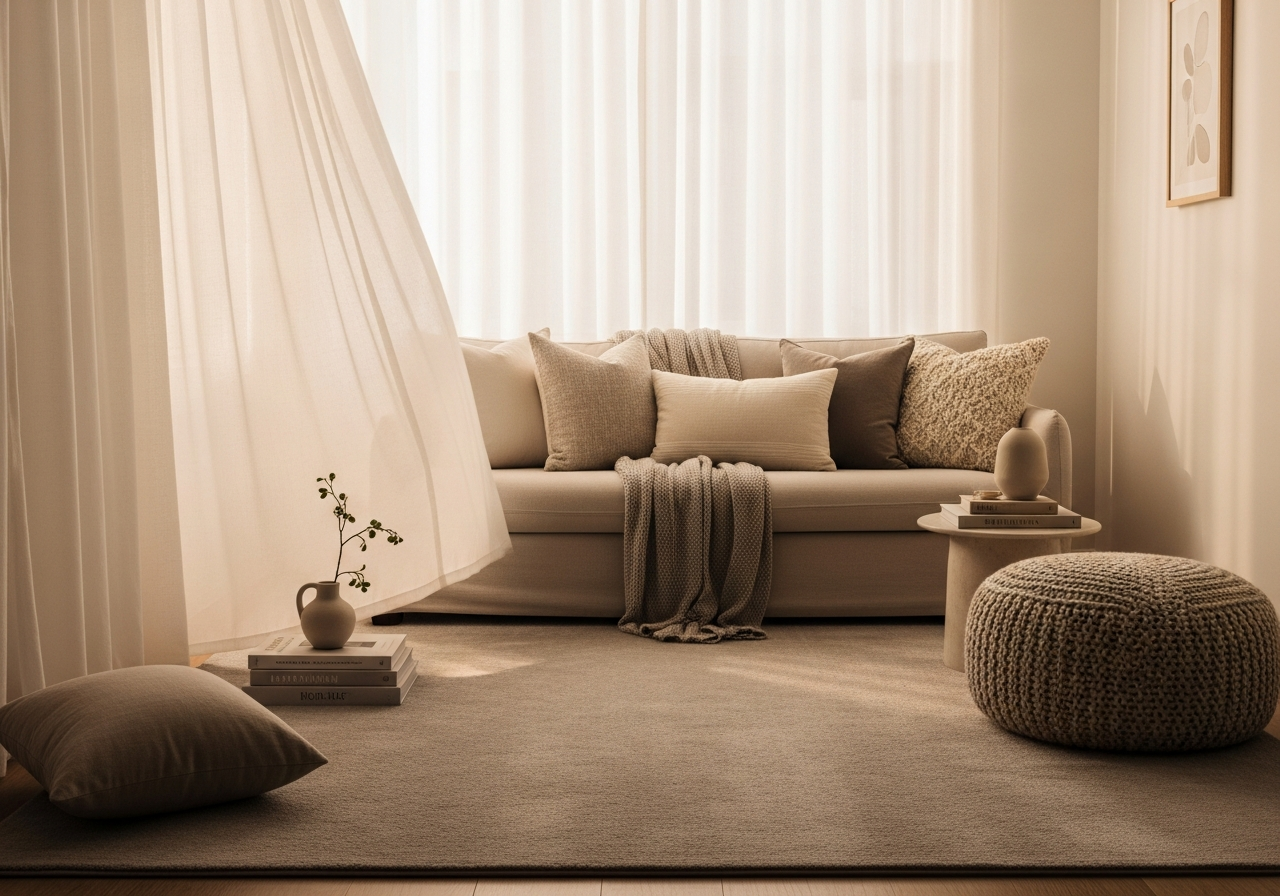
Textiles add warmth, texture, and personality to a small living room — but heavy, bulky fabrics can make a compact space feel smaller. Choose lightweight linen or cotton curtains over heavy velvet or brocade. Sheer panels filter light while maintaining an airy feel. An area rug that extends under the front legs of the sofa and chairs unifies the seating area and makes the room appear larger than a rug that sits in the center with exposed floor on all sides.
Limit throw pillows to two or three per sofa — a small sofa drowning in pillows looks cluttered rather than cozy. Choose pillows in varying textures but a cohesive color palette. A single lightweight throw draped over one arm of the sofa adds warmth and a lived-in feel without visual weight. The rule for textiles in small spaces: choose quality over quantity, and let each piece serve a clear decorative purpose. Browse small living room ideas for additional visual inspiration.
Related Articles
If you are working with a compact space, explore our complete living room decorating guide for foundational design principles. Studio dwellers will find extra value in our studio apartment decorating guide, which covers zone definition and multifunctional furniture in depth. For TV wall styling in tight rooms, see how to decorate around a TV. You can also browse bedroom design ideas and try the color palette selection guide to build a cohesive small-space scheme.
Frequently Asked Questions
What colors make a small living room look bigger?
Light colors make small living rooms look bigger by reflecting more light and making walls appear to recede. White, soft gray, warm ivory, pale sage green, and light blush are particularly effective. Painting the ceiling the same color as the walls eliminates visual breaks and creates the feeling of more height. Monochromatic palettes with minimal contrast have the strongest space-expanding effect.
How do you arrange furniture in a small living room?
Start with your largest piece — typically the sofa — and position it to face the room's focal point, such as a window or fireplace. Float the sofa a few inches from the wall. Add one accent chair angled toward the sofa to create a conversation area. Use a round coffee table to improve traffic flow. Leave at least 18 inches of walking space between major pieces and keep pathways clear to the room's entry points.
What furniture should you avoid in a small living room?
Avoid oversized sectional sofas, bulky recliners, solid-based furniture that hides the floor, and pieces with wide rolled arms that consume extra width. Skip full-sized entertainment centers in favor of a slim media console or wall-mounted TV. Avoid too many accent tables — one coffee table and one side table are sufficient for most small rooms.
Do mirrors really make a room look bigger?
Yes, mirrors effectively double the perceived depth of a room by reflecting light and views. A large mirror placed opposite a window reflects natural light deep into the space and creates the illusion of a second opening. Floor-length mirrors leaned against a wall add significant depth. Position mirrors where they reflect the room's most open view for maximum effect.
Visualize Your Small Living Room Makeover with HanoDecor
Decorating a small living room is about making every piece earn its place and using visual tricks that professional designers have relied on for decades. The 10 techniques in this guide — from right-sized furniture and light color palettes to strategic mirrors, vertical emphasis, and layered lighting — work together to create a space that feels significantly larger and more intentional than its square footage suggests.
Want to see these tricks applied to your actual living room before you move a single piece of furniture? Try the AI room designer — upload a photo, select a small-space optimized style, and see a photorealistic preview of your transformed living room in seconds. Or explore virtual staging to test different furniture arrangements and color palettes in your exact space.
How to Decorate a Small Living Room FAQs
Written by
Lisa Wang
Sustainable Design Writer focused on eco-friendly materials, energy efficiency, and budget-conscious home improvement. LEED Green Associate with expertise in low-impact renovation strategies.