Affordable Kitchen Remodel: Smart Budget Strategies That Look Expensive
Quick Summary
Complete guide to affordable kitchen remodeling with three budget tiers ($1K-$5K, $5K-$10K, $10K-$15K), 15 high-impact updates, material substitutions, cabinet strategies, phased renovation timelines, and financing options.

Quick Overview: An ROI-First Approach to Affordable Kitchen Remodeling
A kitchen remodel remains the single highest-ROI renovation project for most homeowners, yet the national average cost of $26,790 for a mid-range project (Remodeling Magazine, 2026 Cost vs. Value Report) puts a full-scale renovation out of reach for many budgets. The good news? Strategic spending between $5,000 and $15,000 can deliver a kitchen transformation that looks — and functions — like a far more expensive project.
The secret isn't spending more. It's knowing exactly where each dollar creates the most visual and functional impact. This guide breaks down a budget kitchen remodel framework that prioritizes ROI at every price point, from a $1,500 cosmetic refresh to a $15,000 strategic renovation that recovers 75–85% of its cost at resale.
Whether you are working with $3,000 or $13,000, the strategies here — including budget-friendly kitchen makeover ideas, material substitutions, phased renovation timelines, and smart sourcing — will help you maximize every dollar. Pair these strategies with the Kitchen Remodel Visualizer to preview results before committing a single cent.
The Budget Kitchen Remodel Framework: Three Tiers of Transformation
Not every affordable kitchen remodel requires the same scope. The most effective approach is matching your budget to the right tier of work — cosmetic, functional, or strategic — and executing that tier completely rather than spreading funds too thin across everything.
Tier 1: Cosmetic Refresh ($1,000–$5,000)
A cosmetic refresh targets surfaces and visual elements without touching plumbing, electrical, or layout. This tier delivers the highest ROI per dollar spent because it addresses the features buyers and guests notice first.
- Paint cabinets — $200–$600 DIY, $1,200–$3,000 professional
- Replace hardware — $75–$300 for an entire kitchen (knobs at $2–$8 each, pulls at $4–$12)
- Install a peel-and-stick backsplash — $100–$350 for 15–25 sq ft
- Upgrade lighting — $150–$500 for under-cabinet LED strips plus a pendant fixture
- New faucet — $120–$350 for a modern pull-down model
- Fresh caulk and trim paint — $30–$80 in materials
Total Tier 1 investment: $675–$5,130 depending on DIY vs. professional execution. Expected ROI at resale: 80–100%.
Tier 2: Fixture and Surface Upgrade ($5,000–$10,000)
Tier 2 builds on the cosmetic refresh by replacing dated fixtures and upgrading one or two major surfaces. This is where budget allocation becomes critical.
- Everything in Tier 1, plus:
- New countertops — $1,200–$3,500 for laminate, butcher block, or quartz composite (25–40 sq ft)
- Replace sink and faucet together — $250–$600 for an undermount stainless steel sink plus installation
- Upgrade to a stainless steel appliance — $400–$1,200 for a single appliance (dishwasher or range)
- Install ceramic or porcelain backsplash — $300–$900 for a standard subway tile layout
- New light fixture — $150–$400 for a statement pendant or semi-flush mount
Total Tier 2 investment: $5,000–$10,000. Expected ROI at resale: 75–90%.
Tier 3: Strategic Renovation ($10,000–$15,000)
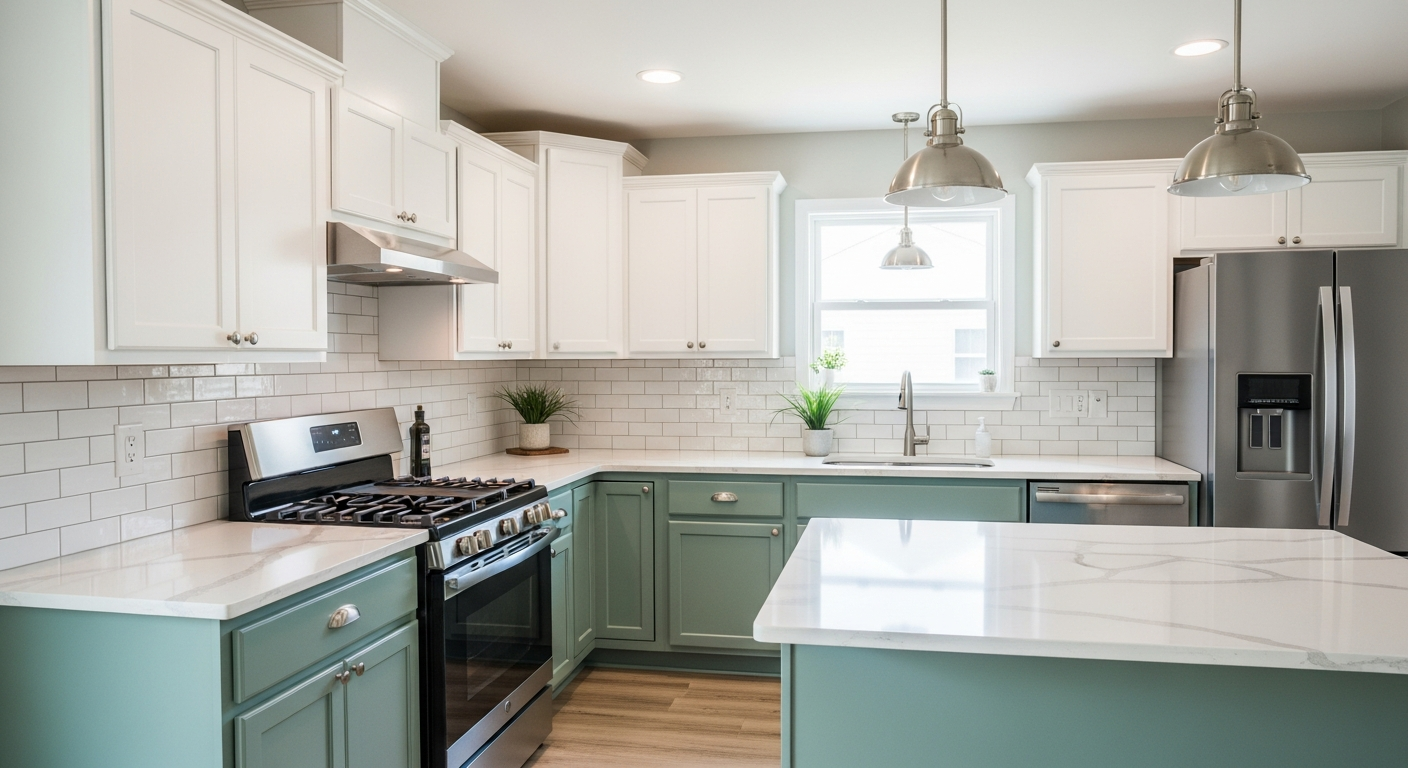
At the $10K–$15K level, a low-cost kitchen renovation can include cabinet refacing or partial replacement, new flooring, upgraded appliances, and professional countertop installation — producing results that rival $30,000+ remodels.
- Everything in Tiers 1–2, plus:
- Cabinet refacing or door replacement — $2,500–$5,000 (vs. $12,000–$25,000 for full custom replacement)
- LVP or porcelain tile flooring — $1,500–$3,500 for a 120–180 sq ft kitchen
- Two new appliances — $800–$2,400 (range and dishwasher)
- Quartz composite countertops — $2,000–$4,000 installed
Total Tier 3 investment: $10,000–$15,000. Expected ROI at resale: 70–85%.
Decision Matrix: Which Tier Is Right for You?
Choose your tier based on three factors:
- Your timeline — Selling within 2 years? Tier 1–2 maximizes ROI. Staying 5+ years? Tier 3 pays off in daily enjoyment.
- Current kitchen condition — Structurally sound cabinets? Tier 1–2. Warped, damaged, or dysfunctional layout? Tier 3.
- Your DIY skill level — Comfortable with painting and basic installations? You can stretch any tier budget by 30–50%.
15 High-Impact, Low-Cost Kitchen Updates
These 15 updates deliver the greatest visual and functional improvement per dollar, ranked by impact-to-cost ratio. Many are achievable in a single weekend, and the complete list totals under $5,000 if executed as DIY projects.
- Paint kitchen cabinets ($200–$600 DIY) — The single highest-impact change. A quality cabinet paint job in white, soft gray, or sage green transforms a dated kitchen instantly. Use a bonding primer like Stix or KILZ Adhesion, and a self-leveling cabinet paint like Benjamin Moore Advance. Explore trending cabinet colors and styles.
- Replace cabinet hardware ($75–$300) — Swap brass-tone oak knobs for matte black bar pulls or brushed nickel cup pulls. Budget $3–$8 per piece; a 20-cabinet kitchen needs 30–40 pieces.
- Add a tile backsplash ($300–$900) — Classic subway tile at $1–$3/sq ft installed over 15–25 sq ft delivers a designer look. See backsplash ideas from subway to statement.
- Install under-cabinet LED lighting ($80–$250) — Plug-in LED strip kits from commercial suppliers cost $40–$120 and install in under an hour. Instantly adds depth and a high-end feel. Read the complete kitchen lighting guide.
- Upgrade the faucet ($120–$350) — A pull-down kitchen faucet in brushed nickel or matte black changes the focal point of your sink area. Moen, Delta, and Kraus offer excellent options under $200.
- Add open shelving ($50–$200) — Remove two upper cabinet doors and install floating shelves. Costs almost nothing in materials and opens up the kitchen visually.
- Resurface or replace countertops ($500–$3,500) — Countertop paint kits start at $75. Butcher block runs $25–$65/linear ft installed. Laminate with a realistic stone pattern costs $15–$45/sq ft installed.
- Buy a scratch-and-dent appliance ($250–$800) — Appliance outlet stores sell cosmetically imperfect units at 30–60% off retail. A side dent on a range hidden against a wall saves $400+.
- Replace the kitchen sink ($150–$400) — A 33-inch undermount stainless steel sink from Kraus or Ruvati costs $180–$350. Pair with the faucet upgrade for a unified look.
- Install a statement light fixture ($80–$400) — One oversized pendant or a three-light linear chandelier over an island or peninsula creates a designer focal point.
- Add a kitchen runner rug ($40–$120) — A washable runner in front of the sink adds color and texture with zero commitment. Look for 2.5' x 8' sizes from Ruggable or Boutique Rugs.
- Replace select cabinet doors only ($400–$1,500) — Shaker-style replacement doors from Cabinet Door World or Barker Door cost $15–$45 per door. Replace just the most visible doors for maximum impact at minimum cost.
- Apply peel-and-stick backsplash ($100–$350) — Smart tiles or peel-and-stick subway tile panels require no grout, no mortar, and no experience. Perfect for renters or temporary upgrades before a full renovation.
- Upgrade bar stools or dining chairs ($150–$500) — New counter-height stools in modern metal or upholstered styles anchor an island or peninsula and modernize the eating area.
- Re-caulk and repaint trim ($30–$80) — Fresh caulk lines around countertops, backsplash, and windows, combined with bright white trim paint, makes the entire kitchen feel cleaner and newer.
For a complete list of weekend-friendly projects, see the DIY kitchen remodel guide for beginners.
Affordable Material Substitutions That Look Premium
Value engineering — the practice of substituting less expensive materials that deliver comparable aesthetics and performance — is the cornerstone of any kitchen remodel under $15,000. These substitutions can save 40–70% on material costs without sacrificing visual quality.

Flooring: LVP vs. Hardwood ($3–$7/sq ft vs. $8–$15/sq ft)
Luxury vinyl plank (LVP) flooring has become the go-to budget-friendly kitchen floor. Modern LVP features realistic wood-grain textures, is 100% waterproof (critical in kitchens), and installs as a floating floor over existing surfaces — eliminating demolition costs. Brands like LifeProof and COREtec offer 20-mil wear layers that withstand kitchen traffic for 15–20 years. A 150 sq ft kitchen costs $450–$1,050 in LVP vs. $1,200–$2,250 in engineered hardwood.
Countertops: Quartz Composite vs. Natural Marble ($40–$70/sq ft vs. $75–$150/sq ft)
Quartz composite countertops deliver the veined, luminous appearance of Calacatta or Carrara marble without the etching, staining, and annual sealing marble requires. Brands like Silestone, Cambria, and MSI offer installed prices of $40–$70 per square foot — roughly half the cost of genuine marble. For even greater savings, budget countertops in laminate with stone-look patterns cost just $15–$35/sq ft installed and now feature convincing edge profiles that mimic stone.
Cabinets: Stock and RTA vs. Custom ($150–$350/linear ft vs. $500–$1,200/linear ft)
Stock cabinets from home improvement stores and RTA (ready-to-assemble) cabinets from online suppliers like CliqStudios or Lily Ann Cabinets cost 50–75% less than custom cabinetry. Modern stock cabinets come in soft-close, dovetail-joint constructions with plywood boxes — features once reserved for custom shops. A 20-linear-foot kitchen runs $3,000–$7,000 in stock cabinets vs. $10,000–$24,000 for custom. See the full cabinet refacing vs. replacing comparison.
Backsplash: Porcelain vs. Natural Stone ($5–$12/sq ft vs. $15–$40/sq ft)
Porcelain tile now replicates marble, travertine, and slate patterns with remarkable accuracy. Large-format porcelain panels (24" x 48") eliminate grout lines and deliver a luxury aesthetic for one-third the cost of natural stone. For a 20 sq ft backsplash, expect to pay $100–$240 in porcelain vs. $300–$800 in natural stone.
Hardware Finish: Chrome vs. Brushed Gold ($3–$8/piece vs. $10–$25/piece)
Chrome and brushed nickel finishes cost 50–70% less than trending brushed gold and unlacquered brass options. If the gold look is non-negotiable, buy from Amazon Basics or Franklin Brass lines at $5–$10 per pull rather than designer brands at $20–$35.
Cabinet Strategies: Refacing, Painting, and Smart Replacement
Cabinets consume 30–50% of a typical kitchen remodel budget, making cabinet decisions the most consequential choice in an affordable renovation. A cabinet strategy decision tree helps determine the right approach based on current condition and goals.
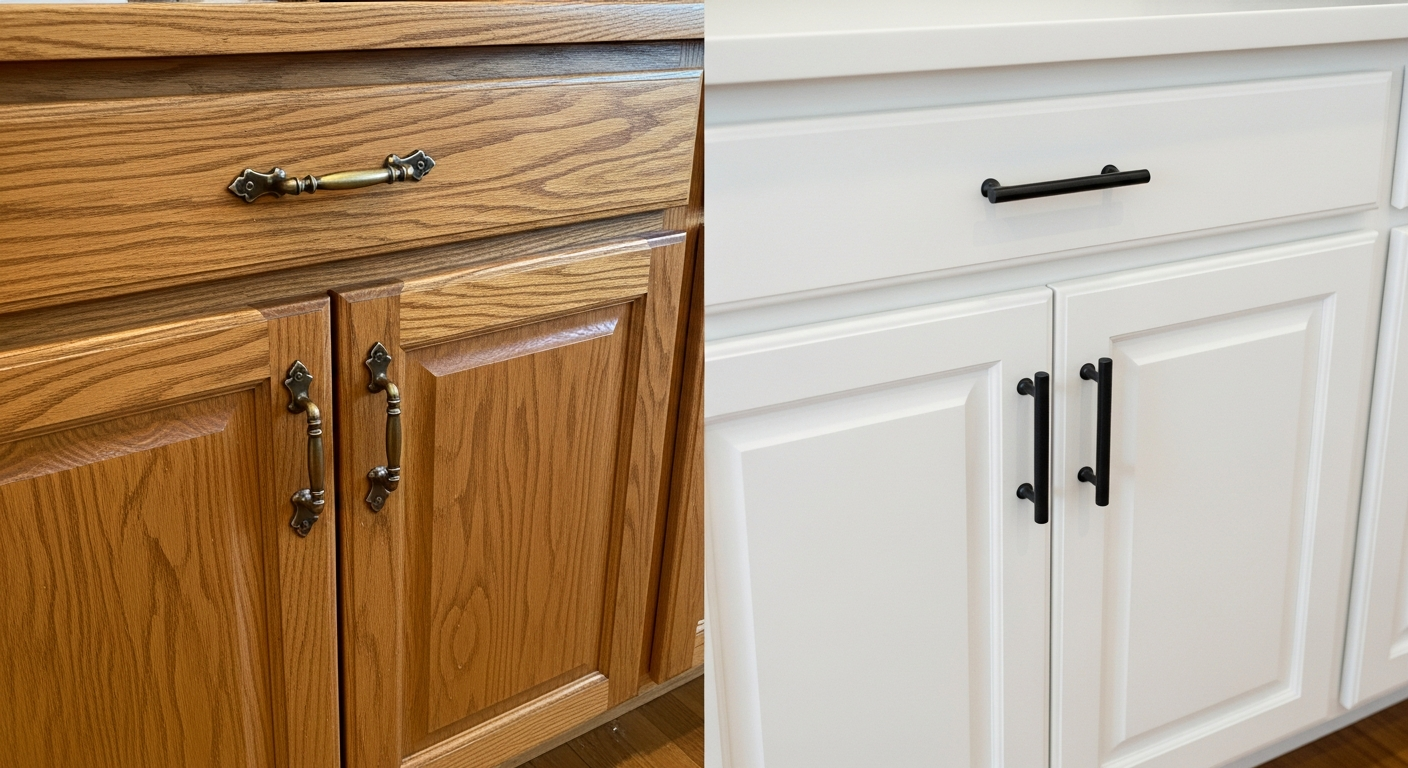
When to Paint Cabinets ($200–$600 DIY / $1,200–$3,000 Pro)
Painting is the right choice when cabinet boxes are structurally sound, the layout works, and the goal is a cosmetic transformation. The process involves cleaning, deglossing, priming with a bonding primer, and applying 2–3 coats of cabinet-grade paint. The total cost for a 20-cabinet kitchen averages $400 DIY or $2,000 professional.
When to Reface Cabinets ($2,500–$6,000)
Refacing makes sense when cabinet boxes are solid but doors are damaged, outdated in style, or you want to change door profiles (e.g., raised panel to shaker). Refacing replaces doors and drawer fronts while applying a matching veneer to visible box surfaces. It costs 40–60% less than full replacement and completes in 3–5 days vs. 3–5 weeks.
When to Replace Cabinets ($4,000–$15,000 Stock/RTA)
Full replacement is necessary when boxes are water-damaged, warped, or the kitchen layout needs to change. Choose stock or RTA cabinets rather than custom to stay within budget. Order 4–6 weeks ahead to avoid rush charges and measure precisely — off-the-shelf sizes in 3-inch increments (12", 15", 18", 21", 24", 30", 36") cover most kitchen configurations with filler strips.
Cabinet Decision Tree
- Boxes solid + layout works + budget under $3K → Paint cabinets
- Boxes solid + doors damaged/outdated + budget $3K–$6K → Reface cabinets
- Boxes damaged OR layout change needed + budget $5K–$15K → Replace with stock/RTA
- Want premium result + budget $15K+ → See the complete cabinet replacement guide
The Phased Kitchen Renovation Approach
A phased kitchen remodel spreads costs across 6–12 months, reducing financial pressure while allowing you to live with changes before committing to the next phase. This approach works particularly well for budgets between $5,000 and $15,000.

Phase 1: Cosmetic Foundation (Month 1) — $1,000–$2,500
- Paint cabinets or apply cabinet paint kits
- Replace all hardware (knobs, pulls, hinges)
- Re-caulk countertop-to-backsplash joints
- Deep clean and paint walls
- Install under-cabinet LED lighting
Phase 2: Functional Fixtures (Month 3) — $1,500–$3,000
- Replace faucet and possibly sink
- Upgrade one major appliance (dishwasher or range)
- Install a new light fixture or pendant
- Add a peel-and-stick or tile backsplash
Phase 3: Surface Upgrades (Month 6) — $2,000–$5,000
- Install new countertops (laminate, butcher block, or quartz composite)
- Upgrade a second appliance if budget allows
- Add open shelving or replace select cabinet doors
Phase 4: Flooring and Finishing (Month 9) — $1,500–$4,000
- Install LVP or porcelain tile flooring
- Add trim, molding, or toe kicks
- Install bar stools or breakfast nook seating
- Final styling: runner rug, decorative accessories, plants
The phased approach also lets you shop sales between phases — holiday weekends (Memorial Day, Labor Day, Black Friday) typically offer 15–30% off appliances and materials at major retailers.
Where to Find Kitchen Materials at Discount Prices
Sourcing materials strategically can reduce your affordable kitchen materials budget by 25–50%. These seven sources consistently deliver quality materials below retail pricing.
Habitat for Humanity ReStore
ReStore locations accept donated cabinets, countertops, sinks, appliances, and hardware from builders, remodelers, and homeowners. Prices run 50–80% below retail. Inventory varies daily, so visit weekly and build relationships with staff who can alert you to incoming donations.
Appliance Outlet and Scratch-and-Dent Stores
Every major appliance brand has an outlet program. Whirlpool, GE, and Samsung sell floor models, returned units, and cosmetically damaged products at 30–60% off. A $1,800 stainless steel range with a dented side panel (hidden once installed) might sell for $750.
Online Marketplaces: Facebook Marketplace and Craigslist
Homeowners completing renovations frequently sell removed cabinets, countertops, and appliances in excellent condition. Search for recent listings of cabinet sets, granite remnants, and gently used appliances within 50 miles.
Seasonal and Holiday Sales
Plan purchases around major sales events. Appliance prices drop 15–25% during Memorial Day, July 4th, Labor Day, and Black Friday sales. Flooring and tile retailers run clearance events in January and July to move out discontinued patterns.
Contractor Surplus and Liquidation
General contractors and kitchen remodelers often have surplus materials from projects — extra tile boxes, leftover countertop slabs, and unopened hardware boxes. Ask any contractor you engage if they have surplus from recent projects. Building material liquidators like BuildDirect and Floor & Decor outlet sections sell overstock at wholesale pricing.
Countertop Remnants
Granite and quartz fabricators keep remnant slabs from larger projects. These pieces — typically 20–30 sq ft — are perfect for smaller kitchens and sell at 40–60% below full-slab pricing. Call local fabricators directly and ask about remnant availability for your measurements.
Cabinet Closeouts and Overstock
RTA cabinet companies sell discontinued door styles and colors at deep discounts. Check clearance sections at CliqStudios, Cabinets.com, and The RTA Store for full kitchen sets at 30–50% off standard pricing.
Financing Your Affordable Kitchen Remodel
Even budget-conscious kitchen remodels may require financing. Understanding the four primary kitchen remodel financing options helps you choose the lowest-cost borrowing strategy for your situation.
Home Equity Line of Credit (HELOC)
A HELOC offers the lowest interest rates (currently 7.5–9.5% variable APR in 2026) and allows you to draw funds as needed during a phased renovation. Interest may be tax-deductible for home improvements. Best for homeowners with 20%+ equity and budgets above $10,000.
Personal Home Improvement Loan
Unsecured personal loans from lenders like SoFi, LightStream, and Discover offer fixed rates of 8–14% APR with 3–7 year terms. No home equity required. Approval in 1–3 business days makes these ideal for time-sensitive purchases. Best for budgets of $3,000–$15,000.
0% APR Credit Cards
Several credit cards offer 0% APR for 15–21 months on purchases. Using a 0% card for materials and paying the balance before the promotional period expires means zero financing cost. Best for budgets under $8,000 where you can realistically pay off the balance within the promotional window.
Contractor Financing
Some kitchen remodelers partner with financing companies to offer payment plans. Rates vary widely (0–18% APR), so compare total cost carefully. Ask if the contractor offers a cash discount — many will reduce the price by 3–5% for cash or check payment, effectively giving you a financing alternative.
For detailed cost breakdowns and transparent pricing information, use the numbers in this guide alongside contractor estimates to set a realistic budget.
Frequently Asked Questions
What is the cheapest way to remodel a kitchen?
The most affordable kitchen remodel focuses on Tier 1 cosmetic updates: painting cabinets ($200–$600 DIY), replacing hardware ($75–$300), installing peel-and-stick backsplash ($100–$350), upgrading lighting ($80–$250), and installing a new faucet ($120–$350). This cheap kitchen remodel approach totals $575–$1,850 and delivers a dramatic visual transformation without touching plumbing, electrical, or layout.
Can you remodel a kitchen for $5,000?
Yes. A $5,000 budget covers a complete Tier 1 cosmetic refresh with professional cabinet painting, new hardware, a ceramic tile backsplash, updated lighting, a modern faucet, and fresh wall paint. If you handle painting and backsplash installation yourself, the $5,000 budget can also include a countertop upgrade to butcher block or laminate, stretching into Tier 2 territory.
What kitchen updates add the most value?
According to the NAR 2026 Remodeling Impact Report, the kitchen updates with the highest ROI are: new countertops (recovering 75–85% of cost), new appliances (recovering 65–80%), cabinet refinishing (recovering 80–100%), and updated lighting (recovering 85–100%). Focus on these four areas before spending on lower-ROI upgrades like flooring or structural changes. See kitchen remodel before and after transformations for real examples.
Is it worth remodeling a kitchen before selling?
A minor kitchen remodel (Tier 1–2) recovers 75–96% of costs at resale, making it one of the best pre-sale investments. However, major remodels ($40,000+) typically recover only 50–65%. For maximum pre-sale ROI, invest in the kitchen remodel ideas with the broadest buyer appeal: neutral cabinet colors, stone-look countertops, stainless appliances, and modern fixtures.
How long does a budget kitchen remodel take?
Timeline depends on scope. A Tier 1 cosmetic refresh takes 1–2 weekends. A Tier 2 fixture upgrade takes 1–3 weeks including countertop fabrication lead time. A Tier 3 strategic renovation with cabinet refacing, flooring, and multiple appliances takes 3–6 weeks. The phased approach described above spreads this across 6–9 months with minimal daily disruption.
See Your Affordable Kitchen Remodel Before You Spend
Planning a budget kitchen remodel is easier when you can see the results before committing. The HanoDecor Kitchen Remodel Visualizer lets you upload a photo of your current kitchen and preview transformations — from painted cabinets and new countertops to backsplash styles and lighting changes — in seconds.
Use the visualizer alongside the strategies in this guide to:
- Test paint colors on your actual cabinets before buying a single gallon
- Preview countertop materials — compare how butcher block, quartz composite, and laminate look in your space
- Experiment with backsplash patterns — subway, herringbone, or peel-and-stick options
- Compare before and after to validate that your budget allocation matches your priorities
Start with a $0 investment: Upload your kitchen photo to the Kitchen Remodel Visualizer and see what's possible within your budget. The best affordable kitchen remodel starts with a clear vision of the finished result.
Affordable Kitchen Remodel FAQs
Written by
Michael Torres
Bathroom and Kitchen Design Specialist with 15 years of remodeling experience. NKBA-certified designer focused on functional layouts, fixture selection, and spa-inspired wellness spaces.