Bathroom Wall Decor and Accent Ideas: Beyond Basic Tile
Quick Summary
Your bathroom walls hold enormous design potential that goes far beyond basic tile. From waterproof wallpaper and dramatic murals to wainscoting, board and batten, and handmade zellige tile, the options for creating a stunning accent wall or feature wall are more accessible than ever. This guide covers 10 categories of bathroom wall decor and accent ideas — including 3D wall panels, gallery walls, decorative shelving, natural stone, and reclaimed wood — so you can transform plain surfaces into a true statement wall that reflects your style. Whether you prefer subtle texture or bold pattern, you will find practical, moisture-safe solutions for every budget and bathroom size.
Why Bathroom Walls Deserve More Attention
Most homeowners pour their renovation budget into vanities, fixtures, and flooring — then leave the walls as an afterthought. That is a missed opportunity. Walls make up the largest visible surface area in any bathroom, which means they set the mood the moment you walk through the door. A well-designed accent wall can make a small powder room feel like a boutique hotel, or turn a primary bathroom into a personal spa retreat.
Beyond aesthetics, wall treatments serve practical purposes. The right paneling protects drywall from moisture damage. Textured surfaces hide imperfections that flat paint exposes. And strategic wall decor draws the eye upward, making ceilings feel taller and rooms feel more spacious. According to design professionals surveyed for 2026 bathroom trends, statement walls are among the top three features homeowners request in bathroom renovations.
The key is choosing materials rated for high-humidity environments. Not every product that works in a living room will survive daily steam and splashing water. Throughout this guide, we identify which options belong in wet zones, which work best in dry areas, and how to protect your investment over time.
Waterproof Wallpaper and Murals
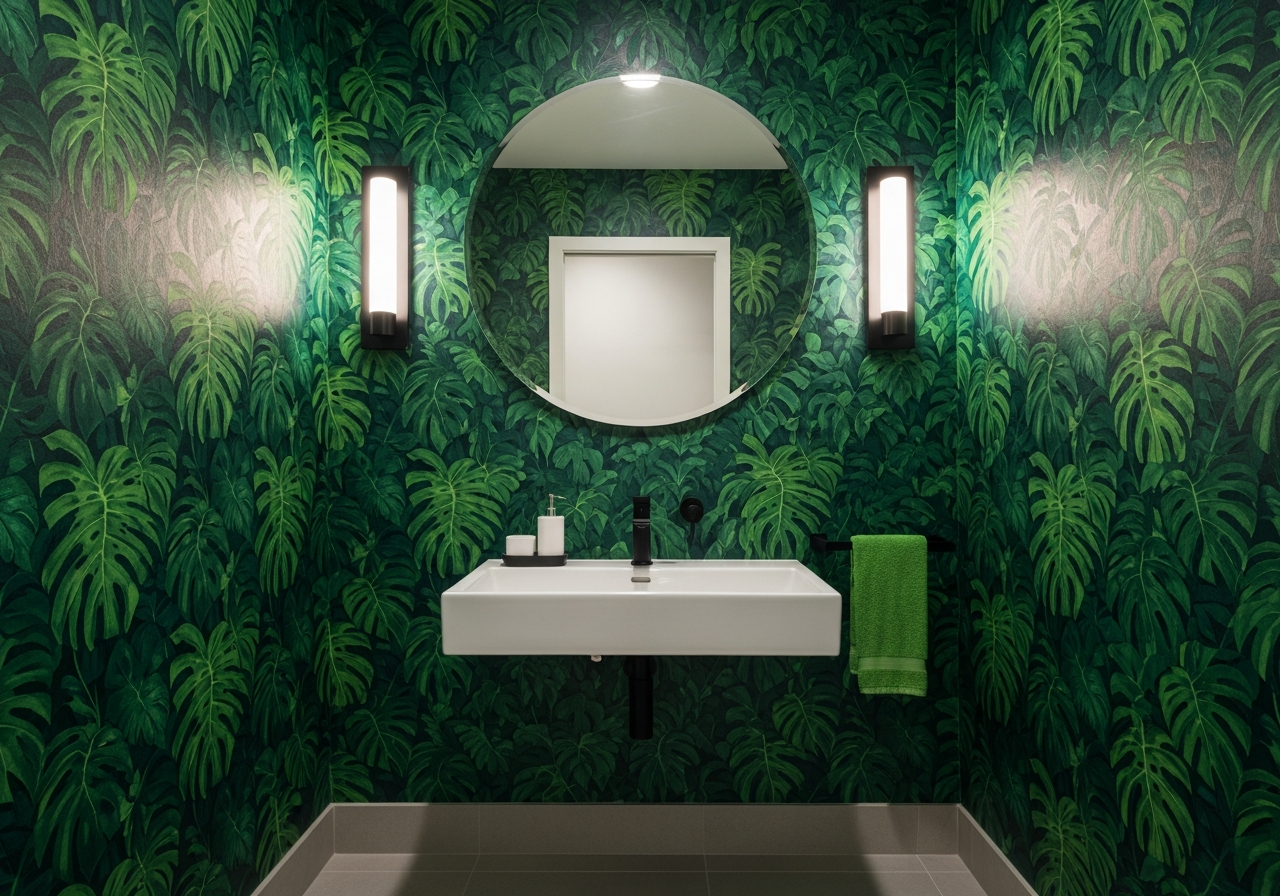
Wallpaper has made a spectacular comeback in bathroom design, thanks to advances in waterproof wallpaper technology. Modern bathroom-rated wallpapers feature vinyl-coated or solid vinyl construction that resists moisture, steam, and even direct splashing — a far cry from the peeling, bubbling wallpapers of decades past.
There are three main types of bathroom wallpaper to consider. Solid vinyl wallpaper offers the highest moisture resistance and works well in full bathrooms with showers and tubs. Vinyl-coated wallpaper provides a good balance of breathability and protection for half baths and powder rooms. Peel and stick wallpaper has become increasingly popular for renters and commitment-cautious homeowners — it installs without paste, removes cleanly, and many brands now offer moisture-resistant versions suitable for bathrooms with adequate ventilation.
When choosing where to install bathroom wallpaper, think in moisture zones. Zone 1 — directly inside the shower or tub enclosure — is off-limits for wallpaper. Zone 2 covers surfaces within 60 centimeters of the shower edge, where only solid vinyl with sealed seams should be used. Zone 3 includes all remaining wall surfaces — the vanity wall, the wall opposite the shower, and above wainscoting — where virtually any bathroom-rated wallpaper performs well.
Bold botanical prints, tropical leaf patterns, and oversized floral murals are trending heavily in 2026. A single wallpapered feature wall behind the vanity or on the wall opposite the door creates maximum impact without overwhelming the space. Pull one accent color from the wallpaper pattern and repeat it in towels, accessories, or the vanity finish. Geometric patterns and stencil-inspired designs work beautifully in modern bathrooms, while toile and chinoiserie patterns suit traditional spaces. Explore how different patterns and bathroom color schemes interact before committing.
Wainscoting, Board and Batten, and Paneling
Architectural wall paneling adds dimension, character, and a layer of moisture protection to bathroom walls. These treatments work especially well on the lower half of walls, where they shield drywall from water splashes while creating a finished, intentional look. Paneling also allows you to introduce texture without the permanence of tile — and it pairs beautifully with paint, wallpaper, or decorative finishes on the upper wall.
Traditional Wainscoting
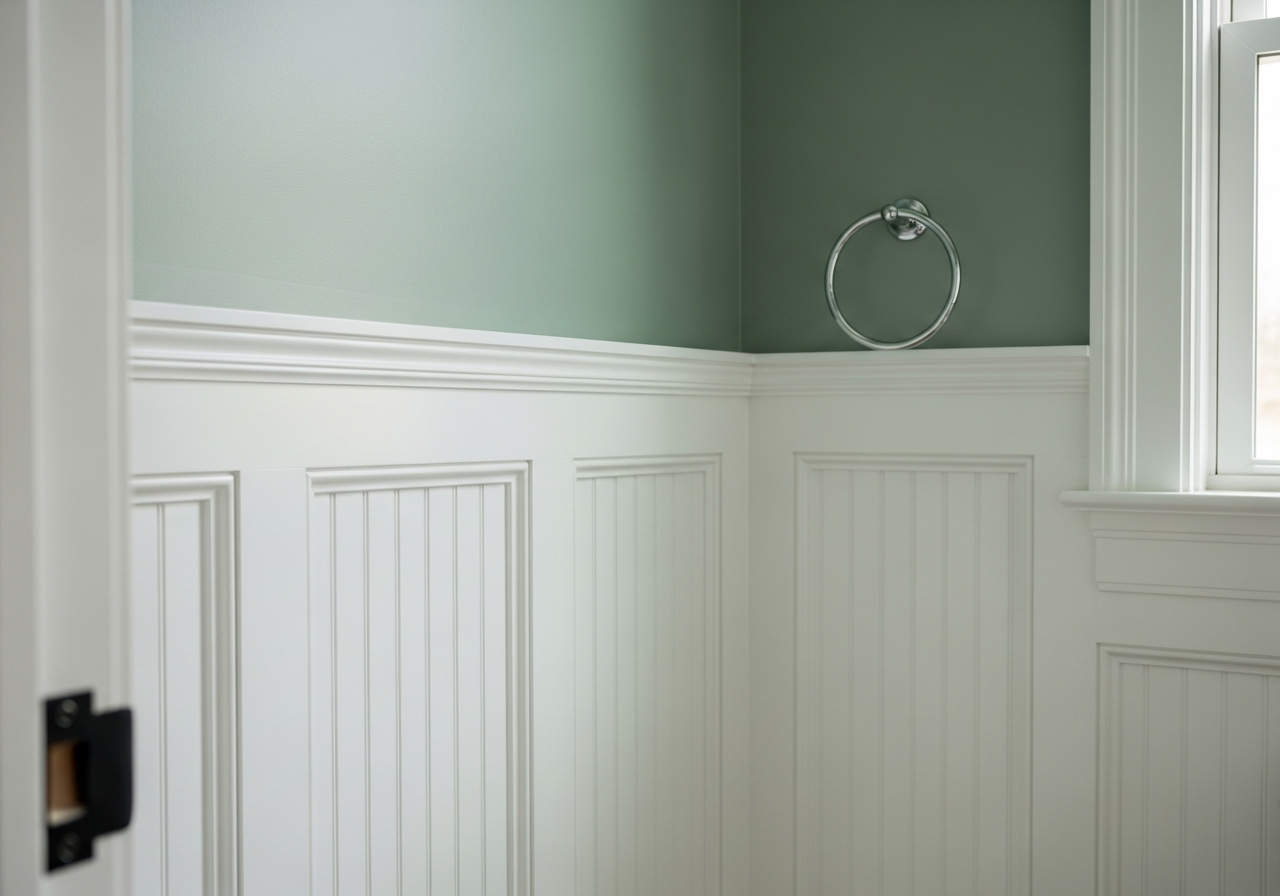
Classic wainscoting features recessed panels framed by stiles and rails, typically installed from the floor to chair-rail height (approximately 32 to 36 inches). In bathrooms, wainscoting delivers a timeless, formal appearance that suits traditional, transitional, and coastal styles. PVC and moisture-rated MDF versions are ideal for bathrooms because they resist warping, swelling, and mold growth far better than solid wood. A raised-panel design adds depth and shadow lines that make even a small bathroom feel more architecturally detailed. Paint wainscoting in a semi-gloss or satin finish for easy cleaning and additional moisture resistance.
Board and Batten
Board and batten paneling creates a clean vertical rhythm using flat boards with narrow battens covering the seams. This treatment has surged in popularity for bathrooms because of its versatility — it works equally well in farmhouse, modern, coastal, and Scandinavian-inspired spaces. Installing board and batten on the lower third of the wall with a contrasting paint color above is one of the easiest ways to add architectural interest to a builder-grade bathroom. For the most durable results, use PVC trim boards or primed finger-joint pine, and seal all edges before painting. Full-height board and batten extending from floor to ceiling creates a dramatic statement wall behind a freestanding tub or double vanity.
Shiplap and Beadboard
Shiplap and beadboard bring horizontal or vertical lines that add texture and a relaxed, cottage-inspired character. Shiplap features overlapping boards with a distinctive shadow gap between each plank, while beadboard uses tongue-and-groove construction with a narrow bead detail along each joint. Both are available in moisture-resistant PVC and composite materials that perform well in humid bathroom environments. Beadboard installed vertically on the lower wall beneath a simple cap rail is a budget-friendly way to transform a plain bathroom, and the grooves create subtle visual texture that photographs beautifully. Shiplap installed horizontally on an entire accent wall behind the vanity adds depth and makes the wall feel wider. For a cohesive look with modern bathroom design, paint paneling in the same color as the surrounding walls for a tone-on-tone textured effect.
Accent Tile Feature Walls
While standard subway tile remains a reliable choice, an accent tile feature wall takes bathroom design to an entirely different level. The goal is to designate one wall — typically behind the vanity, inside the shower niche, or on the wall visible from the doorway — as a showcase surface using tile that stands apart from the rest of the room.
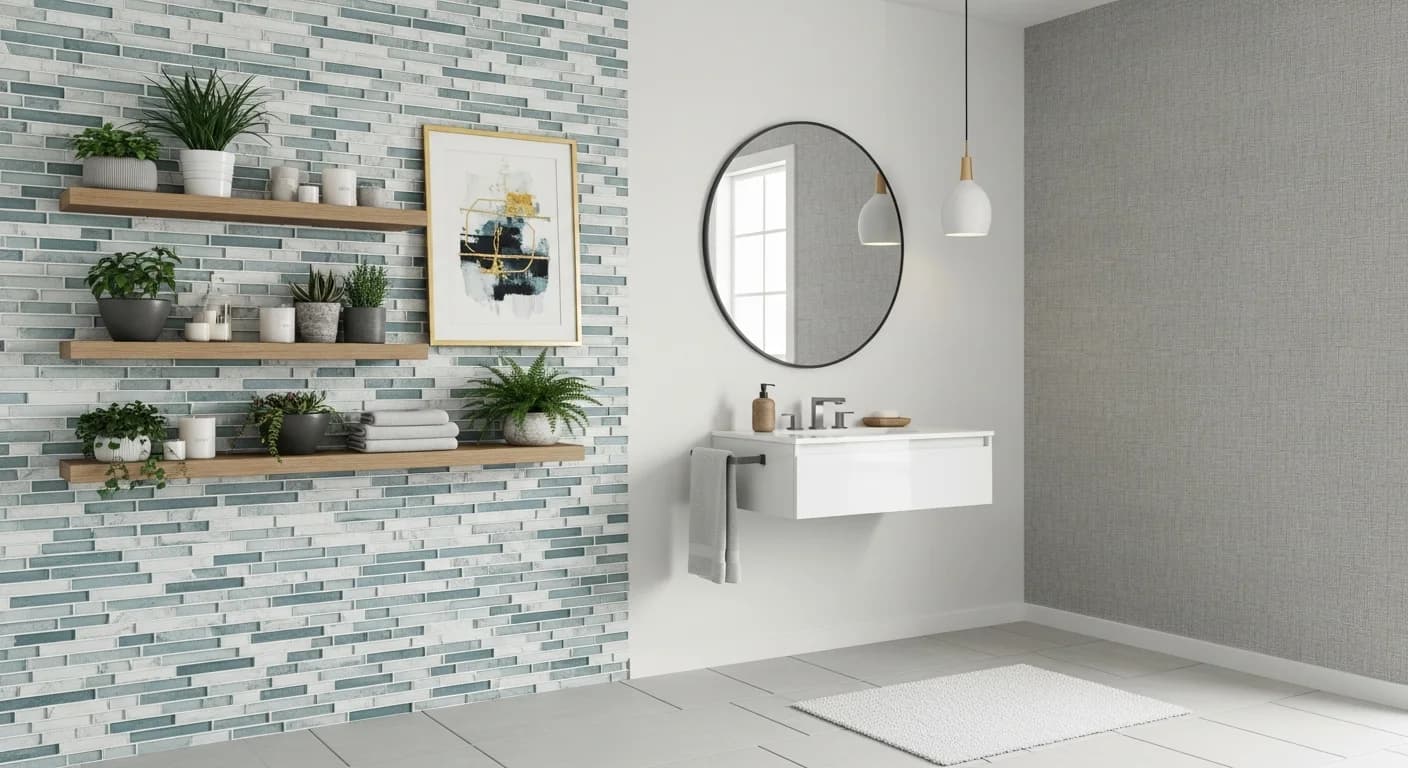
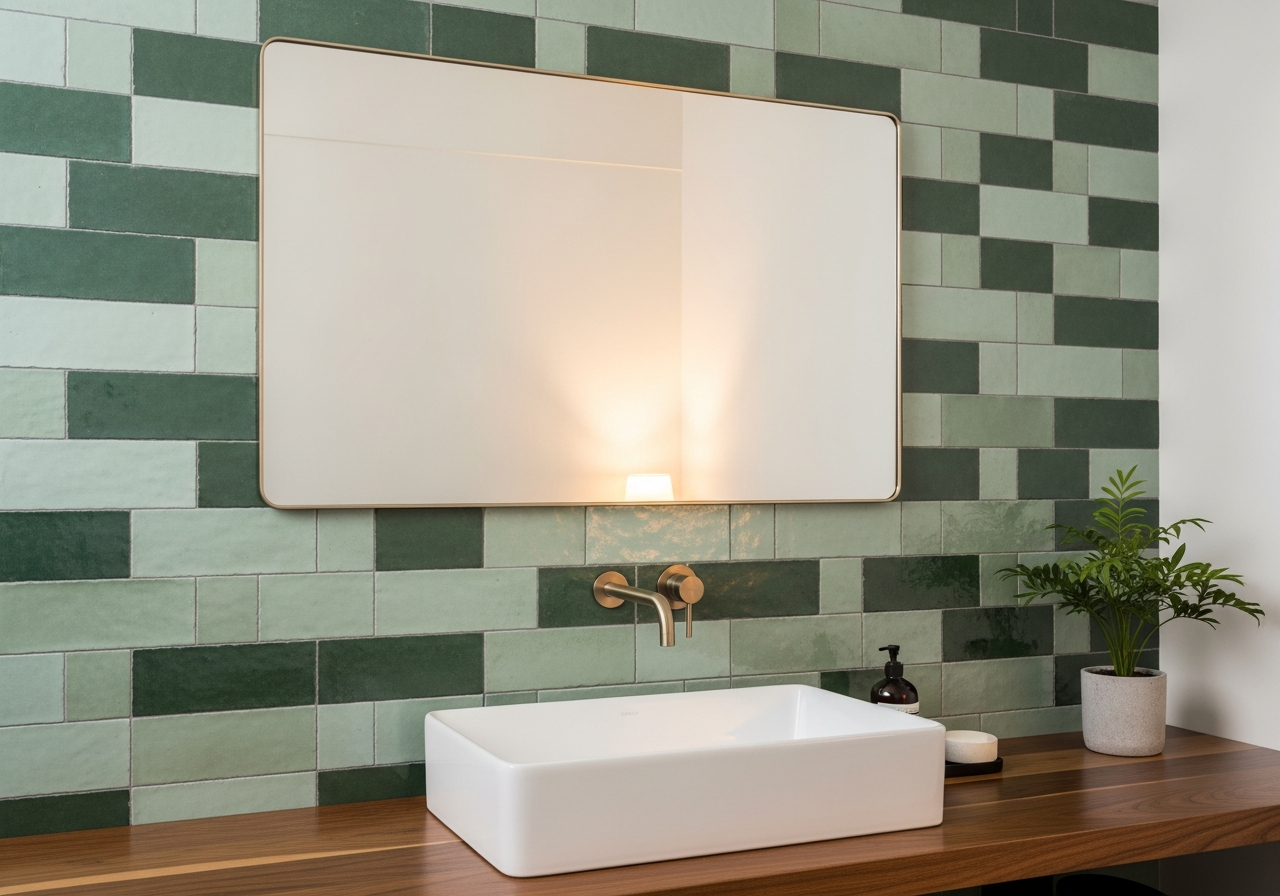
Zellige tile has emerged as one of the most sought-after options for bathroom feature walls. These handmade Moroccan clay tiles feature irregular surfaces that catch light differently across every piece, creating a luminous, textured effect that mass-produced tile cannot replicate. Zellige comes in a wide range of glazed colors — sage green, ocean blue, warm terracotta, and creamy white are especially popular for bathroom accent walls. The slight variations in color and surface make each installation unique, and the tiles pair beautifully with both warm and cool bathroom color palettes.
Mosaic tile offers another avenue for creating eye-catching feature walls. Penny rounds, hexagons, fish scale, and arabesque shapes introduce movement and pattern without requiring bold color. A mosaic accent wall in a neutral palette — think varying shades of white, cream, and gray — adds sophistication and visual interest while remaining timeless. For bolder statements, patterned encaustic cement tiles or graphic black-and-white mosaics deliver high-impact design that becomes the focal point of the room.
When planning an accent tile wall, consider scale. Large-format tiles with minimal grout lines create a clean, contemporary look, while smaller tiles with more grout lines produce a busier, more textured appearance. Grout color matters as much as tile selection — contrasting grout highlights the pattern and individual tile shapes, while matching grout creates a more seamless surface. For inspiration on pattern combinations, explore our guide to shower tile patterns and layouts and our comprehensive collection of bathroom tile ideas.
Natural Stone and Wood Accent Walls
Few materials deliver the same warmth and organic beauty as natural stone and wood. A stone accent wall transforms a bathroom into a spa-like sanctuary, while reclaimed wood introduces character and warmth that manufactured materials struggle to match.
Stacked stone panels — available in slate, travertine, quartzite, and ledger stone — create dramatic textured walls with genuine depth and shadow. These panels install similarly to tile and work well as a feature wall behind a freestanding tub, inside a walk-in shower, or flanking a double vanity. Natural stone is inherently water-resistant but requires sealing in wet environments to prevent staining. Lighter stone options like white quartz ledger brighten the bathroom while adding texture, whereas darker slate creates a moody, dramatic atmosphere.
Reclaimed wood accent walls bring rustic warmth and sustainability to bathroom design. However, wood and moisture are natural adversaries, so protection is essential. Select kiln-dried reclaimed wood treated for insects and mold. Apply multiple coats of marine-grade polyurethane or penetrating waterproof sealant to all surfaces, including back and edges. Install reclaimed wood only in Zone 3 — well away from direct water contact — such as the wall behind a toilet, above wainscoting, or opposite the shower. A moisture barrier between wood and drywall provides additional protection. When properly sealed, a reclaimed wood accent wall can last for years in a well-ventilated bathroom.
Art and Gallery Walls in Bathrooms
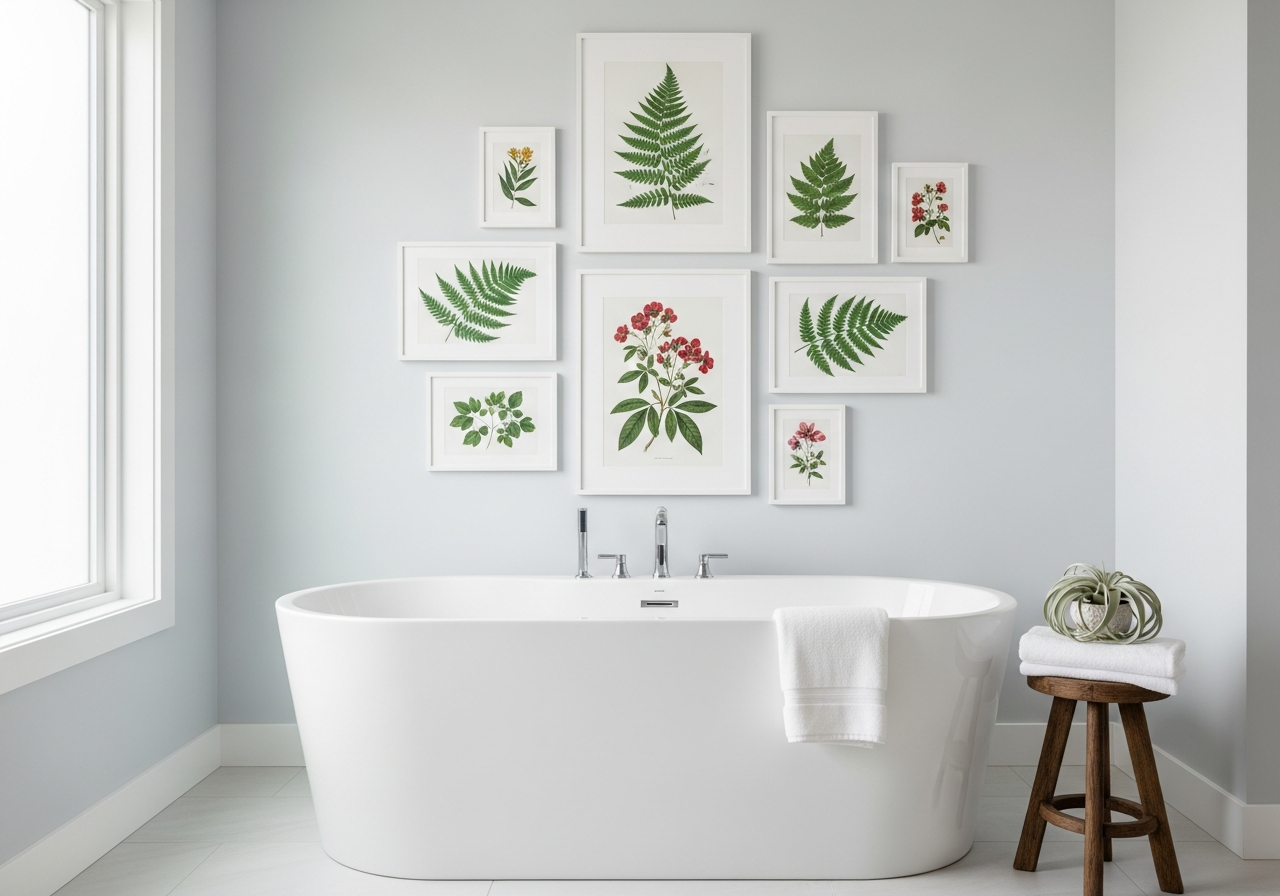
Hanging art in a bathroom was once considered risky, but with proper framing and placement, a gallery wall transforms a bathroom into a curated, personal space. The key is protecting artwork from humidity while creating an arrangement that feels intentional rather than cluttered.
For framing, choose materials that resist moisture and corrosion. Metal frames in brushed brass, matte black, or stainless steel are the most durable options. If you prefer wood frames, select sealed hardwood or composite frames rather than raw softwood, which may warp. Acrylic glazing instead of glass reduces weight and prevents shattering. For maximum protection, have prints sealed between the mat and backing with archival tape.
Placement matters as much as framing. Avoid hanging art in bathroom areas directly above the shower or tub where steam concentrates. The wall above the toilet, the wall opposite the shower, and the space above a towel bar are all excellent locations for a gallery wall. In powder rooms and half baths, where humidity is significantly lower, you have more freedom to create expansive gallery arrangements.
For hanging methods, use picture-hanging strips rated for humidity or stainless steel hardware with wall anchors. Avoid adhesive-only solutions in full bathrooms, as steam can weaken adhesives over time. A gallery wall of three to five coordinated prints — botanical illustrations, abstract watercolors, or black-and-white photography — adds personality and sophistication. Mix frame sizes for a collected feel, or use matching frames with uniform spacing for a gallery-style grid. For ideas on combining art with bathroom storage and styling, consider how shelving and art can balance visual weight across the room.
Decorative Shelving and Niche Styling
Decorative shelving and styled niches merge form and function, giving you display space for both practical items and design accessories. When done well, shelving becomes wall decor in its own right — adding visual layers, introducing new materials, and breaking up large expanses of flat wall.
Floating shelves are the most versatile option for bathroom wall decor. A floating shelf in natural walnut, white oak, or matte-painted MDF adds warmth and display space without the visual weight of bracketed shelving. Install floating shelves above the toilet, beside the vanity mirror, or on the wall opposite the shower. Style them with a mix of functional items — rolled hand towels, a small plant, a decorative soap dispenser — and purely aesthetic objects like a ceramic vase or small sculpture. Group items in odd numbers with varying heights for the most pleasing composition.
Built-in shower niches and wall recesses offer another opportunity for niche styling that goes beyond storing shampoo bottles. Line a shower niche with a contrasting tile — metallic mosaic, marble pencil tile, or a jewel-toned zellige — to create a miniature feature wall within the shower itself. Illuminated niches with waterproof LED strip lighting add a luxurious, spa-inspired glow. Outside the shower, recessed wall niches in dry areas can display candles, small plants, or decorative objects.
Plant shelves deserve special mention. A narrow ledge shelf or wall-mounted planter brings living greenery into the bathroom, improving air quality and adding organic texture. Pothos, ferns, air plants, and snake plants thrive in bathroom humidity and low-to-moderate light. Choose planters with drainage trays to protect the wall surface beneath them.
3D Wall Panels and Textured Surfaces
3D wall panels add sculptural depth and dramatic shadow play to bathroom walls. These panels feature raised geometric, organic, or abstract patterns that transform a flat surface into an architectural element. Available in PVC, gypsum, plant fiber, and moisture-resistant MDF, 3D wall panels install over existing drywall with construction adhesive and can be painted any color to match your bathroom palette.
The most popular patterns for bathroom applications include wave, diamond, brick, and organic petal designs. A single accent wall of 3D wall panels behind the bathtub or vanity creates a focal point that feels custom and high-end — often at a fraction of the cost of stone or tile. When lit from the side or above with directional lighting, the raised surfaces cast shadows that shift throughout the day, keeping the wall visually dynamic.
PVC and plant-fiber panels are the best choices for bathrooms because they resist moisture absorption and will not warp or swell in humid conditions. Gypsum panels work well in powder rooms and half baths but should be avoided in full bathrooms with showers unless they are sealed with a moisture-resistant primer and paint. For a seamless, sculptural look, fill the seams between panels with joint compound, sand smooth, and paint the entire surface in a single color. This monochromatic approach emphasizes the three-dimensional pattern and creates a textured wall that feels like a custom plaster installation.
Other textured surface options include lime wash paint, which creates a soft, cloud-like variation in color and depth, and Venetian plaster, which delivers a polished, luminous surface with subtle movement. Microcement provides a seamless, industrial-modern finish that is inherently waterproof. Each of these textured wall treatments adds visual richness without the busyness of pattern.
Combining Wall Treatments with Color
The most striking bathroom walls layer multiple treatments with intentional color coordination. Combining textures, materials, and paint creates depth and sophistication that no single treatment can achieve alone. The secret is establishing a clear visual hierarchy — one dominant treatment, one supporting treatment, and color that ties everything together.
A classic combination pairs board and batten on the lower wall with a bold paint color or waterproof wallpaper above. When both elements share the same color family — white paneling below and a soft sage wallpaper above — the effect feels cohesive and elevated. When you introduce contrast — dark navy paneling below and warm white above — the combination becomes more dramatic. Understanding how color affects mood is essential, and our guide to bathroom color psychology explains these principles.
Mixing textures within the same color palette is another sophisticated approach. Consider a stacked stone accent wall in warm gray paired with smooth painted walls in a complementary tone. Or combine a 3D wall panel feature wall in matte white with glossy subway tile on the adjacent wall. The variation in surface texture creates visual interest even when the color remains consistent.
Color blocking — painting the upper and lower portions of a wall in two contrasting colors — is one of the simplest ways to create a statement wall. This technique works particularly well with a chair rail or wainscoting cap that defines the transition. Deeper colors on the lower portion ground the room, while lighter tones above keep the space feeling open. For guidance on palettes, explore our bathroom color scheme ideas.
When combining multiple wall treatments, limit yourself to two or three materials. A bathroom with shiplap, stone, wallpaper, and patterned tile on four different walls will feel chaotic rather than curated. Choose one hero treatment for your accent wall, use a quieter treatment on surrounding walls, and let consistent color tie the composition together.
Frequently Asked Questions
What is the best accent wall material for a small bathroom?
For small bathrooms, lighter-colored board and batten, beadboard, or a bold waterproof wallpaper on a single wall work exceptionally well. These treatments add visual interest and perceived depth without physically reducing the room's dimensions. Avoid heavy stone or dark wood in very small spaces, as these can make the room feel closed in.
Can you put wallpaper in a bathroom with a shower?
Yes, but placement matters. Use solid vinyl or vinyl-coated bathroom wallpaper rated for high humidity, and install it only on walls that do not receive direct water contact. Walls opposite the shower or above wainscoting are ideal locations. Adequate ventilation through an exhaust fan is essential to prevent moisture buildup behind the paper.
How do you protect art from humidity in a bathroom?
Use metal or sealed composite frames with acrylic glazing instead of glass. Seal prints between mat and backing with archival tape. Hang artwork on dry walls away from the shower zone, and ensure your bathroom has a properly sized exhaust fan that runs during and after showers. In powder rooms, humidity is rarely an issue.
Are 3D wall panels waterproof?
PVC and plant-fiber 3D wall panels are moisture-resistant and suitable for full bathrooms. Gypsum and untreated MDF panels are best reserved for powder rooms or half baths with lower humidity. Always prime and paint panels with moisture-resistant paint for maximum durability.
What is zellige tile and why is it popular for bathrooms?
Zellige tile is a handmade Moroccan clay tile with an irregular, glossy surface that catches light beautifully. Each tile is slightly different in color and texture, creating a unique, artisanal look. It has become popular for bathroom accent walls and shower niches because it adds warmth and character that mass-produced tile cannot match.
How much does an accent wall cost in a bathroom?
Costs vary widely by material. Peel and stick wallpaper runs $50 to $200 for a single wall. Board and batten or beadboard paneling costs $200 to $600 installed. Handmade zellige tile ranges from $800 to $2,500 per wall depending on size and tile selection. Natural stone panels typically cost $1,000 to $3,000 installed. Use our bathroom remodel visualizer to preview different options before investing.
Design Your Accent Wall with HanoDecor
Choosing the right wall treatment for your bathroom is a big decision — one that affects both the look and longevity of your renovation. Before committing to materials and installation, see how different accent wall options look in your actual space. Upload a photo of your bathroom to the HanoDecor bathroom remodel visualizer and experiment with wallpaper patterns, paneling styles, tile selections, and color combinations. Visualizing your design before you buy saves time, money, and renovation regret.
Browse our design gallery for real before-and-after transformations featuring feature walls, statement walls, and creative wall treatments. For more bathroom design inspiration organized by style and room type, visit our bathroom ideas collection. Whether you are planning a full renovation or a simple weekend refresh, the right wall treatment can completely transform how your bathroom looks and feels.
Bathroom Wall Decor and Accent Ideas FAQs
Written by
Emily Rodriguez
Interior Design Editor covering living spaces, styling trends, and room makeovers. Former Architectural Digest contributor with a focus on accessible, budget-conscious design.