Exterior Painting ROI: How Much Value Does a Paint Job Add?
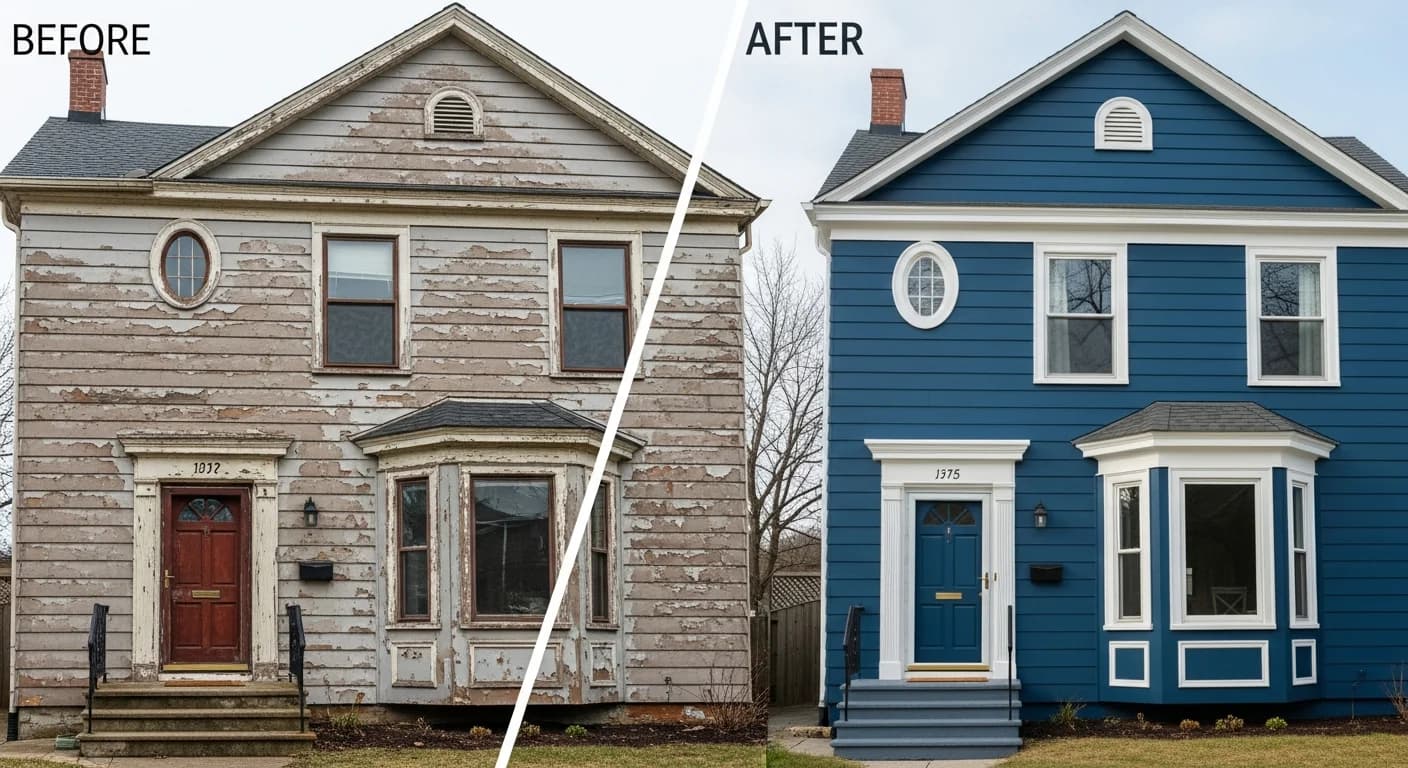
When it comes to home improvements that deliver measurable financial returns, exterior painting punches well above its weight class. For an average investment of $3,000 to $7,000, a professional exterior paint job can increase your home's perceived value by 2% to 5% — that is $8,000 to $20,000 on a $400,000 home. Real estate data consistently shows that fresh exterior paint is one of the most cost-effective ways to boost curb appeal, reduce days on market, and increase offer prices. Whether you are preparing to sell, refinancing, or simply protecting your largest investment, understanding the return on investment of exterior painting helps you make smart financial decisions about your home.
Exterior Painting by the Numbers
The average return on investment for exterior painting ranges from 51% to 55% according to the National Association of Realtors' Remodeling Impact Report and data from Zillow and Redfin. That means for every $1,000 you spend on exterior painting, you recover $510 to $550 in increased home value. While that percentage is lower than some interior improvements, the absolute dollar impact is significant because exterior painting affects every buyer's first impression.
Specific data points paint a compelling picture. Zillow research found that homes with a black front door sold for approximately $6,400 more than expected — a return that dwarfs the $50 to $100 cost of painting a door. Homes with charcoal or dark gray exteriors commanded premiums of $2,500 to $5,000 in certain markets. The National Association of Realtors reports that 66% of real estate agents recommend exterior painting before listing, making it one of the most universally recommended pre-sale improvements.
The 2026 Cost vs. Value Report shows the average exterior paint job costs approximately $4,200 for a mid-range project and recovers about $2,300 in direct resale value — a 55% ROI. But this figure underestimates the total impact because it does not account for the indirect benefits: faster sale speed, stronger negotiating position, and the elimination of "deferred maintenance" red flags that cause buyers to demand price concessions.
For context, compare painting to other exterior improvements: a new garage door returns 103% ROI, but costs $4,300. New vinyl siding returns 68% ROI but costs $16,000+. A new front door returns 69% ROI at $2,200. Painting delivers the second-highest impact-to-cost ratio of any exterior improvement, making it the sweet spot for homeowners seeking maximum curb appeal transformation on a reasonable budget. Understand the full investment breakdown in our house painting cost guide.
Why Paint Has Outsized Impact on Perceived Value
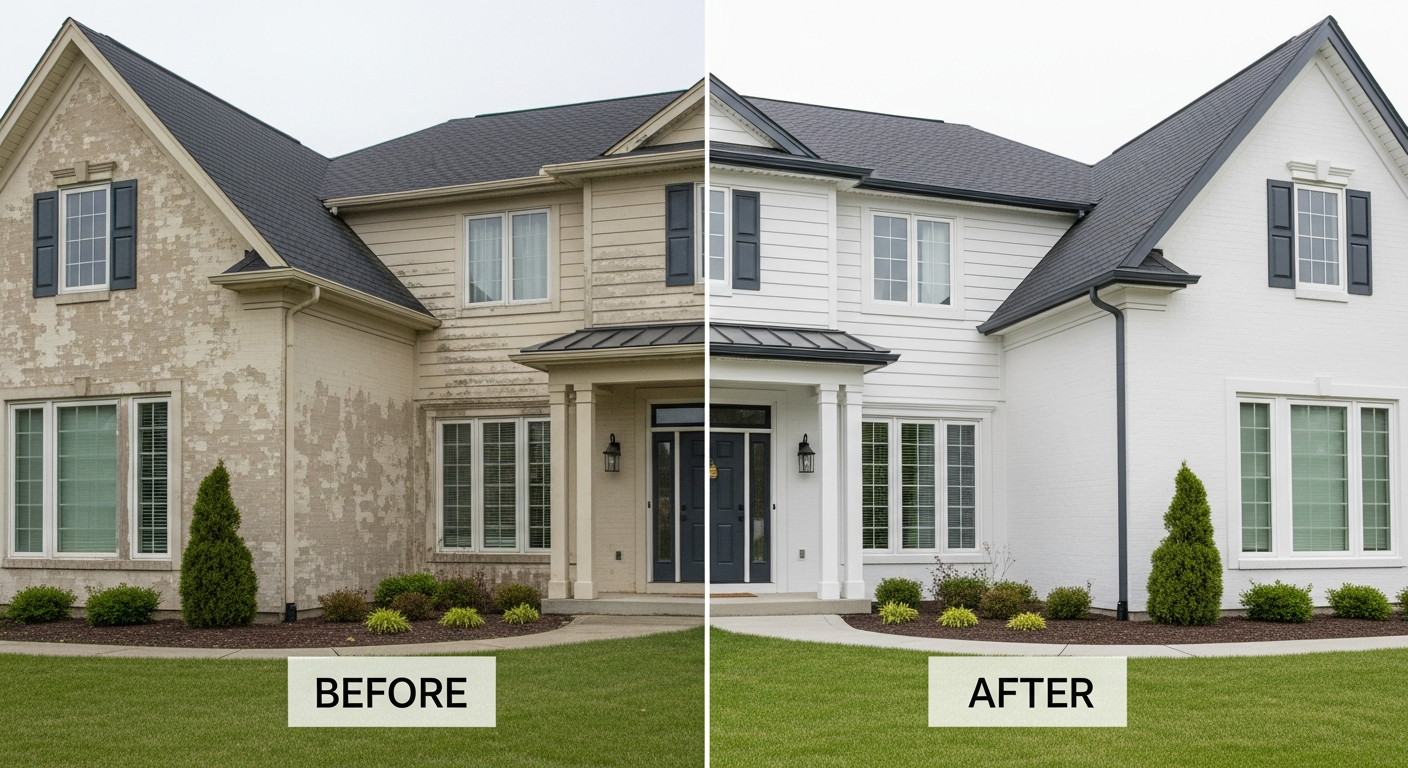
Buyers form their opinion of a home within the first 7 seconds of seeing it from the curb. That initial impression — positive or negative — colors every subsequent judgment about the property. Fresh, well-chosen exterior paint instantly signals that the home is well-maintained, cared for, and move-in ready. Conversely, faded, peeling, or dated paint triggers a "deferred maintenance" alarm that makes buyers assume everything else is neglected too.
The psychology of first impressions is powerful in real estate. A buyer who pulls up to a home with crisp paint, a bold front door, and clean trim starts the tour with positive expectations. They are more likely to overlook minor interior flaws and more willing to pay asking price or above. A buyer who sees peeling siding and a faded front door starts with negative expectations and spends the tour looking for problems to justify a lower offer.
Photography impact cannot be overstated. Over 90% of home searches begin online, and listing photos are the single most important factor in determining whether a buyer schedules a showing. Fresh exterior paint photographs dramatically better than faded or deteriorated surfaces. The color consistency, clean lines, and visual crispness of new paint translate directly into more attractive listing photos, more showings, and ultimately more and better offers.
Real estate agents consistently report that homes with recently painted exteriors sell 10% to 15% faster than comparable homes with aging paint. In competitive markets, that speed advantage can mean the difference between receiving multiple offers at asking price and sitting on the market with price reductions. The perceived value of fresh paint extends far beyond the actual material cost. Enhance your curb appeal further with strategic landscaping for maximum impact.
Interior vs Exterior Painting ROI
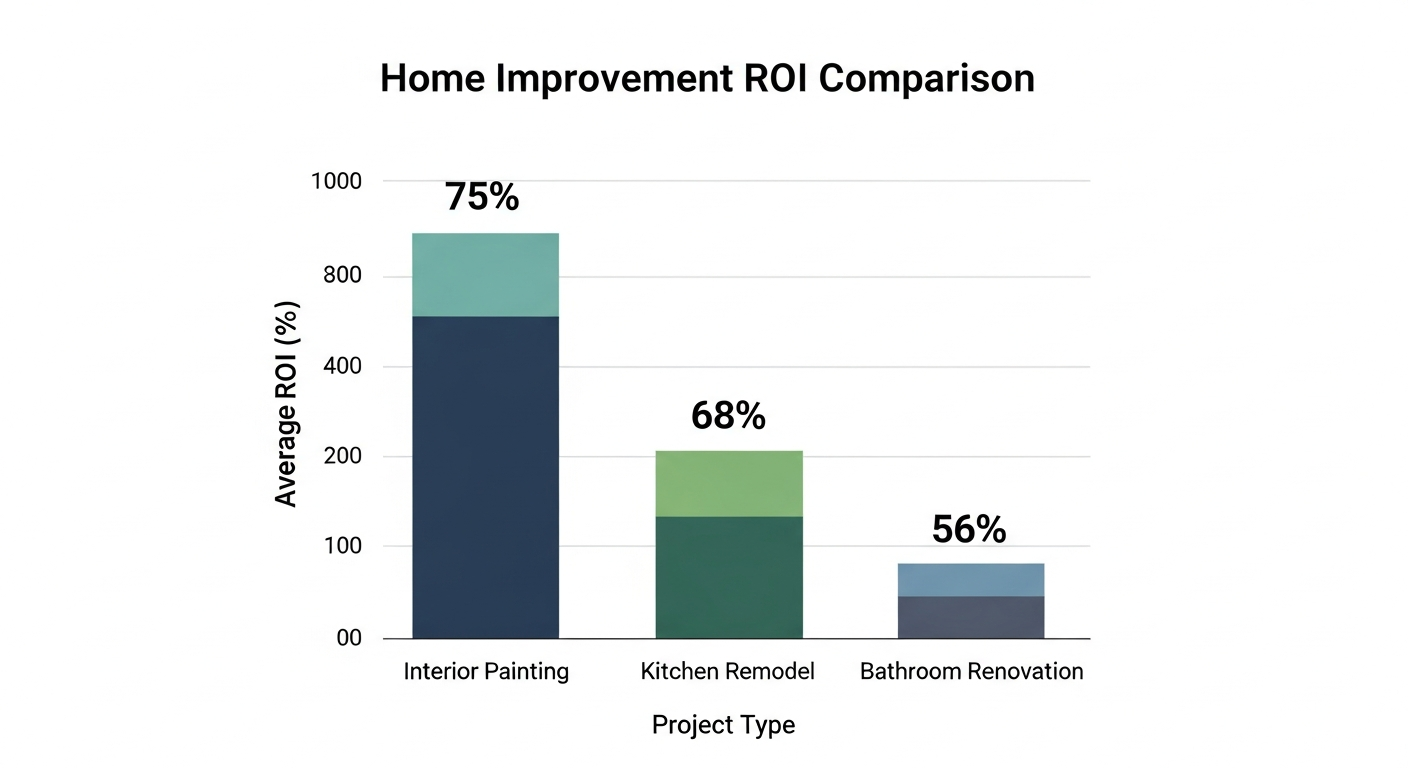
Interior painting delivers an estimated 107% ROI — actually exceeding its cost in added value. This impressive return occurs because buyers directly experience interior spaces during tours and mentally calculate the cost and hassle of repainting themselves. A freshly painted interior with modern, neutral colors makes the home feel move-in ready and eliminates a task from the buyer's post-purchase to-do list.
Exterior painting delivers a lower percentage ROI (51-55%) but has arguably higher strategic impact because it controls the first impression. No buyer ever sees the interior without first seeing the exterior. A stunning interior behind a shabby exterior means fewer showings and lower initial interest — you never get the chance to show off that freshly painted living room if the exterior drove buyers away before they walked through the door.
The optimal strategy is to do both interior and exterior painting before selling. The combined ROI exceeds either project alone because the synergy between a polished exterior and a fresh interior creates an overall impression of a well-maintained, move-in ready home. If budget forces you to choose, prioritize exterior painting because it generates showings, and showings are what ultimately sell homes.
For homeowners not selling, the ROI calculation changes. In this case, exterior painting protects the structural integrity of your siding, trim, and substrate — preventing moisture damage, rot, and insect infiltration that cost thousands more to repair than to prevent. The protective value of exterior paint makes it a smart investment regardless of whether you plan to sell.
Colors That Maximize Resale Value
Best body colors for resale are universally neutral. Greige (gray-beige blend) exteriors consistently sell for the highest premiums across all markets. Light gray, warm white, and putty/khaki tones also perform well because they appeal to the widest range of buyers and provide a blank canvas that allows buyers to envision their own personalization. Specific high-performing colors include Sherwin-Williams Agreeable Gray (SW 7029), Benjamin Moore Revere Pewter (HC-172), and Behr Sculptor Clay (PPU5-08).
Best front door colors for resale are bold and confident. Black doors lead the pack with Zillow's $6,400 premium finding. Charcoal, deep navy, and dark slate also perform well. These dark, saturated door colors create a strong focal point that photographs beautifully and projects confidence and sophistication. Bright or unusual door colors — lime green, hot pink, bright orange — tend to polarize buyers and may reduce offers from the majority who find them off-putting.
Colors to avoid for resale include purple, bright orange, neon anything, and overly trendy choices that may date quickly. While a trendy sage green or warm terra cotta might be personally appealing, these colors have narrower buyer appeal than classic neutrals. If you are painting specifically to sell, choose broadly appealing colors over personally expressive ones. Save the bold colors for your front door and accent areas where they can add personality without risking buyer rejection.
One important consideration: always coordinate your paint colors with your home's fixed elements — roof color, stone or brick, hardscape, and landscaping. A color that tests well in isolation might clash with your specific home's existing materials. Use HanoDecor's AI House Painter to preview resale-friendly colors on your actual home and ensure everything coordinates before committing. Explore our complete guide to exterior color schemes for coordinated body, trim, and accent combinations.
Best Time to Paint Before Selling
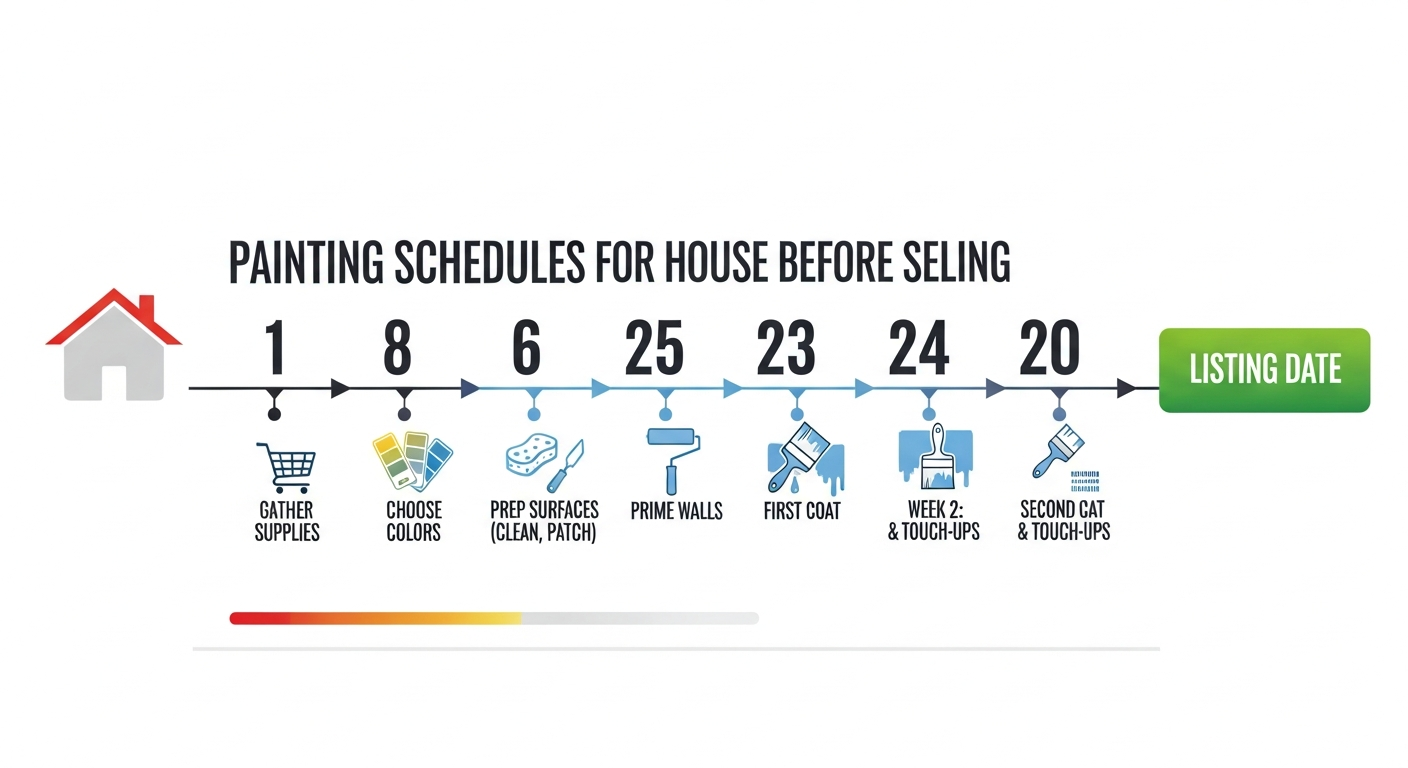
Paint your home's exterior 2 to 3 months before your planned listing date. This timing allows the paint to fully cure and settle (eliminating any "fresh paint smell" at the door), gives you time to address any touch-ups or issues that emerge, and ensures the paint still looks brand-new in listing photos and during showings.
If you are planning a spring listing — the most popular time to sell — paint in late winter or early spring as soon as weather conditions permit. A late-February or March paint job in temperate climates ensures your home is ready for prime selling season. In colder climates, coordinate with the earliest reliable painting weather, which may be late April or May.
Painting too far in advance — 6 months or more before listing — risks accumulating dust, dirt, pollen, and minor wear that diminishes the fresh appearance. Painting too close to listing — within 2 weeks — means the paint may not be fully cured, and the chemical smell can be off-putting during showings. Some buyers associate fresh paint with "covering up problems," so having the paint look settled rather than obviously brand-new can actually work in your favor.
Coordinate your painting timeline with other pre-sale improvements for maximum efficiency. Power washing the driveway, walkways, and patio ($200 to $400) complements fresh paint beautifully. Updating landscaping and adding seasonal flowers ($300 to $800) completes the curb appeal transformation. Together, paint + power wash + landscaping delivers the most dramatic visual transformation available for under $8,000. Plan your painting project timeline to align with your selling schedule.
Exterior Paint vs Other Curb Appeal Improvements
Exterior painting offers the best balance of cost, visual impact, and return among all curb appeal projects. To put it in perspective, here is how painting compares to other popular exterior improvements in terms of average cost, ROI, time to complete, and visual transformation.
Exterior Painting: Average cost $3,000 to $7,000, ROI 51-55%, professional completion in 3 to 7 days, with a visual impact rated at 9 out of 10. It transforms the entire exterior appearance and protects the home's structure. Professional Landscaping: Average cost $2,000 to $5,000, ROI 100%+ according to NAR, completion in 1 to 3 days, with a visual impact of 7 out of 10. Landscaping provides excellent return but affects primarily the ground-level view.
Power Washing: Average cost $200 to $500, ROI 200%+ (low cost makes any value increase significant), completion in 1 day, visual impact 5 out of 10. Power washing is the cheapest way to refresh your exterior but does not address faded or damaged paint. New Front Door: Average cost $1,500 to $3,500, ROI 69%, completion in 1 day, visual impact 6 out of 10. A new door provides excellent focal point impact but is a single element.
New Siding: Average cost $12,000 to $25,000, ROI 68%, completion in 1 to 3 weeks, visual impact 10 out of 10. New siding provides the most dramatic transformation but at a substantially higher price point. For most homeowners, painting over existing siding in good condition provides 90% of the visual improvement at 20% of the cost.
The winning combination for maximum curb appeal ROI is paint + landscaping + power washing. This trio typically costs $5,000 to $12,000 combined and transforms every aspect of your home's exterior appearance. Browse our siding options guide to determine whether painting or replacing your siding is the right choice for your situation.
When NOT to Paint Before Selling
If your current paint is in good condition — no peeling, no fading, no visible wear — do not waste money repainting. A well-maintained exterior in a neutral color does not need a fresh coat just because you are selling. Buyers rarely check when the house was last painted; they evaluate the current appearance. If the paint looks good, it is good enough.
If you are selling as-is to investors or flippers, skip the painting. Investors and professional flippers expect to renovate and have already factored painting costs into their offer calculations. Your $5,000 paint job will not increase their offer by $5,000 — it might not increase it at all because they may repaint in different colors regardless. Save the money and accept that an as-is sale targets a different buyer pool.
If your home needs significant structural repairs, address those before cosmetic improvements. Fresh paint over rotting siding, failing foundations, or damaged roofing creates a misleading appearance that can lead to legal liability and failed home inspections. Fix structural issues first, then paint. A home with new paint but obvious structural problems raises red flags that make buyers more suspicious, not less.
Also consider whether your neighborhood context warrants the investment. If you are in a market where homes sell quickly regardless of cosmetic condition — like many hot markets in 2025-2026 — the marginal benefit of painting may not justify the cost and delay. Consult with a local real estate agent who knows your specific market before investing in pre-sale painting.
DIY Paint vs Professional: Which Has Better ROI?
DIY exterior painting costs approximately $800 to $2,500 in materials and equipment rental, compared to $3,000 to $7,000 for professional painting. The lower cost means a higher ROI percentage on paper — if you spend $1,500 on DIY materials and the value increase is $2,000, that is a 133% return. A professional job costing $5,000 with the same $2,000 value increase returns only 40%.
However, the ROI calculation for DIY must account for quality risk. A poorly executed DIY paint job can actually decrease home value by signaling to buyers that the home has been maintained by amateurs. Visible brush marks, drips, missed spots, uneven coverage, and sloppy trim work all communicate unprofessional care. If buyers suspect a DIY paint job, they may assume other maintenance was similarly amateur.
For pre-sale painting, professional application is almost always the better choice. The quality difference is visible, the speed advantage means less disruption to your selling timeline, and the professional result creates the impression of a well-maintained home that justifies a higher asking price. For personal enjoyment and protective maintenance with no immediate sale planned, DIY can be an excellent option — especially if you are comfortable with heights and willing to invest time in proper preparation.
A middle-ground approach works well for some homeowners: hire professionals for the body and trim (the majority of the work and the areas most visible from the street), and DIY the front door, shutters, and small accents yourself. This captures the quality advantage of professional work where it matters most while saving $500 to $1,000 on elements you can handle at ground level.
Frequently Asked Questions
How much does exterior painting add to home value? Exterior painting typically adds 2% to 5% to a home's market value, which translates to $8,000 to $20,000 on a $400,000 home. The exact amount depends on the current condition of the paint, the quality of the new paint job, the colors chosen, and the local real estate market. Homes with severely deteriorated paint see the largest value increases from fresh painting, while homes with paint in good condition see minimal additional value.
What is the cheapest way to improve curb appeal? Power washing is the single cheapest curb appeal improvement at $200 to $500 for a whole-house wash. After power washing, painting your front door ($50 to $100 in materials), adding seasonal flowers ($100 to $300), and replacing old house numbers and mailbox ($50 to $200) provide significant visual improvement for minimal investment. Combined, these updates cost under $1,000 and create a noticeably fresher appearance. For the most dramatic transformation under $10,000, add exterior painting to these smaller improvements.
Should I repaint before refinancing? Repainting before refinancing can help if your home's exterior is in poor condition that drags down the appraisal. Appraisers note exterior condition as part of their assessment, and peeling or failing paint is flagged as deferred maintenance that can lower the appraised value. If your paint is in reasonably good condition, repainting for the sole purpose of refinancing is unlikely to provide enough appraised value increase to justify the cost. Consult with a real estate appraiser before investing.
Does my HOA require specific exterior colors? Many HOAs maintain a list of pre-approved exterior colors and require architectural review board approval before repainting. Check your HOA's CC&Rs (Covenants, Conditions, and Restrictions) before selecting colors. Painting without approval can result in fines and mandatory repainting at your expense. Most HOAs provide a color palette that includes a range of acceptable options — use HanoDecor's AI House Painter to preview approved colors on your home before submitting your application.
What is the ROI of painting just the front door? Painting your front door is arguably the highest-ROI home improvement project in existence. A single quart of quality exterior paint ($15 to $25), a brush, and an afternoon of work can deliver a $2,000 to $6,400 increase in perceived value. Black doors show the strongest data, but any bold, well-chosen door color that coordinates with your exterior creates positive buyer impressions. There is virtually no scenario where painting your front door is not worth doing before selling.
See Your Home's Value-Boosting Transformation
The most effective way to understand the visual impact of exterior painting is to see it on your own home. Small paint chips and online inspiration galleries cannot show you how a specific color will look on your specific architecture with your specific landscaping and fixed elements.
HanoDecor's Exterior Visualizer lets you upload a photo of your home and preview complete exterior transformations — new paint colors, siding options, trim details, and landscaping — all before spending a dollar. See the difference between your current curb appeal and your potential curb appeal, and use that visualization to make confident investment decisions.
For color-specific previews, HanoDecor's AI House Painter lets you test body, trim, and door colors instantly on your actual home photo. Compare resale-friendly neutrals, test bold accent colors, and find the palette that maximizes both your personal enjoyment and your property's market value. Visit our pricing page to explore visualization plans and browse the transformation gallery for inspiration.
Exterior Painting ROI FAQs
Written by
James Park
Architectural Design Advisor specializing in exterior remodeling, siding systems, and structural home improvements. Licensed architect with 18 years of residential project experience.