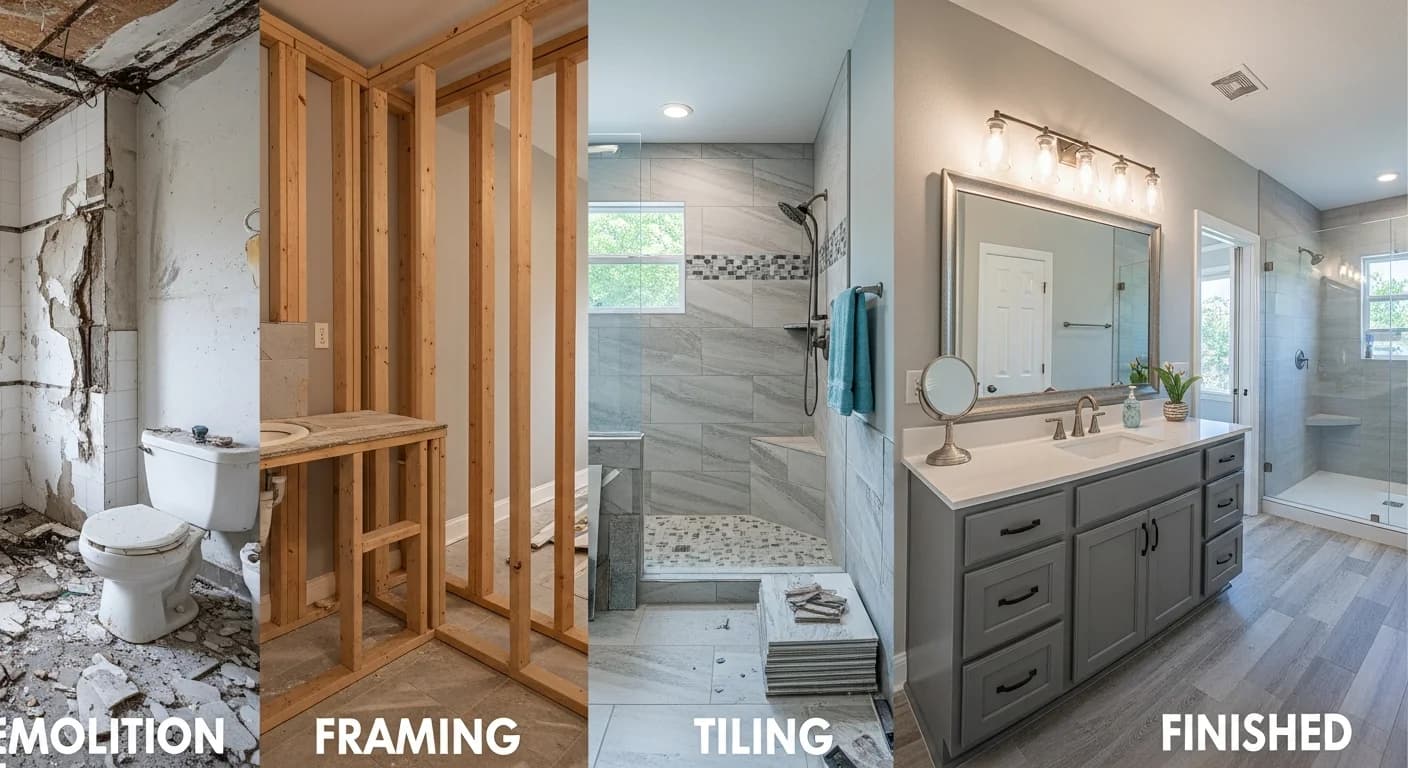
How Long Does It Take to Paint a House Exterior? Complete Timeline
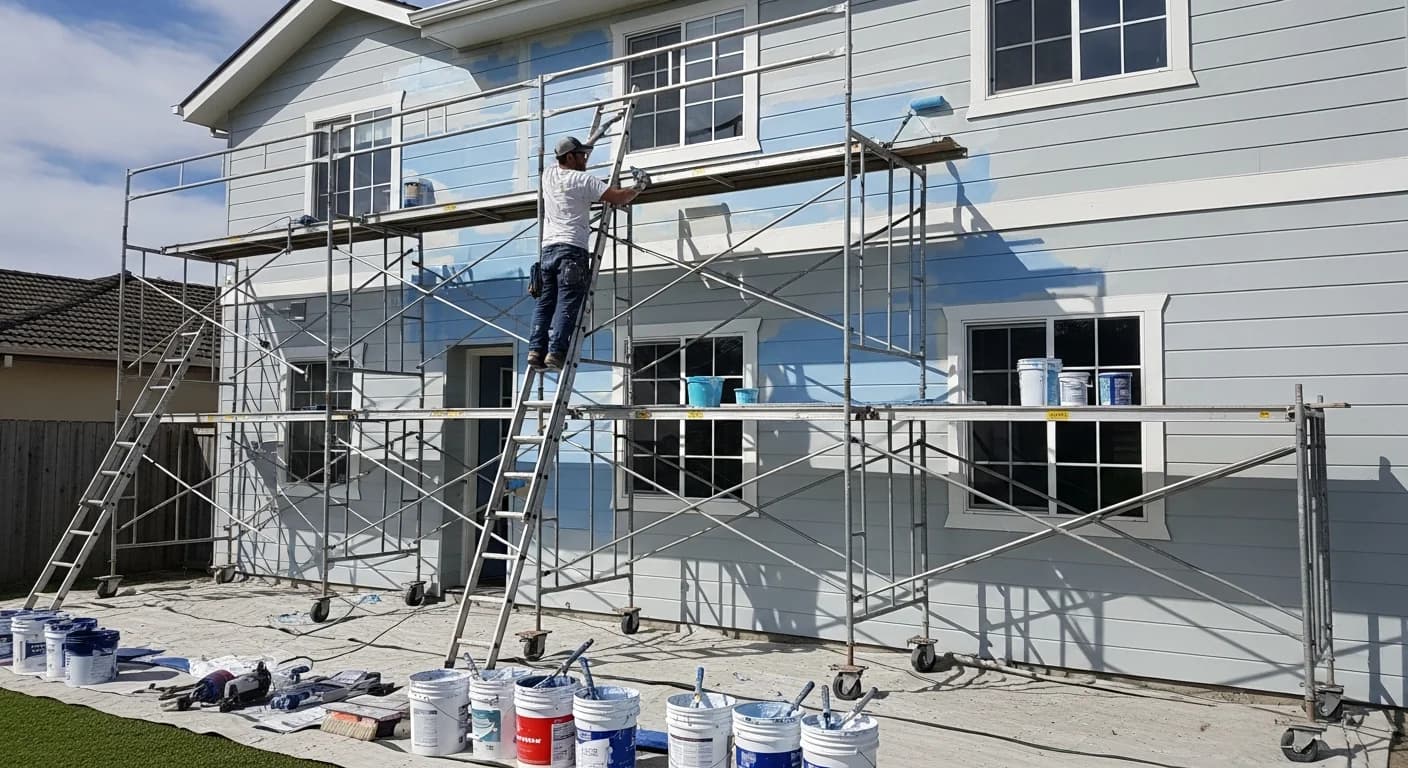
One of the most common questions homeowners ask before starting an exterior painting project is "how long will this take?" The answer depends on several interconnected factors — your home's size, the condition of existing paint, architectural complexity, weather conditions, and whether you are doing it yourself or hiring a professional crew. Underestimating the timeline is one of the most frequent planning mistakes I see as a professional painter, and it leads to rushed prep work, compromised quality, and projects that drag on far longer than expected. This guide breaks down every phase of an exterior painting project with realistic timeframes so you can plan effectively, set accurate expectations with your family and contractor, and achieve professional results without time pressure.
Average Exterior Painting Timelines
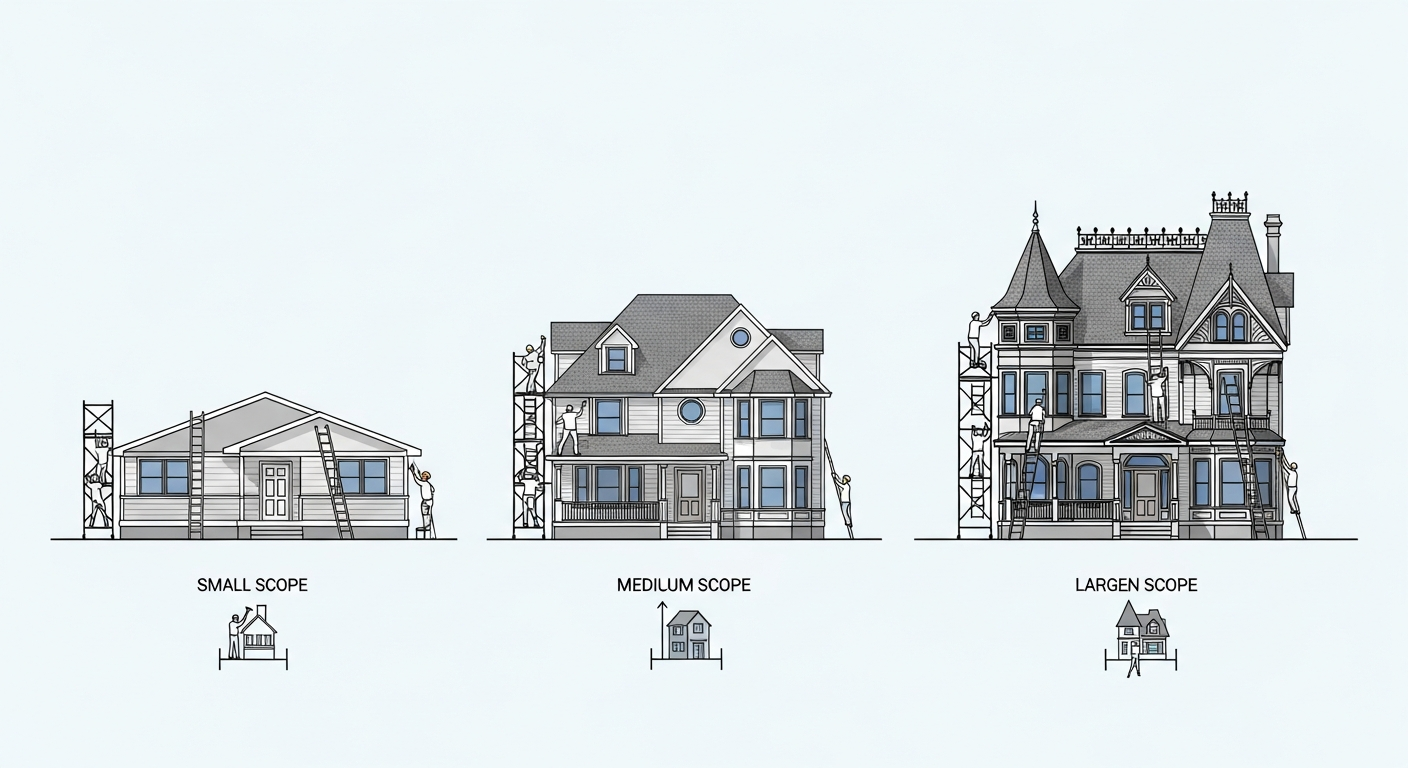
For a 1,500 square foot home — a typical small ranch or Cape Cod — a DIY painter working weekends should expect to invest 80 to 120 total hours spread over 2 to 3 weeks. A professional crew of 3 to 4 painters will complete the same home in 3 to 5 working days, weather permitting. The professional crew's efficiency comes from specialization (one person preps while another primes), commercial-grade equipment, and years of practiced technique.
For a 2,500 square foot home — a standard two-story Colonial or split-level — DIY hours climb to 120 to 180, taking 3 to 5 weeks of weekend work. Multi-story homes add significant time for scaffolding setup, ladder repositioning, and the slower pace of working at height. A professional crew handles this in 5 to 7 working days, using scaffolding systems that allow multiple painters to work simultaneously on upper and lower surfaces.
For homes 3,500 square feet and larger — large Colonials, Victorians, or expansive ranch homes — a DIY project can stretch to 180+ hours over 5 to 8 weeks or longer. These projects often become impractical for a single homeowner because the sheer duration means weather conditions may change mid-project, and paint applied in week one may have weathered noticeably by the time you finish in week eight. Professional crews complete large homes in 7 to 10 working days and can compress schedules further by adding crew members.
These timelines assume moderate preparation needs — typical of a home being repainted in similar colors over existing paint in fair condition. Homes requiring extensive repair, complete stripping, or dramatic color changes will take 25% to 50% longer. The full cost of painting a house is directly proportional to these timelines, as labor represents 70% to 85% of the total project cost.
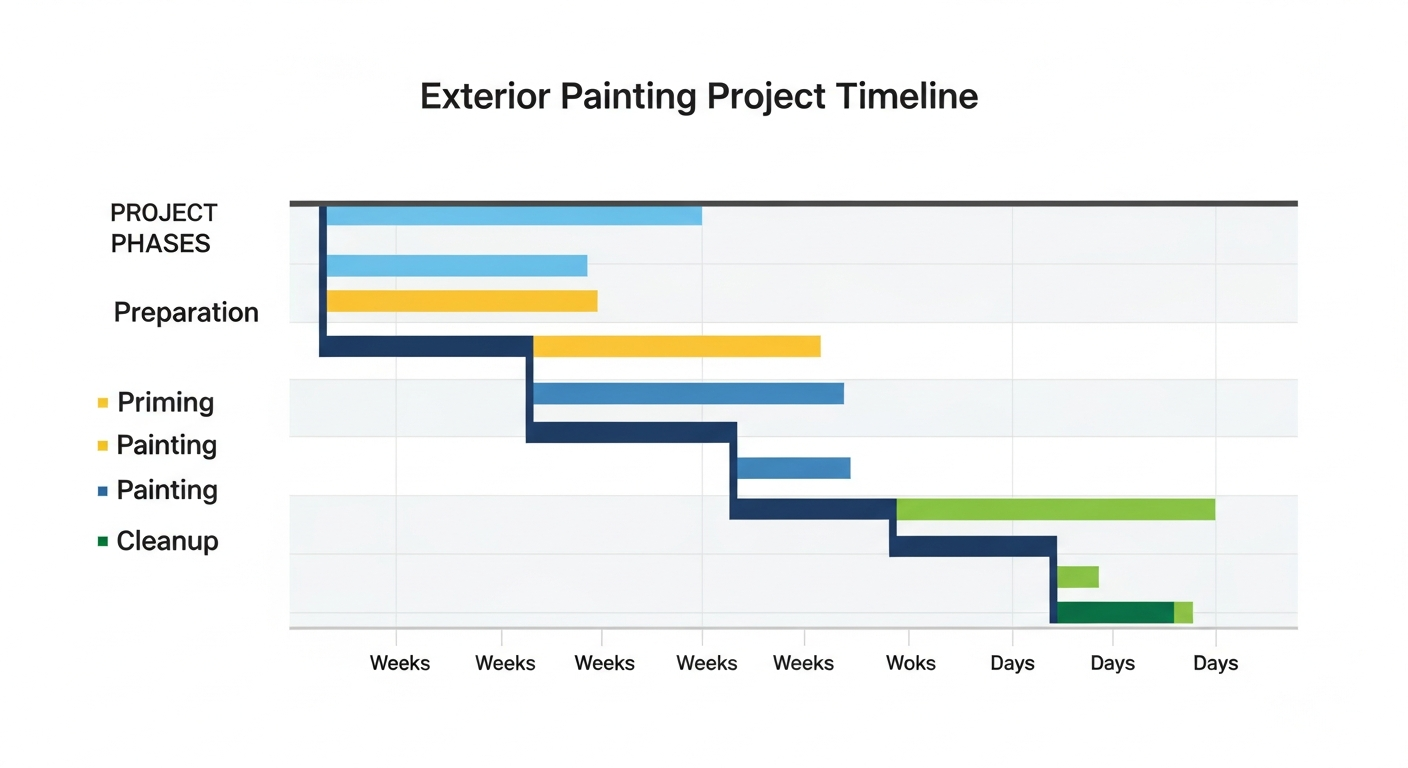
Phase 1 — Planning and Color Selection (1 to 2 Weeks)
Color selection alone can take days or even weeks if you approach it casually — browsing hundreds of paint chips, testing samples on multiple walls, observing them in different light conditions, and reaching consensus with your partner or family. Streamline this process by starting with digital visualization. Upload a photo of your home to HanoDecor's AI House Painter and test dozens of color combinations in minutes rather than days. Narrow your choices to 2 to 3 finalists, then purchase sample quarts for physical testing on your actual home.
If you are hiring professionals, this planning phase includes getting contractor quotes. Request quotes from at least three painting contractors and expect the process to take 1 to 2 weeks. Each contractor should visit your home, assess the scope, and provide a written estimate that details the preparation work included, paint brand and product specified, number of coats, timeline, and warranty terms. Rushed contractor selection often leads to poor outcomes — take the time to compare thoroughly.
During the planning phase, also verify whether any permits are required (rarely needed for residential painting, but some historic districts require approval) and check your HOA's color approval process if applicable. Order paint and materials at least a week before your planned start date to ensure everything is on-site when work begins. Running out of paint mid-project and waiting for a delivery wastes precious good-weather days.
Review your exterior color options and the latest trending colors for curb appeal to inform your selection. Planning time invested here saves time during execution by eliminating color changes and material runs during the painting phase.
Phase 2 — Surface Preparation (2 to 4 Days Professional / 1 to 2 Weeks DIY)
Surface preparation is where professional crews gain their biggest time advantage over DIY painters. A professional crew with a commercial pressure washer, power scrapers, and pneumatic sanders can complete prep on a 2,500 square foot home in 2 to 4 days. A DIY painter with consumer-grade tools typically needs 1 to 2 weeks of dedicated work for the same scope — and prep is the most physically demanding phase of the entire project.
Preparation includes power washing or hand cleaning all surfaces, waiting 24 to 48 hours for complete drying, scraping all loose and peeling paint to sound edges, sanding rough areas and glossy surfaces for adhesion, filling holes and cracks with exterior wood filler, repairing or replacing rotted wood, caulking gaps around windows, doors, and trim, priming bare wood and repaired areas, and masking windows, doors, fixtures, and landscaping.
Professional painters are 3 to 4 times faster at prep because they use commercial tools, work in specialized teams, and have the muscle memory of thousands of prior projects. A professional scraper can clear a wall of loose paint in the time it takes a DIY painter to figure out the best angle and technique. This speed advantage is one of the strongest arguments for hiring professionals, especially for homes with extensive prep needs.
The most common prep-related timeline mistake is underestimating drying time. After power washing, wood siding needs a minimum of 24 to 48 hours to dry completely — longer in humid conditions. Stucco and masonry can take 3 to 5 days. Primed surfaces need 2 to 4 hours before topcoating. Building these drying windows into your timeline prevents the temptation to paint over damp surfaces, which leads to the kind of failures described in our painting mistakes guide.
Phase 3 — Painting (2 to 4 Days Professional / 1 to 3 Weeks DIY)
The actual painting phase is what most people envision when they think about a painting project, but it represents only about 40% of the total work. Professional crews apply the first coat using a combination of spray, brush, and roller techniques, moving systematically from top to bottom across each wall. A skilled crew can coat the body of a 2,500 square foot home in a single day.
Between the first and second coat, drying time must be respected. Latex paint typically requires 4 to 6 hours between coats in ideal conditions — temperatures between 60°F and 77°F with moderate humidity. In cooler or more humid conditions, recoat time extends to 6 to 8 hours or overnight. Oil-based paints require 24 hours between coats. Professional crews often apply the first coat in the morning, allow it to dry through midday, and begin the second coat in the afternoon — completing both coats on the body in two days.
Trim and detail work consumes a disproportionate amount of time. Trim represents only about 20% of the total surface area but accounts for roughly 50% of the painting time because it requires careful cutting in, multiple color changes, and precise technique around windows, doors, and architectural details. Experienced trim painters work with a steady hand and quality angled brushes, but the work is inherently slow and methodical.
Doors, shutters, and decorative elements are typically painted last. Some painters remove doors and shutters to paint them on sawhorses for best results — this adds removal and reinstallation time but produces a dramatically better finish, especially on front doors where quality is most visible. The choice of paint sheen affects application speed as well — high-gloss doors require more careful technique than satin body paint.
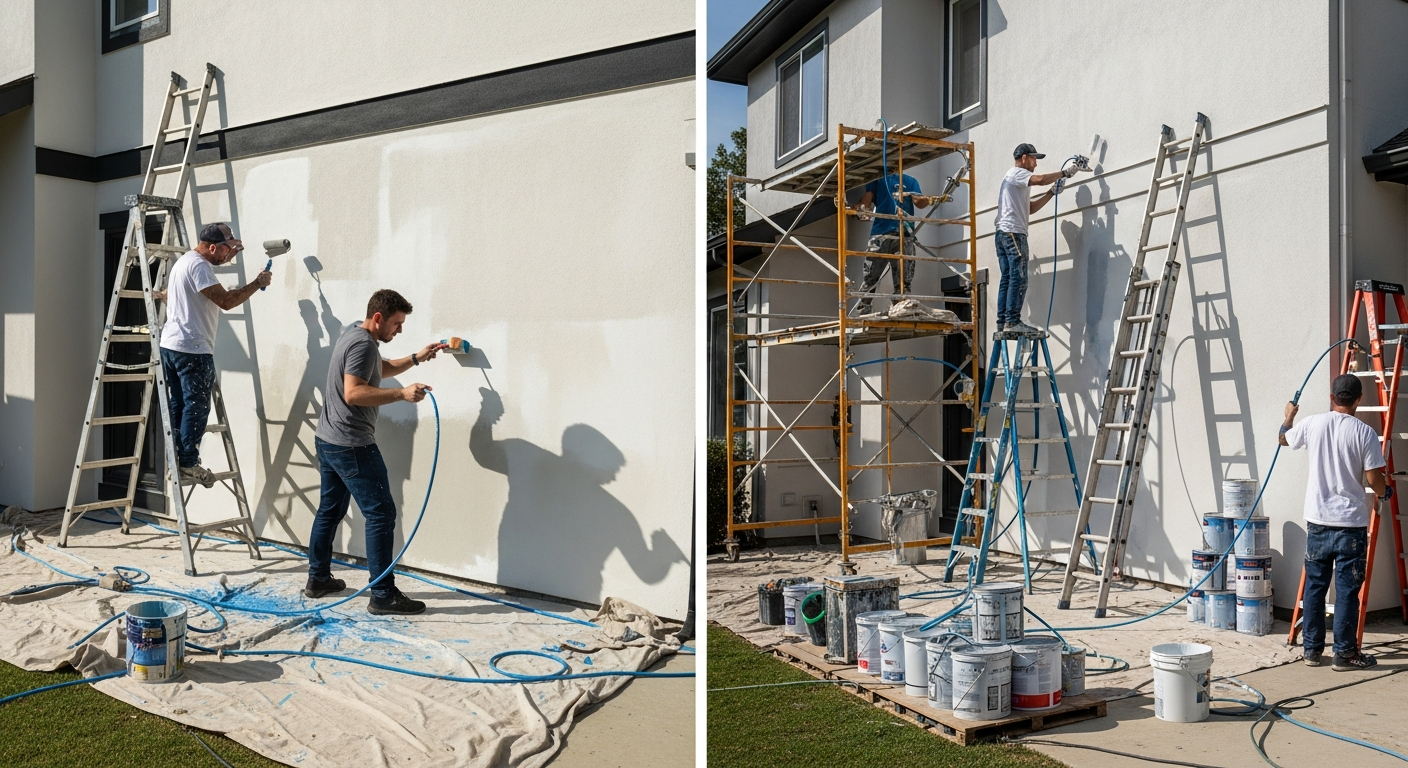
Phase 4 — Touch-Up and Cleanup (1 Day)
The final phase is often rushed or skipped entirely, but it separates a good paint job from a great one. After the second coat has fully dried — ideally overnight — a thorough walk-around inspection reveals any spots that need attention: thin coverage areas, minor drips, missed corners, or spots where masking tape allowed bleed-through.
Touch-up painting should be done with the same paint used for the corresponding area — body paint for the body, trim paint for trim. Use a small brush for precision and feather the edges of touch-up areas to blend with the surrounding surface. In warm, dry conditions, touch-up paint dries quickly and blends almost invisibly. In cooler conditions, give touch-ups extra drying time before evaluating the blend.
Tape removal has a specific timing requirement. Painter's tape should be removed while the final coat is still slightly tacky — typically 1 to 2 hours after the last coat. Removing tape too early risks smearing wet paint, while removing too late pulls cured paint off with the tape, creating ragged edges. Pull tape at a 45-degree angle away from the paint line for the cleanest release. If tape does pull paint, touch up with a small brush immediately.
Cleanup includes removing all drop cloths and plastic sheeting, uncovering and cleaning any paint from fixtures and windows, disposing of used materials properly, and storing leftover paint for future touch-ups. Label stored paint with the exact color name, code, brand, sheen, and date applied — this information is invaluable for future maintenance and saves hours of color-matching work down the road.
Factors That Extend Your Timeline
Multi-story homes add 50% to 100% to the total project timeline compared to single-story homes of similar square footage. The additional time comes from scaffolding setup and repositioning, slower working pace at height due to safety considerations, and the logistical challenges of moving materials up and down. A two-story home with the same wall area as a ranch house takes significantly longer because the upper story requires scaffolding rather than simple ladder work.
Extensive repairs dramatically extend the preparation phase. If your home has significant wood rot, failed caulking, damaged siding boards, or substrate deterioration, these repairs must be completed before painting can begin. Major repair work can add 2 to 5 additional days for a professional crew and 1 to 3 additional weeks for a DIY project. In some cases, siding replacement may be needed — which is an entirely separate project that must be completed before painting commences.
Complex trim and architectural details slow the painting phase. Victorian homes with intricate gingerbread trim, Craftsman homes with extensive stone and wood combinations, and homes with multiple dormers, bay windows, and decorative elements require significantly more cutting-in time and careful brush work. A Victorian "painted lady" with five to seven colors and dozens of trim elements can take a professional crew 10 to 14 days — two to three times longer than a comparable-sized home with simple architecture.
Weather delays are the most unpredictable timeline factor. A multi-day rain event can halt an exterior painting project completely, and wet conditions may persist for 24 to 48 hours after rain stops before surfaces are dry enough to paint. In regions with unpredictable weather — the Pacific Northwest, the Southeast during hurricane season — build extra buffer days into your schedule. Professional contractors typically schedule 25% more days than they expect to need as a weather contingency. Review our weather conditions guide for planning around weather.
Dramatic color changes require additional coats and drying time. Going from dark to light — or from a saturated color to white — often requires an extra coat of primer plus two topcoats instead of the standard two-topcoat system. Each additional coat adds a half-day to a full day for a professional crew and a full weekend day for a DIY painter.
Factors That Shorten Your Timeline
Good condition existing paint dramatically reduces preparation time. If your current paint is intact, well-adhered, and just faded or outdated in color, preparation can be as simple as power washing, light sanding for adhesion, and spot-priming repairs. This minimal prep can be completed in a single day for a professional crew, cutting the overall project by 1 to 3 days.
Simple architecture with flat walls and minimal trim speeds every phase. Ranch homes, modern homes, and other simple-profile designs paint faster because there are fewer edges to cut in, fewer elevation changes, and less detail work. A simple ranch house can be painted 30% to 40% faster than a comparably sized home with complex Victorian or Craftsman details.
Same-color refreshes are the fastest exterior painting projects. When you are simply refreshing the existing color scheme, there is no need for color changes, no risk of bleed-through from contrasting underlying colors, and no agonizing over color selection. A same-color refresh on a 2,000 square foot home in good condition can be completed by a professional crew in as few as 3 working days.
Professional spray application is significantly faster than brush and roller. A professional-grade airless sprayer can coat a wall in minutes that would take an hour with a roller. Combined with back-brushing for adhesion, spray application reduces the painting phase by 30% to 50%. However, spray application requires more extensive masking preparation, so the net time savings varies by project. This speed advantage is particularly significant on large homes with extensive wall area and minimal trim.
Sample Project Schedules
Scenario A: 2,000 sq ft ranch, professional crew, good condition paint. Day 1: Power wash, begin prep work. Day 2: Complete prep, prime repairs, mask. Day 3: First coat body and start trim. Day 4: Second coat body, continue trim. Day 5: Complete trim, doors, touch-ups, cleanup. Total: 4 to 5 working days. This is the most straightforward exterior painting project and represents the best-case professional timeline.
Scenario B: 2,500 sq ft two-story Colonial, DIY, moderate prep needed. Weekend 1: Power wash, assess repairs. Weekdays: Let surfaces dry. Weekend 2: Scrape, sand, repair. Weekend 3: Continue repairs, prime, begin masking. Weekend 4: First coat body. Weekend 5: Second coat body. Weekend 6: Trim first coat, doors. Weekend 7: Trim second coat, touch-ups, cleanup. Total: 3 to 5 weeks of weekend work. The multi-story height adds significant time for ladder setup and the inherently slower pace of working above ground level.
Scenario C: 3,000 sq ft Victorian with extensive prep, professional crew. Days 1-2: Power wash, full assessment. Days 3-5: Extensive scraping, sanding, repair work, rot replacement. Days 6-7: Priming, masking. Days 8-9: First coat body in primary color. Day 10: Second coat body. Days 11-12: Multiple trim colors, decorative details. Days 13-14: Doors, accents, touch-ups, cleanup. Total: 10 to 14 working days. Complex Victorian homes are the most time-intensive painting projects due to their architectural detail and multi-color schemes. Review exterior color scheme strategies to plan multi-color approaches efficiently.
Frequently Asked Questions
Can a house be painted in one day? A very small home (under 1,000 square feet) with simple architecture, good condition existing paint, and no extensive prep could theoretically receive a single coat in one day by a professional crew. However, a quality two-coat paint job with proper preparation is virtually never a one-day project. Even the fastest professional crews need a minimum of 2 to 3 days for a small home and 4 to 5 days for a standard-sized home. Anyone promising a one-day exterior paint job is almost certainly cutting corners on preparation, application, or both.
How long should I wait between primer and paint? Most exterior primers require 2 to 4 hours of drying time before applying topcoat, depending on temperature and humidity. In ideal conditions (65°F to 75°F, moderate humidity), 2 hours is typically sufficient. In cooler or more humid conditions, extend to 4 hours or overnight. Check the primer manufacturer's label for specific recoat times. Some primers, like Zinsser Bulls Eye 1-2-3, dry in as little as 1 hour. Oil-based primers like Zinsser Cover Stain typically require 8 to 24 hours before topcoating.
Do I need to be home while painters work? Not necessarily, but being available for the first day and for final walkthrough is recommended. On the first day, the crew may have questions about scope, access, furniture and fixture protection, and specific instructions. During the project, professional crews work independently and do not need supervision. For the final walkthrough, you should inspect all surfaces, identify any touch-up needs, and sign off on the completed work before making final payment.
How many workers does a painting crew typically have? Most residential exterior painting crews consist of 3 to 5 painters. A crew of 3 can handle a standard home efficiently, with one person prepping or cutting in while two apply body coats. Larger homes may justify a crew of 5 to 6 for faster completion. Solo painters or two-person teams are less efficient and will take proportionally longer. Ask your contractor how many crew members will be on-site — this directly affects the project timeline and should be specified in your contract.
What happens if it rains during my scheduled painting project? Rain delays are built into professional painting schedules. Most contractors include weather contingency days in their timeline and will not paint in rain or on wet surfaces. If rain disrupts the schedule, your contractor should communicate the delay and revised timeline. Surfaces typically need 24 to 48 hours to dry after rain before painting can resume. Plan your project during the driest season in your region to minimize weather-related delays, and consult our weather guide for optimal timing.
Start Planning Your Exterior Transformation
The most productive use of your planning time is to finalize your color choices before the painting phase begins. Color indecision mid-project wastes weather windows, adds cost, and extends your timeline unnecessarily.
HanoDecor's Exterior Visualizer lets you see your entire exterior transformed with new colors, materials, and design details — all on a photo of your actual home. Finalize your vision during Phase 1 so you are ready to execute the moment weather conditions align and your contractor or supplies arrive.
For quick color testing, HanoDecor's AI House Painter lets you preview body, trim, and door colors in seconds. Compare dozens of color combinations without buying a single sample quart, then order only the colors you have already approved virtually. Visit our pricing page for visualization plan options and check the gallery to see real transformations from homeowners who planned with HanoDecor before picking up a brush.
How Long Does It Take to Paint a House Exterior? Complete Timeline FAQs
Written by
James Park
Architectural Design Advisor specializing in exterior remodeling, siding systems, and structural home improvements. Licensed architect with 18 years of residential project experience.